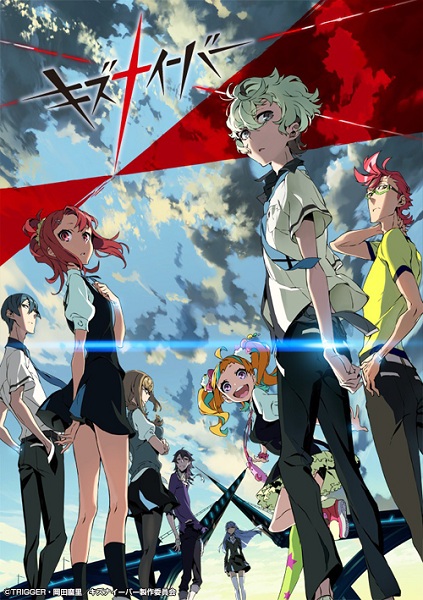

キズナイーバー
Katsuhira Agata is a quiet and reserved teenage boy whose sense of pain has all but vanished. His friend, Chidori Takashiro, can only faintly remember the days before Katsuhira had undergone this profound change. Now, his muffled and complacent demeanor make Katsuhira a constant target for bullies, who exploit him for egregious sums of money. But their fists only just manage to make him blink, as even emotions are far from his grasp. However, one day Katsuhira, Chidori, and four other teenagers are abducted and forced to join the Kizuna System as official "Kiznaivers." Those taking part are connected through pain: if one member is injured, the others will feel an equal amount of agony. These individuals must become the lab rats and scapegoats of an incomplete system designed with world peace in mind. With their fates literally intertwined, the Kiznaivers must expose their true selves to each other, or risk failing much more than just the Kizuna System. [Written by MAL Rewrite]
Main
Main
Main
Main
Main
Main
Main
Main
Supporting
Supporting
Supporting
jc9622
July 3, 2016
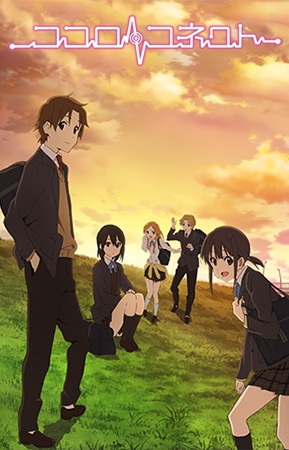
So what happens when 7 people, who knows almost nothing much about each other, are forced into a situation where they have to work together, know about each other's past, feeling each other's pain together (both physically and emotionally) and etc.? Well, Kiznaiver shows us how and they did a pretty good job presenting us how [Story]: (7/10) One day Katsuhira, Chidori, and four other teenagers are abducted and forced to join the Kizuna System as official "Kiznaivers." Those taking part are connected through pain: if one member is injured, the others will feel an equal amount of agony. These individuals must become the lab rats andscapegoats of an incomplete system designed with world peace in mind. With their fates literally intertwined, the Kiznaivers must expose their true selves to each other, or risk failing much more than just the Kizuna System. The story of Kiznaiver is nothing new. High school students are forced to be together and they eventually learn about each other and all that crap. I've seen another anime that did pretty much the same thing called "Kokoro Connect". The only difference is they literally feel each other's pain and this is just an experiment while Kokoro Connect is some mysterious entity forcing high school friends to work together or else they suffer the "consequences". The plot of the show is decent and much of the show is focused on developing each and every main character in the series. I guess you can say that Kiznaiver has a "Forced Character Development". While that may be a bad move for most series, for Kiznaiver, it's not. That's the whole point of the series and it magically works. My review for this section will be short since I'll be focusing much of my review on the characters itself. Meaning most of my review will be on the "Characters" section. ______________________________________________________________ [Art/Animation]: (8.5/10) I don't know what it is about Trigger's animation that I find so appealing and unique. Maybe it's because the way they draw their characters or how weird the visuals and some of the character designs look. Whatever, it doesn't matter because I weirdly love it for whatever reason. ______________________________________________________________ [Sound]: (8/10) Some of the OST's stood out like the theme that plays during the action scenes or scenes that has no action but is super intense but for the most part, the soundtrack is just average and not really worth mentioning. Now the OP and ED theme song(s) The OP theme song is "LAY YOUR HANDS ON ME by Boom Boom Satellites". The ED theme song is Hajimari no Sokudo" by Sangatsu no Phantasia I'm sorry guys but I'm going to be on the minority here and I will say that I hate the OP theme song. It's boring and I don't know what it is about the OP that people find appealing. On the other hand, I love the ED theme song. The singer has a nice voice and there are actual lyrics playing on the song instead of "Woahhh Layyyy Youuurrrr Haaaaands On Meeee!" which to me is not an actual song and more like a theme to something. ______________________________________________________________ [Characters]: (9.5/10) "Character Development: The Animation" ^^ In my opinion, that title fits perfectly on what the show portrayed. When I first watched the series, I knew the character development would be amazing like Kokoro Connect and after 12 episodes, the show proved me right. Literally every single main characters here gets a screentime of their own and they will get a character development. It's like the Kizna Experiment is (not literally) stripping them down and exposing their main flaws and weakness that made them who they are today. Funny because I said the same thing when I wrote a review of Kokoro Connect. Anyways, at first, the characters may come out as either super-cliche or just plain boring but as the series goes on, you'll understand why they're like that and you'll love these characters for who they are. Well, I did anyways. An example is Katsuhira Agata. When I first saw his character in episode 1, I thought he was going to be one of those silent and bland protagonists that we have seen a million times before. I don't know what it is about the silent types in anime that Japanese audiences find appealing but I'm tired of it. Except, he's not your typical silent dude. There's a reason why he's an insensitive and emotionless freak who doesn't feel any pain. They explained in the last 2-3 episodes and to be honest, those episodes were very emotional for me. To think how much kids have suffered just because of the Kizna experiment. Kiznaiver has one -- if not -- the best character introductions I have ever seen in my entire f*cking life. If you check Chibi's episode 2 reaction to Kiznaiver, you can see that I left a comment saying the same thing and apparently, a lot of people agreed with me. Why the hell would I say that though? I'm going to explain. In my 1 year of watching anime, the way they introduced their characters is super boring and filled with expositions that makes it very hard for me to watch the first couple of episodes when I want to watch a new series. Kiznaiver is an exception. It's either introducing yourself to the party or you suffer the consequences. There's an exciting twist that makes Kiznaiver's character introduction so thrilling. Plus, during those character introductions..the experiment exposes that they may seem like your usual cliche characters that fits into one of the character stereotypes but there's a reason why they're even that way in the first place. The writers intended them to be that way and they have a reason why they're like that. When it comes to character drama, not everyone will like it and it is evident (based on what I've read from people's opinions) that the community is split in half when it comes Kiznaivers character drama moments. 50% will like/love it and 50% will not like it because it's too melodramatic for them. If you ask me, I'm kind of on both sides. While I agree that the show's drama is so over the top, like the love triangles and how everyone in the groups loves someone in the group, I also disagree with the fact that Kiznaiver's drama as a whole is melodramatic. Besides the love triangle or pentagram or whatever , the show did a good job with its drama. The dramatic story that I want to use is Maki and her friend Ruru and their relationship. In my opinion, it was very well done. When Ruru showed her feelings to Maki, Maki didn't give her back the same feelings. Even though Maki is in love with Ruru, she didn't want their relationship to go any more further because Maki knows her fate. If she responded to Ruru's feelings, it would have hurt her more emotionally once she dies so she decided to just ignore her. This is actually one of those "Pick your poison" moments. If she responded to her feelings then she'd have to endure a more emotional pain once she dies while ignoring her would have caused her emotional pains too but not as hard or as painful as the first one. Their relationship also f*cking hit me right in the center of my heart which still hurts for whatever reason. ______________________________________________________________ [Enjoyment]: (8.5/10) I don't follow Trigger nor do I follow any anime news. So my expectations were at 1% when I first watched the series but after watching the first couple of episodes, I was very surprised. It exceeded my every expectations and after watching Kiznaiver, I expect every author/writer to write an exciting character introduction instead of our usual boring-ass character introduction. In other words, I'm expecting changes. ______________________________________________________________ [VERDICT] Kiznaiver was an exciting series to watch and it's a series that I didn't even plan to watch for Spring 2016. It exceeded my every expectations. While the show's plot may be weak, which is the reason why the show's overall score for me is an 8.5, the character development, on the other hand, is amazing. I never expected I would get emotionally invested in most of the main characters, especially Maki and her relationship with Ruru. In my opinion, the show's weakest plot point is its love triangle and some melodramatic scenes. After being disappointed with Trigger's Kill La Kill, Kiznaiver is currently the best show from Trigger. This makes me gain hope for Trigger and makes me excited for their future works. [OVERALL]: (8.5/10) Pros: +Amazing Character Development +Kiznaiver currently has one of the best character introductions +Trigger's Unique Animation +Most Character Dramatic moments are well done Cons: -Weak Plot -The Love Triangle Plot is completely melodramatic.
Supporting
Veronin
June 25, 2016
Kiznaiver is so stylish and colourful that it is almost blinding. But behind Trigger's beautiful visuals, there just isn't a whole lot else besides an extraordinarily average, if somewhat enjoyable anime-- one that is certainly a noticeable step down from their previous work, Kill la Kill. This should not be taken as an insinuation that all Kiznaiver has to offer is style without substance. There is value here, and Trigger has evidently tried to capitalise upon some of Kill la Kill's prior successes, particularly with regards to its characters. Kiznaiver tries-- it tries ever so hard-- but in the end crumbles under its own ambition. Itis an excellent premise that unfortunately never really finds its footing. Were it a full two-cours of content rather than the mere twelve episodes it actually is, the result might have been different. Kiznaiver's characters are likely the first thing to catch one's attention. They are rich with personality, visually distinct from other characters in anime. There is no one that feels particularly bland (aside from maybe Sonozaki), but a number of them never go much beyond simply looking cool or being weird. Nico is a cute airhead suffering from a variety of mental illnesses (and quite possibly low IQ), while Yoshihara is an extreme masochist who orgasms at the very idea of pain, and exists largely as fuel for shounen-ai fanfiction and doujinshi. The protagonist, Katsuhira, is also a mopey emo kid who lets people beat him up without a care. This is about all that characterises them for the entire show. They are as one-dimensional as can be. It is bit of a waste, given how unique their character designs are. (And I do not only say that because I like twintailed girls named Nico.) Some characters are more compelling than others. Tenga's dialogue in the original Japanese, for example, is fairly natural and feels like something that could come from an actual teenager's mouth. Chidori, as annoying as her scream-fests tend to be, is also pretty representative of how the average teenage girl handles their emotions. The writers of Kiznaiver know what they are doing and are capable of doing it well, but the problem is that the short episode count prevents these characters from ever realising their full potential. It throws a lot at the viewer, but never gives them time to digest it or room for the characters to breathe and relax. It is, almost invariably, the quiet moments that stand out the most in a story. There are no quiet moments in Kiznaiver. I suppose it makes sense for something like Kiznaiver to be as short as it is, as Trigger puts a great deal of work and effort into each episode. It obviously shows. But that still does not excuse them creating a story and a cast of characters bigger than they could handle within the allotted time. For something like this, a more briskly-paced movie, perhaps a duology, would have been a better way to compress the story without sacrificing visual quality. But I suppose a movie or two doesn't make quite as much money as five or six over-priced BluRays would. Anime is expensive to make, and Trigger needs to pay its animators so they can eat and have a roof over their head. I get it, but it is still a bit disappointing to see business prioritised over artistic quality in this case. If Trigger saved up extra money for a year or two through smaller projects, and used that to fund an extra cour of Kiznaiver, we would undoubtedly have had a much more exciting product. Some aspects of Kiznaiver, however, are less the result of its short episode count, and more related to lacklustre writing. Most of Kiznaiver's drama involves angsty, spoiled teenagers overreacting. Being rejected by someone you like is a sucky thing, there is no doubt about that, but it is not the end of the world like Kiznaiver tries to paint it. There are things far worse going on out there, and yet they're traumatised because someone they had a crush on couldn't reciprocate those feelings? Big deal. Give it a couple months and it will barely even cross their mind again. It would be one thing if these feelings were long-term, but for everyone excluding Chidori, they have had these crushes for a few weeks, tops. Kiznaiver tries to create an absurdly complex set of romances. Every character is attracted to someone else, and often the one they love is interested in someone else entirely. With eight main characters and only twelve episodes, you can have a pretty good guess of how well these romances are handled. They get angry, scream and beat each other up when they find out the one they love is being treated poorly by one of the other Kiznaivers, only for another person to get upset in return, and another and another, it raining and dramatic music blasting all the while like the world is on fire and ready to explode. It is extremely difficult to care about their feelings for one another when most of these feelings (particularly surrounding Tenga) have been seldom explored and revealed only one episode beforehand, without so much as an explanation-- or heck, even a hint-- for why they like each other in the first place. Considering the experiment within the show is also manipulating these characters' feelings, the romance doesn't just feel lacklustre-- it feels artificial. Chidori and Katsuhira are about the only couple that make any sense. Everything else is just a big mess that the show could and should have done without. It is also quite silly and cloying how emotional 'pain' is shared and hurts them all as well. One of the Kiznaivers is heart-broken, so, hey, that means everyone else must succumb to the feels and suffer from heart-break, too, because emotion is equivalent to physical pain and not at all psychological, or something. There are other scenes, like Chidori confessing to Katsuhira in the middle of a storm (weather in anime being the convenient device that it is), or Yuta and the rest screaming at the top of their lungs and jumping into the river (because that's how you deal with your anger?), that make it quite clear that Kiznaiver is not all too interested in appealing to adults. I can totally understand why someone who is around fourteen-years-old may enjoy and empathise with that sort of thing, but being twenty-three myself, it doesn't warrant much more than a sigh and some head-shaking. For how believable Tenga's and Chidori's characterisation can be, it is a bit disappointing to see the show stray so heavily into melodrama territory. At least Kill la Kill was aware of how blatantly over-the-top it was; Kiznaiver takes itself seriously all the time, and it wants you to take it seriously, too. It forgets how to have fun with itself, and that is perhaps the most disappointing thing of all. I'll still give Kiznaiver credit for trying. Most of these issues could be resolved simply by the show having more episodes to develop its characters and their feelings in a more meaningful way. It would still not be an anime without significant flaws, as the copious amounts of melodrama make clear, but there certainly was the potential to, if not match Kill la Kill, at least come close to its quality. Kiznaiver looks and sounds so nice that it is easy to forgive some of its issues and enjoy the ride regardless, but, in reflection, there just is not much else to praise aside from that. I really, truly wanted to give Trigger's big new project a glowing review, but I just can't do it. It's not there, and it never gets there. At the same time, not everyone is looking for the next greatest thing. Having charm and style alone can please most people, and merely being a standout title within its respective season is enough to warrant a viewing. And, you know, that's perfectly fine. I wouldn't hesitate to give Kiznaiver a recommendation if all the person wants is a few hours of fun and something a little bit different. Because, make no mistake, Kiznaiver is not a bad anime. It's just an immensely disappointing one.
lawlmartz
June 25, 2016
If you don't know what state your wounds are in, or where you're hurting; if you don't know that for yourself, then there's no point in trying to share it with others is there? -Hisomu What makes an original? Is an original a piece that spawns copies, or something that comes from within a creator; something that no one else has ever before thought? Have you ever had an original thought? What if, despite your thought that your idea was original, someone across the globe, someone with whom you have never and will never have contact with had your same idea and yet, weren't able toact on it. Is it still original? No matter your definition of original- Trigger continues to pump out quality writing and both new, heretofore unseen content, and new ways of presenting old ideas. This season, they pulled the trigger on a double barrel shotgun of new for the anime viewing populace with the zany Space Patrol Luluco, and the much more subdued Kiznaiver- and what a season it's been. Kiznaiver is what I would describe as a new twist on an old classic. One of the interwoven themes is referenced in both my opening and ending quotes- the power of friendship. Had Trigger just stopped there, they would have produced a trite, unimaginative, and unfulfilling series much like those that crop up each season. Kiznaiver is not content to merely focus on the power that friends hold over you, but also delve into deeper concepts of pain and loss, the stages of grievance, and the ties that bind. Much like the multifaceted Kill La Kill before it, Kiznaiver tackles these themes with depth and sophistication. Conversations that outwardly appear to be simple exchanges between friends often reveal much more about the characters and their mentalities. The characters themselves also outwardly seem to represent the kind of one note stereotype- Katsuhira the unfeeling, dull, mophaired main character. Chidori the tsun tsun. Nico the genki girl, etc. However simply the characters are presented in the beginning, throughout the course of the show, we watch them grow as people, friends, and characters. In the early episodes, we see the group forced together as part of some sick social experiement- a disparate group of persons from different cliques, if you will, thrown together and told to "become friends" (whether through traumatic shared experiences, which has been proven to form bonds between people who might not otherwise associate- such as in fraternity hazing, gang initiation, etc. or the typical socialization process that people go through.) We get to know the person of the characters, what drives them, their insecurities, wishes, and failures. Each has their turn in the spotlight, and as the viewer, I felt like most of these characters, even though many had larger than life personalities, could have been real people. They don't have superpowers. They aren't infallible, neither are they perfect. They don't win every time, and the certainly don't all get along perfectly, kiss and make up after every little thing. Like real friends with disparate interests, they get on each other's nerves, hurt each other (in more ways than one) fall in love, fall out, make each other cry, and experience life together. Trigger, in all their savviness, also recognized the potential for relationships in the show, and makes moves for different character romances to happen, fall apart, and change. It's not your typical ensemble where the bland, self insert protagonist has color coded dereotype ladies throwing themselves at him for no reason. No, Kiznaiver takes a more nuanced approach, and the characters have viable, believable reasons (some are not pretty, just like life) for being interested in each other like mutual interests, pure pity, opposites attracting, and finding kinship. The plot of the show takes a backseat to characterization in what's known as a "character driven story", which is also something of a rarity in anime these days. It's not all about some grand scheme or hero's journey, but about the interaction of the characters themselves that matter. As mentioned above, I think that the characters experience the five stages of grief (denial, anger, bargaining, depression and acceptance) throughout the show, as a theme. As part of the Kizna experiment (linking people through sharing pain), these kids in the story, through their own relationships and getting to know themselves and the people around them, experience these stages as part of their characterization. Each is in denial over some reason or another, whether it's "how could my friend have died?" or "this person loves me, they just don't know it", etc. This progresses as the story heats up- they're angry over their inner demons, and it spills out onto each other- until the voices of reason, Hisomu and Nico bring them all to their senses (bargaining). After the climax of the show, they all decidedly experience a strong depressive episode, where the characters decide what they're going to do with themselves, and about each other- having made themselves vulnerable and revealing their secrets to each other. Eventually they come to accept each other, and the story takes its final twist, which would be criminal of me to reveal. Suffice to say, it's certainly worth watching to find out. The art of Kiznaiver is also excellent, with the flair Trigger has for small details, and making their characters look fresh and interesting. There are a lot of stylings of Little Witch Academia, especially the hair, but still very within the modern style. It's crisp, clean, and flows well, but the lighting is really something. Reflections, eyes, and anything lit look really great, drawing attention to details and adding depth to the shot composition. I applaud the casting director at Trigger, whoever they are- for they have done it again. Similarly to Kill La Kill, Kiznaiver is impeccably cast. The nuance and emotion (or required lack thereof) that was put into the performances really sells the drama and characters. The larger than life Tenga, fragile Maki, zany Nico, wacky Hisomu, hot and cold Chidori, stiff Katsuhira, and mysterious Noriko (and some nice performances from the supporting cast as well) all add up to a very well produced product. tl;dr for my lazy folk + great characterization + fantastic art + a human drama, one that you can get behind, that doesn't descend in to pointless melodrama +/- your favorite characters might not get together Friends are soy sauce! The omnipotent seasoning! - Nico
ZephSilver
June 25, 2016
Forced drama, what does it entail? Is it the act of searching for genuine emotion in a place that never offered it? Is it not understanding the limitations of your screenplay? Perhaps it comes from honest attempts to create something organic. Whatever the reason may be, when it happens, it doesn't leave a good aftertaste. So which is it for Kiznaiver? Is it truly trying to craft something memorable? Is it seeking poignancy in the anguish of others? Is it studio Trigger trying to branch out into unfamiliar territory; a leap of faith, hoping their dedicated followers would comfort them when they fall on theirfaces? And really, should I care, even if they did attempt something out of a place of honest effort? Well, short answer, fuck no. I don't need to babysit a half-baked effort. I don't need to try to empathize with a failed project that slipped out of the creators' hands. As harsh as that mentality may be, it's the honest truth. I'm the consumer. The only thing required of me is to be entertained and engrossed by the project they put forward. And guess what? I wasn't. In fact, I was mentally drained by this synthetic try-hard and its relentless efforts to pull at my heartstrings; operating with as much subtlety as a Macy's Thanksgiving Day Parade trying to sneak down Central Park West. A good concept doesn't make a good anime and Kiznaiver embodies that very notion. The message it chose to convey was fine, but the way it went about delivering it was the problem. In a sickeningly idealistic attempt to bring forth "world peace" and a greater level of understanding among humanity, the Kiznaiver project was created to combine the shared pain of its placeholders by linking their sensory output together. The more these placeholders are made to open up to each other, the deeper their connection becomes; experiencing everything from the surface-level physical pain, to more emotional-based pain, as the walls that separate them dissipates. If the premise wasn't made explicit enough already, it's essentially one big character study and self-examination of human relationships. And it should go without saying, but whenever topics like these are made your primary focus, there are some prerequisites expected of it in order for it to function with any semblance of validity. You can't go swimming without a pool of water, and in the same light, you can't have a character study without characters. Notice I wrote "characters" NOT "caricatures," a distinction that Kiznaiver can't seem to make. If Kiznaiver had an extended title, it would go something along the lines of: "Kiznaiver: Forcing Archetypes to have Da Feels" These color-coordinated caricatures are so cookie-cutter by storytelling standards that you could sum them all up with one-liners. They're basically human smurfs, each feeding into pre-assigned roles with little in the way of diversifying their default archetypes. Instead of swimming in a pool of water, Kiznaiver attempts to achieve the same feat with a pit full of dirt. A task that's not only nigh impossible but also painful to watch play out as well. Archetypes are meant to serve as default personalities to further build upon. To simply present them as is without building on who they are as characters is not only conceited, it's borderline delusional when taking into consideration the importance that the characters hold in the confines of this material. This isn't an action adventure where the world being trekked is the star attraction, it's a character study, a CHARACTER study. If there's one aspect of your screenplay that you want to shine the most, it's in this department. And yet, redhead tsunderes are pre-packaged in this anime in the same way every live-action movie and TV drama depiction of high school has the popular blonde cheerleader and varsity-jacket-wearing jock. So when these non-entities are placed in a situation where they're forced to open up to each other, there's very little that could be done to divert the audience's attention from the obvious truth. That truth being that there's nothing to truly pull from these "characters" since there was nothing there from the beginning. The show desperately attempts to squeeze a modicum of emotion from this dirt pit, and when that plan fails, we're brought back to my original inquiry. This anime is strong-armed into producing something it never had to begin with; genuine emotion. To be fair, there are transient glimpses of decent writing in this dirt pit of a cast, that coming in the form of one character, Honoka Maki. If there was ever a character in this show that Kiznaiver didn't butcher with its ineptitude, Honoka was it. With the introduction of her backstory, as well as the time dedicated to exploring her psyche, she stands out like a sore thumb, especially when placed in her vapid surroundings. Had the show handled its cast with the same amount of effort and care as it did with her, I would have been singing a different tune. But this sadly isn't the case, and just as quickly as Honoka's character focus brought hope to the show, it's immediately snuffed out as the artificial angst surrounding every other facet of the screenplay further plunges the material back to the subpar levels that it was constructed out of. If I had to offer any other appraisal outside of this temporary moment of decent writing, it would be that of the art and animation department. Unlike the rest of the show, this area demonstrated the talent found at Trigger that they accumulated from their time spent at Gainax. The color palette used was radiant and immediately draws the viewer's attention. With storyboarding that kept a sense of flow in mind and a decent amount of consideration made in its use of color theory, there was clearly more effort here than what's usually expected out of typical studio projects. The same could be said (for the most part) about the character designs. While some were painfully by-the-numbers, others were quite expressive and easily identifiable. At the end of the day, these designs are wasted on cookie-cutter archetypes, but they're still appealing nonetheless. One a side-note, for readers who've already seen Kizanaiver, the designs of the gomorin outfits take clear inspiration from the Maromi doll in Paranoia Agent. Perhaps this was done so as a tribute to Satoshi Kon, given his extensive work in the field that the show is trying to dive into. Whatever the case may be, it was a nice touch. Another detail that, while not innovative, still deserves mentioning was the color of the characters' hair. Katsuhira's hair—which was supposed to show someone close to complete apathy—was represented with pure white hair overlapped with some brown, with the white representing an absence of emotion and the brown being the faint presence of it still left within him. The same could be said about Niko's hair, which obviously denotes to the flamboyancy of her personality given the diverse, bright colors. Again, pretty simple in how the hair color denotes their traits, but still worth noting. As for the soundtrack, there isn't much to say. The only thing that sticks out is the opening theme "LAY YOUR HANDS ON ME" by BOOM BOOM SATELLITES, and rightfully so, given the infectious nature of it in accompaniment with the visuals presented. This could be attributed to the fact that sonically it has much in common with one of pop's more recognizable tunes "Take on Me" by a-ha. At the time of this writing, a quick youtube search of "Kiznaiver take on me" would bring you to a video that exploits this, merging the song with Kiznaiver's opening, demonstrating just how interchangeable it really is. That being said, BOOM BOO SATELLITES certainly delivered. Everything else in the sound department is forgettable by comparison. The only other thing worth taking note of is the sound effects used at times; like the glitchy noise made whenever the Kiznaiver device was activated, or the added sound effects given for objects when motioned. It was minor inclusions but still did something for the show than had it been excluded. Now, what should have been excluded but ultimately made the final cut was a love heptagon. Not a regular one-way love, not a love triangle, but a full-blown love heptagon! And what happens when you involve a bunch of dimensionless smurfs in an ouroboros-like relationship? You get an embarrassing display of cardboard cutouts inserts pleading to each other. A potpourri of ill-advised confessionals that transformed itself into a deformed, blubbering mess. There's very little in the way of actual characterization for these mouthpieces with legs, so expecting them to divulge genuine feelings for each other just comes across as half-assed. Some characters don't even have much in the way of one-on-one interaction prior to these events either, and those that do get that time barely share any semblance of chemistry. This made what was suppose to be emotional climaxes in the story, into an over-bloated cringe-filled sob-fest. This was midday soap opera levels of awful. The show steamrolls through all of this melodrama and artificial angst in order to deliver a message that no one needed help figuring out in the first place; getting closer to others runs the risk of eventually being hurt by them. This isn't exactly an eye-opening revelation, this is just common sense. But what's possibly worse than off of this is the fact that what Kiznaiver struggles to deliver in 12 episodes, is easily understood with just 1. This 1 episode I speak of is the TV pilot of Kino's Journey. Watch those 20 minutes and save yourself hours of seeing a show drown in the kiddie pool section. Enjoyment: 3/10 I told myself, as well as a few colleagues, that I wasn't going to review this, due in large part to the fact that just talking about it made me feel mentally exhausted. But then I thought about what it would mean for those people that share my stance but can't quite articulate the reason for why they feel the way they do. I thought about our perspective going unheard in the frenzy of hype and unchecked evaluations. Letting Kiznaiver get off scot-free to gain unwarranted appraisal became far bigger of a burden than simply ignoring it to comfortably go about my way. And so, here I am, writing this review for all those, who like me, are tired of these empty vessels being filled with accolades it doesn't deserve. The only emotional response that Kiznaiver got right was that of frustration, as that's precisely what I felt while watching it. Overall: 4/10 Kiznaiver is fine until it gets into the character drama, and seeing that the whole show revolves around character drama, you could see how that leaves very little in the way of value. Had the characters been handled better, had the concept not been bare-bones, had the writers tried a bit harder, then maybe, just maybe, there would have been something here worth talking about. But that wasn't the case, and Trigger, once again, "saves anime!" "The show wasn't that good, but the opening was so nice though!" How many more times do we have to make this statement before we let insufferable titles like these crash and burn? How many more times would we equate trying with being good enough? The only good that Kiznaiver can offer is serving as a future example of what forced melodrama looks like. With that being said, ignore this one if you haven't already, it's a practice in tolerance-control that would only serve as a distraction from watching something else that's truly worth your invested time.
Cinnamon_Pramma
June 28, 2016
Have you ever wondering how it must feel when one of your friends or loved ones are in despair? When they’re having a despondent day? Well, look no further because Kiznaiver portrays this theme, and I mean literally. Kiznaiver is an anime revolving around bonds through pain and sentiment. The story circulates around that of our main protagonist, Katsuhira Agata, a modest, slow teenage boy that grasps no emotions within his hands, accordingly making himself a bullying target. However, the bullying that consistently approaches him from every direction is beyond his concerns and most notably, his pain. Him, alongside with 5 other teenagers’wounds are connected through the Kizna system and are obligated to bond for the sake of creating “World peace”. And so, their journey begins. Now, I must say, Kiznaiver is an anime I saw one of the brightest potential in, however, was abstracted by various divisions. Whenever it was character development or drama, the manner Kiznaiver executed this is what made itself abstracted from a rather good conception. Many like to say this is a character-based show so they are going to get more profound of the characters than any other department in the show, but even then, Kiznaiver fails abominably at this. If I had to describe the characters using three adjectives, they would be “mild, archetypal, and caricatured” The characters were first given archetypical roles, initially seen as symbolism, which I had no concerns for, however, the characters just started to use that as their foremost individualities, never actually getting in-depth of the traits and explaining why they maintain such. Alternatively, this started to define the characters themselves and the purpose they bring to the plot. Niko and Tenga, for most of the series existed, only to slap in some eccentric yet cartoonish comedy in there, but only came irksome and unnecessary, leaving room for its incompatible tonal dissonance. Kiznaiver genuinely knew what they were doing, thus far were oblivious about the fact that it’s never going to work. Kiznaiver knew that it wanted to be witty at times, whilst simultaneously being serious, yet merely making the story paradoxical. The way serious scenes would modify itself into comedic ones was awkward and off. Kiznaiver couldn’t handle both, therefore making the tonal shifts cringeworthy. The only characterized really are Honoka, Katsuhira (fairly) and Sononaki, yet they still don’t possess strong characterization. Katsuhira and Sonozaki were the only crucial characters of the show and would have still been proficient of creating a story with just the two of them. The rest of the cast didn’t live up to their significance, let alone nearly, and that’s what I found dissatisfying about Kiznaiver. If every single character were presented exactly like how Honoka was, this series would have left me with a different impression, potentially increasing its score from me. Hisomu was a random guy in the background educating a few life lessons to these youngsters but served no purpose whatsoever. The finale of Kiznaiver entirely explained the significance of our cast; A bunch of kids that just added their two cents to Katsuhira and Sonozaki’s association without it actually making that much of an impact, and additionally their personal issues being irrelevant, which brings me to explain the execution of drama in this series. Kiznaiver must be an anime that secondly enthrals and is reliant on drama for its series, considering the fact that it’s a character-based show, however, even its drama was horribly done. Albeit, I can comprehend the fact that they’re just average teenagers so they are bound to create conflicts; it’s only natural for them to do so, however, not one speck of maturity was balanced with the juvenility of the quarrels. Example would be Chidori’s issues. Instead of it being a bunch of sixteen years olds arguing about their love interests, it was something that a bunch of twelve years old would be arguing about. Moreover, the love interests were either absurd, lacking or arbitral. Nico liking Tenga had to be the most illogical, a relationship that was barely transparent and developed. Kacchon and Chidori was a relationship that was hard to care for because they’ve barely exposed their relationship before the Kizna system. Instead, we’re just left to imagine and presume how strong their relationship must be. Characterization and the character interaction within the show were born out of compulsion as a way to move the plot forward, merely making the characters plot devices. A great example of this is episode two, where the characters were forced to reveal a secret of theirs, which I found quite rough. Kiznaiver wanted to impatiently force development out of our characters and rapidly reach the good part of the story, thus giving a reason to these “required missions” or “served punishments if something is not achieved” As much as this made the story engaging, it just came redundant. The same results would have still been created if the characters were simply left to unravel their way out of the system or getting profound of each other. The secrets and authentic identities were proficient of unfolding itself but Kiznaiver were too impatient. Kiznaiver already has an implausible conception, yet is very questionable. They’re already aware of the failure the experiment has brought prior to other children that initially were a part of the research, so why do they revive it again on other kids? Initially, the experiment became extremely hazardous and was nowhere near creating “world peace” from the looks of it, so why would it be smart to do it again? Moreover, Kiznaiver never gets in-depth of how connecting pain equates to world peace, but rather they just state it will. Kiznaiver doesn’t try to bring coherence to an already puzzling idea. I am very aware of the fact that the whole point of the show was to show the faults of the idea, but they never really try to fully clarify the agenda from the very beginning. The effort put into Kiznaiver is very transparent and I support it for doing that. The distinctive turn they wanted to add to their story with the connecting pain and all boasted Kiznaiver up, however, ever so slightly failed itself from the inconsistencies. Kiznaiver prioritised the artistic merits in contrast to all the existing departments, just like what any average modern anime would do really. Not that it’s a problem with bring bigger significant to the visuals of the show, but to not show as much importance to the characters and story is what Kiznaiver performed. The art was very satisfying yet aspiring. It had a very crispy and sharp design to it. The backdrops basically go by what I’m saying, very distinguishing and never felt boring. The character designs were fine, and I mean, really fine. Very distinguishable and was very defining. Each character has an exhilarating look to them and was pleasing to the human eyes. They looked exactly by their characteristics and their personalities were easy to presume. The colour palette was very strong and bright and the animation ran smoothly. Well done BOOM BOOM SATELLITES and Sangatsu no Phantasia by genuinely going by your intended purpose. They rightfully went by what it means to create an opening and an ending, thus making it very appropriate. An opening is to grip you into the series and places a significant role by entertaining your audience into watching more; the Kiznaiver opening ideally went by that. An ending is meant to relax the viewer and conclude them that the episode was nicely completed; the Kiznaiver ending also ideally went by that. However, the only trouble I have with the opening is how unmemorable it is. As Zeph stated, the only unforgettable line in the opening is “LAY YOUR HANDS ON ME” Other than that, it’s fine. Kaji Yuki, you shady monkey. His performance was not particularly extraordinary, but most definitely stood out than the rest. I absolutely love how Kaji Yuki can just adjust his voice in order to fit the character, completely making him distinguishable from his most popular roles. Kaji Yuki is like a person that can just hide behind characters without knowing it’s him. His voice was perfect for Agata and convinced me into liking it, a lot. What to expect and personal enjoyment But the real question is, did I enjoy this? Not necessarily. It has to do with the fact that Kiznaiver vaguely touched upon its default genres, hence why I couldn’t get profound of it. It was hard for me to articulate the message that Kiznaiver was trying to depict because so many things distracted it. There were nothing for me to get in-depth with really, but rather I just started watching the show with enjoyment in my mind. Kiznaiver is fairly a dumb watch. If you want an anime for its exhilaration and fun, Kiznaiver is for you. If you’re looking for any perception of our characters and story, you’re not going to find that here Kiznaiver should have been a 24 episode long series and more considerate with where it story and point goes. This show only wears the name of it being character-based and dramatic but it poorly conveys that. This show technically done what death parade done; a poor story in which its opening saves itself from hate and is seen as good in the majorities’ eyes. Kiznaiver is yet another anime that had potential, however just didn’t go by it. Negatives •incompatible yet irritating tone dissonance •Implausible and vague conception. •Obligated character interaction and characterization •Purposeless or one-dimensional cast •Melodramatic, no maturity balanced with childishness Positives •Effort •Satisfying art and animation •Appropriate music •Kaji Yuki Kiznaiver = Overall 4/10
Rank
#2704
Popularity
#284
Members
794,455
Favorites
5,253
Episodes
12