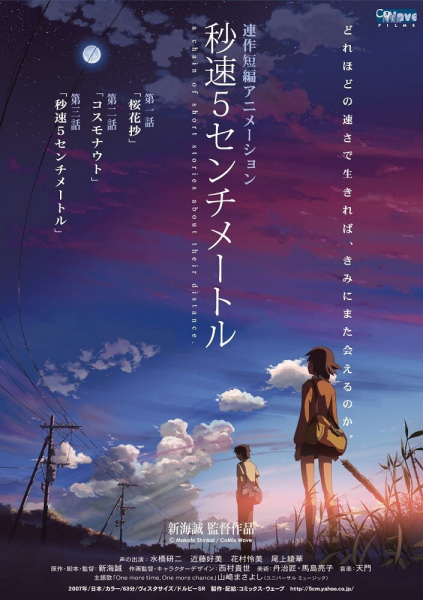
Tsukigakirei
月がきれい
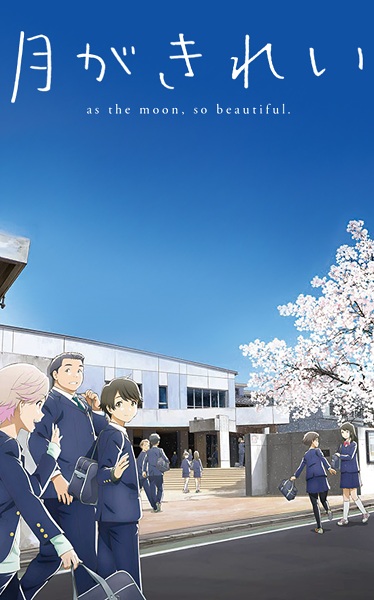
With a new school year comes a new crowd of classmates, and for their final year of junior high, aspiring writer Kotarou Azumi and track team member Akane Mizuno end up in the same class. Though initially complete strangers, a few chance encounters stir an innocent desire within their hearts. A yearning gaze, a fluttering heart—the hallmarks of young love slip into their lives as fate brings their paths to a cross. However, though love is patient and love is kind, Kotarou and Akane discover it is not always straightforward. Despite the comfort they find in each other's company, heartache and anxiety come hand in hand with pursuing the feelings in their hearts. With the uncertainty of how the other truly feels as well as the competing affections of those around them, the road ahead is unclear. Even so, under the shining light of a beautiful full moon, Kotarou gathers his courage to ask Akane a single question, one that forever changes their quiet relationship. [Written by MAL Rewrite]
Main
Main
Main
Main
Supporting
Supporting
Supporting
Supporting
Supporting
Supporting
Supporting
FuryTomic
June 29, 2017
Honestly in my opinion, this show is one of those original work gems that stand out for this season of Spring 2017! An Original Work containing Romance, mixed along with Middle School themed characters, plus those awkward and moments we all had at some point in our lives. As what some others have said, I also agree that this show is something refreshing and nice to watch. The story has good development overtime. It's not really rushed a lot with tons of scenes and action that was all done in one go. The story progressed at a reasonable good pace. Though, there's a notable amount oftime-lapsing to transition to each episode. I did like the development for the characters too, since it went at a pace that isn't too fast for viewers to try and understand, and not too slow where the viewers will be bored. The art is good quality. There were a few scenes that were done well. However, I do have some issues with a few particular scenes that could be revised for the DVD/BD Release. But other than that, I don't think it would affect much for my rating. Art wise for the characters, I liked it, and found Akane cute too. The sounds is something that I found pleasant. The casts all fit with the characters represented too. What stood out for me was the noises that Akane makes. "Eh?" "Aah!" Un!" Like Kumiko noises. Kotarou on the other hand, "Ah.." "ooh.." "Un." basically like Akane but a male version. (lol) Though, that did motivate me to work on a video dedicated to both of their noises that I could find from every episode. The characters, I don't have much to say (As it also contains spoilers if I do say something about them and the others) but characters that will make you want to like, laugh at, or maybe be going, "What? No! Don't you dare do that!" It's a typical range of emotions and stereotypes that you find in Middle/High School. I do find that the staff and producers managed to make the characters feel more interesting instead of bland. My enjoyment with the show was lovely. I did like it how in the ED, there's text conversations that is interesting to read. I do believe someone made a forum post dedicated to translations for the conversations. Anyways, the Shorts after the ending were entertaining too. Some in which are hilarious. When I get my Blu-Ray order in October, I will definitely re watch the show to see if they changed anything from how it was aired this season. Overall, I loved Tsuki Ga Kirei. As I stated, it's one of those original work gems that is both good and refreshing to watch. I've started to support this show by ordering the Blu-Ray. You should too if you enjoyed it! My last thoughts is that it would be lovely to see an OVA or an adaptation (like light novel, manga) for Tsuki Ga Kirei. Who knows what Studio Feel. and the staff members might do for now. Hopefully, maybe something that is good as Tsuki Ga Kirei :)
Supporting
KingKatsura
July 7, 2017
Tsuki ga Kirei is a boring adolescent romance that masquerades as something more than it is. It's avoidance of standard romance tropes is not an act that by default renders a romance any better, or even realistic or compelling, if it's still utterly lacking in anything substantive whatsoever. The main couple have a serious lack of chemistry that plagues the show from front to back. Their reservations and quaint interactions are cutely refreshing and much more in line with the actuality of young love than your typical anime portrayal. That said, I still don't understand why they liked each other in the first place orwhy that feeling only grew over time. They were awkward, but it wasn't just a cute display of awkwardness, as they legitimately had nothing substantive to talk about, ever. It felt almost ironically shallow. Nothing particularly exciting happened either, which is both astounding and damning in this show's bewilderingly positive reception. I personally don't watch television or film to be bored out of my mind while in some desperate search for trope-avoidance tactics. There are surely more valuable things to do in this world than conduct pointless meta-analysis on how a boring anime is actually good because it isn't generic. Uniqueness and quality are not mutually exclusive metrics. Tsuki's side characters are also extremely undeveloped and not impactful in the slightest. The show employed an interesting technique of having brief side character stories shown after the ED of each episode, but these were far too scattered and simplistic to provide any insight into the actual characters. 'Twas nothing more than some quick laughs arising out of character interactions from characters' faces you sadly may not even recognize or ever see again. Back to the main show, the two romantic foils, who had actual relevant screen-time, disappointingly ended up amounting to nothing more than stale obstacles. There was also no discernible difference between the two's roles in the series. Furthermore, there really wasn't a discernible difference between the two main characters themselves other than gender. The pseudo-plot is that these are two very goal oriented kids, longing to fulfill their dreams but gratefully burdened by unexpected love. The actual plot is that these are two regular kids who aren't particularly interesting to watch nor display no distinct, marked instances of actual romantic relationship. The art style is a blatant ripoff of Kimi no na Wa. Which is good, in the sense that Kimi no na Wa has a great art style, but somewhat shameless nonetheless. The fonts, the lighting techniques, the environments,.. everything screamed budget Shinkai. I sure hope he gets royalties from this show for inadvertently providing the entire visual framework. There was also a very prevalent usage of CGI for background characters in Tsuki ga Kirei, which was wholly unnecessary and distracting. The CGI was awful and not befitting of modern animation standards. There was also no real need to have crowds of background characters populating every scene. The environments were perfectly fine on their own. The music was decent but nothing notable and the voice acting was very poor. I haven't heard so many audible groans, breaths, and bodily noises since I last watched Dragon Ball Z. Why write actual script when you can pencil in dumb, nonsensical noises? Watch Kimi ni Todoke or Ao Haru Ride if you want to see shy young people fall in love organically, albeit dramatically and with a theatrical flavor, as is the nature of entertainment media. Those shows are compelling, in part, because high school is an interesting romantic setting. Middle school is not. Please do remind me of a middle school romance you witnessed that wasn't (in retrospect) hilariously shallow and forced. Tsuki ga Kirei is the most forced romance I've ever watched, personally, and that's not enjoyable.
Intelos
July 6, 2017
Most romantic tales are quite ubiquitous. There is a chance meeting, an initial spark, then further interactions, perhaps some conflict and ultimately a resolution. Tsuki ga Kirei, at first glance, is not too different in these respects. However, while the outline of this anime is similar, there is a certain finesse and subtlety which I will now get into in more detail. Before delving too deep, however, there's a key symbolic concept that's used in this series and it involves the use of the moon. There is a saying in Japan that goes as such: “The moon teaches us that darkness can’t hide the beautyof life if we know how to reflect beauty”. It is by this proverb whereby the Tsuki ga Kirei's title is based off, as well as how the characters grow throughout this show and ultimately how the romance is developed. An example which illustrates this is during the ending sequence in each episode where a moon appears on the top right-hand corner of the screen. Starting from a new moon and concluding with a full moon, this imagery hints that in the end the romance between Akane and Kotarou will have been fully realised and will come into fruition. This is further shown, as a full moon is often seen as a symbolism for height of power, the peak of clarity, fullness and obtainment of desire: which in this case is romantic tension. In addition to this allegory, quotes from a famous Japanese author, named Osamu Dazai, are tastefully used in each episode. These quotes are directed from Kotarou’s point of view and are applicable to the advancement of the story. In episode 1 the quote “The feeling of joy is perhaps like a speck of gold, glimmering faintly at the bottom of a river of grief” is used, while in a later episode the recitation “This is what I want to believe implicitly: Man was born for love and revolution”. These aren’t utilised without any ulterior purpose simply to sound witty, but are imperative to give the viewer the ability to follow the state of the story, as well as to read the character’s mind-sets at that point in time: starting from the initial moment when affection is first sparked, until the eventual full-fledged liaison. As stated in the introduction, refining of simple techniques are used in Tsuki ga Kirei. These techniques are made use of because in essence, this is a simple story: two middle-schoolers meet by sheer chance and a romance blooms. The advantage of such a straight-forward setting is that the more vital features of a good story are highlighted, while simultaneously a large audience is able to enjoy said story, since there is not a lot of challenging information which needs to be digested first-hand. There are no deeply psychological traits here, nor are there any surreal plot-twists. In all honesty, that is precisely what made this anime so effective to me. All the viewer’s focus is predominantly extended to the relationship between the characters, without much distraction from anything else. Tsuki ga Kirei, in this way, is a profoundly efficient tale as every scene exists simply to further and more strongly achieve a realistic narrative. Correspondingly, the efficient nature of the story is accentuated by the barren use of any major drama or comedy segments (in the main story at least). While these attributes are certainly existent, similarly to the quotations of Dazai, they are applied elegantly and are spread enough apart from one another, so that no overwrought or soppy scenes would strive the viewer away from the show's principal backbone; which once again is the successful capturing of a realistic and believable cast of characters set in a logical and credible environment. The only issue I personally experienced with Tsuki ga Kirei’s story, ironically (as this is the event that sold most people into becoming infatuated with the show), is with the ending itself. Although beautifully executed, I feel as if it ventured away from what the production attempted to achieve and that is centrally a credible chain of events, but I digress as I was relatively pleased with the finale. Matching the astounding storytelling, what makes the characters so rational is that they all have their own respective backgrounds, quirks and set of values. This makes each persona their own, instead of relying on tired tropes which bargain on a gimmick to describe their personalities. Equally, one of the most notable achievements in Tsuki ga Kirei is the manner in which the characters enhance each other throughout the series, but more on this later on. Foremost I want to talk about the two protagonists: Azumi Kotarou and Mizuno Akane, starting with Azumi Kotarou. The story is told chiefly from the perspective of Kotarou as he gradually develops a meaningful connection with Akane, while exploring the changes that occurs in his adolescent mind. What makes him such a proper protagonist is that he acts, sounds and thinks like a child in his age. Combining a fascination for classical writing and love for shadow-boxing, he feels like a living, breathing person and in the same fashion as the story he is shown in a diffident, simplistic light, once again rejecting any unnecessary personality traits which would likely distract from his maturation as a teenager. He is an individual filled with a past of embarrassments and regrets; he has felt failure many a time yet he is determined to succeed in the end. The outstanding writing and characterisation allows for Kotarou to feel genuinely authentic as he is not shown to be without flaws, yet simultaneously he has enough motivation in himself so that he is an ever-changing and distinctive person, without the limits seen in typical male protagonists. Akane is the female leading character and, besides acting precisely how a middle-school girl would, has her own key traits which allows for her to have an ineluctable bond with Kotarou. She too has experienced sorrows such as constantly moving homes and failures such as losing sprinting races despite years of preparation that permits her to have this innate and almost platonic initial connection to Kotarou, as they both share similar experiences and so can converse about their problems together. However, unlike the way in which Kotarou is portrayed, Akane has experienced and tasted success; she achieves high grades in school and readily surpasses her previous record times in track and field. She also often plays with this potato plush toy, which underscores her anxious nature, increasing the amount of realism in her personality. This opposing nature in character, leads to our main male lead to almost yearn for and strive to be like Akane; this leaves the story space to work with and manipulate its run-time and thus leading to maximum evolution in their romantic relationship, which suggests why Tsuki ga Kirei is so efficacious as a romance. As previously stated, a remarkable achievement of Tsuki ga Kirei is how different characters enhance each other during the run-time of the show. This enhancement is achieved by the surprising use of both sets of parents of the main characters. For both parties, parents provide much-needed support, be it in a direct way such as motivational talks, or in a laconic and unhurried way such as the making of a celebratory lunch box. Parents are underused in media in my opinion, as more often than not only one parent exists as the focal role for development. This is a waste of good influence, however, as parents are constantly around the characters we follow in stories, so the presence of both a mother and a father is more likely to lead to strengthening of the more relevant characters. Although the side-characters do not have as much exposure as Kotarou and Akane, they do a great job of adding gravity and intensity to the relationship between them. They are all well crafted and balanced and often have their own battles and desires, which creates increased tension in the overall atmosphere of the series. Something, however, that I would have liked to have been done better is the reasoning behind the actions that some characters take later on the story. I can’t help but feel as if these were slightly rushed so that the intrinsic romance is focused on instead. In a way this is forgivable, as teenagers often act irrationally and radically, particularly in situations such as love which they may not have as much experience in. The art, although once again simple, contributes greatly to the relaxed atmosphere of the anime. Backgrounds are meticulous compared to that of the foreground and the designs of the characters. This, together with the use of blank space and white accenting is perhaps to further emphasise how simple humans, especially in their younger ages, truly are as well as the nostalgic feeling of first falling in love. The facial expressions characters make, although lacking detail, are accurate to the emotions felt at that point in time. The animation, however, is more polarising. Despite the fact that many frames are drawn to highlight an accurate representation of a character’s actions, the flow of these frames is commonly ruined by sloppy editing, leading to an almost jerky aesthetic. Furthermore, the use of CGI in the background for crowds of people makes casual movement robotic to say the least. These CGI models don’t carry themselves as fluidly as the drawings do and often end up looking comedic. In retrospect, however, Tsuki ga Kirei’s production team was struggling to release episodes on time, so this is less of an issue concerning talent and more of an issue on time management. One of Tsuki ga Kirei's most surmounting achievements for me, were the extra phonetics the voice actors made during a lot of the dialogue segments. This produces an almost lifelike status when hearing characters converse, as their conversations mimicked that of an actual discussion. Not only this, but especially in the opening episodes the awkward disposition between Kotarou and Akane’s relationship was further realised by this effortless technique. Besides this, the voice-acting itself was as well pleasant to listen to, especially knowing how both protagonists’ actors were relative newcomers to the industry, accommodating for a more genuine-sounding series as the viewer relates that unfamiliar voice to the specific character being voiced. The soundtrack itself was comprised of some wonderful vocal insert songs and a pleasant array of classical instruments. These were used sparingly and so no particular soundtrack ever felt forced or hackneyed, which is quite rare for a show especially when you have marathon-ed it, like I did. Perhaps a hindrance I felt with the show’s musical score, is that no singular song especially stood out to me. This may, of course, simply be a result of the abundance of different soundtracks used. From its hyper-realistic setting with stunningly crafted backgrounds, to its effortless communication of emotion at just the right times, Tsuki ga Kirei is an anime which promptly came to my surprise from the very first minute of the first episode. Euphoric yet wistful, joyful yet dismal, melancholy yet hopeful, the innate beauty which Tsuki ga Kirei permeates can dispense a wide array of emotions. For myself, this allure lead to tears being shed through almost every episode despite there being no logical reason to. But in shows like these, reason should be the last thought in your mind: just sit back and cherish the inevitable void you will feel once the 12th episode hits 24:26. Story - [Score: 8.5/10] Characters - [Score: 8.5/10] Animation/Art - [Score: 6.5/10] Sound - [Score: 8/10] Enjoyment - [Score: 9/10] [Final Score: 8.2/10] Final comment: An absolute marvel of a school romance; there may never be another like it of its caliber for me.
Pipe
June 29, 2017
Every season we can watch average animes, good animes but few times we have the privilege of watching an amazing anime that will be part of us for a long time. Tsuki ga Kirei will fulfill our expectations and more. Even if the story could be at the beginning simple, it will start advancing in a way that will keep us entertained until the end. The story has excellent pacing and covers the insecurity, the desires, the doubts, the dreams of a group of teenagers. We follow the story of a couple from the start until the end (in some way), their names are Akane andKotaru. They are just typical teenagers, and their relation starts from the immaturity and the usual shyness, the fear and the anxiety that can be found in the real world every day. As the relationship progress, we can visualize how the casual insecurity, the distance, and the everyday life issues appear and how they try to surpass them. From my perspective, that is one of the reasons to watch this anime because in some way we will feel related to that kind of relationship. The anime has a great narrative combined with great visual art, and perfect sound timing creates a masterpiece that you will enjoy. The characters are well developed, they transmit their feelings, emotions to the audience and not only the main ones, but the extra characters also add some atmosphere to the story. The music and the songs are great. They used it in the perfect timing, and it doesn't destroy the narrative or the visual. The story is balanced in the perfect sense of the word. One last advice, please read the line messages, there are some translations if you don't know Japanese, they are short stories about the relationship and will add more ideas about it. You could try to guess if they are related to them or not :P You should try to watch it if you like romance stories and a slice of the life stories. If you are seeking fights, actions or anything different, you should skip this anime.
Loneninjah
July 5, 2017
Are you Interested in a change of pace? Want something out of the norm? Something that's different from previous romance titles but still leaves a large impact on the viewer. If so then I would highly suggest watching something else. I went into this anime hoping that it would progress in a manner I am not used to but it failed to impress let alone entertain me for the majority of the season. Typical intro where the main character meets a girl who he doesn't know and for whatever reason they're instantly drawn to each other. A clichéd intro like this had me feeling asif I was going to be watching another typical shoujo anime. And boy was I right. That's not to say that the anime is horrendous, the art style is interesting and the sound is fair. The characters however, did not leave much of an impact on me at all. I felt as though I was actually watching supporting characters rather than regular characters in a story(if that makes any sense). It feels as though the characters were there because they needed to be not necessarily because they were meant to or because they fit in well. This review comes from someone who watches romance anime more often than any other genre and the rating this anime has still continues to baffle me in comparison to some of my more favorable titles. I do have to give the creators some credit because they did manage to construct a pretty eventful story in only 12 episodes without it feeling rushed, the story itself however, could've used some polishing. Check it out though, you might disagree.
Rank
#693
Popularity
#420
Members
592,791
Favorites
8,164
Episodes
12