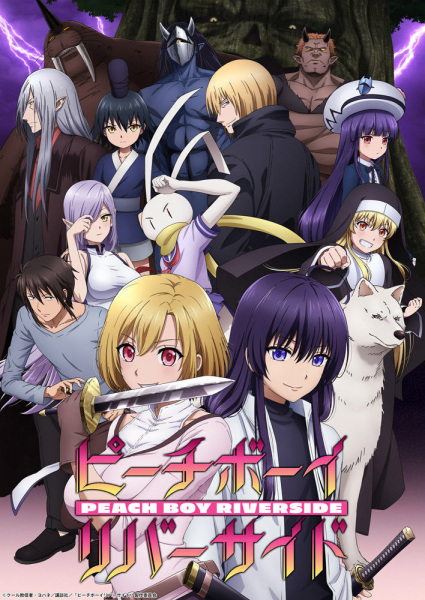

ピーチボーイリバーサイド
In a magical world where humans, demihumans, and oni are heavily at odds with each other, a princess named Saltorine "Sally" Aldike is on a journey to find a person named Mikoto Kibitsu. Traversing the world, Sally comes across many truths that she had been ignorant of due to her lineage—including the knowledge that the oni possess power potent enough to wipe out humanity. Seemingly blessed with a way to counter the oni's might, Sally has a strange power that manifests itself as a sigil resembling a peach, giving her superhuman abilities capable of defeating powerful oni with ease. Even so, Sally refuses to discriminate between humans, demihumans, and oni as much as possible, believing that peace between the three factions could be attainable one day. On the contrary, Mikoto—who also has the same ability as Sally's but with greater mastery—has a different goal. Mikoto is out to kill and torment all oni in existence, stopping at nothing to fulfill this objective. As Sally and Mikoto continue to cross paths, the power they possess will spell the difference between amicable coexistence and utter annihilation. [Written by MAL Rewrite]
Главный
Главный
Второстепенный
Второстепенный
Второстепенный
Второстепенный
Второстепенный
Второстепенный
Второстепенный
Второстепенный
TheUnholySausage
September 16, 2021
First time writing a review so don’t tell me to go jump off a cliff if I have no clue what I’m talking about. Peach Boy Riverside is honestly wasted potential. One of the shows I was really interested in, due to my love for myths and lore’s, and sad to say but I was really let down by it. An already set up premise ruined by a horrible method of storytelling. The shows later episodes honestly made me want to drop it, due to how mind numbingly annoying the arrangement is and how shit barely makes sense. Story: (2/10) Honestly there’s nothing much to say about thestory. It’s set in your usual fantasy world with humans and demons and big tiddy anime girls. It’s filled with clichés and often times have no idea where they want the story to go towards. The first few episodes will definitely get you interested, but the problem starts in the later half. The storytelling in this show is horrible. The episodes being scattered is honestly annoying and rly takes you off the world (worse if you’re watching weekly). The story introduces various major events and backstories out of the blue, then proceeds to not explain the outcome or the effects of thy said events. Like bruh, the last thing I want to do is brainstorm the events of 9 episodes and put them in order before watching the latest one. Characters: (5/10) Probably one of the redeeming aspects of the show. The characters aren’t the most unique or mind blowing, but they blend into the world well and honestly makes you curious to see their journey through. The most interesting character is definitely Mikoto. A feminine looking male, whom every one confuses for a girl, which is a running gag on the show. His backstory is simple yet interesting. It’s honestly amusing to see him go from being all quiet and collected, to losing his shit and getting horny over the thought of killing ogres. Sally is another character that catches your eye for two reasons, her powers and slightly less yet fiery thirst for killing ogres (similar to mikotos) and of course, those big fat buzzums, praise the lord! The 2 main characters have contradicting aims, one seeking peace between the ogres and humans, and the other seeking total annihilation of their species, and it really is fun to see how this plays out. The side characters are just there for the sake of being there, doesn’t really catch your attention or get you heavily invested in them. Fraus a walking, talking rabbit who turns into batman for a short while…oh yeah apparently he’s also dead idk. Carrots swaying between her ogre origins and human affections is executed pretty poorly. The knight guy is there…yea. Milias hyper active nature and her interactions with ogre hating mikoto is fun to see. But that’s honestly it for side characters. Art: (6/10) With the sheer abundance of isekais plaguing my eyes with the same, generic art, it’s almost refreshing to see a somewhat new and unique art style. Now it’s definitely no Monogatari or Violet Evergarden, but it’s enough to deserve a pat in the back. The animation is….alright I guess. The fair few fights there is has subpar animation, and most fights end before you can even realize what happened (or maybe I fell asleep idk). The backgrounds and surrounding gives you an olden age fantasy world vibes. The art fails in the demons aspects tho. Although the main demons have some uniqueness to them, the lesser ones look super generic, and often times comical. It fails to convince you that these are an actual threat and feels more like a villain out of power rangers. Kinda takes you away from the world, but thankfully Sally’s tiddys are there to hook you right back in. Sound: (5/10) I don’t really pay attention to sound, but the OSTs in this show are decent. It definitely helps to make u feel the olden fantasy vibes a lot more. The OPs and EDs alright, nothing spectacular. Overall: (4/10) Definitely not the worst thing to ever come out since corona, but not good enough to leave you satisfied or looking back on it fondly. The episodes were fun in its own means sure, but I felt more annoyed than pleasant after completing every episode, remembering that the previous episode and the next one has no co-relation to the one I just watched. I regret watching it weekly, I feel like I would have appreciated the show more by binging it in the proper order. It had a lot of potential to be a fairly decent fantasy show in the pile of repetitive garbage that we get nowadays. Not a show that makes me want to overdose on heroin, but definitely not one I’m going to think of when I want to watch a fantasy show in the future. Again, absolute beginner reviewer. If my words are absolute camelshit than I apologies. It’s honestly just what I felt about the show. Anyways its 5 am here, gunna stop overdosing on caffeine and go hibernate for the next 3 days. Peace!
Chakiil
August 7, 2024
This is such an underrated anime IMO. Granted the anime is shuffled but the story is a good 8/10. Better than a lot of other anime’s with higher rating. The art style is good and the characters are well put together. Maybe going a bit more into their backstory would give us a bit more content and let us understand why they’re that way. If watched in the correct order, I’m sure people would enjoy a bit more. Maybe the low rating comes from frustrated fans trying to find how to properly watch this. To me, it felt more like a little Easter Egg 🤣 Ihope they can come out with season 2 and people get to enjoy it!
Maris333
September 16, 2021
Peach Boy Riverside is not so bad animation when you watch it in different order. I suggest to line up episodes as 4, 1, 2, 3, 7, 9, 11, 12, 5, 6, 8, 10. If you watch it like this it's rating could be quite good. Story in right order is quite normal adventure one. 7 points I do like the adventure part of the story but it's not anything very new. Art is nice, about 9 points. The scenery and monsters and everything are made with great care.Sound is good, 9 points. Someone have done a good work with sound, that makes it more and more understandably why the episodes are such a mess. Character development is actually interesting. Especially I like Carrot and Frau, Sally is little bit too immature. 8 points. Enjoyment 7 points. That means overall 8 points.
SunlitSonata
September 16, 2021
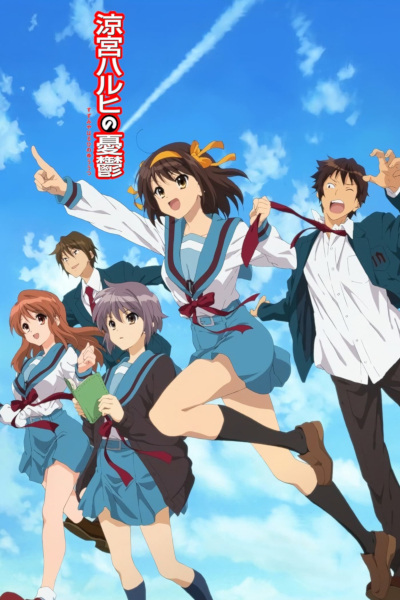
To call the anime adaptation of Peach Boy Riverside a mess would actually be an understatement. A “mess” is usually caused by accident, trying to do something well and then tripping for some reason or the other. No, the fate of this anime was sealed before an episode even aired. The staff decided to take a fairly logical flow of events from the manga, and then shuffle them around, just so the final episode could end on some sort of action climax. This butchers the show right out of the gate. It makes you wonder why certain characters are even in certain places at certain timeswithout properly communicating a sense of time. Occasionally Sally, one of the two protagonists, will have an outfit change, but other than that, it makes the timeline seem jumpy and difficult to really wrap your head around, especially for weekly viewers. If you’re a manga reader, this approach does very little, since you already know what happens in the story and can already say what goes where. Hell, the anime itself manages to both spoil the result of the final episode before it even happens and make the ending of another episode a huge ass pull because it brings in a character the audience hadn’t gotten to know yet. So, this is detrimental on both ends. I’ve seen some comparisons made to Melancholy of Haruhi Suzumiya and Baccano before the series aired, in regard to airing episodes out of the intended order from their source, but both of those series better justify this particular decision. Haruhi was mostly a slice of life comedy, with only some plot gradually thrown through the background, so the lack of consequence in the majority of runtime fit the kind of show that it was, while letting individual episodes stand out on their own. Baccano meanwhile was an incredibly fast paced show; many events of importance were happening at once and one of the three plotlines was an action setpiece on a train that was constantly evolving. Peach Boy Riverside doesn’t have the forethought of either series. It’s tied to a fairly strict continuity of events each episode, at a pace that can be incredibly slow at points, and there’s no distinct vibe that the out of orderness adds to spice up the viewing experience, beyond learning certain things earlier than they’ll actually come up. To any new watchers, there’s nothing to gain from the way the staff aired this anime, which I will judge as such since that’s how it was released. Jee, I’ve talked so much about the out of order timeline and its detrimental effect on enjoying the show that I’ve barely talked about the show itself yet! So, what is this story that the staff felt was so intriguing that it needed to be told out of order to try and invest a brand new audience? A painfully generic fantasy romp that makes Akame ga Kill seem inspired by comparison, even with its folktale inspiration. In a fantasy world that’s incredibly non-descript, half the show follows Sally, a princess with the magical power of getting hot and bothered. The other half follows Mikoto, a swordsman who seems dedicated to solving the systemic problems of the world by murdering nearly every oni he comes across, but not when one of them needs to be alive for plot reasons, or tag along with either protagonist for reasons that don’t add too much beyond more powers for the action scenes. The show likes to abuse the “pet the dog” trope for these characters, giving a determinably evil race just enough sympathy or a cute design for them to stick around, but not enough to really……understand them. It’s mostly a series of slow conversations underlying limp, weakly animated schlocky action. Characters talk about various things, places get destroyed, but the show doesn’t do enough to get you invested in its world. It’s a very thrown together world, the kind that’s unfortunately very common in low rent fantasy stories. Every place is just a place to host plot. If each setting the characters visited had a distinct visual identity, perhaps it would better serve the out of order pacing of the anime by making it easy for viewers to remember what place was shown when, but alas. It’s not a plot to really expect much from, but at times it’s trying to say something about racism. It’s not entirely lip service either despite not having much punch. How humans treat demihumans (or ogres) with disrespect versus how demihumans harshly react to the human characters is something that’s occasionally brought up as a drive across several episodes. This is at least pondered in Episode 7, and creates the distinct ideologies of the two protagonists. Sally…is not a great female lead for this story. Beyond the in-poor-taste tentacle fanservice you see right from Episode 1, she’s mainly there to be incredibly ignorant of the world around her as a once sheltered princess and, again, get hot and bothered during the action scenes……………………..like once. If the first episode hooked you on the possibility of her going cuckoo for Coco Puffs in the action scenes, I hate to say it but this hardly ever happens again; one action scene later when she uses the power, she’s fairly measured. Crunchyroll at least wanted to market the series with the scene where Sally goes crazy with her special shonen power, but if you want more of that craziness, it’s missing in a show that’s already committed to being hardcore schlock. Instead, she’s mostly just shown as painfully naïve. By the third episode, which takes place a bit later in the actual timeline, she’s deciding between the guy who wants to kill all the ogres, but whom she personally knows has her best interest in mind, and a total snake who claims to be wanting the races to co-exist. She’s one of the characters hurt most by the out of order pacing, participating in action but not driving a plot that’s above the audiences’ heads. Mikoto is at least a little better; there’s actually an episode in the season that shows us their crybaby backstory which is…………fine, probably one of the few episodes where its timeline placement doesn’t really damage the cruddy pacing of the series. Sometimes his attitude is enjoyable. Otherwise though, he alternates between being nonchalantly morbid and IMUSTKILLALLTHEOGRES much like a certain other Shonen protagonist known for yelling. His voice actress is very sweet sounding, to the point where, in combination with the wiki considering him “non-bindery”, I assumed maybe this character was a non-binary protagonist, which could’ve been fairly progressive for anime. But nope. Quite the opposite, we get an incredibly uncomfortable gender panic scene in Episode 4, where Sally is shocked at him being flatchested and then lands on top of him as she realizes further. Another episode literally ends on a joke of someone else realizing the character is a femboy. GREAT. The rest of the cast is pretty dull: a collection of tropes with little to really contribute. There’s witches, nuns, tiny priest looking ogre girls, a boring guy who only exists to be the straight man, and a series of ogre designs which serve more as action obstacles than anything else. With exception to Mikoto and one other, there isn’t much to really care about in the limited time the anime has; most of these relationships are shown out of order at any rate. The best character in the show is easily Frau, one of the few for whom the racism lip service idea has some kind of fruit to bear. Frau has a distinct design as a bunny schoolgirl shaped like a friend, and their loyalty to Sally is at least charming and believable in a couple of the action scenes, despite the weird worldbuilding to justify their revival mechanics not really being. Still, they’re the most distinct character in a fairly bland and boring cast. Perhaps the best I can say visually is that there’s at least……………..some creative designs? Like the aforementioned Frau, or the giant walrus and chicken demon things from the first episode. There’s some variety in even the more generic ogre characters. The art style is passable, but you won’t find much in the way of fluid animation to come from it. Most action scenes compromise of several motion tweens moved in sequence, and the occasional big explosion. It doesn’t go nearly as ridiculously bloody as you might hope from a show like this; a Kouta Hirano anime this certainly isn’t. There’s no cost cutting CGI, which is good, at least until an ugly CGI tree in the final episode. It keeps a consistent art style in place, but these scenes don’t do enough to stand out or flow well at any rate. Similar for the soundtrack; there’s a couple decent tunes drowned out by the dialogue, but nothing you’ll think of after this show ends. The ED though is one of the lamest I’ve ever seen visually in some time, with almost nothing going on but panning up on still shots of characters in various places; no unique personality of an animator shining through. Peach Boy Riverside is mostly pretty trash, but not entirely from the base of it. I at least like the idea of having two protagonists with distinct ideologies regarding their world’s systemic conflict going on their separate journeys and occasionally crossing paths, even if that happens too frequently in conjunction with lackluster worldbuilding, action scenes being schlocky without being memorable and the out of order story the anime staff planned out not being very considered for narrative investment at all. You’re not gonna get much from here. If you really care about the story that much, just read the manga. But if you’re just a shonen or action fan, I’d say skip this self-inflicted mess. There’s much better options for you out there in both a building structure and bombast from action scenes.
KANLen09
September 16, 2021
Before starting this review proper, you, the reader of all things, should be informed of this: watch Peach Boy Riverside in its original intended "Time Series version" order, NOT the "On Air version" order in which this absolute MF of a director "purposefully/intentionally" shuffled a decent but cool story that's written by the mangaka of Miss Kobayashi's Dragon Maid (Cool-kyou Shinja) to oblivion. I know I have been burnt totally by this madlad of a seriously cursed "talent" of a director such as Shigeru Ueda before through the horrible abomination that is Gekidol, and his directorial intention to go anachronical with Peach Boy Riverside justto make things "more interesting" is just...it makes me mad that someone like him is hired to destroy any momentum of whatever anime that translates to the volume of readership towards the original source material. Please pray tell that no anime production team will hire this director without any clear indication of a narrative path in the near future. WHEW, RANT DONE. The first of 3 Cool-kyou Shinja adaptations in this Summer 2021 season, and with that said, what is Peach Boy Riverside all about? To get the basis of such a story that this now famous author has concocted, if you've ever been taught some Japanese History before, the story of the Momotaro is that he is a popular hero of Japanese folklore. His name translates as Peach Tarō, a common Japanese masculine name, and is often translated as Peach Boy. The Momotaro was born from a giant peach, which was found floating down a river by an old, childless woman who was washing clothes there. The woman and her husband discovered the child when they tried to open the peach to eat it. The child explained that he had been bestowed by the Gods to be their son. The couple named him Momotaro, from momo (peach) and taro (eldest son in the family). When he matured into adolescence, Momotaro left his parents to fight a band of Oni (demons or ogres) who went pillaging over their land, by seeking them out in the distant island where they dwelled (a place called Onigashima or "Demon Island"). En route, Momotaro met and befriended a talking dog, monkey and pheasant, who agreed to help him in his quest in exchange for a portion of his rations (kibi dango or "millet dumplings"). At the island, Momotarō and his animal friends penetrated the demons' fort and beat the band of demons into surrendering. Momotarō and his new friends returned home with the demons' plundered treasure and the demon chief as a captive. Cool-kyou Shinja's version is a bit more loose and simplified, that it only engages the mature side of things without the whole exposition of the newborn Momotaro, and that the animal companion part only consists of a talking dog. Yet though, the Momotaro lore is not lost, and to concoct a story out of that with the base foundation of a world filled with humans and demons being at loggerhands with one another, it only results in more killings between each species. Enter the unassuming lone traveller that is Mikoto Kibitsu, an established ruthless Momotaro demon slayer, and a coincidental meet with Sally (a.k.a Saltorine Aldike, the princess of the Kingdom of Aldike) on an equation to a child's runaway rebellious nature kickstarts the princess's dream of learning what lies beyond the kingdom's walls. Instead of being confined to the royal palace, to go out on her own dangerous mission like Mikoto's, and that's where her journey starts. First off, I've gotta say that I wished that Mikoto had more screentime as he is the story foundation of a hostile demon slayer, unlike the benign Sally and the other people that she'll encounter on this journey between the humans and demons to break down the walls between both species and come to a peaceful resolution (which trust me, will never happen). Whenever we see Mikoto on screen, it's instantaneous that any demon who comes across his path will not be let loose easily, and more often times than not, result in uncouth attempts of death perceptions unfazed. Make no mistake, Mikoto in his Momotaro state is merciless while maintaining a facade of playing niceties to Sally and the other demon-converted demi-humans. Speaking of demi-humans, because of the long-running conflict between humans and demons, demi-humans (half-human, half-demon) are notoriously shunned by humans out of warranted fear. And that's the rhetoric of Sally meeting demi-humans like the carrot-loving rabbit-human Frau and former Eye Oni (a.k.a Meki) Carrot, along with Captain of the Rimdarl Knights Hawthorn Grattor on this gratifying plause of a journey. In the process, more demons show up and serve the antagonist roles against those who defy their order, and when these two sides clash, it's a brutal battle to claim superiority and discernment. Sally herself is an interesting character in which from the get-go, meeting Mikoto is like her dream come true to explore the world solo, only to be met with such atrocities, forcing her to become a Momotaro in the process, like it or not. Otherwise, I'd also mention that since the web manga of this was published years before Miss Kobayashi's Dragon Maid (and the remake version published after said series), you can really tell that there is a clear distinction between the characters illustrated in both series. With that said, when it comes to the production side of things, I've never had faith of Asahi Production shows that could pull any genre off with the usual limited budget works that this studio always seems to undertake. And knowing director Shigeru Ueda's nonsensical direction of all things, Peach Boy Riverside just seems...there. With almost blurring the line for action production values that are teetering on the line of "just nice" and nothing more, I can only say that as underwhelming as the manga can be at times, at least the anime traded that off with some average tropes like the constant fanservice shots (which I don't remember seeing them at all), since Peach Boy Riverside isn't as fanservice-y as Dragon Maid, and there's gotta be a give of a fair trade, right? The OST, just like the production values are just servicable enough, there's nothing of give that I can say that it's good, but it's decent and easily forgettable when you're done with the show. When all is said and done, the TL;DR is this: please refer to the forum thread that I made that clears this entire nonsense, and as spoilery as that can be, that is the only way to enjoy Peach Boy Riverside at its best for the majority that wants a watch (or a re-watch) of this. I know that some minorities will prefer the shuffled order, but this is not how you execute a Haruhi Suzumiya nor Princess Principal-type case of an analogy where everyone has the love-hate relationship with anachronistic orders. And the director is the only one that thought that it'd be a good idea to do a complete 180 UNO Reverse card at the behest of everyone else in the production team, with or without Cool-kyou Shinja's supervision. A self-entitled bad call and horrible directional take to ruin a source material, I feel sad for the mangaka. Watch at your own risk for Peach Boy Riverside in whatever order that you so choose, but if there's anything of hope, I'd say that the story of the Momotaro is indeed a fascinating one to have, that's sadly not created nor talked about much in the AniManga space.
Ранг
#9208
Популярность
#1373
Участники
201,107
В избранном
692
Эпизоды
12