プラチナエンド
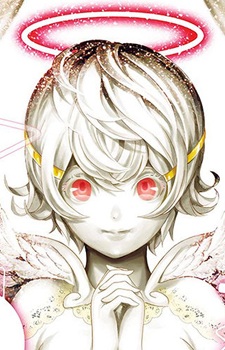
Ever since he lost his family in an explosion, Mirai Kakehashi has lived a life of pain and despair. Every day, he endures abuse at the hands of the relatives who took him in. As his anguish steadily chips away at his will to live, he is eventually pushed to the brink. Prepared to throw it all away, he stands on the edge of a precipice and takes the leap. However, instead of falling to his death, he enters a trance where he meets a winged being who claims to be his guardian angel. Named Nasse, the angel offers him two priceless abilities and convinces him to go on living. When Mirai experiences the marvel of his new powers firsthand, he gets a taste of the freedom that was locked away from him for so long. Armed with Nasse's gifts, Mirai is flung into a showdown with 12 other individuals, one of which will be chosen to become the next God. In stark contrast to when he wanted to end his life, Mirai is now prepared to do whatever it takes to protect his bleak chance at happiness, lest it be wrenched from his grasp forever. [Written by MAL Rewrite]
danielsalt
March 24, 2022
To put it plainly, Platinum End is… misunderstood. There’s a lot to say about Platinum End – its concept and execution, its characters and their quirks and intricacies, its art and animation, its social commentary and outlooks – yet, Platinum End’s biggest flaws are Tsugumi Ohba and Takeshi Obata. The two authors – story and art, respectively – of Platinum End. Chances are that nearly everyone that has read or watched Platinum End did so knowing, or perhaps solely for the reason that these two are the authors of Death Note. Platinum End will inevitably always live in the shadow of Death Note, considering its masterly writingand cultural impact - and it simply doesn’t have what it takes to break free from this label. This, however, is not to say that Platinum End should be seen as a successor to Death Note, which is what pushed so many people away from seeing Platinum End as what it is: its own story. Back on track, Platinum End tells the story of Mirai Kakehashi, our MC, and eleven other god candidates - regular people that for one reason or the other, had given up on life and were on the verge of suicide, only to be rescued by their guardian angels, literally. Before you misread my tone, let me just say that I think the concept of Platinum End is brilliant: 12 people of different ages and contexts, all with their own unique struggles, dejections, and delusions, faced with a predicament of unprecedented severity, as only one of them is set to hold the very future of humanity in their own hands. Perhaps cliché, but brilliantly set up. As the story goes on, we are presented to more characters and villains, each with different motives and goals, as rivalries and alliances begin to form. Characters like Mukaidou and Kanade give us compelling yet justified perspectives on a convoluted mess, while characters the viewer is more familiar with, like Mirai and Saki, show us a side of the coin which may not be as enthralling, but show a sense of humanity and composure that the average Shonen viewer might not be ready to embrace. Characters’ motivations are often simplistic and one-dimensional, yet they’re cleverly presented in a way that reminds us that humans are simple-minded beings. Nowadays, many shows will try too hard to find glamorous meaning behind characters’ actions, to a point where characters lose their authenticity. However, Platinum End succeeds in telling us an extravagant story, where the characters are nonetheless human. The category where Platinum End truly fails to bring out its fullest potential, is the animation itself. It pains me to see Obata’s art in Death Note, animated by Madhouse, 15 years ago, look so alluring compared to whatever ‘Signal.MD’ (who?) put together for Platinum End in this day and age. Thanks to Obata, the art and characters in Platinum End look great… as long as they stand still. Not only is the animation subpar, but the studio somehow managed to use every tool in the box to make characters that are on the brink of their demise look even more lifeless than their own rotten souls. Other aspects of the production of Platinum End are satisfactory enough not to hinder the viewer’s experience. The soundtracks and background art are sometimes somewhat dull, but they complement Obata’s art well enough, and the opening and ending sequences are surprisingly amusing, particularly the opening, with the second ending being an upgrade from the first. The occasional fight scenes are nothing to applaud, but they keep the tension high and are backed by adequate sound effects and soundtracks. Overall, I think Platinum End deserves credit for giving the viewer a story that surprisingly manages to keep them on the edge of their seat, with well-timed cliffhangers and skillfully maintained tension throughout the length of the show’s run. Some aspects of its production weaken its impression but are backed by solid story writing and well-founded characters and contexts that keep the story fresh, and the viewer engaged. Story: 9 Art: 6 Sound: 7 Character: 8 Enjoyment: 9 Overall: 8

Japanese


Supporting
Mcsuper
March 24, 2022
It seemed interesting, that’s the attitude I had towards Platinum End when I decided to watch this show. Now that’s it’s done, I’m probably better off to be honest. This had some promise early on, but quickly that sentiment left. Despite having a comparatively stronger second half, the ending does not make it worth it. Unfortunately, there isn’t much good to say about this show, so we’ll briefly go over it. By the way, were you expecting something as good as Death Note? Ha ha. My grading criteria: Story: /25 Art: /10 Music: /10 Characters: /20 Enjoyment /15 Thematic Execution /20 STORY: 2.5/25 The narrative started out pretty interestingly,but it quickly became very dry after that. If we’re talking about plot points, everyone probably expected most things to happen, and were correct. The things we didn’t expect to happen are plot points that just don’t make much sense. The entire God Selection process was not explained very well, as it seemed like they made a lot of things up on the spot for plot conveniences, and that does not sit well with any watcher. The pacing… let’s talk about that dumpster fire. In my opinion, this show could have been over and done with much quicker. Some episodes and fights last WAY TOO LONG, especially the one of Metropoliman near the end of the first half. We’d have entire episodes of fighting, then just get left at yet another cliffhanger. The numerous episodes of build up usually amount to not a whole lot, and that’s just tough to see. ART: 3.5/10 Some parts look good, but most look very below-average to me, the art style just isn’t very well done in general. MUSIC: 8.8/10 Practically the only thing I enjoyed was the music, especially the opening and the two endings, as those were nice high quality tracks. Yuu Miyashita’s ending was amazing and if you haven’t listened to it, go give it a listen. CHARACTERS: 2.6/20 I know everyone hates our main character Mirai, but he’s not even my least favourite character. I suppose I will talk about him first. Yes, he’s indecisive, has weird morals, talks and thinks for too long, but he doesn’t do anything inherently bad. It’s the inability of writing interesting characters in general that brings this show down. The female characters were especially poorly written, especially Saki and Yuri. I have no idea what Saki even did in the story except give doubt to Mirai’s every move, and exist as a cheerleader. The romance between Mirai and Saki felt so forced as well, as I couldn’t really pinpoint any reason behind it. Yuri was so annoying to watch, but relatable in the sense of some people, but the things she says… so tough to listen to. It’s not all bad though. The characters that were at least interesting to watch would be Mukaido and Yoneda. They have good ambitions and interesting dialogue, and kept my attention to the show at least a little bit. Their morals and goals at least kept this show watchable. The angels were fun to watch, but they didn’t have much of any solid dialogue to keep things interesting. ENJOYMENT: 2.5/15 Little ups, huge downs. At least the second half improved a bit. THEMATIC EXECUTION: 2/20 They called this a drama, psychological show? This show does those themes no justice, and I checked out very quickly because of that. OVERALL: 21.9/100 Probably one of the worst shows I’ve watched in 2021 and 2022, as it’s a poor showing of what a psychological anime (a genre which I usually enjoy a lot) should be like. Tough to recommend this one to people, I wouldn’t even say it’s so bad that it’s good. It’s just plain and simply not enjoyable.
Stark700
March 24, 2022
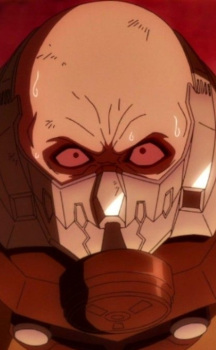
Yes, somehow I managed to finish Platinum End without smashing my computer. Somehow within a span of 24 episodes, this show managed to make me question the logics how creators brainstorm their ideas when writing a story. I don't want to dive too much into the juicy details so let's leave it to our imaginations. But to say the least, let's just say there's a whole lot of wrong in Platinum End with little done right. Now I must digress that Platinum End has some rather sensitive topics. These includes subjects related to suicide, abusive relationships, bullying, and transgressive matters. This isn't the a cherry storyabout some guy who becomes a saint and out to save the world. Rather, this is a supernatural thriller following the footsteps of Mirai Kakehashi. After obtaining powers that rivals those of the Gods, he is thrown into a contest to decide who would become the next God. Without throwing yourself too far ahead, this show can be viewed as a twisted game where only one winner can obtain the ultimate glory - becoming a God. Platinum End reunites two iconic individuals who once made the infamous Death Note. Remember Tsugumi Ohba and Takeshi Obata? Even if you don't remember their names, you would definitely remember hearing Death Note sometimes in your life. Unless you've been living under a rock, Death Note has attracted a cult audience and enjoyed glorious popularity since its debut. Yes, it had its controveries and some have even been linked to real life crimes. What could go wrong with Platinum End since it doesn't involve a notebook anymore? The first answer is real simple. This show loves its own premise, far too much for its own good. Let's start when Mirai attempts suicide and gets saved by the mysterious Nasse. She claims to be an angel and bestows Mirai with supernatural powers. These powers include flight and more importantly, the usage of the white and red arrow. She explains the properties of these arrows and believe me, it's not something you'll ever come across. When shot by the red arrow, a target would fall in love with the shooter for 33 days. Meanwhile, the white arrow is essentially a killshot, being able to exterminate a target when hit. Obviously, Nasse wants Mirai to become to next God but with many obstacles in their way, she realizes that everything is a far cry from easy. This is also made harder when you realize Mirai doesn't want to be a God but instead wants to live free and be himself. Like with many other shows with battle royale elements, Platinum End introduces a variety of characters known as the God Candidates. One of the most prominent is a girl name Saki, who serves as both a candidate and love interest to Mirai. Early in the show, she forges an alliance with Mirai. Because let's face it, two heads are better than one, right? The catch is that battle royales usually involve strategies, deception, and survival of the fittest. There can only be one winner. This brings in the issue of trust between Mirai and Saki. And to say the least, they are at least somewhat compatible. However, watching the duo's journey in this show can be nerve wrecking at times. She comes off as a timid girl who seems having a hard time trusting others, and it isn't until much later in the show when she finally feels more free express herself. On the other hand, Mirai is protrayed as a sort of justice hero. Unlike Light from Death Note, he doesn't wish to kill others and only wants to be free and end the world of cruelty. Watching Mirai's actions sometimes will make you scratch your head because how controversial he can be. But yet, the creators made him the poster boy. Joining them includes the other God Candidates with a diverse range of personalities. For instance, we have someone named Kanade Uryu who represents the anti-thesis of Mirai. He strives to become the next God even if it means taking lives of others. To him, killing is part of his strategy to eliminate the competition. Others in the show include Hajime Sokotani who is obssessed with his physical appearance, the young Shiji with a strange outlook on suicide, among others with different reasons to becoming the next God. I won't list them all in this review as each has their own circumstances. However, some of the common themes that revolves around these candidates includes being bullied, dealing with depression, or being ostrachized by society. I can also say that most of these characters are disposable with limited character development. The only character other God Candidate who gains more prominence in the story is Kanade, who goes by the alias "Metropoliman". After awhile, you could say that he's a major obstacle and threat against Mirai and Saki. Unfortunately, the anime decided to make him into one of the least likable characters. If the cast wasn't depressing enough, Kanade represents the type of coward who takes lives but is fearful of losing his own. You've probably seen characters like him in other similar battle royale shows before. The catch is that Kanade simply lacks any desirable qualities just like most of the candidates. From what we've been told, the anime does desire to adapt the complete manga. A 2-cour show perhaps is the way to go and leaves no room for a cliffhanger ending. Indeed, if anything is plausible about this show's quality, it would actually be its adaptation standards. The anime tries to capture most of what it can from the manga. It also sticks with its general themes and storytelling without staying off track. What you see is what you get is the easily way to say it. There won't be times when you scratch your head and ask why a particular episode suddenly went off rails. Watching Platinum End is perhaps most satisfying if you've followed the manga and enjoyed the author's previous works. That being said, this review was written for a wide audience and not just targeted to manga readers. When judging it on its anime perspective, this is nothing more than another mediocre supernatural thriller you can find just about anywhere on a bookshelf. Oh dear, with Signal.MD with Studio Pierrot together, you shouldn't expect a masterpiece visual extravaganza in the making. At its best, the show is tolerable for its thrilling atmosphere and passable character designs along with its human emotions. At its worst, the production quality looks like it went at least 10 years back in time. I won't drawn comparions to Pierrot's previous works but they've rarely produced a show worth watching for its animation quality. Thankfully, at least, the anime does retain its violence and sometimes may able to win an audience over through its over the top antics. Yes, Platinum End completed its airing and without a shadow of a doubt, one of the most disappointing thrillers I've seen in recent years. That's actually a bit of an accomplishment considering the interesting premise it had. Then again, maybe some people will enjoy this show for its story, characters, themes, or antics it pulled out. As for me, I wish I rewatched Death Note instead.
Yashondowski
March 24, 2022
Really people all around the world are all clueless. heres what the ending of platinum end is meaning. Ohba created the manga keeping the suicidal issues of Japan in mind. It's a manga about suicidal people. And keep in mind he kept all the characters morale, ideologies and mentality as real as an actual human. The whole story of platinum end revolves around the concepts of depression and suicide. And both are connected to eachother in real life and in the story of platinum end. Those who don't really know anything about either suicide or depression will never understand the story. The following explanation all revolves around the conceptsof depression and suicide. - The "Depression" , the "Suicide" and the "Will/Hope" "The Depression" First let's see what Depression IRL is. Depression (major depression) is not sadness, it's best described as emptyness. You can l be laughing and smiling one moment, everything seems just fine, the world is beautiful and the very next moment and all of a sudden depression kicks in and sucks away your "hope to keep living". Depression can also be caused by abuse in one's childhood, oh wait that's Mirai. The embodiment of depression in the ending of the story is Muni the angel of destruction (**explained later) "The Suicide" Depression is one of the leading cause of suicide. People prefer death then to keep living in agony. Depression makes you hollow, it makes you "shallow", it makes you forget who you once were. The most depressed character of the story, Mirai, is perfect embodiment of real life depression. He choose suicide when there was no "hope" in his life. The embodiment of "hope" in the story is God (**explained later) "The Hope/Will" We all are living becz we have a hope/will to continue live. Depression can surely suck ones "hope to live." In the story of platinum end, that "hope" for candidates who were once hopeless upto some extent in life were given a 2nd chance i.e. "by becoming god". Death of God is the "death of hope" (**explained below) **Explanation What u witnessed in the ending is the inter relationship b/w depression, suicide and hope to live. Since her debut, Muni the angel of destruction (depression) has always shown her desire to bring havoc to the heaven & the God (hope) and ultimately humanity. Muni chooses Yoneda becz they both have the same goal i.e. humanity's despair (Episode 18 although Yoneda's "despair" is a paradox) God's death ("suicide") i.e. heaven's fall is what Muni always wanted, and she succeeded. With no God (hope/will) the lives all around the world ended. The Meaning: Depression saps the hope/will to live and often results in suicide. --- "The ending events and meanings" As god, Shuji Nakaumi observes the truth of the world. He saw the differences among people, he saw several people committing suicide. He asks 'why' the previous god didn't helped the once in need, and instead did nothing. The *original God* inside him answers "I watched, gods purpose is to create life." Original God continued and said "you may do anything, you are god, if you want to kill them, kill them. If you want to save them, save them." Shuji remembered Mirai saying "I will do nothing" and prof. Yoneda's theory of "no need for god." He came to the conclusion that there is no need for a god as god doesn't do anything in the 1st place. This is where he was wrong, Shuji wanted to tell Yoneda that his theory of 'no need for God' and 'God being a creation of human imagination' were right. (But they weren't) Shuji Nakaumi concluded there is no need for a god and gods death will not bother the human world. The *original God* inside Shuji warned him that and said "Not true, don't do this." (remember this) Shuji concluded his death won't make a difference in the human world. (remember this) __ The Meanings The ending is very simple in terms of meanings. It revolves around the concepts of suicide. The feeling of hopelessness, the feeling of uselessness, the lack of 'color' in life, the lack of interest and desire to do keep living and many many more feelings and thoughts constantly revolve around in the mind of a suicidal person. Ultimately when these 'negative' feelings overtake the 'positive' feelings, the positive feelings that makes one to keep living, many surrender to suicide. Note that how I used the words 'positive' and 'negative'. For us normal and healthy minds the feelings of suicide are a 'negative' becz we have a will to live and a hope in life, we want to keep living and suicide is opposite of what we desire. But for a suicidal person, life is nothing but a living hell. For them, life is the 'negative' and death is the 'positive' as they want to end the suffering . Another common thought in many suicidal people is, "What difference will it make if I die?" The ending of platinum end answers that very question. Shuji Nakaumi never ever intended to end humanity. He believed the death of God will make no difference, just like how a suicidal person thinks his death will make no difference to the world around him. Suicidal people often think their lifes are insignificant, and so their deaths won't really matter. Most of them fail to see what havocs their death can cause to their close ones, just like how Shuji failed to see how his death will effect the human world, and he will never realise how wrong he was. God does nothing for the world, still his death affects the entire world. With the end of god, there was no one to maintain death. Without death there is no life, just like there is no light without darkness. Mirai for example, was going to die in agony but was saved by Nasse. He lived a happy life and then finally died happy. These 2 messages above r what the author is trying to say. --- Some interesting takes from the ending ∆ After God's death, Ogaro said "This couldn't had happen once they (original God & Shuji) were completely fused". The whole reason to pick suicidal people as god candidates was to make it easier for "The original God" to absorb and fuse with the candidate's mind. If u didn't knew that even after watching 24 episodes then idk maybe u were watching with closed eyes. ∆ After God's death all life on earth started disappearing in ascending order (young to old). This is what I think, This is entirely my theory, I could be right I could be wrong: Children are most vulnerable to depression BUT they have support of parents and thus the rate of depression in children is quite low. But if children r exposed to a adult's level of depression, they will surely crumble from it. Now note that females vanished before males (of the same age group). Studies from different groups all around the world stats that depression rates in females are higher in than that in males. The last ones to vanish were the olds like Yoneda. Again if you check the stats of how depression affects different ages, studies show that most older adults feel satisfied with their lives, despite having more illnesses or physical problems than younger people. Not saying they can't have depression, but they are old enough can have factors like experience that does help fight depression. ∆ Yoneda couldn't finish his last sentence. "The creature is____..." this is set up my the author so that the viewers can use their own brain and pick what he's saying. ---- There are 2 types of people in the world, one who understands Platinum end and one who does not understand Platinum end. With the 1st half of the show showing about how people deal, live and make decisions with depression (like Mirai & Saki) How depression affects different individuals and how with help of other humans it can improve. (Like Mukaido with Mirai) 2nd half was about suicide, depression and the hope/will to live. Just like I explained earlier. Not the most satisfying ending but the meanings in it are an absolute masterpiece. Platinum end has always been an anime of meanings, philosophies, ideologies, there is so much one can learn *if* they try to pick the meanings b/w the line. But that's where so many people fail, they don't want to use their brains and instead call every as bs and leave.
spectre699
March 20, 2023
Ok so unlike most (if not everyone) who watched this, I didn't see a single episode of death note when I was watching this, I just know the characters and the "write the name of the one you want to die in the notebook" trope, so I don't really have any idea or expectation when I was watching this, there's nothing I can compared it into. Like the other guy said, I see most people diss this just because of death note but that's not the case for me, I enjoyed it and in the first part of the series, I was seriously considering this asmy anime of the year, then the second half disappointed me but I still enjoyed it, it's just that I kinda don't like the ending that's why I put this in mixed feelings even though I rated it this high.
Rank
#10505
Popularity
#643
Members
417,072
Favorites
2,561
Episodes
24