Insomniacs After School
君は放課後インソムニア
High schooler Ganta Nakami has trouble falling asleep most nights. As a result, he is irritable at school, always searching for an opportunity to find a secluded place to doze off. On the other hand, Isaki Magari is a free spirit who is well liked by her friends, but no one is aware of her sleep disorder. She makes use of the school's abandoned astronomy club observatory as her secret sleeping bunker when she needs to get some shut-eye. As fate would have it, Nakami finds Magari napping in the observatory. When Magari discovers that she and Nakami have something in common, she offers to share her secret sleeping spot with her fellow insomniac. As the two find warmth in each other's company, the struggles they face start to become easier to confront. [Written by MAL Rewrite]
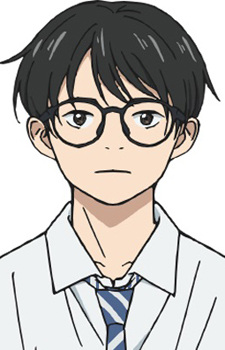
Main
Main
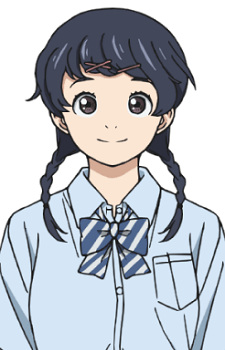
Supporting
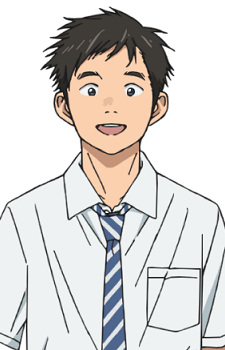
Supporting
Supporting
Supporting
Supporting
Supporting
Supporting
Supporting
Marinate1016
July 3, 2023
Few series have ever captured the struggles of youth as well as kimisomu does. It’s a a beautifully rendered and tender story of growth and self-acceptance. Anime often tends to exaggerate adolescence, romanticising it and making it out to be this adventure that’s constantly exciting. The reality is that being a teenager sucks. There’s the stress that society and your parents put on you and the desire to fit in and find who you really are. It’s such a challenging and sensitive time. This anime handles that stage of life with such realism and authenticity that it blew my mind. I absolutely loved the use ofinsomnia as a shared bonding experience for the two main leads. Both of their conditions stem from trauma that they’ve been holding in for years. While many teens don’t go through insomnia, most do have things they’ve repressed and bottled up which can lead to anxiety, depression other mental conditions. The characters in this show reflect that. They behave as actual teenagers who are stressed would. The interactions are simple yet poignant. There’s so many small intimate moments that just blew me away in this show. Whether it’s singing on a beach, simple nighttime walks or the type of banter between the two leads, it just has a degree of genuineness to it that’s hard to come by in anime. I really appreciated seeing the small details that make the characters who they are. The side characters are also very enjoyable and added some depth to the story. I particularly loved the astronomy club senpai who acts as a mentor to the two leads. The romance may be a slow burn in this, but it’s a very rewarding one. Starting as club mates, then friends and so on. It feels like a believable natural progression. The two leads find solace and serenity in one another and really feel like two halves of the same coin. The art in the show is pretty solid. It’s not the best in the world, but LIDENFILMS did a good job of bringing the story to life. I liked the art direction for all the big emotional scenes and the OST was solid throughout as well. We’ve all been teenagers once and can relate to the pressures it brings. It’s a delicate time where we think we should have everything figured out, but we just don’t. It’s frustrating. This show gets it. If you’re tired of watching the same old high school stories and want something different, this is the one. Kimisomu gets 9, out of 10.
KANLen09
July 3, 2023
PTSD a.k.a Post-Traumatic Stress Disorder, is a real issue that can affect all of us in certain ways that we ourselves will only know and that can be either unexplainable or inexplicable to others. But what if you could utilise the only thing that is the common denominator between two kindred spirits, and add the fraction of a relationship that's not just full of love and fluttering feelings, but one of adolescence and keen understanding? The end result will be in the form of mangaka Makoto Ojiro's Kimi wa Houkago Insomnia a.k.a Insomniacs After School, a series that, as a devoted and hardcore manga reader,I have always wanted to see her vision come to the small screen for quite some time. And in this Spring season, it has finally come (along with the live-action movie adaptation to tie in with the anime), and in the heft of new and returning rom-com-cum-romance shows, this show is one of the best of this season, bar none. A short story on how I encountered this manga: it was a year or two ago during the pandemic season where I was unfortunately struck with the thou-shall-not-be-named virus, and even worse, it was at a time in the night where I was feeling the dread of insomnia from watching seasonal anime, as heavy as I am now even back then. After the daily stint of shows ending as late as 2 or 3 in the morning, I was looking for a manga to read, and through the grapevine, this manga came recommended to me somehow, and I read it through from the beginning, then to the next chapter, onwards, and so forth. It was so good that I read up until the latest chapter that was released at the time (well beyond the anime adaptation) and even bawled tears of joy and sadness, knowing how much I could relate to the main characters and their issues on why and how they developed insomnia to begin with. As the months pass, I find myself re-reading the entire manga from scratch so often, catching up to the latest chapters (which, as of this review, are updated to the latest Volume 13) and feeling the same exact emotions over and over again, that it hurts even more with every re-read. It's painful, but a good lesson on the fraternity and sentimentality of life. Indeed, love makes the world go round, but I also argue that goodwill is not misplaced among those who take care of each other, like brothers and sisters. This is the story of a boy and girl who bond through the unlikeliest of circumstances, in a place where even the word "haunted" is a mere understatement to their wellbeing: Ganta Nakami and Isaki Magari. In the school where both of them reside, there once existed the Astronomy Club, located at the school's observatory, but a gruesome death hides a rumour of a ghost sighting, and has left it abandoned. Nakami, having a severe case of insomnia, seeks to find a place where he can get some shut-eye, and the one place that he always finds himself going to is the observatory, because nobody can disturb his much-needed sleep. That is the ritual habitat for him, until he finds somebody who is also sleeping there — the aforementioned Magari herself, sleeping in a locker that has been left opened and vertically placed on the floor like a sleeping bag. Thus, the mystique opens between the two, and more than acknowledging their various states of insomnia as fellow insomniacs, they help cope with each other's adverse effects to get by their high school lives to the best of their abilities, like reestablishing the Astronomy Club back to its former glory. First off, I must praise the fact that Makoto Ojiro has taken THIS long to finally get to her masterpiece. Because this has been a very long undertaking since her starting days in the early 2010s, writing for multiple series the likes of 2012 to 2015's Fujiyama-san wa Shishunki a.k.a Fujiyama's Adolescence, to 2016 to 2018's Neko no Otera no Chion-san a.k.a Cat Temple's Miss Chion, which I have read the former after reading Insomniacs the first time through, and found it to be very poignant in its sense of capturing the story through the no-nonsense depiction of its plot. And the same can be said about KimiSomu here, taking cues from her prior works and perfecting them for this manga, and now the anime as well. KimiSomu is, to me, still a masterpiece manga in the making, though the anime adaptation has taken some liberties that I am and am not a fan of, and we'll discuss this down the road. I must admit that I can relate quite a lot to Nakami here. He's the irritating and grumpy guy who wants to get what he wants, and that's part of his rebellious nature. He is a guy does what he wants to achieve the best results without any compromise, and apart from his varied behaviour, once you get to know him, he's actually quite the nice guy within, reasons and all. Nakami appears quite closed in the beginning, having his only friend in the form of best wingman Tao Ukegawa, who understands his insomniac issues deeply and worryingly while also remaining happy-go-lucky all the time and accompanies Nakami if he's feeling down or just being a plain ol' good, trustworthy friend at that. How we wish we could have friends like Ukegawa: a loyal friend that doesn't discriminate and plays along with his best friend's traits, even when Nakami's insomniac traits create a bond with Magari all the more. Speaking of which, let's talk about Isaki Magari, because if you're a manga reader (you SHOULD know where I'm going with this), she's the literate embodiment of a red flag. I'm not going into spoiler territory (this is for all of you anime-onlies to figure out) but Magari herself is a stark contrast to Nakami as the sociable and carefree girl with her clique of friends: Motoko Kanikawa, Kanami Anamizu, and Mina Nono. The clique of four girls who just want to casually enjoy life together are just like normal friends whom you want to hang out with daily. Kanikawa comes on initially as a person of spite, accusing Nakami of getting close to Magari and giving him endless stares that make him feel uncomfortable. In hindsight, Kanikawa is a rather family-centric kid, the daughter of an okonomiyaki restaurant that she has inherited her family's skills from, and she goofs off quite a lot, though she always commits well to the straight man gag because she's jealous if she feels left out. Anamizu is a tanned girl whose priority is sports, specifically baseball. A somewhat closed girl just like Nakami, her words are few, but they make up for her spirit of just being there for Magari, and as much as she is a background character, she is a support that's called forth when Magari or the other girls need it. Nono is the sunshine of the group. Being very enthusiastic and methodical in her approach to just about anything, she is such a delight to watch as her easy-going nature helps to open up barriers between Magari and Nakami, even to the point of supporting their love for each other as Nakami gets more proactive in his pursuits of wanting to overcome his insomnia. Magari's older sister Haya is the typical brat that likes to bully her own younger sister for her whims, that's the sibling echelon tower trait of superiority. Same with the blonde-haired Rui Haida, who's just a pick-up ladies' man; he too comes off as obnoxious from the get-go. And definitely, the stars of Nakami and Magari's relationship fall on Usako Kurashiki, their homeroom teacher-cum-Astronomy Club supervisor, who just wants to slack and sleep her way through. Such a crass teacher, but who cares. She's a highlight. The same goes to former club member Yui Shiromaru, to whom she contributed greatly with her great composition shots and extensive know-how when it comes to cameras, which Nakami is being taught to carry on her legacy within the club. Oh, and she carries the comic relief, which is nice. Overall, the characters are only part of the shining example of Makoto Ojiro's manga, but that's not all. The cats, like the club's mascot of Two-chan, are also a highlight of the manga, plastered all over the place, because they are that simple and convincing, with references made from the manga's chapter titles. The art is where the manga truly shines in its own right, being a manifestation of great visual art, almost comparable to those of art pieces, and in part, Liden Films tried to capture the mangaka's sense of her distinctive art style, it's...alright, though it can never reach the heights of the original source material. That is despite having Reiko Sasaki, planning assistant-cum-producer of Yofukashi no Uta a.k.a Call of the Night, yet another Liden Films show that focuses on the nightly aspect of the series, which this anime and its manga counterpart are similar to. To be frank, this show needs only sakuga moments in the right places, and through in-house director Yuuki Ikeda, of whom this show is his debut work, he hasn't had quite the experience backing him up from only working on shows in a single-digit manner. So, it's quite the elephant in the room that only Makoto Ojiro's story and plot hold up when others cannot. The music is rather good, to be honest. aiko's OP is a pleasant, smooth-feeling song that tugs at the heartstrings, and makes it worth it for a decent song. The same goes to Homecomings' various ED songs, though they're fine and nothing noteworthy. Even if there isn't Season 2 on the horizon, this is the point where I HEAVILY caution anime-onlies to read the manga at your own risk from this point on. Waiting patiently is better than rushing through the vineyard about the plot points going forward, and while the anime is by no means perfect, it's a good adaptation of the manga overall, and I'm down to see more if they give the anime a sequel in the future.
Mcsuper
July 3, 2023
Insomnia is something that plagues many people, and this sleep depriving condition arises from many reasons, for example, fearing what tomorrow will bring, negative thoughts, stress, and general anxiety. While insomnia isn’t something that affects me personally, for many people, seeing the two main characters who deal with insomnia, and tackle it together by pouring their restless, sleepless time into something positive like astrophotography, must have been relatable, and to me, a very solid concept. Along the way, there was some romance in the air, but it wasn’t a huge focus until near the end of the season, which I actually liked, as the charactersdidn’t just spend time with each other, but made some fond memories with their other friends as well. The story material was generally a strong part of the show, and it was very character driven. While the focus is obviously on the two leads in Ganta and Isaki, I really liked how it highlighted the life struggles of a lot of the cast members outside of the main characters. It allowed me to get invested in most of the characters, and their interactions together. The two leads though, are very endearing, with some relatable moments regarding their insomnia and their struggles. Their dynamic together felt pretty fresh, among the large amount of romcoms we have nowadays. The thing about the storytelling that unfortunately holds this adaptation back is that even as an anime-only for this show, it was pretty clear to me that some key moments from the manga that would serve to flesh out the characters were skipped, and thus, made some of the more dramatic scenes a bit awkward as we lacked some context to make those scenes hit harder. Even so, I did find quite a few of the scenes emotional and hard hitting, though it could have been better. The production behind this show was a mixed bag in my opinion, as while some of the nighttime backgrounds were very beautiful, the overall animation quality was very average, with some errors here and there in character expressions. Studio LIDENFILMS has not ever really been known for stellar animation, other than in Call of the Night, but that was largely due to Monogatari director Tomoyuki Itamura making that show shine. While this show was not directed poorly at all in my opinion, it didn’t live up to some of my expectations. Overall, this was a very fine show, with moments of brilliance and relatability, but I just wish it could have looked even better visually for more impact. The characters are endearing, the story material is well done, but as an adaptation, I’m not sure what manga readers think, but I feel it could have been adapted a bit better. That said, I found a decent amount of enjoyment nonetheless from this, as the good parts still outweighed the mediocre ones, and I’m hoping for bigger and better things to happen in the future, if it gets a sequel.
DaxxYo
August 22, 2024
so this is my first time writing a review after a few years of using MAL. as someone who really loves astronomy, i can say this anime is really good and beautiful. when I saw the genre I thought this was a normal anime and when I watched it wow this is not just romance but there are some comedies, slice of life, and school genres. the last time I watched an anime with an astronomical theme was just "koisuru asteroid" then I really wanted to find another anime. and I accidentally found this anime. this really makes me grateful and happy. thank you formaking this beautiful anime 10/10 of course, I enjoyed every single thing in this anime especially the astrophotography concept
DiamondDimoDaddy
July 9, 2023
The approach to romance in anime has been portrayed in very familiar territory. It is often an explosion of emotions, of characters explicitly realizing they are deeply in love with one another, of the exaggeration and over dramatization of love to make it “pop” for entertainment purposes. This is where Insomniacs After School takes a different, much more gentler and quieter walk on the journey of two individuals learning to understand and share their feelings with one another. One of the first things to notice about the two leads is how notably comfortable they are around each other. While there is a presence of teenageawkwardness, of navigating the tension of growing feelings, it is never done so in a way that is jarring and off-putting. The reactions are controlled to perfection. There is certain frictionless and accessible comfortability of the chemistry and dynamic between the leads that is very soothing. Much of the tension in the story revolves around the characters themselves, around the personal hardships and trauma they face, rather than the development of their relationship. It’s disarming but the story understand to create conflict that doesn’t stem from outside intervention. Ganta and Isaki move the plot forward on their own rather than get dragged along. From the very first episode, the leads together hold a certain soulmate energy that stems from their shared sleeping disorder. It is with that foundation that their relationship kicks off. They begin to learn more about each other, what makes each other tick, what they fear, what they struggle with, what drives one another to do what they do, what they are passionate about. Over the course of the story, the themes of insomnia still runs, but it is expanded upon with themes of family, finding a passion, cherishing beautiful moments in time, exploring personal trauma, and accepting love, care and empathy of those around you. It explores many different aspects of life rather than run the same main theme nonstop, but never ignores the importance of it. Insomnia is something that is prevalent in almost every episode, no matter how big or small the moments are. Ganta and Isaki’s relationship is the classic example of the “disciplined, reserved boy meets carefree, outgoing girl” story. While this has been done countless times, what matters the most is execution. In the hands of a lesser writer, the romance between these two would’ve fallen short, felt lacking and remained stagnant. There lies the magic of Makoto Ojiro’s writing, a style of romance that refines the calm approach to portraying intimacy in such a way that one can’t helped but respect the amount of tenderness and care she has for her characters, a reflection of what the two have for each other. The author and anime respects the audience’s intelligence to piece together the growing relationship between the insomniacs. It is explicit in your face that the leads love each other dearly, but it doesn’t ever need to have the two think that for the audience. Paying attention to the small blushes, facial features and understanding the context behind many big and small actions is crucial to understanding and resonating with the romance of Insomniacs. In a way, while Insomniacs is mainly romance focused, its first and foremost directive is to portray the emotional empathy, the powerful and unyielding human connection they have to one another. Isaki and Ganta don’t focus on the ideals of love, they don’t agonize how much one cares for the other. They know it, they feel it, and they express it to each other. Their love blossomed naturally from their connection and intimacy. This approach to not ignore, but to interweave the romance so fluidly and subtly with well-meaningful interactions gives Insomniacs that feeling of authenticity that is hard to find, much less replicate. There is a natural gravitation they have towards one another that I find extremely heartwarming and touching. It’s organic romance that helps the audience learn that they’re not just romantic partners, they’re best friends, they bounce off each other so well despite being on the opposite spectrum of personalities. They are the type of people to remain together until the end of their days because their relationship is more than just romance, it’s the feeling of complete and mutual connection. They have different facets of their bond that isn’t reliant on one singular aspect. To dive in deeper, the intimacy of their romance is very gentle and straightforward. It’s simple, but in its simplicity shines beauty and refreshes anyone that is sick of seeing characters constantly avoid each other’s advances. Isaki and Ganta are very physically intimate, they aren’t afraid to get close but not done so in a way that feels out of place. They’re not robots or machines that bends to bad romance tropes. They still are teens after all and will get a bit nervous as expected, but they never shy away from touching. There is a sense of awareness they share in one another’s presence, but they don’t make up any excuses to avoid one another’s touch. They don’t go into a nervous breakdown or panic, they cherish the comfortable moments they share. For the emotional aspects of intimacy, there’s no shortage either. The connection these two share goes beyond falling in love. They truly get to deeply know one another and the lives they lead. As mentioned before, the feelings of empathy is executed in such a tender and powerful manner that it is easy to see how deeply lost into each other they are. Ganta and Isaki represents the ideals of youth and adolescence so elegantly through how they laugh together, how they cry and shed tears in front of each other, and through it all, be the emotional rock the other needs, whenever and wherever. There is a sense of beautiful idealization of their love that is grounded by how it is just a very natural part of life to do all they’ve done with each other. There is a balance between comfiness and melancholy, and sometimes a mix of both that Insomniacs has that propels it upwards highly in the romance genre for me. The most real and beautiful thing about the romance between the couple is that it’s not tied to some goal. Everything that happened between them are pieces of the path, of all they went through together rather than the definite end goal they have to reach, it’s a sense of almost wandering through life and love that lies in the soulful nature of the two’s bond. Their relationship is not a mere reward but rather it is like planting a tree. Instead of the chase, you get the growth, the journey. The fruits of their relationship comes as an extension rather than the focus of their journey. Branches of intimacy extend as their relationship grows and they grow closer, from the seeds of two teens finding out they share the burden of insomnia, something they try to work around as a positive throughout the story. From outside the couple, the supporting casts add extra depth, introspection, perspectives, and bounce off the leads very well. All of them lead their own lives but are there to provide the wisdom and support to help the two not only grow closer, but as people. They are the friends and people you wish you had in your life in high school. Shiromaru is the senpai that wants to make sure you truly understand the passion you are diving into. Kurashiki is the sensei that helps you decipher the kind of person you are, the struggles you face, and the emotions you hold. Ukegawa is the kind of wingman you’d want as not only a best friend for life, but a brother. Nono is the girl you’d want nothing more than to protect and keep her happy, her outgoing silly nature is contrasted by her focused, meditative one when it comes to art. Anamizu is the inspirational gal that you’d love to goof off with and play sports all day together due to her passion of her own, the gal who works her butt off despite people telling her she sucks and can’t do something right. Kanikawa is the spoiled brat that seems to be extremely hatable, but her energy and enthusiasm is nothing short of infectious and uplifting, plus being a chef that wants to bring the best food for the people she cares about is not half bad either. In a sense, they embody the best parts of teenage years almost just as much the couple do. It’s the sense of having these kind of people in one’s life at one point that makes high school truly worth cherishing. The anime’s background visuals are very beautiful and as expected of Lidenfilms, the skies shine bright, the twinkling stars lined with a wonderful blend of blue, black, pink and and purple. The animation is not much to write home about but for a slice of life romance, it’s not very necessary. The emotional moments and beats are of course enhanced wonderfully by Yuki Hayashi’s OSTs, the man behind the music for Haikyuu and My Hero Academia. Overall, this anime is a treat for those that enjoy well-paced, natural, casual and laidback romance helmed by leads with wonderful chemistry. It is a refreshing take on the romance genre and unique in its normality. The raw display of earnestness, genuine love and care the couple have is nothing short of a sight to not only behold but to truly feel, along with the calm and healing atmosphere. For me, it is a romance anime peeled back to the most rawest and beautiful layer.
Rank
#615
Popularity
#1028
Members
271,437
Favorites
2,483
Episodes
13