AnAntithesis
September 30, 2023
RecommendedWell-written
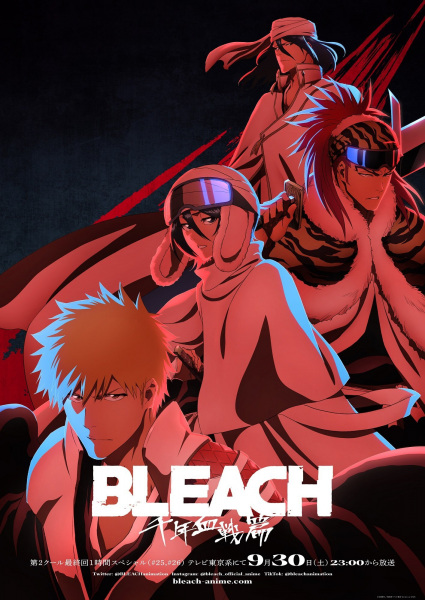
To preface, I shall rip the band-aid straight off: BLEACH: Thousand Year Blood War - The Separation isn’t a replication of cour 1’s excellence. However, this is because the critically acclaimed cour 1 is nothing less than a 10/10 as a flawless narrative masterclass of beautiful thematics, symbolism and poetry brought by Tite Kubo to the forefront of his story to loom over Bleach’s radical expansion and acceleration of plot-points as well as the many foreshadowed twists that came with it here in the series’ most ambitious and ultimate arc; all whilst encased in state-of-the-art production values and direction. It is a perfect showcasing ofthe battle genre which–true to Ichigo’s motif–shattered fate; and became something greater and more successful than what most anyone was expecting. One that had successfully revitalized the series from a classic into a neoclassic. Competing with what is nigh-universally acknowledged as the pinnacle of Bleach (at least, for now) is obviously a feat in and of itself. But cour 2 still retains the essence of the first with the same cinematic productional aspects; nothing less than a 9 whilst at the same time serving as an intermediate between the initial narrative blitzkrieg of cour 1 and the apocalyptic climax and prophetic unification of Bleach’s story in the next two cours. For you see, TYBW has 206 chapters. Cour 1 adapted Ch 480-542 and this cour adapted around 70 chapters, leaving around just 80 chapters to be adapted within the next two cours. Substantial new extended content is all but confirmed and just where TYBW needed it. Thus, The Separation will (reassuredly enough) be the weakest cour in this series’ greatest arc, where everything comes full circle and we end at the beginning.
It is difficult to truly display The Separation’s brilliance (as well as the previous cour’s) without spoiling it. The Separation begins immediately after the events of the ethereal ‘The Blade Is Me’ - the most important moment in the entire story in which we see the culmination of Ichigo's character interwoven with all of the powerful major themes and recontextualizing foreshadowings of Bleach as well as the nigh-conclusion of his character arc. Cour 2 carries on the incredibly sharp and polished, streamlined 13-episode experience and is still filled with a powerful architect and depiction of emotion. The pacing is a stark contrast to the 2004 anime and mirrors the streamlined experience of binging Kubo’s cinematically paced and presented manga of aestheticism.
Cour 2 is laced with back-to-back dynamic fights, and these all serve a purpose either to the overarching and ambitious plot-heavy narrative structure and/or several character pieces. Dialogue, subtext, symbolism, themes and the wrapping of character arcs are all executed in very powerful ways through these fights. They have meaning and aid in character writing which works in tandem with Bleach’s worldbuilding and lore. This series has always been a character-driven story. It is a collection of character pieces that explore different themes and concepts but which the overarching plot catalyzes and serves to unite as a cohesive whole.
The power system in Bleach (Reiatsu) is a major contributor to this. Cour 1’s romantically written and beautiful climax the ‘Everything But the Rain’ flashback and the subsequent ‘The Blade Is Me’ (EP11-13) not only proved that Bleach is not merely about fights but also its intimate characters, plot revelations and developments; but as well as how the series iterates on its themes and concepts smartly. Reiatsu is inherently adjacent to the major themes of identity and duality in this series, which was fully demonstrated when we learned about the balancing nature of the Hollowfication process; White, and thus Ichigo himself, inherently being tied to these major themes by proxy of this thematically rich mechanic once looking at the nature of his Hollow-Shinigami powers. The Zanpakuto, or the Schrift, or the Resurreccion, is the characters’ fingerprint; an extension of their soul and personality. Aside from having immaculately designed powers to look at, it helps us learn about the characters through brilliant displays of their identity manifested through combat. Every single character is given abilities that complement them and there’s always an underlying theme to their movepool rather than an uncorrelated, random mess. This cour reinforces Reiatsu as an exemplary power system. The Separation truly plays to its strengths as a character-driven battle series not only by using the gorgeously produced and choreographed battle spectacles as the foundation for which character pieces are developed but also by tying these pieces into the wider world of Bleach. Examples of this sophisticated assimilation of storytelling elements are Komamura and his relation to the Beast Realm, Ichibei and his progenitive relation to the Bleach cosmology, and Yhwach alongside his Schutzstaffel and their relation to the Soul King. Reiatsu, unlike most power systems such as Nen, is not a needlessly convoluted and mechanical one for the sake of it. It operates on soft logic because Kubo recognizes that characters and narrative are more important than the power system and environment and that creatively unique abilities paired with interesting match-ups are far more important for writing engaging fights than needlessly complex mechanics that read like pseudo-science and are ultimately a trivial slog for the reader. It’s why despite many of the fights’ similar structure in this series, they are still engaging along with other aforementioned factors such as authentic character drama and exchanging of ideological and philosophical dialogue if not the characters themselves, rather than a fixation on power system mechanics debased from reality.
A good example of all of this is As Nodt’s battle with who I will not spoil. The dialogue and his character dynamic with his opponent are genuine and the abilities displayed here are among Kubo's most creative. The interaction between his Fear Manipulation and his opponent’s Absolute Zero is ingenious and thoroughly engaging. It’s fun seeing busted abilities thoughtfully counterbalancing each other; with one of my personal favourite things about the final arc being how the power system leans towards more hax and abstract/conceptual abilities; thematically befitting as it reflects the escalation of stakes in this arc and the Quincies seeing themselves and being portrayed as a higher class of elite soldiers compared to the Shinigami and Arrancar. The power system is capable of creating esoteric yet easy-to-follow abilities without being convoluted or having to resort to mindless beam spams and fist-waving instead. Another example is Kenpachi’s fight. Not only was this a great beneficiary of the refreshing pacing of the TYBW adaptation as an efficiently condensed single continuous high-octane action sequence due to many of the manga panels being art pieces, but this fight embodies the essence of Bleach. It's a story where the very concept of "To fight" is a centralizing force. Kenpachi has always embodied this the most, and after his intimate battle with Yachiru Unohana the First Kenpachi in EP9-10 ‘The Drop’ and ‘The Battle’ of cour 1, he became the embodiment of a Shinigami–the true embodiment of death. Meanwhile, his opponent who I will not spoil has the power to imagine anything in and out of existence, which is the otherworldly and dynamic nature of the fights in Bleach taken to its utmost extreme. Kenpachi cuts down anything thrown at him, including oneshotting a meteor capable of nuking the Seireitei and slicing through the fabric of space itself because he is just that much of a "monster". It's thematic with him being THE Kenpachi and displaying through BATTLE the weight that such a title holds. Kubo went about creating such an overpowered ability in the opponent perfectly, by essentially turning the whole fight into one big thematic execution; and the conclusion for his opponent is layered in symbolism and poetry. The beauty and the beast dynamic and the brawn vs brain dynamic of these two fights respectively are merely the final thematic touch. However, probably the very greatest example of Bleach’s deceptive amount of depth regarding battles is Ichibei’s this cour, which serves as the finale; embodying the true essence and soul of Bleach thematically, conceptually and aesthetically whilst it insurmountably pushes forward the lore and worldbuilding of the story along with the two conflicting characters in the aptly named episode titled ‘A’.
Kubo’s characters, main and side alike, contribute to the themes and worldbuilding of Bleach, and are intelligently utilized throughout the story so as not to take away from the core narrative and characters. For the most part, characters come into the narrative, contribute their part, and exit stage left. For instance, the supporting characters Yachiru and Isane–who among many had their character arcs in focus last cour–are neatly wrapped up in this one in respect of the battle between the two Kenpachis, or their two Captains respectively. And this will be a reoccurrence for others such as Nanao in the future. Character interactions in this series are always sentimentally written and meaningful. Even tertiary characters like the otherwise one-note comedy relief Keigo in this arc gets nuance and depth to him with his outburst towards Kyoraku after learning of the Soul Society’s possible dark intentions for Ichigo. The TYBW adaptation also includes Kubo’s elegant chapter epilogue poems for each episode, which serve as pseudo-supplemental content that enriches his already powerful characterizations. This all applies to the Sternritter as well, and their approach to character writing is refreshing. The Espada gathered together for their own reasons, they were individualistic in nature. Aizen got them under his control simply because he was stronger than them. But with the Sternritter, they follow Yhwach because he’s their king. They believe in his ideology and they all bear the same grudge against the Shinigami. There is no need for full-fledged backstories for all of them besides the war 1000 years ago which we get this cour as anime-original content, for the strong yet subtle thematics displayed here justify it. It is something that’s always been characteristic of Kubo’s writing: The Arrancar arc shared a similar plot structure to the Soul Society arc but was thematically polar to it and is how this structural iteration is justified: The Hollow-centric arc created an intentional yin-yang, or inverted mirror with the Shinigami arc that ingeniously iterates on the two races’ opposite interactions with Humans (Shinigami release the soul, Hollows consume the soul) and the overarching theme of duality via the series’ very structure itself.
On the topic of duality, the main villain Yhwach serves as a great parallel to Aizen. Aizen is a slow-burner who is methodical, conniving and planning in the shadows. You can see his machinations from the very beginning of the canon manga timeline back in the ‘Turn Back the Pendulum’ arc. Yhwach is the opposite: He is introduced in the final arc, and thus, we immediately get to know him and he is even immediately more impressive in many respects as he is immediately boots-on-the-ground, even killing Yamamoto - the pillar of the Soul Society, before targeting the Soul Palace. Actually, he and his soldiers accomplish more against the Soul Society than Aizen and his army in just the first invasion. All of this makes total sense as well; Yhwach is a warlord, whilst Aizen is a scientist. They both ultimately play the overarching villain in the story and want the same thing, but for different reasons with different end-games; with the latter having a personal connection with the Soul King and Ichigo having personal stakes against them both for different reasons. Kubo even tells this duality visually, with Aizen dressed in all white and slick, whilst Yhwach dressed in all black and dominates the page composition. Both are excellently written characters for thematically inverse reasons and regarding the Sternritter in particular, their actions can believably be justified and sympathized with. Kubo hits the perfect balance between pure evil and sympathetic for his villains. They aren’t cartoonishly evil and shallow like in Oda’s writing, nor are they cornily humanized and declawed like in Kishimoto’s writing. Kubo writes ruthless villains and leaves their moral interpretation up to the viewer. This moral greyness especially works because Bleach operates under a morally grey, nihilistic world that allows for more nuanced lore, worldbuilding and cosmology; and which begins being placed centre-stage in this cour. Such a world inevitably seeps into the cast and shares onto them its nuance and creates these complex characters such as Aizen, Yhwach, the Shinigami’s entire purpose not as heroes but merely arbiters of the universal order, and by extension their complicated dynamic with the Quincies. Depending on how you look at the final battle which the fate of existence rests upon, it is between either two morally evil characters, between two morally ambiguous characters, or one good and one bad.
The Sternritter are consistent in their great characterization and depiction as a terrorizing force for the Shinigami, with none of them being push-overs and which required inherent identity introspection from the Shinigami in order to be overcome. Some xamples of this were the beautiful (and in the latter’s case, tragic also) closure of character pieces for Rukia and Komamura that tied back to Byakuya and Tosen respectively all the way to their beginnings in the series. Even Byakuya is revitalized here through simple yet ingenious strokes by Kubo that make him one of the most pivotal players; Kubo characteristically doing much with little. My one singular gripe with cour 1 was Byakuya not dying after his brutal loss against As Nodt despite a flawless closure to his masterful character development that would’ve elevated Rukia, Renji and As Nodt’s characters as well. Alas, this was unfortunately out of Kubo’s control as he wanted to prioritize his own life from the death threats he was receiving for the daring decision to kill off such a massive fan favourite, thus did a 180 on Byakuya’s fate only a few chapters later. However, in spite of that, Kubo intelligently justified Byakuya’s existence here despite being ultimately done with his character writing with how he was implemented as a supporting character, and this was even reflected in his subtle power-up in contrast to the Bankai, Shikai and Shunko awakenings of many others reflective of their character progressions after they were all forced to lick their wounds and mourn their losses from the brutal Quincy blitzkrieg last cour. The Sternritter being the menace to the Soul Society also rewrite the architecture of the Seireitei with their own gothic European palaces, castles and building of the Wandenreich as the Schatten Bereich engulfs the Seireitei from beneath and envelopes it in a sky that’s soaked in blood red. It’s reminiscent of the humiliation they made the Shinigami suffer in their first invasion and these visual overhauls against the Shinigami are hauntingly imposing representations of their dominance up to this point. There is also something novel about the Thousand Year Blood War taking place beneath a blood-soaked sky.
And, Kubo takes inspiration from other forms of media such as music, as well as high art, philosophy, mythology, history and religion when writing his world and characters (such as Aizen representing Nietzsche’s “ubermensch”, or the Bleach cosmology being based on Buddhist Samsara). In relation to the Sternritter as a collective in their motif, there is clear inspiration in aspects from Nazi Germany and the Roman Empire. Their revolutionary technology from the last cour and here with their occultist undertones mirroring occultism in Nazism with Uryu performing the ritual of drinking Yhwach’s blood in order to be bestowed his Schrift; all whilst being thematic to the race war Yhwach is initiating. All of this is to say that it shows the deceptive amount of thought and care put into these multi-dimensionally designed characters and world by Kubo.
However, I can’t deny that the emotion here in cour 2 is generally weaker relative to the emotional rollercoaster that was the first. Amongst the biggest reasons why everything adapted in cour 1 is almost universally regarded as the pinnacle of Bleach is because of the incredibly powerful impression left by the Sternritter. The Sternritter’s blitzkrieg of the Seireitei was very real in its depiction of warfare whilst providing us with the very peak of what the battle shounen genre is capable of with its prowess in spectacles. The Wandenreich declare an ostentatious and symbolic declaration of war by killing the Captain Commander’s Lieutenant just to spite the Shinigami, they lie about invading in 5 days for a tactical advantage, they overwhelm the Shinigami with advanced technology in the form of the Bankai-stealing medallion (literally robbing them of a part of their soul and identity), there is a morale boost and subsequent shattering among the Shinigami, EP6 ‘The Fire’ and EP7 ‘Born in the Dark’ are chaotic and with pacing that almost marches in a rapid tone, and of course, Yamamoto’s seething hatred for Yhwach in their very personal feud that’s filled with powerful subtext, followed by his gutturally ignoble death (he still died standing like the warrior he was, though); the Quincy with complete disrespect for and mockery of the Shinigami using cheap tactics as a reversal to the similar ones the Gotei 13 had used on them 1000 years ago. It was all very dark and gritty, and perfectly encapsulated resentment and despair.
Aside from the breakneck pacing itself being fresh and keeping TYBW dynamic, the fruits of its labour can already be seen from this arc onwards. In its most minor extent, this cour still sees a surge in anime-original content every episode through polished storyboards that make existing scenes more impactful or provide fresh perspectives of concurrent events in the timeline; and through small meaningful character dialogues that enrich characterizations and character dynamics. An example of this is all the subtle changes to the Sternriter’s meeting with their emperor Yhwach. Many new faces are introduced here much earlier in order to better their intrigue rather than an abrupt introduction later where they play their centrepieces, and Bazz-B is portrayed as having his own group much like Bambietta with the ‘Bambis’/Femritters. There are subtle additions that provide foreshadowing and earlier establishing of plot-points for pay-offs down the line, such as Haschwalth’s dialogue with his maid regarding to Uryu and Yhwach’s shadowy plan for him, or Ichigo’s passage through the Soul Palace relative to the sinistry of Ichibei. Even minute things like ordering all the Sternritter by Schrift alphabet at the communal shows the attention to detail for this anime.
Anime-original content at its most major, however, is creating entirely new sequences for new plot-points and the development of existing ones. For instance, the ominous tears in the fabric of reality that loom and disappear are revisited here. Or, in what is the greatest example of anime-original content this cour, and that which was left a mystery in the previous one: The historical context of the entire run of this arc and the crux of its namesake - the Thousand Year Blood War. In what was arguably the greatest episode of cour 1–EP7 ‘Born in the Dark’–we got an incredible flashback of the original Gotei 13 and the battle in the Seireitei itself 1000 years ago; and this revelation is fully realized here in EP13 ‘Too Early To Win, Too Late To Know’ with the lengthy flashback of Yhwach’s original Licht Reich and his dynamic with Ichibei. Elements of the biggest mystery in Bleach–the existence of the Soul King–are now being unravelled to their eerie core and thus, the expansion of the Bleach cosmology. Many of these character and lore/world bits are much-needed incorporations from the Can’t Fear Your Own World sequel to the Bleach manga - an incredibly written sequel light novel to the manga by fellow Bleach enjoyer the author of Baccano–known for his masterfully concocted ensemble casts–and supervised and drawn by Kubo. It is a work that completes the Bleach canon and elevates its lore and worldbuilding to some of the best and most fascinating in the medium. And it’s reassuring to see this external canon being assimilated into the main source. All of this is indicative of the passion project and love letter to Bleach fans that this anime is by the Pierrot staff. This isn’t a soulless 1:1 adaptation capitalizing on nostalgia, it’s an immaculately produced endeavour by Bleach fans and overseen by industry-setting direction by Taguchi with Kubo as a guiding figure and conceptualist. Creative liberties extend to certain chapters being slotted elsewhere where more appropriate and sometimes carved up to the point of being completely unrecognizable from the source material.
The TYBW adaptation continues to have state-of-the-art theatrical levels of art, directing, compositing, storyboarding, animation, backgrounds, music, sound design and voice acting. The Separation follows the same smart resource management as cour 1 - it accomplishes all of these production feats, and when allowed to truly move with its key animation, it produces amongst the best fights in the medium due to state-of-the-art animation carrying all these other nigh-flawless productional strengths along with it. Visual artistry and directional finesse persist, like how this cour symbolically began with Yhwach in abstract imagery and ended with him just like in cour 1. True to Kubo’s manga, the TYBW adaptation has a clear appreciation for aesthetics. And regarding music, Sagisu does an exceptional job balancing out the nostalgia and new tracks while, as he himself stated, respecting the European-inspired orchestrations for the Quincies. Furthermore, he gives deeper meaning to the tracks as they symbolize character arcs. The transition cards are great too, which aside from being aesthetic, is a clever directing decision that doesn't interrupt the flow of the action whilst maintaining viewers aware of the lore bits with conveniently put-together information within the episode itself, thus being part of the general experience without the need for outside material.
We get a lot of cinematic wide-angle shots this cour too to show us the grand, otherworldly expanse of the Seireitei, the Soul Society, the Soul Palace and its individual Zero Squad palaces (with Ichibei’s palace even getting a name, thematically enough), and the Silbern hidden within the Schatten Bereich as the narrative begins unravelling the enigmatic lore and worldbuilding that this series has to offer. The few moments of CGI that exist in this anime are sharply implemented as well, with industry-setting compositing complementing it. Tone, atmosphere, colouration and lighting are aspects of this anime that are utterly flawless and so effectively create immersion to an even greater extent than the manga. The lighting, effects and animation all combine to create impact. Soft lighting is used to give everything a more subtle glow and let colours truly pop, whilst the utilization of dynamic lighting creates more emotionally charged, powerful scenes. And whilst Kubo’s thematically relevant black and white backgrounds work excellently in the manga for placing emphasis on his characters and their emotions in the panels, the anime meanwhile has some of the most gorgeously detailed and scenic backgrounds in the industry to bring those characters to life on the screen.
‘Kubology’ prevails this cour and The Separation continues with the sophistication of cour 1. Not to the same extent, perhaps, but that is to be expected and it is there nonetheless. This cour adapted the weakest parts of TYBW and thus, this will be the weakest cour of the adaptation. Yet, in this part still exists amongst the highest points in the series, such as As Nodt's battle, Kenpachi’s battle and Ichibei’s battle. It continues to exude the status of a passion project and is an adaptational work of art that undeniably elevates an already great source material with its own strengths. TYBW is Kubo’s most ambitious arc; the unprecedented culmination and cultivation of Bleach’s narrative and the rapid-fire progression of his characters, wider world and thematics. They all return this cour and will escalate in the next. Bleach is a sophisticated shonen rife with literary devices such as symbolism, visual/textual metaphors and allegories. Kubo’s nature in artistic and poetic storytelling has led to a masterstroke in thematic execution and structuring that involves beautifully meaningful and eternal themes such as death and the afterlife, identity and self-discovery, duality and balance, sacrifice and redemption, honour and duty, friendship and loyalty, and power and ambition. These themes intertwine and evolve throughout the narrative of Bleach, but especially so here in the finale, where a complex and multifaceted story engaging with both personal struggles and grand-scale conflicts is truly realized. The series’ lore and worldbuilding begin to properly unravel in this arc and here in this cour in particular with their ascension into an expansive yet interwoven ethereal cosmology of great immersion. There is both a deep elegance to Bleach and a dark undercurrent to TYBW with its subtle visual storytelling and the powerful way in which it utilizes the abundance of subtext that’s in its world; all layered by a mature, articulate and aesthetic cast comprised of profound characterization and compelling dynamics with one another.
"All human beings have things that cause them comfort, and things that cause them fear. When they enter a place that causes them comfort, if questioned as to why they feel comfortable there, they cannot form a clear answer, merely saying things such as 'because I do'. But when they enter a place that causes them fear, even the dullest of fools can identify the causes of that fear. Darkness, cold, height, confinement, pain, contamination. People can list any number of reasons to be afraid. This is because at the most fundamental level, 'comfort' leads to 'life', whilst 'fear' leads to 'death'. While people cannot give a clear answer why they want to live, they can give any number of answers why they do not wish to die." -As Nodt