16bitセンセーション ANOTHER LAYER
Konoha Akisato's love for bishoujo games—a type of entertainment focused on interactions with beautiful girls—has always nurtured her aspiration of becoming a popular artist. However, as Konoha secures her first job as a sub-illustrator at the game company Blue Bell, she confronts the harsh reality surrounding her favorite genre. In 2023, the bishoujo game industry is overrun with cheap, repetitive, and low-effort releases, with Blue Bell at the core of the problem. After stumbling upon a vintage game store and reminiscing about the impressive titles of the past, Konoha suddenly winds up in the year 1992—just as the bishoujo game industry was beginning to flourish. Konoha struggles to accept her new circumstances until she joins Alcohol Soft, a small game company willing to employ her as an illustrator. Although she believes her skills from the future will propel her to success, technology and illustration are considerably old-school, and she must promptly adapt if she wishes to fulfill her dreams. [Written by MAL Rewrite]
Main
Main
Main
Supporting
Supporting
Supporting
Supporting
Supporting
Supporting
Supporting
Supporting
KANLen09
December 27, 2023
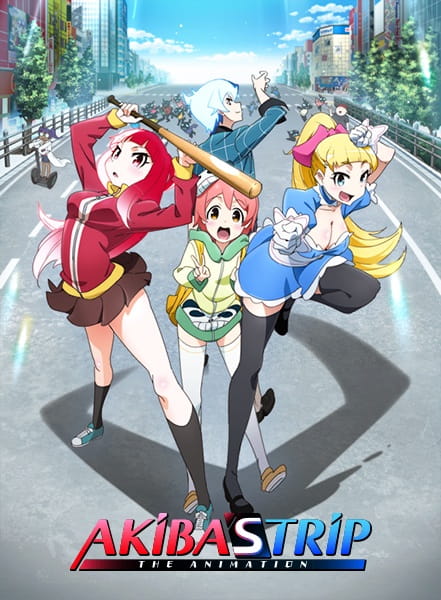
16bit Sensation - A celebration of all things Otaku, specifically the Bishoujo a.k.a cute girl theme, based on real-life experiences that truly make it one of, if not the influential "grandfathers" of the AniManga industry that we see today in Japan. Truth be told, when was the last Otaku-focused show that we got in anime form? Many would say that it's Summer 2021's Bokutachi no Remake a.k.a Remake Our Life!, or for the veterans in us, 2017's offerings of Fall's Anime-Gataris (which is one of the first Otaku-based shows I've watched since starting anime back in that year, that I still enjoy to this day), witha tinge of Winter's Akiba's Trip The Animation or even Summer 2016's New Game! series, mixed in with this Spring's Mahou Shoujo Magical Destroyers for the insane and non-stop unpredictable story-moving action. As for 16bit Sensation, apart from the manga, which serves as the basis for the anime, which takes place in the 1990s and details the game creation processes of that era, Another Layer takes that resemblance and intertwines that with its own "spin-off" territory of sorts through a 3rd-person POV. The manga got its start as a Doujinshi at Comiket 91 in December 2016, created by illustrators Misato Mitsumi and Tatsuki Amazuyu of AQUAPLUS, based on their time in the bishoujo game industry, and one fine gentleman by the name of Tamaki Wakaki, the mangaka best known for Kami nomi zo Shiru Sekai a.k.a The World God Only Knows, and one of the scriptwriters alongside former AQUAPLUS game writer Tatsuya Takahashi for the "original" anime. Trust me, if there is a show that you NEED to pay absolute attention to all of the fine details that make it work, it's this one. The story begins in modern-day 2023, where game production is treated like a sweatshop of black companies pushing their staff to work harder for low pay and increments, even for those who find their passion in creating games. And one such person is 19-year-old Konoha Akisato, who is a budding illustrator working hard at what she does best, but she's not satisfied that the game corporation company that she's working for doesn't exactly appreciate her work and even demotes her as a sub-illustrator colouring background characters. In a fit of rage, she ran out of the company, never wanting to see them again. A few days later, Konoha sighted a traditional game shop that's been taken care of by an old woman, who so happened to have a case of old, influential Bishoujo VNs a.k.a Visual Novels, that are sold for dirt cheap. Of course, Konoha's Otaku senses light up, but she feels bad for the old woman that she could not purchase them from her and leaves her unintended. A few days later, a paper bag containing those same games appears at Konoha's home, though she doesn't know what to do with it since both the old woman and the game shop mysteriously disappeared...until she opens one game and realizes that she is instantly transported back to 1992 after meeting someone who tells her of the reality that she has time-travelled back to the past. With that reality struck to her face, Konoha wants the acclaimed company Alcohol Soft to work with her dream of making Bishoujo games. Not everyone is a game industry nut, so I'll spare everyone's homework and give only the details that you need to know: the in-series game company Alcohol Soft, it's based on the real-life game developer Cocktail Soft, known for eroge/VNs such as Doki Doki Vacation ~Kirameku Kisetsu no Naka de~, and Welcome to Pia Carrot, both of which Misato Mitsumi and Tatsuki Amazuyu worked on before moving to AQUAPLUS (of which game studio Leaf is a sub-brand). Also, most of the games that were in the paper bag, from Dōkyūsei to Kizuato and Shizuku, were also games from AQUAPLUS/Leaf, and 1996's Shizuku would become the de-facto standard for how game developers would create VNs going forward, thanks to game writer-cum-scriptwriter Tatsuya Takahashi. Aside from debut director Takashi Sakuma, who doesn't have as much knowledge as his staff team does, you can tell that 16bit Sensation: Another Layer is a re-telling from the eyes of the prevalent people in the AniManga industry, so much so bearing the fact that it's a love letter to the history of Bishoujo VN games like Key's Kanon, Clannad, and Little Busters!, paving the rise to fame for the lucrative VN game market. This makes the anime so palpable and cements itself in a league of its own...that's if Tamaki Wakaki had some radical ideas introduced into this "spin-off". And if you've watched or read his prior series, you already know what I'm talking about. No spoilers here; it's best that you experience it for yourself. Joining Konoha in her game-making endeavour are the people of Alcohol Soft, whom in the future will become a tour de force in the VN games scene but will get disbanded in time to come. The first person is Mamoru Rokuda; he is the company's sole programmer and the son of the company's owner, Masaru. He is quite the rudimentary lover of the PC-98 platform (the business-oriented version of the consumer PC-88 series, which allowed its parent company, NEC, to dominate and establish the Japanese PC market from the 1980s to 2000), and he will not relent on making games for future platforms of Windows 95 and beyond. But all Konoha needs is convincing and persistence to allow him to see her vision, which he will then give way to and make her dream a reality. Thankfully, Konoha is not alone, as there are also Kaori Shimoda and Meiko Uehara, both concept and line artists, with the former being a CG illustrator and the latter wanting to become a programmer. Together with the mask-wearing scenario writer Kiyoshi Gomikawa, the 5-man team completes Alcohol Soft, bereft of Konoha's future technology and essentially starting from scratch for said time traveler. It's definitely a work of art by going back to the basics, and aesthetically, this is one of the anime's strong points. Studio Silver may be a rather old studio that has existed since February 2001, but their recent breakout together as a studio collab effort with Arvo Animation on the Bokutachi wa Benkyou ga Dekinai a.k.a We Never Learn: BokuBen series since 2019, certainly paved the way for the studio's single output to come. And 4.5 years later, it's through this show that looks pretty decent, as far as I can tell. No problems here whatsoever if it looked like a low-budget show from the outset, which I can tell you that it's not. The music...is highly debatable, but it's definitely the elephant in the room. For Shoko Nakagawa, she's definitely acclimated to shows that were made for young kids, but considering that her last "adult" effort was on Akiba's Trip The Animation, serving as one of many ED songs, this OP song will not cut it for a lot of people. I find it musically pleasing, but the lyrics are a whole other story of sounding just weird and bad. The better part comes with the ED song sung by Konoha's VA Aoi Koga, with lyrics done by J-Pop artist KOTOKO and composed by Shinji Orito, who is the music composer of Key's VN anime adaptations of Air, Kanon (2006) and Little Busters!, to name a few, along with the ED visuals of pixel art, which are great to see. If there are high points I can say about this show, it's of Aoi Koga delivering her performance as Konoha Akisato, sounding just like the 19-year-old version of herself who carries the entire show with ease, as well as the ED song growing more on me as time passes. Otherwise, I'm just kind of disappointed in the reception that this show got for trying to be something different from what was already established a.k.a the manga. This, to me, is intentional creativity as the creators and the staff wanted it to be, and I think this succeeded in its delivery. Otaku lovers, you ought NOT to miss out on 16bit Sensation: Another Layer. You're missing out on a real historian's gem, which has been lathed on Another Layer.
Ursaw
February 19, 2024
The unfortunate thing about this VN production anime is that it isn't about VN production. If you want a variation of Shirobako — look elsewhere. This is an uninspired "teen girl does time travel" anime that uses old tech as a cheap nostalgia bait. The deepest it gets into the actual creative process involved in VN creation is within the first few episodes where the main character Konoha first teleports into the past and finds out that in the 90s you had to use your mouse to draw on PC (the horror!). The problem is that creative team behind this production is as knowledgeable aboutVN/old tech/overall 90s topics as their main character. So they just throw a few old VN names (that they have rights to) in your face and maybe dangle a floppy or two over you... but some retro PC visuals and a running gag about a character who is just so in love with outdated NEC PC is all you're gonna get, because the anime doesn't actually care about all that stuff. In retrospect after watching it in full, I'm not sure what it cares about at all? It's not about Visual Novel creation. We are told the main character Konoha hates her job in the industry in 2020s (because she's a newbie and noone will listen to her 1000 page long script about "half-angel half-whatever Mary Sue saving the postapocalyptic fantasy sci-fi time travel girls und panzer meets makoto shinkai world" that she's certain would be a mega hit unlike those pesky boring whatever-it-is-they-do-nowadays). Okay, she's 19 and has an entry level job, she doesn't understand her beloved industry yet, maybe once she gets transported to the past we'll get to learn about VN creation together with her? (No, we will not). In the past, even when she gets actively involved in the process of making VN (and not running completely unrelated errands like she does most of the time), the process itself is basically skipped over. Anime just says "and then the creative process ensued, and the artists artisted, and the scenarists said "it's scenariing time" and scenariod all over the place, and 5 seconds later our new game of the century was ready, yay!" It's not about genuine love for old tech or any other 90s things. Time travel scenarios implemented within the real world are great for showcasing old-timey stuff the author genuinely cares about and speculating about humanity's possible future. In theory... Thinking about this makes me remember the episode in Shirobako where they scheduled a field day to learn more about what's gonna be in their new anime. 16bit Sensation's "field day" was opening a Wikipedia page about the 90s in Japan and promptly forgetting half of what they just read. Noone looks or talks like they belong in the 90s, the tech they use is anachronic (either already too old to be useful by the time events happen, or probably shouldn't exist for another decade), the business side of things is... Let's not even go there. Everything is either a blatant plot device, or only exists because it showed up on the first page of pictures when the production team googled "90s Japan". Same goes for the faceless future. Noone cared what it looks like because it only exists for the main character to undo it anyway. Funnily enough, I don't feel like it's passionate about time travel either. Sure, it's the premise of the whole thing, but the level of detail and thought put into the inner workings of it is negligible. It's a time travel show because Stein's Gate was a widely popular time travel show. And people nowadays love time travel, right? Fairly close to isekai too, and people are into isekai, right? The time travel is the whole plot, and it's honestly such a mess. It jumps all over the place constantly. Half of the time it forgets where it started and why it went there in the first place, then there's also /checks notes/ aliens, I guess? Honestly, it reads as if their main character wrote this whole thing. And, of course, it's not about the interpersonal relationships between main characters. Or, even if it is, it does a terrible job at that as well. Everyone loves our quirky main character because she's so cute and quirky, (and because people in the past are just so much kinder and better than in our pesky reality). Sure, they grow in a literal sense, since the anime takes place in the span of ~30 years, but none of them really grow and change as people. But I guess there's not much place to grow from when you only exist to support the main character, fix her mistakes, pat her head and tell her how cool and special she is and how much you missed her. As a fan of all things VN I desperately wanted to like this and find something good in it, but it was just a bland and uninspired waste of time. I've read self-insert Naruto fanfiction in the 00s that was more thought through and novel than this.
PanzerIV-J
December 27, 2023
"16bit Sensation" Is a great anime, that is only held down by the ending. What I am trying to get at is that the last 3 episodes are noticeably worse writing and quality wise then the rest of the series, mainly because it feels like the writers didn't have enough episodes to put in all the content they wanted to put in this anime and were forced to cut content, or were rushed to complete the last few episodes because of time constraints. Either way it feels like the quality dropped throughout the twelve episode run, since the art gets to points where it is noticeably worsefor some scenes, and some scenes seem cut short a bit. But this is FAR from being bad at all, it's characters are well constructed and are not made to be stupid or dense. Konoha is probably the most annoying character by far, but it's their character so it's intended. The story is a bit crazy, but it is something that you can vibe with, even if it sometimes doesn't make sense all the time. Overall though it is a good anime. Watch it if you don't mind a decrease in quality over 12 episodes. 🗿 7/10 🗿
inactivist
December 27, 2023
What even is the anime industry in 2023? I would say it's like a cocktail with a bunch of mystery flavors. You won't know how it tastes until you try it. On the one hand, we have a variety of anime about time travel with virtually no originality and, on the other hand, we have hen- *cough*, please excuse my language. Now imagine combining those two aforementioned "flavors," adding a bit of gaming passion fruit and diluting the mix with some crushed ice to avoid making it too strong. The extravagant, yet tasty, cocktail you would end up with is 16-bit Sensation: Another Layer; a unique takeon the time travel trope that manages to keep its audience engaged with its top-tier voice acting and simple but effective storyline. Let's savor the taste together, shall we? As mentioned above the story is pretty straightforward: The protagonist, Konoha, is obsessed with bishoujo games and time travels to 90s Japan to make MORE. The only thing on her mind is gaming and cute anime girls, which officially dubs her as the most cultured anime character this year. Keep in mind that this love of bishoujo games isn't just some joke for her, it's her life. This kind of character motivation guides the plot and avoids overcomplications, resulting in a lot of funny moments. The humor works because Konoha's 3 total braincells along with her obnoxious personality, clash with a group of confused underpaid "adults" that have no idea what a present day otaku is capable of. Good comedy is seriously scarce nowadays, so take advantage of it while you still can. 16-bit Sensation has definitely got it down in the funny department. On to the rest of our wonderful cast of "adults." Their de-facto leader is Mamoru: another obsessive, stubborn and maybe-adult, who, like Konoha only has one thing on his mind; the PC98. The guy probably sleeps, eats and drinks thinking of PC98 world domination. To the point though, believe it or not, the chemistry between him and Konoha is one of the most wholesome elements of the show. Without diving into spoiler territory, try to imagine two characters who have decided to dedicate their whole life in only one thing, trying to have a deep and meaningful conversation. There is absolutely no way that could work. However, these two proved us wrong. Their conversation has got to be the most irrelevant and yet most emotional experience ever. The amount of passion they both have for their hobby explodes into vivid, motivational monologues about eroge. You read correctly. This anime makes you feel emotional watching two brainlets talking about eroge. If that's not incredible, I don't know what is. To dig into this a bit deeper, the fact that 16 bit sensation succeeds so well in conveying this passion and emotion is not only because of the character's personality, but mainly because of the voice acting. Now before you start angrily commenting about how annoying the protagonist is, hear me out. The VA for Konoha is also the one for Kaguya Shinomiya from Love is War. If you've seen both shows or at least heard this voice actor before you would know what I'm talking about. In short, she's excellent. All the emotional high notes were delivered with perfection and I'm not even going to comment on how talented someone has to be to do Kaguya's quieter and imposing voice and turn it into Konoha's passionate squeaky monologues. The production team really most have put everything into hiring her and it paid off with interest. One more aspect of the plot that's worth exploring in more detail is the time travelling gimmick. Despite it being severely overdone, 16-bit Sensation manages to add some "spice" using it. In their world, you may only travel to specific dates in the past using the release dates of 90s games, which, in a sense, limits the protagonist's ability to have an impact in the world's timeline. This restriction in combination with Konoha's lack of a brain makes the time travelling tropes practically obsolete, since the future never changes significantly. By doing this the show, creates a balance to develop the characters and reinforces its comedic theme. Or at least that was the idea, until we start building towards the finale where the trope's impact makes its sudden appearance. This shift in tone in the later episodes in tandem with the shows overarching themes makes for a very surprising twist. TLDR; All in all 16-bit Sensation made me feel things I didn't expect, made me laugh more than it should have and overall blew my expectations out of the water. On the surface it might have a pretty shallow plot with not many complications, but that quickly changes as you watch more and get invested in the story. If you like a good comedy with a surprising twist, I highly recommend it. The protagonist's voice might be a turn off at first, but trust me, by episode 4 you'll have your mind changed. Thank you very much for reading!
lycoping
October 28, 2024
I'm honestly a little mystified as to why this has a rating as low as it does. There is a clue to why I feel this way in the name: "another layer". This is a layered anime. If you look at it from a surface perspective, you might not like this anime very much. And from a surface perspective, there's not much to like. There's quite a bit of nostalgia - most of which is done rather hamhandedly (though even at my age I didn't know about the PC-98, seems interesting to look into). It could also be seen asa love letter to bishoujo. It kind of is, but if we were to leave it at that level, it wouldn't be much to speak of either. On those levels, the story is a bit trite and shallow, the FMC is rather annoying, and the MMC is quite one-dimensional (see what I did there?) But there's so much more to it - if you look for it. I doubt everyone has. This story is actually a rather odd coincidence in my life, because it directly (and flagrantly) addressed a question that I've been mulling over in my head for a little while: what role does imagination have in creation? I won't go too deep into that because I'll bore the pantsu off you, and it gets absurdly theological, but it's a fascinating question, I think. All of the other things - bishoujo, nostalgia, time-travel, are all subjugated to this question. What makes us human? What is imagination? What is that intangible thing that makes the difference between a stupid garden variety game (or, by extension, anime) and one that is popular/amazing/whatever? And the way it handles that question is amazing, and frankly, rather unique. So for that reason, I would have rated this anime a ten. I wanted to rate this anime a ten. I almost did rate this anime a ten. But there were a few flaws, and I couldn't do that in good conscience. As some reviews have said, the FMC was rather insufferable. She was supposed to be voice acted as a super high energy, young-ish character who, well... it's her world and everyone else lives in it. But what they ended up making the character was a shrill, overly hyper, loudmouthed character that was difficult to warm to. Yes, she was a good character, and the VA was *capable* of toning it down when necessary, so at the end, that was clearly a directorial decision, and an awful one. They could have lowered the pitch a bit, made the voice a little less harsh and grating, and not only would nothing have been lost, but it would have been even better. The second major flaw, to me, has to do with the last three episodes. I'll try not to spoil. But this reminded me very much of Back to the Future 2, when Marty came back to 1985 or whenever after changing the timeline in 1955, and ended up in a dystopian society. The thing is, it was *needlessly* dystopian. It's 2023, not 2050, and the technology would not have been *that* drastically altered by a game company having a successful game. The corporate environment might, but the technology was significantly more "advanced" than it was in the original timeline. It just made no sense other than to enhance the sense of dystopianness. Plus, when that story arc "resolved", it, well, kinda didn't. Did the villain get his just desserts? We assume so. But of course it doesn't matter, because, well... it just doesn't matter. You'll see. But the thing is, it wasn't entirely dystopian. Yes, there were dystopian elements, and *clearly* so, but I found it fascinating how the redevelopment and "improvement" of Akihabara was portrayed as, by definition, dystopian. I guess I can see that to a degree, it would certainly have been dystopian in the FMC's perspective (they addressed the "coming home to a place you don't know" emotions very well), but still, I got the distinct feeling that it was *such* a love letter to Akihabara that it couldn't have been any other way. I guess that goes back to the "love letter to gaming" layer, because Akihabara is the mecca, but... still. It was a hamhanded message. Also, there were some plot points around the time travel that were, well... insufficiently addressed, to put it lightly. I can't really say everything about what I mean because it would be a spoiler, but let's say there were some situations and characters throughout the anime that were, well... inscrutable, and clearly deliberately so. That's fine right up until the inscrutability becomes indistinguishable from a "deus ex machina" and, well, that line was crossed. Would have been nice to have a few things explained a little better, rather than just have some rather odd and poorly explained people hopping in to save the day for no apparent reason. All that said, the flaws were enough to take it from a 10 to a 9, but that's still high praise. It's one of those anime that makes you think, and one that after the anime is over, that you just kind of sit there and have to process it for a little bit. I had that same experience with some of the greats, like "Akebi's Sailor Uniform". If you can look past the shallow surface layers to the message beneath, you might find something meaty to chew on, and given the ascendency of anime about as shallow as most of the bishoujo games this anime was, on the surface, a love letter to, that's a rare thing indeed. Recommend from me.
Rank
#5215
Popularity
#3157
Members
62,062
Favorites
246
Episodes
13