Jellyfish Can't Swim in the Night
夜のクラゲは泳げない
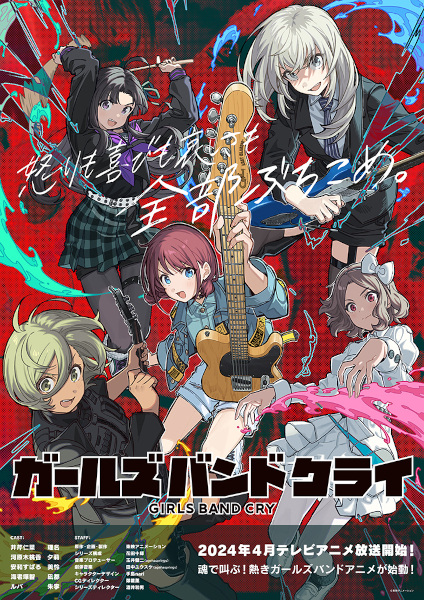
Mahiru Kouzuki, a skilled artist, gives up on her passion after her elementary school classmates ridicule her colorful jellyfish mural. Several years later, upon encountering an unexpected admirer in Kano Yamanouchi—a former idol with a troubled past—Mahiru decides to pursue her childhood dreams once more. Tasked with designing the mascot for Kano's new music project, JELEE, Mahiru enlists the help of her childhood friend and professional streamer Kiui Watase to make JELEE's first music video. Together with Kim Anouk Mei Takanashi, a pianist and fan of Kano's work as an idol, the girls aim to turn JELEE into a global hit. However, if they want to succeed in this ambitious endeavor, they will first have to free themselves from the shackles of their pasts. [Written by MAL Rewrite]
Marinate1016
June 22, 2024
It’s honestly hard to quantify exactly what Yorukura has meant to me over these last 3 months, but I’m going to try to express it. This show and its cast have been an irreplaceable part of my life and ignited a fire in me that few anime have. It’s the type of show that motivates you to be a better person and take risks to seize what you want in life. It’s the type of anime that lets you know it’s ok to be yourself. Shows like this come around only every so often, and I’m glad I was here for this one. Doga Kobo areno strangers to blowing my mind. They’re one of my favourite studios, producing some of my favourite series from Plamemo, to Yesterday wo Utatte and Oshi no Ko. This studio has shown time and again they’re able to create magical anime with characters you can truly empathise with and relatable themes. Yorukura, their latest anniversary work is right there at the top. It’s one of several amazing female driven musical anime this season, but in my opinion it stands head and shoulders above the rest thanks to its cast and themes. Those themes being anything from depression, suicide, bullying, gender dysphoria, sexuality, hopelessness, abusive parents, the toxic Japanese entertainment industry, etc. Some real dark stuff gets tackled in here and it’s done in a very tasteful way and feels real. The other big thing for me is the cast. These girls are amazing and I don’t know how I’m going to get through the weeks without them going forward. Seeing a group of girls who seemingly come from completely different backgrounds come together and bond over their desire to pursue their artistic endeavours was very heartwarming. Basically all the girls in the story had dreams that they gave up on. Whether it’s drawing, singing or being a vtuber, for one reason or another they lost their way in life and abandoned the things that really make them happy. By meeting one another, they’re given the encouragement needed to pursue those creative ambitions again and find purpose. It’s something that I think a lot of people can really relate to. Sometimes life happens and we just stop doing the things we used to enjoy, or we even lose faith in ourselves. Having someone that believes in you and encourages you to continue working at what you want in life and to improve in that is beautiful. The girls’ dynamic could not be better in this one and it made every episode a joy to watch. Further to that point, when a couple of the girls get back into the things they love to do, it’s revealed they’re doing it because another cast member is their motivation. I like that the characters gradually realise this isn’t a healthy or sustainable approach either. Validation and satisfaction can only come from within and singing for others or drawing for others won’t make you love yourself or your work. The writing is just so good here and as someone who has done things that I enjoy, but got lost in seeking approval from other people I related a lot. In a way, Yorukura also acts as a pushback on the traditional Japanese ideology that “the nail that sticks out gets hammered down” This refers to the need to conform in Japanese society. All these girls are social outsiders in a sense and deal with a ton of pressure to fit in. By the end of the show, they all realise that it’s more important to be happy with yourself than to fit in and I just think that’s such a powerful message that kids, especially Japanese kids today need to hear. Of course you can’t talk about this one without the Yuri undertones as well. Actually, undertones aren’t even a good word. This show is gay, gay as hell and in the best way possible. There’s proper lesbian confessions and clear romantic inclinations between characters. What I like most though is that that didn’t define the girls. Yea, they might be queer, but they’re so much more than that and that’s all in the background while the story focuses on them as people and developing to overcome past trauma and insecurities. I think one of my biggest pet peeves in fiction is when a relationship or sexuality is someone’s entire personality, sure that’s nice to get, but let’s not minimise characters to just being romantic tropes and I think Yorukura’s author nails it perfectly. Honestly, this comes as no surprise as Yaku sensei, who also wrote Tomozaki kun, is one of my favourite authors and has a talent for writing realistic teenaged/young adult characters who do things that kids their age in real life would. They’re kind, thoughtful, selfish, nasty, lost, hopeful and hopeless all at the same time just like we are in real life. People are complex and when an anime can capture that, it’s special. Production wise, wow man. Doga Kobo have never made a bad looking anime, but this is their best looking yet, which is saying something because Oshi no Ko looked amazing. Just every aspect of this show was masterfully crafted and elegantly designed. The character models, the letterbox aspect ration emphasising impactful moments, the seiyuus, the musical performances, it’s just all.. great. If it sounds like I’m gushing over this show and biased, it’s true, I am. I unapologetically love everything about Yorukura and it’s changed my life for the better. An instant classic and one of the best anime originals ever in my opinion. A must watch for any fan of realistic characters, and those who had big dreams, but maybe lost their way. Keep going. Yorukura gets a very easy 10, out of 10
Mcsuper
June 22, 2024
Music anime with girl bands or groups being the focus have never been more prominent in the anime sphere, with recent hits like Bocchi the Rock, and old hits like K-On. In this season alone, we saw the revitalization of another old music hit in Sound! Euphonium Season 3, and new kids on the block in Girls Band Cry, and Jellyfish Can’t Swim in the Night. There’s so much that writers can do with this type of show, from stories of inspiration, stories of young people trying to find their passion, or in other cases, more comedy-oriented shows that serve to brighten up one’s day.In the end, the formula remains similar, to showcase the growth of the characters and their differing personalties, through their involvement in a music group. Jellyfish Can’t Swim in the Night is a bit of an odd case to me, because while it has its share of light-hearted moments, and the comedy is snappy and quite honestly, amazing at times, it also goes down the slippery slope of leaning into heavy melodrama. With the limited runtime that this had, with just twelve episodes, it was a bit of a questionable decision to me. In the first number of episodes, it was all about how people motivate each other, rather it was through art, music, or any other expressive outlet, and it was indeed very interesting. As the characters got introduced, they were characterized through various backstories that showed how tough their pasts were, or how they got to know other characters in the show. I’m not always a big fan of that story structure, as while it might provide great emotional highs, I’d much rather see the characters get characterized with how they act in the present, which this show does eventually do as well. I call this an odd case, because each individual bit of character drama was honestly handled quite well, with very realistic and relatable struggles, for example, wanting to enjoy and behave in a way that people think is “childish”, or having one’s path to stardom broken because of a response to injustice. It led to some brilliant character chemistry between the members of JELEE for sure, but I also don’t think the drama contributed to the big picture of the story well enough, and also got in the way of what I expected the show to be more like, which was seeing the creative process of JELEE’s music. To do all this in twelve episodes is no easy feat, and I just do not think there was enough time here to flesh everything out. The messages were really good, the pieces were there, but with twelve episodes, it was virtually impossible to fit in the progression of JELEE and the character drama, leading to various aspects feeling contrived and rushed, lacking the organic growth that we could have seen if this series had more of a runtime. JELEE gains a following in almost no time at all due to a timeskip, Mahiru’s art is suddenly highly respected from being mocked just a few episodes prior. Suddenly, a performance at a venue happens with not much build up. A career is put to a halt because of one single internet warrior. The antagonistic character suddenly goes along with what the protagonist proposes. You get my drift. Could this all have been fit into twelve episodes if the script was just a bit tighter? It’s hard to say how this anime should have went, because on the one hand, if you don’t have the comedy and light-hearted moments, the audience would not have as much of an attachment to the characters and their respective personalities, though on the other hand, if you don’t have the drama, the plot does not move forward. The best anime series are able to balance both the aspects of character building and pacing effectively. I do believe that the script could have been a bit tighter with the removal of a few characters, such as Baba and Koharu, so that the eventual drama could be less contrived. Again, I want to emphasize that the individual stories were good, but they just did not mesh well enough with each other. Some emphasis of side characters took away from Kano and Mahiru’s issues, and led to the overall storyline being resolved rather haphazardly. Visually, this anime is stunning. Props to Ryouhei Takeshita for directing this as well as he did. It had a very snappy feeling in the editing made it a great vessel for comedic timing, which I still believe is the strongest part about this anime. I might not have agreed with some of the drama, but the way some of the dramatic scenes were directed was superb, along with the sound direction, to illicit as much emotion as they could out of the viewers. Furthermore, the voice acting performances here were excellent. Shout out to Rie Takahashi, Miyu Tomita, Miku Itou, and Miyuri Shimabukuro for their incredible work as Kano, Kiui, Mahiru, and Mei, respectively. There were also several music videos from JELEE that served as special ending themes, and you could see the improvement in the visuals with each passing music video. That type of subtle growth was what I wanted this anime to be like, but obviously, it went in a different direction. With how solid the first few episodes were, I think it really showed that sometimes, things do not need to be deep and hugely thought-provoking to be good. The message was there, the characters were perfectly fine, the growth was JELEE was being seen, the comedy was snappy and funny, but the decision to go into heavy melodrama was one step I feel this anime did not need to take. The sheer energy of the show, the vibrance of the characters, all of that was sucked out with the melodrama, because even though the comedy still remained throughout, there was always that bit of drama that loomed large over it all, leaving it less fun than it could have been. It lacked a proper identity, and tried to do too much in a short amount of runtime. In the end, it was like a slightly overcooked steak. It tastes good, but it is chewy, and leaves you slightly underwhelmed. Occasionally, some anime just have that sort of a fate. Oh, what this could have been…
7_3
June 22, 2024
I feel betrayed in a way, like I just got deceived, and now I feel like a piece of demotivated rubbish if I wasn’t already one. This anime was like joining a friend group only for those "friends" to start treating you like some weirdo nobody after a while. I was surrounded by a bunch of “me fr fr” people and I thought I was going to literally die from happiness. I thought that maybe I was going to experience some genuine emotions while going through this ride. I thought that maybe there’d finally be characters with genuine personalities that don’t scream, “I AM ABLATANT CHARACTER ARCHETYPE LMAO” at me. I thought all of that, but that dream I was living didn’t even last halfway through the anime. It was wishful thinking hoping that it wouldn’t devolve into some lifeless drivel anyway, but still, what went wrong exactly? I think it’s fair to say that the characters are the driving force behind Yoru no Kurage wa Oyogenai’s whole idea. Four high school girls who struggle with faith and self-confidence form a band together in search of the colors they’ve been missing in their lives, and to find themselves—to become who they truly want to be. Faced with the many challenges of fame, the girls endure and power through the ups and downs of the new light in life they’ve found together. Theoretically, that sounds like a seriously awestriking idea for an anime, one which has heavy inspirational themes and messaging within it, so everything should go perfectly, right? Well, “inspirational” is what it COULD have been, but you see, there’s just one big problem that makes everything fall apart: the characters. Yes, the “driving force” of the anime itself kind of…sucks. Remember when I said they seemed to have real, genuine personalities? That mirage wore off real fast, alright. One of our main protagonists, Kouzuki Mahiru, is an illustrator for the band she’s formed with her friends, JELEE. She draws everything from promotional art to the band’s mascot, JELEE-chan. Once she entered the limelight of fame through JELEE, obviously, things started to go a bit awry. No one is used to fame from the get-go, and for a person who struggles with confidence and self-esteem like Mahiru, things started to get to her. Barraged by the internet’s reception and criticism of her artwork and her band, Mahiru, not used to this harsh environment, was quick to cave in and start thinking pessimistically. “Is my art not good enough?” “Maybe I should try to change my artstyle?” “Wow, people really like the fanart better, huh?” Are all thoughts (at least along the lines of the thoughts) of Kouzuki Mahiru, who crumbles easily. And you might be thinking, “WOW that is relatable as hell,” and I also should’ve been thinking “WOW that is relatable as hell,” but all I felt is hurt. It’s all artificial. This entire anime, along with its characters, ends up all artificial and hollow. Mahiru IS just another blatant character archetype, and so is every single other member of JELEE. And it’s all because the anime refuses to touch on their personalities far enough. “tf u mean, it clearly touches on their development as they journey through the trials and tribulations of fame.” And you’d be completely justified in saying that, because, in truth, yes, that’s exactly what the anime does. But that journey only brings out that tiny part of their character that IS an archetype, and that makes them seem like fake people. The anime spends minimal to absolutely no effort giving any of its main characters a real, uncontrived personality, because it doesn’t explore them whatsoever, yet it drags those characters and stretches them out so that they can somehow fit with a story that requires characters with ten times more layers to them. I personally find it hard to relate or find these characters interesting at all, because while their basic characteristics might be relatable, the amount of effort put into their personalities and the depth they are given is much more like a spit in the face toward me, and other people who might’ve shared any commonality with them. And so, as a result, trying to understand, feel for, and relate to any of the characters is like trying to understand an alien speaking in ⚍ ᓭ╎ꖎꖎ|| ℸ ̣ ∷ᔑリᓭꖎᔑℸ ̣ 𝙹∷ ⚍ᓭᒷ∷。 But who the fuck cares if it doesn’t relate to ME? This review so far has been all about me, me, me, and ME! *I* didn’t like this, *I* disliked that—I need to talk about YOU, the reader. And if you, reader, are sitting here, gawking at the gall I have to bring down your favorite anime from the heavens it soars in, then that either means you’re not looking at the whole picture, or this anime wasn’t made for you in the first place. About the former: you might not actually take the characters into account, or care about them for that matter. You might be one of those yuri addicts that gravitates toward everything with any hint of yuri, or more realistically, you might be here only for the touching journey the characters go through, and not for them particularly—and I would have said I can’t really tell you that’s wrong, but then again, avoiding one of the only reasons why this anime is what it is, is kinda dumb if you ask me. And about the latter: you most likely don’t have an understanding of these characters, and probably have almost nothing in common with them, their experiences, or their feelings, which leads you to believe there are little to no faults with their personalities, while you shouldn’t actually be sure of that. And that’s fine. I get it. You can watch this anime while ignorant and oblivious of its internally vapid and lifeless characters and not have to feel awful, but to those who are able to enjoy the entirety of what makes this anime, and to those who should have been impacted the most, those who should have felt the most touched; to those whom this anime was aimed at and made for, it all ironically ends up amounting to nothing but a meaningless attempt at inspirational storytelling. That was my experience with Yoru no Kurage wa Oyogenai. I write this review in hopes that you are able to better decide whether to possibly be pushed down into the gutters, or continue with a different anime. You know what was a real stab in the guts, though? Ryugasaki Nox’s VTuber model. That shit had me crying tears of pent-up sorrow I never even knew I had. Thank you for reading my review.
Kuso_AR
June 22, 2024
"You know, jellyfish can't swim or shine on their own, but once they absorb light from around them, they're able to shine for themselves! So maybe...I can, too! If I'm around you, maybe I'll be able to shine, too?" Social media has taken over the world and people have embraced this new identity. To be honest, I've been waiting to see an anime effectively dive into this trendy subject and the deep process of creating content (music, animation, streaming) for a virtual online brand. YoruKura was that anime for many fans, a "new-gen" story with big ambitions, and it manages to shine. For the first 2/3 ofthe show. However, with a mere 12 episodes of runtime, YoruKura is far too ambitious for its own good and leaves fans with a lackluster taste in their mouth. Let's get the positive out first. The *first half* of YoruKaru is utterly fascinating. Yorukaru overcomes its initial hurdle of being an original anime with A POWERFUL first impression, art and visuals that tear at your heartstrings, intriguing characters that actually feel like cohesive characters and not "moe" archetypes, and an actively trending subject. YoruKura seemed to understand what actually goes into this type of work and making it interesting for general audiences. Moreover, you see the results of the group's hard work in several of the series' endings that just look perfectly entwined. Seeing their process episode-by-episode had me on the edge of my seat. All of the characters find a way to work together with great chemistry, develop their relationships, overcome their faults, and grow not just as people, but as artists. Their first arcs are all amazingly executed and their conflicts are a big factor to their group's success. Personally, I love Kiui Watase and how her connection between VTuber Identity and IRL Identity were done, but fans can relate to all 4 of these girl's dilemmas. The character bonds and personalities are what helped pull the story together and produce amazing works alongside the other 2 girls as JELEE. And for those, Yuri fans out there, you're sort of in luck. This isn’t a show that "baits" their audiences with one-off Yuri-bait interactions (I'm talking about you Hibike Euphonium). There's actually good development there for a fun ride. Of course, much credit to production. Unsurprisingly, an anime from Doga Kobo looked, sounded, and executed this well. Visuals and colors are utterly beautiful. While I was initially hesitant of Ryohei Takeshita, the Director of frickin' Eromanga Sensei, being YoruKura's main director, there isn't anything too weird other than a few odd camera angles (worst case: in the same episode a character complains about people gazing at her body, there's a camera shot on her butt 9 minutes earlier. Comedy doesn't come this naturally). Moreover, many scenes are amazingly done by the voice actors. They hit DIFFERENT. A lot of this show's direction, scripting, and production was solid. In the middle of the season, YoruKura had many YouTubers and forum members calling it the underrated "anime of the season." A genuinely great surprise and the arguable favorite of the season. I had given this series a 9 at first too. However, that rating has since dropped for many fans, including myself. While YoruKura is still a great experience, many will be left with mixed feelings, and it has to do with how this series ends. Ironically, the final part of Yorukura end up like "Jellyfish in the night" and struggles to swim on its own. A set of narrative decisions from its writing team halts everything that made the series great. In the span of just 1-2 episodes, YoruKura shifts from a step-by-step journey toward creating music and striving toward stardom into rushing new ideas, deriving character motives, and a final melodrama that leaves a weird taste in your mouth. This isn't to say drama doesn't work in YoruKura. Each character has their own personal drama: conflicts and issues they have to overcome throughout the series. However, these were settled episode by episode and were able to entwine with YoruKura's main thesis (4 girls coming together to produce music under JELEE) quite well. However, the final drama (without spoiling of course) fails to hone in on that show's thesis, ultimately rushes many different contrived developments, and instead directs away from the show's overarching message. And it's hard to recommend an anime with a "bad ending." Animes with "bad endings" aren't that uncommon. Attack on Titan, Charlotte, and (my personal vendetta) Wonder Egg Priority easily come to mind. Series with amazing openings and concepts that have weak or utterly disappointing final arcs. You'll always see countless people say "Did the anime switch writers or something?", but in reality, some shows just don't know how to end well. Either 1) production experiences several issues, 2) a writer has a great concept but doesn't know how to wrap it up properly, or 3) a team has too many ideas and not enough time or episodes to give each idea grace. While nowhere as egregious as say Wonder Egg Priority's fall, YoruKura does leave many fans with a lackluster afterthought. This falls into reason 3, wanting to execute too much with far too little time. The series, as a whole, wanted to do a lot more than its runtime of 12 episodes. With too little time, you have 2 decisions: 1) Limit the ideas and plant the "seeds" in case of a further retelling/season 2, or 2) try and tighten the script to fit multiple arcs and ideas into one cohesive story. YoruKura probably knew a season 2 wasn't likely happening, and thus goes for option 2. However, it fails to tighten everything into the story's cohesive message. Without spoiling the events, episode 9 completely changes the story and its tone, and the production team is now tasked with just 3-4 episodes to create, redeem, and simultaneously wrap up angsty melodramatic conflicts that were far from YoruKura's initial direction. It rushes through countless developments and redemptions that were unneeded for the story's headlining message of being able to shine. Audiences were first heavily judgy? All of a sudden they're accepting and gassing stuff up! Everything either falls perfectly into place or goes under wraps to get every idea crammed into a 4x4 box. Some characters remain strong, others become utter shells of themselves as they are rushed into unrealistic situations, and others just...don't work for me. The most egregious of this has to be with Kano's past idol group. I cannot understand how this series wants to characterize them. Yukine Hayakawa, Kano's mom and the producer of Kano's past idol group, for example. One second she's portrayed as the selfish idealistic who only cares about her dream rather than being a mother; the next she's portrayed as being heavily considerate, making a final decision that makes not much financial sense from her position as an idol group producer. Mero Setou, the idol group's lead idol, is even more egregious as while her presence goes up (she played a major role in a past conflict), she doesn't have enough connection for a viewer to care about her. It very much seems they wanted an arc surrounding this group, how it connected to Kano's past, and evolving them. However, again YoruKura doesn't have the time. This period halted not just JELEE's process, but the anime's as a whole before the anime subsequently ends. YoruKura is ultimately a strong anime. Beautiful visuals, amazing characters, great sound and music direction, light-hearted comedy balanced with interesting conflict and goals, wonderful music developments, and a message that worked so well at the start: shining for oneself in a deep sea and being able to swim. However, the last arc ends up losing the show's mojo with a haphazard conclusion. Could all of these fit together with better directing? Could earlier ideas have been cut to fit this arc? Could this final arc have been entirely reworked? I don't know. While the start is absolutely deserving of praise and will be given praise, the decision surrounding the final moments sucks audiences out of a show with wonderful energy, leaving it rather unclear. *EDIT* In actuality, you can really start seeing signs of a "downfall" after episode 6. Episode 7 introduces a new character to be important, but their complete lack of involvement in later events and character arcs makes their role rather pointless. Episode 8 also introduces a dilemma that could have many character perspectives to dive into, but it completely rushes its development to set up the story's final arc. The signs were there of too many ideas being rushed or unexplored. It just became far more evident near the end. *EDIT OVER* A show with very high potential and great tricks but didn't stick the landing. If you told me how a jellyfish willingly shut off the light and not swim on its own, everyone in the room would shout "YoruKura!". It would have enough presence and members to fill the Tokyo Dome. Final score: 6.2/10
Marsh37
July 13, 2024
YoruKura is an anime that was incredibly close to being a solid recommendable show. Sadly, the final few episodes felt messy and ended up detracting from all of the good themes and ideas it was building up along the way. This was a result of failing to utilise its characters effectively, sidelining positive plotlines and pointless pandering. The art and animation quality is the one positive thing which remained throughout this anime, with a unique style. However, the music is subpar for an anime that is meant to be partially about music, and none of the songs particularly stand out as memorable. In most cases,this would not count as a negative, but given that music is a big focus in YoruKura, viewers should expect to at least have one or two songs that resonate with them for the show to be counted as successful within its genre. The characters have a level of complexity, although this is not always to the benefit of the anime. It is a recurring feature of YoruKura for characters to question their ways of thinking, indicating that they may be on the verge of developing, and then miraculously ending up almost exactly where they started. It is not necessarily an issue if character development is slow, or even non-existent, but where YoruKura fails, is where it appears to pretend that the characters have come a long way and developed, when in reality, they end up with an almost identical mindset that led them into a rough spot to begin with. Many of the side characters are clearly designed to appeal to certain niche audiences, which has the potential to alienate viewers outside of those communities. This is not inherently a bad thing, as having a solid target audience requires a certain level of exclusivity, however YoruKura doesn't follow through on key character moments in most cases, leading its characters to be used as a form of bait for its audience, rather than actually creating a meaningful narrative that can truly connect with the viewer emotionally. The storytelling, alongside the character writing, ends up completely stifling any possibility of a satisfying conclusion. The two central girls, who the story sets up to support one another, ultimately don't really do anything for one another in the final act, leaving rest of the main cast to pick up the slack, which otherwise, could have been used for some emotional character growth. Subplots are introduced and seemingly forgotten about by the end of the show. The theme of creating art for the dopamine effect of 'number go up' is seemingly presented as something to be overcome with some greater purpose, however YoruKura fails to come up with any proper alternative idea for its story to cling to as a good moral. This ultimately ends up feeling shallow, and despite spending a large portion of the anime searching for it, its unclear what the main character's purposes for creating really are, and how they have evolved from where they started. If you aren't a part of the niche audience that this anime tries to pander to, it is likely that you will find the characters become annoying, as they fail to truly grow as people or deal with any of the core issues which they intitially face. If you are a part of that niche audience, you have a chance of enjoying the anime, however its failure to land cleanly at the finish line may still leave you disappointed.
Rank
#1286
Popularity
#1944
Members
132,113
Favorites
956
Episodes
12