Welcome to Irabu's Office
空中ブランコ
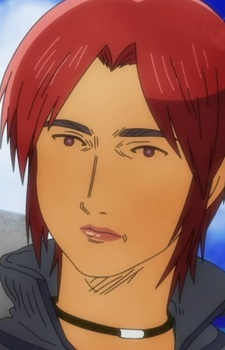
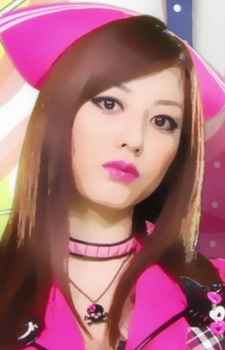
The world of psychology is far from strange to the unusual Dr. Ichirou Irabu, a resident psychiatrist of Irabu General Hospital. He and his charming nurse Mayumi run through several patients, each suffering from a mental illness that harms their everyday life. Patients should be wary of the seductive Mayumi, with her spellbinding looks and devilishly short pink nurse uniform. On the other hand, the doctor seems to have three separate personalities: a child with an oversized lab coat; an intelligent, youthful man with feminine traits; and a selfish, outgoing green bear. While curing his patients in questionable ways, Dr. Irabu often tries to gain something from them outside of his profession—and in doing so, occasionally forgets his role as a doctor. As each patient struggles to face the nature of their distress, an obvious yet invisible thread ties their paths together. [Written by MAL Rewrite]
Main
Supporting
Supporting
Supporting
Supporting
Supporting
Supporting
Supporting
Supporting
Detective
December 29, 2009
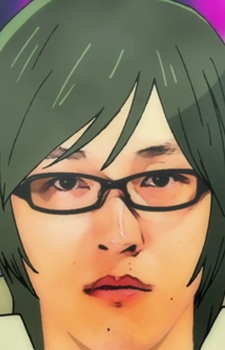
Here is an anime that will turn 90% of its viewers away. Why? Because it dares to be distinctly different. For the remaining 10% who watched after the first episode, you probably know already how great this anime is. Now let's hope to switch these figures, so everyone can enjoy. Story: 9/10 The story is of Dr. Irabu, a psychiatrist who also happens to be the vice chairman in his fathers hospital. He's an incredibly skilled doctor who welcomes many patients, and his treatment is always vitamin injections. The story revolves around the people with disorders such as OCD (Obsessive Compulsive Disorder), NPD (Narcissistic Personality Disorder), andmany others. The story takes place all within ten days, December 16th to December 25th, and all the stories somehow affect one another, whether it be minutely or dramatically. Now up to this point you may think this sounds really dreary and serious, right? Wrong. The stories are very light-hearted for the most part and the comedy is boundless. There's a case where a man has an uncontrollable boner, and the only way to cure it is by forgetting his past. Crude? Yes. Hilarious? Yes. The interwoven ten day tale of the wacky doctor and his just-as-wacky patients will surely amuse you if you give it a chance. Art: 10/10 Well. You might hate it. You might love it. But you gotta admit, it's interesting to watch. Kenji Nakamura used the same kind of art in Trapeze as he did in Mononoke. It's really cool stuff if you're a fan of his. The terrificly strange style really does help the mood of this anime, a psychedelic off-key kind of a mood - something weird. And listen here folks, this is anime is as weird as it gets. Trapeze sometimes even incorporates live-action materials like faces and bodies, once again setting it apart from the usual anime. If you liked the art styles of anime like Mononoke, Mind Game, and Gankustuou this may be the artsy-fartsy anime for you. Sound: 9/10 Character voices for Irabu are great. Whiny and shrill, loud and fast-paced, slow and chiseling - actually three different "voices" altogether (two voice actors). When Irabu changes persona's from his middle-aged man, to his bear-mask, to his child form, his voice changes and personality slightly changes as well. A really nice touch. As for the rest of the cast, nothing out of the ordinary, good voices, but nothing historic. The opening is loose and odd and fits the anime quite well, it has a good beat you might even start to hum. The ending is really great though. It fits the anime perfectly and whenever I hear it, I just feel like dancing. The ending suits the feel you get at the end of an episode of Trapeze, and that's what really counts. You have to make your catchy songs not only be catchy, but also connect to viewers emotions for more of an impact, and that's what Trapeze does. Character: 10/10 A new character every episode? How am I supposed to like that? I won't even care for them if they just disappear in twenty minutes! Right? Wrong. A great cast of characters, just about every single one of them memorable. The recurring cast is Irabu, who I've already touched on, Mayumi - Irabu's nonchalant maid-nurse who supplies the patients with injections (and cleavage), and Fukuicchi the live-action doctor who pops up from time to time to inform the viewer about certain things he may not be familiar with (i.e. what OCD is). The interchanging cast is the patients. All appear in more than one episode, but only one episode is mainly focused on them. There's a reporter who's afraid of causing people trouble, there's a failed child actor who still thinks he's "got it", there's a baseball star who's feeling like he's lost his touch, there's even a man afraid of sharp edges. Just check them out for yourself. Enjoyment: 10/10 Not a single episode I didn't enjoy more than the average anime. If I had to rate each episode, I'd give nine out of eleven of them a solid 10 and two of them a 9. Not too shabby. But this rating is only mine. It's not yours. If you don't like this anime, it's not because it's bad, it's because you simply *didn't like this anime*. It's a psychological show, about emotions and personal distress and what can happen to it when left alone. It's not the kind of a show with a message that reaches the world easily. All I can ask is that you try it out, and if you didn't like it after one episode don't drop it and give it a 1 out of ten (unless you seriously hated it that much, but I'd have to question your judgment skills - only watching one eleventh of something and turning it off). Overall: 10/10 Wildly different and stunning in every sense. I'd be terribly disappointed if this anime didn't win some kind of award somewhere out there, whether it be for "Strangest Anime of All Time" or what I don't know*. But this is good. Watch it, and watch more than one episode. Why not watch two? I mean, twenty minutes won't kill you if you end up enjoying it. I guess the point I'm trying to hit home is that a lot of people drop this anime because it isn't their cup of tea, and there's nothing wrong with that. This anime deserves more than that though, it deserves a chance for all the hard work put into it for making it as off-beat as possible and I'm just trying to supply a voice to do that. Now go forth, and witness the birth of the freak known as Trapeze! *Actually Trapeze has won a few awards since, notably it's award for best show for young adults and "the Prize for Filming Technology by Motion Picture and Television Engineering Society of Japan."
nicepants
December 29, 2009
Trapeze is a show that comes along once in a blue moon. There is no moe to be found here. There is no fanservice (apart from Mayumi's injections). There are no lolis. The art style is odd, and there is no bloodshed. So, why should you watch it, you ask? Trapeze is a story that dares to be drastically different, with amazing writing and strong characters, while supporting a unique and engaging art style. The voice acting is top notch, and the stories are great. Taking place mid-to-late December, the show is mostly episodic, covering the same time frame. Characters appear in episodes other than theirown, lacing the entire show together and creating a living, breathing world. The stories are all very human, and most are rather touching. Every episode is strong, focusing on a patient and following him around their everyday life, and how their mental illness debilitates them. The real showstealer is Dr. Irabu, though. His three appearances, representing the Ego, Superego, and Id, give a variety of viewpoints, and Fukuicchi gives real medical advice (kind of). Trapeze is a show that will never be as popular as it deserves to be, because it is so incredibly different than the norm. It will never be seen for the example of what a great show is. And that is the tragedy of this comedy.
Matas
April 15, 2014
"No one is perfect!" Everybody has problems, everybody has fears, everybody needs help sometimes, but despite being as flawed as we are society seamlessly moves forward and knowingly or not we are each an important gear in advancing our culture and world. Kuuchuu Buranko is an artistic, psychedelic expression of problems or doubts we have and getting through them or bettering ourselves. Some of us have common fears and anxieties from not being able to deal with our families and trying to run away, to maybe some stranger problems like uncontrollable erections, as well as everything in-between. Those are the types of experiences we handle inthis show, I say experiences because they are 'representations' of real life problems and feel very human to the core despite being very surreal and seemingly visceral on the outside. It presents various psychological problems in a visual way, makes the unseen seen as they attempt to rip out the problem at its root. These problems and the characters suffering from them are dealt with in an episodic, case-by-case nature giving them all the time necessary for a self-contained journey of self-realization or epiphany that is pushed along by our central characters Ichiro Irabu, an eccentric, care-free psychiatrist with an injection fetish and a generally strange method of treatment as well as Mayumi, his sexy, somewhat cold nurse. The main characters I feel however, are the patients of each episode with Irabu and Mayumi there to help guide them to the path of recovery, but not outright curing them, making every episode cathartic and full of character development. Some of the outcomes are very blatant with their problems being completely solved, some of them are more subtle and only put them on the right mindset to recovery, but each and every one of them is educational, inspiring, full of catharsis, and a batshit crazy mind-trip that may seem random but is actually very precise and well-coordinated. That isn't to say that there aren't some weaker episodes, there definitely are but they all have a great sense of purpose and still manage to give you something to think about or reflect on. The finale may not be a grand-stand that makes its episodic nature into something more but it really puts an emphasis on the themes of the show and wraps it all up very nicely. All the events are actually linked together, not in a high impact epiphanic way but in a way that's meaningful to the show's purpose and ideas. Our characters may not be the most fleshed-out but they're very engaging, sympathizable, and most importantly, human. Some of them are defined by their problems, some of them aren't but there's always a degree of depth to them that makes up for episodes of over-arching screentime with sheer writing quality. Kuuchuu always puts it's heart and soul into its themes and characters, always lively and ambitious but never pretentious or insincere. Sometimes the writing can seem sloppy here-and-there but despite that it proves itself as a masterful work with lots of meaning, artistry, expression, and heart. I described this show as "surreal" or as a "batshit crazy mind-trip" and that's largely to do with its art direction. It's an interesting culmination of traditional style anime with lots of vibrant colors, real-life people or backgrounds, and rotoscoping. I know when I say rotoscoping a lot of you want to run for the hills, but here it works quite nicely. It's used in more of a comedic way or to properly emit facial expression, mostly comedic though. If I made the show sound like it's entirely serious up to this point, that's definitely not the case. It's really charming and extremely goofy in presentation, while also being dark and strong on its themes, the show knows exactly when to take itself seriously and when to throw in some great satire. There's never a jarring tone-shift and its comedy really works, atleast from my perspective. Back to the art, Kuuchuu features a ton of visual metaphor and is fairly heavy on symbolism, it doesn't use its symbolism as a crutch to make sense but it certainly adds a lot of content to the show. If you're the type to look deep into those types of things then you'll definitely get a lot more out of this show. All-in-all though the show just looks great, has tons of flair and style with lots of meaning to it, it's not just trying to look different for the sake of being different. The voice acting is stellar to say the least. Everyone gives a really convincing performance and really brings their character to life, most notably Paku Romi and Mitsuya Yuji as Irabu, he has multiple voice actors as he is represented by three different appearances according to the personality traits he's displaying, but there's assuredly other reasons as well, he's shown as: A large man in a bear outfit, a child, and kind of a middle more 'normal' form. His seiyuus really bring out his personality and capture all his little quirks perfectly, I can't imagine him with different seiyuus. Kuuchuu also features an interesting soundtrack full of music that's kind of reminiscent of eurodance or technopop including the OP and ED which are really catchy and emits the feeling of the show pretty well. ---- Kuuchuu Buranko is truly an artistic gem with a ton of merit. It doesn't shake off being formulaic, a problem most episodic shows have. However, it manages to be incredibly engaging despite that with it's zany narrative and art direction, human characters, solid comedy, great foreshadowing, and fantastic execution of it's themes. If you're a fan of psychological anime, willing go out of your comfort zone in terms of visuals, and don't mind episodic shows then I fully recommend this, you're in for a very powerful and different experience. Story: 7.5/10 Characters: 7.5/10 Art/Animation: 8.5/10 Sound: 8/10 Enjoyment: 9/10 Overall: 8/10
eririri
February 23, 2015
Do you truly know the people around you? Do you notice the chirping canaries that fly by your side? Psychiatry deals with grave issues; perhaps triggered by a past trauma, perhaps by an insufferable present; patients find themselves struggling to cope with their daily lives. This gravity is what makes the eccentric Irabu Ichiro, certified psychiatrist, so bewildering a character. Accompanied by his seductive nurse Mayumi, he runs a psychiatric ward offering consultation and treatment for people suffering from various mental disorders. The deceptively simple premise of Kuuchuu Buranko lays the groundwork for an extraordinary exploration of human mind and society. The first thing in Kuuchuu Burankoto catch people’s eyes is often its distinctive artistic style which utilizes a combination of animation, live-action, and rotoscopy. The colours are vibrant and lively; patterns inspired by pop art overlays various background objects, and work in conjunction with the vivid palette to surround the viewers in a psychedelic ambience. The atmosphere straddles the line between real and surreal. Far from a superficial attempt establishing a psychological tone, the unique style is appropriate for an investigation of the human psyche where reality intersects perception and imagination. The bizarreness does not move out of line: the lifelike character designs and the sincerity of the stories both serve to ground the show in reality. The human mind can be an alien place, but the problems it may cause are nonetheless real. Being an episodic anime, each episode deals with a new patient and his disorder. Though those who consult doctor Irabu may display exaggerated traits or disorders, these are reflective of universal problems present in the general public. Insight into the viewer’s mind follows alongside the development and unravelling of the characters’ stories. Kuuchuu Buranko does not take the disorders lightly; they can lead to severe difficulties as they do in reality. Yet, the comical depiction of the disorders give the viewers a laid-back and sometimes ironic view of the traits that they themselves likely display to a milder degree. The seemingly detached standpoint on the veritably personal problems stresses the importance of perspective in psychiatry. Each episode ends on an uplifting note, but is not blindly optimistic as the disorders are not always cured. It is rather the outlook on the problems that change by the end of each episode. The psyche is shown as the dynamic and flexible being that it is Much of the themes of Kuuchuu Buranko are best embodied by Dr Irabu himself, who sporadically transforms between a patched-up teddybear, a young adult, and a child. At times indifferent and other times caring, each persona is marked by a distinctive personality. He is seemingly unbound by physical limitations as he appears at any place and time as he wills. Being the only character without a live-action face, Dr Irabu embodies a concept which drives forward the patients and the show’s messages rather than appearing as a realistic character. In psychiatry the source of the cure is always the patient, whereas doctors and drugs merely facilitate the patient’s self-discovery. Operating completely at his own whims and without regard to traditional medical ethics and practice, Irabu illustrates the importance of personalized and adaptive care instead of systematic approaches on patient treatment. Often understated in importance is the nurse, whose explicit fanservice scenes may overshadow her comparatively minimal characterization. Shown simply as eye-candy in the first few episodes, her humane side is gradually revealed as time goes on. Through subtle gestures and short remarks, she establishes herself as perhaps the most human of all the characters, in contrast to Dr Irabu. Animated entirely using live-action techniques, she acts as a foil to the doctor and emphasizes the importance of caring for those around you. We are all human being with our own feelings and motives behind each action. She, just like everyone else, quietly and subtly supports others in her own way from the background. Whereas the doctor and the nurse are both entertaining and thematically dense, the real highlight of Kuuchuu Buranko is the rest of its cast. With focus on characterization rather than plot progression, the patients show significant depth and development despite each being cast in only a single episode. Each episode condenses a widespread problem into a character’s mental disorder, slowly provides perspective and insight into the problem, and ends on a satisfying manner be it conclusive or not. Take episode ten for example, in which a sentimental businessman struggles to relive his youth through his sense of duty and patriotism. Rather than dealing solely with the often deceptive notion of youth, pride and strength, it also discusses the mismatch between the self we conceive and others’ conception of us. The issues dealt with are usually far broader than is apparent but do not suffer from the superficiality commonly resulting from broadness, due to the depth and effectiveness with which the specific issues are tackled and developed. Kuuchuu Buranko is powerful because it knows us. Others don’t see the world as you do; each person has his or her own struggles and imperfections. Without trying to truly understand and empathise with those around us, we will never see beyond face value. Kuuchuu Buranko is not just a story about psychiatric professionals and patients; it’s a story about each of us struggling with our mind and coming into terms with the world surrounding it. Do you, my friend, notice the chirping canaries that fly by your side?
ktulu007
September 21, 2016
Kuuchuu Buranko is based on a series of short stories by Okuda Hideo. The stories have been adapted into multiple live action films, a television drama and this anime series from Toei animation. That's right, the same studio behind Dragonball, Sailor Moon, Precure, Digimon and many other anime. So, how did they do with this series? Let's delve in. Story: Irabu is a psychologist who works with all kinds of patients. The series basically covers eleven of his cases. What their neuroses are and how he treats them. All in a way that's supposed to be comedic. But that's also the big flaw of the series. It's largelynot actually funny. A lot of the humour is supposed to come from shifting art styles, Irabu's weird fetish for vitamin shots, his patients being shown with animal heads and other things that aren't actually funny. They're strange, certainly, but strange doesn't necessarily equate to comedic. Part of the issue is just that the setups are all pretty similar. We get a glimpse of the patient and their problem. Irabu has them given an injection and then we see them go about their lives for a bit while Irabu follows them to dispense advice and then we get a small indication that things are going fine for them before the episode ends. For a series that relies so much on surreal artwork the comedy is all rather sterile and predictable. From a comedic standpoint, it's pretty lacklustre. Another issue is that the attempts at comedic content are distracting enough to undermine the series' more serious elements That being said, the series does keep your attention pretty well. Seeing the daily lives of the various people and how they carry on while trying to control their mental problems can be interesting. I also appreciate that the series does inform you of how the illnesses its portraying actually work or if they're pure fiction, as one is, instead of claiming to be any kind of accurate representation of those illnesses. Characters: In terms of characters, this is a kind of odd series. The major characters don't have much to them. Irabu is just kind of quirky. His nurse, Mayumi, doesn't have much personality aside from being kind of cold. The side characters ie the patients, however, get pretty nicely fleshed out. The series spends time setting them up and the bulk of them are fleshed out, believable characters. Which is a big part of why the psychological aspect of the series does generally work. Art: The series has an art style unlike any other series I've seen. There are a good three or four different art styles and the series mixes them together, shifts between them and it results in a pretty surreal atmosphere. That being said, there is one major failing to the whole thing. It's way too damn busy. The combination of bright primary colours and shifting artwork can be physically painful to look at. There were multiple points where I had to stop watching in the middle of an episode, take off my spectacle and rest my eyes for a while before continuing. Especially since it's pretty constant. Even putting the discomfort aspect aside, it just comes across as half ocular cacophony and half surreal. Sound: The acting is another heavily mixed element. The series did get some good actors, Paku Romi & Mitsuya Yuuji being the big ones, and they sound fine when they're talking normally, but they frequently don't speak normally. They operate with loud, exaggerated, bombastic performances that make Brian Blessed sound subtle. Irabu's character, voiced at times by both of the aforementioned actors, is the worst when it comes to that. Whenever you see him with a mouse's head, he sounds ear-bleedingly obnoxious. The music is brought to us by Mori Hideharu, who also worked on the music for Black Rock Shooter TV. It's all right. I wasn't super fond of it but I also didn't dislike it. Ho-yay: There really isn't any in this series. Final Thoughts: When it comes right down to it, the big issue with Kuuchuu Buranko is that there's so much about it that's overblown. A lot of the acting is bombastic. The artwork is overdone to the point where it can be painful. The comedy relies on things being overly strange and the other exaggerated factors. That being said, the psychological elements generally do work but I don't know if I can recommend it on that basis since this is a psychological comedy and the comedic elements generally don't work. Ultimately, it's a pretty average series. My final rating is a 5/10. The stuff that does work works well and the stuff that doesn't gravitates towards being obnoxious. If you want something a bit different and you like psychological elements, it might keep you entertained. If you want the comedic or dramatic elements, you'll probably be disappointed. Next week I'll look at something else psychological with Haibane Renmei. Until then, keep being fabulous.
Rank
#891
Popularity
#2349
Members
101,803
Favorites
1,382
Episodes
11