Children Who Chase Lost Voices
星を追う子ども
If you could turn all your memories into a song, what would it resemble? Between being an exceptional student and taking care of the house alone during her mother's absence, Asuna Watase's only distraction is listening to her old crystal radio in her secret mountain hideout. One day, she accidentally tunes to a mysterious and melancholic melody, different from anything she has ever heard before. Soon after, an enigmatic boy named Shun saves her from a dangerous creature, unknowingly dragging Asuna on a long journey to a long lost land bound to surpass her very imagination, turning her once melodic life into an intricate requiem. [Written by MAL Rewrite]
Archaeon
December 11, 2011
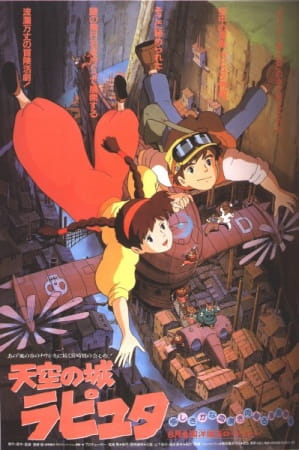
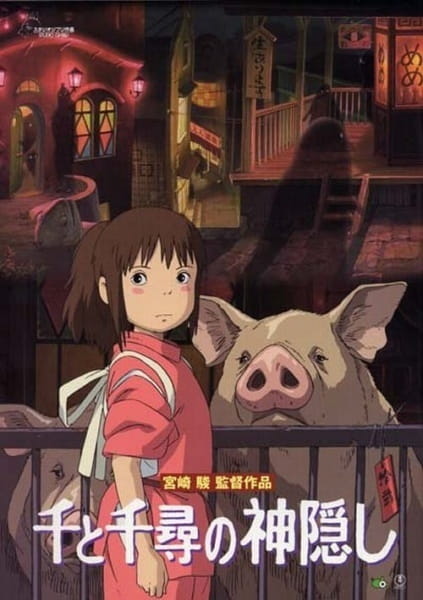
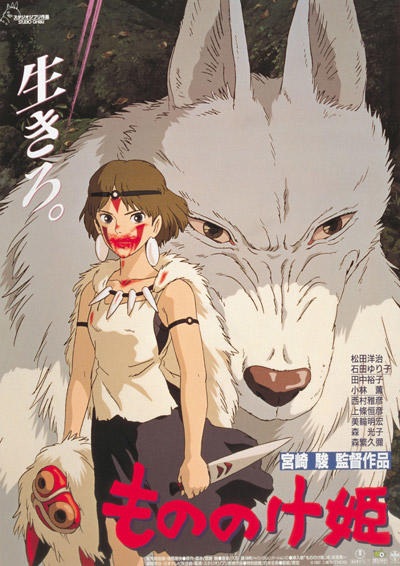
Stories about the dead coming back to life are a dime a dozen these days, mainly because of the current fascination with zombies and vampires, but rarely do we see a tale that's more akin to the legends of old, where mighty heroes brave the perils of the underworld to be reunited with their lost love. Sorry, that should be a 12 year old girl. Let's try this again ... Stories about children having adventures in other worlds are a dime a dozen these days, but rarely do we see a tale that's more akin to the stories of old, where brave youths traversed other realms ona journey that would teach them ... lots of stuff. Nope, that's not going to work either. Let's try putting the two together ... Hoshi wo Ou Kodomo, which apparently means "Children Who Chase Stars" but for some reason is called "Children Who Chase Lost Voices From Deep Below", is the latest work from acclaimed creator and director Shinkai Makoto. The story centres on a small town in the countryside, where a young girl called Asuna spends her time after school listening to the strange music that comes from the crystal radio that her father left to her before he passed away. Everything is peaceful until one rather eventful day ... At it's core, Hoshi wo Ou Kodomo is an adventure covered in a philosophical blanket that doesn't quite fit, and it shows in many ways. The plot tries to blend a variety of themes, but it never really manages to do this with the panache of Shinkai's previous works. In addition to this, there's a childishness to the narrative that some viewers may find a little annoying, and quite often events are resolved in a manner that is very "black and white". Because of this the story lacks a good measure of catharsis, especially in comparison to "5 cm Per Second" and "The Place Promised In Our Early Days", and the film concludes with a rather lukewarm resolution. That said, the movie is interesting to a degree, but much of this comes from the way in which myths and legends regarding the underworld and resurrection are tied into the plot. Unfortunately, it's clear from the opening scenes that inspiration for the anime has come from a few very well known sources, and viewers may find that they spend more time playing spot-the-influence, and less time paying attention to the storyline. One of the first things that people will notice about Hoshi wo Ou Kodomo is the very "Ghibli-esque" atmosphere it has, but while this perception can initially be ascribed to the rural setting and the young lead character, the similarities actually run a lot deeper. The scenery is a rather pleasant blend of Shinkai's trademark panoramas and the kind of countryside imagery that one might find in "Only Yesterday" or "Spirited Away". Once the action moves beyond the gate, the background art and the settings dramatically improve, and the audience is treated to the kind of vistas that one would expect in a Shinkai feature. Unfortunately the same can't be said of the design, and viewers may be forgiven for thinking that the entirety of the movie is nothing more than an homage to a certain well known studio. The characters are so stereotypically Ghibli in fact, it's easy to imagine them searching for Laputa or farming in The Valley of the Wind. The similarities even extend to the animals, and while several of the more fantastic creatures wouldn't look out of place in the forests of "Mononoke-Hime", the strongest resemblance (in more ways than one), is between Asuna's cat Mimi and Nausicaä's pet Teto. Sadly, the comparison can only go so far as the characters lack visual refinement, which is further compounded by the lack of gradation in the colour palette used for them. When it comes to the animation, Hoshi wo Ou Kodomo is a long way from the best work produced by the long-running Shinkai/CoMix Wave Inc. collaboration. The action sequences are pretty decent for the most part, but the characters can sometimes move in a stunted manner, almost as if there's a degree of uncertainty about how each person should act or react in a given situation. In addition to this there are several scenes where the characters seem to have irregularly proportioned bodies, and viewers may find themselves wondering why particular events leave them with the nagging feeling that something isn't right. The theme song, "Hello, Goodbye and Hello" is a bittersweet ballad composed and performed by Anri Kumaki, and in all honesty it's a rather fitting song given the nature of the story. As for the background music, there's a rather nice mixture of placid or bittersweet orchestral tracks, light-hearted jingles and dramatic pieces, all produced by Tenmon - Shinkai's long-time compositional stalwart. Ironically, the movie excels when it comes to audio choreography, and with an array of high quality effects on offer it can sometimes feel as though more care has been given to making the feature sound good in a pretty setting, and not enough on developing the story. The script lacks a degree of intuitive flow, and the characters can sometimes state the obvious or wax philosophical for no reason other than to add a veneer of intelligence to proceedings. It's a sad fact that the dialogue can sometimes be stunted, and lacks the nuance that many viewers might expect. While some people may believe that this is due Asuna's age and lack of knowledge, the simple fact is that it highlights more than anything else how inexperienced Shinkai is with this type of movie. That said, the more than experienced cast have rallied well, but even with their ability to project emotion and personality, there are moments when they're unable to compensate for the heavy handed script. There's a strange dichotomy with the characters as on the one hand Asuna, Shun, Shin, and pretty much everyone else aren't really anything to write home about - especially if you've watched certain Ghibli movies. On the other hand Morisaki Ryuji is a very interesting person indeed, and is reminiscent in many ways of a more humane Ikari Gendou. Unfortunately he also suffers from the same problem in that he isn't given enough back-story to support his actions and decisions, but then, that's pretty much the tale of Hoshi wo Ou Kodomo in a nutshell. Although there is some development for the lead roles, it's often sporadic as the focus seems to be more on the journey itself. Shinkai Makoto has made it no secret that the inspiration for this movie came from a story he read in elementary school, but it was during his sojourn in England in 2008 that the idea for the anime finally coalesced into something more concrete. Which, strangely enough, explains rather a lot. There's a childishness to the movie that doesn't quite fit with the major themes of the plot, and in many ways it feels more like Shinkai was testing the waters and his determination, which isn't actually surprising when one considers that Hoshi wo Ou Kodomo is also his attempt to prove that he isn't a one-trick pony. While there are some positives that can be taken away from the feature, there are far too many things that have been "borrowed" from other films, and these make it difficult to see the movie as little more than an homage. In all honesty it would have been nice if Shinkai had the courage of his convictions and relied more on his own style (like he did with "5 cm Per Second" and "The Place Promised In Our Early Days"), instead of trying to piggyback on that of another studio. That said, Hoshi wo Ou Kodomo is a fairly easy movie to watch as long as the viewer doesn't delve too deeply, and it has a much lighter and more adventurous tone that Shinkai's previous offerings. In addition to this, if one considers it an experiment with a new type of story then it doesn't just become a reasonably entertaining feature, but also a glimpse into the mind of Makoto Shinkai, and that is a much more rewarding experience than the movie itself.
Marow
April 1, 2013
Imagine someone looking at Studio Ghibli in hope of creating something similar, but end up completely missing the point and delivering a train wreck of a movie. This is how I would describe Children Who Chase Lost Voices. Although, to be perfectly honest, I do not entirely agree with the Ghibli comparison many have done. The similarities stop after a magical land, equally magical creatures and character designs that, with some small adjustments, could have come from any of Hayao Miyazaki’s flicks. The rest is characteristic Shinkai flair, albeit this time muddled with a severe identity crisis. On a first glance Children Who Chase Lost Voices doesnot sound too bad. A girl named Asuna is about to be killed by a magical beast when a mysterious boy pops up and saves her. One thing leads to another and soon she is thrown into Agartha; a land unknown to mankind. This is a good set-up and it also tries to tackle subjects such as death and bonding. But the lacklustre execution leaves extremely much to be desired. It is hard to understand how Shinkai, who at least were somewhat coherent in the past, could end up doing this mess. The story never really makes any sense and Asuna’s drive, a character she had known for ten minutes disappearing for reasons unbeknownst me, is a really bad excuse for starting it. Every ten minutes, sometimes even less, we have drama cranked up to eleven even by Shinkai standard. In most cases these moments are variations of Asuna needing to be saved which does not help making the drama less tiresome after the tenth overblown scene. There is no room to for Children Who Chase Lost Voices to actually breathe and explore its own setting. Agartha itself is never properly established and neither are the people nor the creatures that inhabit it. There is some conflict, a large kingdom and so on… but these do not matter at all. This becomes almost pathetic when none of the main characters even question or act surprised at what they are witnessing. This is because they are only there to move the already non-existent story forward. As if to rub salt in the already fatal wound, Children Who Chase Lost Voices also suffers from a directing that I never would have guessed would come from Shinkai who is an experienced person. The movie has a lot of scene transitions and cuts which results in a very fragmented story. In one second there is a chase scene, another second it has ended and then all of a sudden we are in a town. This hurts the already unexplored setting even more! Add in the tedious drama I spoke of earlier and it simply does not mesh that well. And this leads me to the movie suffering from an identity crisis. It does not know what it wants to focus on. The setting is not important, the story is poor and the characters are shallow. Yet Children Who Chase Lost Voices incorporates them all in a hope of achieving something. But that something never shows itself throughout the movie. Even the themes, death and bonding, are thrown out of the window towards the end as a way to squeeze out a tiny bit more drama instead of something believable. Whether or not Children Who Chase Lost Voices was an experiment by Shinkai to try out something new or an attempt to emulate someone else’s success does not change the fact that this is a disaster. An utter disaster that makes me skeptical of his future works.
5camp
November 19, 2011
The story is about Asuna, basically the female lead from every single Ghibli movie ever, a bit of a loner girl who spends her time sitting on rocky outcrops listening to her makeshift crystal radio. One day she is attacked by a monster, who got lost on his way to a Princess Mononoke audition, but is saved by Shun, who is basically the pretty boy male lead from half of every single Ghibli movie ever (don't worry, the other half of the pretty boy male lead is role is taken up by Shun's younger brother). But then Stuff Happens that I don't want to spoil,so Asuna has to travel to the magical land of Agartha with her mysterious substitute teacher, who is basically the villain from every single Ghibli movie...wait, actually he's not. He's more nuanced than that, and was far and away my favourite character of the movie. I'm sure the clever ones amongst you must have caught on by now that this movie is rather derivitave. Yes the movie takes many cues from Ghibli flicks, particularly Laputa which Shinkai has admitted to being a big fan of, but it plays around with the formula in enough new and interesting ways to stand out from the pack. Asuna, our female lead, does start out as rather irritatingly perfect, but as the movie goes on her loneliness and fears begin to come more to the surface. Plus it does this without ever being in your face about it. Yes, the characters sometimes have to point out the direction their character’s development is going in, such as when Asuna admits to her substitute teacher acting a bit like her father, but it flows well with the dialogue and doesn't feel the need to retread these same points over and over again. Then there's the substitute teacher, Morisaki, who I've already eluded to as being my favourite characte. He starts off appearing like he's going to be the standard deluded villain, intent on destroying all in his path to get to his goal. This is sort of what he is, but his reasoning is sympathetic and he doesn't act pointlessly evil for the sake of things. He's quick to draw his gun, but it's for his own safety and not because he just likes shooting things. His reasoning for going into Agartha makes him sympathetic too, rather than just being power-hungry or driven by sheer greed. But what makes him great is he also brings out the best in Asuna, elevating her to an interesting character in their own right. As the two travel through Agartha, they strike up a rapport like that of father and daughter, which was very fitting given what the two of them had lost in their lives. They became the family neither of them ever had and, while he was often harsh to Asuna, there was still the strong sense that Morisaki grew to care for her immensely. He's a human character with real flaws, as was Asuna, and their relationship was the real highlight of the movie. Animation-wise, the movie is stunning. OK, this is still Shinkai, and his tendency to focus on clouds remains completely baffling, but the world of Agartha is beautiful. It's essentially the same as earth, but there's enough touches here and there to make it seem alien. Morisaki and Asuna travelling through the countryside had this almost Lord of the Rings feel to it. The world can feel a bit barren at times, lacking magical towers and sparkles at every turn, but it fit the feel of the world. It was supposed to feel empty and dying. The other thing this movie nailed was the sheer scale of some of the set pieces. Where Ghibli films excel is in the fine detail, which I don't think Shinkai got quite as well in this film, but the scopes of some of the set pieces were jaw-dropping. Particularly I have to mention the giant hole in the world that book-ended the film and that multi-eyed monstrosity that was meant to represent the god of this world. And hey, since we're talking about monsters, special mention has to go to those skeleton-like creatures that swam on the ground like sharks of the shadows. They were flat out creepy. It's far from a perfect film though, and I particularly have a bone to pick with the music. The sweeping orchestral score has all the subtlety of a child smashing a spanner on a table to get attention. Because the same score is used for almost every single slightly dramatic scene, it robs the music the intense effect it's supposed to have on the more dramatic scenes. It's also a bloody long film, about 2 hours long, and takes a while to get going. It doesn't really pick up until the characters visit Agartha, and that takes almost an hour. This is partly down to Shinkai spending far too much time setting the scene, showing off the landscape of Asuna's home town. Which is fair enough, highlighting the ordinary world so it makes the contrast with Agartha that much stronger, but he really spends too much time on it. I really didn't need that shot of dragonflies having sex Shinkai, and could you please stop it with the bloody clouds? Yes, these scenes are incredibly important to establishing Asuna's character for the development that occurs later on, but it doesn't stop the scenes from being boring. And no, sticking in the fox-cat from Nausicca won't make these scenes that much more tolerable. That's just cheating. Plus since it's basically Ghibli, it carries over not only the strong points of magical worlds and amazing attention to detail that these films have, but also carries over the warts too. Towards the end it really starts to get a bit silly, especially when the giant monster thing swallows the main character and jumps down a bizillion foot drop in order to transport her, looking rather like a pregnant woman crossed with those robot things from Laputa. It even brings over the forced in environmental message that Miyazaki works into his films with the grace and subtlety of a hippo doing ballet. It did only got a passing mention and, while clunky, wasn't anywhere near as bad as Miyazaki's tend to be. Besides, the movie earns so many points by adding the much needed nuance to the main character and the sorta villain that I can forgive most of the mistakes it makes. Asides from the clouds. Please stop with the damn clouds. There is one final problem I'd like to highlight. There was something off about the pacing. The story was very well told and wove the themes of loneliness and loss in extremely well, but the transition from set piece to set piece was clunky, as though it was adapting a TV series and these were the gaps between episodes. As I said, it's a two hour movie which is really a touch too long, but I also wouldn't want to cut much out of it (asides from all the clouds). I think it may have suited a short Noitamina length TV series or OVA instead. You could have delved into some of the characters pasts a bit more, or told us more about Agartha. That was one thing I was a bit miffed about. There was an interesting conflict between Morisaki and the people of Agartha where he accused them of accepting their decay and being lazy, which tied quite well in with his own story, but it didn't really tackle the Agartha side of the story once he'd left. While there are plenty of flaws with the movie, I did end up enjoying it a lot. Not sure how fans of previous Shinkai films will take this, as it's a drastic change from them. I suppose the themes are kind of similar (or at least I'm told the themes are similar, I was too busy gnawing my arm off in an attempt to stay awake to notice the themes of his previous films). But if you like Miyazaki's films, you'll like this. It's too long, take a while to get going, gets a bit silly at times, and someone needs to bop the composer over the head and tell him to lay off the full orchestral sweeps every once in a while, but it's a genuinely entertaining film with a well told story. And clouds.
Tyblazitar
May 7, 2011
Disclaimer: As this obviously hasn't been subbed yet, and my Japanese is nowhere near fluent, it's possible that certain minor details in the plot might have escaped me. Please keep this in mind while reading the review. Makoto Shinkai's most recent work is something quite new for him. The main criticisms of his works has as far as I can tell been the character designs being to simplistic and rough, as well as all his three longer works being quite similar. Though I would contend the latter point, it's certain that Hoshi wo Ou Kodomo is different, in both aspects. It would seem that Shinkai hasmoved away from his tragic love stories with sci-fi elements and to something more Miyazaki-inspired. But does he succeed? (OK, I guess this isn't much of a cliffhanger considering my scores.) Story: Our heroine, Asuna, lives a relatively normal, albeit busy life somewhere on the countryside, until she one day gets attacked by a strange beast and saved by a mysterious boy. This leads to an amazing adventure in the strange underworld Agartha. Sure, this doesn't sound like anything new, but the progression of the story is quite interesting, unpredictable and exciting. All the characters have their own stories and agendas, and the film manages to involve us in all of them without losing focus. The climax is extremely moving in the way only Shinkai can manage, and nothing ever feels unnecessary or forced. Art: Art is certainly one aspect where one have high expectations of Shinkai, but he delivers anything one could want and more. Takayo Nishimura, the man behind the character designs in 5 cm/Second is back, but Hoshi wo Ou Kodomo looks distinctly different. The designs are still relatively simple, but bursting with life and charm. I would compare them to the designs found in Hayao Miyazaki's films, which certainly seems a plausible influence. In this way, Shinkai has ridden himself of what some people thought to be the weak point in his aesthetic, while still keeping true to the relatively simple designs he's always used. The rest of the art is amazing. The backgrounds, whether they're clouds and stars or forests and plains, are breathtakingly beautiful, and what's particularly interesting about Hoshi wo Ou Kodomo compared to Shinkai's other works is the setting. While he certainly has used nature before, there has usually been more focus on cities or space. In this film, both the Japanese countryside with mountains and forests, as well as the fantastic world of Agartha with its plains and ruins, are brought to life splendidly. Animation-wise there is nothing to criticize. The animation flows smoothly and beautifully, and Shinkai certainly knows how to work the angles and perspectives to get the most out of the scenes. This is very evident in many of the action scenes, and I was particularly impressed by a swordfight during sunset, the amazing colors of the background framing an intense burst of life with the "camera" flying all over the place, creating an incredible impression. Sound: Tenmon is back, and he's better than ever. Utilizing a range of instruments including his famous piano pieces as well as some wonderful violins, his music set the mood for the film perfectly. What struck me the most was the way the music could change mood in a heartbeat without seeming out of place, particularily evident in a scene where you first get the "hero riding out to save the princess" mood, and when the scene shifts to the damsel in distress, as it were, it seamlessly changes to an intense "our friends are in great peril" theme. On the voice actor side, Shinkai has managed to score some very talented people. All the three main characters are quite big names, and Kazuhiko Inoue's role as Asura's teacher, as well as Hisako Kanemoto as Asura herself both excel, and really do their part in making their respective characters believable. Miyu Irino as Shin and Shun is also a very fitting choice. However, one of the most impressive voice actors was Rina Hidaka as Mana, a character who doesn't use words, but conveys all her feelings with random sounds. A challenging role to get right, but Mana's character turned out perfect. Character: Asuna, our main character, is a very busy girl. She lost her father at a young age, and her mother is very busy at work, so she does a lot of chores, while at the same time keeping up her perfect grades and finding time to climb the nearby mountain to listen to the radio her father left her. As the story progresses, she is faced with quite a lot of hardships, and one can see her progress through dealing with them. She is not quite sure why she's on the journey she ends up on, and seeing her discovering more about herself as she faces new challenges is quite moving. Morisaki is Asuna's new teacher, and one of the main catalysts of the adventure. He starts out mysterious, but one quickly learns of his goal and the lengths he will go to reach it. He's cold and blunt, but though he will not give up on his goal, he is also considerate of others, and his relationship with Asuna develops in quite interesting ways. Shun is a mysterious boy from Agaruta who, like Morisaki, starts out mysterious and cold. We learn that he's a conflicted and confused boy trying to find his place in the world, and he develops greatly during the course of the movie, finding great courage within himself. There's also a great supporting cast, such as Asuna's mother, who's very busy, but still manages to care a great deal about Asuna even after her husband's death. The previously mentioned Mana, as well as Shin, are also great characters for their purpose, but the one that really sticks out is Mimi, Asuna's cat, who follows her through the journey and whose vivid personality really makes one attached to it. Overall: Though I'm a huge fan of his other works, it's great seeing Shinkai going in a new direction, this time aiming at a much larger group of people, from children to adults. The similarity to Miyazaki's adventure films is certainly present, in particular there were quite a few parallels to Mononoke-hime, but he still manages to keep his own unique style, including the extremely emotional scenes that he excels at. I certainly look forward to more Shinkai works, and would recommend Hoshi wo Ou Kodomo to anyone, regardless of whether or not you liked his earlier works.
Psychotik
December 2, 2011
Every year or so, there is usually an epic movie that comes out on the silver screen. A story of a kid sucked into a fantasy world of some kind, willingly or not, and embark on an adventure of a lifetime. These films have almost become a dime a dozen these days, so they really need to be excellent and memorable to become a classic. Sadly, I don't really feel like this one treads new ground. In this tale, we follow Asuna, a regular, independent teenage girl. We also meet a substitute teacher (Morisaki) and follow them through an underground world to play God and revivethe dead. Ambitious, you can call them, though it is an understatement. The concept of resurrection is certainly very interesting to explore, though this movie doesn't really do that, even if it is a main focus. It lead to a very anti-climactic ending. They made very quick work of the ending. They could have really explored more about resurrection and be more imaginative, but instead it felt lazy. Everything leading up to the end felt cliché and predictable, thus, a little boring. The characters didn't really standout, either, though they aren't terrible. Asuna is a fun little character, always happy and optimistic, though also a little bland. Morisaki was also a little boring, always serious and never letting loose. They could have played around with him a little but we got nothing. The same can be said about most of these characters. They're pretty one-dimensional and not very believable. Of course, I have to praise the art. "Scenery porn" as many like to call it. The landscapes are all very beautiful and detailed; they remind me of shows like 5/cm. It's probably (okay, definitely) the strongest point of the movie. The lighting can be really exquisite at time and DEM CLOUDS. I can jerk off to those clouds all day, but I digress. Being a movie, the animation is very good but not exceptional. Standard movie stuff. Overall, the music is nice and fits the scenes well. They used the music well, as well as silence for those tense moments. The only qualm I have with it is that it just isn't memorable at all. It's hard to recollect any song from memory. Voice acting is decent, but even they couldn't save the sort of bland characters. This movie is just another fantasy story that doesn't standout or offer anything new. It isn't really remarkable at anything, except perhaps the art. The story left more to be desired and a lot felt somewhat unexplained, especially near the end. I still kind of enjoyed it though. The characters were a little boring, but I still enjoyed their interactions with the new world. If you're looking for something just to enjoy on a boring night, or need a movie the whole family can enjoy, you can give this a try. If you're looking for a masterpiece, you should probably look elsewhere.
Popularity
#1220
Members
229,661
Favorites
720
Episodes
1