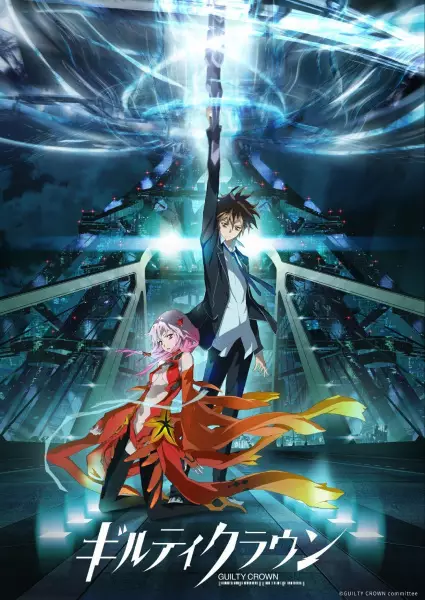


ギルティクラウン
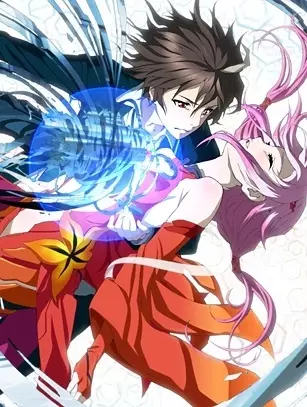
On December 24, 2029—the day colloquially known as the "Lost Christmas"—the Apocalypse Virus spread across Japan, bringing death to its citizens and plunging the country into utter chaos. In an effort to establish order, the United Nations sends the GHQ to assist with the crisis by containing the outbreak while removing all political autonomy in the process. A decade later, the country still lives under their control, unable to break free from their draconian rule. Frustrated with the state of the nation, a resistance group named the Funeral Parlor aims to liberate Japan from the GHQ. Led by the charismatic Gai Tsutsugami, the group plots to steal a vial containing the "Void Genome" to further their goals. The vial falls into the hands of internet vocalist Inori Yuzuriha, who ends up being hunted by the GHQ's Anti-Bodies forces. Having nowhere to go, she seeks refuge in a warehouse where she meets Shuu Ouma—a socially awkward high school student who is a huge fan of her music. Shuu gets dragged into the conflict the moment he rescues Inori, and the Void Genome shatters in his hand, granting him the "Power of the Kings." While learning how to control his grand new ability, Shuu must now fight to liberate Japan from its cruel oppressors. [Written by MAL Rewrite]

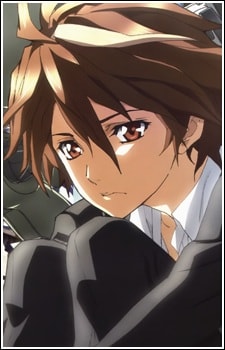
Main
Main
Main
Supporting
Supporting
Supporting
Supporting
Supporting
Supporting
Supporting
Supporting
BrentoLand
March 1, 2014
“The right to use my friend as a weapon. That is the sinful crown I shall adorn.” Intro: Whether you like it or not, opinions from others can affect an experience. This can also become apparent when you watch an anime. If you hear negative opinions, you end up going in with low expectations and you might enjoy it more. Set your expectations too high, and you end up disappointed. Today I’ll be reviewing Guilty Crown, an anime that was really freaking popular back in 2011. But unfortunately back then I wasn’t into anime so after hearing generally mixed opinions about it, I decided to checkit out for myself. So was it a decent anime or does it completely crash and burn? Well let’s find out. Story: The story of Guilty Crown takes place in the year 2039 in Japan. 10 years prior an apocalyptic event known as Lost Christmas spread a cancerous disease known as the Apocalypse Virus throughout Japan. Since then Japan has relied on a multinational organization called the GHQ to get them out of these hard times. The GHQ however does not care about Japan or its people and use the Apocalypse Virus as an excuse to slaughter innocent civilians. A rebellion organization named Funeral Parlor was created in order to free Japan from the grip of the GHQ while saving the people of Japan in the process. I’ll be honest, the story in Guilty Crown is a complete and utter mess. The plot comes off as jumbled and confusing. And the story is full of clichés and terribly written plot points. It gets worse in the second half when the story has ass pulls so big I’m pretty sure the story was left with an asshole the size of the Mariana Trench. I thought that the story had a lot of potential with its plot set up but it completely fails to capitalize on it. Most of the time it just leaves you feeling confused and to an extent you might even start to get pissed off at the show. I feel that the story in Guilty Crown tries to cram too many elements together leaving you in a state of confusion throughout the story. This is one of the many weak points that Guilty Crown has. And trust me, not just its story has problems. Characters: The main character for Guilty Crown is Shu Ouma, a normal 17 year old highschool student who ends up right in the middle of the conflict once he obtains the mysterious and supernatural power know has the Guilty Crown. This power gives him the ability to extract a person’s “Void”. A “Void” can best be described as a physical manifestation of a person’s heart. He is then recruited into Funeral Parlor so he can help bring an end to this war. Now the Guilty Crown power that Shu obtains is where some of the plot holes come up. It helps create what is known as Deus Ex Machina writing. For the uninformed, Deus Ex Machina writing is defined as: “A plot device whereby a seemingly unsolvable problem is suddenly and abruptly resolved by the contrived and unexpected intervention of some new event, character, ability, or object. Depending on how it is done, it can be intended to move the story forward when the writer has "painted himself into a corner" and sees no other way out, to surprise the audience, to bring a happy ending into the tale, or as a comedic device.” So you have a door that needs to be opened? Look, conveniently there’s a Void that can do that! What’s that? We’re all about to die? How can we be saved from that? Let’s just fuse Voids together! The Guilty Crown even has rules and limits to its power. But those rules and limits don’t apply to it when the plot demands it. This is something that infuriated me when I was watching this at first. The lack of consistency holds the story back. I’ve noticed that when people talk about the characters in Guilty Crown, most of them don’t like Shu as a character. Everyone complains that he’s too weak or indecisive making him one of their least favorite characters. Now while I agree that these are some of Shu’s flaws, I didn’t hate him. Hell I thought he was a great character. While yes he has these issues, I was actually able to relate to him and some of the social problems that he has. There were times where I could see why he was acting weak or indecisive and I didn’t hate him for it. Shu gets plenty of development in the second half of the show, even though for a short period of time in the second half he becomes an unlikable prick. So unlike most people I found Shu to be a good main character and he ended up being my favorite in the show. Inori is the name for our female lead in Guilty Crown. She is known to be a famous pop singer in Japan and I have one word to describe her: Lifeless. She basically has the personality of a cardboard box crossed with Kirsten Dunst. I DID NOT LIKE HER. Throughout the entirety of Guilty Crown she has almost no point. Inori basically serves as a plot device to give Shu motivation for the second half of the show. The romance between Shu and Inori felt forced and awkward and as a whole unsatisfying. It just goes to show that even though you’re hot as hell, it doesn’t make up for the fact that you have no personality. The last main character is Gai. Gai is the leading member of Funeral Parlor and he actually showed promise in the beginning episodes of the anime. But once we get to the second half of Guilty Crown, he becomes the embodiment of Deus ex Machina writing. What happens with him in the second half is considered to be the worst part of Guilty Crown’s story. This caused him to be one of my least favorite characters in this anime. Actually the characters in Guilty Crown are one of its major problems. Guilty Crown tends to introduce a lot of characters at once and gives them all little to no development whatsoever. In fact I find it hard to actually remember a lot of the side characters names, even when I was watching the show. I just gave them nicknames like Asshole, Comic Relief, Cat Girl, and Slut. The only character that I felt got enough character development for me to like them was Shu. The characters were a definite disappointment in Guilty Crown. I wish some of them got more development then they did. Then maybe they would be good characters. Or maybe if some of these side characters served a point. This is one of Guilty Crown’s biggest weakpoints. Animation: One of the things in Guilty Crown that I will give universal praise, is the animation. The animation is BEAUTIFUL. Production I.G. did a truly amazing job with Guilty Crown. The animation is consistently great looking. The character designs, the movement, the colors, the action sequences, everything is visually appealing and there are little to no errors with consistency throughout. Guilty Crown was directed by Tetsurō Araki, who is most well-known for directing shows like Death Note, Highschool of the Dead, and Attack on Titan. And just like the shows I mentioned, Guilty Crown has amazing action scenes. The points in Guilty Crown where I had the most fun were definitely the action scenes. The combination of animation and music made them my favorite part of the anime. It is probably one of the reasons people watched this anime in the first place. The animation is a definite strong point for the anime and I can’t praise it enough. Sound: Speaking of the music. THE MUSIC. Throughout all of Guilty Crown I never had one problem with the music. Guilty Crown’s soundtrack is filled with powerful songs for both the action and the story heavy scenes. Upon watching Guilty Crown, its soundtrack quickly crawled up into my favorite anime OST’s of all time. The music is overall amazing. Guilty Crown has recently gotten a DUB by FUNimation. The English DUB and Japanese DUB are both very well done. I would even consider this one of the best DUBs FUNimation has ever done. Austin Tindle does a fantastic job playing the role of Shu, making him sound nervous but also confident when he has to. While I didn’t like Inori, Alexis Tipton did a great job portraying her character. In fact the only character that seemed to be off in the DUB is Monica Rial as Tsugumi. Overall the DUB is great and I would recommend either the SUB or the DUB to anyone wanting to watch the show. You guys are good with either one. Enjoyment: Judging by the large amount of bitching I’ve done throughout this review, you would assume that I hated Guilty Crown. Well actually it was the opposite, I loved Guilty Crown. You see before watching it, I heard generally mixed to negative things about Guilty Crown. So I went into it with low expectations. Due to this I was able to enjoy it more than others. Yes the story and characters were pissing me off. But once I got to around the halfway point, I decided to stop taking them seriously and I had a much better time because of it. I believe that if you want to truly enjoy Guilty Crown you need to accept it for what it is, pure entertainment. I believe you will have a much better time doing so. I know I did. Hell, I’m pretty sure that’s what most people who enjoy Guilty Crown did. My recommendation is to just shut your brain off and enjoy it for what it is. Conclusion: Guilty Crown is an anime filled with problems. A plot filled with holes and ass pulls, some uninspiring characters, and serious writing issues. But Guilty Crown is saved by its amazing animation and music, a fantastic DUB, and just being all around entertaining show. Guilty Crown is not for everyone, but if you don’t take the story and characters seriously, you might find a show worth watching. I give Guilty Crown a final score of: 8/10
On December 24, 2029—the day colloquially known as the "Lost Christmas"—the Apocalypse Virus spread across Japan, bringing death to its citizens and plunging the country into utter chaos. In an effort to establish order, the United Nations sends the GHQ to assist with the crisis by containing the outbreak while removing all political autonomy in the process. A decade later, the country still lives under their control, unable to break free from their draconian rule. Frustrated with the state of the nation, a resistance group named the Funeral Parlor aims to liberate Japan from the GHQ. Led by the charismatic Gai Tsutsugami, the group plots to steal a vial containing the "Void Genome" to further their goals. The vial falls into the hands of internet vocalist Inori Yuzuriha, who ends up being hunted by the GHQ's Anti-Bodies forces. Having nowhere to go, she seeks refuge in a warehouse where she meets Shuu Ouma—a socially awkward high school student who is a huge fan of her music. Shuu gets dragged into the conflict the moment he rescues Inori, and the Void Genome shatters in his hand, granting him the "Power of the Kings." While learning how to control his grand new ability, Shuu must now fight to liberate Japan from its cruel oppressors. [Written by MAL Rewrite]
xbobx
November 5, 2013
"There are no innocents fighting a war" specially when it comes to the front line. If you are fighting, you're fight for an ideal, fighting to protect the lives of the ones you cherish, but in order to do it you're ceasing the lives of those who oppose you. Inevitably, together with it comes a feeling that question if what you are doing is right or is wrong. This feeling is called Guilt. The main focus of this anime. This review will follow a different approach than the majority here. Trying to present a different viewpoint. Anybody who searches through reviews will noticed that a lot of people gave prettylow scores to this series, and even lower to its story. Why is it? There will never be a consensus, since each reviewer have a personal interpretation of the matter, however, I strongly believe these scores results from a unexpected complexity of the storyline, not common to action animes. From the surface, Guilty Crown seems just like any other action/battle shounen series, the first episodes will really remind -those who watched- of a certain series that also has mecha and this genetic/genome element on it. However, as the story progresses it becomes clear that its storyline is way denser and heavier than it appears to be. If it happened to disappoint so many people, this is because it was badly driven and poorly organized at critical turning points, but it certain had the elements to be a masterpiece. This is something to give credit for. Another common complain is its ending. This review won't touch this matter. It's unreasonable to blame the series for not making the ending you wanted. It wasn't a ambiguous neither a vague ending, so there are no complains towards it. Many people misinterpret what this anime really is about. It isn't a romance, neither a adventure, it's far from it. Interesting that some OST gives a clue of its true motivators, and yet, many seems to not get it. (Listen to the OST -Ready To Go) Guilty Crown is about how a society can go to ruin when a crisis appears, how power can corrupt, the importance of friends, and specially, family. One can simply watch it for the battle scenes (worth mention: their background music was really well elaborated) but should have in mind the story isn't simple as a swordplay like that. The reason why Guilty Crown story collapses on itself is the amount of different elements presented in a short period of time. Imagine a book series. One of those trilogies that each book have more than 500 pages, no pictures, and a heavy built background story. Now take everything and compress into a 22 episode anime series. There is no way it would have room for everything. Guilty Crown tries to tell a entire saga from it's birth, through its glory and till its fall. New action and thrilling elements are introduced non-stop to a point the viewer starts to question what is all that about anyway, and this is where Production I.G lost it. The big mystery, the key for the story, was perfectly and cleverly elaborated, hidden from the beginning till the end and when it was time for the curtain to fall, it closed up with a grand-finally that just a few could say they saw it coming. However, while the writers were focusing into elaborating this solo segment of the story, they complete piece was running towards a dead end, with a absurd amount of loose ends and continuation mistakes. In order to save it, they manipulated the original structure of the characters, performing a completely change of ideology and personality of some of them. This, not the story, ruined Guilty Crown's kingdom. This sudden change in some characters is what did the most impact on this show dignity. People sure change as time goes by, and some tragic or happy events can also make their feelings and attitudes to change. However, nobody goes through a complete ethical and moralistic meltdown from the night to day, neither someone can recover from days of suffering in a blink of an eye. Perhaps if the second arc of the anime was divided from its main piece as a second season, it would be easier to swallow, but the way it was done, doesn't mater how you see it, it's too abrupt. -Dear Production I.G, just one "breather episode" (ep.13) can't possibly be enough to shoulder a change like that. Also, interesting to mention, Shu -our protagonist- isn't the "hero" of the series. The character that holds this significance is another, but in order to now spoil it, I'll void its name. Shu, instead, is the figure of the anti-hero. That is why it's correct to expect from him some attitudes he took, and that is also why some changes in his character are acceptable. He drives away from the pattern of shounen's heroes. Where the protagonist "seeks power to protect", he is afraid of it, is insecure, childish and lacks of determination. If Guilty Crown has any of originality on it, it's right on this topic. Even though, the OST makes up for this series. The reason why I can give it a solid 8 is because of the magnificent job that was done regarding the sound production. From all the little blasts or fire effects to complex insert songs, they all sounded real, equating to a cinematographic production. These insert song, themselves holds an important meaning on the story and also works as a breather for action-packed scenes. The reason why the enjoyment reached a fair score was also due to the pieces chosen for some key scenes. Strong operas at some parts, along with epic fast-paced drum & bass, and even some classic-style compositions, turns the entire sound division an pleasure to listen. I prefer to consider Guilty Crown as a deviant series. Not for what is on its surface, neither for its concept. But for hidden aspects of the show. First, some subtle dark humor in the villains dialogue aligned to a curious irony in some episodes and twists of the story. Second, for the way it manages to be eccentric at times but still don't loose its main characteristics as a "battle shounen". The final couple of episodes brings ideological senses with a "sweet" sarcasm that you gotta be courageous to try it. That conflict of what is sick and what is beautiful contrascenes with what is right and what is wrong. It is the most honest truth say this series is fascinating. Fascinating, and this is it. It failed in so many aspects it becomes hard to give it a higher score. However, it is entertaining, have some alluring elements -I'm not talking about Inori (...) Or maybe I am?- and ends the game with a interesting plot twist plus a acceptable epilogue. At least, I'm glad this didn't end up being a 200 eps. anime. Numeric score: Story 10 - Art 8 - Sound 10 - Character 4 - Enjoyment 7 - Overall 8. (You know you can see it by clicking the hyperlink where it says "overall" right?) Putting it simply. Definitely worth watching for its uniqueness. For being... Exceptionally ordinary.
saintlier
January 13, 2012
*edited* As I've finished Guilty Crown, I'll re-review it, keeping the end of the series in mind. Guilty Crown had an endless amount of potential. While watching its earlier episodes, I really, really liked the series and fought to support it among the fandom. But then, this happened-- music: I'm amazing. art: I'm beautiful. plot: I suck This pretty much sums it up. Guilty Crown's OST and animation are phenomenal, and no viewer can deny that. However, the plot, in essence, sucked. It seems as if it was made to specifically rely on cliffhangers and events that would excite the audience for a few seconds. You could actually relate theplot to the classic penny dreadfuls. The plot got very lost among those attempted plot twists, as a few elements of the story were not justified or relative. Or even necessary. Details were left unattended, resulting in this very messy outcome. Still, I quite enjoyed watching it because I was so interested in what was happening next. I must at least commend GC for executing the plot twists so well. All in all, the ending was fulfilling enough, but the way we got there was less than satisfactory. The characters were also very weak, as many only held a purpose as walking fanservice. Shu doesn't count, because he is the protagonist who starts out all lame; but a large portion of the females were not strong, admirable characters in respect to their role in the story. Once again, Guilty Crown had incredible art and music, and greatly lacked a good plot, but did plot twists and cliffhangers well. I wouldn't really recommend this. But I'd recommend listening to the OST by itself. Note: For you OST junkies like me, the OST is exceptional; with powerful orchestral movements full of energy and triumph, or suspense and a somber mood when necessary. Of course, as this show was placed Twenty Minutes into the Future, there is a large influence of techno and guitar that fit right in place. The vocal tracks had some problems with the German and English pronunciation, but it can be easily overlooked as the backing track is amazing. The multiple reprises of a singular theme also deserve praise, as it is versatile enough to be used as an emotional piece or battle music.
Miharu-Kun
March 16, 2012
With the large amount of Guilty Crown reviews going around lately, It wouldn't be too hard to find a 'decent' review, right? well that's not the case at all, It seems that most of the reviews are either written by blind fan-boys/fan-girls or haters, 10's,9's,4's and 3's seem to be the popular choice of overall rating, though looking at Guilty Crown in a balance way, this anime definitely deserves a 7 and I'll explain why in the next couple of paragraphs which will you most likely will flick through. = Story (3) = If you have been watching Guilty Crown or have seen some of the rantingson the forums, you would know that the story is filled with cliché's and awful execution (for the most part anyway), So I won't go that in-depth to the story, basically just think of it as a mecha-action-supernatural-apocalyptic-drama-comedy-Sci Fi-romance-school-fan service super show. In other words, Shu (Shuu), your average 16-year-old guy living in a future version of Tokyo get's himself wrapped up in the activities of terrorist group defying the government called Funeral Parlour, he meets the leader Gai, find's out his favourite singer is a member of the group and that the government is corrupt blah blah blah = Art (10) = If there's one thing that no one can complain about, I'd say it's the art. Every episode looks of cinematic quality and the character designs are well down as you'd expect from Production I.G and Redjuice (supercell). If there is one thing to fault about the art, I believe it's the design of the apocalypse virus, It just doesn't look like some deadly disease that someone would be afraid of, though that doesn't really matter. = Sound (9) = Sound is also a great part of Guilty Crown, the insert music and the OST is brilliant, the first OP 'Euterpe' was only used in the first episode which was disappointing since the second OP which lasted for 11 episodes wasn't hardly as good. The best OP in my opinion and one of my favourite anime openings is the third and last one 'The Everlasting Guilty Crown', It seriously made the other two seem like crap in comparison. = Character (7.5) = 7.5? That's not even an score according to MAL is what you might say though that's really the only score I can give it, The characters and their developments weren't very good though they weren't just good either, sort of in-between. The problem with the characters is that they introduced too many too fast, there wasn't really any-time to grow attached to them or even remember some of them at all. You didn't know which ones were supposed to be Minor or Main characters or just background ones in most of the first half. Another problem was the likeability of the main characters in most of the FIRST HALF, Shu just sit's around most of the time, being a indecisive, annoying loser. Gai was just emotionless (for the most part) and all Inori could do was use the power of singing(?), provide fan-service and dodge (she might of shot a gun once) but that's it. Though, (without spoiling anything) In the second half, the main characters had great development. = Enjoyment (7) = Enjoyment levels really depend on how serious you take Guilty Crown, don't go into the series expecting a masterpiece because you will most definitely be disappointed and hating on it. Though if you are a simple person (no offence) and just like your anime with ton's of great looking action scenes and a little bit of everything rolled in one (even if the result is total mess) then you will obviously enjoy the series a lot more. = Overall (7) = Overall, Guilty Crown is definitely not a masterpiece, though it does NOT deserve the crap reputation it gets, sure the story becomes screwed up beyond repair with the can of cliché's they sprung at you each episode and the character development doesn't really start until halfway through the series, what really matters at the end of the day is how much the viewer enjoys the anime, people will hate, like or love GC and that's their opinion just as this review gives my opinion, I don't really care about the 'helpful' or 'not helpful' clicks, as long as my review isn't buried so deep that it can't be of at least some help to the many users who are looking for a new anime to enjoy, and that's the whole point of reviews, to help people decide whether a anime would be to their liking or not.
Archaeon
May 18, 2012
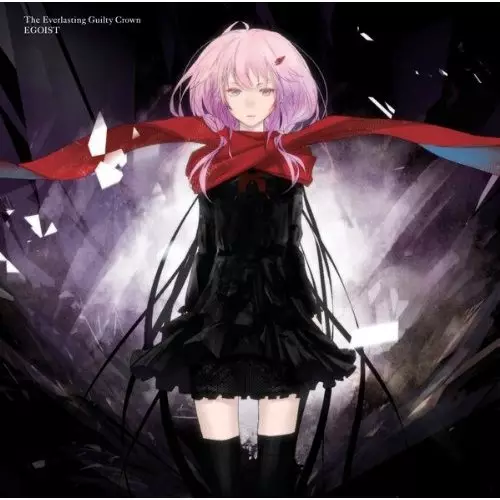
Many people are aware of the financial problems faced by the anime industry, and one of the methods that studios have adopted over recent years to try to shore up their crumbling foundations is to adapt popular manga, games, and more recently, Western comics. This approach has become a tried and tested moneymaking endeavour for the majority of studios, but in many cases this is simply due the fact that the source material caters to the lowest common denominator - which usually means fanservice. Unfortunately, the relative success of these shows have allowed them to become the norm rather than the exception, and with thatcomes a number of problems. The sad fact is that while it's okay to find inspiration from other sources, the industry has become so used to the adaptation that studios and writers find it difficult to produce work that could be considered "original". Instead, what passes for a unique story tends to be nothing more than a collection of concepts and ideas from other tales that are thrown together in the vain hope that people will rush to buy the end product because ... well, because someone tells them to. But rather than dwelling on such things, let's take a look at Guilty Crown. Set in Tokyo in the year 2039, a decade has passed since a mysterious outbreak known as the "Apocalypse Virus" killed thousands of people and brought Japan to its knees - a disaster that would later be called "Lost Christmas". Since that time Japan has lost its independence, and has become a martial state governed by an international organisation known as GHQ. The story opens with a pink-haired girl and a small robot escaping from a futuristic-looking facility, but security forces injure and corner her until she falls off a bridge. The next morning is just like any other day for highschool student Ouma Shu, an awkward young man who is a fan of the pop-group Egoist, whose lead singer just happens to be a waif-like girl with pink hair. And then everything gets ... weird. Guilty Crown is a bit of an odd duck as it attempts to blend several disparate themes, but doesn't quite manage to finish the job. The plot has clearly been influenced by several popular franchises - which isn't necessarily a bad thing, but the execution is where the writers have let themselves down. The narrative is often disjointed, and many events in the storyline appear to have no logic behind them other than to put Shu through an emotional wringer. In addition to this, the writers appear to have taken a rather nonchalant approach to reasoning and rationale, one example of which is how GHQ's repeated massacres are never covered by any sort of media outlet. This seemingly lackadaisical attitude is apparent in several areas of the plot - which is littered with "coincidences" - and these cause the narrative to have a mechanical feeling. In many ways it's almost as if the story was nothing more than a collection of bits that would apparently appeal to the largest number of people. Aside from the inclusion of numerous well-known aspects that have clearly been transplanted from other popular stories and the "plot-by-numbers" approach, Guilty Crown also suffers from the rather obvious idea that most adults are evil and only kids are able to save the world. That said, the series does have some good points, in particular the way it attempts to recreate a situation similar to that found in "Lord of the Flies" by putting all of the students in one place and imposing self-rule. There are other, similarly dark influences that add a veneer of maturity to proceedings, but sadly these aren't enough to support the inherent weaknesses in the narrative - the main one being the decision to make yet another school-based anime. In terms of production quality, Guilty Crown is arguably up there with some of the better shows of recent years, but the sometimes stunning visuals and effects are tempered by a few issues that may initially appear to minor, but in actuality are representative of the mentality of the show's creators. It's obvious that a great deal of thought has gone into the background artwork and set designs, but the same isn't true of the characters. For the most part they look good, but the decision to feature highschool students places an immediate limitation that becomes obvious when one considers the variety of features and body shapes found amongst the adults. The problem lies in the fact that the design of the younger roles includes an element of stereotype in order to impart a degree of familiarity - thereby making the show more accessible to people. It's an old marketing trick that has become a staple of the anime industry over the years, and while Guilty Crown has tried to be a little bit more subtle than most in its usage, one does have to question the logic behind Tsugumi. A cat-eared tsundere loli wearing what is effectively a plug suit (and a maid costume later on), only serves to highlight the thought processes of the show's creators. Thankfully Production I.G. maintain their standards when it comes to the animation, and the series is littered with flowing, well choreographed action scenes. The characters are well-balanced in their movements, and a degree of care has been taken with those that are injured, disabled, or suffer from an affliction. Like many anime that run for over twenty episodes, Guilty Crown features two opening and ending sequences - each with an original track written by Supercell. The first OP is a rather dizzying blend of effects, character montages and action scenes while the song "My Dearest" - a suitably fast paced and dramatic pop song performed by Koeda - sets the tone for the series. "The Everlasting Guilty Crown" performed by the fictional band Egoist is the track of choice for the second opening sequence, but while the artwork and design ethic have clearly shifted to promote a bittersweet atmosphere, the actual content is much the same as that of the first OP. Egoist also perform the melancholy ballad "Departures ~Anata ni Okuru Ai no Uta~" for the first ending sequence, which features Ouma Shu and Yuzuriha Inori walking away from each other against a backdrop of character art and effects. The second ED contains a mixture of video footage of landscape speeding by, scenes from the series and a few still images of the school environs that are "projected" onto a screen behind Inori and Shu as they decide to run - all while Koeda performs the rather upbeat rock song "Kokuhaku" Which brings up one small issue. Although it's true that some thought has gone into the composition of the opening sequences and that they are very well choreographed, both also feature overt plot spoilers. Now this does happen in other anime, but in general there are efforts to avoid such things occurring - which doesn't appear to be the case with Guilty Crown. Aside from that minor niggle, the high production standards are also reflected in the quality of the music and audio effects. Sawano Hiroyuki has taken care to ensure that the background pieces are varied and suitably dramatic where necessary. The wide range of sounds and noises are clear and distinct, and the audio/visual choreography shows just how much effort has been made to produce a show that looks and sounds great. Unfortunately the same can't be said of the actual dialogue. Now while it's true that Guilty Crown features a range of characters and personality types, for some reason the decision was made to revert to old anime stereotypes and then write justifications into the storyline. The script is littered with monologues, diatribes, conversations and arguments that would grace any show where the "hero" has to lead his people to salvation whilst fighting against the enemy and his inner demons, forming a pseudo-harem along the way, and showing the world just how much of a tragic-yet-heroic figure he is. Thankfully the actors are more than capable, but no matter how good their skills are, prosaic and formulaic dialogue will always be just that. As for the characters themselves, Ouma Shu is the kind of leading man who can be found in a number of other titles - quiet, reserved, doesn't have many friends, and a bit of a loser - and therein lies the problem. The writers have taken great pains to try to show him as a "human" more than anything else, but in their efforts to promote Shu as the tragic hero, they've ignored one of the most basic rules of characterisation. In other words, Shu has no personality whatsoever - even at the end of the series when all his "suffering" is over. It's this apparent inability to develop the characters in any meaningful way that makes them appear as nothing more than inane, and the lack of any real growth means that everyone pretty much ends the series having learned very little (aside from maybe Daryl). In addition to this there's an element of ridiculousness to the choice of characters, the prime example being Yuzuriha Inori (although Tsugumi does come a close second). One has to wonder what chemically induced delusion could have persuaded the show's creators that having the lead singer of a hugely popular band stealing from the enemy in the opening scenes while wearing her stage outfit was a good idea. Apparently students can recognise her even though she's wearing a school uniform, but soldiers and officers of the military forces controlling Japan have no idea who she is since pink-haired girls wearing fluttery costumes are a dime a dozen in Japan. Guilty Crown is one of those anime that can only truly be enjoyed if you have never watched any of the titles that it takes its inspirations from - and that becomes a problem if one has watched, and enjoyed, most of them. The main issue is that there are several character types and plot elements that are better used in their original anime, so their inclusion here makes them stand out in less than flattering ways. The real problem with Guilty Crown though, is the element of arrogance that is prevalent throughout the series, and this comes solely from the show's creators. The basic premise of Guilty Crown is perfectly fine, but everyone from the director and series composers to the producers have assumed that the "anime-by-numbers" approach that they have so clearly used here is enough to make a hit franchise. There appears to have been a major assumption that the audience will swallow the whole thing without automatically referencing other shows that they may have watched, and that's where everything begins to fall apart. Storytelling is, after all, an art form, and a good writer can captivate their audience without overtly referencing where there inspiration came from. Unfortunately the folks behind Guilty Crown appear to have forgotten this simple fact, and it leaves one with the sad realisation that this anime had the potential to be so much more than it is.
Rank
#2568
Popularity
#124
Members
1,274,212
Favorites
17,164
Episodes
22