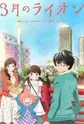
Kids on the Slope
坂道のアポロン
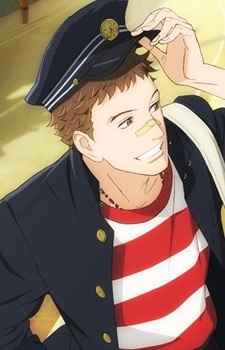
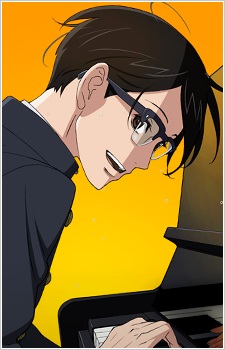
Introverted classical pianist and top student Kaoru Nishimi has just arrived in Kyushu for his first year of high school. Having constantly moved from place to place since his childhood, he abandons all hope of fitting in, preparing himself for another lonely, meaningless year. That is, until he encounters the notorious delinquent Sentarou Kawabuchi. Sentarou's immeasurable love for jazz music inspires Kaoru to learn more about the genre, and as a result, he slowly starts to break out of his shell, making his very first friend. Kaoru begins playing the piano at after-school jazz sessions, located in the basement of fellow student Ritsuko Mukae's family-owned record shop. As he discovers the immense joy of using his musical talents to bring enjoyment to himself and others, Kaoru's summer might just crescendo into one that he will remember forever. Sakamichi no Apollon is a heartwarming story of friendship, music, and love that follows three unique individuals brought together by their mutual appreciation for jazz. [Written by MAL Rewrite]
Main
Main
Main
Supporting
Supporting
Supporting
Supporting
Supporting
Supporting
Supporting
Supporting
johnvswild
August 28, 2013
How much you enjoy Sakamichi no Apollon is largely dependent on your level of emotional maturity. SPOILER-FREE™ Sakamichi no Apollon translates to “Apollo of the slope,” not “Kids on the Slope,” so whatever translation you want to use really doesn’t matter. Kids on a Slope may look on the surface like a typical clichéd romance anime with lots of misunderstandings, too much drama, love polygons and people sort-of-but-not-really changing who they love. You may be tempted to think that’s all Adolescents on an Incline is, and you should give in to that temptation because that’s exactly what it is. Juveniles on a Slant, by the way, is totallyNOT GAY. It’s completely normal for male friends to hold hands, embrace each other crying, run out of school together, eat out of each other’s hands and the like. At least I hope so because me and my roommate may have had a small sexual encounter the other day so PLOT POINT: my childhood friend who I secretly love read that and is now crying so I headed over to her house but PLOT POINT: my father who I thought was dead meets me along the way and tells me he wants to be a real family from now on but PLOT POINT: my roommate accidentally bumps into him and knocks him into a cement plant and starts crying because PLOT POINT: my roommate was actually in a relationship with my father but PLOT POINT: there’s a meteor headed toward earth and I have to decide if I want to spend my last moments with my dying father or childhood friend. STORY 4/10 You may have gathered from that somewhat cryptic paragraph that Youths on a Declination has no story, what it has is a string of barely connected random events as a cheap attempt to cause an emotional reaction in the audience. The other point I was trying to make is that Striplings on an Oblique Surface has quite possibly got the single most forced plot I have ever seen in anime. The story is hashed together with every situation the creators think could possibly pull on someone’s heart strings, natural story development be damned. The result is some completely artificial Frankensteinian monster. You can almost hear it sob “Please…kill…me” as it stabs your eyeballs trying to get you to cry any way possible. As the plot lurches through its various stages it manages to amass quite the collection of plot holes and inconsistencies. For the most part however, it manages to hold itself together as a pretty stereotypical Josei. It does treat themes like coming of age and friendship acceptably. If you happen to really, really love drama and romance then maybe you’ll find a way to enjoy it. The setting of late-60’s Japan deserves special attention in this review, because it didn’t get any in the show. Whippersnappers on an Acclivity really missed a chance to be unique and interesting by capturing the flavor of the era. Instead, there is barely anything there to distinguish it from a typical modern anime, I half expected a student to pull out a cell phone at any time. There are a few token times when the show tries to masturbate to its own classiness, old-style desks, records and such, but there are so many anachronisms that it winds up just being annoying. ANIMATION 7/10 The art is not very attractive. The characters have faces only a mother could love and objects and backgrounds can look plain and simple. But Minors on a Gradient has one secret weapon up its sleeve: animation. I could use words like fluid, smooth and beautiful. One test I use to determine how lazy a studio is in animation is music scenes. That is, whenever someone is playing an instrument, do their movements match up with the song? Even an amateur can tell if the beat is on (which it often isn’t). Here, the piano parts are matched to the characters fingers. It shows great attention to detail that is present throughout the show, which compounds the great animation to look spectacular. SOUND 3/10 Wait, WHAT? 3!? What the fuck is wrong with you John, giving a music anime a 3 for sound? Well, Tykes on a Cant’s soundtrack is lousy. That isn’t to say there’s no good music, it’s just all 30-60 second outtakes of jazz classics. I like jazz more than most, but no points for unoriginality, especially if it’s tied together with a second-rate OST. The voice acting is underwhelming but passable. Ultimately, if you came for the music, go listen to music and give this one a pass. CHARACTERS 3/10 The translation “Kids on the Slope” may not be faithful to the Japanese, but it’s very faithful to the characters, because they act like children. The main pair: Kaoru and Sentarou, have an interesting relationship. They are best friends, not because they are alike or get along or anything lame like that. No, the show just declares them best friends when they barely know each other and from then on they stick together for better or worse. SIKE! They spend more than half the show not on speaking terms, and they have at least one fight an episode. I seriously hope nobody views this as a model of a healthy friendship. The way they hate each other makes it even more bizarre and surreal during the few times when they inexplicably love each other. Now flawed characters are a good thing, but the biggest flaw of Squirts on Uneven Ground’s characters is that they don’t feel like people, not at all. They certainly carry out the orders of the story well, but they have no depth OR consistency. The few times when they acted like human beings was lost on me since I was completely unattached to them. ENJOYMENT 5/10 Do you get emotional easily? Do you cry when you see road kill? Are you a pre-teen girl? If any of these are true, you may enjoy Youngsters on a Rise. But if unrealistic story and characters causes you not to get emotionally invested, I don’t think this is for you. The make or break here is drama. Many people will think the drama is excessive, but if you’re easily affected then maybe this is worth a shot. CONCLUSION I may not be the biggest fan of the romance genre, but (Baby+15)/(mx+b) was a real let-down. It didn’t so much strike me on a sour note, mostly I was just bored watching it. I definitely enjoyed some of the music scenes, but mostly I just want my six hours back.
Nurseroo
November 8, 2013
Are you ready for a bromance so strong, you’ll feel friendship tingles down the shaft of your peen? For romance elements so complex, they are no longer love triangles--but instead, terrifying, ever-growing love polygons of doom? For jam sessions so boppin’ they could make the late, great, Sun Ra tap his foot in his grave? Then my friend, you are prepared for Kids on the Slope. At a glance Kids on the Slope is nothing more than a high school drama, akin to the hundreds which flood contemporary media. While I’ll admit that I do enjoy a show that makes me feel my proverbial ovaries rubbingagainst each other (it’s a guilty pleasure of sorts that I’ve acquired over the years) as well as the occasional bitch-tear from some of the more well put together dramas/slice-of-lifes that catch my eye, I often find the angst ridden filth which is commonly regarded as ‘adolescence in a nutshell’ to be utterly vexatious. While easily misinterpreted as complaining, I do understand that I’m not a member of the target demographic for at least 90% of the series’ mentioned above and as a result of this I just tend to walk past that hypothetical garden of pubescent depression as opposed to trampling upon it and it’s eternally cherished flowers, despite people’s affection towards them being baffling to a man such as myself. With that being said, I’m also not a part of the target demographic for Kids on the Slope but that does not mean that I was unable to enjoy the fuck out of it. To put it bluntly, this is, at the moment, my favourite slice-of-life anime of all time. And how could it not be? Set in the quiescent period of 1960s Japan, with a serene art-style and ataractic soundtrack, I often found myself lost in a sense of euphoria. While the pacing at first may seem quite slow, I believe that this is part of the series’ charm and works well to accentuate the insouciant nature of both the series and the era in which it’s set. Accompanying its unmatched poise is the maturity (I’m sorry guys, but this translates to no prolonged gratuitous ass/panty/cleavage shots, unfortunately) in which the story is presented and a great set of characters. Not only could I compare almost every character to someone I’ve met in in the course of my life, I was also able to relate certain elements of each character’s personality to myself. Similarly, no character was your average cardboard cutout. Instead, each and every character had a very human feeling associated with them. Over the course of this journey, we’ll observe each of the main character’s flaws, attributes and eventual evolution into adulthood. The premise for this slice-of-life drama was also quite refreshing, in the sense that the relationship which receives the most limelight is that of two males as opposed to a primarily romantic relationship. This unlikely bond between Sentarou and Richie will oftentimes amaze me when I think that this is the first bro-drama of it’s kind to cross my path. While for the most part, their friendship does reflect that of a lot of close friends; do expect some moments which gracefully tread the thin line between bromance and romance. The animation in this series really is admirable, and this is most evident during the jam sessions. While concert performances and the like are no new occurrence in anime (especially as of late), in Kids on the Slope every drum hit, every piano note, every pluck of the upright double bass happens in time with the music and looks magnificent. The accurate animation of the instruments really helps bring home the notion that the musically orientated segments of this anime are not a gimmick but rather, help bring the characters together as a group while at the same time aids the characters in growing as individuals--as I daresay music does in everyone’s lives. For those of you who feel as if you’re the paragon of masculinity but may want to try a slice-of-life, then look no further (there are multiple physical altercations in this anime, which is why I believe it’s a great starting point for those new to the genre). Similarly, those who merely enjoy jazz but find the genre a bit too intimidating to delve into will find some great artists and songs to add to your essential private shower performance repertoire. All in all, this anime is heartwarming, bitch-tear inducing and a must watch for any and all anime fans. TL;DR? This may be a josei. However, it is a bro-tastic josei which can be enjoyed by anyone. I give this anime a 10/10 and while this is a highly subjective score, this anime objectifies everything I'm seeking when I make the infrequent trip to tear-jerker town. Its stylish aesthetic coupled with its awe-inspiring soundtrack serve to create arguably one of the best slice-of-life experiences I could imagine.
Tolzen
February 8, 2014
This was an anime that popped up in my recommendations for a while based off various other's I watched. I simply didn't believe it would be anything close to what I wanted and became frustrated seeing the same cover page over and over of which I wasn't to fond of. I refused to watch it time and time again based on my own superficial reasons until I finally said to myself "it's 20 minutes of my life, I'll watch just one episode." It wasn't just 20 minutes, it ended up being a good portion of the season before I had to finallyget some sleep. Story- The story of Sakamichi no Apollon is one of the strongest I've ever seen in only 12 episodes. It gives a great back story as to why the main character (Kaoru) is where he is now and immerses you in the time frame of the story immediately. Although it's in the 60's and I was very skeptical of such a time frame, it's essential for the jazz fueled story of friendship that takes place. The story is truly touching and special as it addresses the great value of a deep bond of friendship as well as coming of age into your own person. There's certainly romance as well, although the most prevalent romance lies not with the main characters but with two supporting ones who in truth, really have their own amazing chemistry and story unfolding. This was one of the few plots that kept me invested, thinking and connected to everything happening at all times, it made you feel really heavy and then full of joy the next episode because of how much meaning the plot held. Art- The art I was sorely mistaken on. I went in thinking for some reason it was going to have outdated animation purely because it was based in the 60's. In reality it was great quality animation, though I can't really pick out any instance where I was amazed by its creativity or colors. It does what it needs to do in this anime and depicts the time period of the 60's amazingly well, although it wasn't the brightest of times in Japan so I can see why it wasn't trying to be something it wasn't. The best part is the character designs as they're all crisp and perfectly fit their respective personalities. All in all the art compliments the story really well, but it's nothing to really to gaze at in itself. Sound- This is what makes the anime other than the plot. I'll come right out and say it, I just couldn't handle jazz before, it didn't please my ears you could say. However, the second I heard Sentarou and Kaoru's first jam session together I was not only moved at how this music brought together the two most unlikely friends, it really gave me a new outlook on the music. Jazz is the driving force of this anime and this is easily the most important section of the review as there are so many situations that these characters must get through with their music. They even communicate with each other simply by being in the same room and playing their improv jazz, pouring out all their emotions to each other in instrumental song. For anyone who hates jazz, this show will at the very least make you tolerate it, they bring meaning to the genre for people who don't care about it in the least. Not to mention the theme song is the most fitting I've ever heard and the soundtrack is really something so unique and beautiful it needs to be experienced. I can rant on about how great the sound is for an entire review's length so I'll leave it at this. Character- The characters are very well developed especially for a series that only spans 12 episodes. All of the main characters are very different but they all become bound by one similar interest in Jazz. While the typical delinquent meeting the quiet exchange student has been done before, both of these characters are far from common beneath the surface. Sentarou is one of the deepest characters in any show, and you can tell this almost right after meeting him, he had a feel to him that compelled you to be drawn to his story as well as the pure friendship between him and Kaoru. The seiyuu really bring these characters to life and add a great sense of realism to them to. Even the supporting characters play vital roles and all help the main characters along in their own way, as well as progressing their own stories in the time they have. What can be said overall is that there is not one annoying character or overly common one either. Every single character whether it be main or supporting has their own unique personality and goals that sets them all apart yet binds them together and that's what I find so impressive about the,. Enjoyment- As you can all tell I thoroughly enjoyed this anime. It truly impacted me on a few different levels and really makes you think because there are so many real situations and desires you can relate to, despite it taking place in 1966. It just goes to show you that no matter the time or place, people will always have these issues to go through, and this show goes to show you how valuable having a deeply bonded friendship can be through that. Overall- I highly recommend this to anyone who has even a slight interest in romance/comedy/drama/slice of life or even music. People who actually go into this liking Jazz beforehand will be on cloud 9 the entire way through. It drives home a message that I believe resonates with the majority that it will definitely leave you thinking deeply about it after you've finished. The only reason I did not give it a ten is because (and this is nitpicking now) even with these wonderful aspects I just couldn't put it on the same level as Steins;Gate, Honey and Clover, or Bakemonogatari. That being said it's extremely close to Honey and Clover, however H+C had amazing art while Sakamichi no Apollon had enough to convey its message.
Stark700
June 28, 2012
Let's do a trivia here! Are you someone who wants to know what it is like back in the 1960's? Ever wanted to build an escapism from the harsh reality of today's world? Want to just sit back and enjoy some old school music after a stressful day? Well, perhaps you've found a series worthy to invest your time into because Kids on the Slope is there and sure to give you something to think about. Kids on the Slope (also known as Sakamichi no Apollon) is a story taking place in the beginning of summer, 1966. It stars the protagonist Kaoru Nishimi, an honor studentwho tends to keep to himself. He has a rather reserved personality and hard to open up. That is until he meets the bad boy and future best friend Sentaro Kawabuchi. While mistakenly getting to a bad start, these two soon develop an unforgettable friendship based on respect, forgiveness, and of course, music. Later comes into picture is Ritsuko Mukae, a friendly girl who plays intriguing roles in the story ranging from music, friendship, and later love. The series follows three friends as they create unforgettable memories of the 1960s in the age of jazz music, friendship, and melody. Now, you're probably asking yourself “why should I watch this series?” Well, first of all this series contains the unification of icons Watanabe Shinichi (Series Director of Cowboy Bebop) and music composer Yoko Kanno. That alone can be seen as a good reason to start watching. While labeled as a coming-of-age drama, this series also contains a bit of the romance theme and of course, drama. So for those interested into the intertwined story arcs mixed in with misunderstandings, jazz critique, and love trials, then this could be a little added bonus. [ - Story - ] Kids on the Slope details friendship and is one of the most important element of the series and should not be just seen as an aspect of the anime but in real life as well. Kaoru, Sentaro, Ritsuko forge friendship through one common passion: the love of music and the bond that they share. This series does not have a strong impression at first. From the first episode, there's not much to say besides the typical high school drama and music setting. Furthermore, for those carving for action and psychological twists or for some who call it “mindfucks”, then this is the wrong series to look into. Thankfully, there's an old saying that goes “never judge a book by its cover”. Damn right, you shouldn't because this coming-of-age drama is sure to give you a surprising twist. In the beginning, there is the common theme. Kaoru falls for the friendly girl, Sentaro falls for the graceful girl, and Ritsuko is already in love with the childhood bad boy. Then comes even more characters that makes the already complicated geometric love shape even more complicated later on. Kids on the Slope moves at a relative pace that can be considered neither slow or fast. Ironically, it starts off slow even though it's kids on the SLOPE. Anything that flows down a slope relatively moves fast but in this case retains a relatively average pace. So I'll say this again, this series is not for the fans who carves the fast paced action and psychological twists. If you want that, try Jormungand or something. [ - Characters ] While the characters are animated plainly and simple, their inner character and style is what drives this series as why it's ranked into the #100 of MAL. Beyond the romance polygon are characters that balances out the series. First we have Kaoru, the middleman who has the reserved personality. He is smart, he is reserved, and he has the talents to become a real star. Thankfully with some fate, he finds someone who also share a similar love for the age of music. That brings us to Sentaro. Like the opposite of ying and yang, Sentaro is seen as the tough guy with the soft spot, the one that picks fights but also the guy who protects and values his friendship with the other characters from the bottom of his heart. His outer image covers up the fact that he is a deep down guy and cares for the people and things he truly loves; his friends, his family, and the children that respects him so much and of course, music. Finally, there's Ritsuko. She is the cheerful girl, the one that builds bridges of friendship with friends and generally well-liked. Yet behind her outer image lies a somewhat insecure girl and sometimes jealous of others' ability to be so outright themselves. Later on of course, there are other characters that enter the scene that have stark personalities and also not who they appear to be. I'd love to go on and on about these characters but this isn't an summary is, it? This is a review so I'll leave you to find out. But trust me, you'll love to get to know them once you see the realism behind their outer characters. And speaking of realism, it is noticeable that the characters' personal lives are conveyed in a way that can be seen and defined as quite real. Whether tragic, sad, or cheerful, we see the histories of the main characters that can be related to most of us. They all have background histories that brings the overall realism into the 1960's and even towards today. [ - Animation/Art -] If there's one thing to forget, it might be the art. I'll say this in the most honest way as possible: It is too plain and simple. The animation is not rich and series airing this Spring Season like Fate/Zero puts it to shame in the art department. The animation however brings out a powerful feeling of nature and refines the 1960s style in its finest form. While plain and simple (Karou's glasses, Sentaro's shirt, etc), we can see that the culture it tries to convey of the 1960s is successful. Culture has indeed changed from the past to present day as we can clearly see the lesser technology and more general and sophisticated themes. It is simple and not detailed just like how high school should be. It doesn't need to be something special that makes us go “wow!” After all, the precise of an entire series is not always judged by art solely. At one point of watching over 100 series, it's just down right common sense. [ - Sound/Music - ] Ah yes, this is the main event, if for any reason to watch this series at all, it is this. Music and life plays a key role in this series and thus, one could expect the melancholy and drama the music lyrics conveys and delivers. With the ultra talented Yoko Kanno in charge, one can expect a blockbuster hit and smash of the season. And she does not disappoint, neither her skills or the characters' that plays both artistically and beautifully in the series. In fact, the music in the series plays well, even in rhythm with the main characters. If you take careful notice, the way and style they play their instruments systemically match their art and moments. The way the characters play the music is natural and in the ways they are of themselves, not for a popularity contest. To play music and bring pleasure to the ears is something to respect and take notice of. These kids really do have talent. [ - Enjoyment - ] This story is of the old school coming-of-age style so the pleasure of enjoying this series can vary. At first glance, one might decide to drop or put on-hold at its relative pace as well as its lack of the typical “shounen action”. But with so many of those airing these days (including this season), why not give something new a try? It's more than just a high school story of kids falling in painful geometric shapes of love or the “friendship conquers all”. And of course, despite being hard to make it into the mainstream, it's one of those series that takes an unique and cultural approach of the coming-of-age genre mixing in with jazz music, friendship, and love all in a wonderful little package. The characters are unique and real with their backgrounds, contrasting personalities, and style. The story is easy to follow despite its intertwined arcs. The art (despite plain and simple) brings out the naturalism and culture of the 1960s. It's something not as complicated as the real world we face today because it's so damn right simple. Honestly, I miss it. And who can forget the relaxing music? Without it, this series would be dead. But with it, the series comes to life through realism and gives viewers something to talk about. Again for those who are so into the shounen style battles, the fan-service of ecchi shows, or psychological mindfucks, this series can be something new to look forward to. After all, there's an old saying that goes, “life is like a box of chocolates. You never know what you're gonna get." And once you open that box, you'll be surprised what you'll find. In this case, it's Kids on the Slope.
ratchet573
May 22, 2015
I love jazz. Some of my favorite memories of my time living in Florida have to be going downtown to listen to the local jazz festival. Sitting in front of that gazebo and getting into the spirit of the musicians is something you can only experience if you listen to jazz. It’s so different from any other musical genre and I was excited as hell to get to watch an anime centered around this amazing style of music. The problem is Sakamichi no Apollon isn’t as much about jazz as it is about lame characters. There’s jazz in the series, and it definitely plays a part,but it doesn’t play as large a part as I wish it would. This seems to be the theme of music-based anime, not paying attention to the music as much as the boring lives of the characters. Jazz is frantic, it changes with the mood. There are a lot of things about jazz that could have been played out in Sakamichi no Apollon that aren’t. That heart and soul of jazz are only seen during the portions where the characters play music. Other than that, the series falls flat. Kaoru is a guy. He goes to high school. He’s a bookworm. Sentarou is a guy. He goes to high school. He fights a lot. Ritsuko is a girl. She goes to high school. I can’t discern her character besides “love interest”. Together they are the three main characters of our little drama. Kaoru goes to high school as the new kid. He meets Sentarou who is a pretty violent guy who skips classes (the delinquent). Sentarou is a drummer who plays jazz with Ritsuko’s father and a guy named Jun. Kaoru, who can play the piano, joins in on the fun and learns how to evolve from his classical roots into the realm of jazz. There are, of course, some bumps on the road. A couple of love triangles (those are the main plague that infest this anime), Sentarou’s problems with his father, and Jun’s becoming a good-for-nothing. The plot is really not that exciting. You’re watching this for the music more than likely, not the duo of love triangles that seem to give way to more of a bromance at the end than anything else. This is where the plot becomes especially painful. The series plot is loose, and by that I mean nothing is consequential or matters. It’s there to hold the series together and give it a reason for being, but it’s mediocre at best. By the end, nothing really matters and the series goes back to square one. “BUT RATCHET! WHAT ABOUT THE MUSIC?” What music? There’s a little bit of music going around, but for a music based anime there’s not enough. As I said in the beginning of the review, there’s not a lot of music going on. There are a few songs here and there, but not enough to warrant being considered as “musically focused”. It’s more just a school life anime than anything else and suffers because of the fact it tries to be something it is not. “BUT AT LEAST IS HAS GOOD CHARACTERS!” All the characters were generic at best. While Sentarou was a decent character, I grew to hate Kaoru more and more as the series progressed. It reached the pinnacle when he nearly raped Ritsuko. Ritsuko wasn’t a bad character, but she didn’t actually have a lot of character there. She was just there as a love interest and a plot point more so than anything. Jun was okay, but he also had some issues that made him dislikable. His girlfriend, Yurika, was okay. I wasn’t really impressed by anything that concerned the plot. I was impressed with some of the music (the little that there was) and the animation was especially good during jam sessions and concerts, unbelievably so. I’m unable to say too much about Sakamichi no Apollon because it’s so average. It’s the definition of average. Good music and good animation, mediocre characters and plot, and an overall disappointment. If the series had been longer I feel that perhaps the plot and characters would have been more entertaining. But as it is, Sakamichi no Apollon is merely adequate. The last episode feels especially rushed and I assumed I was meant to feel emotions of some sort, but was left not really caring. And when, by the end, I could care less what happens, then I know that I’m not watching anything special. Sakamichi no Apollon is a hesitant pass for me. It’s overhyped, and that hype is probably why you decided to jump on the bandwagon and check this anime out. There are some qualities that are enjoyable, but taken as a whole, it’s merely adequate in satiating the thirst for jazz, as well as the search for a good music anime.
Rank
#328
Popularity
#645
Members
414,119
Favorites
7,319
Episodes
12