From the New World
新世界より
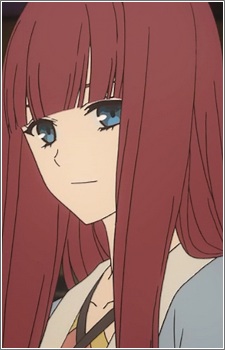
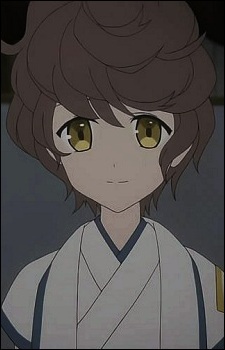
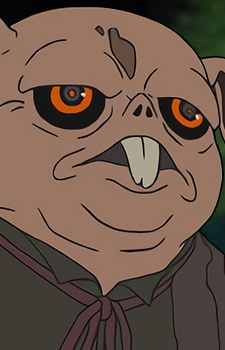
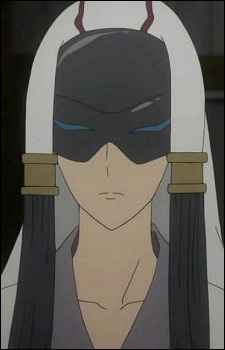
In the year 2011, a small percentage of humans began manifesting psychokinetic abilities known as "Cantus." Over a millennium later, in the small town of Kamisu 66, Saki Watanabe is the last of her friends to awaken her powers and join the Sage Academy, a school for psychics like her. Although everyone at the institution has Cantus, they are not all equal; shortly after Saki enrolls, one of her classmates who is regarded as being weaker than the others suddenly disappears. Walking home one day with her friends—the determined Maria Akizuki, the intelligent Shun Aonuma, the observant Satoru Asahina, and the timid Mamoru Itou—she comes across two unfamiliar creatures known as "Monster Rats." These beings resemble moles and worship those with Cantus as gods. As a result, when Saki uses her abilities to save one from trouble, she is met with exceptional gratitude. Now unsure about the Monster Rats' place in society, Saki and her friends find out about another disappearance. As time passes, they slowly look for answers to the mysteries that surround them and begin to realize that this seemingly "perfect" new world masks humanity's dark past. [Written by MAL Rewrite]
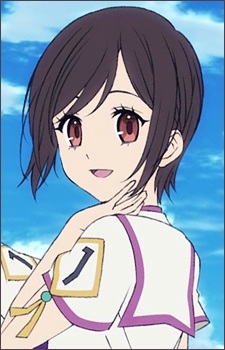
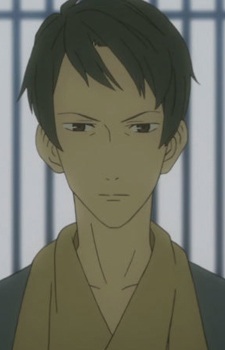
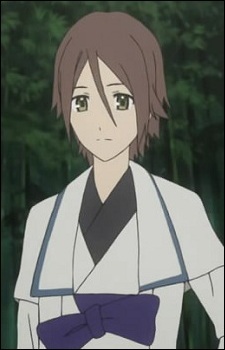
Main
Main
Main
Main
Main
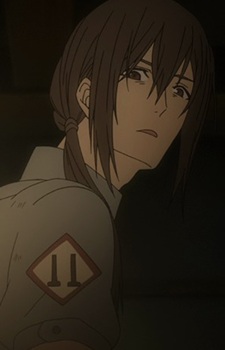
Supporting
Supporting
Supporting
Supporting
Supporting
Supporting
GonzyChan
February 8, 2014
There's often a point in one's life to acknowledge the possibility of another worldly phenomenon outside of our collective conscience from where we live that is in contrast with our ideals. This philosophical problem has always been a subject of discussion since Plato's "Allegory of the Cave," which chronicles how our limited understanding of the reality we perceive may not be what it seems since we're so entrenched in our society. Many works of fiction have dabbled this subject matter numerous times, with some succeeding and others failing. Unfortunately for Shinsekai Yori, it falls into the latter, but not entirely. To start, the basic idea ofhow Shinsekai Yori's story pans out is that it's a coming-of-age story focusing on five different characters. Their journey in discovering the history of human civilization eventually transpired into pure dystopia. It starts exceptionally well with building up these characters that are all very unique and distinguishable from each other. There's never a moment where I couldn't remember who a specific person was, and it's not just their appearances but their well-written personalities and backgrounds. Their childhood arc paces itself nicely in giving an atmosphere for us to take in that's mysterious and puzzling in a minimal understanding of what the world is actually like because that's how the childish mindset would be like in this scenario. However, once that arc was finished and we got our first-time skip, it didn't get too extraordinary as one would hope. One thing that makes the time skips off-putting is how there's hardly any build-up on how these characters' personalities matured over time. For instance, one of the most controversial things about the show was the relationship between kids of the same sex. It's not so much the relationships themselves that I have a problem with. It's how it comes out of nowhere with hardly any development behind it. In this sense, it feels as though there was more to their relationships, but they had to rush it so it won't feel dragged out for time constraints. Because of this, one might feel inclined to give it a pass. But for me, the time skips cannot forgive. Given the context, this show brings to the table wanting to be this grand epic that ultimately feels lazy from a writing perspective. The best romantic development in the entire show was between Saki and Satoru because of how long we've followed these two together and how strong their bond was in helping each other through the numerous challenging obstacles. Alas, the rest of the relationships thrown out didn't make a massive impression because of how weak and lazy they implemented them into the story; if they had anything of value for us to see how they got to that point, it would've been for the best. While the story itself isn't something we've seen before, it is still a mysterious and suspenseful drama that manages to pull off some great twists through the narrative. That is until the realization comes to mind when the pacing of it all fails to make it a masterpiece in the writing department. Like I said before about the time skips, they dumb down the pacing because of how they rush some of the arcs that could've been more effective had it been done with better intentions, such as at least showing us a montage of them overtime. That shouldn't mean that time skips are unnecessary in any situation, but it takes a lot of care and precise handling to make them work. Time skips aside. The other pacing issues mostly happen in the middle part of the show, where scenes lack clarity in their exposition, giving us a clear, concise way of what has happened or what will happen to the characters or future events. Too fast to even comprehend the overarching conflicts that arise from the protagonist feeling messy and disorganized for us to piece together what will transpire. This could come into play with the fact that the show skips over essential details in the novel, but for reviewing the show itself, there's no need to go over that aspect. How Shinsekai Yori handles its world-building through expository dialogue receives a mixed response from me. It works like a pattern where one or all of our heroes are journeying or trying to find answers. Eventually, they'll talk to someone who will explain everything to them in no more than ten minutes, either the dark history of Japan and how it ultimately became a grim dystopia or what the ethics counsel is really like underneath. The narrative is thought-provoking at times that bring into question human nature and how society structures itself into chaos. However, I can't help but feel that it could've been done more better with less redundancy and not feel like a lazy attempt at being profound. It's not just the writing that feels off, but the technical side of the show feels very limited and looks shoddy in the process. That's not to say all of it looks bad, there are a lot of beautiful set pieces drawn into the backgrounds, and the character designs look unique and fit well with the tone of the show. However, there are a lot of problems with the designs of the monsters that inhabit Shinsekai Yori, where they don't look well-drawn, and their animations look as if the director hired a low-budget studio to animate them. There's even one episode where the animation took a complete nose-dive where the queen of the queerats looks like a giant blob that the animators didn't draw fully of what it was initially supposed to look like. I'm not saying that all shows have to look highly high-budget to be called good art/animation, but it doesn't strike my fancy when there's nothing significant to gaze at. With all of the negativity I've had for Shinsekai Yori, there are still several good things worth noting. It is without question that the amount of suspense and heart-pounding tension that Shinsekai Yori offers is astonishing. The first three minutes of the first episode alone garners some needed praise for its well-directed atmosphere, right down to the music and editing of all of the events in present-day Tokyo. Its tone is not pretty, and it will nonetheless make a lot of people feel uncomfortable to sit through in some instances, but that should warrant a lot of credit to the show in giving us a very mature tone that comes in full swing. What makes the suspense amazingly good and imposing is the amount of mystery that we are provided through the children's perspective and how we can never see how the adults know the situation in the world. Often you don't see stories handle mystery this way and make for an intense experience. The first-person narrative through Saki gives a distinct feel to how we see her grow into this person who is fully aware in later life that feels undeniably human to me. As many have told me about the story, the ending makes up for it despite its faults. It provides the level with a satisfying conclusion. There were no predictable outcomes present at the narrative's end. That guarantees Shinsekai Yori some much-needed acclaim for at least not giving us a story that isn't inherently generic in a predictable way. No Hollywood gimmick severely tarnishes the gritty tone. It handles itself in a very realistic fashion that feels very satisfying to see first-hand. Musically, it mainly consists of really bombastic chanting music that is very haunting and intimidating from the style of tone it tries to set. There are very few questionable choices of songs that Shinsekai Yori has that feel out of place in any scene. Intense orchestration also borrows from some minimalist influence in some ambiance tone it gives with light electronically ambient mixes in-between settings that are inherently quiet and simple. Ambitious though it may be, Shinsekai Yori just doesn't cut it entirely as a supreme masterpiece that has come out in recent years. The problems it possesses in giving us a poorly-paced story that can't provide a concise narrative that's hard to get around. Character development feels good in some areas, but their relationships felt contrived with inconsistent expository problems due to the poorly put time skips. I wouldn't classify this show as completely bad. The amount of suspenseful tension makes for an intense experience to behold in showing us the one significant development of Saki into a fully realized character. After all, a worthwhile experience with many faults in its technical aspects is at least more tolerable than a show with great technical prowess with no added value to the experience whatsoever. Grade: B-
Supporting
Artrill
August 8, 2018
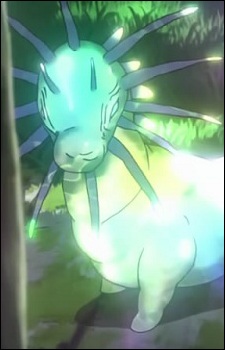
[4.0/10] _____________________________________________________________________________________________________ We wage war that tears down walls and buildings brick by brick, as our own inventions create and destroy. We put roofs over our heads only to light them ablaze. We create a hierarchy only to rebel against it. It's an endless coil, a snake eating its tail, feasting on the notion of betterment. If we dismantle our creations enough times and iterate upon them, surely we will reach that stretching plateau of perfection that our own ideology believes in. Yet once the dust and soot settle, we can only regret our impulsivity, our misunderstanding; the ladder of progress we eagerly climb is infinite, andthere is always someone looking down on us. Yet from that rubble, a flower blossoms. From a New World is desperate to tell us what we've been told before in a unique way. Whether it be that despotism is bad or that uncompromising control of sentience is evil, the results are virtually one and the same, and in this case, necessary. Furthermore, much like any tale of dystopia, we are presented with similar character beats, analogous narrative structure, and identical revelations. Yet none of this is a negative to me. See, I like dystopia. In fact, this signature sci-fi concept is one of my favorite tropes in entertainment. I like seeing similar ideas be iterated and expanded upon. I even find joy in witnessing ignorant, blinded characters have that signature horrifying revelation of, "Oh shit, my entire life is a lie!" From a New World reinforces that joy, as the narrative itself is, in concept, quite good. An impressive, detailed world that was clearly birthed and seasoned at the hands of a novelist. Their pen bursting with ideas, as they terraform a white mass into something rich and structured. You could make an encyclopedia out of the knowledge given, albeit a short one, and still feel as though the folded over edges that hide that last inkling of wisdom are just out of your grasp. A flurry of creative concepts that give and give until you are figuratively stuffed and questioning what is truly right and wrong in this imagined world. I don't feel as though I'm discussing the series, though. For all the creative strength that Yusuke Kishi, the novel's writer possesses, little of it is adapted. By that I mean, it feels as though A-1 picture's, in all their incompetence, simply took the words on his page, stripped out the prose and detail, and injected them into their abridged script. I see nothing but the story in From a New World, and for a product that is an audio-visual experience, utilizing both audio and visuals in such heavily flawed ways is beyond inexcusable. An infection spreads throughout the presented world. That infection is power, the ability to control and manipulate objects and people. These infected people destroy out of fear, out of want, out of desire, and the world collapses at their whim. Through that collapse, a new society and hierarchy are birthed. New rules are created, new ideologies formed, yet the remains hang just below the shimmering surface, waiting patiently. That permeating mysticism is the backbone of From a New World. Especially once we are introduced to Saki Watanabe and her merry clique of character archetypes; each one varies in hair color, personality, and talent. That talent, of course, is what they are together for. You see, in Kamisu 66, one of the many sleepy towns that dot this new world, children discover their innate powers about when puberty hits. From there they are inducted into an academy and begin learning how to harness their strength. As viewers, we are thrust into this setting with enough exposition to clue us in on just about every action taken that isn't purposefully shrouded behind the pervading mystery. This group is sent out exploring, adventuring, getting in trouble, all with the notion that they will come into their own. What becomes clear is that this society is constantly on thin ice. Any unwanted movement risks the collapse into the freezing water. If the allegory behind power isn't clear enough, let me also mention the subservient colonies of "Monster Rats" that reside in this world as well. Ugly, mole-like creatures that show intelligence, yet speak with slurred, barely comprehensible speech. They don't have power so they serve the ones who do. Get it? "Are we the baddies?" May as well be the thesis to From a New World, and that is inherently interesting. The notion isn't spelled out immediately but seasoned veterans of dystopian writing can most likely deduce that the progressed, oppressive side is generally the one you should not trust or at least question. Whether their actions are necessary is half the intrigue in From a New World. Once again, all of this is taken from the novel, from the source. These ideas are lifted and splayed out in front of us. Examining the series itself, though? We are left with eerie orchestral vocals and stringing chimes to enrapture moments of total flaccidity. A-1 Pictures can't seem to get it right. Their feeble attempts with Your Lie in April, smothering every element of music behind manga-esq exposition about how beautiful the music we can literally hear is. Or, in this case, deciding to ignore the fact that anime is an audio-visual medium. The fact of the matter is, From a New World is unbelievably boring. It is, for the first fifteen or so episodes, one of the single most flat and tedious series' I have ever put myself through. Virtually everything about this series is flaccid. The animation, directing, even the musical stings are often used ad nauseam. Nothing is given room to breathe; everything that the adaptors thought needed to be explained was explained. You see, a novel has the ability to have large exposition dumps because the reader sets their own pace. A fast reader can shoot through these segments and siphon all the necessary information from them. Especially when large sections of supposedly good, mysterious plot progression is back ending these bursts of exposition. Yet the series doesn't have that quality. It's a twenty-minute anime, and that fact ruins the entire product! The writers need to get this massive amount of information across, so they have to cut out those valuable segments of proper writing because there is no time to have them. They rush from beat to beat and those beats are the least interesting part of a visual medium. That's not to say it is unable to be adapted. It simply requires a talented, unique approach to showcasing information diagetically. In episode three our group stumbles upon what I can only call a glowing information hedgehog. While they call it a false minoshiro, all it is is a glorified exposition machine. That entire episode was them sitting in a generic, boring anime forest listening to this man-made device literally tell them everything they want to know except what just so happens to be a crucial piece of information the entire series wants to keep a mystery. It's genuinely unbelievable how weak this presentation is. Now if there were redeeming factors to the shot composition or animation maybe I could remain engaged for what is a glorified reading of a Wikipedia page. However, there is none of that. From a New World is ugly. It has this somewhat unique aesthetic, with flat colors and a gray, dusty palette. Yet the director has seemingly no idea how to direct color, or images, for that matter. You'd think it is easy to create compelling shot composition when you have virtually no animation to worry about, yet this series' unsightly palette is all that is to be seen. From a New World uses something I see in every A-1 show and plenty of other anime; I call it "texture muddying." They are clearly rushing the product and the artists either don't have the time or talent to draw proper backgrounds, so they instead just color a texture onto flat environments using what I imagine is a tool from their digital art software. These environments lack all semblance of depth and quality, resulting in some horrendous design. Decent character-designs stand in fields of muddy greens and shit-stain browns that are drained of all vibrancy for no apparent reason. Similar to last season's Violet Evergarden, the director isn't grasping why one should use a certain color palette or filter, instead prompting for a stylistic choice that holds absolutely no reason or merit. Glaring, abrasive CG rocks are hurled through the air in some tensionless action scenes where the characters take a backseat to whirring, synthetic sound design that is constantly repeated for every telekinetic "move" these characters employ. This aggressively weak presentation is compounded by endless exposition that disregards any potentially interesting writing for blunt explanation. It lasts for minutes on end with minimal flashbacks or any sort of engaging material to consume. The application of these ideas is beyond misguided and feels downright disrespectful to the author who clearly put effort into this world. More so than just that, the series feels as though it is presented through a passive voice. Nothing is imminent. Nothing is about to happen. It already happened. Multiple episodes pass with virtually no tension established. For example, a character runs away and hides from their impending doom at the hands of their own people! Yet we don't see this. We see their friend's reacting to their disappearance and then finding them. Seven minutes of exposition as to why they left ensue. A few minor, fuzzy flashbacks reveal what they experienced and then the credits roll. This happens constantly. Everything experienced by our protagonist, Saki, always feels as though it already happened and the viewer is just treading on ground that has been stampeded on. The majority of the actions she takes aren't even out of her own volition, and the small number of actions she decides to take are either frustrating or minor in the context of the entire series. I can only place this blame on the series' presentation. Virtually every fault is at the hands of the people adapting this novel, as they visibly fumble over themselves and fail to convey any form of intrigue when by all means it should exist in abundance. Once these tedious pieces begin to fall away and we enter the third act of the narrative, we are met with more focused storytelling. It feels as though the earlier segments only existed to convey the few ideas that were carried over into this act. I began feeling somewhat rejuvenated and started to enjoy the kinds of revelations I was expecting from this narrative. None of it was all too surprising, but as I stated earlier, I like dystopian stories and From a New World breathes some interesting ideas into this potentially stale conceit. Unfortunately, once the final credits roll I couldn't help but ask myself whether the many hours of tedium and despondency was worth the neat conclusion and I can't help but say no. It really wasn't worth it. The presentation is so weak that reading a summary or just the novel itself would've served to be a better way to spend my time. If watching this series was like biting into a sandwich made of mud and feces which housed a delicious piece of chocolate at the center, chewing through all that only for a hint of sweetness would still result in a putrid taste. The title of the series breeds mystery, intrigue, a will to go forward and discover what comes from the new world, both literally and figuratively. I'm sure the novel follows through with that mystery at least to a certain extent. I can't judge the novel based on the abridged, mangled body presented by A-1 Pictures, though, and I would never want to. What was initially a holistic work was chopped up to only include the most mandatory elements presented in a lifeless way with sporadic moments of inspired shot composition blended hideously with endless, muddy animation and tensionless scene structure. However, the ethical questions of greater good and excusing horrendous actions to negate even more frightening results is fascinating. A truly unique way to expound upon established dystopian concepts and pulling inspiration exactly where it is iterated upon. Giving appropriate praise where it's due, From a New World succeeds through its ideas, and fails through its presentation. Sadly, that's hardly a feat in this medium. In film, visuals are the single most important element. The same should be applied to animation. We can have a film without sound, without story, yet it can be something that blooms with quality. A novel is bound by different chains, so an adaptation requires a specific effort to be applied to change a long-form story into a completely different medium that utilizes unique presentational elements. As it stands, the title is what breeds the mystery. The cover art was why I initially picked this series up. Yet From the New World, only disappointment blossoms.
DeusAnima
November 10, 2013
Shinsekai yori was something else... First let me say Shinsekai yori was not a light watch at all. This is a thinker's anime. Casual viewers will probably be very turned off by the serious nature of the show. Having said that, for those of you who are looking for an anime that shows the story of a dark, fear ridden society in a brutally honest way keep on reading! Shinsekai yori is unique in which it has no correct set of morals. The line between good vs bad is blurred to the point where the viewer sympathizes with the antagonist. Why is this? It is because Shinsekai Yori isvery realistic. Let me give an example to further the meaning of the previous statement: In modern society many consider stealing to be a sin while others justify the act in order to feed their families. In other words survival is all that matters and that is what Shinsekai yori is, a situation in which survival is the only thing that justifies an action or not. Now logic such as this will undoubtedly result in very disturbing outcomes and decisions so viewers should brace themselves for very gruesome events. If anyone is expecting to see plenty of action/comedy/happiness I suggest you think twice about trying this anime. Positive moments are stretched out far in between and thus rare throughout while tragedy is almost always present. Also casual watchers should beware that Shinsekai yori requires some degree of analysis for it to be enjoyed to its utmost potential. If you are still with me, Great! Here goes the review. Everything is spoiler free! Story: 9.5 The setting involves a dystopian society 1000 years into the future that has actually reversed progress regarding industry and technology due to human beings obtaining telekinesis. We observe the society of year 3000 through the eyes of 5 children who are just as clueless as the viewer. The story is narrated by one of the children, Saki, as the anime shows the events of the children's lives and their fates from the ages 12-26. Throughout the anime the group of five learn of the evils and secrets that society has hidden away. Upon learning, life changing events take place throughout their lives, affecting not only their relationships but their sanity as well. The story of Shinsekai yori takes the concept of a dystopian future but applies it in its own very original style. It explores various sinister and dark themes of the human mind through solving the thrilling mysteries of the society and its past. The story was highly original and refreshing due to its thought provoking and mature layout. Taking a story such as this and adding the amount of realism Shinsekai yori provides results in a story that is close to flawless. Art: 7.5 Now I must admit, the art would amaze me one episode and then would make me cringe the next. For example there were many instances where some of the character's faces and bodies were so warped it shocked me that such mistakes were made in production. Although having said that, there were various instances where the art was absolutely stunning. Gorgeous still shots and surreal dream sequences beautifully portray the gloomy environment. Just try searching up Shinsekai yori and looking up some HD scene pics. I give the art a 7.5 because the production team really made some episodes look absolutely horrible while others were done brilliantly. To sum it up the art is inconsistent and is a hit or miss depending on the episode. Sound: 9 Shinsekai yori did not have an OP, which may bother some. I skip the OP 95% of the time so the fact that Shinsekai yori had no OP was not a negative factor personally. The soundtrack was spot on in providing the gloomy dark atmosphere for the anime. It really stood out. Each time a track played it would send shivers down my spine as I watched in awe as to what was happening on screen. For the episodes where the art was done well, once the music played, it would produce some of the most chilling scenes of any horror anime I've ever seen. One thing that should be noted about the music is that it is very repetitive and is rarely varied. Although in Shinsekai yori's case this isn't necessarily a bad thing. Why change something that does its job 110%? Character: 7.5 Now I have to admit that the characters are decent at best. I doubt that even Shinsekai yori lovers and fan boys would put one of the characters in their favorites. Although they are not very memorable the reason I gave it a 7.5 was because their actions and reactions were very realistic (something the whole anime has going for it). From tough decisions to shocking news, all the characters reacted in ways that the viewer could relate to. Other than the realism most viewers will likely not be very attached to the characters which will thus reduce the emotion induced upon tragic events. Nonetheless, I still give it a solid 7.5. Overall: 8 Boasting a plot and environment that could have potentially catapulted it into my group of masterpieces Shinsekai yori falls short due to suffering to a tedious build up with some unmemorable characters and inconsistencies in art. Overall I highly enjoyed Shinsekai yori and its wonderfully refreshing story and believe that any anime fan that truly loves mystery, horror, and plot twists must give Shinsekai yori a try.
Link_of_Hyrule
October 25, 2014
**SPOILER FREE REVEIW** During the Fall season of 2012, animation studio A-1 pictures was airing two anime. One of them was the infamous Sword Art Online; the international sensation that essentially made money faster than it could be printed. It went down in history as one of the most hyperbolized and dramatic popularity explosions of all time. In the wake of the massive tidal wave created by the anti-Christ itself (or the messiah, depending on your perspective), there was another anime; an anime that was swallowed whole by the mainstream hype of the industry. An anime that barely anyone bothered to watch. An anime that nearlyeveryone in its already small audience dropped because of a 10 second yaoi scene in episode 8. An anime that was a complete financial failure. Why is this story concerning? I’ll tell you why: because that anime was called “Shinsekai Yori”. If the name doesn’t mean anything to you, that’s probably because you haven’t seen it yet. There is little debate that this anime is something special; it has one of the most mature and refined tones in the history of the medium, the music and animation are unbelievably atmospheric, and the world building is absolutely unparalleled. To the anime community, none of that mattered. Shinsekai Yori’s monetary disaster coupled with SAO’s monumental success sent a very clear message to the industry: More SAOs, less Shinsekai Yori’s. *Sigh, this is why I drink. This is also why I write reviews. Ladies and gentlemen: Shinsekai Yori. Synopsis: One millennium into the future, society exists as a utopia in which every human possesses “the god’s power”; a form of incredibly powerful psychokinesis. Our protagonist, Saki Watanabe, lives in this utopia that is completely barred from the outside world. However, her and her friends begin to discover some of the dark secrets behind their society as their perfect little reality begins its slow, downward spiral into disaster, as all utopias seem to do. Let me reiterate something I mentioned earlier; this is a very mature anime. When I say that, I don’t just mean that there’s a lot blood and gore/sexual themes (although those things certainly exist in the show). Rather, I mean to say that you have to be a mature person to enjoy and understand this show. The pacing is very, very slow, there is a LOT of info-dumping, and the show lacks the energy or excitement that you would typically see in a psychological show. Virtually all of Shinsekai Yori’s plot is spent building its vast, unique, fascinating, and disturbing world. This anime is the absolute pinnacle of world building; arguably the best of all time. The utopia that is the focus of the story can only be described as staggering. The most beautiful thing about the setting isn’t merely its depth, however, but rather the way in which the show’s themes are built so perfectly around it. The implications of the way this society is run and how it began are legitimately shocking, dark and frightening. This anime will almost certainly give you the chills, but it goes beyond just that; it makes you legitimately think. Perhaps the scariest part about the show is that nothing about it is unbelievable. Nothing about it is unreasonable. There are no good guys, there are no bad guys. There is only a group of organisms behaving according to their nature. At the risk of spoiling the plot, I will not go into much depth about the intricacies of this outstanding storyline. Just know that it will leave a serious impact on you; it is easily the highlight of the show. Because the main focus of the show is undoubtedly the world building, Shinsekai Yori’s characters don’t receive nearly as much time or attention. However, that certainly doesn’t mean that they aren’t good. Our protagonist, Saki Watanabe, serves as a parallel to the audience’s experience; she learns about the truths of her world at the exact same pace as we do. This makes her extremely relatable and the audience is able to know what she is thinking and what she is feeling at all times. Although some could argue that she (as well as all her friends) merely serves as a medium to explore the setting, the reason I believe that she is a fantastic character is because she is ultimately the one who brings the themes full circle at the end of the anime. Although she is certainly passive most of the time, it is ultimately her thoughts and actions that hammer in the message of the show. Saki is one of my favorite female characters ever. The supporting cast, however, lacks depth. While they all have their own basic personalities and motivations, they ultimately just serve as the passive mediums I mentioned earlier, this time without the thematic implications of Saki. They are certainly likeable (I really liked Sataru), but they don’t offer as much as I would have liked them to. Then there are the antagonists (if you can even call them that). Going into any detail on this matter is a spoiler, but the seemingly evil actions executed throughout the narrative puts the concept of morality itself into question; it makes you legitimately consider what is evil and what is justified. That is the mark of truly fantastic writing. I also feel the need to mention the superbly surreal presentation of the show. The animation is incredibly crisp and the color pallet is visually appealing, but the artwork stands out in particular for its wide variety of amazing designs. Every human character has a great design, which is impressive enough, but the show also features a plethora of strange, grotesque, and fascinating creatures. Shinsekai Yori does a fantastic job of coming up with creative appearances for these creatures and making them all memorable. In short, the animation is top notch. The music, on the other hand, really steals the show. This anime has no OP theme, as is tradition, but it instead has one of the greatest ED themes of all time. Some would argue THE best. However, it is the OST that’s the really impressive aspect of the sound; it is absolutely mesmerizing. The potent combination of haunting, spine-tingling pieces and sad, somber pieces combine to form a remarkably large part of the show’s atmospheric and chilling environment. Also, the voice acting is well above average. Truly a memorable presentation style. In conclusion, Shinsekai Yori is one of a kind. It chooses to walk the path of a mature, thought provoking, somber tale and never strays from that path. It’s not flashy nor is it particularly exciting, but it certainly is remarkably written. If you ask me, Shinsekai Yori is a masterpiece. You would be hard pressed to find a more fleshed out and imaginative setting in all of fiction; not just in the realm of anime. Needless to say, I highly recommend this show and I’m glad to see that it has gotten the attention is deserves after an initial period of failure.
Manglex
July 22, 2013
Everyday we wake up, preform our daily ritual, then go to sleep, and all the while the world around us seems so perfectly normal. We, as people, have evolved to accept the normalcy of everyday life. It is seeing how people really act when normalcy is torn away from them that many people find so intriguing. The sad fact of the matter is that mystery thrillers are so rarely done right that people over look them without a second glance. Shinsekai yori is one of those gems that does it right, and should not be looked over so easily. The Story (10): Shinsekai yori is setone millennium in the future. Yet the the depicted future will remind you more of a feudal japan as there are no fancy gadgets or mecha robots to really say "Hey, this is the future!" Instead people in this distant future have created themselves a Utopia, and hold psychokinetic powers know as Cantus. In this "New Age", Cantus users are the dominate species on the earth, while humanoid rats known as Queerats also inhabit the planet. They are treated mainly as slaves and do work that Cantus users don't deem worthy to be done by themselves. These Queerats literally refer to Cantus users as God. The events of Shinsekai yori follow a certain group of friends as the try to master their Cantus through schooling. All the while Watanabe Saki and her friends try to unravel the mysteries of their society, and in doing so also unravel the normalcy that we humans hold so dear. The first three episodes are entirely used for world-building, while nothing special they lay the foundation for a beautifully intricate story to be woven. After finishing episode four, the story of Shinsekai yori becomes a compelling work of art. Any small plot holes this anime may seem to have are hugely overshadowed by the seamless transition from one episode to the next. It becomes almost impossible not to relate the world of Shinsekai yori to the world we live in now. As normality is ripped away from the lives of our protagonists and the darker themes are revealed you will realize how truly mind boggling the writing of this masterpiece is. The ending of Shinsekai yori could not have been better. It leaves no questions to be asked and really ends the story right. It does not leave one wanting more, rather the ending concludes the story in a way that sums up all events and any questions you may still have. One of the biggest complaints about the story of Shinsekai yori is that there are homosexuals scenes, and yes there are. These scenes are in 1-2 episodes tops and the are completely relevant to they story. I assure you that they are not there for no reason, and will, if anything, add to the depth of the presented story. Art (9): The character designs of Shinsekai yori may take some getting used to for some, but it very beautifully done and suits the work quite well, the backgrounds are desktop worthy, and the animation effects are quite stunning. The only misleading part about the artwork is that it appears to be very light and happy. Shinsekai yori is not light and happy, Shinsekai yori does have some graphic violence at heaver points in the show and the art style can somewhat take you out of the moment. But it in will no way keep you from being on the edge of your seat as you click on the next episode. The highlight of the art in Shinsekai yori is by far the backgrounds you will see. The artists put a tremendous amount of detail into the work, and it payed off in making some of the best scenery porn in anime. Sound (10): Wow. The tracks played with this anime blend so smoothly into the moment that you won't even realize the music is playing. It sets the feeling in a way that enhances the story, never once did I find a kink in the sound that would have lessened my enjoyment. Something that really blew me away was that Shinsekai yori doesn't have a musical opening. Instead, it has one of the best musical endings in all of anime. That is no exaggeration, the EDs for Shinsekai yori are fabulous. The voice actors did an immaculate job. I can't express this enough, the voice actors did so well with this anime. They fit the characters perfectly. Characters (9): Often times we see plot driven anime fall short because of the characters in them. It is when we find a set of characters that fit a story perfectly that it really shines. Shinsekai yori has a beautiful cast of characters. You will even find yourself loving to hate the antagonists. As I said earlier, the VAs did so well with the characters that you will never doubt why they are doing what they are doing, or why they feel the way they feel. What actually happens is that you begin to see yourself in them. Enjoyment (10): I watched all 25 episodes in one go. I believe this anime to be a masterpiece in the best way. The entire show felt tense/dark, and I couldn't help but get sucked in. Yes there are some pacing issues, and there are homosexual themes in 1-2 episodes but that never took away from the enjoyment I experienced watching this anime.
Rank
#382
Popularity
#270
Members
818,826
Favorites
22,414
Episodes
25