
ヒカルの碁
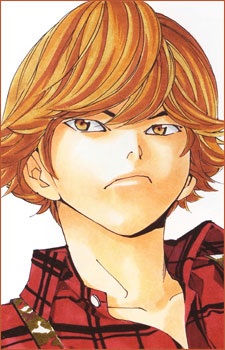
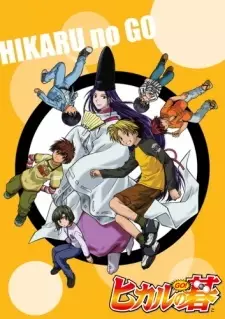
While searching through his grandfather's attic, Hikaru Shindou stumbles upon an old go board. Touching it, he is greeted by a mysterious voice, and soon after falls unconscious. When he regains his senses, he discovers that the voice is still present and belongs to Fujiwara no Sai, the spirit of an ancient go expert. A go instructor for the Japanese Emperor in the Heian Era, Sai's passion for the game transcends time and space, allowing him to continue playing his beloved game as a ghostly entity. Sai's ultimate goal is to master a divine go technique that no player has achieved so far, and he seeks to accomplish this by playing the board game through Hikaru. Despite having no interest in board games, Hikaru reluctantly agrees to play, executing moves as instructed by Sai. However, when he encounters the young go prodigy Akira Touya, a passion for the game is slowly ignited within him. Inspired by his newfound rival, Hikaru's journey into the world of go is just beginning. [Written by MAL Rewrite]
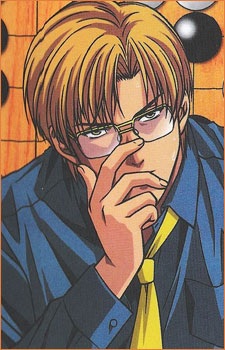
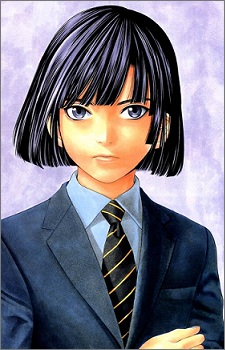
Main
Main
Main
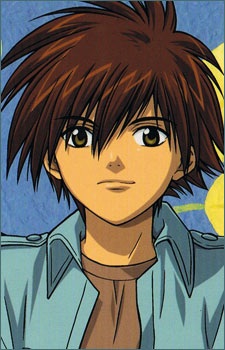
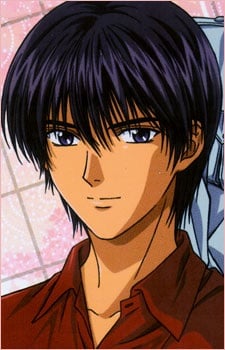
Supporting
Supporting
Supporting
Supporting
Supporting
Supporting
Supporting
Supporting
Stormy_77
June 19, 2007
How on earth could anyone make a 75 episode anime about a school kid playing a 3000 year old board game? Surely there must be a lot of filler episodes. Those were my initial thoughts but Hikaru No Go had a great rating on Animenfo and I decided to start watching it. The first thing to do is to collect the entire series of 75 episodes, the special and the Journey to Hokuta Cup before you start. One of the most amazing things about Hikaru No Go is it's ability to capture the viewer from the get go, once you start watching, it's like you don'twant to stop. Every episode except for Story Arc endings is a mini-cliffhanger motivating you to start the next episode. This perfection of editing and pacing has not been achieved by many other anime. The story centers around Shindou Hikaru, a 12 year old school boy. He's just had his allowance cut and was in the midst of rummaging through his grandfather's garage looking for something to sell for money when he picks up a "Go" board inhabited by the ghost of Fujiwara No Sai, a genius Go player from the Heian dynasty. Sai has unfinished business in this world, he wants to achive "The Divine Hand or Hand of God" in go. He possesses then haunts Hikaru ~ all he wants to do is play Go. Initially Hikaru lets Sai play by moving the stones for him but he starts to fall in love with the game and starts playing himself. The series is a coming-of-age, maturing of new talent, exposure to the competitive world of Go and the beauty of the game. There's a nice large cast of supporting characters, all of which are fascinating in their own right. The soundtrack is wonderful and fits the scenes well. The animation does have some frame reuse but it's done by the same artist who did Death Note and is good. As the series continues you can physically "see" the characters growing up, they get taller and their faces change. One of the reasons Hikaru No Go is such a good anime is because Sai is the best anime character ever created (in my opinion). He's very loveable, smart, funny, honorable AND he's a Go genius.He shows amazing patience with Hikaru's moods and childishness, not just being his friend but also teaching and mentoring him from nothing to greatness at Go. Sai is just one of those characters you'll never forget. He has a big heart. Having dated a nationally ranked chess player in my wild and mis-spent youth, I was amazed at how faithfully the series captures the world of competitive board game sports ~ rivalry, one-up manship, jealousy, excessive obsession with the game, psychological warfare, pushy teachers, they're all there and exist in real life. Even a person who doesn't play Go can understand it as it is presented in the anime. The series has many layers of philosophy behind it that escape most people the first time around. * How great is a person's desire for something? * Can one live, obsessed with a game and winning? * To achieve greatness there is always a price one must pay, in time, or friendships sacrificed by oneself or others. How far should one go? * How should one deal with or live with regrets from one's past actions? * Do people care about legacy and what should one try to leave behind? * If a goal seems "unreachable / unattainable" is it still worth pursuing? On surface the plot seems simple but in reality it's very profound, that's one of the reasons I consider this series a masterpiece. It could easily go on for another 75 episodes and I would want them all. Even after it ended, I was still thinking about it and craving more. I even started playing Go online. The manga sparked a resurgence of interest in Go in Japan, wih some message boards featuring posts by Go professionals stating that they wish they could play against Sai. For an anime to arouse this level of interest is amazing. Hikaru No Go deserves to rank much higher than it does, it is truly a masterpiece.
TheLlama
August 22, 2009
Hikaru no Go is, in essence, an anime about the world of Go; about the game, the friendships and rivalries that arise in this world, the challenges, obstacles and feelings. This is a lot to actually live up to, and Hikaru no Go most certainly fills its role well. It starts out very simle, in a way you've probably seen before. The main character, Shindou Hikaru, encounters a paranormal apparition by coincidence while stumbling around in his shed, and only he can see it. Said apparition is, in fact, the ghost of a skilled Go player from the past, Fujiwara no Sai. He really wants toplay a game of Go, and as such Hikaru brings him along to a Go salon, where he finds a kid his age which he can play. Since only Hikaru sees Sai, Hikaru must play the pieces for him. Of course, fate throws a twist by letting the opponent be a prodigy almost strong enough to become a professional Go player. Sai, skilled as he is, beats this kid, Touya Akira, to a pulp. From here, a wild goose chase after the illusion of Hikaru starts. Sai of coruse manages to get Hikaru into the game, and he eventually chases after Akira. As such we have Hikaru chasing after Akira, who again is chasing what he thinks is Hikaru. Voilá, the stage is set for an intense anime full of emotions, drama and, of course, Go. The plot from there is, for the most part, what I said above. Through tournaments, encounters at Go salons, school Go clubs, Inseis (aspiring professionals), and eventually the professional world of Go, we see these two chase after each other, and what remains in their wake. Quite honestly, the plot is very barebones, but that is completely irrelevant, because Hikaru no Go is in each and every way a character-driven series, which makes it in many ways more riveting and inspring than a plot-driven series. And characters, we lack not. Aside the intense, heart-throbbing rivalry that develops between Akira and Hikaru, there are bucketloads of interesting side characters, who range from Go club members to hardened professionals who gaze as these two young players lead on a new wave of young and skilled Go players. Mostly everyone gets an acceptable amount of development, for example the challengers; why they play and what's at stake for them are usually revealed in a gripping way - I surely don't think I've ever rooted for ten characters when all of them posed as adversaries to the main character. The professionals and newspaper people's reaction to these up-and-coming kids, it all seems so real you kind of experience their surprise and excitement at this. But of course, I can't get lost in the characters only; even though the characters are so good it's easy to forget the artistic qualities of the show, one must not at all forget the music and animation, which both play an impressive behind-the-scenes role in making this series what it is. Let me ask you one question: When you were a teen, or if you're one now, have you ever looked at a picture from when you were two-three years younger? If so, the reaction "Holy mother of love, did I look *that* young?" is probably a familiar one. And when you watch this series, you'll probably end up thinking the same. For this is indeed a coming-of-age anime, following Akira and Hikaru from sixth grade through ninth grade, or three years. Their growth, while seen mostly in their Go playing and their personalities, is also very much reflected in the animation. Towards the end of the series, I asked myself: "Did they always look like that?". When they showed us flashbacks to the beginning, I realized, they did not. While you can recognize them, it is actually impressively easy to spot that they were different. Their faces, so much more child-like, and their stature lower. Much lower. I commend Pierrot for doing such a great job of reflecting their growth physically, too. It was so smooth that I couldn't say from one episode to another that, "hey, he looks older!", but on an overall basis, by skipping, say, twenty or so episodes at a time, I see that they gradually change. Apart from that, the animators did an outstanding job. The next thing on the list is probably how they made the Go matches very interesting to watch. Just pain watching the stones being placed could've been very deterring, at least in the beginning. So instead they throw in a heap of special effects; lights, shadows, camera angles, intense effects when placing stones, even changing the background to make the game more in the center of attention, or even make a symbolic scape, for example the universe itself, symbolizing the "world" that is the Go board, and even the so-called Divine Move. In general, Pierrot did an awesome job of making the show pretty to look at. Now, even in 2002 you had better-looking series, but it does not change the fact that it looks really nice. And they improve as they go on. It looks only mediocre in the first episode compared to the final episode. Among the stronger points I can mention clothes, backgrounds and effects when playing Go. The weaker parts are a bit annoying, but are mostly fixed upon as they go along, creating a most aesthetically enjoyable series. One problem is faces, which look a bit weird - at times some details are a bit misplaced -, but they do a nice job of expressiions, while not going overboard with them either, keeping a fairly serious tone. And later on, when I saw the sheer intensity in their eyes, I just thought "whoa!" and had to let a drop of sweat run down my cheek. The other problem is that sometimes when they placed stones on the board, the perspective was done entirely wrong, when the rest of the stones already there looked real nice. This, too, improved very much as the series went on, and in the latter stages I noticed very litte to none of this problem. And now, the soundtrack, which was done quite nicely. No, that's an understatement. It was inspiring and evocative, all the while not taking over the series, doing a nice job behind the scenes to build up and strengthen the emotional impacts of the show. The intense feelings of the games, the sad feelings that happened occasionally between characters, it was all done with music that reinforced those feelings and made it enjoyable to the point where I felt this tingling feeling in my stomach. The opening and ending themes are quite nice, too. The first opening, "Get Over" by Dream, especially; its synth-pop rythms and lyrics are very inspiring, but it doesn't completely outmatch the others; they were all very strong candidates for favoritism and defnitely a worthwhile watch. Not to mention the final ending theme, which is a ten-minute half-instrumental, half-original mix of Get Over. That was a masterful piece of music. All in all, Hikaru no Go provides sufficient character-driven, intense and emotional entertainment, which most people would find interesting. And don't let the pretense of a baord game like Go deter you from watching; it is hhgly enjoyable, and though I didn't really care for the Go, it remained interesting throughout the whole series. And the more enjoyable aspects of the show will definitely overshadow it if it comes to that. And for new and seasoned Go players alike, this is a very interesting ashow to watch!
Hiromi
December 24, 2006
An anime about a grade school boy playing a board game. Sounds intense, huh? *cough* That's what I thought when I first heard about Hikaru no Go. But how about something like this: A young boy is introduced to a board game unchanged through nearly three millenia by the spirit of a top player still yearning to complete what is called the "Hand of God." But then again, everything sounds good when you throw in big words. Hikaru no Go is essencially the story of Shindou Hikaru as he is inhabited by Fujiwara no Sai - a genius go player from the Heian Period. As Hikaru isinducted into the world of Go as Sai's 'hands,' he sees for himself that an entire world built on the base of a board game exists almost secluded from reality. As he watches Sai play, Hikaru develops a want to play himself. What makes this story reach out towards you is that not only do you watch on as Hikaru's will to play increases, but you yourself also want to play. At times you'll be watching two players put down stones while dramatic music plays in the background. To an outsider, this may seem a bit odd and lame but when you truly watch it, everything feels correct. Hikaru no Go is not just the story of Shindou playing a game. Throughout the anime, Hikaru matures eventually realizing that the world of Go isn't just built on a game but the emotions -for the game- each player possess. The animation proves to hold very consistent through the entire anime, peaking towards the end as Hikaru becomes older. There isn't much flash or bang to each episode but there's always a well done scene when needed. Too many openings and endings to count. There'll be at least one that you enjoy - not to mention the OST is half decent, with a few tracks standing out (Honda vs. Izumi!). You'll be introduced to a huge cast with only a handfull being quite important to the plot and even then a smaller handfull remaining important to the plot after their 5 seconds. If you're interested in a story about a young boy pushing through the world as he experiences that you can't always do what you want and make the best situation of things, check out Hikaru no Go.
VoDKa
January 6, 2009
I will begin by saying that do not let the length of this anime turn you off. Although watching 75 episodes is not an easy job for any given anime, I cannot once remember the act of watching Hikaru no Go being a pain. In fact, every single episode was a pleasure to watch and the entire experience was nothing less than spectacular. I will not go into the plot since there are countless places on the web where you can find the plot outline (including myanimelist lol). This review is therefore strictly to do with the elements that make Hikaru No Go such anawesome anime to watch. For starters, although this anime is about Go, you do not need to have an understanding (or even liking) of this game in order to enjoy it. The driving force of HnG is a combination of excellent character development, brilliant plot, fantastic music, and an overall gripping presence to the show. All you have to do is to watch the first episode of this anime and I will guarantee you that you will crave for the next episode. Yes, it is THIS good. Another noteworthy aspect of this anime is the emotional impact it has towards it's viewers. I found myself laughing, smiling, upset, angry, and almost in tears at specific time points throughout my experience of watching this anime. You will really be putting your emotions through a roller coaster ride, which is quite rare for a lot of other animations. I strongly suggest you all to watch this one. It will not disappoint you. Story: I know that I mentioned that I will not talk about the storyline but since this is part of the review, I will provide a brief outline. HnG is based on the ancient strategy game called Go (similar to chess or checkers) and it journeys into a student's (Hikaru) self discovery when he begins to play Go under the influence of an ancient ghost called Sai upon being possessed by it. At first, Hikaru is compelled to play Go on behalf of Sai but as he begins to play more and more, he begins to develop a personal liking to the game, especially when faced with a genius rival of the same age (Akira). This leads to his aspiration of becoming the best Go player that he possibly can. 9/10 Art: The art was fantastic and colorful. It complemented the theme of the anime very well and the overall art was generally perfect. I cannot imagine the art being any different to what it was. 10/10 Sound: Another amazing addition to the anime. The sound was simply outstanding, which really leaves an impact on the viewers. Bokura No Bouken (ending theme of the first dozen or so episodes) was breath-taking and gave a lot of character to the anime. The other themes were equally fantastic. 10/10 Character: Each character was portrayed in a realistic way and fortunately there was not a single character who was "over-the-top" or irritating. Unlike naruto for instance, where certain characters are too silly or juvenile, the characters in HnG were unique in their own ways without acting overly stupid. This gave an interesting flow to the anime overall. Even the comical aspects of some characters were extremely well developed. 9/10 Enjoyment: For me personally, Hikaru No Go was extremely fun to watch and I was seriously addicted to this show. After watching the first episode, I just knew that I had to complete this anime asap because it substantially increased my confidence that I would not be wasting my time. The only thing is, I was sad when I finished it and felt this strange void instantly after I watched the final episode. I think it is remarkable that some anime can have that effect on you. It is as if they become a part of you. 9/10 I am quite strict when it comes to scoring anime, so I give this a 9/10 overall. If you have not seen this anime yet, I suggest you add it to your "plan to watch" list. It really is a fantastic show.
slpless
April 20, 2008
So how does one make a 75 episode anime about go, let alone a good anime? Simple, you don’t, instead you make an anime about people that play go. While Hikaru no Go can be classified as a sports anime it does not follow the typical sports anime structure. That structure is characterized by train, fight/play, train, fight/play, etc. One can call Prince of Tennis an anime about tennis and Hajime no Ippo an anime about boxing. However, it would be incorrect to call Hikaru no Go an anime about go. Before I start this review let me justsay one thing. I was once a nationally ranked chess player back in high school so I have first hand experience of many of the things the characters goes through. Hikaru no Go is 75 episodes long yet it has this uncanny ability to keep the viewer sitting wanting more. I attribute this partly to the seamlessness nature of Hikaru no Go as well as having constant cliffhangers. Virtual every episode ends on some sort of cliffhanger. If I really think about it, I have a very hard time really breaking down the story down into multiple arcs, this only shows how each episode seems to blend with each other. Wait, actually I can, the first arc is over 60+ episodes long though. Around this time the seamless nature breaks down a bit and loses much of its focus but, it does get back on track in the end. However, if one looks objectively the dip in quality spanned around 7-8 episodes, that’s around 10 percent of the entire series. It like saying a 26 episode anime series was bad because of 2-3 weak episodes. So I can forgive Hikaru no Go for its slight dip in quality, especially considering how good the other 90 percent was. As I said in my introduction, Hikaru no Go is all about the characters. Shindo in particular goes through a lot of change in the 2 years the anime covered. However, the change the characters go through is so gradual and natural that one won’t realized it unless you go back to the first few episodes. Also, as I mentioned in my introduction, Hikaru no Go doesn’t follow a typical sports anime structure. Shindo does lose, and he loses plenty of times. No matter how good one at something, they are bound to lose. This isn’t because one needs to lose to grow. While this is true, sometimes your best isn’t enough. Sometimes no matter how hard you work you’ll still fail, what matters is that you keep going. This is far more realistic than most other sports or shounen anime. Where the protagonist is so perfect they’ll always win or at the very least push a far superior opponent to their limits. For those titles, I often get annoyed and even start to hate the protagonist or at the very least get bored by its predicable nature. Shindo on the other hand is far more human and likable when compared to other sports/shounen anime leads. Also, I can’t forget about the other characters. Sai in particular is a lovable character, with plenty of depth and complexity to compliment his fun nature. Ok, I’ll stop now, because if I don’t I’ll probably keep going on and on about how awesome a character Sai is. In fact, most if not all the characters are likable to some degree. I find it really hard to not like or at least understand anyone as they do a good job fleshing the characters out. Music is another one of Hikaru no Go’s high points. The many pieces they use really bring out the intensity of some of the games as well as accent some of the more emotional scenes. In addition, I’m fond of most of the OP and ED, in particular “Get Over” by Dream. As for the art I much rather like the style they used (same artist that did Death Note) and I really like the female designs. Too bad there were so few female character. Sighs, oh well I guess its realistic in that sense too. In addition, I really like the fact that the characters actually ages realistically over the course of 2 years, especially considering the fact that they’re going through puberty. However, what makes me really like art is the fact that it was extremely consistent. For something this long one is bound to have some weakly animated episodes, thankfully they didn’t, or at least I don’t remember any. As for the actual animaion, I felt that they got a bit cheap in this regards. Sure Hikaru no Go doesn’t need extremely smooth animation, but it can get annoying when we’re constantly viewing panning shots. As someone that has played tournament chess, I must say they did an excellent job in portraying the life of a tournament player. If an outsider looks in on me playing a chess match, they’ll probably think its boring. Well chess or go isn’t a spectator sport and its definitely not boring to the people playing. When I’m playing a chess match, I go through a wide spectrum of emotions as well as playing with an extreme amount of intensity. Hikaru no Go perfectly depicts this intensity and the emotions of the player perfectly. In addition, to game play the tournaments as well as the life of a professional player are depicted in a true to life manner. Hikaru no Go features nearly flawless pacing and strong character development. The flow of the story does get a bit weak in the mid 60’s but that’s only 10 percent of the entire series. Furthermore, the characters are realistic and extremely likable. Music is used to great effect as well as featuring some very nice OP and ED songs. Hikaru no Go is not a very deep or complex anime, for the most part its pretty light but, it is nevertheless fun to watch thanks to its very likable cast of characters. Also, make sure you marathon Hikaru no Go as the story structure and light nature lends it to be marathoned.
Rank
#594
Popularity
#1762
Members
149,319
Favorites
2,555
Episodes
75