

サイコパス
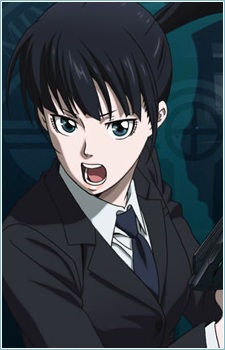
Justice, and the enforcement of it, has changed. In the 22nd century, Japan enforces the Sibyl System, an objective means of determining the threat level of each citizen by examining their mental state for signs of criminal intent, known as their Psycho-Pass. Inspectors uphold the law by subjugating, often with lethal force, anyone harboring the slightest ill-will; alongside them are Enforcers, citizens that have become latent criminals, granted relative freedom in exchange for carrying out the Inspectors' dirty work. Into this world steps Akane Tsunemori, a young woman with an honest desire to uphold justice. However, as she works alongside veteran Enforcer Shinya Kougami, she soon learns that the Sibyl System's judgments are not as perfect as her fellow Inspectors assume. With everything she has known turned on its head, Akane wrestles with the question of what justice truly is, and whether it can be upheld through the use of a system that may already be corrupt. [Written by MAL Rewrite]

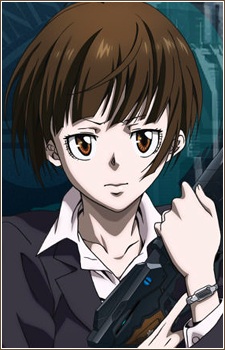
Main
Main
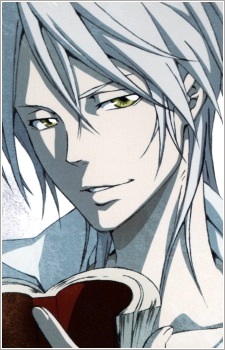
Main
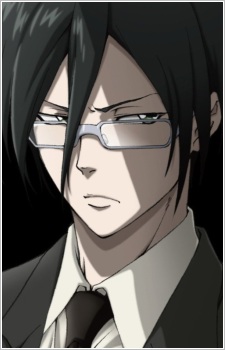
Supporting
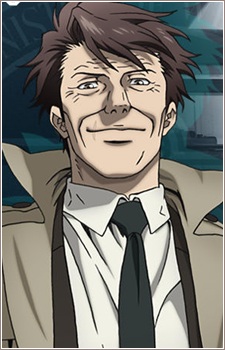
Supporting
Supporting
Supporting
Supporting
Supporting
Supporting
Supporting
johnvswild
August 25, 2013
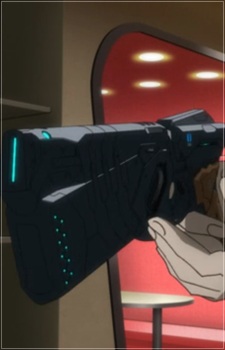
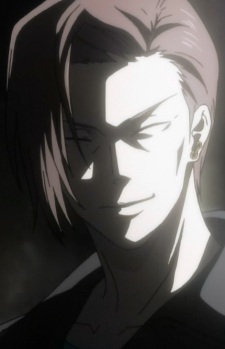
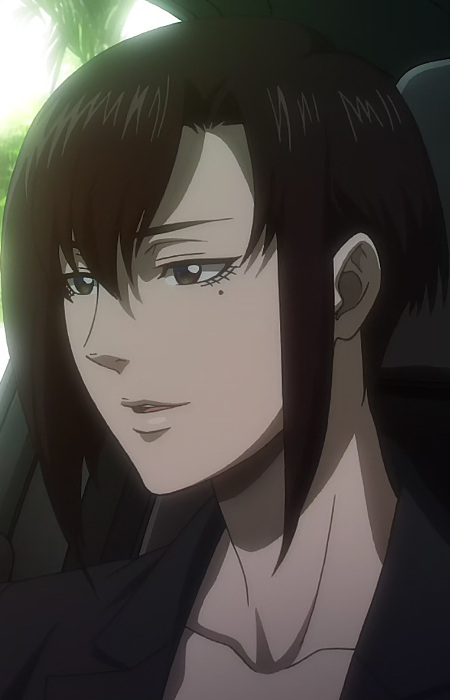
The Butcher strikes again with an intense action set in a chilling dystopia that, regrettably, is one of his weakest works. SPOILER-FREE™ In early 22nd century Japan, it has become possible to analyze a human mind with a startling degree of accuracy using a network of scanners and an incredibly powerful supercomputer known as the SIByL System. To this end, the judicial system is no longer required for law enforcement. Police use the SIByL System’s abilities to judge a person’s mental state and depending on the situation, either arrest them so that they can undergo therapy, or carry out executions on the spot. Into this world isthrust the brilliant but inexperienced Inspector Tsunemori Akane. We follow the inspector and the rest of the Public Safety Bureau as they investigate the tenacious shadow of crime that haunts Japan, and learn more about the truth behind their “paradise.” One thing that caught me off guard, which viewers should be aware of is that despite being an anime about police detectives, it is most definitely NOT a mystery. The pawns and masterminds of crime are made known to the audience quickly (read: in the intro). This is a fast-paced action anime much more than it is a mystery. An action anime that is quite dark and violent at times. Although Psycho-Pass does not thrive on gratuitous gore for shock value, it’s definitely way too much for younger audiences or those with a weak stomach. The first thing you will notice about Psycho-Pass is that the story is served up on a silver platter of fluid animation and solid, yet disquieting music. Psycho-Pass’s presentation of the future transitions between sleek and gritty, but never boring. Be it the character designs or some high-tech contraption, there is always something pretty to look at. It’s no secret that Production I.G has a lot of money, and they obviously dropped big bucks to make this title look good. Unfortunately, Production I.G has acquired a nasty habit in recent times: making some parts of anime dazzling (especially the beginning) and hiding some less-than-outstanding work throughout the series as it goes on. This creates the perception that an anime is gorgeous, and once people have that impression in their minds the studio is free to be a little lazier when nobody’s looking. You can see this habit at work in other anime like Suisei no Gargantia and Shingeki no Kyojin. I noticed several conspicuously still backgrounds and simple designs especially in the middle-late part of the anime. These are the sorts of things I would consider run-of-the-mill in a typical anime, but it is precisely because Psycho-Pass is such an attractive anime that these lapses are so irritating. But the substance behind the style is what really makes, and breaks, this anime. The setting of this anime is particularly excellent. The society we see at the beginning is safe, happy and free. But as Psycho-Pass continues, we learn that the pillars holding these values are actually rather fragile. Social problems, isolationism, unreliable technology and oppression lurk in the unilluminated shadows. This dystopia is definitely authoritarian, to the point of dictating possible jobs to people based on their abilities. But there are several examples of how it is not an Orwellian “Big Brother” society. The citizens are happy, without being brainwashed, quite reminiscent of Philip K. Dick. Therein lies the problem, Psycho-Pass is the world of Philip K. Dick, if they didn’t flat-out admit it in the anime they might almost be accused of plagiarism. Psycho-Pass is brazenly derivative of several other works, even anime. More than once I had to ask myself if I wasn’t watching Ghost in the Shell or reading Gulliver’s Travels. Psycho-Pass doesn’t even care if you know, in fact it wants you to know; it’s positively stolid. The setting may be a little stale, but Urobuchi makes it work, the real point is what goes on in that setting. The Public Security Bureau may be the sword-arm of SIByL, but they do their job because they care about protecting people. As they are faced with a string of brutal crimes, it gradually becomes as obvious to them as it is to the audience that there is a connection. The focus of Psycho-Pass is not so much what is behind these crimes, but why. At first, it seems the only motivation is the sadism and insanity of distasteful malcontents, but the more complex picture is gradually revealed. In this sense, the story is very well put-together. Forced storytelling is nowhere in sight; I was fully expecting one of the detectives to produce a totally rectally-derived solution to an investigation, but to my delight, it never happened. There are no plot holes and the elements of the story come together strongly as nobody is “right” or “wrong.” The characters are flawed and very compelling, compounded by excellent voice acting across the cast. Even side characters have believable thoughts and motivations. The three main characters are all superb. Tsunemori’s development can be a little jerky and opaque at times, but she shows tremendous, yet believable, strength of character. She is presented with several difficult decisions and her reactions are all reasonable, earning her praise and scorn from others. Kougami struggles with his ideals against his feelings and past, which is satisfactorily explored without being too excessive. He has little faith in the society that shuns him, but embittered though he is, he tries to do the right thing. Makishima is a spectacular villain. At first it seems he is merely an evil psychopath, which he most definitely is. However, his motivations and methods reveal an intricate character, almost noble in some ways. Some viewers may even root for him at some points, and not just those who support the bad guy to be edgy. One of the biggest problems with Psycho-Pass is the sometimes incomprehensible rationale behind it. The science (often pseudoscience) of the show is extremely confusing at times. The technology is especially baffling, particularly the Dominator weapon system. I will refrain from spoilers, only I think that it must be designed expressly with storytelling potential in mind, with any practical concerns neatly cast away. There are also a few times when the characters are equally obtuse. I recall a small squad of police bursting in on an injured and unarmed criminal and shooting him without hesitation. One character promptly wonders aloud who the criminal was talking to and whether he was working alone. Apparently it never once occurred to him that he might get that information from the man himself. This infuriating quirk only gets worse as the anime goes on. Psycho-Pass is very pretentious at times. It asks some moderately philosophical questions, but like the setting, nothing even approaches originality. It wants to provide dumbed-down action without sacrificing its air of deepness. Psycho-Pass isn’t a “bad” anime by any stretch of the word, in fact it is quite entertaining. But it isn’t nearly as intelligent as it thinks it is.
Missingnomer
April 29, 2013
*Somewhat spoilerish materials in this review. I will try to fix that as I continue to grow as a writer!* By now I have watched many anime shows that covered almost every theme you could possibly think of, almost. Yeah, I say almost because once in a while an anime show in particular rises above them all. A show that introduces an idea in a new way. A show that diverges from the other dozens of shows that air along side it. But what makes an anime stand head and shoulder above the others? Could it be the story, characters, or (if you are like me)even the soundtrack that makes an anime outstanding? What if there was an anime that incorporates all of the above? Now that is an anime worth anybody's time. And that anime would be Psycho-Pass. Set in a futuristic Cyberpunk setting we dive into a high-tech and self-sustaining Japan where law and order are maintained by an all-powerful supercomputer dubbed "The Sibyl System." By this system all people of Japan must obey and follow its every command and judgement, whether you consider it fair or not. However, all governing bodies aren't perfect. Everything has its flaws and imperfections, but when the very people who uphold this system's "justice" start to find out about these imperfections what would happen? ===== Story ===== Psycho-Pass starts off by introducing Tsunemorie Akane, a new Inspector for the Public Safety Bureau which upholds the laws set by the Sibyl System. The system that runs the country by judging every human mind individually, evaluating its talents, weaknesses, and even its potential to commit crimes. Through this system life is practically dictated to the civilians of Japan creating a Utopian society devoid of criminals and even potential criminals. But when Tsunemorie and Unit 1 stumble across a case that blatantly defies that very system they swore to protect all hell breaks loose as the very foundation of society is shaken by one man. The story of Psycho-Pass is the meat of the entire show. The common theme of what's right and wrong is tossed around quite a bit. Even with that common theme being the backbone of Psycho-Pass it still found an entirely new way to present this overused theme. If society accepts or allows certain things does it make that certain thing right? Good? The Sibyl System just sounds too perfect... If we all followed something unquestionably than wouldn't that make you no better than a pet? An animal that simply listens to what it is told? When man loses his will and ability to decide for himself can he truly be called a human? All these themes and questions ring loud and clear in Psycho-Pass. It was a true joy to see these old themes dressed and presented in new and compelling ways . Ways that would make me bite my nails and rock my chair back and forth until the next episode. ======= Characters ======= Being a show with such a deep, dark, an mature story we are given a cast that really showcased just how much potential the show really had. Shinya Kougami was that classic old-school protagonist that you just couldn't help but admire. He just screamed Spike Spiegel to me (which is a really good thing). An old-school classic character is always welcomed, but I always wanted to watch a show that had an antagonist that was cool, level-headed, dark, sinister, but yet a man an audience can sympathize with. Enter Shougo Makishima. Now I know plenty of you guys went through that, "Hey! They totally stole my idea!" Moment at least once when you watched a movie or show, well when I saw Shougo in his full glory in episode 11 I couldn't help but scream that out at the end of the episode. I finally found another show that diverged from those cookie-cutter antagonists that were always evil and had no sense or reason. Shougo had his reasons, and they were pretty damn good reasons too. But we can't forget the mighty Akane Tsunemori. Though she played a small role for the first half of the show she finally had her due spotlight at the closing of the show which I greatly appreciated. She was a good breath of fresh air from all those other female protagonists out there (Yes! I am looking at you Inori). But I know half of my love for Akane comes through her God-like seiyuu, Hanazawa-chan.......I am a softy for cute and soothing voices, which are very much welcome in such a show as dark and gloomy as Psycho-Pass. Along with the other inspectors and enforcers the cast was a big reason for this shows incredible story. (Give a shout out to that Yuri love with Shion and Yayoi!.....Sorry, I just couldn't let that go unsaid) ============ Music and Animation ============ If you haven't guessed already I tend to put a lot of value into animation and soundtracks. What makes those climax scenes, transitions, fight scenes, and even scenes with characters randomly staring up in the sky even more epic? Get Yoshikazu-sama to be your Sound Director! Come on people, this is the guy who had his hand in Baccano! The Main theme for Psycho-Pass is played through out the show on a piano, violin, and synthesizer. Each version played with their respective scenes flawlessly. The soundtrack gave so much life and definition to the anime that it just couldn't be ignored. Animation goes hand in hand with the music and Psycho-Pass hit it right on the nail. Though the art got choppy in later episodes (for understandable reasons), both were produced to masterful levels of brilliance. When the I saw the Dominator in action I couldn't help but desire one for my own personal use. Along with those artful explosions of blood and guts, we tend to see the insides of many people. This is rated R for a reason people, so try not to watch Psycho-Pass during your lunch break because you just might get Dominated! AHAHAHA, classic...Ahem, in any case, Bravo Production I.G. ===== Overall ===== When an anime presents us a strong and emotional story line complimented by intricate and complex characters backed up by an art and music style that resounds with epic simplicity but yet amazing profoundness we find ourselves with a jaw-dropping anime: Psycho-Pass. The story and characters flesh out what makes a man a man. Conforming or reforming, mature themes that are tough to swallow. With a story that has so many things going on we can't really see the line of good and evil. That's were the beauty of Psycho-Pass lays hidden. This isn't a show that tells you what is right and wrong, this is a show that makes you decide. Decide for your own life, don't blindly follow things or people without reason. It is a good reminder to not get lost in today's world with so many conflicting views and accepted norms. What makes you human? Your Psycho-Pass? Or what YOU make of YOURSELF? But then again "The SIByL Still Continues..." A sequel that has the possibility of retaining or even surpassing it's predecessor? Sure as hell hope so. *This being my first review I thank you for reading it. Feedback and friendly criticism is welcomed! Once again, thank you.*
Stark700
March 21, 2013
Hey you, turn on the news. What might be the first thing you see? It might be something like, “today in this peaceful community....police are looking for your help in identitying this suspect wanted for […]. If you have any other information, please contact your local authorities”. Seriously, how often do you hear that? Most people who tune in the news daily probably would be half a dozen times a day. In the world of Psycho-Pass, the series takes crime to a whole new level with its advanced technology. Yet at the same time, hope and justice exists as the Enforcement Division uses technology oftheir own to apprehend criminals and eliminate them as a threat to society. Psycho-Pass is an original series that debuted on the noitamina network featuring a setting of a dystopian future. The series may be synonymous to the term, “psychopath” that reflects on a twisted individual's state of being. But any rate, the series takes place in a future where it has become possible to instantaneously measure and quantify a person's state of mind and personality. For that purpose, the term “Psycho-Pass” is used to refer the measure of an individual's being. In such a world, those with high Psycho-Pass levels are considered a threat to society and it is up to the Enforcement Division to eradicate them. We need to think about this though: Humans aren't perfect and we are all capable of making mistakes. The degree of these mistakes varies but all have consequences. However, should we really be punished before the action is committed? Should we be judged based on a system rather than morality? What if there is a flaw in the system and something goes wrong? It seems that some of these questions/ideas becomes a conflict for those who follows the system. Essentially, the series makes an excellent pilot episode as well as the main themes of the series. The way Gen Uroboichi (PMMM, Fate/Zero S2, Phantom Requiem) handles this series traces down some of his other ways of dealing with his previous works. The themes of dealing with the future and thriller like moods are both present and beautifully executed. In fact, the series follows what police and the government can do in the future with technology like we have never seen before. It is quite an enthralling idea. Just think about it: reducing crime or rather, eradicating it before it even happens and prevent the damage. Maintaining public order in a dystopian world is never easy but the Enforcement Division is there to tackle the job. Unfortunately, the series' themes tries a bit too hard occasionally with its philosophical and confusing speeches. In particular, the seemingly antagonist of the series stays in the background most of the time. More precisely, he is shown to be a humanist who embraces the idea of cruelty and the dark side of the human mind. It is possible that he even views himself as an immortal with the way he handles torture of his victims, either physically or mentally. He even makes twisted dialogues portraying a lot of old culture and seemingly becomes a distraction in occasional episodes with his Shakespearen-like monotones. The themes of the series are also not new or too original as some people may think. The idea of a dystopian setting and working for a government in a futuristic setting can be traced in other anime series such as Ghost in the Shell and Ergo Proxy. In fact, viewers might even find some of its similarities so similar that it's almost like a season 3 of GiS. As such, police drama with cyberpunk and mysteries are involved. Even in live action movies, themes similar to Psycho-Pass exists such as those in The Minority Report, a film loosely based on Philip K. Dick. The point is that the although promising, it may or may not be new for veteran anime fans into the franchise. Regardless though, the series' idea is still interesting with its dark backgrounds and writing courtesy of Urobutcher. As mentioned before, the series takes off with an explosive start and shows that such a dystopian world is truly dangerous. It does drag off balance a little though in the beginning episodes that seemingly may distract the viewers a bit. Examples of this includes the seemingly virtual world, stage attacks, and those fan service bits of Akane. However, it still maintains a high level of interest for viewers especially later on when new characters are introduced and some intertwined plots become connected through the criminal activities and mysteries. Some of the thriller endings are also capable of keeping a viewer at the edge of their seats as they make a viewer wonder “what will happen next?...” Psycho-Pass continues to maintain its balance of character casts. They work together as a team with the unit because in the end, it takes teamwork and skills to finish the task. (and with a little help with the Dominator of course) The main male protagonist in the series is a young man named Shinya Kougami who is tough, independent, and skilled in what he does. Ironically, he has a high criminal mentality himself but circumstances has allowed him to become part of the solution. Working with him on various assigned tasks is the female protagonist of the series, Akane Tsunemori. She joined the department for a different reason than Shinya but otherwise becomes part of the solution as well. Unlike Shinya however, she is more delicate who makes up the team with her intelligence rather than brawn. She seems to serve as the foil of Shinya and possibly even become a future love interest of his. The two shares an awkward relationship but it is clear that they care for one another, especially Shinya who seems to go his ways to help and protect her. The other characters of the team and cast also plays various roles although their spotlights are lessened in the series. Yet, they do balance out the team. We have the enthuastic and outgoing Shuusei Kagari who often makes jokes during the job that brightens the mood of the story. On the other hand, Yayoi Kunizuka maintains her calm composure during any situation and shrives to get the job done right. Then, there's Nobuchika Ginoza who has the most experience on the team and thus serves a sort of mentor for the others in order to ensure the success of a mission. Others such as Tomomi Masaoka and Shion Karanomori also play their roles. Ultimately, it's up to the entire team and their skills collectively as well working together to make the city a better place to live in. *****WARNING***** The series is quite violent both physically and psychologically. Even in the very first episode, the criminals are shown to be merciless and violent. In fact, the very first criminal in the series that we see is a kidnapper, potential rapist, and possible murderer. It is no wonder his criminal mentality level is so high. The psychological part of Psycho Pass exists as well especially involving the main antagonist with his way of speeches. The way he talks through metaphors and expressing his ideas while having an English song being played can be a bit disturbing. It's not exactly something a viewer should watch before they go to sleep at night. The way the series handles the fates of criminals with high level of Psycho-Pass is also brutal. Every time the Dominator claims a new life breeds a new scene of gruesome death, where the body splatters upon impact. The blood fills the screen and employs those shock values of violence and gore. Even when the target evades the move, it makes it seem it's just a matter of time they meet their ultimate fate. It doesn't stop there either. Fan service are also present especially with Akane and later on at school where artwork is seemingly portrayed as a way of sexualizing dead bodies where even cases of necrophilia is present. At some point, viewers will realize the various shock shown and what Psycho-Pass is as a series: a dark and gruesome presentation in the dystopian world. The point? DO NOT WATCH if you can't take this. Trust me, you won't make it. ********************* The artwork of the series is quite dark and I mean it literally. Even in the beginning episodes, it's hard to make out what exactly is happening until you take a closer examination. This shouldn't be a surprise though as in most dystopia series, such visuals are used to convey the serious mood and dark backgrounds. Koji Eto (Fate/Zero, Garden of Sinners, Steins;Gate) serves as the art director and the man gets the job done with his talents. With his already talented skills in crafting and directing darker themed series, Psycho-Pass brings those backgrounds of violence, cruelty, and darkness into the series quite well. The CGI usage of those dominator also shows the technology side of the P-P world. It's quite enthralling to look at and see how far everything has come through in such a futuristic dystopian setting. Likewise, the soundtrack makes an impression. Yoshikazu Iwanami (Another, Koi Kaze, Deadman Wonderland) orchestrates the score and makes his skills known throughout the eerie sound rythyms in later episodes. In some of the scenes, English folktale music is used to reflect some of the moods of dark violence that expresses itself metaphorically. An example would be in one of the arcs where “Rule Britannia” is seemingly played during a rather disturbing scene. Employment of this is rare in anime series these days and makes some of the arcs that much more darker. The opening song is performed quite well in general. Abnormalize by Ling Tosite Sigure plays a montage of the gruesome backgrounds of the series with some montages of the main characters. The lyrics “secret kills for you” is occasionally heard that brings the haunting words to life in the anime series. Likewise, Egoist makes their name known for their talent in both of their ED songs. Although not too realistic, it is catchy and fits within that P-P way, just the way it ought to be. Ultimately, Psycho-Pass is a blockbuster series that can be quite a blast especially those into a futuristic setting involving police detective fiction. It's hard to say that the series is really for everyone especially those who have problems with the violence, gore, and psychological thriller themes expressed. It looks like P-P does try quite hard occasionally, but in such a world, there needs to be order. The series makes a great usage of its dystopia future while staying to the point without going off track too much. Science fiction often incorporates the package of alien invasion, going into a virtual world for conquest/domination, or time travel. Psycho Pass takes that genre and transforms it into a product that is appealing with its dynamics beyond those typical themes. However at many instances, I do feel that the series falls apart with its plot. Still though, it was a nice watch for me. Now, what that's being said and done, season 2 may be on the horizon. Crime coefficient levels? Hell, if I'd know.
PoeticJustice
May 24, 2013
It has been a while since there has been a dystopian, psychological, police thriller of this popularity since Ghost in The Shell first aired. Writer Urobuchi Gen, famous for his works on the Fate/Stay Night series, and Mahou Shoujo Madoka Magica, decided to use his deft hand at writing and give us his own twisted version of the future. Psycho Pass is a dystopian crime thriller, centered around human morality. Is it right to sacrifice individual freedom, for safety? Is it right to condemn someone for something they might do? Sadly, Psycho Pass falls short of greatness due to uneven pacing, some pretty poorcharacter development for certain characters and what I find to be a lackluster conclusion. Story(7/10)- Psycho Pass is set in the future, where it is possible to measure the "soul" of a person using a device installed on each citizen called the 'Psycho Pass'. Using an advanced A.I. system called the ' Sybil System,' the police are now able to measure a person's mental state and the chance that they will commit a crime. The first episode starts off very strong where we see the female protagonist, Akane Tsunemori, tackle her very first case and particularly gruesome one. The viewers are introduced to the obvious flaw of the Sybil System, that people under significant psychological stress are criminals. The episodes after that are very slow moving. Most of these story arcs are dreadfully boring and seem to drag on forever. It isn't until episode 8 where things really start to pick up when we are introduced to the antagonist, Makishima Shogo. It is only when he appears do the themes of Psycho Pass solidify and we see the potential this show truly has. Sadly, the poor ending ruins what could have been a great series. The producers of the show obviously wanted to leave room for a second season if the show did well enough, and that was to the show's detriment. Now, I must give psycho pass credit, because all the themes were implemented flawlessly. For example, a big theme in Psycho Pass is emotional repression. The people in that society view expressing an type of emotion as negative out of fear that they will be punished by the Sybil System. As a result, the society is in a vegetative state, and act almost like zombies. They feel no empathy towards each other, they do nothing to help one another, all they are concern is about the state of their Psycho Pass. The world in Psycho-Pass is fleshed out to the point of believability. Art(6/10)- The most obvious flaw has to be the animation. In this day and age, there is no excuse for the animation to be like this. It is often very choppy, and there are some poorly drawn characters. This does not make the show unwatchable by any means, heck sometimes the show looks great like in the first episode, but those moments are few and in between. Sound(7/10)- The BGM wasn't very noticeable, and when it was, it didn't really add or take anything away from the scenes. The Opening and ending songs are very catchy though. Character(7/10)- In a show like Psycho-Pass, characters are essential to moving the plot forward. If the characters are bad, then the show will fall flat on its face. Luckily, the cast of characters aren't bad but they are not as developed as I would have liked them to be. First we have Akane Tsunemori, a new and heavily idealistic detective to the police force. In early episodes, she comes off as a ditz, and relatively boring. It isn't until the midway through the series she starts to develop. Her confidence emerges as she becomes a more experienced and competent detective. Sadly, in the last few episodes, her personality does a complete 180 and she regresses to an even worse state than she was at the beginning of the show. The other protagonist, Shinya Kougami is literally nothing more than a foil character. He does cool things from time to time, and can spew George Orwell quotes like no tomorrow , but he is a relatively shallow character. He seems stuck in the past, but it is debatable whether the writers did that purposefully. The rest of the cast aside from the villains, add little to nothing to the show. The crown jewel of this series has to be Makishima Shogo, the "villain," of the series. I put villain in quotes because it is up to the perspective of the viewer to decide if he is truly evil or not. His motives are always shrouded in mystery, making it hard to know what he will do next. He is calm, focused but never carries an air of malevolence like most of anime villains. Shogo vaguely reminds me of Johann Liebert from Naoki Urasawa's famed manga series, Monster. And that is no little accomplishment. It is a shame that his character was dragged down by the end of the show. Is Psycho Pass a masterpiece? Not by any stretch of imagination. Is it a bad show? Absolutely not. Psycho Pass, if anything, is a sign of things to come. It is a sign that, hopefully, that there will be more anime with a message rather than generic harem or romcom shows. I give Psycho Pass a 7/10.
xelyak
November 11, 2013
"It's not the final judgement of "good" and "evil" that's important. What matters is that you come to that decision yourself. That you agonize over it and eventually accept it." -Akane Tsunemori Psycho-Pass is essentially a psychological-action anime with a sci-fi based setting driving the story line. The Story: 9/10 ------------------- Psycho-Pass is set in the future where you are able to easily see the mental state of one's mind. This is given a number, a number relating to one's contingency of creating a crime, called the 'Crime Coefficient' if it is over the normal rate. These persons are apprehended, if not disposed of if reached too high.Inspector Akane Tsunemori and Shinya Kougami are both part of the Public Safety Bureau's Criminal Investigation Division, which is in charge of maintaining order with the use of the Sibyl System. Sibyl connects with the Dominators Enforcers and Inspectors use to hunt for the latent criminals. On her first day Akane Tsunemori meets with Inspector Nobou Okura and the two, with the Enforcers are labelled to take down the cause of the Area Stress level. Nobuchika Ginoza, Shinya Kōgami, Shūsei Kagari and Tomomi Masaoka are introduced as the first Enforcers seen in the story. In the first episode, you will feel slightly information-dumped with the expectation that you will remember each person’s name. After getting into this series a bit more, you will conveniently find that this is not the case. The producers have made it very clear and easy who’s communicating to whom. The rules or what you can and cannot do with the Dominators are shown over time in the series and the motives characters are very well defined in the story. There are small side stories within the anime, but they all intertwine at a point within the series in some way or another. The links between each case is put together very astutely. Execution of this concept is what made the story very interesting in such a way different to other anime with a mystery and crime genre. There are a couple of episodes slightly not as fulfilling, maybe only two. But don't let these ones deter you away from the anime, they're just very dialogue driven and provide more insight into the characters. The Art: 9/10 ---------------- The animation here was very well done. Background effects brought a dark feel to the even darker plot. It enhanced the experience of the story in such a way that it felt very real. Either foreground of background the designs of objects, characters and material were very well done. Character designs in the anime were all very different. None of the characters art looks like it had its shape copy/pasted and put different things on. This includes the supporting characters- of which there are many. Dark color shading to every object will undoubtedly annoy some people to not see a change in texture, but because of this the theme of Psycho-Pass is reinforced. The Sound: 8/10 -------------------- The sound here seemed to have high audio quality. EGOIST and ryo are great choices for creating the composition for Psycho-Pass. The visuals to make the OP for Psycho-Pass must have, undoubtedly taken quite a bit of time. The meaning behind the lyrics is very deep; it accompanies the art used to make the opening and ending scenes substantially high in quality. But, despite this it isn’t as addicting to listen to after finishing the actual anime. To get a clearer picture, you really must have the visual aid of the music segment while listening to enjoy it to its full extent. The voice acting was favourable, despite the voice mostly being in a serious tone. Understandably, because Psycho-Pass has a dark theme, there wouldn’t be any times when main characters were lively. In turn the voice actors could not express their skill fully in the anime. The Characters: 10/10 ------------------------- All of the main characters have their stories straightened out in Psycho-Pass. There is none, or, at the least very little times that you would question the past of one of the main characters. Shinya Kougami. He's the main male Enforcer in the story where there are 5 other Enforcers and 2 Inspectors working with him. He's enemies with Makishima, actually the villain of the story because of his connection with the Specimen Case. He tries to guide Akane onto the route of being a good Inspector while also looking after her- even saving her at times while trying to hunt for Makishima. He’s not much of a diverse character. Once he has made his mind of doing something he sticks with it. Akane is a bit of a tricky one. At times it seems like she has ‘feelings’ for Shinya and other times not as much. Her past is clearly defined in Psycho-Pass. She's a good strong one, who just needed a kick start to developing into a versatile character. One thats progress throughout the story can be seen very clearly. Makishima Shogo is the main villain in the story. He’s a sadist to the extreme degree, while maintaining his twisted views on the world where they would stay at the same point. His choices are well characterized and his logic and thoughtfulness put into each of these is very intriguing. The side characters are all entertaining and likable in some form. Each of the members in Unit One contributes greatly to the story line and helps to push it forward, while also relaxing tension in between scenes. The Enjoyment: 10/10 ------------------------- Others who enjoy a morbid feel in anime will most likely enjoy this. Personally, watching this was something new to me as I had not explored this genre before. I’m surprised how amazing and tense it can make you feel. I’ve only watched this series once through, and a couple of sections while writing this review. To me, it feels like a one-time-only anime. Unless you like to re-watch things, re-watching this won’t bring anymore enjoyment or chilly feelings as much as going through it the first time through. It would be a lot staler in its mystery and plot twists, as well as those climatic moments. After watching this quite a while ago, I can safely say that it’s actually not that memorable. After the first few days, for sure it will be in your mind after watching. But this thought will soon go away. Overall: 9/10 ---------------- Overall with the solid ending and neat epilogue it makes this anime very worthwhile. As this anime has a very unique setting and plot, it’s recommended for those who can bear the heaviness this anime has.
Rank
#288
Popularity
#70
Members
1,740,236
Favorites
40,246
Episodes
22