
KEY THE METAL IDOL
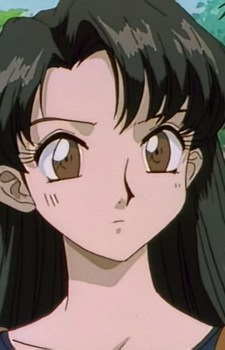
Tokiko Mima, nicknamed "Key," is a 17-year-old girl living in the Japanese countryside who, despite her human-like appearance, is a robot. When Key's grandfather Dr. Murao Mima passes away, he leaves her a dying message, telling her that she can become a real girl if she is able to make thirty thousand friends. Thus, Key moves from the quiet Mamio Valley to the busy streets of Tokyo, where she soon runs into her childhood friend Sakura Kuriyagawa. Key quickly becomes enamored with idol singer Miho Utsuse and wonders if becoming a singer will allow her to make the amount of friends needed for her to become human. But Miho carries a ominous secret: she is connected to Jinsaku Ajou, an old rival of Dr. Mima trying to make new a breakthrough in robotic weaponry. As Key works to become a real girl, Ajou sets a dangerous plan into action, and it turns out there's much more to Key than meets the eye. [Written by MAL Rewrite]
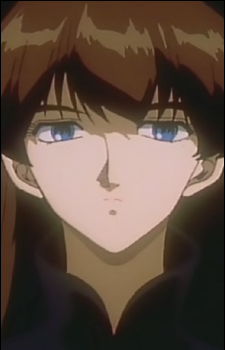
Main
Main
Main
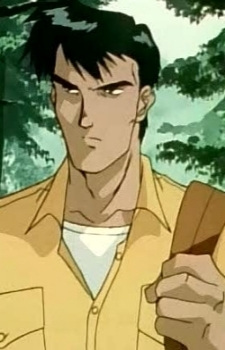
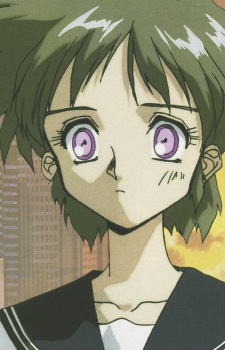
Supporting
Supporting
Supporting
Supporting
Supporting
Supporting
Supporting
Supporting
Hayato_Matsuo
October 23, 2009
I first heard of this anime in an old RightStuf catalogue I got in high school. After reading the description, I knew it was a must see. Even though most people would rather see the japanese sub, I highly recommend the english dub. Not only the VAs were decent, but the music has all been remade to english, and is some of the most beautiful music of the mid-late 90s. Storywise, this had a great storyline. You could say this anime has a bit of a Pinocchio complex, as the main character (Key) is trying to become a human. How she does this is to simply make30,000 friends O.O. How this works out remains a mystery until you get near the end of the series, where all questions will be answered. As Key is faced with obstacles, her human transformation takes place, and truly wows those around her. By the time you get to the end of this anime, you will also fee that you've become one of her friends. The artwork is somewhat outdated, but that's to be expected from an anime made in 1997. However, that's no excuse to toss it aside for it being so old. The character designs of the main cast and the robots raises some nostalgia for the classic Terminator movies. The special effects are truly impressive, worthy of giving this anime an award, if it doesn't already have one. Though there is some nudity, it's not so much to toss this in with ecchi Just enough for you to keep in mind that this is a serious story. Overall, I would have to say this anime is one of my top 5's. After seeing this the first time through, it really brings a tear to your eyes. T_T I highly recommend watching it.
Fear_the_Reefer
May 27, 2016
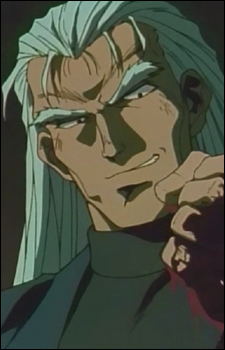
Throughout your tenure as a student, you probably met a diverse assortment of people... You made friends with those you connected with, feuded with those you hated, and largely ignored those that fell by the wayside. However, there’s an incredibly likely chance you met someone you couldn’t easily categorize... Someone who challenged your perception of how a fellow classmate should act and interact with the people around them. Someone like Tokiko Mima, a quiet, strange girl who speaks in a flat, inflectionless voice, carries a broken speech pattern, and seems to have no interest in the world around her. Now,being young, you probably haven’t heard of the word Aspergers, so you’re more likely to use words like weird, creepy or gay to categorize kids like this. Tokiko, or Key for short, has adopted a category of her own: Robot. And no, she’s not just saying that to troll you, or to offer up an easy explanation for her own behavior. Talk to her Grandfather, and he’ll tell you that it’s true... Or he would, were he still alive. Yes, Tokiko’s guardian has departed this world, and while she’s old enough by Japanese standards to begin living on her own, he’s left her with on final message; If she goes to Tokyo and makes friends with 30,000 people, she’ll finally be able to become a real human girl. She catches the next bus out, but it turns out the big city isn’t as friendly as she was expecting it to be. In fact, the first few people that approach her make it very clear that they’re looking for something a lot more than just friendship. Luckily, before they can take advantage of her, she’s rescued by an old friend who’d moved away a few years before her, and immediately takes her in. It’s when they visit Sakura’s part-time job at a video store that Key catches a glimpse of an idol concert, and decides that in order to make 30,000 friends, she has to become a pop idol! Will her climb to the top see her becoming Japan’s next big national treasure, or will the robot assassins and even more cold-hearted music executives standing in her way prove to be too dangerous of an obstacle for her to overcome? Key the Metal Idol was an OVA series that was released by Studio Pierrot between 1994 and 1996. There were no deadlines to contend with, and they were able to release the series gradually in single episode VHS chunks, so they were allowed a lot more leniency with their budget than they would have been with a televised anime. This lack of a financial burden shines through beautifully in what I have to call one of the best looking anime of the mid-nineties. I admit that the art style and limitation of movements may immediately give away it’s age, but it’s held up surprisingly well over the years, even well into the modern age when a show as attention-demanding as this one would likely have obscure visuals and camera angles compensating for all the dialogue going on. Instead of relying on those kind of cinematography tricks, Key has a much more realistic visual style... Well, realistic with a few anime tropes thrown in, like big-eyes female characters and the all-important villain with long white hair... And it goes a long way in making this old-school anime environment look immersive to the viewer. Stereotypical anime expressions are nowhere to be found, which is something I don’t think I’ve ever said in a review, but it makes even the most useless character look relatable in some way. The difference in lighting and color between Key’s mountain home and the big city, along with an attention to detail that captures every spot of grime and turning gear, tells you all you need to know about both locations. Random people in the background don’t always move, but with smart editing, you’ll tend not to notice this enough for it to bother you. The realism also extends to the character designs, as almost everyone in the series has your typical dark Japanese hair, which helps Key to stand out in contrast, being the only character other than a certain white haired Russian to have a lighter, grayer tone of hair than anyone else, and the choice to have it go back to brown every time she’s unable to control her emotions makes it easy for us to distinguish between her robotic and human selves. The robots roaming the city also look like about what you’d expect them to... Giant, bulky brutes covered in way too much armor, like the original Ironman suit. All in all, the decision to make almost everything look and move in realistic ways is in deliberate service to the themes of the story, which deal with certain facets of humanity, but aren’t really apparent until future rewatches. The music is also a clear indicator of the show’s age, as you’d probably expect a show about a girl who may or not be a robot surrounded by beings that are definitely robots to be dominated by EDM or Dubstep in today’s market. While there are mechanical sounds in a few of the tracks, particularly the first few beats of the opening theme, this soundtrack is pure rock and roll, with a few slower ballads thrown in for good measure. Being that it’s an anime about musical artists, there are of course a lot of tracks including vocal performances, mostly from voice actor Chiyako Shibahara, who is an insanely good singer, and she takes care of the stark majority of the in-universe songs. The rest of the tracks are performed by Sario Kijima, including the haunting tunes from the opening and closing videos. Speaking of the themes, the opening is just mesmerizing, and it employs a style where every single dreamlike shot connects in some way to the shot following it. I know that Railgun and Index also did this at one point (each), but it works so much better here in the way that the constant motion relates to the narrative of the series. The ending theme may have equally beautiful music to the opening, but since the series was released episode by episode, the ending is presented as more theatrical than what most anime viewers are used to, with a scroll of text on a black background, and a slide show of images eventually appearing on screen underneath them. There are also a few background tracks that don’t really fit into the rock definition I mentioned earlier, but they’re fairly low-key, and they serve their purposes fine. Before I start talking about the dub, I should probably take some time to acknowledge the thing that most of you will notice right off the bat... If you’re old enough to have experienced the original Ocean Studios dub of Dragonball Z, you’ll already recognize at least half of this cast. This Canadian dubbing company doesn’t specialize in anime, rather in western animation, but they do have a few anime to their name, and Key was one of them. Moving on, if you’re a brony, you’ll probably do a double take when I tell you that the role of Key, the flat-voiced girl who says everything with an artificial-sounding mechanical tint, was played by Nicole Oliver, who played a very small number of anime roles... the tragic hero Naomi Misora may ring a bell... as well as the duplicitous Princess Celestia, who could be a more different character from Key. It’s difficult to act when playing such a monotonous character, but Oliver makes up for it by exploding with complexity and emotion every time her human side takes over. In other words, she’s the perfect actor for the role, but her best friend stands in stark contrast to her. Megan Leitch provides the voice of Sakura, and while she does a decent job about a quarter of the time, she can’t nail down the tone of a scene to save her life. Her voice roles can be counted on one hand, and thank god, because she replaces all of the warmth and comfort that Miki Nagasawa brought to some scenes with over-the-top melodrama, and when she tries to give the character an attitude, she sounds like a child actor from an old Charlie Brown cartoon. She does emotional scenes well enough, but she’s still the weak link that the rest of the cast has to compensate for. Two of their male allies are voiced by the original dub actors of Recoome and BOTH Goku voices, and they do just fine, especially with the obscene amount of dialogue they have to soldier through in the abysmal episode 14. John Novak, Mark Gibbon and David Sobolov haven’t had much credits to their names, but they managed to play exceptionally intimidating villains as the terrifying record executive Ajo and his cold-hearted henchman Sergei. Brian Drummond, who played the original Vegeta and supplied the world with it’s favorite anime-based meme of all time(“Its over 9000!) plays my favorite character in the series, Hikaru Tsurugi, a talent trainer who’s obsessed with raw genuine emotion and disgusted with the idea of people trying to succeed by showing him what they think he wants to see. He saw the human side of Key once, and was immediately hooked by how honest and fragile it was, which led to him targeting her as a pupil... A pupil whom he would stare at for hours on end, cruelly provoking and depriving her in the hope of seeing that face again. In his first appearances, he comes off as slimy and arrogant, the sort of over-privileged man who’s been spoiled by his own success, but as the methods to his madness are revealed,he goes further and further off the deep end until he finally starts resembling the grinning Death Note Shinigami that would eventually define Drummond’s career. Is there anyone else left who’s worth talking about? Well, you know, nobody in particular, except for Saffron freaking Henderson. If you don’t know who that is, she played not only Goku in Dragonball, but Gohan in the follow-up series DBZ, at least in the Ocean dub. So who does she play in Key? Some little kid, maybe one of the main characters in a childhood flashback? Nope. Not only does she play the idol character Miho that got Key into becoming an idol in the first place, she sings the English version of almost every single song on the soundtrack. And she sounds phenomenal in them. With her primary character, she has to play not only the healthy sounding robot version, but the weak, shriveled up slave version that nobody gets to see behind the scenes, and she never stops being convincing through any of it. While Sakura may be a special exception, I highly recommend this dub. As you may have surmised from my plot summary, this is a series who’s deepest details are shrouded in mystery, and at times, it can be a very confusing tale for first-time viewers. We’re offered many questions to ponder as Key begins her journey, but thankfully, the first one we’re encouraged to focus on is whether or not she’s actually a robot. This plot point will eventually fade away as the more serious plot elements start to take form, but as a jumping off point, this one is handled really well. In addition to the hair colors that I mentioned earlier, the series is very careful with how much evidence it gives us towards one conclusion or the other. We never see Key eat, and her grandfather makes a point of telling her that he recently made a new body for her... Which is designed to create a small plothole that’s just hard enough to decipher to make the viewer feel uneasy about what they’re being told. The only definitive detail clue we’re given is that when Key’s hair color changes, she’s somehow able to subconsciously perform supernatural feats, such as levitating people and objects, and making machines go on the fritz. She’s often shown nude, particularly in the first episode, but these scenes are so clinical and cold that they can hardly be called fan-service at all. It feels more like seeing C-3PO with his gold plating off than a seventeen year old girl in her birthday suit. Oh, and before anybody suggests that the animators just don’t know how to create a sexy nude scene, her friend Sakura has a shower scene that exudes sexuality, despite being ten seconds long and fitting into context as a hygienic shower between jobs. And yes, that’s another plot point that makes the possibility of Key being a robot more apparent... Her best friend is unmistakably human, to the point that I’m pretty sure I’ve known about a dozen people like her, both male and female. While Key just kinda exists in Sakura’s apartment, taking advantage of the shelter being offered to her, Sakura is off working three different part-time jobs to pay for her rent and food costs. And they’re not particularly glamorous jobs, either... Pizza delivery, garbage truck directing, and video store cashier. Most people in that kind of situation would look for some kind of break, right? Well, earlier, I mentioned that Sakura saved Key from some shady individuals that were looking to produce the first ever robot-girl porno. What I didn’t mention is that they made a similar offer to Sakura when they caught up with the two girls later. Now, Key showed a mild sign of humanity when she realized what they were doing and tried to excuse herself, right before being rescued, but Sakura reacts a little differently. She identifies them as the sleaze that they are, and refuses to work for them... Until they bring up the money she’d make. She doesn’t accept their offer, but she does falter, however briefly, as it would be a break from the daily grind. We all have morals, we all have standards, and we all have certain extents to which our dignity can hold out... But when we’re treading water, magical solutions can become tempting. Would Sakura have accepted if her friends hadn’t been there? I don’t *think* so, but the fact that she’s able to choose her own abilities and work ethic over a magical solution that may end up hurting her in the long run is the exact opposite of Key, who doesn’t believe she has the capacity to make 30,000 friends without the magical solution of becoming an Idol, which in this series turns out to be a way more dangerous pursuit than porn. This difference between them plays up not only the robotic elements of Key’s personality, but also the ultimate theme of the series... The dilemma between reality and fantasy. There are two rather popular topics that Key the Metal Idol likes to discuss in relation to this theme... They’re topics I’ve seen brought up many times before, and they both have a lot of room for different perspectives. The first one is, obviously, the true life of being an Idol. This is far more a Japanese subject than it is anywhere else, as Japan’s Idol culture is a monster in it’s own right. Perfect Blue explored how Idols are subjected to the controls of not only the people managing them, whom they have to do uncomfortable things to please, but by the perceptions of their fanbases, whose acceptance or refusal of the changes they make can have devastating impacts on their careers. A more recent show called Love Live took a different route, showing how hard and sincerely people have to work to become idols in the first place. The second topic is the relationship between man and machines. Chobits is perhaps the most noteworthy example, as it explores the hikkikimori’s mind set, with a focus on how a computer may be more equipped to offer a man the perfect, idealized woman than actual women are. Other titles like the Matrix franchise have explored the idea of creation, and how the machines we birthed could eventually conquer us and take over the world, turning on their creators as man have with God. There’s also a lot of fiction dealing with artificial intelligence in this way, but shockingly, Key the Metal Idol doesn’t even touch the subject of AI. Instead, it has more in common with the Fullmetal Alchemist idea that you have to trade life to create life, even if it’s just the illusion of life. Through it’s plot, Key combines these two topics in many intriguing ways, particularly when it comes to Ajo and his business ventures, one of which manages the idol Miho. Key believes that becoming an idol like Miho will help her transition from robot to person, but what she doesn’t know is that(and this is only a small spoiler) the real Miho is locked away backstage, attached to a headset, controlling a robotic puppet on-stage while she withers away, her life itself unappreciated by those who own her. What Key expects is the exact opposite of what’s really happening, because becoming an idol in this universe is a process where a human becomes a robot, and not the other way around. In other words, an object wishes to become a person through means that actually turns people into objects. Add that to the fact that robots can’t move on their own, and are powered by human life force, and you have the perfect metaphor for human beings trying to create life in their own image, attempting to play God and failing miserably at it. And if you need more proof about the religious angle of this theme, there’s an actual religious cult that plays a major role in the plot, painting Key’s abilities as miracles, and putting every ounce of effort into protecting her from her aspirations to join the world of Idolhood... Which, if read from the perspective I mentioned earlier, is a pursuit removed from God. When in the service of this cult, Key’s powers are used with more benevolence than at any other point in the series... She even brings a sick little boy back from the brink, something she didn’t even try when a far more tragic death occurred right in front of her towards the end of the series. The significance of religion in this equation is established even more firmly by the fact that robots eventually wipe out this cult, as if to say that man, as God’s creations, have created something that kills God... An idea further supported by a metric butt-ton of expositive backstory later on. And thus you have the main driving theme of the series... The reality of humanity vs. the fantasy of created humans. Robots that are built to fight wars for us or even just perform for us need to drink our life force to work, just like how idols that are meant to simultaneously uphold our moral ideals as well as our standards for youth and beauty are just being unrealistically objectified. Key the Metal Idol brings us a tightly written narrative, flawlessly weaving different topics into a theme that beats at the very heart of the story, all while inviting us along for a poignant mystery as to how any of these circumstances came about, what it means to the world, and just where it’ll all take our adorkable android heroine. There would have to be some serious flaws in it’s execution for me to give it anything less than a perfect score... But alas, that elusive 10/10 will not be reached today. For you see, even though the animation holds up over twenty years later, and even though the plot is dripping with depth, the mystery still needs to unfold properly... And it’s with this element that Key fumbles. See, the final two episodes are each feature-length, at over 90 minutes apiece, and it deeply saddens me to say this, but episode 14 is borderline unwatchable. In order to justify basically everything that had happened thus far in the story, the writers needed to explain to us who Key was, what she was, and how these life force eating robots came to be. And here’s the beautiful part; They could have done this by airing a 26 minute flashback episode from Key’s grandfather’s perspective. Instead, the entire story... Intricate details, motivations, speculations... Is fed to us in the form of exposition while Grandpa’s story is shown to us in the background. It’s bad enough that the majority of it is revealed in conversation between two supporting characters, but the rest of it is coming from some random old dude who telling his tale to literally nobody as he constructs a new robot. And all the while, the two main characters are huddled in their apartment, hugging each other. How’s that for female lead characters? They don’t need to know what’s going on... They just need to be emotionally supportive while the men-folk work things out for the audience. The final episode manages to improve immensely from there, including delivering a heartbreaking death scene out of the clumsy, stupid set-up that 14 gave it, but at that point, the damage was already done. Key: The Metal Idol was originally available from Viz Media, but has unfortunately been out of print since 2004. You can find the three individual DVDs online for a variety of prices, or you can find them with the official series box for anywhere from sixty to 100 dollars. Copies with the slim-pack CD Soundtrack still inside of them will run you quite a bit more, although I was able to find my copy at FYE for 26 dollars. It can be viewed legally on Viewster.com, and pretty much nowhere else. Soundtrack CDs can be found in varying online locations as well. This series came so close to being perfect that it tortures me to see it fall so far short right at the end. I guess you can blame the sudden lapse in judgement on the huge time lapses between each episode’s release... There was a seven month gap between episodes 13 and 14, and I while I have no idea what happened in that time, I have to assume that somewhere along the way, Director Hiroaki Sato must have gotten bags of letters from angry fans that he’d made the mistake of treating with respect and intelligence saying that they didn’t understand what was going on, and wanted him to stop playing coy and lay it all out on the table. I mean, what else could it be? This series was in production for three years, with fans loyally picking up each volume, even though they were coming out at month-long intervals at best, so that in 1997, after going all winter without a solid release, fans just over-reacted and started demanding closure, even at ass-expensive Japanese VHS/DVD prices. I can’t entirely forgive it for this blunder, whatever the reason behind it was, because the unwatchable episode is NOT skippable, but you know what? I can still whole-heartedly recommend this series, even with that small warning attached to it. If you’re looking for a mature anime with R-rated content and deep, complex themes to back it up, and you don’t mind getting over one major hurdle at the end, I highly recommend checking this series out. You’ll feel challenged in a way that’ll have you coming back to it over and over again, just like I did. I give Key the Metal Idol a 9/10.
FALLEN101
July 9, 2008
Story: The story for Key the Metal Idol is relatively simple at first. It's the generic 'go on a quest' type. For Key she has to get all these fans so she can change from a robot into a human, relatively blah right? Yeah, it kind of is. The story does get really good at the end but getting there takes forever and the pacing of the series isn't good. It's relatively boring for about three or four episodes and then BAM! something just exciting enough happens so you keep watching the series a little longer to see how itends. Up until the end practically nothing really makes any sense at all. However, the ending is quite good and it wraps up the series nicely and with no loose ends. And the story, once it gets going, is rather original and ... strange. Art: About the art there's not much to be said. It was released mid-90s so it has the generic art type from that time. Nothing really spectacular about it, it's above average, little else. There is one saving grace about the art though: the robot designs. They are excellent, the problem is you don't get to see them too much. Sound: Here comes the one thing that really hurts this series. The sound isn't very good at all. The voices are altogether cheesy and halting, espicially Key's. By the end of the series you just want Key to shut up because her voice is so annoying. It's the generic robot voice that you can listen to on your computer. They didn't even need a voice actor for her part. Also, there is a lot of singing but only one song is really any good in my opinion and that's the lullabye. (Can't really describe it without spoiling the series.) Besides that the songs just aren't vrey good, espiecially the opening theme which nearly turned me off before I even got two minutes in. Character: At first all the characters seem rather generic and boring but they start to get better around the halfway point of the series. This goes espiecially for Key as you can probably guess why. Also, the pasts of the power players in it are really good since the series pretty much remade the history of the world of robotics from the forties on. (It's fun to watch, espiecially if you are into robotics.) Enjoyment: The series will make you happy ... if you can stick with it. I had to watch about four episodes at a time and then take a few hours break before returning to it. If you do it this way, you won't fall asleep ... most likely, and you'll get the most out of it. The ending really makes it worth struggling through the first thirteen episodes. Overall: This series is a good series, if you can make it through. It isn't very action oriented but the conversations are pretty deep and the plot twists are excellent ... though some of them are a little obvious. Everything does come together at the end and it's an excellent ending. Although this isn't the greatest show ever released, it's worth a look espiecially if you like strange anime or if you like your sci-fi with a little twist. It may not be your favorite series ever, but you won't be disappointed.
Mike4Life
January 5, 2021
To be frank, Key the Metal Idol isn't a great anime, nor does it get anywhere close. Conceptually speaking, it definitely had potential, but this would go largely unrealised. Given the fact that Key's final two episodes are each an hour and a half long, it's possible that scheduling and/or finances are the reason/s for this squandered potential. Key's story is a fairly obvious criticism of the idol industry in Japan. As a Western viewer, it's hard to deconstruct this aspect of the story in any meaningful way since idols (in this context) are a cultural phenomenon exclusive to Japan. That being said, it is interestingin the way it depicts idols as robots/puppets, and how a human's life force is drained controlling these idols. Having the titular protagonist Key struggle with the ambiguity of her being either a human or a robot also gives at least some reason to watch through to the end. Her naïvety also leads her into some...interesting situations, to say the least. The tense moments towards the end, as well as the painfully long build-up, make the ending satisfying enough in the moment, but certainly not worth the slog that precedes it - especially episode 14, which just dumps a bunch of information on the viewer. The characters are bland. They mainly act as a medium for the story - each serves their purpose, but you probably won't end up caring for any of them, even if the Japanese voice acting is decent. I doubt many people would get excited seeing any of these characters in another story, or as merchandise. Whilst the art is OK, the animation is terrible. In almost every situation the bare minimum is done to make it watchable. At one point, they don't even bother to properly animate a group of people sitting down, they sort of just awkwardly fade downwards. A lot of people put this down to its age, but there were plenty of anime at the time that looked leagues better. Key is far below average. As expected, the exception to this is the opening, which looks cool, if a bit awkward at times. The ED is just credits on a black background. Unfortunately, these issues with the visuals are compounded by the poor DVD quality of the anime. Anime DVDs looked bad in the 90s. This isn't a problem for the more popular ones (see: Evangelion, Cowboy Bebop), since they got Blu-Ray releases. It's definitely a problem for Key, which didn't receive nearly enough attention to warrant a Blu-Ray version. The footage is jittery, a bit unclear, and the subtitles are a bright yellow, which would have helped legibility when watched on the CRT TVs it was designed for, but is a complete eyesore nowadays. (Oh, and I counted 11 typos/mistakes in the subs- but I'd be interested to see if anyone could find more.) Come to think of it, it's probably not a good sign when the part of an anime you feel the most strongly about is the visuals. Sound-wise, it isn't anything to write home about. The opening song is good, but nothing else - not sound effect nor song - sticks out as good. Or bad, for that matter, so it at least doesn't actively harm the experience. That being said, I like how they used the full version of the opening song to start the final episode off, combined with footage from previous episodes - an early AMV of sorts. Overall, Key the Metal Idol aimed fairly high, but ended up an unimpressive bore - one fated for obscurity.
Quiddity131
March 13, 2016
Key the Metal Idol’s basic premise is very similar to Pinocchio. Tokiko Mima, nicknamed Key, is a robot girl who lives in the Japanese countryside. When Key’s grandfather, Dr. Mima passes away unexpectedly, he leaves her a dying message about how she can become human by making herself 30,000 friends. In order to fulfill this goal, Key heads to the busy streets of Tokyo where she quickly encounters her best friend, Sakura Kuriyagawa who had moved away years before. Thus, the two begin a quest to help Key become human, believing the best way to do so is to make Key an idol singer, likethe well-known Miho Utsuse. Don’t let the premise fool you, this is both a dark show as well as a very intellectually fulfilling one. The similarities to Pinocchio are there with Key’s main goal to become human, but this is not a story for children. This become apparent from the very first episode where the naïve Key gets tricked into being recruited for pornography and is only saved by the coincidental appearance of her friend Sakura. The show has a considerable amount of violence and nudity, and contains several scenes focusing on the almost sexual fetish that the main villain, Jinsaku Ajo, has for the robot soldiers he creates. The show also does a very effective job at showing that the life of an idol singer is not as glamorous as it appears to be. Key idolizes the singer Miho, but we get a lot of background on the life Miho truly lives and it’s not pretty. Also interesting is the mystery surrounding the titular character. A big mystery delved into by the show is whether Key really is a robot, or if she simply thinks she is one. While Key has no doubt that she is a robot, the fact is that there is no evidence that she really is one. She is completely human in appearance, displaying no robotic parts, and while she has a tendency to mysteriously pass out at times, this is very possibly just her suffering from anemia. Key certainly has a robotic personality; the character is very similar to Rei Ayanami from Evangelion (and she may have been an inspiration for said character). But that doesn’t mean she’s a robot, it could be she suffered some traumatic event as a child that caused her to think that way. Even Key’s best friend Sakura simply thinks Key is living under some kind of delusion. But then if she human, what will happen if she makes 30,000 friends? The show has a very interesting interplay among its main storylines; Key’s quest to become human, the life of Miho the idol singer and the mysterious company behind her led by Ajo. All of the storylines are intrinsically linked with one another and scenes in one storyline often can have big impact on other ones. Technically, the show is fairly up there for its time. Being an OVA, the animation is typically of good quality throughout the show and the character design is strong. Given that idol singers is a big part of the plot, having a strong musical score is critical, and the show really delivers there, both with the instrumentals and the lyrical songs. The English dub is also quite strong, arguably as good as the Japanese one is. Megan Leitch as Sakura and John Novak in particular as Ajo put in great performances, but there isn’t really any performance here that I would say is below average. The songs are all dubbed in English as well and don’t really lose anything being in English. One flaw with the dub is that 2 of the major characters get recast halfway through the show. Unfortunately the show does have its flaw, and that resides with the final 2 episodes. Much like with famous TV shows like The X-Files or Lost, when you build up such mystery throughout the show, when it is time to provide the answers you can risk not pulling it off right and alienating your audience. I think this show really does that towards the end. The second to last episode, which is 90 minutes in length (as is the finale) is composed primarily of us being narrated all of the background information of the show. While we do get certain flashbacks of this, a large portion of this is either told via a couple of characters sitting on a bench, one giving all this info to another, or an old man working by himself, recollecting the past. Being able to show, not tell is a critical thing a director needs to be able to do in the visual medium, and that simply isn’t the case here. Even if the answers themselves are for the most part interesting and fulfilling, the manner in which they are told is a massive failure. The director should have figured out a way to better disperse these answers throughout the storyline rather than presenting it to us in this manner. The final episode is a considerable improvement, doing away with this style as we work our way towards the conclusion. In particular it is very emotionally powerful. One of the show’s significant characters dies; I won’t say who but can say that said character’s passing was and remains one of the more emotionally powerful ones to me in anime. Not because of the manner of said character’s death, but the way the character’s life ended up and the effect their death had on another character did a very good job at eliciting an emotional reaction out of me. Unfortunately the show starts to hit some pacing problems as it hits its conclusion; the writers and director knew where they wanted to get us, but the way they got us there was not as believable as it could have been given how quickly it took place. Anyway, this is a very highly recommended show. It’s unfortunate that the show has some problems near the end which means it isn’t as great as it could have been, but that aside, this show was a very entertaining viewing experience and something that many anime fans should enjoy.
#5353
Popularity
#4613
Members
30,087
Favorites
177
Episodes
15