In This Corner of the World
この世界の片隅に
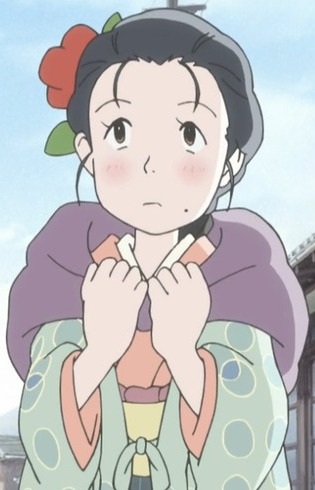
Suzu Urano is a pure and kindhearted girl who loves to draw and keep her head in the clouds. Growing up in the outskirts of Hiroshima with her family, she is more than happy to help with her grandmother's nori business. However, when she becomes of age, Suzu leaves her beloved home to marry Shuusaku Houjou, a man she barely knows. As she integrates into her new husband's household, the homesick bride struggles to adjust to the unfamiliar environment as the war effort extends far beyond its point of no return. When the war reaches Suzu's own backyard and peace gives way to brutality, how will she support herself and those she comes to love along the way? Kono Sekai no Katasumi ni paints a colorful yet haunting depiction of everyday life in the years before and after World War II, showcasing the perseverance and fortitude of ordinary Japanese during one of the darkest periods of modern history. [Written by MAL Rewrite]
Main
Main
Supporting
Supporting
Supporting
Supporting
Supporting
Supporting
Supporting
Supporting
GohanwaOkazu
November 23, 2016
A "Slice of Life" in Kure and Hiroshima in 1940s, Involving Love, Laughter, Fantasy, Hope, and Death. The protagonist is a nonchalant (at least on the surface) and a bit dreamy ordinary girl who loves to draw and paint. She is raised in Hiroshima and marries into a family of a young man employed in the naval town of Kure, The movies goes into great detail showing the life of an ordinary family of that time. It starts as a great slice of life, of her old-style marriage with a new husband, sharing life with in-laws and communicating with neighbors. There are happy, sweet, and tendermoments although the life is set in wartime, and the hardship gradually creeps into life. The relationship with the sister-in-law is a bit fictitious, but the protagonist forms a solid bond with the family and the relationship to her little niece is just beautiful. And I will stop there, as it would be a great spoiler. I will only add that air raid scenes were really terrifying, although it was not right in your face bloody. The reason why almost excessive showing of daily life was necessary becomes evident when the war becomes very personal and relate-able to the protagonist, and you are shown what war can do to people leaving emotional and physical scars. The effects of the A Bomb is not directly shown apart from a later brief horrifying scene (as the protagonist was in Kure, 30-40km away from Hiroshima), but depicted as a culmination of personal tragedies in a mass scale (if one could feel the great tormenting pain and sorrow of losing a loved one in Kure which was attacked by conventional incendiary bombings, then imagining the tragedy of hundreds of thousands lives lost in Hiroshima can evoke fear and despair without showing it right in the face). I groaned in the theater as shedding tears was not enough to control my emotions. After the film finished I was in the streets with Christmas lights and happy faces around among families and friends. The world felt very ordinary yet very fragile. I kept on half-weeping on the train heading home. This is a very well done film with a distinct art-style (it is realistic but it's a reality only achieved by animation and not a photoshop production using photographs or rotoscope), thorough research in history, and passion. I don't know if this film is the best of all war films, but I think it is one of the best animated films produced dealing with war (I can't say which is better- the Grave of Fireflies, or this). This should be seen at theaters with a wide screen and good audio.
Assthete
January 3, 2018
I'll begin by stating my strongest gripe: the film feels disjointed due to the abrupt way it cuts the scenes and how little time is dedicated to deal with certain problems within the story. My guess is that they were trying to create this monotony that most people experience in their daily lives. It makes sense considering the movie is a sort of "mundane" approach on the issue of living under bombing raids and military pressure. Still, every time a work attempts to present a lighthearted atmosphere in the middle of such overall grim situation, I can't forgive but to think it's limiting itself bynot adopting a solid stance. See, there's nothing wrong in trying to convey this contrast between innocence and cruelty, but trying to force that by moving from one moment to another without a time to breathe isn't quite rewarding. An example of that done right would be Hotaru no Haka, which regardless of how emotionally intrusive or morally ambiguous you consider it to be, is masterfully directed and avoids major discomfort regarding pacing by simply not suddenly changing the mood of everything just to convey the banality and mundanity of sordid events. Aesthetically speaking, my only gripe is how much the character design seems marshmallowed and unfit for whatever mood intended. At first, I found it to be overall pleasing and cute, but as soon I realized it was confusing me on whether I should be relaxed or tense, it began to bother me. Aside from that, it's overall gorgeous with a unique touch of visual realism that's always welcome in any war drama. The backgrounds are detailed and cozy, rich in colors and identity, vivid and with an endearing picture book-esque look. There are also several angles only properly done through aerial photography, which again denotes the commitment to realism where it's due. It's simply undeniable the amount of care put into it. The animation is fluid enough, though I believe it wasn't the focus as more often than not it's obvious they want you to pay attention to the scenery instead of how things move. However, once the bombings take place, the animation reaches its peak and realistically depicts war explosions battering the screen in a manner that I doubt has ever been so accurate in anime medium. I won't lie, the protagonist's voice doesn't fit, but it's still a great voice. It doesn't fit due to the cartoonish look that is like seeing a little girl talking like an adult. I appreciate how natural the voices sound; in contrast to the artificial screeches that exist within the medium, the voices are closer to what real people sound like. Odd as it may seem to have a new type of voice to be your main character, it is these little actions that diversify the search for new talents and different approaches in the industry, thus, commendable. Characterization-wise, it's obvious that the protagonist is the main focus. It's a coming of age depicting the development of a female character who faces several minor conflicts involving her family while dealing with the war and its outcome, and honestly, a lot is left to be desired. Most of the movie details a very generic situation: Suzu coming to acknowledge her own capabilities and trying to cease fire with her sister in law Keiko. The mundanity of events is way too clear, so much that it begins to beg for something more substantial to happen. Some major events like death and moments of extreme doubt are, unfortunately, rushed and not properly developed. It does not suffice to dedicate a mere few minutes to explore the regret, anger, and mourning involving an important and present character's death. In the end, Suzu doesn't really change beyond one would expect from the very beginning, as she doesn't draw a very innovative conclusion out of the whole picture the film provides to us. War is bad and we need to do our best. This is a rather common problem I perceive in most anime about war: they don't really do anything with the premise. It's interesting to explore different facets regarding a theme, but it's not actually leading anywhere. The mundanity of war isn't ambitious enough. Even then, its execution could have been superb if it wasn't rushed. This would give both the protagonist and the audience enough time to contemplate, feel, and think beyond the monotony she was trapped in but not necessarily brainwashed by. It'd be a lie to say that 90% of the film isn't simply Slice of Life in War. In itself, it's not a bad concept, but it requires extremely careful directing to hold an air of poignancy. It's possible to delve further into other characters, but I don't believe they're worth analyzing when they mainly just set a conflict with the protagonist or contribute to the lighthearted vibe that weaves throughout the movie. It is indeed a character-driven movie, but by a character who isn't very deep or interesting past what's presented from the beginning. She does change, but just a little and we are mostly presented to how she reacts and interacts with others rather than how those reactions and interactions change her through time, which in my opinion should be the focus in any character study sort of story (as in Ashita no Joe for example). In the end, In this Corner of the World can be a very good movie depending on what you're expecting and planning to enjoy out of it. I can't stop thinking this is a "feels good" sort of anime and no matter what tragedy they tried to convey, it just didn't resonate with me at all. Maybe I had set the bar too high and got slightly disappointed, but my biggest gripes are without a doubt the pacing that's occasionally repulsive and the abrupt cuts that can annoy some viewers, myself included. I do believe the movie had a solid and genuine intent as an adaptation made with care and I do believe its execution, albeit flawed, manages to deliver enough to constitute itself as a worth watching piece of animation.
moonbell
August 11, 2017
This is another film I saw at Annecy, and a considerable part of my review is going to focus mainly on the audience's reactions to it since I think they were pretty telling. I will also be reviewing this as a person who has not read the manga the film is adapted from. I was fortunate enough to go to the very first screening of this film at the festival, which featured a short talk by Mr Katabuchi and, needless to say, the audience was very excited to watch the film. French isn't my best language but what I got from it was that Katabuchi believesyounger generations in Japan don't realise how the war affected people, and it's perhaps likely that foreigners don't either (as a foreigner, I feel this is true of me). He felt that the original manga helped educate people about it through a very personal lens, by immersing them in and exploring how it affects the life of an ordinary woman from Hiroshima, and he hoped the film would do the same. Well, that it certainly did. The film itself is slow, and beautifully so. The actual plot, as in most slice of life, is minimal. There is no big conflict to be resolved. Just life, and the war that affects it. And this was all extremely unnerving. From the very beginning of the film, you could feel the tension in the theatre. We, as an audience, didn't all know about how the war affected individual Japanese people, but we all knew about the war, and certainly about what that meant for Hiroshima in particular. As the film progressed, and more and more time passed, the tension in the room grew stronger. People were, quite literally, at the edges of their seats. It's an awful feeling - you know what will happen. You see all this stuff happening to people but you know it's not the culmination, because you KNOW what will inevitably happen in Hiroshima, and you're just waiting for it to happen. With most films, there's often the potential of something terrible happening, and you're waiting to see if it will happen. With In This Corner of the World, a slow-moving 2 hour masterpiece of a film, you don't wait to see IF the big bad thing (that the characters don't even know about) happens. You wait to see WHEN it happens, and that is the most unnerving feeling in the world. And I think In This Corner of the World knows how unnerving it is, and it plays with that. At several points in the film it builds up the tension and the feeling that something bad will happen, and you could hear little gasps in the audience. We were being played with in a very cruel way that only a very good film could. Once a character is invited to go to Hiroshima for a festival, and I heard someone whisper "oh no". And when IT inevitably happened, it was... brief, and unspectacular. It was not the huge culmination we had all been waiting for which, instead of underwhelming, made the whole thing even more uncomfortable. The entire theatre felt more silent than it had been the entire time. I suspect we, as a majority of foreigners, expect that the bombing of Hiroshima would be the absolute worst thing to happen (I know I sure did), but it wasn't. The aftermath, of course, was another deal, but that's what I feel is so special about In This Corner of the World. It's not spectacular in the sense of being a spectacle, it's spectacular in the sense of being quietly real. We know the experience of an entire nation, more or less. We know what happened. But what we're shown is the experience of just a handful of people. It makes it personal, and it makes it special. And, through all the suffering you see in this film, in the end you can't help but feel a certain... hope. In the end, even after all the hard-hitting stuff you see on screen, you're left with a feeling of it gets better. You know it gets better, and you remember not just the hardships of the characters but also the message of sheer human resilience, and hope, so much of it. In This Corner of the World is an absolutely beautiful film. It truly is a masterpiece, for any film - animated or not, and if you have a good supply of tissues, I can not recommend it enough.
WhyZigle
September 26, 2017
War. A strong word that could be described with multiple meanings. A word that brings joys to the winner while also brings miseries for the lost one. A word that brings dooms, sufferings, starvations, destructions, loss, and fears to people that live in that zone. A word that makes me ask, what is actually a word called justice? A word that makes me wonder, is the word of "peace" just a lie that disguised as a beautiful dream? Are humans actually equal , just like what people always tell? That is me, an ordinary person that ask this question. Just imagine to live in awar period or warzone already gives me a shiver and chill. War is often illustrated in many medium like film, book, comic, or even animation medium like cartoon and anime, shows the cruelity of the war itself. And when we are speaking about war movie(anime), Japan often released anime which the theme is the war time, especially around World War II period, a war which Japan won but also lost at the same time. WW II period is often portrayed in various perspective on this medium. Grave of Fireflies with survival of two siblings during that period, or The Wind Rises with the bittersweet life of aeronautical engineer during that period as the point of view. From the movies that I mentioned above, they have some interesting point of view to tell the story during World War 2 period. While Hollywood war films are more focused on the glorifications with their patriotisms and prides, Japanese movie anime take another approaches to depict this period. Wrapped with more dramas, they tend to tell it through the poignant sense or with the spirit to rise up again and again. Deliver a really powerful message for the generations henceforward, and telling that war will and always bring tragedies and grieves behind the short victory of war. Delivering the theme that could make the viewers sob while being wrapped with a powerful messages. That very portrayal of the theme which makes Japanese war movie really special. But... Behind the cruelity of war and the effect that it caused to people, there is always a slight ray of hope and the will to survive during this dreadful period. And it is clearly portrayed by a movie which adapted this theme as the meat of its story, a tale from the corner of this beautiful world, that resonates through the emotions; ladies and gentlemen, here I present you the movie that won many awards reaches its peak by bringing home the highest award in Japan's film, the 40th Japan Academy Award, and the movie has the title named Kono Sekai no Katasumi ni, known as In This Corner of The World as its global name. Kono Sekai no Katasumi Ni is adapted from a manga serialized from 2007-2009 by Fumiyo Konno. It is a movie that being brought by Studio MAPPA (Yuri on Ice!!, Zankyou no Terror) and directed by Sunao Katabuchi (Kiki's Delivery Service assistan director, Black Lagoon) through a crowdfunding from 3374 supporters. A brief synopsis : Kono Sekai no Katasumi Ni kicks off in 1933, following a young girl, Urano Suzu, beginning with her childhood in Hiroshima. There, we get glimpses of her life as a kid full of laughter, familial love, and artistic skill – painting and sketching her surroundings whenever possible. It becomes quickly evident that Kono Sekai no Katasumi Ni is told in the form of the young girl’s personal diary, quickly skipping through the formative events of her childhood and as her personal history runs parallel to the grinding gears of war. Time passes with the same rapid bliss with which it does in real life, and come 1943, 19-year-old Suzu agrees to a marriage proposal from Shusaku Hojo, a man that she "never" met before and lives in Kure, a port town that located over the mountains but also the naval base of Japan in WW II. Welcomed into the new family, Suzu begin to take on the daily chores of household, also quickly adapts herself to the new environment. The emotional intimacy between her and Shuusaku developed soon enough, also with her new family including her niece and scornful sister-in-law. As the story moves forward, year 1945 finally arrives. Smoke clouds the harbor, hiding unseen danger. Far-off friends and family are connected only by occasional letters and visits. The radio warns of incoming air raids or abruptly falls silent. The slur of everyday changes brought on by the war culminate in the air strikes and bombing raids that finally reach Kure. The theater of World War II at its peak. The biggest strength of this movie lies on its storytelling. By using the slice of life as its gimmick, the director manages to create the magnificent play from the beginning till the climax of the movie through the sublime storytelling. It is as if we are really enjoying Suzu's daily life as an innocent, funny, yet an inspiring housewife as well. The pacing moves pretty slow but it is not boring at all. Instead, we are being immersed slowly into the daily lives of our casts. The movie does a great job building tension toward a specific end date, you are left on the edge of your seat waiting to see how history will affect the lives of characters that we have come to care for. First half of the movie is dedicated for the story telling of Suzu's daily life as a new family member of her husband. Doing household chores like crafting kimono, laundry, cooking for family, while trying to fit in her new family. The realistic depiction of the slice of life element flows subtly while being followed by the music that plays gently behind the screen. Creating a harmony, slowly but surely, the viewers are being drawn into the narrative; and me without exception. And then, without realizing it, we have fallen into the trap that set by the director. The moment the movie reaches its climax and tragedy after tragedy befalls, like BAAMM, as we were being struck by a fast moving train. Resulting in an irony of war, this movie makes people woobled in feels ride, and it is without injecting the forced drama element into it. The combination of slice of life and its drama blend really well and successfully create a solid and emotional story. The romance element in the movie is pretty simple and a pretty common among people. There is no fictional romance here. It flows really natural and subtle flavored with husband-wife relationship or first love as spice. In this period, losing your family member and the loved one is inevitable. Kono Sekai depicts every these moments really well and clear. Many scenes portray those moments on the second half of the movie. It is not a strategy to make us, the viewers cry. They bring a powerful message that war only brings misery and tragedy to the people. And the biggest commentary by Suzu near the end really gives me goosebumps after knowing that Japan lost and surrender after failed to fulfill their ambitions in World War II. The tragedy lies in the fact that we know, even before the movie begins, that these characters are doomed from the start. But was it ever about the course of the war? Certainly not for us, and in the end, certainly not for Suzu and her family. For just as this a film set in war, that is not about war, so too is her life one that precedes, and even ascends, the circumstances that define it. Many powerful scenes that show the cruelity of the war and they strengthen the fact of this movie as an anti-war movie. Kono Sekai no Katasumi Ni itself is told from Suzu’s point of view ,from her corner of the world. This movie knows how to do a character development on Suzu perfecty. We see Suzu as a girl, a bit of a daydreamer, and an artist; a good one, at that. And she has an affinity to often see the art in many situations, although this often means she loses focus on the here and now (in one scene during an air raid the puffs of smoke from the anti-aircraft fire become a beautiful impressionist painting to her eyes – gorgeous but it also means she is too mesmerised to take cover).Without exaggerating, her characterizations are done in a really natural and realistic way. Started from a young girl and then becomed a housewife on her beginning of her adulthood time who should endure all the hardships in this wartime. Suzu is an admirable protagonist not because she’s a stereotypical strong character with superhuman physical strength and mental fortitude, but because she is an ordinary person living through terrible events who nevertheless decides to keep going. Non as her voice actress really did a great job in portraying Suzu's character. Her Hiroshima accent fits really well with Suzu who comes from Hiroshima as well. She knows how to voice a simple yet innocent girl but with never give up attitude on Suzu. Supporting casts like Suzu's family, neighbors, or even a prostitute are adding another new layer on Suzu's life. With all the people around her, sometimes carefully, oftentimes spontaneously, Suzu chooses to protect and love who and what she can as best she can, and to find a future for herself among the ashes of the past. She knows about fighting for what she can change and adapting to the things she can’t, and about the ordinary power of enduring, persisting, and coming out the other side, bent but not broken. Despite the wartime conditions, the premise of the movie appears at odds with what we see on screen. Kono Sekai no Katasumi Ni prides itself on its hand-drawn animation, a level of effort that's becoming rare nowadays. The rich colours of the beautifully hand-drawn animation seem almost too radiant to be found in a war film. The animations are really simple and give nostalgia vibes to the viewers. The artstyle fits perfectly with Suzu's humility and produce a visual formula which is pleasant and enjoyable to watch. Hiroshima and Kure are beautifully portrayed. The sea is really calm and inviting, the scenery does bring the calmness, costumes, bustling roads of Hiroshima, and naval base with their legendary battle ship like Yamato and Nagato docked. The atmosphere of war is detailed portrayed and bring impacts to the viewers, even without adding tensions or gripping tones. I can imagine how nostalgic and important this film can be to Japan. The film is like an epitome of Japanese history, traditional culture and art. More so, the painterly approach to the look of the film encapsulates the waetercolor goggles through which Suzu views the world. In her earliest moments, the character is established to be an avid artist; one illustrative sequence shows that the young girl has sketched so extensively that her costly school pencil is now an impractical nub. Sometimes, the animation in the movie shifts from its realist mode to capture an impressionistic vision of the surrounding beauty. The blend of visual styles, one representing the real world and the other representing the imaginary or the idyllic; White rabbits illustrate the cap of waves, the bombs and explosions turn into expressive looking fireworks being drawn by an unseen hand. The most radical stylistic departure follows the movie's traumatic incident. The movie relies on an artistic representation of the scene in order to convey its full impact. For all its impressive attention to detail, Kono Sekai no Katasumi Ni is a painting of history, not a photograph of it. It also answers the question "why anime?" This is one of the movie that could effectively uses animation to deliver the meaning. The music on the other hand, is very simple and fits very well with the animation. Kotringo's composition brings a melancholic feelings to us as the viewers. Sometimes, the music brings you a happiness with its gently note. Sometimes, it brings you a sadness with its rhythm that echoes through a tragedy scene. The songs on the other hand, remind me with Hitomi's song on Planetes. It gives you a calm feeling. But on one particular scene, one of its songs really hit me with all the feelings from all the tragedies that have happened. A powerful moment with a powerful song and put an end to this movie. Another think that I believe it's worth pointing out the movie's context is the historical aspect of this movie. The one unavoidable reality that the film largely ignores is that Japan is historically seen as one of the villains in World War 2. The scars that they left to countries due to their colonization still remain. Whether it’s denial of Japanese war crimes, or the enshrinement of the men responsible for these war crimes, I think it’s fair that Japan inability to fully reconcile with it’s dark past is a lingering, festering wound on the psyche of an entire region. Kono Sekai no Katasumi Ni is a very human movie. Beautiful, artistic, historical accuracy, timely messages and thematic depth, thoughtful, and more importantly, it is a genuinely enjoyable viewing experience that I won't forgot. A movie that echoes with me through its emotional journey. A movie that I enjoyed the most from all movie that I have ever watched before. It’s a provocative, engaging, and thoughtful look at a very problematic time in history. A movie that brings back everything that has been lost for many years on animation medium, especially movies. A great showcase for animation as a storytelling medium, unafraid of using the unique aspects of animation to its advantage. If a person ask me what movie that I should recommmend to him/her, I will proudly answer Kono Sekai no Katasumi Ni. If a person ask what is the best movie in 2016, Koe no Katachi or Kimi no Na Wa? Nah, it is Kono Sekai no Katasumi Ni. And I believe, this movie will yield more blog posts and essays for years to come.~ "In the end, the cicadas do not stop playing just because there is a war. And that's why life should go on while we are busy dealing with its tragedies"
SirMarmelady
May 31, 2017
War is never beautiful and I can't decide where you'll see the most damage. The battlefield itself, where the wreckages of men still cry over their fallen comrades, the foolishness and betrayal of being promised glory and fame ending with nothing but pain and loss, wishing and praying they could go home. Or is it the home itself? Father is off in a foreign land fighting, and the women must pull through together with the old yet they do not escape unharmed, with countless bomb raids disturbing their sleep after a hard day trying to make ends meet. A slip or absence of vigilance andcaution of your world might well cost your life. The worry, the fear of living in the dark of utter annihilation as late news of the ongoing war comes in through the wireless. In This Corner of the World is fantastic at showing the latter of these two scenarios but also not forgetting that life goes on with or without war. It's a beautifully made movie of the regular people afflicted and moulded by World War II and it is just a great movie. One particular feeling this movie has is the waiting of the moment when the first atomic bomb is dropped on Hiroshima, yet it doesn't distract you from what's going on on the screen. It's always there as a reminder for when everything is going to change and they use that knowledge and feeling in the beat way possible. In peace, sons bury their fathers. In war, fathers bury their sons. This quote fits the story of the main character and is very much her development throughout the movie. What I mean by this is that she during peacetime and during her youth plays and acts like a child in her own world with dancing rabbits. But the years of struggle that follow force her to grow up to develop and become an adult. It is an amazing development and you are left satisfied with her change, almost like a parent's. It's hard for me to judge wich is better between the Grave of the Fireflies because they show different aspects of this terrible war even though they aren't far from each other, both I believe are set near Hiroshima, where the first atomic bomb was dropped. I strongly suggest you watch both since both are great movies, but I urge you, no, implore you not to give this movie a pass for the artwork. You might feel it's too sketchy or that the Ghibli production is prettier or whatever critic or problems you have, but it works magnificently with the main character and certain scenes that will make you think. "Oh my god, they did that so fucking good". This will easily fall on the top 10 list of best Movies I've seen this year and also best anime movies I've seen. Don't give this a miss.
#390
Popularity
#1332
Members
207,544
Favorites
1,704
Episodes
1