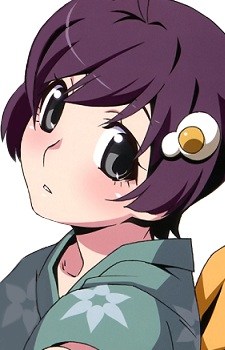
Nekomonogatari Black
猫物語(黒)
After surviving a vampire attack, Koyomi Araragi notices that his friend and savior, Tsubasa Hanekawa, has been acting strange. When he happens to cross paths with her on his way to a bookstore and sees she has a bandage on her face, he knows something must definitely be wrong. Araragi wants to help her, but Hanekawa assures him that her wound is just something she received at home and that he should not concern himself with it. But when a white cat with no tail is hit and killed by a car, the pair bury the creature and the real trouble begins. When Araragi later pays a visit to his friend Meme Oshino and recounts the day's events, he is informed what they have buried is actually an apparition, one perfect for Hanekawa in her current state. Tasked with finding his friend to confirm her safety, he discovers that she has attacked her parents, possessed by the "Sawari Neko." Now, it is up to Araragi to help Hanekawa as she once helped him. [Written by MAL Rewrite]

Main
Main
Supporting
Supporting
Supporting
Supporting
QuietDiscourse
January 3, 2014
Nekomonogatari: Kuro is the third adapted installment of the Monogatari series, an array of light novels written by Nisio Isin. It serves as a precursor to Bakemonogatari and features Tsubasa Hanekawa during the events of Golden Week, in which she becomes possessed by a neko (translated as "cat") and indiscriminately attacks people on the street to relieve her built-up stress. Viewers of Bakemonogatari may recall references and flashbacks to this incident particularly in the Tsubasa Cat arc, and here we finally see it divulged in detail. Now coming from the markedly huge success of both Bakemonogatari and the controversial Nisemonogatari, fans may likely enter this thirdinstallment with a few qualms. After all, Nisemonogatari occasionally acted like a completely different series than its predecessor Bake, with the most divisive issue being its more prolific fanservice. And now viewers are left wondering whether Nekomonogatari will continue the footsteps of Nise or tread back towards the more "conventional" success from Bake (well, at least more conventional than Nise). The result? A mixed oddity. Structurally, Nekomonogatari is like a bizarre child born from a vile yet oddly alluring incest between Bake and Nisemonogatari. It takes the most successful aspects of both series and tries to mash them into its own masterful direction. But the end result is less a full-on masterpiece than an overall great but not perfect special: Neko thrives and yet occasionally suffers from the very compiled aspects it relies on. On a holistic level, the story follows Bakemonogatari's arc formula quite closely. It starts off—much like a visual novel or eroge—with several cameos of the "see girl then talk to girl" type. Here, it stays light-hearted in its comedy while tossing in some witty dialogue between our sexually frustrated Araragi and one of Nekomonogatari's several supporting characters. The overarching mystery is then introduced, some character development and macrabre-like drama ensues, a solution is finally realized, and the status quo is achieved again. While this formula is nothing new coming from the five alike arcs in Bakemonogatari, it is nonetheless executed in a well-woven and highly enjoyable manner. Really, this alikeness to Bakemonogatari is actually one of Neko's strengths, as it keeps the plot structure fresh and interesting coming from the slower and more casual pace of its predecessor Nisemonogatari. Even the sudden, fast-paced action scenes involving some form of an Araragi massacre continue to be outlandishly eye-gripping and exciting, not only in its sudden change of pace coming from the heavy dialogue, but also in its vivid detail and fluid animation. It is no exaggeration that these extremely gory scenes keep viewers on their toes and high on the suspense, even if these scenes are just part of the arc formula to reach the end conclusion. After all, being the subject of mutilation is Ararararagi-kun's modus operandi, a lose to win scenario, and he certainly doesn't disappoint in being the best loser there is (I'm bad at puns). Now aside from the story structure, what the Monogatari series truly shines in is its engaging, witty dialogue. Nekomonogatari is certainly no sloucher, as it touts some of the best soliloquys in the series and continues to make great use of its art direction in keeping the dialogue-heavy script truly captivating. Regarding the subject of much of the dialogue itself, Nekomonogatari acts more like Nise in employing a raunchier perversion and boning up the sexual tension to the largest tip. This isn't to say in contrast that Bakemonogatari is the Virgin Mary of anime, but the sexual undertones and fanservice in Bake is arguably done in a more playful and "intellectual" manner, though it still has its fair share of ecchi(-ish?) slapstick comedy and deadpan humor. This brings us to the most controversial topic in the series—fanservice. Whether you may be in the "too much" or "too little" category, there is no doubt that the Monogatari series lives by its unique art direction, strong characters, and witty, often sexually charged dialogue. All of these elements, including fanservice, are just as frequent in Neko as they were in Nise, and whether it's discussing porn and fondling breasts with your sister or licking desks and gaping at a scantily clad Hanekawa-nyan, Nekomonogatari does not hold back on its fanservice—for better or worse. However, there is a lot to be said about the source material here. This four-episode series stays pretty true to the light novel it adapts to, and does quite a good job at condensing the entire novel into only 96 minutes. That said, the fanservice could have been a lot more prevalent given the elaborate detail and flamboyant panache of the novel (where's our 2-page rant on Tsukihi's pantsu??). Personally, I find the occasional subtle fanservice more enjoyable than the crude masturbatory imagery done in most fanservice-inducing series or specials; and in this respect, I think Neko does a decent job at providing enough fanservice to stay true to the novel and pander to fans, but not so much that it completely bars one from enjoying the story or characters. Character development-wise, the story explores Araragi's love for Hanekawa in great detail, as he questions whether his newfound love is one based on romance or one based on lust. There is certainly a plethora of great analysis here given Neko's connection to Bake and Nisemonogatari. For one, we have a clear juxtaposition between Araragi's relationship with Hanekawa and his relationship with Senjougahara. In Neko, for instance, Araragi discusses Hanekawa's cat problem with Oshino, and Araragi promptly asserts, "Only she can save herself." And yet in early Bake, Araragi discusses Senjougahara's crab problem with Oshino, and it is not Araragi but Oshino who spouts the very same line. Is Araragi perhaps more willing to save Senjougahara than Hanekawa? More interestingly enough, this becomes ironically subverted: Senjougahara essentially overcomes her crab problem by her conviction alone, while Hanekawa overcomes her cat problem not by her own will, but by direct intervention from Araragi himself (well, technically it was Shinobu but you get the point). Hanekawa's development alone is also quite strong, though little can be said without spoilers. In a very early scene where Hanekawa explains to Araragi why her step-father hit her, she undermines herself in her step-father's defense, saying that she was a "seventeen-year old that speaks like she knows everything," a subversion of her very well-known catchphrase, "I don't know everything, I just know what I know." Ah, what a woman. Other supporting characters get a fair amount of detail as well. While Nekomonogatari features a smaller supporting cast (for continuity's sake), this is actually quite convenient given the limited 96 minutes, as Neko doesn't have to deal with adding short fanservice cameos to every single character in existence. This isn't to say that Nekomonogatari doesn't suffer from this problem however, as Karen makes an awfully short cameo with a small role in the story and a big role in the fanservice. At the very least, however, the rest of the supporting cast get their just deserts. We get some much needed interaction with Tsukihi, who was largely lacking in Nisemonogatari as her sister Karen took up almost all the spotlight—even in Tsukihi's own arc! Oshino also makes a few great cameos in Neko, and it's interesting to see his character again considering the discussion surrounding his philosophy from Nise's finale. And perhaps an even more vital character, Shinobu gets a good deal of much needed air time as well. With her intimidating yet all the more cute capriciousness, she continues to be the looming lolicon vampire guardian that we've all come to love from the past two seasons, possibly the most fleshed-out character of the supporting cast. While she still hasn't gotten the attention she deserves as a prospective main lead, it will certainly be interesting how her role will play out in the events of Kizumonogatari. Animation-wise, SHAFT artwork in general has always been controversial. Some consider it a beautifully original direction while others consider it an expensive slide show. Nekomonogatari is certainly no different than its predecessors in its production quality. As such, we get a fair share of one-liner screen slides, SHAFT head tilts, eye-cropped shots, and outrageously comical blown-up views to make the current situation more over the top than it already is. The series can immediately shift from cheaply made 5-second-long stills to the most beautifully hand-animated artworks in existence, taking the "sudden shift in art style" trope to the utter extreme. Nekomonogatari's attention to detail here is excellent, with a vibrant array of colors and overall strong use in appropriating the lighting and physical setting to suit the current atmosphere. Really, if you've watched the previous installments or any modern SHAFT work, then you know exactly what to expect, and at the very least, it's undisputedly better than two talking heads in a fixed panned-out shot. Whether you're a fan of SHAFT's eccentricities or not, animation style is all about complementing and enhancing the story, and a dialogue-heavy series—however good the script may be—just wouldn't be all too compelling without fresh ways to keep viewers piqued. Suitably in that regard, it is even more vital that the seiyuus do an excellent job at conveying proper emotion and keeping viewers entertained. And Nekomongatari certainly doesn't disappoint, employing the same brilliant cast. The soundtrack is pretty decent, and as with Bakemonogatari arcs and their respective OPs, Nekomonogatari's OP "perfect slumbers" is composed by Satoru Kosaki, lyrics by meg rock, and vocals by Hanekawa's seiyuu Yui Horie. It's a nice mellow tune featuring the beautiful Hanekawa, with a soothing yet melancholic mood revolved around loneliness. Dire fans (and/or the masochist-equivalent) may recognize that SHAFT certainly loves its train tracks and vibrant geometric imagery, and "perfect slumbers" is no slouch on either account. All in all, Nekomonogatari doesn't do much different from its two predecessors, combining a Bakemonogatari-like storyline with a more sexually charged dialogue and more rampant fanservice suitable to Nisemonogatari. And for a four-episode prequel, Neko does a great job at handling a focused cast and molding their characterization and relationships to fit its congruity with the rest of the series. ------------------------------------------------------------------------------- This review is written by members of the club Quiet Discourse. For more details, please see the club frontpage.
Stark700
January 2, 2013
Nekomonogatari: Kuro. What does those two words reminds you of? A cat perhaps? Well, neko (in Japanese) does translate to cat, an ordinary theme in many anime series we see today. Oh but Nekomonogatari is anything but ordinary. In fact, for Shaft fans and those who have experience already with the monogatarai series, you will know the way these type of works go. Once again, the franchise brings forth the latest installation from the monogatari series. So, if you're curious just like a cat/neko, then this series is definitely worth some time to invest on. Nekomonogatari: Kuro is the prequel of Bakemonogatari, an anime series adaptedfrom the light novels written by Nisio Isin. Nekomonogatari: Kuro actually translates to Nekomonogatari: Black which is adapted from the sixth light novel written during the summers of 2010. The series details of the Tsubasa Family Arc with cameos from other characters and of course features our beloved main protagonist, Koyomi Araragi. For anyone new to the monogatari franchaise, there are a few things that you should first familiarize yourself. It's hard to exactly describe what Nekomonogatari is because it's quite an unique series. In fact, many words can describe the monogatari series like strange, bizarre, otherworldly, sexy, clever, enthusiastic, humorous, entertaining, amusing, and maybe...just something like you might never ever forget. To me, Nekomonogatari and most of the other monogatari series is like a reading a textbook with pictures. Only difference is that there seems to be no limits on how many pictures are on each page, or at least ones that convey to the words written. The series Nekomonogatari and like many of its other titles is an actual portmanteau or combination of two words. In this case, the words “neko” and “monogatari” is used. Neko means “cat” when translated in Japanese while “monogatari” means story. At this point, one might assume that this series may be about the story of a cat. Like its other works, the animation studio Shaft (Maria Holic, PMMM, Bakemonogatari) handles this prequel. They are known for its unique gags and references that are used for their ways of conveying their storytelling to the viewers, often with the usage of word plays. The word plays themselves are heavily incorporated into this series as well because a lot of the scenes often comes up heavy dialogue, references, and parody. In fact, the visuals themselves represents a way of presenting to scenes of showing rather than telling. Most of the times, they are humorous, bizarre, amusing, and a way of expressing a particular word or dialogue. The series starts off with Araragi doing what he does best and who am I kidding, it's already blasts off with humorous quotes with his beloved sisters. He talks about various subjects although his interest seems to be focused on “love” that he portrays in his peculiar way. From there on though, we later meet the other main character who represents the title: Tsubasa Hanekawa. She is seen as the class president at school and nicknamed “Class Rep-chan”. To me, that title fits her well. I mean, just look at her! Hanekawa's hair is braided, wears glasses, and has a mature personality just like how a class president ought to be. In fact, the way she is has made Aragai call her the “class president of all class presidents”. Besides that part though, there are other characters who makes their cameos and return to this series. For vampire fans out there, our beloved vampire Shinobu Oshino makes her cameo in her amusing way. Her love of donuts remains strong as ever during her brief reunion with Aragai. Her personality changes somewhat according to Aragai but let's another story. On the other hand, there's also Karen Araragi who also makes her short yet very entertaining cameo. Unlike Shinobu, she is every talkative and hot headed with an equally hot body that she boasts about. Unfortunately, her dialogues are limited in this series but the moments she presented were entertaining. Speaking of moments, there were quite a bit that some of us may never forget... In fact, despite the many humorous scenes presented in Nekomonogatari, there is also some violence with blood being shed by a vengeful cat. Blood getting spilled is often depicted as violent in anime or real world culture, but in this series, I found it to be near comical. In fact, I found many of the scenes in this series to be comical. Whether it's the various parodies, dialogues, violence, or fan service, Nekomonogatari presents these type of scenes as almost classical. Its abstract and absurdity is so often set up that it becomes a work of art; even the fan service. Oh and speaking of the fan service, there are quite a bunch of them especially involving our neko and those delicious scenes during the classroom. The way she talks, dresses, and uses parody of the “nya” that are incorporated into her speech patterns is absurd yet amusing to watch. She's pretty much nude wearing those skimpy clothing in the way of a cat with those ears and suggestive positions. It's no surprise though especially for fans who got a taste of the original series. In fact, the fan service expands beyond just the bare skin. The violence is also over exaggerated to the point of “gore” and blood. Although it's an overused trope in todays' anime cultures, I found it visually appealing by the way Shaft uses it to present the monogatari series. It's like a work of art rather than to show off. In the meantime, there is a darker scene of the series as the episodes progresses especially later on. It's hard to tell the exact direction due to the way most of the dialogues are used as well as the visuals presented. Therefore, it's just best if you go with the flow and to follow what you see rather than analyze the series to its finest details. Like I said before, the details in the series is portrayed in that way which is Shaft's way of doing their works. It is artistically unique and presented in a way in which...*gasp* done right with the fan service. Whether you agree or not is up to you but I personally found it quite entertaining. The artwork of the series remains generally the same as its other works from the franchise. Many of the series' visuals are presented with geometric designs in simple shapes and sizes. It's not complex and easy to watch. If you want some spectacular artwork, go watch some Shinkai Mikoto's films or something. However, the way it approaches its visuals is quite unique. It's like going to an art museum for the first time in a room where you see the walls and walls of abstract works. The soundtrack, music, and voices of the series is imperative for this to flow well. Because there is a lot of dialogues, the voice actors have to step it up to the plate (unless of course if you're playing a vampire). Luckily, it works quite well and most if not all the mannerisms fits well. In particular, Tsubasa Hanekawa's voice actress Yui Horie (Higurashi, School Rumble, Little Busters!) perfects her skills with her voice by using her speeches similar to a cat during her scenes. In fact, the OP song, "perfect slumbers" by Tsubasa Hanekawa even has her involvement. It is quite a purrfect match that fur her roles well. Similarly, many of the OST played during the word plays scenes are orchestrated in that way of the monogatari style. All in all, Nekomonogatari was a fun experience for me. It's clever, entertaining, fun, sexy, and an unique watch similar to its other title works. I do admit though that it occasionally tries too much especially in the fan service and dialogue department. In fact, some of the presented word plays are a bit repetitive and hard to adapt. If you're new to the series, you will likely get one of those “what the fuck did I just watch?” moments. But if you're already familiarized yourself with Shaft's works, then this could definitely be an enjoyable experience for you. Whether you enjoy Nekomonogatari: Kuro in the end is up to you however. It's not a purrfect series but definitely one hell of an experience.
jayjaybernil
January 17, 2014
Being a huge monogatari series fan, I decided to write my first review about it and I chose Nekomonogatari: Kuro. Even before it was subbed, I already watched it out of excitement and it did not disappointment. Story: The story is great. It is one of the main strength of the series. This part is before the start of the first series and we learned the past of Hanekawa and how she met oddity. The story is great because it made us realize that Hanekawa is not perfect and also susceptible to emotions. Art: The art is the other main strength. I watched this series because of the waythey show the art. It is not the normal one and it fits perfectly with the settings of the story. It uses the same style of art from bakemonogatari and nisemonogatari. Sound: The sound is awesome. It really gives the viewer the right feel for the scenes that gives a very good viewing experience. The opening and ending themes are also great. Character: The story is mostly about Hanekawa. Koyomi showing different emotions and reactions to different situation but in the end, he's the same common protagonist that saves the girl in the end. Enjoyment: I watched this during the season that is usually joyful. Even though the story is far from that, i find the episodes enjoyable. Overall: This is a must watch for Bakemonogatari series fan as it gives back story of Hanekawa and I'm sure you will find this enjoyable and worthwhile.
Micsupreeme
July 2, 2015
~ Let's have a discussion about love. ~ As a chronological prequel to the events of "Bakemonogatari": Nekomogatari (as I will slightly abbreviate), is the first short, fast-paced, single arc installation of the "Monogatari" series. Some may be skeptical at first about the franchise's storytelling prowess, following the fanservice ridden antics of "Nisemonogatari" (that tilted many heads to say the least). But fans following the series up until now will be pleased to know that Nekomonogatari very much reverts back to its highly praised, "Bakemonogatari" inspired roots. Taking on the task of presenting the "Curse Cat" arc alone, Nekomonogatari brandishes a relatively simplistic, and more so romance-orientedstory line than in previous seasons. As usual, we are plunged into the very "Monogatari", occult-influenced world, riddled with hidden dangers, and home to our main protagonist: Araragi. Nekomonogatari is clearly oriented about the relationship between Araragi and the heroine elaborated upon in "Bakemonogatari"'s 5th arc: Hanekawa. An arc, a plight, and a problem-solving protagonist. It's become a somewhat consistent and charming formula throughout the series, but Nekomonogatari proves that each time: It works, and is always appreciable in a slightly differing manor. To an extent, disregarding "Nisemonogatari"'s tangent of documenting "Evil and Justice", these 4 episodes bear an uncanny resemblance to our masterfully crafted "Bakemonogatari" (aka: Ghostory). Nekomonogatari IS a nostalgic taste of that memorable concept we had previously kept referring back to: "Overcoming personal demons". It's an inherently engaging plot line that emphasizes a familiar sense of struggle. It's another hurdle for us to watch Araragi overcome, which means that from the start... Nekomonogatari outlines the context, introduces the problem, introduces the goal, trials some methods, and we get a result. It's direct, trialed and tested, and here we see ample "(Bake)Monogatari" elements shining through. So while staying away from confusion tactics, the story line itself: about Araragi's perception of love and overcoming obstacles to perhaps develop his first romantic experience... is debatably the most simple, and simultaneously the most complex conceivable plot line. This is dependent ironically on YOUR perception of love, but I found the story aspect pretty easy to follow. While slower to begin with and set the scene, Nekomonogatari follows in the footsteps of its predecessors, by continuing to incorporate a lot of substance into the show's dialogue. It plays a big part in the Monogatari series' signature presentation style, and allows us to gain an intimate insight into the thought processes of the main characters. It gives the viewer an omnipresent eye, and diversifies the dialogue: making it expressive, highly descriptive, somewhat poetic, metaphorical, and even humorous. Above all, it's more than just speech. It is the epitome of well-crafted expression. It has meaning, doesn't become dry, and strays from being conclusive, which means that viewer interpretation becomes an increasingly important factor. Introducing the context, and returning us to Araragi's POV (nearing 2013) is done rather casually. The beginning of this short season is above all: fresh, charming, and enticing. It certainly doesn't hint at the rapid, and imminent escalation of severity and situational struggle that is to come. This adds impact and a strong sense of development from "situation A to situation B", and really does introduce the viewer quite thoroughly, to this new state of affairs. Being a mere 4 episode season, is obviously a cap on potential development. But in spite of this fact, Nekomonogatari "does do" what it sets out to in the way of character development, on top of this rather familiar plot development "stance". Now to start off, there aren't any new faces to note within Nekomonogatari. Again... 4 episodes: A wise move, don't you think? The "Character front" of the show is simply an extension to our prior knowledge of the Monogatari series' characters. Suprise suprise, it's Hanekawa who (besides our obvious primary character: Araragi), steals the spotlight. Hanekawa's "evolution" adds to our understanding of her stresses. Her perspective (as opposed to Araragi's) is given more attention, and therefore she blossoms to life rather well as characters go. It's far from an epiphany of understanding and sympathy, but Nekomonogatari will at the very least, suffice as a season to reveal more personal traits, of our beloved "class rep". Besides that, Shinobu is actually fairly involved, but only in terms of the plot. She's merely used, but doesn't even speak properly until the last episode. Following her considerable development in "Nisemonogatari", we got a lot more of her (arguably too much), and gained quite a satisfying insight into her life. Here however, nothing is added. With the themes of "Bakemonogatari", and a similar balance of development: this time spread fairly equally between plot and character, there's not really much new substance that Nekomonogatari has to offer. Animation-wise: we are once again subjected to Monogatari's masterful and unique visual representation style. Highly stylized Patterns, vibrant, simplistic, and yet vivid art is abundant. Visual metaphors, and text: they are again used boldly to maximize the show's expressive potential. It's a familiar art style that should've already grown on you if you made it to this 3rd Monogatari installment. And while it's not new anymore, it's always going to remain, as one of the series' immortalized strong suits. Sound-wise: A notable lovely opening sequence in particular. More highly fitting and appropriate BGM to set the tone of any scene. As part of a series that prides itself on audiovisual prowess, it's undoubtedly a pleasant sensory experience to say the least. There's nothing that I would change in this department. Nekomonogatari ultimately takes a strangely simplified approach. The complexity and extent of the plot and character aspects, are unavoidably limited by this season's duration, and its subject. It covers one arc quite comprehensively, and adds some more contextual information to the last story we witnessed in "Bakemonogatari". While this is the reason for the story making sense in the first place, it's safe to say that we pretty much knew, of could quite easily have guessed everything that these 4 episodes attempt to "add" to Hanekawa's plight. On a strictly technical front, besides duration limitation of development: Nekomonogatari doesn't exactly do anything wrong, but it is simply far too much of a simple iteration of the "Curse Cat" arc we experienced in "Bakemonogatari". There's just not much of a purpose in this season. We've experienced the story (or a variant at least) before, and so it becomes predictable, not particularly intense, or great at adding new substance. There is the appreciable novelty of an elevated contextual understanding, and with 4 episodes, it's worth watching for this reason alone. Just don't expect Nekomonogatari to be that big-a landmark within the series' timeline. ~ Is it love, or lust? ~
Nasty001
January 6, 2013
Meow, meow......Rawr! Grrrrrrrooooooooooooowwwwwl, I'm screeching like a cat. Ok, I've just finished watching this 4 episode anime and I must say that studio SHAFT did an amazing one. So, this 4 episode prequel is all about Koyomi Araragi and a Tsubasa Hanekawa arc, only this time it dwells on detail before Hitagi Senjōgahara came into the picture, Rawr!!!!! It is safe to say that this part is the Tsubasa Cat part of the Bakemonogatari franchise. Thought this anime's genre is comedy and supernatural, I would probably drop the comedy part, since only the supernatural part is what best describe this anime, let's facethe comedy part where it involves Koyomi and his fire sisters are just minimal and down right cheesy and so as Shinbou's donut desire part. However, aside from the symbolism that goes around the anime, I guess everyone will agree that the cuties part of this anime was seeing Hanekawa ( in a cat form) in her lingerie, sometimes I'am starting to think that the "Kuro" part of this anime's title refers to the color of Hanekawa's lingerie which is always black. But I must say that she does provides a good fanservice for this anime and she kinda like reflects man's sexual fantasy for a sadistic woman in a form of a cat, just as exhibited from one of Batman's villainess "Catwoman," HISSSSSSSS!" Koyomi on the other hand, did played his part well as the protagonist who would leave no one behind even if it kills him (since he's one part vampire he can do so), though a bit on the perverted side, his loyalty and dedications to the ones he cares compensates for his bad side. So how did I ranked each category of this anime? Here's how: Story: Good 7. "Meow" The plot maybe complicated, but as one watches this anime one will get the idea behind it. Art: Good 7. "Meow" The score is for Hanekawa's fanservice. Sound: Mediocre 5."Purrrr" No Comment. Character, Enjoyment, Overall: Good 7. "Meow" The Hanekawa X Koyomi arc is something that we audience desired for and everyone will agree with me that the 2 would be a purrrrrrrfect match, but it cannot be establish if Koyomi does have any feeling for Hanekawa, enjoyment, pretty good for the fanservice and Koyomi's sacrifice for Hanekawa was cool, but in the end it was Shinbou who did the finishing touch in which we were hoping that it would be Koyomi would used the very long katana thingy on Hanekawa to release her from the cat's curse, so overall the ending was good but not good enough to be given a score higher than 7. HISSSSSSSSSSS!!!!!!!!!!
#865
Popularity
#426
Members
586,598
Favorites
1,313
Episodes
4