Maria Watches Over Us
マリア様がみてる
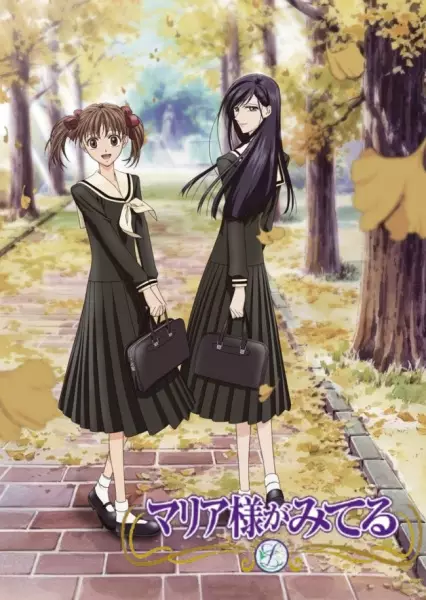
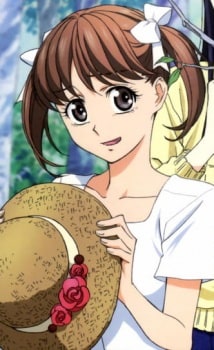
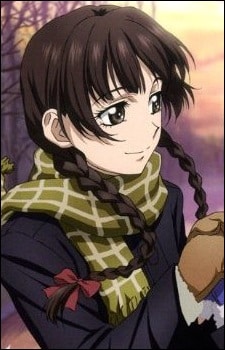
Sachiko Ogasawara, a brilliant and refined student at Lillian Girls' Academy, hides a troubled personality behind her status as the school idol. She has a deep aversion to men and is revolted by the idea of having to dance with a male student for the upcoming school play. Desiring to step down from her role, she proposes to the Yamayuri Council, Lillian's student council, that she will instead prove her worth by finding a petite sœur—an underclassman who becomes the protegee of her grande sœur. To the bewilderment of all, Yumi Fukuzawa, the first-year student Sachiko invites to become her petite sœur, refuses the proposal. However, senior Yamayuri Council member Sei Satou proposes a challenge: if Sachiko can convince Yumi to become her petite sœur, she can withdraw from the play. Although Sachiko often struggles to connect with others, she endeavors to do everything in her power to win Yumi over. [Written by MAL Rewrite]
Imperturbable
December 24, 2007
I've had a very complex history with this series. I only started watching it because people were making a fuss about how another series copied an extremely famous scene from Maria-sama ga Miteru, but I ended up watching both the first and second seasons. (The third season wasn't out at that time.) This is now my favourite series. But it was far from being a favourite then-- I watched it all very quickly, and I don't think this is a series that was meant to be seen like that. I overlooked a lot the first time around and it ended up seemingthe characters were making baseless observations about others. It's easy to watch those slice-of-life school comedy series quickly, for example, since you're just in for a laugh or two, but Maria-sama ga Miteru has got characterisation, believability, and complex interpersonal dynamics that should be savoured slowly. The seiyuu are great overall and generally convey characters' thoughts and feelings very well. The animation, however, could've been better... some parts look a bit unnatural or perhaps a bit mechanical, but I don't think it detracts very much from the series overall and I enjoyed the art style. I fell in love with the series when I rewatched it because there's so much in it. This isn't your typical, run-of-the-mill series where you can just watch for mindless enjoyment. It isn't something you just watch because you know there's f/f in it either. This is possibly the best f/f series you'll ever watch-- without your usual crazy and melodramatic minor character lesbians in it, to boot. (Note that the f/f present is largely on the subtext level, which I find makes it even more delectable. There's canon stuff though, so it's not "just wishful thinking".) On the other hand, I am of the mind that Maria-sama ga Miteru would still be enjoyable for those who don't like f/f or aren't particularly into it. The wonderful characterisation alone should be enough of a draw, should it be the sort of thing you look for in anime. Let me put it this way: This series doesn't necessarily focus on f/f too much if you're inclined to see it that way. Such is the beauty of subtext. Oh, and if it matters to you, the focus isn't on religion despite the series name and the setting (a private Catholic all girls' school). It's really just about a group of young women and what happens to them and between them... which I guess makes it fall pretty firmly into the shoujo genre. Maria-sama ga Miteru, then, is not recommended for those who only enjoy panty shots or seeing two girls somehow ending up in unrealistic, compromising situations. (Please go watch seinen for that fanservice stuff because there's no fanservice in this at all.) I wouldn't recommend this to people who like a lot of action either, because, well, it doesn't have much. It's slice-of-life (probably leaning more toward drama), so if you need an overarching plot to sustain your interest, this is also not for you. This is for those who are starved for a series with, finally, good characterisation. And lastly, there are no self-pitying and screaming adolescent boys piloting mecha, thank goodness.
iamjoe
October 26, 2008
Poor quiet anime with fabulous, fabulous storytelling and characterisation. They get no love, and this is apparent for Maria-sama ga Miteru. It tells the story of girls in a Catholic school. That's all. It's them, their lives, and yet it sucks you in like nothing else could, wraps you up in their stories and makes you itching to learn about them more. There's a little controversy of sorts about the lesbian content of this anime. Honestly, it seems like all the girls are in love with one another, but that isn't the case. There's only one real lesbian in the entire story. So it's interestingto see girls who actually care for one another and are insanely close other than spend their time plotting and hating on one another like other shoujo anime. I love this anime. I can't think of anything unfabulous about it other than inconsistent art and a confusing first few episodes. It will take you while to get used to the names they call one another.
jet2r0cks
July 6, 2007
I wasn\'t sure I was gonna like it at first.. I usually judge anime by watching the opening theme, and I thought it was so dreary because it was all instrumental.. After watching the first two episodes I was satisfied and decided to watch the whole thing. It brought back memories from my high school days, since I came from a private catholic all girls school, much like the one in the anime.. We didn\'t have a soeur system, but there were other similarities, such as girls crushing on other girls.. There were a lot of french terms used, but you didn\'t really need to learn howto speak French to understand the story.. the only french words used in the dialogues were the titles, such as rosa gigantea en bouton, and soeur of course, and they weren\'t used much after the first episodes. The episode titles are also French. There was little lesbian action going on, but it was very discreet so it didn\'t really scare me too much.. The only character who was openly gay was Sei, and the rest of the cast didn\'t give off any impressions that they were gay. There is a big shortage in men characters, the only male characters were Sachiko\'s cousin and fiance, and Yumi\'s brother. The visuals were amazing. All the characters were beautifully drawn, which is one of the reasons why I decided to watch this. All the women were beautiful, but I get the feeling that if you took out their hair and gave them identical wigs, they would almost look the same. The storyline wasn\'t bad - It was mainly about Yumi\'s character and how she tries her best to get along with her onee-sama, Sachiko. During the series, a few episodes are dedicated to Rei and Yoshino\'s relationship, as well as Sei\'s history. We also see some side stories about Sachiko and Shimako. As I\'ve mentioned, most of the music were instrumental, and there was only one song with words in it, which was Rosa Canina\'s rendition of \"Ave Maria\". Still dreary, but the story does make up for the lack of better music choices. However, I do think that the classical music fits the storyline well. It is a rather serious storyline. All in all, I have to say this is one of my favorite series. I have watched many slice of life series, and this one is the best among the rest. It is definitely as must - see.
WeirdHeather
January 21, 2014
This review covers the entire series, which consists of four seasons. The style and quality are reasonably consistent throughout the series, so separate reviews for each season would be largely redundant. "Maria-sama ga Miteru" is unique and fascinating in many ways. It has many layers of meaning, and it lends itself well to critical analysis and repeated viewings. This series is not likely to appeal to everybody. It is slow-moving, emotional, and highly melodramatic at times. It is also designed for a female demographic, so although I am sure men can enjoy it, it lacks the fan service and overt sexualitythat appeal to a certain subset of the male demographic. However, anyone who enjoys coming of age stories, deep and detailed characterization, and compelling cultural commentary should consider watching this series. The multiple themes and layers of meaning appeal to me, for they encourage my analytical tendencies. Given the nature of this series and my tendency to analyze everything, this review will devolve into lengthy critical analysis, so be warned. However, those who read through it might find the first few episodes a little easier to follow. From the very first episode, "Maria-sama ga Miteru" is a study of hierarchical societies. Japanese society is well known for being hierarchical, and standard forms of hierarchy are inevitably present in school-based anime series. The girls' school here, however, has its own unique system of hierarchy, evident both in language and character behavior, so it is likely to cause its viewers, even Japanese viewers, to notice and ponder the nature of hierarchy. In language, the most noticeable difference between this series and others is in the use of honorifics; students use the honorific -sama instead of -senpai when referring to upperclassmen. The usage of this rather formal honorific in Japan is somewhat problematic, and it can be considered rude or patronizing when used inappropriately. It would not ordinarily be used as the characters use it in this series. Even the standard greeting the students use, Gokigenyou, is archaic and formal. The student council members have grandiose titles as the Lady Roses, and most students refer to them by their titles - Rosa Chinensis, Rosa Gigantea, and Rosa Foetida - rather than their names; this usage places them in an exalted and unapproachable position. The use of polite honorifics, archaic language, and grandiose titles serves to highlight and exaggerate the system of hierarchy. However, not every character perfectly follows the rules, and whether or not a character or a pair of friends follows the language rules is an important point in characterization and can be a source of conflict. Noriko, a character introduced in the second season, is quite interesting in this regard. The development of deep friendships is another major theme in this series, and it is the central driving force behind the story arcs. These friendships are encouraged by the sœur system, a system in which an upperclassman and an underclassman declare a relationship as sisters. (Sœur is French for sister.) This is fundamentally a hierarchical relationship, for the older sister, the onee-sama, is expected to provide guidance to her younger sister. The sœur relationships involving the student council are particularly important, for the younger sisters of the Lady Roses, the boutons, also have a strong role on the council. These relationships become extremely close, and in fact can come so close to actual romance that it is easy to read a lesbian subtext into the relationships despite the fact that only one main character is overtly lesbian. Since such close relationships cross the hierarchical boundary between underclassmen and upperclassmen, they effectively destabilize the hierarchy, creating a fascinating conflict within the narrative. The sœur relationships also occur across class lines. This is an elite Catholic school, so all of the students are likely to be affluent, but some are merely well off, while others are filthy rich. The relationship between Yumi and Sachiko effectively explores such class differences, and their friendship allows each to explore the other's world in ways that would ordinarily be impossible. The march of time is another important theme, and the constant progress of time allows the characters and their relationships to develop and grow. High school is a time of transition; people aren't there forever, and unlike some school series, "Maria-sama ga Miteru" does not sweep time under the rug. The episodes are mostly (but not always) in chronological order, and there are some flashbacks. The first season sets the groundwork for a major transition to come in the second, and the fourth season similarly prepares the viewer for changes to come afterwards. (A fifth season has so far not been produced, but the light novels continue the story beyond the fourth season.) Yumi's growth as a character is handled well throughout the series; she starts as a wide-eyed innocent girl who lacks confidence in herself, and by the end of the fourth season, she has gone through many changes. (To prevent spoilers, I will leave out the details.) Even melodramatic story arcs, such as the coincidence-filled story ending the second season, help to develop the characters and to aid the passage of time. This is one series that can get away with melodrama, for the characters are strong enough to make it through exaggerated plot lines unscathed. Though the story and characterization are the greatest strengths of this series, the art and music deserve a few words, for they contribute greatly to its unique and exotic style. The character designs are more detailed than is typical for school anime series, and they are beautifully executed. The backgrounds are soft and perhaps a little stylized, but also highly detailed, and they set up a warm and welcoming atmosphere. As is usually the case in this era of limited budgets, animation is sometimes rough, and designs and quality are a little inconsistent from episode to episode, but these flaws are minor compared to the strengths of the series. The music deviates from the usual pop conventions of anime; it is classical in style, and it perfectly fits the elegant atmosphere and culture of this elite school. The closing theme of the third season and the opening and closing themes of the fourth season deviate from this style and instead conform to pop conventions. While these themes aren't bad in and of themselves, they don't quite fit the atmosphere of the series. The voice actresses are all excellent, and the voices fit the characters well. One could probably guess that, since I have taken the time to write such an extensive review and analysis, I love this series. I certainly do, and I rank it as a strong favorite among the anime series I have seen so far, and it is a favorite even within the broad category of serialized programming - anime, TV series, radio series, and film serials. The attention to detail, the strong characters, the beautiful setting, and the relaxed atmosphere all contribute to my enjoyment of this series. Again, it may not appeal to everybody, but people looking for the qualities that have attracted me to it may also enjoy it, and perhaps a few will rank it among their favorites. Now, I'm hoping for an eventual fifth season or group of OVAs to finish the story, but it has been a few years since the last installment, so my wish might never come true.
PhillyFlash
January 3, 2009
As a rare duck around here, a soon to be 50 year old male who enjoys slice of life anime, I found Maria-sama ga Miteru to have been absolutely charming and delightful, and easily the best series I've watched in all of 2008. The calm, serene, languid pace of the series and its setting at an all-girl's Catholic school made it easy to relax with, but it's the wealth of the show's characters, each with their own distinct and unique personality increased my overall enjoyment and is the highlight of the show. As you watch the show, you can't help becoming involved in the livesof Yumi, Sachiko and all the rest of the girls at Lillian as they develop those very special bonds of friendship, and how those friendships stand tall and strong through good times and bad. MariMite is just the sort of show that anime fans of any and every stripe can enjoy.
Rank
#3120
Popularity
#2796
Members
76,532
Favorites
731
Episodes
13