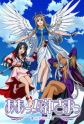
Now and Then, Here and There
今、そこにいる僕
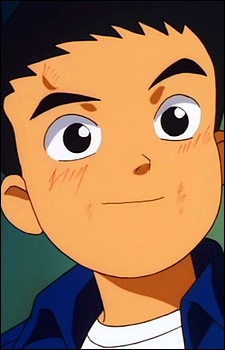
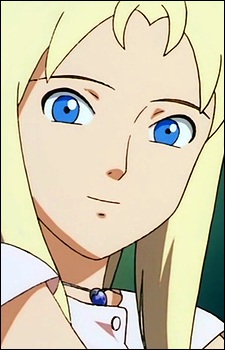
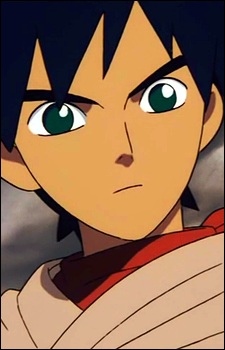
Shuuzou "Shuu" Matsutani lives his ordinary life in peace. He has friends, a crush, and a passion for kendo. Dejected after losing to his kendo rival, Shuu climbs a smokestack to watch the sunset where he finds Lala-Ru, a quiet, blue-haired girl wearing a strange pendant. Shuu attempts to befriend her, despite her uninterested, bland responses. However, his hopes are crushed when a woman, accompanied by two serpentine machines, appear out of thin air with one goal in mind: capture Lala-Ru. Shuu, bull-headed as he is, tries to save his new friend from her kidnappers and is transported to a desert world, unlike anything he has ever seen before. Yet, despite the circumstances, Shuu only thinks of saving Lala-Ru, until he is thoroughly beaten up by some soldiers. As he soon finds out, Lala-Ru can manipulate water and her pendant is the source from which she is able to bring forth the liquid, a scarce commodity in his new environment. But now, the pendant is lost, and Shuu is the prime suspect. Ima, Soko ni Iru Boku is the haunting story of a dystopian world, and of Shuu, who has to endure torture, hunger, and the horrors of war in order to save the lonely girl he found sitting atop a smokestack. [Written by MAL Rewrite]
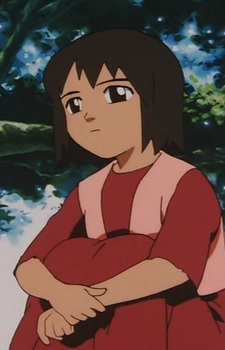
Main
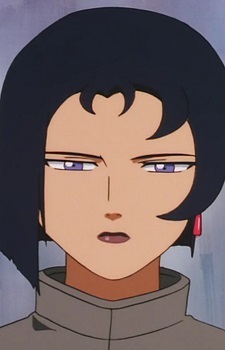
Main
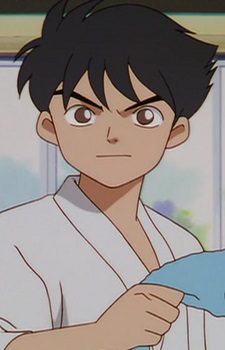
Main
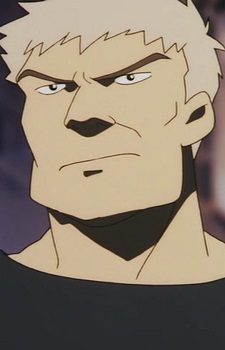
Main
Supporting
Supporting
Supporting
Supporting
Supporting
Supporting
Supporting
thresholden
January 16, 2010
Simplistic Silly War Melodrama Following rave reviews from plenty of sources I came onto Now and Then, Here and There with guarded optimism. I was promised a brutal and uncompromising look on the atrocities of war that would bring real emotion from characters. The only thing phonier than that statement is how absurdly fake the main character Shu is. Coming back from a devastating loss in Kendo, Shu notices a mysterious girl on top of a precarious smokestack. Deciding to investigate, he climbs onto another smokestack and engages with a short one-sided conversation with the blue girl named Lala-ru when suddenly a giant rift in time-spacebrings villains who have come to retrieve her. Lala-ru is able to call forth water from her pendant which is needed by King Hamdo, an evil dictator, to fuel his giant moving fortress Hellywood in order to destroy the world. An interesting if unoriginal story, but that is not the problem with the series. It’s the characters that fail to function like humans. Story: 6/10 Shu is typical boy protagonist who is energetic and absurdly naïve. He’s the messianic “voice of reason” in the series who is the main problem with Now and Then, Here and There. Shu is thrown into a foreign world, tortured, whipped, beaten, kicked, hanged, shot, and pecked on by a bird yet his only thought in mind is to save the magic girl who he barely talked to for 3 minutes. His every other line is “Where is Lala-ru?” or “I have to save Lala-ru!” or simply “Lala-ru!” He suffers no psychological trauma from so much punishment and is still the moral compass for a “world gone mad” as a cheery cheeky Japanese adolescent. I’d rather ask what is wrong with him, is the Japanese education system so thorough that they include torture resistance lessons? Even Jesus on the cross asked “My God, my God, why hast thou forsaken me?” Lala-ru is no better as she is the archetypal ice girl(or water in this case) with little dialogue and even lesser interest. She is simply an object to be fought over rather than a character. The chief antagonist is King Hamdo, who is a generic insane leader, he is a bore to watch. He rants and such, but his script and behavior is ever so recycled. These three inhuman freaks dominate the screen time while more nuanced and human characters like Nabuca, Abelia and Sara take a backseat. Characters: 2/10 The animation is choppy and simplistic. While some the mecha designs aren’t bad, they hardly get enough attention to matter much. The faces hardly differ. Some episodes seem more like slideshows considering the slow frames. I thought several times I had accidently pressed pause when it was simply the animators being lazy. Animation: 4/10 The sad violin main theme is used far too often for emotional scenes with very few musical pieces in between. It eventually loses its impact when you hear it in almost every episode. Character voices generally fit, though the little children voices do seem forced at times. Neither the OP nor ED is memorable. Sound: 5/10 For an anime that brings up so many real problems of child soldiers, slavery, rape, abortion and war, it sure dodges any solution or resolution. The ending is so saccharin and unsatisfying, one must ask, what was the point? Shu repeats his mantra ad naseum, “As long as you’ve got your life, something good is bound to happen.” This lazy conclusion is sickening and pathetic when faced with these atrocities. Now and Then, Here and There tries to add realism to the majou shoujo genre yet its result is even more unrealistic and ends up worse off; it’s sad pathetic experiment for all the wrong reasons. Overall 3/10
Shuuzou "Shuu" Matsutani lives his ordinary life in peace. He has friends, a crush, and a passion for kendo. Dejected after losing to his kendo rival, Shuu climbs a smokestack to watch the sunset where he finds Lala-Ru, a quiet, blue-haired girl wearing a strange pendant. Shuu attempts to befriend her, despite her uninterested, bland responses. However, his hopes are crushed when a woman, accompanied by two serpentine machines, appear out of thin air with one goal in mind: capture Lala-Ru. Shuu, bull-headed as he is, tries to save his new friend from her kidnappers and is transported to a desert world, unlike anything he has ever seen before. Yet, despite the circumstances, Shuu only thinks of saving Lala-Ru, until he is thoroughly beaten up by some soldiers. As he soon finds out, Lala-Ru can manipulate water and her pendant is the source from which she is able to bring forth the liquid, a scarce commodity in his new environment. But now, the pendant is lost, and Shuu is the prime suspect. Ima, Soko ni Iru Boku is the haunting story of a dystopian world, and of Shuu, who has to endure torture, hunger, and the horrors of war in order to save the lonely girl he found sitting atop a smokestack. [Written by MAL Rewrite]
Supporting
Rqt
March 14, 2015
Very rarely does something come along with such detail, such characterization, such perfection that it is able to ascend being just something on a screen, canvas or a musical chart, truly reaching the pinnacle of what we call art. To be able to convey so much in so few episodes, Now and Then, Here and There is one of them. With this in mind, like any art, its not going to be appreciated by everyone. This is a dark, depressing series that masterfully - almost to a horrifying point - is able to illustrate the true terrors and setting of war. Understandably so, it isgoing to fall short for some viewers, yet only because of how well it truly executes itself as a war plagued dystopian fantasy. As such, I consider this to be the most emotionally impactful anime series I have ever watched. From the inception we are presented with a warm, innocent presentation of modern day life. Queue our lovable - or hateable - idiot protagonist, Shu, who has those cliched principles of righteousness who is enjoying his everyday life. This is a deliberate juxtaposition to the rest of the series, as sadly, this innocence is expeditiously turned into insufferable inhumanity. It takes this cliched story of facing hardship and adversity to protect those important to you, deconstructing itself into a brutal, often disturbing narrative filled with equally disturbing themes. Conscription of children, rape, murder, human extortion and manipulation are examples of these themes. While these are not new themes by themselves, they are masterfully incorporated together in a truly effective manner. While this is a dystopian fantasy, what separates this from its counterparts isn’t just its horrific portrayal of humanity, but also the characters themselves. Although overdone and overbearing at times, Shu is the embodiment of hope. He is the small flickering light in the vast and dark world whose beliefs are often questioned and dismissed as naive and ignorant idealism. Despite this, he is never defeated, his unrelenting attitude serves as a beacon of righteousness and optimism which directly juxtaposes everyone and everything in this world. Admittedly, his personality can be obnoxious at times, however there is a clear justification to why he acts the way he does and why his resolve does not falter. Shu is only one example of the fantastic characters that make up the driving force of this series. The entire ensemble of characters are well done and often, like Shu, are personifications of themes and beliefs. For instance, Lala-Ru is a personification of power and success. She is often seen as such, simply a means of power instead of a person. It doesn’t matter who or what she is, all that is important is the fact that she holds the answer to one of the biggest problems this dystopian world faces. She is a character of few words and has a delphic air to her, despite this she is a detailed character who grows significantly as the series progresses. This is a feat of its own as she doesn’t have a particularly large amount of time on screen in these 13 short episodes. Her interactions with Shu are genuine and offers an almost heartwarming comparison to the overly dark series. Most importantly, despite being of the supernatural, she is genuine and realistic in both her actions and her speech. Sara typifies innocence and even humanity itself. She, like many others, is an unsuspecting victim of the story who is wrongly mistaken for Lala-Ru and suffers greatly for it. She loses her innocence in both a literal and metaphorical sense. She is shaped by this dystopian world, largely for worse and is victimized not only by the world but inevitably her own actions too. She - like myself - cannot cope with Shu’s unwavering resolve, often attacking him and his beliefs losing hope for the future. Regardless of if it’s for better or worse, she is largely developed over the course of the series and by the end is almost a different person. I can only say that with absolute praise for such development to occur in such a short time frame. King Hamdo represents harsh brutality and megalomania. He is a tyrant, manipulating and coercing people to work - and often kill - for him. He is a man with no remorse and is self centered. Having just described a very generic, often cliched and overused villain, it’s worth noting that just like the story, Hamado’s strength lies in the characters execution rather than its originality. Having said this, he is still in my eyes the weakest character as his insanity is a simple means to justify his actions with no real explanation, often at times becoming frustrating. Hamdo’s number two, Abelia, represents unconditional loyalty. Despite not agreeing with Hamdo on many occasions she bends to his will, even when he mistreats and berates her. There is no real justification of this either, it is clear that she has issues with what he is doing at many points she is never able to stand up for herself or her beliefs. These are the only two criticisms I have towards the cast of this series which is a testament to how brilliant they are. The most tragic character is Nabuca. Like Abelia he often has a sense of unconditional loyalty to the man that has ruined his life. He is a victim, like every subject of Hamdo and despite his appalling actions, Nabuca has a sense of morality and his actions weigh heavily upon him. Nabuca and Shu both act as foils to each other, often questioning each other’s actions. Yet, both of them share the same goal of survival and a desire to return home. They have a mutual understanding and bring out both the good and bad in each other. Ultimately they are both changed by one another and they end up understanding and coming to terms with each other. The art is certainly outdated by today’s standards and for a 90s series the art is not groundbreaking, fortunately its a series that doesn't rely nor need its art to be masterful. Having said this, the art is by no means bad, but it is the weakest aspect of the series. Yet there is a wide range of cinematography techniques that are used to greatly compliment the series. For instance, the deliberately slow and repeated shots serve to illustrate the painful decisions and heartbreaking scenes. Similarly the use of grainy black and white visuals resonate with the atrocious nature of war. While the art itself isn't particularly strong, the cinematography makes up for it. Comparably, the musical score is used brilliantly to evoke pathos, often complimenting both the heartwarming and heart wrenching scenes. The score perfectly dramatizes the series and whether you listen to it by its own or while watching the series, the poignancy Iwasaki Taku’s score exhumes is beautiful. 13 short episodes is all it took. In 13 fleeting episodes a story was told. A story of the loss, horror and tragedy of war and its toll on humanity. It is a story that sends a clear condemning message of war, yet at the same time sends a message of hope. Despite the darkness, there is always a light, a beacon of hope. It is a bittersweet series in the sense that it is equally horrifying as it is enjoyable to watch. While there are minor flaws scattered through the series, the amalgamation of each and every individual aspect of the series forms something truly great. As a whole, Now and Then, Here and There reaches the pinnacle of excellence and art alike. Thanks for taking the time to read.
BigBoiOnDuty
August 27, 2021
"My sorrows are overwhelming, but my virtue is left to me." Before starting "Now and Then, Here and There" I was sure that I've seen everything that isekai genre has to offer. However to my suprise it turned out that there are still anime that I was wrong and that fantasy anime that explore themes such as war, trauma, torture, exploitation and totalitarianism in a ways that neither fall into the exploitation of cheap shock value category nor are they pretentious and too in-your-face exist. "Now and Then, Here and There" is a mature anime that tackles it's themes with respect and understanding, despite beingonly 13 episodes long it tells a full story of characters fighting with despair in the most trying times. Story This story begins like most isekais do, at first you may even think that this series will be a lighthearted romance but soon it turns out that nothing about this anime is going to be lighthearted and the world that main hero has not only is completely unknown to him but also very hostile. Main plot revolves around Shu's task to save Lala Ru from the evil dictator, called king Hamdo, who wants to use her powers in order to conquer the world. You could say that to some degree this story follows 12 steps described by J. Campbell in his book, "The Hero with a Thousand Faces" in which he desrcibed the archetypical path that most mythical hero's follow and that has been so influencial that many characters ever since the anciet times have followed it (basically think about the LoTR, OG Star Wars or Odysseus), and tries to deconstruct it by showing how it this type of journey would really look like. During his "adventure" Shu will be tortured, forced to do things against his will, starved and he'll witness his friends suffer, it's made abudantly clear that Hamdo's regime will punish Shu for things that he did and didn't do, and that it's leader is a sociopath who cares only about his goals, nontheless Shu remains himself and isn't going to let the regime bend him to it's will. It's a story of surviving through the hardest times, during it's run we see characters who have embraced their life in Hellywood (Hamdo's steampunk "country"), others who have dubious feelings about themselves and those who became victims of the regime despite being innocent and not having the power to fight back. Presenting all of those perspectives let's us how different people can be influenced by this sort of totalitarianism and that system like that can make a person commit the worst crimes without feeling any remorse. It's a really well written story that takes into consideration many possible outcomes and potential behaviours of characters that are in a situation like this one, and doesn't avoid any hard topics. It may not always be the most one but the core aspects of this plot don't play around with tropes. You could even say that this anime goes to greath lenghts in order to let you treat it's plot as a metaphore of our world where all of those atrocities are present, after all warcrimes, child soldiers and cruel dictators have been a pretty big deal in the 90s when the anime was written, and at one point Lala Ru herself gives a speech which in which she sais that mankind is ungrateful and takes the resources for granted. But that's only an interpretation. As I said before, the story takes place in another world, but this time it's not an typical fantasy one but instead a grim and vast place, we get to know only a bit about this place's lore, but it is beeing constantly shown to us and thanks to that we get an idea of what sort of place it is. We get to see few locations but there are only two that matter, Hellywood and Zari Bars, both represent different sides of this conflict, the first one being this huge steampunk behemoth which is willing to destroy everything on it's way, including itself, in order to reach it's goals and the other one being it's exact opposit that's being slowly corrupted by the cycle of violence that came from the Hellywood. As I said, this world can be treated as a metaphore of our one because you won't get much out of it otherwise, worldbuilding isn't this series' main focus and many interesting questions about this world remain unanswered. Characters When it comes to characters in this story then there are few important ones and only a fraction of them are a fully developed ones. Let's start with the main protagonist Shu, at the beginning of this anime he's just another airheaded teen who likes to act before thinking and could be described as a regular shonen MC, and just like most shonen MCs he is an idealist who believes that if you really want to then you can solve all of the problems. Shu's willing to go to great lenghts in order to fight for his friends, he's adamant in his plan to protect Lala Ru and knows that if someone can make a change then it's him. If you were to stick to my interpretation of this series then you could easily say that Shu represent's the good side of humankind, the one which is oftenly naive and idealistic but that's also willing to actively fight for the better future. Throughout the anime we see him face many obstacles, we can see him adapt to his situation but his "core" remains consistent, he's not one of those characters that will change overnight, instead he takes his time and slowly evolves and developes with each interaction spent in this strange new world. The second main character is Lala Ru, thanks to her power to create water she's being wanted by basically every inhabitant of this world, most notably by the stories' main villain Hamdo whose attidute towards Lala Ru, to say the least, is really unhealthy. To say it bluntly, she's a rather passive character who accepts her faith and doesn't really fight back for most of the time. She's a character who has been through a lot, she's seen mankind at it's worst and doesn't seem to believe in the fact that there are good people anymore. The most interesting thing about her is seeing how her worldview is being chalanged by those around her and how she's learning to trust humans again, little may have been said about her but we as viewers can see and understand why she acts the way she does and start liking her. She's not a developed character in a way that we know from other series, but instead thanks to her behaviour and minor details we see her become a fully fledged hero. When it comes to the rest of the characters then you could say that most of them are in this weird state where they have their goals, motivations and reasons to act in the way they do but it isn't set up in the way that you may expect. It feels as if you're in a middle of a bigger story where some things have just happened and there's no need to explain everything, Shu's not a Danganronpa character who'll question everything around him so yet again the show don't tell rule comes into play. The more we learn about the world the more we understand it and it's characters who are directly influenced by it. The important is that we as a viewers understand what's going on and how it affects the characters, the anime is realistic enough to let us expect certain behaviours from the secondary cast and understand what motivation of a villagers, who are under constant threat of being attacked, are without it being clearly said in a long monologue. Production Before expressing my opinion on this anime's technical aspect I should point out that unfortunately I had to watch this anime in 480p thus I won't be able to cover all of the aspects that I'd normally want to. Don't worry tho, there are still some aspects that I'd want to cover so let's just get into it. To start I'd like to point out that ambience in this anime is really well made, thanks to the excelent soundtrack, which sets up the tone of malice and uncertainty even in the seemingly calm moments you can never be sure that hell won't let loose in the next couple of seconds/minutes. The visuals as well contribute to setting up this atmosphere. While in Hellywood you feel surrounded by this steampunk leviathan, there's nowhere you can hide, and danger may exist behind every single corner, it almost feels as if the characters are inside of a living being. While outside of it, you can see how vast the world is and how hollow it is, the emptiness of the outside world can be as terryfing as the overwhelming of the Hellywood. What's also worth pointing out is that the color palette is mainly focused around colours like yellow or brown (excluding the character designs, but I'll talk about that in a moment) which only furthers the feeling of uneasiness. Obviously we can't forget about the directing of this anime which is on a very high level, it allows us to follow multiple arcs and see the world of this anime without confusing us, the pacing can be a bit off sometimes with few scenes being simply too long and just showing us things that we already know instead the interesting stuff, but for the majority of the series it's rather slow and thorough and that works in a story as grim and thematically full as this one. The characters are really well designed, there may not be a plethora of minor details on every inch of their clothing but those plain clothes suit them really well. The character designs can be divided into two categories the first one being "enviromental clothing" such as military uniforms or basic stuff worn by the citizens of the Zari Bars village, this attire not only looks well and realistic (at least by my standards) but also fits this world and it's themes, most kids in the military uniforms start to loose their individuality and they become mass without personality. The same goes for the citizens of the village, you can see that they wear plain clothes so right from the start you get the idea of what type of village is it and that people who live there must focus mainly on surviving another day and can't afford to waste time. The second type of closing is being worn by the vast minority of the characters in the series (although they are the most important ones). Those are cloths that you'd expect to see on a person living nowadays, they may not be the most extravagant ones but they clearly distinguish characters like Shu or Lala Ru from this world and show us that they don't belong here, this garb may be a really casual one but it serves as a reminder of who those characters are and that in this wartorn world there's no place for even the most basic clothing that we use today. Recapitulation To sum up, "Now and Then, Here and There" is a really good anime but only if you're ready to take it for what it is and not set your hopes up for a second Berserk. It's definitely not an easy watch but nontheless it's an important show that tells a story of war, despair and the darker side of humanity. I'd highly reccomend it if you're looking for an unique isekai because there are few anime like this one.
Flawfinder
February 12, 2015
Well, I couldn’t put this off forever. Whilst I’ve made it perfectly clear in the past that I think all non-Ghibli war anime, war movies, and war fiction in general can suck someone else’s critically acclaimed dick far away from me, I’m also aware that there are times when you have to step out of your comfort zone and review something that you only like because “based Shaft”, whatever the fuck that means. So let’s take a look at that late 90s tear-jerking piece of anti-war propaganda that everyone considers to be a classic but I consider to be exploitative rubbish. Admittedly, it’s kind of awkwardtrying to criticize Now and Then, Here and There properly because most of the negative qualities you can associate with the show are what most people actually like about it. Most specifically, the fact that it’s hard to watch, which is about as give or take a quality as the nature of School Days. If you’re one of those people who aren’t familiar with the show – which is understandable given it’s kind of obscure these days – let me fill you in. After realizing that acting like Naruto only causes you to lose tournaments, a young boy named Shu meets a strange blue-haired girl named Lala Ru and is transported into the far future – or at least that’s what people have been telling me, because I apparently missed when that fact was clarified in the show – where water is scarce and children are enslaved in order to serve a dictator who reminds me so much of Billy Zane from Titanic or that boring ponce of a villain from Moulin Rouge it astounds me that people could take him seriously. He is then forced to become a child soldier and from there we follow his struggle to survive in a world gone mad. Whilst the anime clearly shows signs of being influenced by Evangelion (because weren’t all anime during that period trying to recapture that feeling during that time period?), Now and Then, Here and There recaptures that feeling better than most due to its direction actually being really good. Most of the story is told through the visuals and whilst the animation itself hasn’t aged too well, as far as that era goes, it’s actually pretty good. I’m bringing this up because that’s about the only real good thing this show has if you’re not into torture porn. And even that’s tainted by the fact that a good chunk of the visuals overplay how many times I can watch Shu getting the crap beaten out of him before getting bored out of my mind. And believe me when I say that watching these characters getting abused gets old very fast. What the director – along with most war anime in general – fails to understand is that no matter how much he tries to convince me, anime is inherently fictional and thus you cannot make me sympathize with what’s going on in the world just by having your cartoon portray what child soldiers go through and leave it at that. Especially when the child soldiers you’re using to portray the going-ons in Rwanda are shallow stock characters who were created solely to tug at your heartstrings, and make decisions that are so 28 Days Later-levels of dumb that it made me hard to sympathize when they got killed off. I’ve heard some people talk about Nabuca and Sara as fleshed-out human characters – and yeah, when you compare them to that asshole kid who just wants to stay a soldier and climb the ranks, they’re Citizen Fucking Kane – but the Nabuca and Sara I saw was an idiot who couldn’t have telegraphed the fact that his village was a pile of rubble any harder if he tried, and a girl who was created solely to suffer because “war does that to people, and thus we’re allowed to do whatever the hell we want to her!” Another thing that the director, and most war stuff in general, doesn’t seem to understand is that “war is hell” is about as boring and standard a message as that godawful “we need to save the rainforest” stuff that was rampant during the 90s for largely the same reasons. Ghibli understood that almost twenty years before this series came out and thus did its best to breathe life into that tired genre. This is especially true in the studio’s very own tear-jerking war epic, Grave of the Fireflies, which was actually pretty good despite me not being a fan of the setting because of its unique message underneath all the war tragedies regarding youth culture that was relevant at the time it came out and continues to be relevant to this day: listen to your elders and don’t run away from home or you and your cute sister will die like a dog, alone and forgotten. Unless someone can convince me otherwise, Now and Then, Here and There has no such ambition other than to make you feel emotional, which might have been tolerable if the characters had been interesting rather than, well, the inspiration for 28 Days Later’s characters I described them as earlier. Speaking of which, I’m fully aware that Shu is supposed to represent what a normal kid would be like if he was dropped into a strange world (ultimately useless, lone bright spot in a dark depressing world, can’t fight worth shit…except said untrained fighting style actually works on every single bad guy he faces so way to confuse whatever message you were trying to get across with the amount of time dedicated to commenting on it, NTHT), but I’m sure there’s a way to convey that point without making my eardrums rupture. I’m too lazy to look up who did his voice, but my god his simplistic morality combined with that high-pitch was such a chore to sit through I had to change the language to English where his voice sounded twenty years too old, which was at least tolerable in its mild hilarity. Also, regardless of what he’s supposed to represent, that doesn’t change the fact that he had no real character arc, so why did you even have him be the main character in the first place? At least the kid from War in the Pocket had a few minutes dedicated to his changed worldview after the final climax. All I got from Shu was just a few seconds of forlorn reminiscing and everything else up to that was “you can’t hurt each other like this!”. Watching him communicate with practically every single character in this show was like watching an anime adaptation of Ace Attorney without all the funny to the point that the anime might as well have consisted of a war council where people just shouted out “Objection!” whenever a flimsy as fuck point was made and counter with their own flimsy as fuck point. And to make things worse, that’s the most substance you get out of this anime. The entire series feels padded like someone stretched a two-hour long movie into a series and filled up the time by either putting in those overlong “let’s hurt this character just so the audience can feel sympathy for them, but we’re justified because our stuff is actually grounded in reality” scenes I mentioned earlier, or some set piece that sounds cool on paper, but in practice it’s very awkwardly inserted. There’s an entire episode dedicated to Shu and Lala Ru trying to fend off a carnivorous planet that adds fuck all to the plot and only exists just because the staff needed to fill up time and couldn’t think of a good way to put our main characters through the ringer that actually expanded on the “war is hell” message meaningfully. Aside from clarifying that Lala Ru’s powers would kill her if she overuses them too much, which sort of justifies why the show’s conclusion couldn’t have happened much sooner, said event is never brought up again. Don’t even get me started on the way the show padded out the time between Lala Ru losing her pendant and Shu finding it. This review is long enough as is and there’s only so much I can clarify in written words to begin with. For all of Now and Then, Here and There’s apparent teeth, it’s surprisingly shallow in terms of theme, characters, story, and emotions, just leaving me with pure shallow exploitation that isn’t funny nor comforting to watch (and not in the good way that fans seem to enjoy about the show). But I think the final nail in the coffin for why I think it fails is the fact that this show is supposed to be a commentary not necessarily on war and child slavery as a whole, but what was happening in Rwanda during that time specifically. Exactly what part of NTHT indicates that? The show isn’t set in Rwanda. Nobody speaks the language. Unless Boo is actually black, there are no natives from said country in this show. For all I know, the creators might as well have said they based this anime on the American Revolution and I’d have no choice but to believe them. PS: Fully aware that the lack of child slave soldiers during the American Revolution would have made it impossible to base NTHT on that event, thank you very much.
santetjan
March 5, 2008
Seldom have I found it so difficult to grade a series with a simple 'good'. Not because I found it difficult to provide a rating itself, but because I feel this series could have been so much more. The basic storyline should be clear from the synopsis and the other reviews: boy from Earth travels to war-torn world lacking abundant natural resources, becomes embroiled within a war, of which some of the horrors are shown in some detail, and struggles to explain his own moral code to a society that has a tendency to name it baseless idealism unfit for the grim reality. All thewhile, a few side stories show a bit more about that grim reality, leading to some scenes that indeed make the viewer feel a bit uncomfortable, all being connected to the main story by the atrocities stemming from the megalomania of the main Bad Guy. It's not a bad story, even though it might seem like it's done before, though with varying degrees of wanting to make the story seem 'real' and 'dramatic'. The main reason the story works this time over seems to me to be the pacing: the story does not progress very fast, meaning there's a lot of room to show some of the gritty details (such as the subplot focusing on Sara), with the drama being heightened by solid use of sound effects and music that fits the dramatic mold, and of end-of-episode-scenes which cannot be described as real cliffhangers. The art, though quite basic with regard to the characters (the backgrounds can become simply gorgeous, even if they bring little that's new), in fact makes it possible to give the characters very clear expressions which tend to heighten the drama at appropriate times. So, as said, it could have been very good, it could have become 'gut-wrenching', as this series has been described, but to me there were just a few too many problems to make it work. First, this series does rely on cheap tricks to heighten the drama. The somewhat slow pacing and somber music seems artificial: personally, I couldn't help but imagine how a few of the same scenes that were pretty dramatic as shown in the series could be almost comical when the background music would be, for instance, the Benny Hill-tune. This simply means that the scene within the storyline in and of itself was not enough to provide the proper mood. Second, having the main Bad Guy act the way he acts because he's clearly portrayed as being insane is too easy an explanation. Yes, insanity is a way out of cheesy motives, but it also means that a proper motive or method behind what happens is lacking. Third, and here I'm going to flatly disagree with some of the other reviews, many of the elements of the story are completely predictable in a 'well, that was bound to happen' way. Again, I specifically point to the Sara-subplot which could be predicted from the very first scene in which she appeared. Fourth, and to my idea the gravest error, there is the issue of the last episode, which wrecks the totality of the rest of the series. All of a sudden the pacing is lost. All of a sudden characters make a volte-face in the way they act. All of a sudden the story turns from a drama into something a bit more action-oriented, and seems to slide to an unnecessary happy ending. In order to have the series end the way it does end, it seems that the makers wanted to rush too many final pieces of storyline and character development into a single episode. That said, what remains is for the most part good. It's discomforting at times, perhaps, though not overly so because of the lack of unexpected things happening, and it's solidly dramatic in many cases. It's just not great.
Rank
#1802
Popularity
#1669
Members
159,515
Favorites
1,269
Episodes
13