The Tale of the Princess Kaguya
かぐや姫の物語
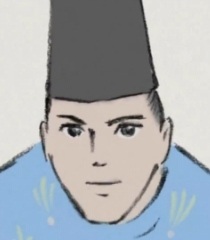
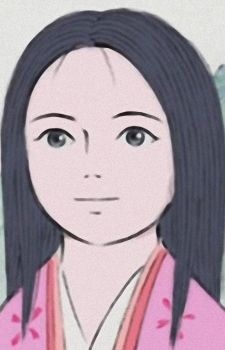
Deep in the countryside, a man named Okina works as a bamboo cutter in a forest, chopping away at the hollow plants day after day. One day, he discovers a small baby inside a glowing shoot. He immediately takes her home, convinced that she is a princess sent to Earth as a divine blessing from heaven. Okina and his wife Ouna take it upon themselves to raise the infant as their own, watching over her as she quickly grows into an energetic young girl. Given the name Kaguya, she fits right in with the village she has come to call home, going on adventures with the other children and enjoying what youth has to offer. But when Okina finds a large fortune of gold and treasure in the forest, Kaguya's life is completely changed. Believing this to be yet another gift from heaven, he takes it upon himself to turn his daughter into a real princess using the wealth he has just obtained, relocating the family to a mansion in the capital. As she leaves her friends behind to enter into an unwanted life of royalty, Kaguya's origins and purpose slowly come to light. [Written by MAL Rewrite]
Main
Supporting
Supporting
Supporting
Supporting
Supporting
Supporting
Supporting
Supporting
HaXXspetten
December 11, 2014
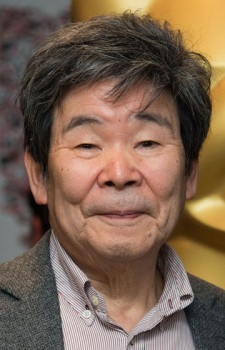
Studio Ghibli have always been at the very forefront in the anime film industry. Their creations have been able to reach out to any and all demographics with great success for decades, and have numerous masterpieces under their belt by now. Most of these are creations of the one and only Miyazaki Hayao, however Hotaru no Haka (Grave of the Fireflies) released back in 1988, one of the most critically acclaimed Ghibli films was written and directed by the studio's co-founder Takahata Isao. But this was something that was known as a one-hit wonder, as his other works never got anywhere near the same levelof praise and attention as his first one did. This changes now however. 25 years after Grave of the Fireflies was released, Takahata's new work titled Kaguya-hime no Monogatari (The Tale of Princess Kaguya) hit the cinemas, and this time he once again got it right, because this movie is sincerely a true work of art. Kaguya-hime (I'll refer to it as such henceforth) is based on The Tale of the Bamboo Cutter, a famous story from Japanese folklore. In this rendition, an elderly bamboo cutter finds a tiny human-like baby within the folds of a bamboo shoot one day, and takes it as a sign from the heavens that it is his duty to raise the mysterious child. However he and his wife quickly discover that the child is far from a normal human, as she grows at an insane speed. She goes from crawling to walking in a split second, she learns to talk in no time at all, and within months she's as big as the older children who used to play around with her. Meanwhile, the bamboo cutter finds even more miraculous gifts within the bamboo shoots in the forest such as gold, gemstones and expensive clothing. He comes to the conclusion that the task the heavens has provided him is not just about raising the child, but about turning her into an actual princess of the land. The majority of the story then takes place in the capital and follows Kaguya's blistering journey through her youth as her foster parents are doing everything within their power to try to turn her into a real princess, although Kaguya herself is mildly enthusiastic about this idea. Now the idea of having a wild tomboy being forced to become a "proper" woman is nothing new, but I still think this story showcased one of the best renditions of that concept that I've seen in a while. Kaguya's character herself is superbly written and her reactions to everything going on around her feel very realistic and enjoyable to witness. She shows in full that she is very talented and fully capable of carrying out all the modest and appropriate ways of behaving for a noble woman, but at the same time very clearly gets the message across that despite all that she only really wants to live her life freely and play around. She's a very relatable character as a whole, and her enthusiastic spirit is perhaps the biggest reason as to why the film is so captivating throughout. The supporting cast primarily consists of Kaguya's foster parents, her mentor, her childhood friends as well as all kinds of rich nobles that are interested in her. None of them feel needless in any way, but it's pretty clear that this story is about Kaguya herself and no one else, as the focus is always on her alone. In a way this can be considered a bad thing since the rest of the characters don't get very much in the way of depth and back story, but I personally didn't ever feel particularly bothered by that. Kaguya is really the only one that truly matters in this movie, and as far as that goal goes the movie executes it brilliantly. What is definitely worth mentioning about this story though is the ending of it. While I obviously won't spoil any details, let's just say that the conclusion of this story is... unexpected. It is very unusual, spontaneous and just plain strange in a lot of ways. Was it bad then? Honestly I'm not entirely sure if I liked it or not, but it was definitely not what I ever thought I'd see in a Ghibli film at least. Personally though, I always appreciate when stories diverge from the norm and decide to go a little bit crazy, so regardless of which I respect it for what it did on principle. However I know from experience that whenever a movie comes along which takes a sudden unexpected turn close to its ending, there will always be heavily split opinions on it. Therefore I can guarantee that there will be a lot of people who will really dislike the climax. Just a warning. As far as the production value goes, the soundtrack is for the most part rather ambient but it is very on-point for the atmosphere of the story. Some of the instrumental tracks in it however were very catchy and pleasing to listen to. In addition Kaguya also plays a little music on her own within the movie itself so it was quite diverse in that department. The voice acting is typical Ghibli in terms of feel and quality, which is of course always a great thing. I'd praise it more, but honestly I'm more or less expecting it from a Ghibli film at this point. The animation however is where Kaguya-hime really goes way off what you'd ever expect to see in an anime movie released as late as 2013. The art style takes a very old school, classical approach which makes it feel hand-drawn most of the time. Sketch lines are intentionally left in, and at first it looks like the movie wasn't actually finished in its current state since common sense says it requires quite a lot more polishing. But this is the style the movie utilizes throughout on purpose. At first it takes a while to get used to, but once you do it's actually really captivating to witness. It makes the movie seem so much more atmospheric somehow, and helps beautify it as the icing on the cake. Where the animation really shines though is during the sequences of the movie which has a lot of rapid movement. When Kaguya runs throughout the mansion or the forests, or when the camera simply "flies" throughout the landscape, it looks absolutely mesmerizing. I'm not even sure how to explain it since it was so unorthodox; it's something you really have to see in person and experience for yourself. As a whole, this is probably my 2nd favorite Ghibli film to date (after Spirited Away), so yes I honestly liked this more than Takahata's former "masterpiece". It's a bit hard to put into words exactly what it is that makes Kaguya-hime so loveable though, but I think it's a combination of the setting, Kaguya's character and the creative artwork. Case in point however is that I truly loved this movie from start to finish, despite its lengthiness. As with most (all?) Ghibli films, this one is most definitely watchable by all audiences, but in particular if you're a fan of beautiful landscapes and coming-of-age stories, then you better add Kaguya-hime to your repertoire as soon as possible. Not doing so would be seriously missing out. Wholeheartedly recommended.
awerture
January 2, 2016
This Studio Ghibli motion picture is relatively well-acclaimed outside the anime world. As of now it boasts 100% rating on rotten tomatoes and it was nominated for 87th Academy Awards. Unfortunately, for all of its praise it's a surprisingly mediocre work. The movie has some merits - it has delightful watercolor-like visual style. It's very pleasant to watch, one can simply sit and enjoy the flow of images. Animation is vivid and the art style captures the mood of the period and atmosphere of the folk tale very well. What this movie fails to capture however, is the very point it's trying to make. Because themovie is adaptation of the 10th century Japanese novel (sort of novel, at least) I initially believed it's the ancient text which is to blame for anime shortcomings. I was really shocked to find out that numerous versions of the original narrative tend to have a better story than this anime offers. The writers of the anime failed because they took their own set of what I will loosely describe as 'Ghibli values', injected it into the old narrative, clashed it with Heian period customs, played this conflict for over an hour and instead of resolving it they turned back to the slightly changed climax from the original story, completely ignoring the fact that with the liberties they took the original ending doesn't work as intended - some characters are straight-up unlikeable, when they really shouldn't be, some characters don't serve any purposeful role and main character is spineless and passive. And any potential moral is subdued by the story's inconsistencies. The creators tried to amend the situation by explicitly telling the audience how and what it should feel and accompanied the ending with an emotional soundtrack (which is by the way not particularly memorable). These tricks don't work perfectly - for the most part the movie feels more like a series of disjointed segments (Ghibli-esque beginning -> modern social commentary -> traditional folk tale -> melodrama), in each segment aiming at a different thing, connected only by the characters and art style. And additionally all of it feels dragged out and, honestly speaking, a little boring. This really is not a good sign for a Japanese movie when a Western viewer relates more to the millennium old original story than to its modernized retelling. Visuals, faint mood of melancholy and oriental feel are not enough to consider The Tale of the Princess Kaguya a good film - it's at most an average one.
Optigisa
March 11, 2019
--- This review spoils the entirety of Kaguya Hime no Monogatari, and is advised to be read after completion of the film --- "It is like a circle, when one ends, the other one begins. So you can always count on it to keep on moving." If there ever was a quote to perfectly describe the surreal and metaphorical journey that is Kaguya Hime no Monogatari, then this quote would be it. Kaguya-hime no Monogatari, or The Tale of the Princess Kaguya, is a Studio Ghibli film that was created and directed by none other than the legendary Isao Takahata, and was released during the year of2013. You would expect that with Takahata being behind this movie, that it would deliver as always, and you are certainly right in that regard. Please do note that this is a movie that is slow, long, and it takes it's time to tell a story, so if you are expecting some kind of action or tension to come out of it, then this movie does not contain any of those things. With that being said, the topic of this movie is about life as a whole, from it's beauty to the struggles and hardships that come with it, to the growth of it's individuals from young adolescents to responsible adults. This movie shows us life's many cycles, from the growth of the little princess Kaguya, to the daily chores of the workers, the struggles of the elderly, the antics of the children, and the habits of the animals. It shows us everything life has to offer in a two hour long magnificent story, coupled with some beautiful visuals and an engaging soundtrack. Since this movie tells the story of life, I like to divide it into several phases, which are: The birth phase, the growth phase, the loss phase, the self-hate phase, and the death phase. - The Birth of the Princess Kaguya - The movie starts off with a very unique premise, a young princess comes out of a random bamboo stick in the woods, and is picked up by an old farmer and taken care of by him and his wife. This concept is already distinctive and interesting in of itself, and grabs the viewer in from the very start of the movie. Not only is said concept great, but also the movie's execution of said concept is brilliant. Takahata is an expert when it comes to crafting a scene and he does not fail in doing so here in this film. Everything in this movie is symbolic, meaning that a scene that contains flowers blooming can symbolize the growth of the little princess Kaguya for example. Every little scene in the beginning of the movie makes sense metaphorically, from a flower blooming to a butterfly hatching out of it's cocoon, they all symbolize the concept of life, and they are all used as metaphors for Princess Kaguya's growth, both physically and mentally. The movie also shows us how the little baby Kaguya is growing up, by making her imitate the jumping movement of frogs, as this scene serves to show us that Kaguya is a fast learner and is growing faster than other children, foreshadowing her as something special, something that is not human. - Growth and Self-realization - The little princess starts to become more and more mature as the movie progresses. She starts to become more like the old man who took care of her as a child. The movie tells us that by showing her taking care of another baby, which serves to symbolize the growth of the princess from an immature child to a mature and young adult. We see her start to become more and more responsible in her own actions, even though she still does make some mistakes from time to time. As she becomes more and more like the adult version of herself and less like the younger, more naive version, she finally comes to the realization that she was the princess that sprung out of the bamboo stick all along, and not a normal child. This phase is supposed to symbolize our coming into terms with the reality of who we are. This phase also sets us up for the third phase of the movie, which is the loss phase. - Losing Your Way In Life - Due to the old man's unconditional love for his daughter, he decides that she should become a princess instead of staying up in the mountains, and that is because she was sent down from the sky. This part of the story deals with the concept of loss, the loss of the friends she made, the loss of the memories she cherished for so long, and the loss of some other stuff she experienced during her life. The contrast between her previous fun life and her current royal life is seen when she is restricted from the enjoyable activities she used to do as a child, like swimming in the water, which is forbidden for a royal princess like her. We see how now, she has to suffer to be able to come to terms with her new self and this life that was imposed upon her. Unable to escape, and not wanting to disappoint her parents, she has to live her life according to these new set of rules. Is this scenario reminding you of someone? This movie is metaphorical at the end of the day, and it could as well be a reflection of us as human beings who are watching this film, since a lot of us tend to live our lives this way. We lose our way in life when a crisis occurs during maturity and are confused as to what to do. Naturally, this leads up to the self-hate phase, and that is due to Kaguya's set of rules being imposed on her. - An Emotional Crisis - After days of training being imposed on the princess, she starts to become more and more experienced in what she does, from playing the instruments to becoming more "lady-like", she truly can call herself a princess now. Although her future looks bright in the kingdom, she still misses her old life in the mountains, alongside her friends and the other villagers. She is trapped, and that leads to a cycle of self hate. She tries to run away, but she cannot live on her own, and after her unconscious body is then captured and returned back to the kingdom, she then finally accepts her fate and gets her face redone to become a true lady. After all is said and done, her father brings her a gift, which is a bird that is trapped inside of a cage. The movie here shows us it's symbolic brilliance, as here we see how there is no difference between the bird and the princess herself, as both are trapped and are unable to escape their fate no matter how hard they tried. When the princess does something she loves to fill in the hole of depression, we see birds and butterflies flying freely in the air, which symbolizes her love for life and the freedom she feels when doing something she actually loves. Due to her unable to accept her fate no matter how hard she tried, she becomes tired and decides to give up on the wealthy life and return to her origins. - The Finale: The Death of a Fake Image - After all the emotional crisis is experienced by Kaguya, we finally come to the death phase. Due to the fake love the princess is receiving from the royal princes and the counselors, she decides that her life is no longer valuable, and decides to return to her original home on the moon. This phase symbolizes the fake love that some people may feel and their inability to feel content with their own lives. When the moon people finally arrive, the story ends with Kaguya forgetting her memories and returning back to her home. With that, the movie concludes it's story about life, which started off from birth and ended at death. The movie tells the tale of peoples' lives in a very beautiful way. It gives us a generic story, but mixes it in some beautiful imagery, amazing metaphors and powerful execution, to give us an unforgettable experience overall. Other than the great story, the movie's visuals and cinematography were beautiful to look at. The art style is certainly a unique one, unlike anything I have ever seen, and is very pleasing to the eyes. The soundtrack is certainly immersing and sounds great overall, with no track being out of place or sounding bad. One gripe I had with the movie was that it was too long for it's good, meaning that this movie should have been an hour and a half at most instead of two hours. A little padding might have been cut off for an overall better experience, and the pacing could have used some work as well. Aside from a few gripes that bugged me, this movie contains some of the best uses of metaphor, and should be seen by anybody who loves imaginative and surreal works that have a sense of realism grounded into them. Overall - 8
Namoonriver
March 23, 2015
As soon as I heard that Studio Ghibli were putting production together for a story as famous as The Tale of the Bamboo Cutter, I knew I had to see it. Growing up on the quirky and relatable characters in Kiki's Delivery Service, to the fantastic visuals of Castle in The Sky, Studio Ghibli never fails to disappoint with their use of musical score, lighting, themes of adolescence, love of nature and companionship. Needless to say, this film did not disappoint. Story: True to the folktale, the plot centers on a bamboo cutter, who comes across a bamboo shoot filled with glowing light. Within that bamboostalk is a tiny girl the size of his palm which he and his wife come to care for. This girl, aptly named takenoko "little bamboo" becomes the center character as the plot revolves around her growth and experiences with the bamboo cutter, his wife and all manner of colorful characters throughout the film. The plot is, simply put, solid. Easy to understand in its presentation, yet intriguing enough to keep us expecting more. The ending in particular was one of intrigue as it expands on kaguya's origins. Characters: Simple yet touching as far as folk tales are concerned, the characters in Tale of Princess Kaguya are instantly charming. Kaguya herself is particularly well done as we view her change from outgoing tomboy to poised princess, and her struggle to commit to either role. The bamboo cutter exhibits all the traits of a loving father, wanting what is best for his daughter and ultimately being overbearing but with the best of intentions. Secondary characters add additional flavor and humorous elements to the story that ultimately, by the stories end, leave you with a greater appreciation of the every day simplicities they presented. Who Is This For? I would say if you love folk tales adapted into film, you will enjoy this. Its adherence to the source material and it's overall presentation is very timeless. If you are a lover of Isao Takahata directed works or Ghibli, you may also want to check this out. Did You Enjoy It? I very much loved it. It took me on an adventure that chronicled a young girls life. You went through her insecurities, her laughter, her sadness and her love. It was fun becoming engrossed in what was a simpler time in japanese history. Sweet of it: Musical Score is perfection when matched with accompanying scenes Art conveys the simple yet timelessness of the folklore Taketori Monogatari Bitter of it: No folklore can have a complete happy ending.
dankzel
December 5, 2014
"Kaguya-hime no Monogatari" was such a beautiful movie made by Studio Ghibli and directed by Isao Takahata (of "Grave of the Fireflies" fame) based upon the famous Japanese folktale "The Tale of the Bamboo Cutter". This is a movie that should truly be considered a "work of art". The classical Japanese art style, which left in sketch lines and seemed to be painted on, took a little getting used to but ended up being spectacular especially with the concluding moon parade sequence. Along with the music and singing, these elements were incredibly immersive and really helped to transport me back to 10th century Japan. Theportrayal of all the characters' emotions really stood out to me from the combination of the superb voice acting/singing and vibrant and dynamic art (definitely go with the original Japanese VAs). I could really feel all the pain, suffering and emotions that Kaguya was experiencing throughout the movie. It was just all around top notch work. The story itself was heart-wrenching (for me at least) and fueled by the emotions of Kaguya. Takahata definitely went with a more somber and emotionally distraught interpretation of this famous tale. As the viewer, you could really feel the love between Kaguya and her parents, but empathize with how they struggled to understand each other at times. At times, I felt so frustrated by Kaguya's father that I just wanted to slap the shit out of him even though he meant the best. I'm also a sucker for happy endings and I definitely got hit by the feels train at the end. That beautifully animated flying sequence when Kaguya and Sutemaru were finally reunited really had me going but then BOOM. And then came "the ending" (I don't want to spoil any of it so you'll just have to watch). I did feel that the story was a little hard to follow and unclear towards the end but this was when we were entering "artistic license" and "rampant symbolism" territory. It was pretty clear that Takahata wanted to leave some things open to the audience's own interpretation. All in all, an excellent watch and definitely Takahata's best work since Grave of the Fireflies. I recommend watching this with the original Japanese voice actors but the English dub didn't do a bad job either. I hope that Ghibli will continue to take on more eccentric projects like this in the future. I would have definitely loved this movie even more if it had ended on a happier note, but this is how "The Tale of the Bamboo Cutter" goes. You don't mess with a 1000+ year old classic. Anyway, get out and watch this because you don't come across a piece of "art" like this too often. Story: 8 Art: 10 Sound: 9 Characters: 9 Enjoyment: 8 Overall: 8.5
#402
Popularity
#1071
Members
259,393
Favorites
3,021
Episodes
1