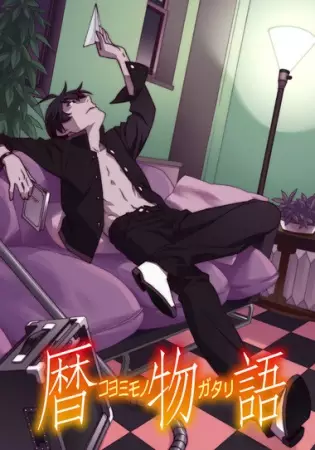
〈物語〉シリーズ セカンドシーズン
Apparitions, oddities, and gods continue to manifest around Koyomi Araragi and his close-knit group of friends: Tsubasa Hanekawa, the group's modest genius; Shinobu Oshino, the resident doughnut-loving vampire; athletic deviant Suruga Kanbaru; bite-happy spirit Mayoi Hachikuji; Koyomi's cute admirer Nadeko Sengoku; and Hitagi Senjougahara, Koyomi's eclectic girlfriend. A new semester has begun and with graduation looming over Koyomi, he must quickly decide the paths he will walk, as well as the relationships he will form and friends that he will save. But as strange events begin to unfold, Koyomi is nowhere to be found, and a vicious tiger apparition has appeared in his absence. Hanekawa has become its target, and she quickly finds she must fend for herself. [Written by MAL Rewrite]
Main
Main
Main
Main
Main
Main
Main
Supporting
Supporting
Supporting
Supporting
Stark700
December 7, 2013
Stories. Everyone wants to hear or tell a story people will remember by. It doesn’t matter if the story is fictional, realistic, sarcastic, humorous, imaginative, mysterious, psychological, speculative, or even twisted as it can be. Stories are created by ideas that are formed from the very thoughts we experience in our lives. In order for stories to be told well, they have to evoke feelings, reactions, and attract audience that appreciates its ideas. Monogatari Second Series - the anime that not only attracted me to its franchise - but also presented it in an extravagant way that takes the art of storytelling to a wholenew level. That level of storytelling was already clearly evidenced from its predecessor that achieved international success. Yes, I’m talking about Bakemonogatari that debuted back in 2009. Its success has later spawned other series in the forms of Nisemonogatari, Nekomonogatari: Kuro, and the soon-to-debut Kizumonogatari . Now, it’s back once again as an ongoing story narrative. Monogatari Series: Second Season is an anime adapted from the novel of the same name written by Nisio Isin with artwork by Vofan. If you’re a fan of the previous Monogatari series franchise, then this should be no shadow of a doubt be part of your watch-list as we are told stories at its most definite form. Similar to what some people might notice in the past, the Monogatari series presents itself in an unique form of storytelling. The term ‘monogatari’ itself defines as literature. For a series based on storytelling to succeed though usually requires a character base with insightful plot, creative setting, descriptive ideas based on connections, and a strong literal sense of execution. Monogatari series plays on most of these concepts but constructs it like an experiment. Whether you dare to take on the experiment might have different experiences. However, there’s no doubt that this series and its franchise has tested their experiment and succeeded in their message. Indeed, the storytelling of Monogatari mixes itself with visual arts and dialogues. The strength of the series comes from its dialogues that creates humor, sense, and might evoke people’s minds to think its true meaning. Most of the time, the meaning of the dialogues are metaphoric and conveys to many ideas. Its usage of word plays presents its unique art style to attract viewers toward its messages. Through these messages, viewers will find out just how exclusive this shows’ storytelling separates itself from most forms of storytelling. Monogatari Series: Second Season isn’t just about storytelling though. As mentioned before, a strong character cast will attract viewers to almost any form of genre. Luckily, this show has plenty of that starring our Koyomi Araragi, a high school student whose life has changed forever after a certain incident. Obviously, I would assume that you have seen the original Bakemonogatari to understand this but Araragi makes his return in this sequel. He makes his presence well known as other characters in the series speculate him as many things - a lolicon, dangerous, pervert, just to name a few. However, we know that Araragi is a character of loyalty as seen through his relationship with Hitagi Senjougahara. More importantly though, he is also protective towards others including his friends, family, and even strangers. Some of his actions might be interpreted in the wrong way by other characters but the guy definitely has proven many times that he is the type that others can depend on. He seeks to achieve the endings that allows characters live in peace. However, this often puts a burden on himself as Araragi finds that sometimes, he can’t achieve everything alone. This even puts his own lives at risk many times. But hey, he is that type of that guy that takes risks. From a narrative perspective, his actions are often awarded although he doesn’t always takes everything for granted. Instead, he keeps his more of the ‘it’s the right thing to do’ attitude. Most of the supporting characters from the novels makes their appearances in the story arcs including Tsubasa Hanekawa, Mayoi Hachikuji, Suruga Kanbaru, Nadeko Sengoku, Shinobu Oshino, and Hitagi Senjougahara. All these characters plays their different roles that fulfills some sort of theme or morality to its title. Each of these titles present a different insight on our characters as we see a sort of journey to embark on. And of course, every journey begins with the first step. There’s already trouble in the beginning as we get a hint of supernatural madness going on. To make matters worse, Tsubasa herself finds trouble with her life as sudden changes occurs. The first story arc initially reintroduces its narrative aspect to get viewers to familiarize themselves the format of how Monogatari works. Its supernatural themes takes on a more gruesome turn later on but there’s also hope and prosperity. As for the other arcs, each of them has a different theme and plot. Some of these arcs also explores the back stories of our supporting characters. Along with that, there’s character interactions that are dynamic with development. Additionally, each arc contains a similar style of storytelling through word plays, visual presentations, and dialogues. As the series contains supernatural elements as well, expect legends to unfold and discoveries to be made. These include spirit apparitions, vampires, mythic cats, and even Gods. The power of its dialogues enhances the experience with the power of its words. It’s an experience you won’t forget especially with some plot twists like one with a snake a girl. Judging on another level of the series is its humor. The style of Monogatari invokes humor in a sense that is quite peculiar. By peculiar though, I mean it as as a brilliant way because the show likes to experiment. Its stylish dialogues often mixes in parodies of other genres and themes for experimentation. These accompanied with the expressions of our characters creates a lavish theater of animation. As good as the series sounds, there’s a few aspects I found to be lacking. Namely, there’s perhaps a bit of too much fan service in the beginning that can be distracting. These don’t seem to have any meaning or dynamics and sometimes may distract viewers from the words play and dialogues. Other times, Araragi’s interactions with some of the other characters might even seem a bit creepy or hard to take for granted. This is especially true in one of the later arcs involving Shinobu that takes itself to a rather defiled way with their interactions. More importantly is the fact that the show sometimes likes to get a bit carried away with its conversations. Some of them might even drag on with small talk that can seem to be mundane. Other times, they flash way too fast to be read that can frustrate viewers in attempting to fully understanding its meaning. (if it has one at some occasions) Finally, there are some recap episodes between each story arc that drags the series together. They might help refresh a bit of its previous predecessors but can also be a waste of time for people who wants the series to accelerate itself. Shaft handles the production of this series. You know what that means right? If extraordinary is a word that just popped into your mind, then you’re on the right track. By that term, Shaft is known to pull out a variety of series over the past year that have impacted the world. Names such as EF: A Fairy Tale of the Two, Arakawa Under the Bridge, Sayonara Zetsubo Sensei, and Puella Magi Madoka Magica are just a few that comes to mind. The artwork of Monogatari is in a sense that can be both visually attractive and descriptive the same time. When not presented as comedy, they hold a deeper meaning or metaphor behind them. Other times, they are connected to the dialogues spoken by the characters to convey their thoughts and feelings. Speaking of characters, most of them are designed in a similar way as their predecessors. Araragi still has that noticeable hair-like antenna sticking out of his head while his girlfriend still retains her haircut. Other characters like Shinobu, Nadeko, and Tsubasa all possesses artistic traits similar to their supernatural counterparts. Soundtrack wise, the series maintains an eerie like atmosphere. During more of the climatic scenes, the series shifts its gears to a more dramatic tone with explosive entrances and executions. Other times, the series likes to keep its more balanced atmosphere along with comedic vibrations. The soundtrack might not be the most powerful device of the show but its various OP & ED songs makes up this department with its various styles. Almost every arc has a different song accompanied by the voice involving the star of that story. Similar to its word plays, they contain a pattern of artistic visuals to brings out the power of its orchestra. With its cast members also lies in the strength of their voices. Almost every characters demonstrates this with their voice mannerisms. These include the cunning Shinobu (Maaya Sakamoto), the kuudere Senjougahara (Chiwa Saito), innocent Nadeko (Kana Hanazawa), the mature Tsubasa (Yui Horie), the playful sisters of Karen and Tsukihi, and Araragi (Hiroshi Kamiya). Because the narrative aspect of the show is so strong with the dialogues, it is important to characterize each of their voices as a focus in order to bring out their best. And yes, I am grateful that these characters all bought forth their best thanks to the talents of their voice actor/actresses. So,this anime might not be for everyone. That’s something I’m sure most people have heard about the Monogatari franchise before. But if you pass this up for whatever reason, I still would recommend at least giving the first arc a try. That way, it might refresh a bit of experience of what you get out of the other series. However, I highly recommend watching this series only after you have completed its previous predecessors to gain full experience of its presentation. The Monogatari franchise has already achieved universal success thanks to its unique narrative, powerful dialogues, artistic word plays, and unique characters. Its humor will knock you out with high doses of laughter accompanied by its strange twist of stories. It even has bits of action too so violence is not out of the question there for fans looking for some intensity. (that and maybe its goal of achieving anemia with its fan service.) But all in all, Monogatarai series definitely took on the storytelling concept like never before creating an enjoyable experience. Now that is the ecstasy of success.
Supporting
Kindle
December 28, 2013
“After nourishment, shelter and companionship, stories are the thing we need most in the world.” -Phillip Pullman On that note, the second season (although technically third or fourth depending if you count Nisemonogatari and Nekomonogatari) of the Monogatari Series was promised to be a two cour delivering viewers the excellent experience that the first season, Bakemonogatari, did. Rest assured that if you enjoyed Bakemonogatari, you will not be disappointed by the second season. Story: (10/10): Monogatari S2's story is the driving point of the anime itself, the beating heart at its core. The storytelling in this anime is top notch, as it is an almost completelydialogue driven anime. If you don't like characters sitting down and fleshing things out, exploring the facets of their inner thoughts, strengths and flaws, then you might not enjoy this season. However, assuming that you watched the first season, you probably would have already figured out whether the Monogatari Series was right for you or not. Needless to say if it is for you, you're in for a treat. The story covers additional stories for Hanekawa, Hachikuji, Shinobu, Nadeko and Kaiki. Most of the characters from the original series make an appearance, although there is a bit of absence of Kanbaru. Shaft's unique way of organizing the anime leaves the free flowing story to explore the great characters within the story, as well as progress through the life of our lively MC, Ararararararagi. All the arcs seem to have different flavors to them, some being more action oriented, others being a lot more explorative, and some very emotional. Shaft has done an excellent job of succeeding the original series, as the viewer truly never finds themselves disappointed by the story aspect of Monogatari. The arcs only get better and better, leaving with a truly memorable experience in the final arc (Koimonogatari) which I'll leave you all to discover for yourselves. The fact of the matter, or the conclusion rather is that on the story basis, Monogatari is outstanding, and it makes me sad that I won't be able to experience the great storytelling until a hopefully additional season comes out. Art: (8/10): The art in Monogatari S2 is very much like its predecessors. The characters are all well defined, and all have unique aspects to them, however if you're someone who is very picky about animation and slick transitions, you might feel a little disappointed. Shaft cycles through animations during dialogue, zooming in and accentuating different nuances to the speaker's body. The famous slow motion head turn and zooming right into their face. It helps to keep the viewer enticed in the dialogue while they are talking, but other than that it does get repetitive. Besides that, the avant garde nature of some of the apparitions and environments (things made completely of Kanji) are always a treat, as the peculiarity only seems to add to the experience. That being said, since Monogatari S2 is such a dialogue based anime, this really isn't a problem. Besides that the transition slides usually have a bit of text, that you can choose to neglect or to pause and read, and people may find that annoying, although I didn't seem to mind it as much. As I mentioned before, if you don't like the way the art and animation is done, you probably would have figured it out in the earlier seasons. Sound: (9/10): The sound in Monogatari S2 is great at doing what it was made to do. Complimenting dialogue with a good soundtrack is very difficult. Fortunately, it's done very well in Monogatari S2, as you will find that what would have been a more stale conversation is brought to life a bit more by the beautiful pieces in the soundtrack. The OPs and EDs are some of the best I've seen, as the music is always great, as it was in the previous seasons. There's a few clips of ambient sounds when transitioning to other scenes, but they only add to the experience. Character: (9/10): The characters in Monogatari S2 really help define what the anime is like. Since it is a storytelling anime, the storytellers should be interesting as to keep the viewers interested as well. Luckily the unique set of characters we have are very well defined and interesting to the end. One of the great parts of Monogatari S2 is the way that it highlights the flaws of people fundamentally. This is through the apparitions that they get latched onto, as the apparitions themselves target weakness and the vulnerable. You have a cast of characters who all have their unique flaws, but all find ways to get through it, and that is the beauty and joy that you will experience through the expert storytelling of Shaft. As expected, the character development is very good, as there are plenty of learning experiences of the characters as they tell their stories. You will grow more attached to your favorite characters, and learn to understand the characters that you don't like as much. The beauty is, there's plenty of choices. Enjoyment: (10/10): Frankly speaking, Monogatari S2 was a very enjoyable experience for me. I loved Bakemonogatari, and watching the series finally get back on track with a two cour season was a delight for me. Picking up on the nuances of the dialogue, and watching the characters retell some amazing stories really never gets old for me. Since this is a sequel, I'll word it like this. If you liked Bakemonogatari, Nisemonogatari or Nekomonogatari, you will find something to appreciate in Monogatari S2. Overall: As 2013 winds down, Monogatari Series: Second Season serves as one of the highlights of the year, allowing fans of the series to rejoice once more in Shaft's excellent work in creating an atmosphere and story truly unparalleled. You will feel for the characters, you will laugh with the characters, and you will cry with the characters through their toughest and most jovial experience all told amazingly through clever dialogue and plot. Verdict: A solid 9/10. There are some things that can't be explained in words, and I definitely recommend this season to fans of the previous ones.
AestheticOnion
July 17, 2016
Since the release of Bakemonogatari, the first part of Monogatari series, this unique show has been splitting the community in two parts, one side being the Monogatari fans, like myself, who threat it like a rare philosophical gem of the anime universe, and the other side which sees it as just another harem show that tries to cover the fanservice with some 'random' philosophy. By writing this review, I want to show you my view on this show, not to force you to have the same opinion on it as I do. As you are familiar with the series (I assume, since this is the review onthe SECOND SEASON of Monogatari series), I will skip the intro and get right onto what made me like this anime so bad, and that is definitely the creativity of the story, and the unique way of storytelling. Monogatari Series: Second Season is featuring five new stories (+ and additional Hanamonogatari) showing us, once again, how human mind can be sick and twisted. Nisio Isin is playing with endless possibilities of the universe he has created, as our heroes struggle in this psychological adventure. While the plot in Bakemonogatari was highly repetitive and stereotipical (where Araragi happens to run into a girl in trouble and helps her), Second season is way more creative. Each story is darker, deeper, and more f*cked up than the ones in Bakemonogatari, and through each story you can find a bit more about the characters, their past, relationships, and a mysterious connection with the supernatural entity, while being trapped in a twisted paranormal adventure. Of course, there would be no story without the characters themselves, having in mind that everything happening in the show, is subconsciously created by the characters themselves. Through this philosophical masterpiece, you can see the protagonists of the Monogatari series in totally different way, discover their backstories, dreams and fears, and even get inside of a parallel what-could-be universe. Also, you can see them changing due to all the paranormal happenings, both psychically and physically. Second Season can probably show the best interaction between the characters in the entire series. The art style and the background music remain fantastic as they always were, since they are done by the SHAFT studio. The art is even better, and the animation is more fluid, which makes your personal enjoyment more a nd more superior. As the studio is getting used to the show, each segment is being more perfected. Atmosphere remains flawless, either if it is a horrific mystery scene, or the super-hot ecchi scene. It is so enjoyable, that I have finished the entire Second Season in three days. Keep in mind that this show is not for all the audience, as it contains lots of mature content like gore and nudity, and it can sometimes be really hard to follow the story line, or to read the subtitle and watch the show at the same time. Also, the SHAFT's way of presenting and animating can be awkward at times, so it can easily cause a headache to ones unfamiliar with it. If you are fan of the series, and you happen to like it so far, I highly recommend you check this out, as it is by far the best Monogatari yet. If you are somehow reading this review and thinking about watching this series, you should first go check Bakemonogatari, and then find out whether you like it or not. And if you are in a not-so-small group of people that were not satisfied with the first one or two parts of the series, I still recommend you checking this one out, as you might change your opinion.
HaXXspetten
July 13, 2014
Even though it’s been over half a year since I saw this anime, on impulse I decided that it was about time I said a few words about it, because I feel like I almost never see anyone ever talking about the “other” side of Monogatari and the quite clear problems the show has. Now before you instantly downvote this because I’m not giving this the very highest score, I just want to clarify that I do not hate this show, nor do I think it is a bad one however there are a number of things that make it far from perfect in my eyes,and they are not spoken of all too often. The first thing you’ll notice when it comes to Monogatari (besides the wacky art style) is its choice of storytelling. Like so many other series out there, it is divided into many smaller arcs that together build up a grander overarching story. Roughly it goes something along the lines of: 1) A girl gets possessed by an Oddity or at least has her life messed up by it in one way or another. 2) Araragi investigates the situation, and after some less than flawless work he manages to rescue the damsel in distress. 3) The girl is then blatantly tossed aside in order to return to the status quo so that the story can proceed unhindered to its next arc, starting over from step 1 again. See that last part there? This is the source of most of the problems of the whole series, and quite frankly I find it to be quite disrespectful writing on the author’s part. You know how people like to complain about the role Asuna was given in the second half of Sword Art Online? Well this is basically the same thing except it happens to almost every character in the entire show at least somewhere during the course of its progression. Basically what happens is that since every arc is about resolving the problems of one of its many heroines, as soon as that arc is over she no longer has any role at all for the next arc. Bar a few exceptions, the only relevant characters at any point in time of the story are Araragi himself, Shinobu (because she’s stuck with him) and whichever girl who’s arc it currently is (and perhaps some antagonist-like character as well). The rest of the cast basically gets ignored completely, and this is not a small cast we’re talking about here, nor are the arcs all that short either. As a result, characters that might have appeared to be main characters at one point might completely disappear from the story for up to 20 episodes sometimes over the course of the seasons, (not discounting his supposed girlfriend) and that’s not exactly a small amount of time for this type of anime. Consequently, Araragi and Shinobu are the only characters that are given consistent character development over the course of the show, whereas everyone else has theirs completely halted every so often. Don’t get me wrong, I’m not the kind of person who’d get upset over the death of a main character, actually I think there’s not enough of that in today’s anime, however this is a completely different issue as the heroines are just pushed aside for no obvious reason for huge amounts of time. It’s not like they’re actually gone, they just… temporarily disappear. Now I know part of this problem stems from the fact that the arcs of the Monogatari Series aren’t aired in the same order as they were written in the original Light Novels, and I understand that reading them might clear up a thing or two. However to me that is not really an excuse; an anime is its own product after all and should be able to deliver on consistent and easy-to-follow storytelling all on its own. You shouldn’t have to go read the source material just to get the full experience of the anime; they’re separate mediums for a reason after all. All that being said it of course doesn’t hamper all the good sides of the series. The animation is completely crazy and very much so up to interpretation but I think it looks absolutely beautiful at least. The soundtrack is not particularly memorable but it has its moments and is certainly not bad. And as far as the enjoyment value goes (which is what really matters in the end), I generally find it very inconsistent and spiky. There are some segments and dialogues in it that are simply brilliant, but just as often I find myself tapping my fingers on my desk in impatience for the series to actually get going. As it is, there is still a little bit more to come from this series and I’m still hopeful that the final part(s) will be able to tie the whole thing together in some way that makes it all feel connected and relevant, because currently I’m sort of missing that part. It just feels like there’s no clear goal regarding where the overarching story will end up and there are a lot of things to patch up and resolve before the eventual conclusion. I still think it can be done though and I hope the author can positively surprise me on this one, but as it currently stands I cannot make myself wholeheartedly approve of the direction this franchise has taken. Although if there is one thing you can’t deny it’s that the series sure as hell is unique, and that alone can take you quite a long way in today’s industry. Here’s to a brighter future!
Chocosword
January 31, 2014
To live in a world with apparitions, what danger will Araragi face? The Monogatari Series is one outstanding series. The light novel is well written and the animated series is beautiful. One important aspect of Monogatari Series is that there are many tropes and themes where viewers and readers can enjoy. Monogatari Series provide a variety of interest and it will make the audience want more. What is understandable is the fact that the underlying themes in Monogatari Series make the series stand out. One theme that is shared throughout the series is random act of kindness. This theme is important because it shapes people psychologically. Theserandom acts of kindness can vary from giving directions to a stranger to saving a person’s life. If a person is in need of help, it is best to help that person out. Even though there are more themes and tropes, they are all able to connect beautifully. Monogatari Series also have dark themes. These dark themes are used to portray reality and fantasy. To discover the truth behind the dark themes is to uncover the mystery behind apparitions. The saying goes: if there is light, there is also darkness. Monogatari Season Two is the continuation of Nisemonogatari. Studio SHAFT plans to animate the whole light novel. There will be a total of three seasons. Monogatari Season Two focuses on Nekomonogatari White, Kabukimonogatari, Hanamonogatari, Otorimonogatari, Onimonogatari, and Koimonogatari. These titles are significant because they relate deeply to the story. For an example, Kizumonogatari, Kizumono means ‘damaged good’, but also ‘a woman who has been deflowered’. Monogatari would mean story. Based off the title, it foreshadows the underlying dark theme. Since there is a sequel, the introduction of Monogatari Season Two provides a recap of what happened previously. The sequel started with Nekomonogatari White. Therefore, the story continued from Nisemonogatari time wise and a continuation of plot to Hanekawa in Nekomonogatari Black. Though, Nekomonogatari Black took place before Bakemonogatari. This may be confusing, but the timeline and plot is completely different. Araragi is helping out people with apparitions and it would be boring if the plot was to be linear. As the anime progress, characters have special appearance in certain situations. There are multiple characters and each character has their own arc. In short, each character is important to their respective arc. There are interactions among these characters even though they are not focused in these arcs. Although they are not focused, it gives insight to the character and provides development. What is given for sure is that this technique is smart and well used throughout the series. Animations are one reason to seek interest in an anime. If the art work is great and the animations are smooth, most people would tend to watch it because it is appealing to the eye. When it is appealing to the eye, it is easier to enjoy the anime and not complain. One reason that makes the Monogatari series good is because of Studio Shaft. Studio Shaft tends to make unique animations. Unique animations as in great camera view, amazing art work, detailed background and effects. There is also a gag where Studio Shaft likes to put their characters in a difficult head tilt. This is just for comedy purposes, but it is indeed interesting. This can be related to paintings as they have their own form of interpretation. Last but not least, the characters are very detailed, the transitioning is beautiful and the art is crystal clear. As the story progress through, the characters adapt to changes. The adaption can be either negative or positive. It is truly boring to watch a static character. Seeing a dynamic character can trigger new events. Having a dynamic character allows the plot to be flexible and create suitable settings. This is important because Monogatari focuses on Araragi and apparitions. As Araragi progress throughout the story, he will learn and experience new information. This is also the same for any other characters in Monogatari. Since there are dynamic characters, there is a beautiful resolve. The resolve can be either a good ending or tragic ending. As characters face an obstacle, they would have to overcome the experience. The journey may be short or long, but the experience is all that matters. The character of Araragi Koyomi is notable throughout the Monogatari series. His goal was to protect those who he cared for. To achieve these goals, he has to fight against apparitions and try to help the victims face reality. There are times where people tend to seclude themselves away from reality. Reality is definitely harsh and not pleasant for those who struggle. What makes human the superior race is that humans overcome their problems and advance forward. Throughout Monogatari Second Season, Araragi has starred in most of the arcs and made a huge impact on the plot. Besides the fact that Araragi is the main character, there are other characters that are significant. As each arc starts, the audience views a nature that a character has hidden. “Anyone who has a continuous smile on his face conceals a toughness that is almost frightening.” – Greta Garbo. This quote pretty much sums up the dark themes from Monogatari Second Season. Each character has their own hardships and it is tough to see them face their own problems. Characters such as Hanekawa Tsubasa and Hitagi Senjougahara have their own problems to deal with, but doesn’t show it until their respective arc shows. To acknowledge these problems, each character is related in a special way. Other characters such Oshino Shinobu, Hachikuji Mayoi, Kanbaru Suruga, and Sengoku Nadeko also has their dark secrets. The audience grasps on these secrets and expands their curiosity. These characters are brought over from season one. These characters undergo more development and thus the audience learns more about the character. There is also an apparition that dwells under the host due to their problems. In order to solve the problem, the character would have to adapt and face reality to overcome their problem. The voice actors and actress are kept the same. This is generally a must since there is a sequel. It would be quite awkward for a character to have a different voice actor or actress unless it was meant. Nobody in Bakemonogatari had different personalities causing it to have different voice actors or actress. What is known for sure is that the audio is great throughout. The opening is normally made by the arc’s main character. For an example, Nekomonogatari White starred Hanekawa Tsubasa so the voice actress of Hanekawa would sing the opening song. It is unique and it requires money and effort to be made. This is one way to show that Studio Shaft is trying to keep the same format as Bakemonogatari. The audio for Monogatari Season Two is great. The opening is kept classy with the main character of the arc starring in the opening. For an example, if Hachikuji was the main character of the arc, Hachikuji will voice the opening and have a unique opening animation. This concept was started in Bakemonogatari and was brought over. I really liked this concept and it was used beautifully in Monogatari Second Season. Overall, Monogatari Second Season is a good anime to watch. It is a genre that all could enjoy. I am sure that SHAFT poured their hearts out to appeal to their fan base and the general anime audience. The story is worth following up upon and the light novels are a great read. One cannot judge a book by its cover until its contents was seen.
Rank
#45
Popularity
#326
Members
715,291
Favorites
24,265
Episodes
26