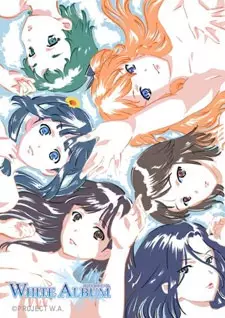
WHITE ALBUM [ホワイトアルバム] 2
Haruki Kitahara's light music club is on the verge of disbanding. At this rate, the third year's dream of performing at the school festival would never be realized. However, as his exhausted fingers drift through the chords of "White Album," the first song he would ever play, an angelic voice and mysterious piano begin harmonizing with his lonely guitar. It is a momentous performance that marks the beginning of everything for Haruki. White Album 2 orchestrates Haruki's final semester with complex romance and exhilarating music, as the curtains of the stage he so desired begin to open... [Written by MAL Rewrite]

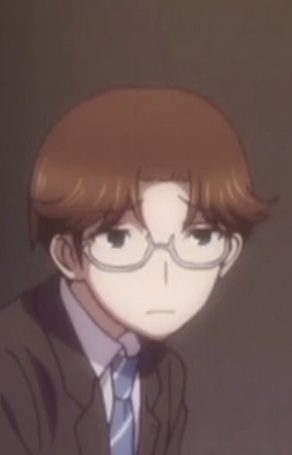
Main
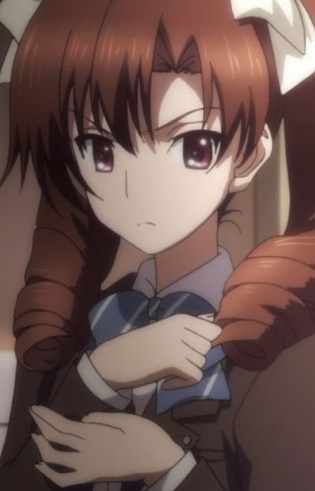
Main
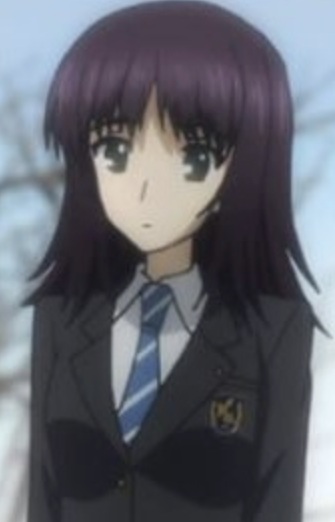
Main
Supporting
Supporting
Supporting
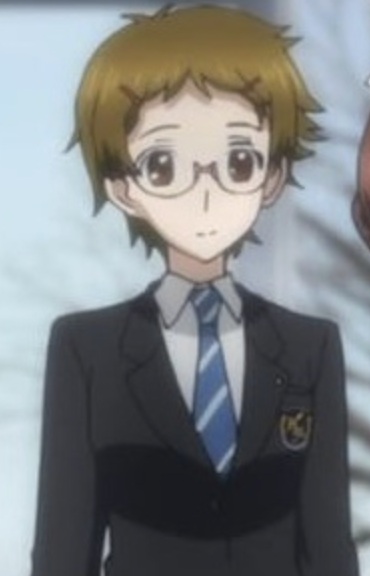
Supporting
Supporting
Supporting
Supporting
Supporting
ZeroReq011
January 8, 2014
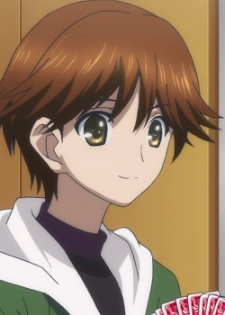
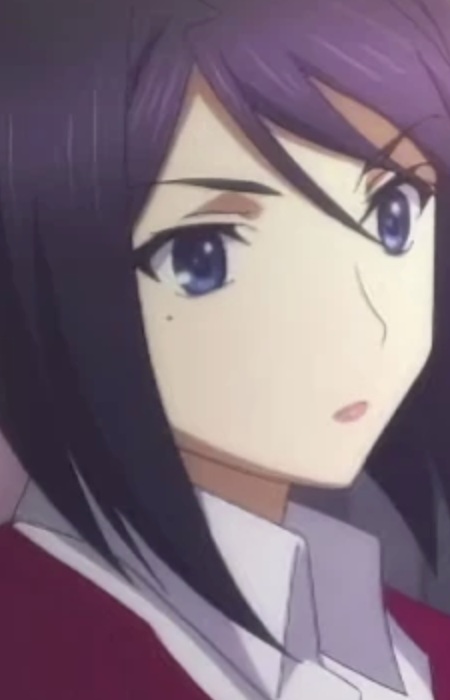
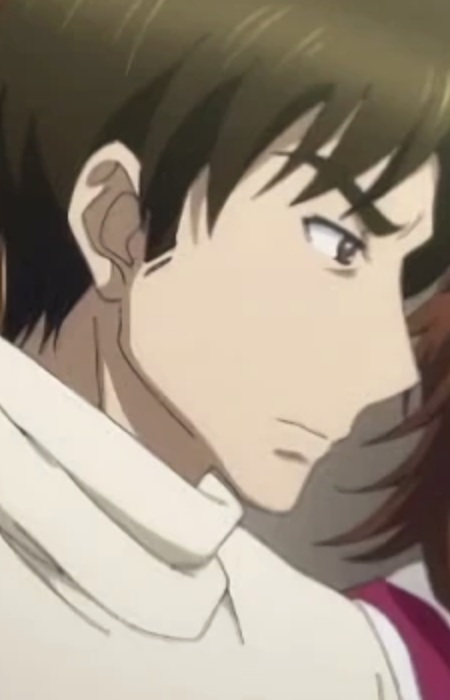
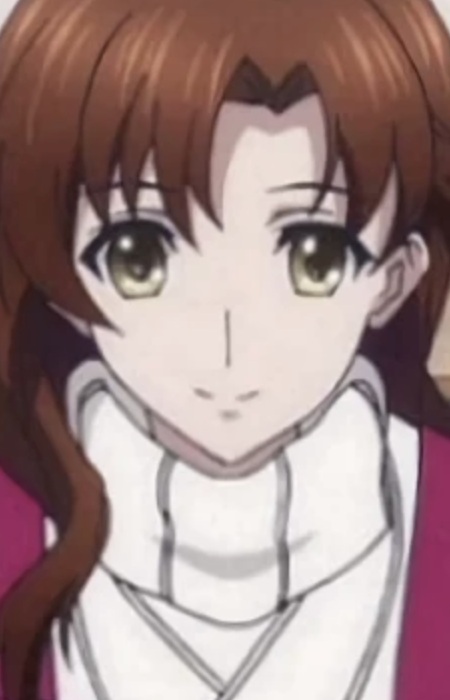
Music Room 2. It's the most unassuming of the three that populate Houjou High. Music Room 3 in the building across has the benefit of being bigger and newer, and the adjacent Music Room 1's been sectioned for everyone save those enlisted in the musical curriculum. Nevertheless, it's where Haruki Kitahara spends his time practicing “White Album” by Yuki Morikawa on his guitar. And out of nowhere, from the adjacent room, from the rooftop, a sound has him spellbound. A piano so soothing, a voice so transfixing, plays, sings to the song's melody. And here is where the story of White Album 2 takes off,where he has to know who. An adaptation of a Leaf and Aquaplus visual novel White Album 2: Introductory Chapter, White Album 2 itself was produced by Satelight, directed by relative dark horse Masaomi Ando, and scripted by Fumiaki Maruto, who was also the original scenario writer for the source material. A qualification before going any further is that outside sharing the same universe, using the same name, and borrowing a few of the same songs, this show is completely unrelated to its predecessor, White Album. Do not expect the same characters or story from then, which I've heard from general consensus is less than favorable, to be present here. Another qualification since this particular plot device's the bane of a number of viewers: this show is driven under the auspices of a love triangle. Feel free to refrain from watching if you absolutely can't stand them. This love triangle, however, does something somewhat different from the usual one male, two female dynamic. Haruki Kitahara, Setsuna Ogiso, and Kazusa Touma are friends. The best of friends. Friends of the dearest kind. The viewer's left with rather maddening issues, monogamy withstanding. How can the guy pursue one girl and avoid hurting the other? How can one girl pursue the guy and leave the other unscathed? How can we all remain close? Each main character wants to have their cake and eat it too, yet the show makes the reality clear: You can't. The heart wants what it wants when it's found it, despite any one party's attempts toward the contrary, and to deny it that when it's within grasp, combined with each character's own baggage, is tantamount to torture, agony of the most existential kind. The agony's even more poignant when they're written as more than just fictional characters. For the female leads, it wouldn't be incorrect to group them under a certain personality, a certain archetype, the warm, popular school idol and the cold, aloof musical prodigy. And yet, they're more than that, never relegated to the distinction of mere stereotypes. They may be extroverts or introverts, but no one girl's one absolute. No one girl's simply the life of the party, just as no one girl's simply a shut-in. Neither is unconditionally anti-social, and both are, by their own past experiences, insecure. Loneliness is an issue for all, manifesting as much in a crowded class as in an empty room. Not one girl is perfect, their masks, their mischief, their indecisiveness, cowardice, impulsiveness, selfishness... they all show, despite themselves and their counterintuitive efforts to preserve the status quo. More than just characters, they're people, female, adolescent, and flawed through and through. And for the male lead? Outside of his sex, he's no exception, especially towards the second half. If what you seek out of this show is your idealistic conception of what a romance should entail, then read well: that's not going to happen here. The ordeals are messy, frustrating, not because they're emotionally manipulative, but because they're real, because the characters, being who they are, are complex, conflicted, and real themselves. It's what would happen in this unextractable web of complexities and contradictions of “I wills,” “I won'ts,” and “It hurts,” where cutting one thread leads to the mangling of another. Then there are those little touches, subtle, never exaggerated, that give these characters sincerity as well as charm. Overly sweetened coffee black, for instance, to match my craving for black milk tea in the morning for every morning. And the show exploits these touches and others, subtleties of all kinds and layers, scattered, embedded, and incorporated into the narrative to outstanding degrees. Barring the first episode, this show's direction and script is all about subtly, about inference, of “show” and not simply “tell.” Where the camera pans, zooms, cuts, and lingers. When the facades of facial expressions slip into distress and recover to overcompensate, the eyes, the lips, the bangs. The deliberate tones in lighting, or the selective shades of lack thereof, complemented by the beautiful looking set pieces. The conversations, highly nuanced, roundabout, indirect, and, when it's called for, blistering. The use of flashbacks before the show's start, combined with the retracing of new and carefully omitted ground within past scenes at the most heart-wrenching of moments, the foreshadowing, and even the character of the character designs and clothes. Barring Episode 1, with masterful strokes of minimalist direction, interwoven seamlessly and purposefully with the music, whether bgm or insert, no one direction is ever oversold. They perfectly illustrate the personalities and emotional states of the cast at any given moment, whether they are bubbling underneath the surface or blasting corkscrew out of it. The best part, and perhaps the most refreshing part, is that it takes its time to do all of this, so that every form of direction feels natural. The last of three qualifications, this show has a sex scene, one without shots of anything particularly precious, but it's easy to infer what's happening. That being said, it's completely within taste, substantially enhances the narrative, and subscribes to a rather waning view that sex is emotional consummation rather than just physical titillation. Also, adolescent intercourse does happen in the real world, and I personally congratulate the staff for including it in, but if you happen to be allergic to sex scenes regardless, then you're going to have trouble fully enjoying the show. Music's, unsurprisingly, a strong element in this series. Outside of tackling the technicalities or philosophies behind notes, though practice does make perfect, the series does everything else in exploiting the medium to create meaning in the music. Outside noise fillers and mood setters, they express powerful sentiments that put the thoughts and actions of characters within context, especially with Touma, whose feelings unseen and unspoken, given her reserved nature, bleeds into her piano pieces. It adds another layer of “show” through melodies and harmonies, and even the lyrics of the songs that have them are loaded with meaning in hindsight. And then there's the OP, “A Love That Cannot Be.” Known in romaji as “Todokanai Koi 13” by Rena Uehara in one track and Madoka Yonezawa, Ogiso's seiyuu, in another, its vocals, combined with electronic keyboard, electric guitar, and a synthetic backtrack, rocks and croons of a passionate nostalgia, of happier times in younger days past caked in a film of melancholy. The visual detail's not quite Kyoto Animation or P.A. Works standards, but it's still really good, and the visual content corresponds excellently with the music, blurs, glare, overlays, and the waning light from sunsets. It also features visually vague moments that occur in the show that contribute to this aesthetic, but aren't really spoilers since they're only fully significant in, once again, hindsight. It's best thought as a bittersweet reminisce by an adult of his or her turbulent youth. White Album 2 is winter-themed, and snow can be beautiful, if chilling. In addition, the transitions are handled with a quiet, yet powerful mix of grace and dignity. It also attempts to do this interesting thing with omitting Touma's face until Episode 3 to reflect a certain in-show direction, which would have been clever had it not been compromised by something in Episode 1. The ED for Episodes 3-6 and 8-10 (Episode 7 doesn't have an ED), “Sayonara no Koto,” or “Goodbye” also by Uehara, flows in the same thematic vein, with recaps of scenes of the episode now past, an evolution from a delicate, yet noble instrumental chorus of electric synthetics, keyboard, classic guitar, violin, then vocals, then electric bass, then drumset, then electric guitar, before it reaches a climax with a vigorous and progressive rock beat, and, finally, settling back down to its quiet origins. Episodes 2, 11, and 12 have their own Uehara EDs, “closing 13,” “After All ~Tsuzuru Omoi~,” or “After All ~Writing Down My Feelings~” and “Twinkle Snow 13” respectively are also great in their own ways but, for the sake of brevity, I'll refrain from their music other than saying they accompany rather significant moments with a certain someone. And after all, they're better enjoyed in context than not. That goes double for the insert concert songs, "White Album," "Sound of Destiny," and the OP, since, outside of singing, they contain some really nice surprises involving solos. Episode 1. It's not a bad episode, all in all; in fact, I think its conclusion was very well choreographed. Still, compared to its successive sisters, this episode has a couple of things that stick out like a sore thumb. There's a questionable amount of exposition within it that I think was a bit superfluous. A few carefully chosen words especially towards the end, coupled with the music, would have been better for the mood, but by far the biggest concern I have was the beginning, where the show previewed portions of the concert from Episode 7. I suspect it was supposed to be kind of a hook, but, returning to an earlier instance of direction which could have been clever, the omission of Touma's facial features seemed to be intended as a means for suspense that also worked in character, given her cold, aloof exterior. While it may have been no surprise that she would play one of the center role, what she looked like would, had it not been spoiled earlier by that flash forward. He has to know, climbing the stairs to the roof, treading the outer walls of the school from stories high to get into the adjacent room's open window. The rest is history. It's been an unparalleled experience to have watched this show and I sincerely hope after reading this review, everyone who's interested watch it as well. It is one of the most finely told romantic dramas I have ever had the pleasure to see, and while the ending was conclusive, since this is only the Introductory Chapter, the story's not even over yet. I give White Album 2 a 10 out of 10.
opernlied
December 28, 2013
Visual novel adaptations have always had a notorious reputation in anime communities. Whether it be issues with pacing, narration, or some nonlinear route structure, these adaptations suffer from a variety of heated complaints from fans of the original source material, sometimes even as to have their very existence denied. Thankfully, White Album 2 is not one of those adaptations. Adapted from the ~introductory chapter~ segment of the bestselling Leaf visual novel of the same name, White Album 2 (henceforth referred to as “WA2”) manages to retain a lot of the strengths of the source material while approaching it in a different, but appropriate, fashion. It is importantto note that, despite the title, WA2 is not a direct sequel to the first White Album, related only by setting and a number of references, so viewing of the first series is not required. With that said, WA2 is, simply put, a romance. To be more specific, it is a love triangle. It begins with a student named Kitahara Haruki trying to revive his high school’s light music club. In doing so, he eventually finds himself involved with the two girls who join the club: Ogiso Setsuna and Touma Kazusa. Certainly, this is a fairly basic set-up for the genre. WA2’s romance is played out in a straight and down-to-earth manner, and its strengths lie with the subdued execution of that romance. In a genre filled with stories that often resort to predictable archetypes and tropes to drive themselves forward, WA2 avoids the pitfalls of many other titles by doing away with the excessive melodrama and roundabout confessions. It does not strive beyond the boundaries of its genre, and thus certainly cannot be compared to shows that feature Titans being screamed at. Consider the very beginning of the show, which reveals some key events that will occur at the end of the anime. In this brief sequence, viewers will be made aware of the kind of road that WA2 is set on. Both readers familiar with the source material and newcomers may initially find this to be a questionable directorial decision. However, in the grand scheme of things, WA2 is not focused on the fact that these events occur, but on how the characters and their relationships caused these events. After all, there are only so many ways a romance can turn out without treading on the grounds of bizarre or convoluted narratives. In general, the genre should focus on the chemistry between the characters and how they deal with the emotions of love. And the characters are undoubtedly central to the romance in WA2. The characters are not dolls made to fulfill a given role, but believable people with distinct personalities. In particular, the main lead Haruki seems like an excellent student, yet so obviously flawed. His altruistic personality leads him into making many unintentional mistakes, and he is unable to avoid the problems he is causing despite being aware of them. And just like Haruki, Setsuna and Kazusa also try to avoid the problems in their own way, but inevitably end up hurting the others in the process. These characters make sensibly human mistakes that some viewers will resonate strongly with, while others may find themselves incredibly frustrated. The notion that viewers opt for a favorite heroine need not apply when the characters can be both endearing and detestable. The alleged title of “best girl” might as well be given to Haruki. Of course, much of the characterization is owned to the wonderful script written by Fumiaki Maruto, the original scenario writer for WA2. The characters and their interactions are brought to life through clear and purposeful dialogue. The lines illustrate the chemistry between the characters and the gradual build-up of romantic tension as the show progresses. As an adaptation, the script is very much condensed to serve time constraints in the animated form, and Haruki’s insightful narration is lost. Thankfully, this is substituted by visual expressions and gestures used by the characters to show certain emotions rather than tell them. Setsuna’s physical distancing during some conversations in the earlier episodes, for example, indicate her perceptions toward Kazusa. In many cases, this use of storytelling adds to the scenes, improving upon the original. On the other hand, some lines in the script are altered, perhaps changing the nuance of the original scenes. A particular example of this is with the scene that introduces Kazusa, in which she speaks with an angry tone as opposed to a confused one. Despite the show’s use of visual storytelling, the technical aspects of the animation suffer from a number of problems, particularly due to the production by Satelight. While the character designs themselves are arguably an improvement over the original's, quality mishaps are abound regarding the anatomy of the characters in some shots. There is also a general lack of “liveliness” in the animation, resulting in dull movements and stills. A notable offender of this is when the concert scene occurs in the story, and repetitive shots of the school’s scenery are seen as music is playing. Moreover, a few other important scenes feature questionable fanservice shots and odd angles, intruding on the mood of these scenes. Fortunately, the aural aspects of WA2 make up for the mishaps in the animation. The soundtrack, featuring tracks that are played by an actual pianist, really complement the nature of the show, more so due to the focus on music. Dramatic sequences are accentuated with powerful yet delicate melodies, such as the instrumental of the aptly-named ending theme, “Sayonara no Koto.” Vocal songs are also prominent, reinforcing the show’s themes through their lyrics. Ultimately, the music is an integral part of the experience in WA2. And the experience is certainly something else. Despite being only a prologue to a larger story, the anime adaptation of WA2 offers a sense of completeness that most adaptations, and anime series in general, should strive for. It is faithful as an adaptation, yet carries its own unique charm. It has a fairly simple premise, yet goes much deeper than that with its characters. The season of White Album has gracefully passed us by, but it won’t be forgotten so easily.
Silent_Scream
January 16, 2014
Have you ever fallen in love? I did. I still am. White Album 2 is set after 10 years of the events that occurred in the original White Album. Despite the title being White Album 2, the story isn't a sequel but is pretty much a standalone or what you could say an alternate setting which has minimal relevance to its predecessor. The only apparent connection are the songs which were sung in the first anime and the people who wrote them, and that it is set in the same world. In simple words, you don't need to watch the first anime to understand this andI would not recommend in doing so since I find the first one to be the complete opposite of what this is - a true masterpiece. The story of White Album 2 is pretty straightforward. The entire story revolves around the three main characters namely Kitahara, Touma, and Ogisa. These three are so relatable that I'm pretty sure some of us could even picture themselves living and experiencing the different social dillemmas each character is facing - they're as real as it gets. At first they might look common, typical or plain but later on as the characters reveal more and more of their personalities and problems, they'll also grow on you. With the intent of being good friends, a simple admiration turned into something more but the intrusion of another led to a love triangle conflict without even realizing it. The story grows beyond from here but as much as I would like to tell more, I would rather have you watch it as it would only spoil all the fun. People tend to do crazy things when in love. As far as beyond what logic could measure, humans would do anything when it comes to love. Love is such an extraordinary phenomenon that people would do something they normally won't do. Trust, betrayal, and even sacrificing one's good for the sake of another - as long as love is present, there is so much an ordinary person could do yet there's so much to lose. That's what I find so great in this anime; it depicts real human emotions at its finest, and at its worst. For a mature and a serious drama/romance anime, the animation is as fitting as it should be. The characters and the backgrounds are very well drawn, the movements are fluid, and the shadings too are very well applied. Not only is the animation good on its own but it also compliments the feel to its amazing music. As one would expect from a musical anime, the music is really good. In fact the soundtracks are absolutely breathtaking from the first episode and it never did go any less up to the last. The lyrics of the songs completely fit the atmosphere adding up to the emotional feeling of the scenario they were on. The voice actors too did their roles very well, might it be just a simple conversation or was it through singing; you can really feel the emotions flowing. At its shining moments, the drama intensifies and the confrontations would make your heart skip a beat. You'd even start to wonder why is it so wrong when it's supposed to feel right, or the opposite. But if you were a person in love, you would know why. After all has been said and done, I could understand why some would feel a bitter aftertaste but let's face it - because even in real life, not everything goes the way we want it to. White Album 2 is such an emotional rollercoaster. At times you'll find yourself smiling along with the characters, and at some you'll find yourself crying. You'll be totally engrossed that you'll find yourself glued onto the screen wondering what would they do next then asking yourself if you would have done the same thing. But by then you won't have even realized that you're already teary-eyed because of how you care and sympathize for the characters that have already grown on you. It is just that good. I'll be honest. I enjoyed every single bit of this anime. But I guess "enjoyed" is an understatement since I pretty much fell in love with this anime. And know what, people do crazy things when they're in love just like what White Album 2 made me do - to once again write a review in which I swore I would never ever do.
Stark700
December 28, 2013
White Album 2 is one of those series many people tend to overlook these days because for a variety of obvious reasons. Some of them might be prior experience with other “White Album” franchise anime that left with mediocre impressions. Then, there’s also a belief that anime series based off of visual novel tends to be the inferior brand. Finally, maybe it could just be the synopsis or premise of the show. It looks simple, tends to be simple, and it is simple. But what you might be surprised at is that White Album 2 is not what it appears to be. Rather than goingthrough a bunch of stereotypical ideas wrapped in a loop of cliches, White Album 2 actually jumps out of that zone on various occasions. Take first note that White Album 2 is not a sequel of the original series. The characters from White Album do not make appearance nor their story connect in any way. Instead, the show stands out as a standalone series based off the visual novel of the same name developed by Leaf. The series chronicles the lives of three young individuals as they become a trio of close friends during their last semester of high school. It’s their final chances to make some memories they won’t forget and chances don’t come easily. The series takes place in high school but focuses it at its ending stages or rather, the final semester. There’s a pressure of futuristic opportunities and decisions to make often during these times. Think of it this way: when you were in high school, have you ever thought what you wanted to be or what you wanted to do after you graduate? For Haruki Kitahara, he can be described as one of those individuals without an exact goal in mind. What he does have in mind though is his ambition to play at the annual school festival. The problem? They need members for the light music club to accomplish this task. This is where our two heroines comes in from the story. First, there’s Setsuna Ogiso, a popular girl at school known well for her beauty and talent in singing. It’s easy for people to make friends with Setsuna because of her bright personality. In fact, many of the times we see her throughout the series is where she is compassionate towards others. Setsuna also possesses the talents of a singer especially after Haruki discovers her on the rooftop one faithful day. The way she sings is majestic, beautiful, and those moments defines her character. On the other hand, there’s Kazusa Touma. Unlike Setsuna, she is usually cold, aloof, and distant towards others. This is evidenced by her hobby of skipping classes and falling asleep that often results in scolding from her professors. But if there’s one thing she does care is music. Music, a word that has transformed words into a form of art and revolutionized entertainment, is what Touma holds dearly to her life. With a common idea in mind, these three characters are the core of the show that define White Album 2. Characterization plays an imperative role throughout the show so it’s important to pay attention to them. Haruki seems to be your typical high school student without much to stand out. He is friendly towards others, honest, accepting, loving, generous, and determined. He might not be a celebrity but Haruki isn’t just a guy that looks around to goof off at school or hit on girls. Instead, he truly cares about his friends and be there when they need the most. On another scale, Setsuna is like a walking billboard of radiance that attracts others. But if we look at her carefully, there’s a sense of insecurity coming out from her character. The smile she wears sometimes seems to formulate a mask that hides her true emotions. It’s not that Setsuna wants to be selfish but some of her decisions tends to be an act based on herself and what she believes in. Finally, Touma is like a stone of hieroglyphics that is hard to decipher. No one really knows what she’s thinking because of her cold personality. It is evidenced that her childhood can be defined as lonely and solitary so that could be part of the reason that made her whom she is today. Luckily, Touma’s love for music defines her character in another way, as a girl that embraces the art and tries to perfect it as a passion. White Album 2’s main characters all get their spotlights and screen time that examines their personalities, lives, and development as they finish their finish year at high school. The story of White Album 2 might take a while to get used to. I’m referring to the rather slow pacing especially in the beginning as we get to know our main protagonists. Taking place in a high school life setting also places the story in a way that is relatable because of the focus on future, struggles at school, and relationships. The story doesn’t drive off with odd plot holes. Instead, it is quite straight forward that is easily comprehensible. It also offers anime-only viewers a way of predicting future events as each episodes unfolds itself. The series also defines itself as a romance show so it’s interesting to theorize who Haruki will choose as his partner for an everlasting relationship. It can be perturbing at some instances but can also create excitement especially for our main characters at the apex of their school lives. Yes, what I’m referring to here is their dreams and ambitions. It’s obvious that Touma is passionate about music. Thanks to her skills with the piano, electric guitar, and other instruments, she stands out as a prominent star of the series. The core of their school life doesn’t come easily as there’s an old saying that goes ‘practice makes perfect’. This concept generally applies to Haruki as he lacks the skills of a child prodigy. What he does have though is a determined heart and spirit to tackle any obstacle through. His dedication fortifies a will that seems to spread like an inspiration to others such as Touma. Setsuna’s skills of singing also becomes the voice of White Album 2. This only defines half the story however as White Album 2 later on takes on a route of that brings forth more emotional impact. It chronicles the relationships of our main characters that is a mixed bag of love, loyalty, respect, and sorrow. While White Album 2 remains refreshing, relatable, and realistic, the show suffers some problems as well. There’s a lack of focus on supporting characters as most of them fades behind the scenes. Most of them plays little roles other than being introduced that becomes part of the cast only on some occasions. The story itself also becomes a bit predictable on various occasions. There’s also some fan service that can be distracting and forceful. Haruki also seems to be portrayed as Mr. Nice Guy with nothing special in particular. I also find a few of his decisions to be irrational and seemingly absurd. Some events also comes as abrupt and hard to sympathize with in terms of development especially involving relationships. There’s also a problem with narrative as the show focuses on three characters but none of them goes through the story by their point of view. Artwork wise, White Album 2 is realistic and designed to look as well as feel like a slice of life. The character designs fits most of their roles well. The outfit designs during the light music club’s debut are fashionable and artistic. (Although more embarrassing in some ways for Touma) But taken on a technical perspective, the artwork is realistic enough that camera angles focuses on each movement of the club when they play music. Examples of this include Touma’s finger movements on the piano, Haruki’s flow with his guitar, or the way Setsuna sings her heart out at her fans. There’s no doubt that realism is strong in the artwork department with a peculiar sense of normalcy. The music of White Album 2 is an embodiment that defines our main characters’ passion and unites them as a group. The OST is calm and pleasant throughout the series but it’s the songs that truly shines. Songs such as White Album, Sayonara no Koto, and the OP song Todokanai Koi '13' defines the show’s style at its finest form. It feels like a juggernaut of feelings poured into the lyrics that makes the show stands out. Voice acting wise, I give praise to Hitomi Nabatame (Strawberry Panic: Shizuma, Chaos;Head: Aoi, Gantz: Kei Kishimoto) as her role of Kazuma Touma. Her voice fits perfectly with her mature and cold voice that defines the character that Touma is. So White Album 2 is probably a show that would stand as something a lot of people might overlooked. It could be the fact that the anime didn’t have much expectations based from the synopsis, preview, or experiences from the previous franchise. As a dark horse, White Album 2 is one of those series that realistic with a fusion of music, relationships, and characterization explored in ways that is surprisingly interesting. The story might feel a bit slow and predictable sequences will pop up. However, patience is a key to unlock the satisfaction of this show. And once you open that door, you’ll discover the true essence of White Album 2.
HaXXspetten
February 25, 2015
Two's a plenty, three's a crowd. Or so the saying goes. People like to say friendship lasts forever. They want to believe that things will never change between themselves and the ones closest to their hearts during their teenage years. However, when multiple men and women grow close enough to each other there eventually comes a point where life-changing decisions must be made. And if your social circuit happens to consist of one man and two women... then odds are that someone is going to have to be left out. White Album 2 is a rare anime in the sense that it is a story about actualtrue love in a mature sense. It is also highly realistic and tangible, which is a strangely unusual thing to find in today's anime industry. Above all however... it is simply beautiful. If you want a short summary of what White Album 2 has to offer then here's a quick rundown of it. Otherwise the full review follows below: - One of the most faithful visual novel adaptations you'll ever find - Close to perfect pacing, not a single scene feels needless yet nothing feels like it's missing either - Very mature and realistic take on romance - Lots of actual romantic progression and relationship development - Quite serious emotional drama, this can either result in it being found tear-jerking or a bit cliché depending on who you ask - No stereotypical anime character tropes are utilized, everyone in White Album 2 feels like a real person - No moe, ecchi or other fanservice-esque elements - Very high-level and emotional voice acting - Heavy emphasis on music: the main characters together make up their high school's light music club and Setsuna's voice actress sing many of the series tracks (beautifully at that I have to say) - While the ending isn't conclusive since only the first chapter of the visual novel is adapted, it still leaves off on a very satisfying note, and therefore the anime works totally fine as a standalone product even for anime-only viewers White Album 2 is one of the absolute most critically acclaimed visual novels of all time, currently sitting at #2 on Erogamescape and #5 on VNDB among other things at the time of writing this, and it is widely considered to be one of the most beautiful love stories ever told. This anime does not cover anywhere near the entire story however, but rather solely the ~Introductory Chapter~ which makes up roughly the first 15% of it. Now you may find the notion of an adaptation only covering such a tiny amount disheartening, but that is not really the case here as the first chapter on its own works just as well as a standalone anime. Furthermore, by narrowing down the scope this much, the anime instead manages to nail what little content it covers more or less perfectly, and as a result this is one of the absolute best VN adaptations I have ever seen. Satelight made an outstanding job turning this into an anime. White Album 2 (henceforth only referring to the anime) is the story of Kitahara Haruki, a diligent student and one of the only two remaining members of the light music club. He dreams of reviving the club after all its other members resigned, and to have them perform at the upcoming school festival as their last event before graduation. In order to do so he manages to get the aid of the cheerful karaoke-loving school idol Ogiso Setsuna, as well as the quiet black-haired beauty Touma Kazusa who is his fellow classmate and a high-level pianist. Together they try to somehow scrape together a performance in what limited time they have left in order to create a final memory before they graduate. That was the only intention. Or at least, that's what is what supposed to be. For the three of them however, the bonds they acquire with each other intertwine in a very intricate and complicated web of emotions, resulting in a rather convoluted and tension-filled love triangle. One without any optimal resolution in sight and packed to the brim with conflicting emotions. This results in the anime being somewhat of a tearjerker but an exquisitely written one at that. Of course not everyone appreciates these kinds of stories since it can also be interpreted as somewhat cliché, and while I cannot deny that fact I still think this is easily one of the best series of the genre. What really cannot be understated with this anime is just how good the pacing is. The ~Introductory Chapter~ of the visual novel is only seven or so hours long, yet the anime is given a full 13 episodes for that alone. It's such a refreshing feeling seeing a story with no holes in it at any point, yet it doesn't ever feel slow or boring for a single second either. Everything in White Album 2 feels like it's actually important and serves as an important piece of the overall story. There are also some neat narrative tricks utilized in the story presentation such as specific camera angles leaving out certain elements intentionally, as well as using flashbacks instead of a totally linear style of story-telling in order to give the show a bigger sense of unpredictability and creativity. The characters of White Album 2 are not based on generic anime tropes like the vast majority of today's shows are, but rather feel like genuine human beings. The concept of fanservice is more or less non-existent in this anime, and instead it offers a very mature outlook on what youthful love might look like in real life, as well as what responsibilities and consequences comes along with it. Is it right to wish for your own happiness if it comes with the misfortune of others? Is it always justified to follow the calling of your heart? These are some of the questions this anime asks. These types of intricate questions make the character development of White Album 2 quite spectacular, as you can clearly see how all three of the main characters change drastically over the course of time. This goes both for how they act by themselves and towards the other two. Whether the choices they all make are right or wrong at times is up to interpretation, but I think all of them are perfectly understandable at least. Above all though, it results in something actually HAPPENING. The biggest problem in most romance anime is the lack of actual romantic development but White Album 2 has it aplenty, despite only being 13 episodes long. Furthermore it actually feels sincerely believable for once, yet not completely predictable either. The presentation is stellar. The animation is very crisp and clean, and fits perfectly for the theme and atmosphere of the series. Above all though, the soundtrack is nothing short of spectacular. It primarily consists of remakes of the OST from the original visual novel, and contains mainly vocal-heavy and instrumental tunes. These tracks are further enhanced by them oftentimes actually being performed live by the characters themselves, albeit merely in practice more often than on stage. The timing of the music is also used excellently, as the key emotional scenes of the story are heavily supported by the background music and the superb voice acting. Really White Album 2 would not have been the same as it is if it wasn't for the audio department. I really cannot praise it enough. As always with these kinds of series, there will be some heavy shipping wars going on regarding which of the two girls every viewer happens to prefer, but regardless of who you happen to fancy I still think that the overall story progression of White Album 2 should be very satisfactory either way. This is not an anime about which is the #bestgirl, it's much deeper and more touching than that. Overall, although this anime only covers a tiny portion of the full story of the visual novel, it is without a doubt an outstanding series in and of itself. Ironically despite the majority of the story not being shown in this anime, the ending of it still feels a hell of a lot more conclusive than most romance series out there. If you didn't know there was any more story left to be told, then you'd probably never imagine there was. It really feels that conclusive despite everything. Recommended for: Fans of mature romance and emotional dramas, as well as people who can appreciate exquisite presentation and directive for what it is. Not recommended for: People who are looking for a lighthearted romcom and those who place too much emphasis on their personal favorite coupling coming into fruition. The latter is not what this show is about on a metalevel. For what it's worth, the amount of emotion and sheer quality White Album 2 manages to squeeze out of a mere 13 episodes is phenomenal. It goes to show just how far you can come with a good source material and some stellar directing. Now if only all visual novel adaptations could do the same thing...
Rank
#1748
Popularity
#1055
Members
264,915
Favorites
3,479
Episodes
13