Moribito - Guardian of the Spirit
精霊の守り人
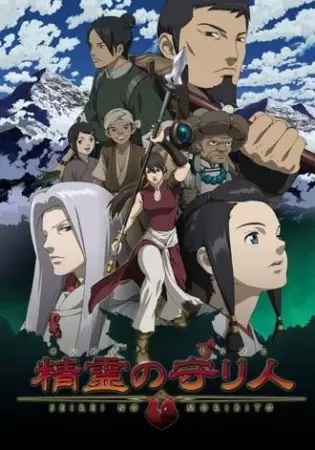
On the precipice of a cataclysmic drought, the Star Readers of the Shin Yogo Empire must devise a plan to avoid widespread famine. It is written in ancient myths that the first emperor, along with eight warriors, slew a water demon to avoid a great drought and save the land that was to become Shin Yogo. If a water demon was to appear once more, its death could bring salvation. However, the water demon manifests itself within the body of the emperor's son, Prince Chagum—by the emperor's order, Chagum is to be sacrificed to save the empire. Meanwhile, a mysterious spear-wielding mercenary named Balsa arrives in Shin Yogo on business. After saving Chagum from a thinly veiled assassination attempt, she is tasked by Chagum's mother to protect him from the emperor and his hunters. Bound by a sacred vow she once made, Balsa accepts. Seirei no Moribito follows Balsa as she embarks on her journey to protect Chagum, exploring the beauty of life, nature, family, and the bonds that form between strangers. [Written by MAL Rewrite]
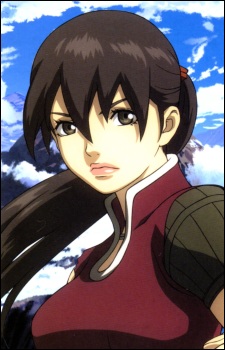
Main
Main
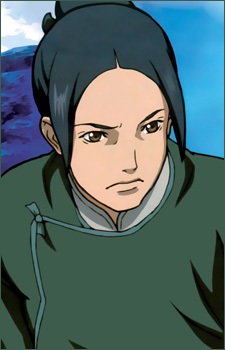
Supporting
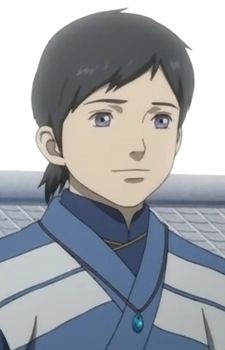
Supporting
Supporting
Supporting
Supporting
Supporting
Supporting
Supporting
Moonlith
October 30, 2010
They say 95% of all anime is complete and utter shit, with the remaining five representing those titles even relatively good. And among that 5%, Seirei no Moribito belongs into whatever number of shows it is which are not just relatively, but genuinely good. Seirei no Moribito is a fantasy adventure story which mostly focuses on the characters of Balsa and Chagum, a prince of a powerful Empire whose forced to exile due to the continued assassination attempts on him conducted by his own father, and their journey together. Those who prefer complex storylines with intricate twists and turns may look elsewhere; the travels of Balsaand Chagum, their struggle to dispel the pursuit sent after them, and how they deal with the water spirit's egg that's laid within Chagum are indeed the plot's most prominent elements. Not to say the story's simplicity is a shortcoming, quite the contrary in fact. It is for once pleasing to see a storyline you can actually understand at first glance instead of having to take guesses or be completely lost in the mock artistry of the show's creators. Not to say simplicity would be the story's main attraction either, for the careful and thorough way Balsa's and Chagum's life together on the run is depicted, Chagum's transformation from a sweet and pampered prince to a smart street kid, and how the relationships between the main characters develop and deepen is plenty to keep the viewer entertained. The characters are another of the show's strong points, especially, with the way how they seem to shatter almost almost all of the major clichés and all. Balsa is without a doubt one of the strongest female characters in anime of all time, she being pretty much the most capable warrior in the whole show and able to handle everything short of magic on her own. To top it off, she's noble-minded (yet not naive) and lack's arrogance (yet not confidence). Perhaps, by putting all of this together, one might notice themselves watching also one of the most shameless mary sues as of late, but amidst Balsa's pure coolness, one is also easily bound not to care. All of this saying almost not a word about Chagum, the boy prince of Yogo Empire who's forced to flee his home with Balsa. He carries the water spirit's egg that's said to keep the lands from drying over within him, but unlike almost all the other young male characters in anime shouldered with a heavy burden, he's not constantly whining about his fate. In fact most of the time he deals with his lot, of leaving behind his comfy life as a prince and carrying a capricious spirit egg within him with easy enough acceptance and even enthusiasm. Other characters deviating from the norm are Tanda, a doctor who's actually the one to tend to the reckless female warrior's wounds instead of the other way around, and the prophets at the Imperial Court who, although proud, aren't arrogant and conservative enough not to learn from their mistakes nor ignore good advice. Production I.G, a quality anime studio responsible for such acclaimed titles as the Ghost in the Shell movies and TV-serieses, makes sure that the art and animation in Seirei no Moribito earn their place among the other aspects that make this show so great. Even the most intense battle scenes flow fluently, the beautiful sceneries clearly depict a world untouched any industrial revolution, and the character designs are as much a treat to the eye as any of the aforementioned. But despite being a show remarkable in it's quality, Seirei no Moribito does leave a few lingering regrets in its wake. A fantasy show as this is, we could've learned a bit more about those elements in this one. We hear of "star diviners", of other worlds that seemingly exist paraller to that which is mostly shown in the series, we see some magic, and so on. But all in all the fantasy elements in Seirei leave me more confused than fascinated, for all the supernatural stuff is either explained too briefly or not at all. A bit deeper thoroughness in this department would've been in order. Another point of some chagrin in Seirei no Moribito is what I'd like to call beating around the bush with the characters' relationships. From the early episodes on we see that there's something going on between Balsa the fighter and Tanda the healer, with the two being childhood friends of opposite sex and all. The romantic tint in their relationship is obvious, yet _NOTHING_ concrete happens between the two in the show. An honest, full blown romance between them could've done much in the way of bringing some good extra drama and maturity to the show, for the platonic nature of their relationship despite the obvious hint at a love story-setting gave the series an ever so slightly childish look at times. Later in the show Chagum also becomes friendly with a girl his age in a village just happening to be on the path of his and Balsa's (and Tanda's) journey, and the crazy shipper in me says they shouldda hooked up as well ;P. Though not necessarily much of a gripe, since anime music failing to impress me is more of a rule rather than the exception, a bit more ambitious musical investment from the creators wouldn't have hurt the show either. Putting side to side the good and the bad, the end conclusion is what I've (hopefully) let you readers understand throughout the review; that this is one damn great of a show worth chalking up to your to watch-list no matter what genre of anime you'd usually prefer. Because even though an action-adventure-fantasy wouldn't sound like the killer combo just for you, Seirei no Moribito holds such a cast of characters and story to it that it is sure to reach the hearts of many viewers regardless of their usual appetite.
Wacek
October 30, 2008
That's right, for my first review I gave all tens. Actually, I belive that it's the best way to show you that this review is worth nothing, but this time I just couldn't help it. Seirei no Moribito. It's been a year since this anime raced through the world, and now I can see exactly why it did so. But, let's get to the point. Story - 10 Seirei no Moribito is fantasy down to the core. You'll find warriors and assasins, shamans and herbalists, emperors and diviners, two worlds overlaping themselves, is there anything more you need? Even if, you'll find it here. The story is very wellpaced. It starts slowly, but comes unstoppable to the point where these slow episodes disappears in blink of an eye. It's well thought, and I didn't find even one unnesesary filler episode. Art You definitely need to get used to it. I mean, after the first episode my eyes hurt from the number of details and amazing backgrounds. For heaven's sake, this anime has real grass, not green smudges, and skies i would spent my life looking for, mountains and forests, all brought to perfection. Even if heroes are in a cave, walls behind them looks the best it possibly could. If you still don't get what I mean, just watch the opening, and imagine that it's not only for show, that this art style continues and is getting better. The animation is smooth, and the CG that appears rarely is well-rounded. Sound The opening and ending themes are fitting the story and the overall feel of this series. Not too fast and not too slow, just like they should be in this case. In fact, they alone would not make me give a ten, but together with background music they plays up the mood in outstanding way. It's well matched, can calm you down or make you sit on the edge of the chair, I found myself completly mesmerized by it. Character And here comes the biggest suprise, at least for me. I was expecting nothing much, especially after seeing some of the newest fantasy series in which you can tell when the hero level-up. Characters in Seirei no Moribito are almost alive, they speak and act according to their own character that slightly changes along the way, but it absolutely don't mean that they turn predictible. They develops in their own way, especially Shuga and Chagum, but the rest of them are not left behind. The seiyuu are matching the characters and doing amazingly well. Enjoyment Why did I enjoyed it so much? This question seemed absurd to me, but after giving it some consideration I just don't know what to say. I don't know if I should talk about the feast for your eyes, the feast for your ears or the feast for your mind. I just know that it was pure joy for me, and I belive it's the effect of combining all this parts together. Overall You know, I'm not good at maths, but this one is evident even for me. So, what more can I say? If you enjoy fantasy, or if you enjoy beautiful art, or if you just enjoy well-made series in both visuals and the story, try it out. I hope you won't be dissapointed with this one, and find it as enjoyable as I did.
Archaeon
September 8, 2008
Seriei no Moribito (or Guardian of the Sacred Spirit), is not your normal anime. It began life as the first in the ten volume Moribito series of fantasy novel written by Uehashi Nahoko, and although these novels were intended for children, they gained many adult fans. In fact, the novels proved to be so popular that they the first volume was adapted into a manga, an anime (directed by Kamiyama Kenji, who directed Ghost in the Shell SAC and 2nd Gig), and even a radio drama. The novel is also scheduled for release in english in mid 2008 because of the immense popularity of theanime adaptation. Art/Animation Seirei no Moribito has some of the smoothest and most fluid animation of any anime produced over the last few years. Production I.G. managed to produce one of the best looking anime of 2007, and with it, managed to introduce one of the most unique and interesting female leads in anime. The colour palette is very "Ghibli-esque" as it mainly uses greens, browns, blues, etc, but Production I.G. has made good use of them for the characters and environements, and the overall effect gives the show a feeling more reminiscent of "Monoke Hime" or "Gedo Senki" than anything else. Character designs are exceptional throughout the show, most especially the main and immediate supporting characters. Balsa is exceptionally well designed, and far more realistic than many other fantasy female leads. Her character is fairly muscular and stocky, yet without the extremely toned muscles shown in most other fantasies. Facially too, the designers went for realism more than anything else. Balsa is not beautiful, but not ugly either. She's plain (in a sense), and is most definitely a woman, not a girl. The other characters are also designed very much with realism in mind, and this actually helps to pull the viewer into the show in a big way. It's also nice to see that attention was paid to the animals in the show as well, and it makes a nice change to see a horse in anime that actually looks like a real horse. One thing that should be mentioned here is the design influences. Many people relate thise series to China and Japan because of the very obvious visual references to those countries (i.e. the palace, the emperor, the ninjas, etc), however this is really only a small part of the whole. In truth, Seirei no Moribito isn't simply based on China and Japan, but is actually based on the greater Indo-Chinese region. This is reflected in the differing facial structures, customs, practices, etc, that are seen in the show. Balsa and Jiguro are originally from Kanbal, a country that shows a number of elements of Northern India/ Kashmir, Nepal and Tibet. This influence also extends to Balsa and Jiguro's fighting style, which is very different to that of the stories other combatants. The backgounds, still scenes, the rural settings, even the mountainous regions and jungles, are very clearly based on a region of South-East Asia stretching from India to Japan, and it's a rarity to find this kind of scope or depth of detail in anime. The animation quality throughout the show never really lets up, and the action sequences are especially impressive. The fights are swift and well executed, and the movements of the combatants is especially impressive during the action scenes. Production I.G. have also paid attention to the different combat styles used in the show as well, and have managed to include these in the animation, which gives the fights a far more "authentic" feel. Sound Each episode opens with a very nice, and rather catchy, J-rock/pop ballad called "Shine", which was performed by L'Arc-en-Ciel but never released as a single. The rest of the music in the show (composed by the famous Kawai Kenji), adds to the atmosphere and overall feel of the show. The dramatic moments, fights, and even the slow-paced scenes are all emphasized with some great background music. The sound effects are exceptional in this show, especially as this is more of a "historical" fantasy. The background noises, the grunts, clucks, whinnies, and other noises of the various animals, the clash of steel on steel, etc, breathe life into the series, and makes the setting that much more "real". Characters It goes without saying that the star of the show is Balsa, the spear wielding warrior woman, and Balsa, as a character, is one of the strongest and most unique female leads in any anime. She is muscular and stocky, possess many skills (not the least of which is her formidable fighting ability), has a strong sense of right and wrong, is very rarely indecisive, and is sensible in many ways. As I've said earlier, Balsa is no beauty, and this again sets her apart from many other female leads, as the designers generally try to make lead women in anime "attractive" to male audiences. Chagum, on the other hand, is exactly how you would expect a young prince to be, but without the arrogance (which makes a nice change). What makes this series really work though, is the attention to character development that both Balsa and Chagum receive, and how, as each of them develops, their relationship with each other changes. There are several other characters who appear throughout the series (Tanda, Touya, Saya, Jiguro, etc), all of whom receive a certain amount of development because of their association with Balsa. The nice thing about the development of the supporting characters is that it is often directly linked to the development of either Balsa or Chagum, or both in some cases. This is most especially true in the case of Jiguro, who was Balsa's guardian and mentor as a child, and is the one who taught her how to fight with a spear. The various references and flashbacks to this character slowly begin to make sense as the series progresses, and with this clarity it is possible to understand Balsa's character even more. There is a downside to the characters though, in that there are other characters who receive little to no development. In addition to that, the characters who do receive development rarely get it continuously. Strangely enough though, this does very little to impact on the story or the viewers enjoyment of the show. Story The story is actually a nice role reversal of the typical "rescue the princess" scenario and, although it's meant to be a serious fantasy action drama, there are some genuinely humourous moments. The story flows at a nice steady pace throughout the series, and although it does slow down from time to time, these are effectively the times when the majority of the character development happens. The premise was good on the whole, and although the story at times seems more like stock fantasy, there are enough differences, as well as some great character development, sound and animation, to make watching this a worthwhile experience. Enjoyment This isn't a light-hearted series, but it also doesn't become overly dramatic. It doesn't focus so much on action that it gives up areas of the story, and it never lets the story become so bland that you get bored of watching. It's an interesting show to watch and the pacing of the show, as well as the slow delve into Balsa's past, serve to ensure that you keep watching. Although the plot may be simplistic at times, this isn't really a show that suffers from it, especially as the show itself is more character driven than anything else. The main focus of the show, from beginning to end, are the characters. This is emphasized by the fact that the action and drama clearly take second place to each of the characters. Overall I'd recommend this show to any Ghibli fan, and also to anyone who like shows like Claymore, Slayers, or even Rurouni Kenshin or Sword of the Stranger. It's an extremely enjoyable example of how good a fantasy series can get if you do it right, and because of it's characters, it will appeal to fans of many different genres.
Washi
October 21, 2007
Seirei no Moribito was one of those rare anime that I commenced with an unshakeable sense of anticipation and with high expectations. I can never resist the urge to assume a show will be spectacular based on the staff or studio involved, even if my hopes have all-too-often been crushed (as was the case with Darker than Black). So, when I heard that Kenji Kamiyama, who is largely responsible for some of the finer creative inputs for both seasons of Gits SAC, was going to be heading this show with Production I.G, it instantly became my single most anticipated series of the year. By thetime the trailer came along I was well and truly brimming with excitement. However, the show that I got was both different to what I had hoped, and also not as memorable or entertaining. On some levels, the show is a resounding achievement, and there are moments dispersed throughout when it reaches remarkable heights of excitement, emotion and splendour. Yet, when looked at as a whole, the show has failings that can not be ignored; most notably, flaws in the pacing and the build-up of the story. The element of Seirei no Moribito that most screams for attention is its stunning production, and here is where my faith in Kamiyama is affirmed. The entire series has maintained an unprecedented quality of art and animation. It has the look and feel of a (good) movie, with a sweeping cinematic mode of directing that befits the stories’ expansive fantasy world, and stunningly realised landscapes that bring the show to life. More so than in any other anime I can recall, the background art in Seirei no Moribito left a profound impression on me - this could well be the finest example of background art in anime, not just for its level of detail, but for the way it is used to enhance the atmosphere of the show and draw the viewer in to its vibrant and striking settings. On top of this, the cel animation, while it could quite easily have been blessed with a higher level of detail to match its surroundings, is amazingly fluid and vital when it needs to be. The use of cel-shaded CG has been popularised among IG’s producers it seems, and it’s generally put to good use in Seirei, to animate hordes of extras in scenes such as in the towns, or when the palace assembles its army. This means that these scenes are bought to life in a way that would otherwise not be possible with a tv anime budget, successfully avoiding the common anime trap of either having a surprising absence of people in the background, or have large crowds of people inexplicably still. Unfortunately, it sticks out a bit too much on a number of occasions, providing a nagging distraction. I think this show’s production also excels in a way that people generally don’t give credit for, and that is the expertise with which it is directed - Kenji Kamiyama’s style of directing is a subtle yet effective one. Unlike the in-your-face stylistic shots of Akiyuki Shinbo’s work (Sayonara Zetsubou Sensei, Tsukuyomi MoonPhase, Petite Cossette), Kamiyama has presented this series in a conventional yet fresh manner. The fight sequences, particularly those in the third episode, exemplify this, where the use of camera angles serves to make the fight more engaging while not drawing from the choreography. The wide and distant shots used in and around the palace are excellent at creating its cold, detached atmosphere, and the overall choice of shots is amazingly good at highlighting the show’s beautiful scenery. As he did with his directing work on Gits SAC, Kamiyama has created a visually captivating series. The music was a surprising achievement from the veteran, Kenji Kawai, whose scores I generally find bland and uninspired. I’m not sure why this anime marked such a great deviation from his usual standards, but the music in Seirei no Moribito is a really crucial contributor to its dramatic impact - from the urgent and threatening battle theme, to the quiet and hauntingly evocative tracks, the music delivers in every respect. I’m shocked to say that his work here was more compelling than much of Yoko Kanno’s recent work, and he wasn’t even creating music with real instruments. Fitting with the visual style of the show, the score music is very much produced in a traditional cinematic way, which does this show justice. Unfortunately, the show’s content fails to live up to its gloss, and I think this is mainly a failure of the pacing of the script rather than of the story itself (which comes from a novel series). The bare plot is an accomplished exploration of life and adulthood, and of the connection between humanity and nature. It is set in a fantasy world, but at its core it depicts a very down-to-earth, human ordeal. Fortunately, the intricacies and depth to the characters and their relationships is well incorporated into the show - the connection formed between Balsa and Chagum gives the show most of its emotional weight. The other thing that I found to be well written is the development of Chagum himself, as he is torn from his palace life and forced to experience life and shoulder responsibility. It is satisfying to see him grow as a person as the show progresses. Perhaps the egg inside of him is a parallel to his rearing into adulthood. The problem lies in the amount of time the show takes to achieve this development, and in the unsatisfying climax. My appreciation of a good story stems from its sense of direction toward a climax that brings together all of the crucial plot threads from throughout the show and culminates them in a burst of excitement of drama that pays off the time the viewer has spent watching it develop. Instead, the big event that the show had supposedly been leading up to was a rushed affair with a surprising lack of tension or emotional potency. The show did not have any filler per se, but by the time the conclusion was wrapped up I felt that a lot of the show’s time was poorly spent on redundant subtleties of its character development. The trailer gave a very different impression to what was delivered. Balsa and Chagum living together was nice a pleasant affair, but it lacked a sense of tension or danger that ultimately dragged down the middle of the show. The exploration of Balsa’s character was far too spontaneous and vague for my liking. I did get a strong sense of her character from her actions throughout the show, but I really think she had a lot more potential and that we were never given the kind of insight into her that was frequently hinted at. All in all, this show left me feeling unsatisfied, like being left hungry after a serving of fine food. The show is of undeniable quality; however the writers behind it failed to capitalise on its full potential, through sloppy pacing that made its stand-out moments seem like a tease, and through its inability to deliver a conclusion that sends off the show at its peak. I recommend this show to anyone with an ounce of patience, as the subtle development of the characters and their companionship is ultimately its most rewarding component. I think this show also succeeds in its fantasy elements - its portrayal of two intersecting worlds is fascinating. Don’t go into this series expecting non-stop, heart-pounding action, because it’s a laidback show about the endearing strength of the human spirit with only intermittent bursts of excitement.
Beatnik
January 7, 2008
My favourite anime of 2007. I decided to check this out solely on Production I.G's involvement, those nice guys behind one of the best anime in the world: Ghost in the Shell: Stand Alone Complex. The animation for this show was superb all the way through, which is nice for a TV anime. Each episode looked gorgeous, so I liked the consistency. The unique alternate fantasy setting and protagonist of this series were a nice departure from anime convention. The main character is a wandering thirty year old spear-wielding woman who bodyguards people for a living. She basically ends up as a guardianof a prince who's possessed by a water spirit. His father, the emperor, orders his death to save the land from a drought, and thus the being-on-the-run-from-awesome-assassins template begins. The assassins are awesome in this case simply because they get time to develop as characters. Not as much as the main characters, but still depicted as a cohesive unit of honourable and professional men, as opposed to remaining faceless goons who obey orders like automatons. Balsa is usually one step ahead of them but they're hot on her heels for most of the anime and this is due to their skill and cunning, not stupid errors on Balsa's behalf. This characterization extends to the land most of the story is set in, so you are actually concerned about the impending doom, as opposed to many other generic anime where you really couldn't care less. The story is laden with feeling. Episode 17 for example has one of the most touching moments I've ever seen in anime, its a very brief sequence but it really put a lump in my throat. But what follows is even more emotional, with Balsa's back story and the inevitable climax...there are really amazing moments spread out through the story, where in any other anime they would be mishandled, but in this production they hit all the right beats. I was teary eyed many a time I'm not ashamed to admit. Seirei no Moribito has a very well written story, great direction and fantastic fight scenes, while bravely eschewing most anime narrative clichés as best as it can for 26 episodes. It does this because its adapted from a fantasy novel, and I hope they adapt the rest of the books in the series. Its a testament to everyone involved in this production, from the writer to the animators, that a story can be so epic and yet not even have a typical antagonist. In fact it wouldnt be too far off to say that we dont really see a villain in Seirei no Moribito. Yet the conflict and drama is monumental, which makes it all the more remarkable. Sure there are characters you wouldnt want to have tea with, but the anime steers clear of generic cliches, there's no black and white good versus bad plot, no easy resolution to everyone's troubles. Seirei no Moribito charts a rites of passage, a life-altering journey, the symbiotic relationship between man and nature. The characters struggle, they run and ultimately have to face their destiny head on. It's inspiring. Why? Because the anime never talks down to the viewer, because it retains its dignity, it doesnt follow the trends of today, it sticks to the source material as best as it can. The only bad thing I can say about this show is that the beginning credits sequence is bland and the song is too, but then I don't like L'arc-en-ciel at all. The short sequence halfway through each episode signalling an advert break is very cool though, it slowly charts the birth of the water spirit. If you like the medium of anime at all, you must watch this. If you're looking for tons of action, you'll be disappointed because this has a story to tell, and it will tell it in its own pace designed to develop characters, and yet it still has some of the best action scenes I've ever seen in my life. If you have any taste at all, you'll enjoy this masterful example of Production I.G's contribution to anime.
Rank
#542
Popularity
#1193
Members
234,413
Favorites
2,874
Episodes
26