The Familiar of Zero: Knight of the Twin Moons
ゼロの使い魔 ~双月の騎士~
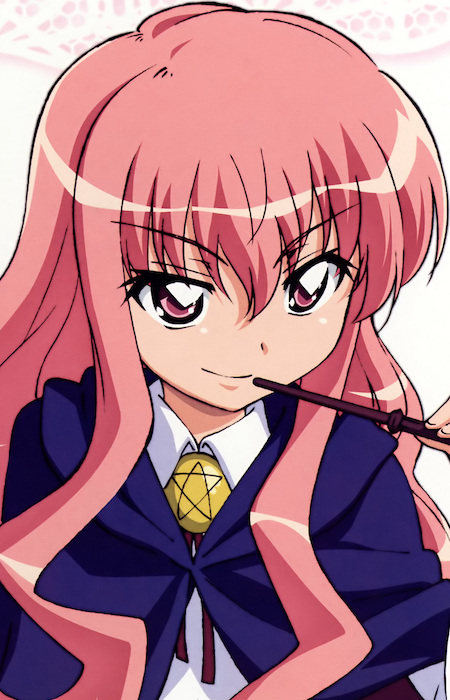
Revered as heroes for their role in defending Tristain, Louise Françoise and her familiar Saito Hiraga face heavy pressure to continue protecting the Kingdom. With an uneasy peace now established within Albion, the newly crowned Queen Henrietta must deal with a political struggle brewing on the horizon. To make matters worse, a new villain has begun plotting in the shadows against the Crown. With the continuing threats that face the Kingdom, Louise and Saito are compelled to work together once more. No longer "Louise the Zero," the young mage's newfound aptitude for Void magic gives her enough power to wipe out an entire village; however, wielding these abilities comes with its share of challenges. As more conflicts arise, the idea of placing honor above oneself is put into question—regardless of their answer, their only choice is to see it through until the end. [Written by MAL Rewrite]
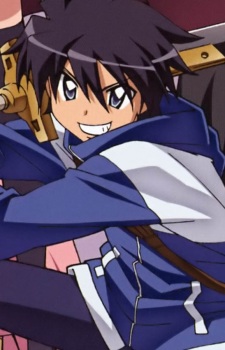
Main
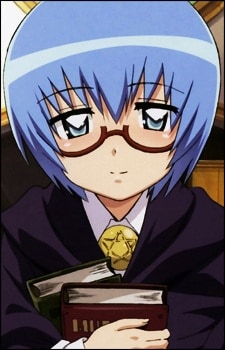
Main
Main
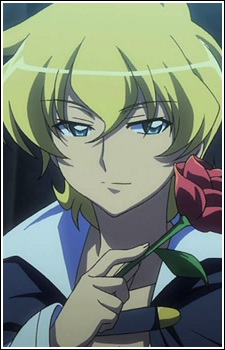
Supporting
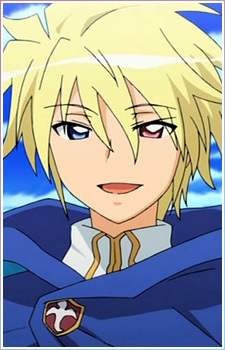
Supporting
Supporting
Supporting
Supporting
Supporting
Supporting
Supporting
DubAwesome
February 20, 2013
Season in mainly about the war between Albion and Tristain. But don't understand this wrong, Its not ALL war. Because there is Comedy in this anime (LOTS OF IT) and it also has its serious and intense moments. And some moments were you just think WTF! this anime has it all! An amazing story, good art, and most importantly, well something That I feel is important that a lot of animes lack, Deaths of characters that you just love. Now dont get me wrong, I'm not for characters dying, but it gets all too boring when you can predict what happens in an anime. and this is not one of those animes. which isexactly why I love it so much. The Genres of this anime or season are; : Action, Adventure, Comedy, Ecchi, Fantasy, Magic, Romance, School life and of course Harem! Now that is a lot of genres. and usually I dislike having many genres in an anime especially because it confuses me quite often, its understandable for animes which have a lot of episodes like Naruto. But for a 12 episode anime to fit this much in one season its really hard to do, or better yet, its hard to make it work well. But despite all that this anime did a really good job. Next im going to be talking about the soundtracks and the music, Im not sure about all of you, But this is something for me that is really important in any anime. If the music is not good and cant suit a certain mood, I probably wont watch the anime, Unless the story has me blown away. Music is what adds emotions to not only animes but also movies, This anime did a very good job on soundtracks and how they used them So in the field of Soundtracks and Music I give this anime a 9/10 The reason why I didn't give it a 10 is because my mind functions a little different and I think other instruments could have been used. I will show you guys an example of what I mean by that. So I will take a soundtrack that is the same piece, but is played with a different tempo and different instrument, Some of you might know this soundtrack. Here is the First Sound track: http://www.youtube.com/watch?v=1Zj4VQy9k30 And Here is the Second: http://www.youtube.com/watch?v=oKYquaCRfIg So I hope you understood what I meant by that. Moving on. Next is my perspective on art. The artwork on this anime was all too good, It could have been better, But in my opinion it could have ruined some parts in this anime, so staying in between cartoon and a little more than mid realistic was a good choice so Artwork gets a 10/10 Next I want to mention the characters. While watching this anime I felt like there are a few characters that should not have been added. or at least should have had a different attitude to what they have. But progressing further into the anime, I did not feel this way any more, mainly because I got used to it, and also because I started thinking that this anime would be a little suckish if they were not there. Characters get 9/10 Next will be the enjoyment: I feel that this is an anime that anyone will enjoy, while watching this anime I did not once look away to play with my rubix cube, or start kinda drawing on my desk or the nearest piece of paper like I would usually do, It was interesting and enjoyable throughout, there was never any boring moments at all So enjoyment also gets 10/10 Lastly I would like to mention the actual story, There has not been a single anime that has less than 26 episodes in one season which is this breath taking. This anime is absolutely amazing and I cant believe that I hesitated to watch it for almost a whole year now. Absolutely incredible, there is not a single word which can defy how amazing this anime really is, Because it truly is amazing! 10/10 And overall rating for this anime is a 10/10
Andristian
May 15, 2010
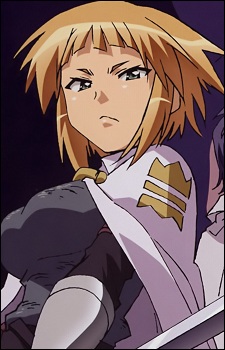
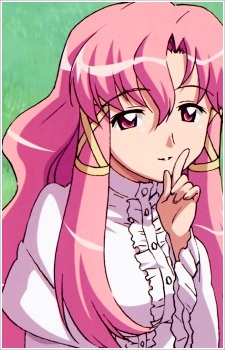
Futatsuki no Kishi, the second season of Zero no Tsukaima takes us back to the magical world where Louise and her familiar Saito continue their adventures. The first season was pretty entertaining and that hasn’t changed much in the second one either. The problem with season two is that most of the episodes follow an individual plot and build up the main storyline slower than what we have encountered in season one. There’s action going on, sure, but the whole bang starts during the last few episodes. Some may not care as much, but it will undoubtedly turn off a couple of less tolerant viewers. Surprisinglyenough, Saito and Louise’s relationship hasn’t changed much. From the very first episode it seems that they’re back to square one and Louise quickly goes back to whipping Saito as if nothing ever happened between them. I didn’t appreciate the lack of progress very much and Saito doesn’t help much either: even though he confessed his love to Louise, he keeps staring at other girls’ boobs and keeps the perverted thoughts coming. There are some nice little touches here and there, and there are a lot more significant scenes that depict the intimacy between Saito and Louise. There are also a couple of new characters introduced and some really add some edge to the overall feel of the series. First you’ve got Louise’s sisters Eléonore and Cattleya, who seem to start playing a significant role in the anime, but are later overlooked and neglected. Cattleya is of more of a gracious and good willed character than her other sisters and only resembles Louise due to her pink-coloured hair. Eléonore, on the other hand, is just as scornful and arrogant as her younger sister and she’s even got her own whip! By far the best character introduced is Agnès, the captain of Henrietta’s musketeer force. She is portrayed as being a tough military leader and her skill in swordsmanship is quite impressive. Many will consider her as being a tomboy and she does have a small story arc going on for a couple of episodes. Her presence throughout the anime is indeed significant and she does give the audience a nice break from Saito and Louise’s tiring situation. Another new character would be Julio Chesaré, a transfer student from Romalia who starts showing affection for Louise, which in turn leads to an interesting and funny conflict between him and Saito. There’s an entire episode devoted to his development as a character, but he turns out to be of little importance after that. The most negative thing about season two is Siesta’s character, which is completely butchered throughout the entire series. Many will recall her as the goodhearted love interest of Saito and a lot actually preferred her to Louise during the first season. There’s an obvious change this time around, though, and the character is completely butchered in season two. The kind and delightful girl suddenly turned into a lying and manipulative bitch that will do anything to sabotage Saito’s relationship with Louise and win Saito over. Not nice, not nice at all. As mentioned before, the story doesn’t progress too well and there are a lot of things that lack balance and don’t make too much sense. It’s still entertaining, though, which is always a plus, especially when you’re talking about anime. There are also a lot more ecchi scenes during season two – there are never enough anyway! The final episode is much more powerful and climatic than the one in season one and there’s a lot more emotion involved this time. There really isn’t any reason to skip Zero no Tsukaima: Futatsuki no Kishi if you’ve seen season one and there’s enough entertainment to keep it from failing, even though it’s not as proficient in substance as the first season was.
moozooh
October 9, 2007
I suppose it's inevitable that Futatsuki no Kishi, being a second season of Zero no Tsukaima, will be compared to the first in one way or another, especially since it's pointless to start the series here, but I'll try to appraise its own merits as well. As implied by the ending of the first season, FnK is a direct continuation of the story. Several new characters are introduced almost immediately, and, while I don't have anything against them, I'd like to point out that they (most notably Agnes) take up quite an amount of screen time with their own subplots, leaving less for the overall story.Thankfully, they aren't dragged out for too long. Particularly refreshing is the noticeable advance in Saito and Louise's relationship, during which several important questions are raised and decisions are made. The animation is done on a fairly high level for the time, although it's not anything outstanding: characters still talk out one side of their face and all that, many scenes lack smoothness—just like in the first season, all things considered. Some scenes, particularly those of burning villages, are pretty nicely done. (I swear I'm not a sociopath!) The sound work borrows most themes from the first season. They're fine for what they are but still come off a little generic. New opening and ending are somewhat enjoyable, definitely more so than those of the first season IMO. As for the characters, the previously known Academy residents (Kirche, Tabitha, Guiche, etc.) have much less screen time. Not sure if I like that; personally, I'd prefer to see them some more. New characters are passable, if a bit queer-looking. Siesta is still there, being apparently dumber than previously. Yes, everything has to be sacrificed for the sake of fan service. (sigh) On that note, what is particularly annoying about FnK is that fan service has increased in quantity, but definitely not in quality. Saito's obsession with boobs might've been funny at first, but the obviously contrived situations become old very quickly. You might not even notice it at first, but by the last episode it will come screaming in your face. Then again, the finale itself is too silly, anyway. All in all, with FnK Zero no Tsukaima keeps being a good addition to your collection as long as you enjoy fantasy harem comedies with a questionably high amount of hit-and-miss fan service. Many will laugh, some might even tear up; overall I think the second season is almost as enjoyable as the first, barring the certain cheesiness and an overall drop in the quality of the comedy. However, it might leave something to be desired when it comes to the story progression, so I sincerely hope they won't drag it out for too long. Any further decrease in pace coupled with an increase in fan service could easily ruin the show. (Editing this paragraph from the future: It did ruin the show.)
jet2r0cks
November 29, 2007
5 WORDS OR LESS REVIEW: Needs a third season As a whole, Zero no Tsukaima’s first season seems better than the second season. If I didn’t like the first season, then that would mean that I probably wouldn’t like the second season, right? Then how come I like the second season more than the first? Read on and I’ll tell you why. The story obviously needed work. I think the problem was that they tried to fit in many different storylines at a time. There was Saito and Louise’s relationship, the ongoing war with Albion and there was Anies’ story too. Each story would have been potentiallybetter as stand alones, especially Anies’ story, but a combination of the three isn’t such a good idea. All three at once can be too much, maybe one or two at a time would’ve been better. Furthermore, I’m really getting tired of the Louise and Saito’s love hate comedy act. It became so predictable – Saito does something that displeases Louise (usually looking at other girls), Louise brings out her whip, screams “You damned dog!” and beats Saito up. It’s been like that since the first season. The only improvement is that both are more aware of their status, that Louise is a noble while Saito is a plain commoner, which is why they’re still not official as a couple. I’m a little disappointed that there was less screen time for the characters from the first season. I’m sure a lot of Zero no Tsukaima fans were disappointed to see less of Kirche, Tabitha and Guiche. A good side effect from that was more exposure for Henrietta - She was barely seen in the first season so I didn’t like her back then, but the second season showed a different side of her which made me like her more. I also like the new characters, Anies and Julio. Anies has such a cool personality and background, while Julio is such a hottie. He is so much better than Guiche. Visually, it looks the same as the first season - same colors, same backgrounds. However, I do think the character design looks different. I think the character designs look more crisp, but at the same time, the drawing became more inconsistent. I’m especially glad that there was less fanservice, or rather, more tolerable fanservice in the second season. Another aspect that didn’t change is the voice acting. I’m glad it didn’t change at all since a lot of my favorite and famous voice actors can be found in the cast list. Rie Kugimiya (Al in Fullmetal Alchemist, Shana in Shakugan no Shana) and Satoshi Hino (Yuuji in Shakugan no Shana, Kouichi in Kimikiss) are still Louise and Saito. There’s also Ayako Kawasumi (Ruriko in Gate Keepers, Ohno in Genshiken) as Henrietta, Yui Horie (Eri in School Rumble, Hanyuu in Higurashi no Naku Koro ni Kai) as Siesta and Takahiro Sakurai (Shun in Gatekeepers, Cloud in Final Fantasy: Advent Children) as Guiche. I also like the music. In fact, I think the music is better this time around. In the first season, the songs were too cutesy, but in the second season, the songs were more striking and had better quality. I really like “I say yes” by Ichiko, which is the OP. It’s so different from all the other Ichiko songs I’ve heard. I think it has more power and emotion to it, which makes it so special. Despite of its many shortcomings, I still like it better than the first season. I thought it was more funny and entertaining, I like the new characters, and I’m especially glad that there was less fanservice this time around. However, the main reason why I like the second season more than the first is potential. I thought the second season had more potential than the first, and I want to see that potential in a third season.
Pontifus
April 16, 2008
I thought Zero no Tsukaima would provide nothing more than shallow entertainment, and I was quite wrong ... but its sequel, I decided, couldn't possibly live up to the standard set by the original. After all, Zero's effectiveness as a story may have been a fluke, a fortunate accident. Fluke it was not, all told. I'd still recommend the series to anyone whose tastes seem to run in the general direction of fantasy/harem romance/politics. But despite its strong latter episodes, Futatsuki no Kishi does suffer from a few weaknesses its predecessor managed to keep to a minimum or avoid entirely. Plot: Again we join Louise and herhapless familiar Saito at the Tristain Academy, where their relationship has grown marginally stronger. I have no complaints with how the whole inevitable Saito/Louise pairing is portrayed at first; we're given the impression that things have moved forward for the two, despite Louise's fondness for brandishing that riding crop, and it's an impression we need to be given if we're going to believe in the two as a viable and vital couple. When relationships hit a standstill in the real world, of course, things tend to go sour very soon after. That said, one of the weakest points of the plot is its handling of the central romance. Louise and Saito make progress with one another in fits and starts, alternating between trite slapstick and almost extreme affection. It's the slapstick that bothers me most, partly because there's so damn much of it, and partly because the plot occasionally has to contort itself in unlikely directions simply to land Saito in unfortunate positions of lechery. Too many episodes are devoted not to progressing the underlying series of political events in any significant way, but to progressing Saito toward a pair of breasts, and Louise toward Saito and said breasts at just the wrong moment. And when they do get along, there are one or two moments of startling physicality that may make it a little difficult to fully appreciate (understandable as these moments may be, Saito and Louise being healthy teenagers and all). Don't get me wrong, though. Futatsuki no Kishi does have its truly sweet moments. The last episode really nails it, but as it's the last episode, I'll refrain from singing its praises too loudly here. Due to Futatsuki's focus on the central romance's sporadic twists and turns, the political storyline suffers -- a real disappointment to me, as the two arcs seemed to work so well together in the first season. The first half in particular often interrupts the continuity with breasts, Saito's appreciation thereof, and Louise's resultant disapproval. The shift toward politics in the second half feels like an abrupt temperature change at first, seemingly for the production team as much as we viewers, as the general organization of episodes seven and eight came across as a bit shoddy to me. When the suddenness levels out, however, we get a solid final four episodes. If you were a fan of the politics in the first season, hang in there; it's ultimately worth it. Characters: I have two major problems with the characterization in Futatsuki, the first being inexplicable personality shifts. The first season gave us a surprisingly strong cast, and I looked forward to said cast developing further from where they left off, but this isn't always the case. Saito, for example, seems at times to have been demoted into your average, everyday pervert. Siesta's resolve to wrest Saito's affections from Louise isn't surprising, considering her acts of momentary boldness in the previous season, but her willingness to throw herself at Saito is a bit disconcerting. These divergences don't seem to be indicative of the kind of change one thinks of when discussing character growth. Secondly, I didn't appreciate the marginalization of some characters. New characters Agnes and Julio ultimately earn our interest, but season one set Kirche and Tabitha up for a bit of explication, and we hardly see them at all this time around. I feel bad for Tabitha's seiyuu, having to make the trip down to the studio to record a grand total of three or so lines. With Tabitha and Kirche out of the way, it goes without saying that Guiche and Montmorency don't get much screen time, either. On the other hand, those recurring characters who are further fleshed did good things for me. I couldn't help being interested in Colbert's history and plight, and Delfringher, who has to be the cleverest talking sword in all anime-dom, is even more hilariously pithy than before. Even Henrietta shows her many good and bad sides this time around. Setting: Tristain Academy hasn't much changed, and, had the majority of the show been set therein, the place may have gotten old. Fortunately, we're introduced to a variety of locales as things move along -- a surprising number, really, considering how much of the plot is fanservice-centric (Saito doesn't let circumstances keep him down, so to speak). Our heroes visit such settings as an underground vault, a snowy mountain, and Louise's ample home, traveling between Tristain and Albion, the flying faux-Britain. We also gain insight into the general level of technology with the introduction of Tristain's musketeers. Despite this title, the guns employed in Futatsuki are decidedly similar to rifles, in terms of accuracy; it seems that magic coexists with a higher level of technology than was previously made clear. By implication, this tautens the dynamic between aristocrats and plebeians, as those not gifted with magic are proven to be perfectly formidable marksmen. Perhaps the aristocrats' control is not as total as it seems. Art: Futatsuki brings back the same clean, simple, Shakugan no Shana-esque art style as the original, retaining its reputation as the pastel equivalent of Shana's darkness and fire. Interestingly, the animation itself alternates between very good and shoddy, particularly where fight scenes are concerned, but it balances out in most episodes to be more than acceptable. I'm happy that J.C. Staff decided to forgo the use of 3D computer graphics in rendering flight sequences; such graphics have their place, that place being Last Exile and not here. Sound: Based on music alone, I would have rated Futatsuki below its predecessor in the sound department. Music throughout the series often comes across as generic action fare, and besides, the opening and ending themes didn't do as much for me this time. Maintaining the score at 7, however, are certain scenes in which the voice acting is absolutely dead-on. Futatsuki's all-star vocal cast definitely delivers. Verdict: Personally, I prefer my shows to be solid from beginning to end, rather than loaded with meaning, progress, and spectacle in the final four episodes. Either way, Futatsuki no Kishi turned out to be worthwhile thanks to that final stretch, particularly for a viewer who enjoyed the first season as much as I did. It's ultimately worth your attention as a follow-up to Zero no Tsukaima and a segue into the forthcoming season three, but be warned that it has its shaky spots.
Rank
#2635
Popularity
#473
Members
527,635
Favorites
1,297
Episodes
12