Kyousougiga
京騒戯画
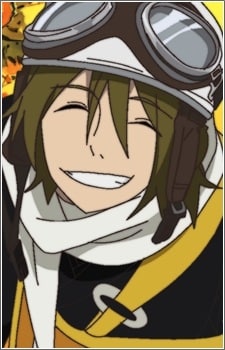
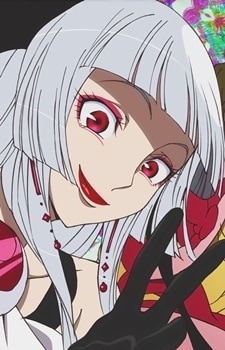
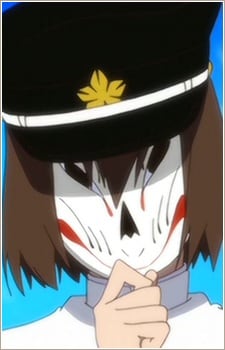
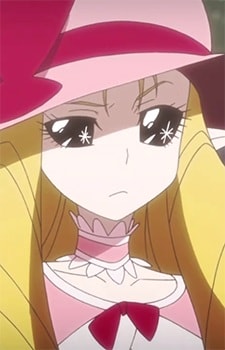
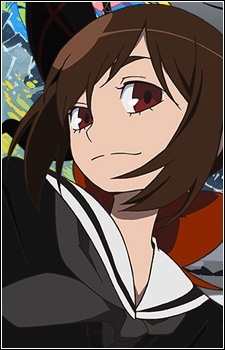
Long ago, there was a monk named Myoue who could bring anything he drew to life. He quietly lived with his wife Koto—a black rabbit in human form—and their three children: Yakushimaru, Kurama, and Yase. One day, the high priest of the land concluded that Myoue's drawings caused too many problems for the locals and ordered him to find a solution. In response, the family secretly fled to an alternate world of Myoue's own creation—the Looking Glass City. Everything was peaceful until Myoue and Koto suddenly vanished. Their three children are left to take care of the city, and Yakushimaru inherits Myoue's name and duties. Stranded in this alternate world, their problems only get worse when a young girl—also named Koto—crashes down from the sky and declares that she is also looking for the older Myoue and Koto. Armed with a giant hammer and two rowdy familiars, Koto just might be the key to releasing everyone from the eternal paper city. [Written by MAL Rewrite]
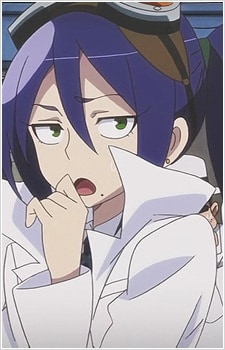
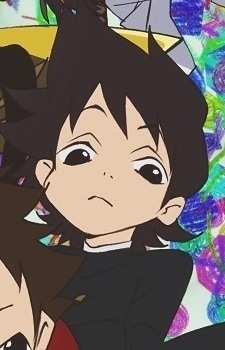
Main
Main
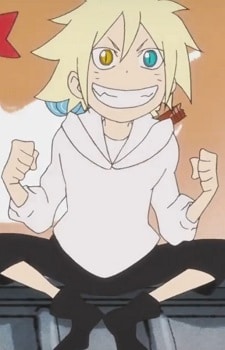
Supporting
Supporting
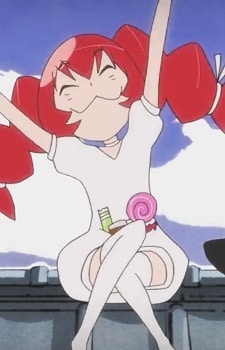
Supporting
Supporting
Supporting
Supporting
Supporting
Supporting
Stellio
January 2, 2014
A journey into Kyousou Giga is an experience like no other. It is perhaps, out of all things, most analogous to wandering in a circus, stumbling upon the Hall of Mirrors, and coming back having witnessed a sensational light show. In other words, Kyousou Giga is a show that stands out for its use of exuberant visuals; it displays a charm that is unique and impressive. However, looks can often be deceiving, and thankfully, this is not the case for Kyousou Giga. Admittedly, the beginning seems bizarre; lots of random, unrelated events occur spontaneously. Nonetheless, a darker narrative, which Kyousou Giga skillfully weaves withits initially lighthearted tone, later takes center stage. And not only does Kyousou Giga manage to blend these heterogeneous elements together, it does it very well. It’s like seeing a constellation of fireworks as they meander into the air, only to explode in a colorful harmony. And never before have fireworks looked so beautiful. Set in the Mirror Capital, Kyousou Giga begins with the Council of Three. The Capital is a painting originally created by a monk named Myoue, who, gifted with supernatural abilities, can give life to anything he draws. Lady Koto, by way of Myoue’s magic and an encounter with a bodhisattva, transforms from a drawing of a black rabbit to a human, and later confesses her love to Myoue. Myoue soon reciprocates Lady Koto’s affection, and creates the Capital, as society became increasingly intolerant of his supernatural acts, to escape from reality and to foster their family. Their family is composed of three children; Kurama and Yase, created from Myoue’s drawings, and Yakushimaru, a human being. The Council of Three are the three siblings who, after the sudden disappearance of their parents, took over the Capital. One day, as Yakushimaru is observing the Capital, a lightning storm comes by, bringing in its wake an eccentric girl called Koto, who’s searching for a black rabbit. By a storm Koto arrives, and what a storm Koto will leave. As it turns out, Koto is a catalyst for trouble and chaos. Almost every scene Koto lands on is bound to be marked by havoc: wrecked either by her whimsical tendencies or her monumental, destructive hammer. The first half of the story does an excellent job of establishing her impulsive character and the second of fleshing it out. Particularly, as the central mystery of the black rabbit is slowly unveiled, Koto begins to gain a sense of belonging. As she searches for something that’s missing from her heart, the Capital becomes her compass, her guidance, and her home. Every character she stumbles upon gradually shapes who she is, and by the end, Koto has found the ultimate bliss. Thankfully, this development is paced properly and thereby blossoms naturally. Koto also brings about excitement to those surrounding her. Acts of kindness and acts of joy, Koto’s true talent lies with her ability to inspire change by way of her impetuous acts. Her interactions with other characters, through thick and thin, effectuate in the development and characterization for said characters. For instance, one of Yase’s notorious temperamental outrages is stabilized by Koto when, after a duel of fists, Yase is able to calm down and reflect upon the kindness around her, a kindness of which Koto offers to those who need it the most. Afterwards, although Yase does not show it immediately, she begins developing a faint, more sympathetic aura than before. Subtly, she matures from a sprout to a flower. On another note, Kyousou Giga also enriches its narrative by paying homage to Japanese folklore and Buddhist tales. And it does so excellently. Extrapolating on folklore such as the “Moon Rabbit” or “Scrolls of Frolicking Animals," Kyousou Giga breathes life into its mystical characters—imbibing the cultural significances that are entailed by said folklores. It is as if Kyousou Giga is taking inanimate legends and rendering them into contemporary art form—as if to yield the perfect balance between faithful “adaptation” and its own creative license. Luckily, this means that even side characters—many of whom are caricatured and used as a comic relief—are given flair from the past: colorful spirits that roam around nonchalantly under Yase’s rule, anthropomorphic animals that speak human tongue, and so on. Even an ordinary motif such as the recurring paper-cut crowds from metropolis can make for a great enhancement to the vibrancy of the Mirror Capital. The presentation is, by and large, a combination of unique visual designs and stellar direction. When likened to Koto’s wackiness, the Mirror Capital is portrayed to be full of mundane follies and mischief. Moreover, Kyousou Giga is able to, in tune with its aesthetics, construct a universe supernatural in concept, but down-to-earth in essence. There's nothing quite like the way that Kyousou Giga fills its canvas: covering it initially with unearthly shapes and vivid imagery, only to be animated by a brush that conjures lifelike wonders. The end result is an unbelievably vibrant piece of work that is both pleasing to the eye and immersed with depth. Of course, this is not without the help of backdrops that depict all four seasons of the year; from the bountiful nature of the spring to the scathing effects of the wintry snow. Similarly, the OST serves its purpose well. Powerful during action scenes and minimalistic when needed to be, the OST complements the elegant animation. A prominent theme in Kyousou Giga is the importance of familial identity. Many characters evaluate their self-worth entirely upon the status quo of their family, and for the Council of Three, who have a dysfunctional family, that is very little. Beautiful as it may be to see Koto develop her own take on her identity, it’s perhaps more joyful to witness the subtle transformations that overcome the three. Through trials and tribulations, they find that family is more than a superficial tradition to live by. To be a family means to make mistakes. To make silly decisions, to argue about frivolous matters, and to spend time leisurely: this is what a family does. It, akin to all things in life, isn’t perfect, and Kyousou Giga tells us not to hinge or weigh ourselves based on mistakes of the past or decisions made in the future. It tells us to live freely in the present, as Koto does, and to see the silver lining in the clouds. Much of this is expressed via the lighthearted mood of the series; the comedy and the playful tone. Koto's whimsical actions and her buffooneries, more than the purpose of entertainment, resound the central theme of living capriciously. Without Koto, the Council of Three would’ve spent eternity waiting; without change, the present stagnates. Koto’s greatest tools to inspire change are her hammer and smile. All this is to remind us to live life to the fullest, joyfully. Kyousou Giga is an impressive anime. Rich in folkloristic imagery, wildly creative in direction, and breathtaking in visuals, Kyousou Giga is certainly one of the best anime in recent years. Even with action, drama, and fantasy, it is able to harmoniously blend these elements together without homogenizing its creative, distinct flavor. Be it fireworks, a painting, or a Hall of Mirrors, Kysousou Giga is a work that deftly conveys its messages by way of its memorable characters, narrative, and production. A journey into Kyousou Giga is an experience like no other.
Stark700
December 20, 2013
A dream is like an imagination. Sometimes they feel so real but other times they fade away like illusions where you’ll never be able to reach it again. But dreams sometimes can be larger than life and when we wake up, we may feel surprised. Kyousou Giga is one of those series that surprised me quite a bit despite feeling like living in a dream. It has a sense of uniqueness and style that will lure you in as if you’re in a dream world but everything feels so real. Kyousou Giga is an animated series that is an expanded adaptation based on the ONA ofthe same name produced by Toei Animation. The ONA attracted enough attention that a full length TV series now stands itself to expand upon the story. Despite the story feeling like a dream, there is a real feeling of various emotions that presents this show as an extravaganza you will not forget. It’s a dream you’ll wish you won’t be waking from. The setting of the series takes place called Kyoto. However, it’s nothing like the city as we know it in Japan. In fact, there are supernatural inhabitants sharing the same space as humans and mysterious events takes place. The city itself also has an origin that traces back its roots to some prominent characters. More importantly, we find out that its rulers are three children of this city. The series depicts of a young girl named Koto as she embarks on a journey to find her mother with the help of her two familiars. Kyousou Giga’s story feels like a dream with a vast amount of imagery and portrayal of imaginations. Rie Matsumoto whom is in charged with the direction takes her skill of directing to an unparalleled level. The way the show handles itself incorporates many motifs and allusions. There’s the style of world crossing phenomenon between the city of Kyoto and Mirror City. Then, there is the progressing story that ties every episode together through flashbacks, feelings, and character dynamics. It’s not just about a story of saving worlds or accomplishing a goal but crafting a legend to tie its themes together for fans to remember by heart. For the characters, this series portrays them in a variety of ways that are memorable because of their highlights whether it’s joyful or tragic. For starters, Koto can be initially seen as a young girl with an ebullient personality and a head full of curiosities. On the surface, she can be depicted as a typical tomboy whom gets into fights and arguments with others. However, deep down, she can also be an honest girl especially towards those who she cares for. Among those who she interacts with in the show includes Myoe, a young Buddhist monk that looks after them as young siblings. He is human but more importantly has a tragic past as we glimpse in various flashbacks in this show. Throughout the series, he plays the role of a guardian angel for Koto especially during her moments of despair. Usually, these results in her own insecurity and self blames for various events. With a tragic past of his own, Myoe hopes others will not fall under the same boat as him. This is seen several times throughout the series where he snaps Koto out of her dark fantasy and back into reality of what’s there. However, his own inner desire often brinks on the feeling of despair, so much that at one point he wishes to be done for. It wonderfully presents these two characters as ways we can appreciate and feel its realism despite being set in a fantasy world. That’s just the tips of the iceberg though. Other characters such as Yase and Kurama has their own problems ranging from self-indulgence and a feeling of escapism to another world. At the apex of one event, Yase loses one such possession that she deeply cared which leaves a hole in her life to be despaired. It’s through many of the scenes of this show that depicts tragedy among the characters. Yet, the direction of the series is wonderfully presented thanks to its construction of its rich details. These include the flashbacks involving Myoe where viewers will personally glimpse at his tragic past. It creates that feeling of sorrow where character deals with loss. Losing something is never easy in life whether it’s a beloved sibling, a valuable property, or an unforgettable memory. Kyousou Giga creates an atmosphere that makes viewers feel in a way that they can hold dear. Despite the moody atmosphere at various scenes of the series, there are also joyful moments such as the original characters in their past times. Myoe (original name: Yakushimaru) also seemed to have a happy life after being adopted. The parental feelings that the show possesses is also touching at various circumstances especially with engaging dialogues and movements of the body. The life of a past Myoe marked with a mixture of calamity and serendipity crafts a powerful story. The action of the series also present itself well thanks to its choreography. Koto explodes into the show with energy while at the same time making her presence well known. Some of the action itself sparks with intensity with intriguing dialogues as well. The feelings often ranges to extreme during some of these action scenes such as Yase’s rage. Similarly, the comedy of the series is attractive with little gags without being overzealous on timing. No fan service. No awkward camera angles. No stupidity. It sets prestige on the entertainment value combined with humor and action that makes up itself to deliver what fans deserve. At some instances though, the series might be a bit confusing to get engaged into. The small cast of characters can take a while to get used to. The length of the show itself also might have omitted some more important themes. Also be aware that some of the scenes from the original ONA will be reused given this set as an expanded anime series. The idiosyncratic style of the show might also not be for what everyone is used to. Sure enough, there’s the engaging dialogues but sometimes the family drama could be repetitive. All things aside, the show still explores a wide spectrum of subjects to present a wonderful experience. The art style of Kyousou Giga is quite unique with touches of fantasy. Kyoto is depicted as a dream like city where realism is void but instead filled with otherworldly phenomenons. The characters are designed to look simple but possesses certain aspects that makes them stand out. Koto looks like an average teenage girl. Myoe is portrayed as a human and thus looks like one. On the other hand, characters such as Lady Koto and Yase gives off a vibe of supernatural. The familiars that travels with Koto also presents a feeling of fantasy. Soundtrack wise, the series does present itself quite well. Measuring on voice acting talent, Myoe holds the title for his mannerisms because the way he tries to balance between his feelings of loss. Koto is portrayed by the queen of tsundere, Rie Kugimiya. Here, she takes on the role of a young girl filled with energy. Rather than looking for love, she is looking for her mother that is quite different than her better known roles. The OST is fairly noticeable with its powerful vibrations that covers the show’s themes. Whether they are sarcastic, eerie, or emotional, all of them are pleasurable that matches its style. Furthermore, later episodes shows an evolution of the ED songs with little gags added in to create more sense regarding our main characters. The OP song “Koko” by Tamurapan is catchy with its visual portrayals and fantasy elements. The camera rolling captures some of the characters’ body movements as well. The end game of Kyousou Giga might not be to stick your eyes to the screen and try to absorb every single detail of the series. Instead, it’s to appreciate the style and themes with a credible setting despite being portrayed like a dream. The influences the show possesses can be touched upon Buddhism, Alice in Wonderland, and the real Kyoto itself. The direction of the story is wonderful thanks to its themes, flashbacks, and colorful cast of characters. It might even feel like a dream at some moments with all the feelings mixed in or the fantasy lives of our main characters. Still, it’s a dream you’ll wish will last forever, ever…and ever.
xplosive59
December 20, 2013
Every once in a while, there is a show that reminds you why you love the medium in the first place. May it be through the narrative completely enthralling you, the story resonating with personal events or just because it strikes a chord and makes you emotionally invested in what is going to happen. Kyousougiga is that show, and to me it is something that you can only really find in this medium. One of the first things to notice about Kyousougiga is that this is not the first Kyousougiga anime. The original was released in 2011 and was a 1 episode long ONA produced byToei Animation and then followed up in 2012 with a 5 episode long OVA series made up of 10 minute long, seemingly unconnected character profiles. So, do you need to watch these two previous shows to watch Kyousougiga (TV)? Not at all, everything from the previous two shows is repeated and expanded upon in here with episode 0 being a straight up remake of the ONA and episodes 2-6 covering what were the OVA’s but in more detail. This however does not mean it is a straight up continuation, a lot of themes and story elements are changed entirely and is in all around different experience in the second half. This also means that fans of the original ONA and OVA’s may be disappointed in the drastic changes made, especially due to it being more exposition driven than the previous iterations but for the most part it carries off this new direction well. The story is relatively simple yet undeniably complex at the same time, with a narrative that fluctuates between linear and non-linear story telling it essentially creates a jigsaw like plot that slowly evolves as the storyline progresses and the true nature of certain individuals and events come into perspective. What starts off with what is essentially an anime interpretation of the classic Lewis Caroll novel Alice’s Adventures in Wonderland quickly becomes something else entirely, because at the heart of it, Kyousougiga is a story about family and self-discovery yet at the same time so much more. This show borrows heavily from Buddhist ideology, the Choujuu-giga, the Buddhist tale of Hariti/Kishimojin, the history of Kyoto and is also very reminiscent of classic anime such as FLCL, Paprika and The Tatami Galaxy in its presentation and narrative. All of this make Kyousougiga a show that is surprisingly more complex than it appears at face value yet is completely enjoyable to someone who does not want to see how deep the rabbit hole goes. The show does suffer in the second half due to its low budget as there are many scenes which rely heavily on exposition. This unfortunately makes the second half of the show very divisive but all the themes that were in the first half are still there and the story takes the utmost logical route possible for what it is. This however is still Kyousougiga’s weakest element but I feel all of things great about Kyousougiga more than make up for it. And no need to worry, the ending is also excellent and ties up all the messages and themes nicely while returning to the quality of the earlier episodes. One major advantage that Kyousougiga has over other stories which deal with a character “going through the looking glass” is that the characters here feel like actual people with realistic motivations and characteristics and are not just an embodiment of the world in itself for the most part. A large aspect of the story just thrives on pure character development for the Council of Three which the story completely revolves around for the majority of the story and by the time that the true plot kicks in circa-episode 6 you do feel invested in these. That being said, there are a number of side characters that could have been implemented better, mainly for those that make up the entourage of Kurama and Yase such as Shoko and Fushimi and Myoue/Yakushimaru’s girlfriend who just seems to exist for some reason or another but for a 10 episode series it is done well enough for the majority of characters still to be memorable. One of the major factors that gathered my interest in this show is art style. Needless to say it is excellent with a lot of focus on colour and lighting which really support the sporadic tone of the show. There is a lot of subtlety in the art itself such as Mirror Kyoto being a lot more vibrant and colourful than its real world counterpart which focuses on shading and almost washed out colours to contrast with the unique character designs. There is also an undying playfulness about the art as there are many scenes where the artists incorporate watercolour like elements to make them stand out or put emphasis on the backgrounds while never being in your face about these elements like a show such as FLCL would. The use of lighting and shadowing in this show is fantastic which really bring to the forefront the amount of detail that the artists put into every scene, and there is a lot of detail. That is what I personally think the show excels in, no nook or cranny is underutilised and every scene is filled with trippy, psychedelic visuals all the way through to ultra-realistic and complex structures and backgrounds. However the same cannot be said about the animation at parts. Don’t get me wrong when it is good it is some of the best, but when it is bad it is very reminiscent of the infamous elevator scene in Neon Genesis Evangelion. This is one certain scene where Koto is standing at a station, unblinking, while CGI shenanigans occur in the foreground as well as the soon to be infamous “walking exposition” scene in episode 9 due to budget constraints. Luckily these scenes are few and far between but they do pull you out of your emersion at crucial points in the story. However, the shows particle effects used and the animation put into the action orientated scenes more than make up for it as they are gorgeous, everything from snow to dust flickering in the light looks realistic and really well down and really transform a scene where there is very little character movement to something very dynamic. There is also a reliance on CGI, and usually I absolutely hate CGI but here it is done pretty tastefully here. The majority of the CGI consists of indescribable light structures and computer generated people that are used to fill up space in mirror Kyoto or hanging ornaments inside the Council of Three Chamber, other than that it was relatively unnoticeable and fit the show pretty well. Where this anime really shines is its soundtrack by Go Shiina. This may be the first time since Yoko Kanno’s work on Ghost in the Shell: Stand Alone Complex that a soundtrack has been completely diverse yet fits the tone and setting perfectly. The pieces of music used in the show range from minimalist and melancholic Piano sonata’s such as the track “Promises in the Snow” all the way through to the track “Shoko” which is a strange mixture of Metal, Hip-Hop, Classical and Electronica which comes together surprisingly well. However, the real meat of this soundtrack comes from the absolutely incredible symphonic pieces which are very reminiscent of Joe Hisaishi’s work on Princess Mononoke and capture the emotions and events shown on screen incredibly well. I wouldn’t usually talk about the opening theme of show, but damn, the track Koko by Tamurapan may be the one of best Anime OPs I have ever heard really, it captures the feeling of the show perfectly and is just is bloody good song all around. There is also the insert song “The Secret of My Life” which is not only a great track, but is used exceptionally well in the context of the show. To me Kyousougiga is a masterpiece as it is everything an excellent anime should be. However, its budget really holds it back from being perfect and that is where the flaws really appear so I cannot give this show a 10 from an objective stand point although I personally think it does deserve it on enjoyment alone. The show is full of heart and passion and I really feel that the people who worked on this really did make the best of the resources that they had and with a higher budget this show would be perfect to me. Pros: + Absolutely beautiful art and soundtrack. + Great characters and a unique story. + Surprisingly deep and thought-provoking. Cons: - The narrative and animation is weaker in the second half at points. - Fans of the ONAs and OVA may be disappointed in the change of direction. - Some side characters could have had better development. 9/10
pakoko
July 14, 2014
Kyousougiga is like a book you randomly stumble upon that you end up reading until you finish it in one-go. Amidst the wide array of classics, bestsellers, and other popular books, Kyousougiga as a book would stand out quietly, waiting to be discovered. And for those who do eventually discover it, Kyousougiga rewards them with a refreshingly original and beautifully heartwarming story. One peaceful night, a tomboyish girl named Koto accidentally crashes down into the “mirror capital” named Kyoto while chasing a magical black rabbit. In this weird city that models itself after the old medieval Kyoto, Koto discovers her three long-lost siblings that havebeen trapped in the city for a long time, waiting for their parents to come back. Follow Koto as she tries to mend broken family ties and reunite the family once more, all the while getting into all sorts of trouble. A fitting description of Kyousougiga would be that it pleases the eye as much as it pleases the heart. Initially, you’ll be drawn in by fantastical world reminiscent of a Japanese version of Alice in Wonderland. The stunning and almost otherworldly sceneries and other eye-catching visuals (like those you would see in a fantasy game) give the show a certain charm unique to its own. You’ll then be drawn in a second time by the heartwarming story of the love and rebirth of a family, in which each family member undergoes some sort of maturation and self-discovery. Before I get into the family members, it’s worth mentioning that Kyousougiga has quoted lines directly from Lewis Carroll’s poem, “Life is but a dream.” The poem is basically about the inescapability of time and the “loss of innocence” children experience as they transition into adulthood. I mention this poem because all the characters, both the children and the parents, go through this “loss of innocence” and move on to become more mature over the course of the anime. What makes these stories somewhat bittersweet but also emotionally satisfying is that the anime dedicates an episode to explore each member of the family to really help viewers understand their thoughts, their personalities, and their actions. Even as a 1-cour, Kyousougiga doesn’t rush the plot but rather focuses on the characters to build an emotional connection between the viewers and the characters. As some of these characters start to change and discover more about themselves, one can’t help but love the characters even more. The fact that the character designs are distinctively creative and unique help to further stand out the characters and give them identities like none other. Now, it is a surprise (certainly a relieving one) that Kyousougiga managed to air 10 episodes. Considering the premise of the show and the fact that the five ONAs released beforehand were rather random and perplexing, Kyousougiga was definitely at risk for not even making it to a 1-cour. Moreover, Kyousougiga's lack of budget shows in some parts of the animation, especially when the show literally copies and pastes whole ONA episodes into its episodes. The newly animated episodes are definitely well-made and beautiful to look at, but towards the end there is more dialogue than action rather than the reverse. In addition, the dialogue is rather lengthy and drawn out, slowing down the pacing and overcomplicating the story. However, Kyousougiga makes a genuine attempt to make up for its flaws. Too many times I see 1-cour anime giving up on wrapping up the anime well and ending it quite abruptly without explanations. In the case with Kyousougiga, however, the dialogue towards the end actually helps explain and make sense of everything. Sure, it takes at least twice or thrice of watching to understand fully, but once understood, viewers will realize that Kyousougiga wraps its complex story up so well that it is almost frightening that they did it in just 10 episodes. As for the animation, I understood the budget situation so I didn’t mind it at all. In addition, what makes this anime even better is the anime's attention to detail. It is full of symbolism, subtle details, references to Buddhism, and allusions to Lewis Carroll’s, “Through the Looking Glass.” All of these components are actually really important for the show because knowing some of the background knowledge about Buddhism or analyzing some of the symbols and details leads to a deeper understanding of the characters and the plot. For someone who loves to challenge himself to really get to the heart of what the show is trying to say, Kyousougiga was like a gold mine waiting to be struck. To end, here are some miscellaneous components that made Kyousougiga better: Music: The soundtrack was the icing on the cake. With music ranging from classical to electronic, there is a wide array of soundtracks that fit the overall uniqueness of the anime. The opening song, “Koko” by Tamurapan, and the insert song, “The Secret of My Life” by Aimee Blackschleger (who sang DOA for AOT), are also still two of my most favorite songs, regardless of genre. The opening song fits perfectly to the anime because the emotionless vocals coupled with a cheery tune gives the song a feeling of melancholy and a sense of longing for loved ones. Special episode: Usually, special episodes are unnecessary summaries with pointless commentaries. However, the special for Kyousougiga has proved me that some specials are worth watching. In the special, the voice actors visit places in Kyoto that were used as models for the setting in Kyousougiga, and in the process they went over some important background details that actually helped me understand the show better. The anime’s attention to detail was a pleasant surprise for me, and made me appreciate the anime even more. *^*^*^*^*^*^*^*^ Story: 10/10 Art: 9/10 Sound: 8/10 Character: 9/10 Enjoyment: 10/10 *^*^*^*^*^*^*^*^ Overall: 9.2/10 P.S. If you have any questions regarding Kyousougiga, leave a comment on my profile or send me a message!
Pylae
June 4, 2015
Beautiful artwork, disappointing plot development. Watch only if you don't mind unexplained motivations and emotional scenes that carry very little weight (due to unexplained or weak motivations). It could be just me and my preference for certain types of plots, but I thought this held a lot of potential and was disappointed as a result. Reserving the reveals for the end left it feeling like a confused, mish-mash attempt at an ending with loopholes to make it work. It simply wasn't believable, even given the myth-like feel that it has. There's beautiful artwork and an interesting plot line surrounding a very strange family (to say the least). Theartwork is clean, colorful, and almost radiant, matching its strange characters in turn. I appreciate how the anime crosses weird, clean-cut, advanced technology with folklore to create strange and interesting characters. Character-driven, there's a distant plotline that's followed, but the characters' internal struggles take front seat until the end (when the makeshift ending happens). Unexplained motivations, again, made for an unbelievable ending, but if you are willing to suspend belief and accept the fact that the ending will be sub-par, at best, then accept your fate and give the anime a shot.
Rank
#1420
Popularity
#1326
Members
208,324
Favorites
2,060
Episodes
10