桜Trick
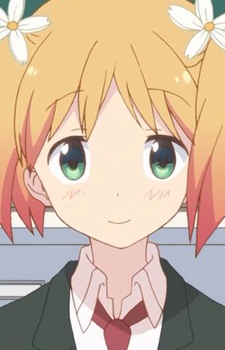
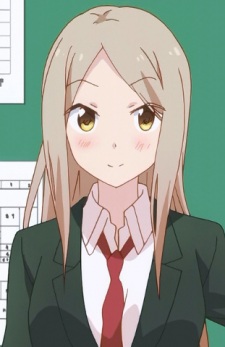
Having been best friends since middle school, Haruka Takayama and Yuu Sonoda plan to attend Misato West High School together. However, despite being assigned to the same class, a cruel twist of fate has them seated on the opposite ends of their classroom! To make matters worse, their school will shut down in three years, making them the final intake of first-year students. Undeterred by this chain of unfortunate events, Haruka is set on sticking with Yuu, striving to create many wonderful memories with her. Much to Haruka's jealousy however, Yuu's easygoing demeanor quickly attracts the attention of their female classmates. Sympathizing with her friend's growing insecurity, Yuu ends up sharing a deep, affectionate kiss with her in an empty classroom. The act intensifies their bond as "special friends," gradually revealing a different aspect to their unique friendship while also inviting new conflicts. [Written by MAL Rewrite]
Main
Main
Main
Main
Main
Main
Supporting
Supporting
Supporting
Supporting
Supporting
chokoichigo
April 13, 2014
My love for this anime is endless! It's filled with fluff and moe characters who look at least 5 years younger than their actual age, like so many other animes, but still it manages to set itself apart. What I really like about this anime is the fact that a romantic relationship between two girls is not seen as completely normal, because this gives it a more realistic touch, unlike animes like Strawberry Panic! where literally everyone is a lesbian. The anime nicely balances the 'oh, nobody should know, since we're both girls' and the general development of one's first romantic relationship, like 'What should I expectfrom my partner, and what does they expect from me?'
jgames111
August 6, 2017
Supporting
Yuri lover (and people who actually use the word shoujo ai) must watch this. Is a must watch and is in every yuri bible book. This is the holy grail of yuri. A show that has the first episode with two girls kissing. Yep, that's right, no final episode for that final kiss is there from the get go. This is Sakura Trick So story wise, it can be sum up by the op, two girls kissing. Yeah at first glance there not much to this. It just follows two friends who start kissing each other and are perfect for each other. Their biggest problem isthat they are both air heads who are embarrassed by their love to each other. Is honestly quite cute and adorable and just fill my heart with way too much sugar that I can't believe my heart did not explode from watching this show twice. That being said there much more subverting going on here. For one the two girls kissing each other in the first episode instead of having it build up. Second is the fact that they are both airheads, which is something new and makes for a lot of good comedy. The third is that the show seems to have lots of couple in this story in different phases. With one starting to date, the other already dating, one character discovering her sexuality and an other two friend potentially blooming. In many ways, the girl discovering her sexuality is your typical yuri main character being somewhat the side character which was neat. That being said only the two main lead and her sister get the main focus which is a disappointment as it would have been great to see more from the other characters stories. While I do like the main couple Haruka and Yuu (my favorite couple in fiction), they could have had one less episode dedicated to them. That being said episode 8 was truly heartwarming. Also to note the romance and the comedy is done great, but yeah there could have been more done with the message. The fact that the main focus is two person being embarrassed by their feeling might put off people who don't want just fluff. Which while I don't blame those people, the chemistry is just so strong and the drama with the sister is very interesting. Art and sound: The animation is great, is Sentai who usually do a competent job. Nothing amazing, but good enough to accommodate the jokes and help the heartwarming moment. Characters: Yuu and Haruka are amazing. My favorite couple ever. Never seen two airheads dating each other that much and this just work wonderful with Yuu being the childish brat idiot, while Haruka is the overjealous idiot. Is surprisingly work. Granted if you don't like their character you are somewhat out of luck as aside from Yuu sister, the other character have way less screen time. That not to say the other characters don't get screen time, but they could have definitely had more screen time. They are still a bunch of fun and add to the comedy and serve somewhat a reflection on Yuu and Haruka relationship, but I wish they could have been focus more. I mean Kotone and Shizuka relationship is your typical rich girl and best friend scenario with all the cliche minus the tsundere surprisingly enough. That being said they definitely had more substance and drama in their relationship that could have been worth looking into more. That being said they are still great when they are on screen just like the rest. When my biggest complaint with characters is I get to see less from other characters while still loving the main lead that get too much screen time, you must be doing something right. So overall this messy reviewer will said that Sakura Trick is definitely a must watch Yuri (shoujo ai whatever) anime.
Micsupreeme
February 24, 2015
~A personal journey into the world of forbidden love, buried under a pink veil~ On the surface, Sakura Trick doesn't seem like the kind of anime to have many unique or redeeming elements. Its vibrant, predominately pink colour scheme and slice of life presentation will impress nobody from a glance. With the further belittlement of the Shoujo and Yuri tag associations, its no wonder that few come to appreciate Sakura's delicacy. A lot of Sakura's strength is in its simplicity. It is an uplifting representation of Shoujo, that ironically plays no tricks. Its straightforward almost to a protesting, influential extent, and it exposes the genre from amultitude of viewpoints... From the predictable Yuri-like intimacies, to the more heartfelt emotional friction between the characters - it may take a few episodes, but one can quite easily begin to appreciate the show's vivid, heart-warming, and surprisingly innocent nature. Sakura goes on to quite vividly document through everyday life, the highs, lows, struggles and battles no matter how small-scale, from the perspectives of many; as the prominent relationship between the main characters evolves. Due to the (from a critical perspective) self-limiting simplicity of the show, it has to pay close attention to its detail - and this is exactly what it does to counter its endlessly rehashed premise. The show is inescapably charming, cute, upbeat, very personal, very intimate, dramatic at times, but primarily... delicate (despite first impressions). Throughout, Sakura continuously flicks between casual slice of life-like presentation, with its fair share of comedy; and romantic, more cinematic, serious, and emotionally-driven presentation. This variety adds to its realism and therefore immersion. It allows for the development of a distance between these stances, establishing more contrast, and giving the viewer a "behind the scenes" type feeling, an appreciation of the show's personal and intimate nature. In terms of presentation, the Art and Sound are flawless, and so despite the often associated one-dimensional nature of Shoujo shows, Sakura appears to know exactly what it is, and plays this mixture of controversy and deeper meaning into the content itself. I definitely was able to engage with the show, as i particularly liked the representation of the intimate awkwardness, and the forbidden, two-vs-society perspective. That being said though, i won't deny that Sakura has minimal "must keep watching" factors, as the individual character development, alongside the story, is very simplistic. It only has power if you permit it to, and so a show where you are in control of your own engagement, is likely to bore those looking for a more dramatic romance. It's genuinely difficult to rate the show, as a lot can be read into it. If you're an interested SoL and/or Shoujo and/or Yuri fan, it's subjective, but give credit where its due, and you'll realize the beauty of this deceivingly cloudy-looking gem.
eririri
April 26, 2014
This right here is a cult classic, a chef d'oeuvrea buried under erroneous preconceptions and unfounded criticism. This gem is obscured because it does not shine; it is buried because its tone is that of abyssal black. Sakura Trick pries into to the darkest corners of our subconscious, the most visceral of our cognition, the most carnal of our urges, and the most primal of our instincts. Its sublimity will ever be debated yet always remain objectively irrefutable; the fundamental insight it provides into human and perhaps animalistic nature may shape the basis of sexual psychoanalysis for millennia to come. Superficially, Sakura Trick appears tobe an anime which caters to the most lowly and deprived among men; conceited critics dismiss it as such often without a second thought. As self-important as these self-proclaimed critics are, they fail to realize that Sakura Trick is indeed a trick, and they are the ones being tricked. Sakura petals, or cherry blossoms, are commonly associated with a sense of beauty and innocence in Japanese culture. As discussed by Ango Sakaguchi in Sakura no Mori no Mankai no Shita, sakura petals are often a means to enhance and stylize the atmosphere of a scene, be it melancholic, resplendent or sensual. Used famously in 5 Centimeters per Second, the sakura petals constructs an immense yet artificial atmosphere which proved successful in fooling the average fool incapable of critical analysis. What most critics fail to realize, however, is that Sakura Trick is playing them beyond this level. The entire visible layer of Sakura Trick is a euphemistic veil obfuscating the dark and uncanny human psyche which it explores; any tangible material is a metaphor for its meticulous meta-analysis of the metaphysical mentality’s pubertal metamorphosis. As brilliantly put by Charles Baudelaire, “La sexualité est le lyrisme des masses.” In Ulysses, James Joyce subverts gender conceptions by deconstructing sexual stereotypes; in Lolita, Vladimir Nobakov delves into the abnormal perversion of hebephilia; in Doctor Glas, Hjalmar Soderberg studies sexual catharsis through murder; in Aquarion EVOL, Shoji Kawamori studies the manifestation of repressed sexuality as love. Time and again, great thinkers have demonstrated the immense potential of sexual psychoanalysis in narrative form. Sakura Trick fulfills this potential. The exterior plotline of Sakura Trick is straight forward - two damsels unknowingly in love with each other: Sonoda Yuu and Takayama Haruka, start high school in the same class with four other apparent lesbians. This premise alone poses innumerable questions of pertinence - most of which are problematized further and explored as the series progresses. Why are two girls romantically interested in each other? Why are there four more girls of questionable sexual orientation in their class? Were they perhaps influenced by Haruka’s and Yuu’s display of intimacy, implying a nurture over nature determination of sexuality? Do their behaviors suggest abnormalities in their amygdala activity, or is such behavior governed by the wider cerebral hemispheres? Hailed as the father of psychoanalysis, Sigmund Freud once said, “The sexual life of adult women is a dark continent for psychology.” The stringency and inadaptability of the traditional approach practiced by psychologists is to blame for this. Sakura Trick is unshackled from such rigidities - by investigating high school girls in late puberty, a time and setting in which sexuality is at its most volatile, and doing so through homosexuality rather than the vapid norm, it sheds light on the enigma which has eluded psychologists for centuries. Perhaps most imperative and counter-intuitive of all, Sakura Trick investigates male sexuality through the scope of lesbianism. Je veux te baiser, baisez-moi! What is the sexual appeal in a couple which can only engage in abortive reproduction? When exposed to intercourse in explicit yuri, it is plausible that lust for the opposite gender can override the notion of evolutionary feasibility. Despite the lack of explicit intercourse in Sakura Trick, male viewers nonetheless experience a craving for the girls’ well-being instead of jealousy and contempt for one of them as would be rational. This paradox challenges not only the Darwinian theories of evolution, but also Freud’s theories of sexuality. He wrote, “A man's heterosexuality will not put up with any homosexuality, and vice versa.” Sakura Trick proves the exact contrary: heterosexual men more than put up with the homosexuality in the series. According to psychologist Henry Havelock Ellis, “Reproduction… is highly complex and not yet clearly understood. It is not necessarily connected with sex, nor is sex necessarily connected with reproduction.” Havelockian philosophy noticeably makes its mark in Sakura Trick; by taking hold of this anomaly in human behaviour and untangling its implications, it explores the darkest depths of our consciousness which borders between flesh and mind. In his essay The Sexual Abberations, Freud discusses human disposition to perversions, including hebephilia, as an original and universal disposition of the human sexual instinct which is not limited to the psychologically ill. Sakura Trick takes this theory beyond mere discourse and puts it into practice. The characters in Sakura Trick are impeccably crafted, not only in their characterization and likability but primarily in their support of the series’ psychological study. Rather than each being equipped with sexually inviting traits, some characters are simply “cute”, for lack of a less vulgar word. A certain je ne sais quoi of the girls are successful in generating not just physical, but more importantly emotional cravings from the audience. The brilliant technique of Sakura Trick’s probing into the atavistic lust is most aptly demonstrated through the analysis of the two main characters: Haruka and Yuu. On the one hand, Haruka is characterized by her lascivious and manipulative personality, pneumatic figure, seductive voice, and red hair indicative of her prurience. In contrast, Yuu has an innocent demeanor, underemphasized curves, a sweet voice characterized by childlike tenderness, and bright amber hair adorned with flowers – all of which are suggestive of a girl in the early stages of puberty. By contrasting these dichotomous traits, Sakura Trick follows in the wake of Vladimir Nobakov and his analysis of the abominable erotic attraction to the so called “nymphets”. A range of recent research by neurologists suggest paedophilia’s origin as a deep-rooted predisposition that does not change, rather than the previous theory of causation by psychological influences. Perhaps influenced by this paradigm shift, Sakura Trick attempts what has never been done before – bringing out, in men, pseudo-paedophilic reactions to girls older than the previously stipulated plateau age of thirteen. This is achieved through the stark contrast between Haruka’s maturity and Yuu’s infantility which tampers with the viewers’ preset dispositions. The additional fact that it succeeds in bringing out such abnormal responses not only in the susceptible older population, but chiefly among the young, truly underscores the groundbreaking impact of Sakura Trick. La peinture parle d'elle-même, il n'y a rien à dire; to describe the artistic qualia of Sakura Trick would be to describe colour to the blind, wisdom to the young, or life to the unliving. The artistic eminence of this series is utterly unparalleled. The visuals are primarily based on a minimalistic design reminiscent of Frank Stella’s later paintings, yet some of the most visceral moments of the series display a paradoxical resemblance to abstract expressionism. This visual style is augmented by subtly and tactfully altering its background or occasionally foreground objects into abstract patterns or drawings depending on the situation and atmosphere. Certain patterns such as polka dots reoccur frequently throughout the series, showing inspirations from early pop-art but crafting a style most avant la lettre. In a masterful display of expertise in art-direction, these aesthetic shifts are extremely frequent yet uncontrived and never interfere with the viewers’ immersion. This enigmatic and radical style vividly complements the metaphysical nature of the series, reinforcing its character as an original pastiche of the post-modernist movement. It is an embodiment and perfection of the ideals that SHAFT had in mind for but failed to accomplish in their shows such as the Monogatari Series and Sayonara Zetsubou Sensei. Another of Sakura Trick’s aesthetic perks is its use of letterboxing: further cinematic flare is added to the already immersive series through the occasional framing of the video in bars. However, in an bold act of defiance and subversion, Sakura Trick makes use of white bars rather than the traditional black. In addition exuding an ephemerally fey charm, the white letterboxing holds several implications that one may only speculate on. Does it symbolize the series’ immense depth as it creates a dual-layered letterboxing on monitors which do not match its aspect ratio? Does its brightness reflect the series’ enlightening exploration of the previously unknown? Does it indicate the series’ nature as an antithesis to conventional psychology? Incidentally, Sakura Trick shows an abnormal and seemingly perverse focus on the characters thighs. In any other context, this would be plain pandering to the lowest common denominator. Nevertheless, when contextualized in sexual analysis one will realize the use of thighs as a study of fetishistic reactions to sexually inert objects. Sakura trick is sublime not only in the depth of its investigation, but also in its breadth. Enjoyment may be a pivotal factor of anime-viewing for the ordinary viewer. For experienced critics such as I, however, examining a show of such depth and complexity brings only misery and agony (which true intellectuals welcome, mind you). Attempts at analyzing Sakura Trick’s implications and unraveling its messages necessitate great concentration and effort, which is further exacerbated when so much of my blood flows elsewhere than my brain when viewing this show. As studied in neuromagnetic stimulations, encumbering the brain to a great extent can be a cause for physical pain. We critics are martyrs – through our self-sacrifice we free plebeians of their ignorance and ablute them of their sins. There have been numerous undisputable masterpieces among anime, such as the Ishihaya Tatsuya’s strikingly realistic classic Clannad or the tactique extraordinaire Code Geass by Taniguchi Goro. Sakura Trick will not join their ranks; its surface is too generic, its themes too provocative, and its messages too obscure. It will remain underground – treasured by the most avant-garde among intellectuals for its edifying if horrifying insight into the fundaments of sexuality. Philistines and self-proclaimed critics alike will shun Sakura Trick, but you can’t fault them for that. It takes boundless wisdom to appreciate its subtleties, and courage to side with the unpopular opinion. Sed domi maneas paresque nobis novem continuas fututiones. The time of Sigmund Freud’s sovereignty over psychoanalysis has passed; Sakura Trick is the herald of a new era that is to come.
smallwaves
March 29, 2014
At the start of the season, Sakura Trick came in strong. While there has been tons of yuri undertones in anime, characters with physically intimate relationships are still pretty rare, so seeing two high school girls locking fingers and making out was what one would consider "the bees knees", and animation segues in vain of Hidamari Sketch, and even the same DIRECTOR? Hell yeah. Sign me up. This could never get tiring, right? Turns out, it takes a mere half a season for it to go from a novelty to a daily routine. After a dozen and half make out sessions, they stop meaning anything andbegin to seem like a time filler. Beyond LESBIANS~, you are stuck with a cast of characters who are, quite frankly, dull as dishwater. Too much time is squandered away on Haruka, Yuu, and Mitsuki, and the rest of the supporting cast don't get enough individual screen time for themselves or to even get a chance to develop their own side-stories that aren't resolved instantaneously. While the OP and ED are high energy, the actual OST is rather serene, giving scenes that require a higher tempo BG no punch, and at times, comes off as dissonant with the activities and dialogs being exchanged. Even if backed by a proper OST, it still wouldn't help because gags are too seldom and too few warrant a chuckle. The visuals are fine, but mostly because it's similar to Hidamari Sketch, except heavily indentured. Part of Hidamark Sketch's charm was the odd animation segues, cutaways, and minimalism. The SHAFTisms separated it from its other SoL peers. Unfortunately, Studio Deen isn't SHAFT. They're a poor company who make low budget garbage like Hetalia, Higurashi, and Pupa, so we're left with the most basic fragments of Hidamari-esque cutaways. Instead of attempting to reinvent Hidamari's SHAFTisms, it's more than content to copycat them very, very poorly. Aside from those little touches, the coloring, while a nice change from many shows that use bright hues, can contribute to the malaise I was feeling as I powered through each episode week after week. The animation is what you would expect from a low-tier studio: most average, but spotty. In terms of quality, it's pretty high end for Studio Deen, so I guess congrats on not making something that looks like complete pigshit for once? By the end of the season, watching Sakura Trick went from how I kicked off waking up at God-knows-what-hour on Friday mornings to go to college into a chore that I would hold off for several days, finished only out of obligation for coming so far. I really did want the novelty to never die. I really did want to like the characters and find them interesting, but as episode 12 was coming to a close, I had my epiphany: This show is boring as shit.
Rank
#4939
Popularity
#1010
Members
275,841
Favorites
1,530
Episodes
12