
げんしけん
Kanji Sasahara is an introverted college freshman just looking for a place to fit in. One day, he happens to stumble upon the club known as the Society for the Study of Modern Visual Culture—otherwise known as Genshiken—that serves to bring the full spectrum of otaku culture together. His first visit to the club, however, does not end well as Sasahara's pride is crushed by his senior, Harunobu Madarame, and he leaves the meeting in full denial of his otaku nature. However, after befriending club member Makoto Kousaka, who turns out to be a hardcore otaku despite his looks, Sasahara becomes more involved with club activities which include obsessing over their favorite anime, reading doujinshi, and attending conventions. There, he meets other interesting people like Kousaka's vehemently non-otaku girlfriend Saki Kasukabe, who strives to turn her boyfriend into a "normal guy." While Saki struggles to understand otaku culture and her boyfriend's love for it, Sasahara finds himself enjoying his time at Genshiken, gradually shedding any denial he once had about being an otaku and immersing himself in an otaku lifestyle. [Written by MAL Rewrite]
Main
Main
Main
Main
Main
Main
Main
Supporting
Supporting
Supporting
Supporting
Atharil
November 23, 2010
Ahh.. The life of an Otaku. Apart from NHK Ni Youkoso, this must be the best Otaku-related anime out there. So yes, Genshiken is basically an anime, which tells the story of a group of different otakus. These people share a few things in common, including a passion for anime & manga, a perverted mind and a school club called Genshiken, which stands for "The Society for the Study of Modern Visual Culture". Story: Basically this anime has no ultimate plot or story. It mainly tells about the daily events, adventures and struggles in an otaku's life. There are arcs which last for a few episodes, butall in all this is a pure slice-of-life anime. What's good about this is that it makes Genshiken a very relaxing anime and it's easy to just lay back and enjoy watching the characters enjoying their lives. Sound: The sounds and music are best described as good but forgettable. The tunes are fairly "upbeat" and your typical jolly slice of life -styled sounds. What I remember was the OP, which was quite a nice song actually. But all in all, this anime doesn't try to be very artistic in a sense, and so there's not much to say about this part. The voice acting is enjoyable to listen and the sound effects are nice. Characters: Now this is where Genshiken shines! Almost all of the characters are great and have lots of personality. The protagonist, Sasahara, is a yet-to-be-a-true-otaku character at the beginning and it's fun watching him turn into a full-time anime-geek with his new club friends. Madarame is also a very symphatetic and strong character. Tanaka-san and Kugayama-san have their places too. I also liked the character of Kousaka, the otaku-but-handsome guy, who has even managed to get a girlfriend. However, this gf's is the one character I didn't enjoy. I understand the point of having Kasukabe-san in the series, she really brings a lot of action and always needed drama into the otherwise relaxing and conflictless life the other club members enjoy. However, sometimes I really hoped that I could just watch and enjoy the otaku-life without having this character around showing her hate towards otakuism. Some scenes, like the one where Kasukabe-san accidentally breaks Tanaka-san's new Plamo, are quite frustrating to watch and they raise strong feelings. Of course that might be because I myself am too much of an otaku! Oh yeah, and Ohno-san is somehow just plain adorable! Enjoyment: As much as I enjoyed watching Genshiken, I much prefer the second season. I think the balance between the characters in the second season is much better than in the original. I loved watching the guys attend ComiFes and it made me want to attend Comiket too! This activity really has a far greater role in the second season, which is a very strong point. Also, the new characters get of course more face-rime, which is nice! I highly recommend watching this anime, and if you liked it, you'll definately like the second season (don't forget the great OVA's)! And if you had the same problems with, for example Kasukabe-san, then the sequel's like made for you!
Supporting
Psychonaut
March 5, 2008
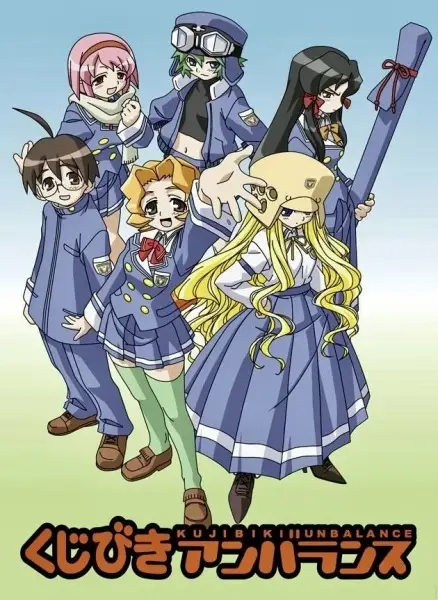
If you were ever sitting around with your friends one day talking about anime, munching on pocky, sifting eagerly through the plunder and spoils after a grueling day at your favorite convention, wishing you could find a date, dreaming about selling your own Japanese animation idea, and wondering about your future, well then, my fellow otaku, a show has been made about you. Genshiken, adapted from the manga by Kio Shimoku, is about a college club for otaku who never quite grew out of the doujinshi, cosplay, and resin-kit building phase of their lives, and how the members of the club find support and acceptance inthe eyes and hearts of each other when the rest of the world labels them as, in the words of one of the characters, "failed human beings". Reoccurring themes throughout the anime are the ritualistic attendance of a Tokyo-based doujinshi convention, Comi-Fes, hanging out aimlessly in the club room discussing the latest installment of Kujibiki Unbalance (a fictitious anime series that often acts as the catalyst for many of the series' early events) and dealing with real life vs. otakudom. The story of Genshiken, much like the relationships between the characters, starts off uncertain and it may seem to the uninformed viewer at times stuck in second gear. But as the characters begin to mingle and expose their personalities more and more, so too does the storyline of Genshiken grow in cohesiveness and also direction. Fans of the slice of life genre will not be daunted by the slow beginning, and will find themselves hooked by the third or fourth episode, as the storyline picks up the pace and wastes no time with the pestilent fluff that is the downfall of many mainstream series today. In a lot of ways, Genshiken reminds me of Azumanga Daioh in that as the series begins, you're indoctrinated into a newly formed circle of friends, almost like a silent observer, but you feel like you're there because of the strong storytelling and realism; by the end, as characters move on with their lives, you feel that profound sense of sadness that one feels leaving their friends behind from high school or college as the next phase of life's journey awaits them. Artistically, Genshiken is on the mark. Tsutomu Mizushima, who adapted the series from Shimoku's manga, was true to form in favoring a mute, more realistic color palette and style of artwork. The background artwork is never shunned and scarcely ever will a frame or series of frames be blatantly recycled. Viewers might be puzzled, however, as toward the end of the series there seems to be some sort of shift in both coloration and style. The sound effects of Genshiken are average, but the voice acting might as well be deemed stellar. Clearly, the brightest and most illustrious of Japan's voice talent was assembled for this job. In a series like Genshiken, where bells and whistles and intense action sequences or gratuitous nudity or fan service can't distract you from poor voice acting, the seiyuu chosen from each role is a critical choice. Each voice actor fits their role flawlessly, especially the character of Harunobu Madarame (voiced by Nobuyuki Hiyama), a high-strung, ultra-hardcore otaku and fetishist. I'm a tough critic, so my numbers may be skewed from what you're used to reading. But truth be told, Genshiken deserves a 9 when it comes to characters. Very rarely do you come across characters in an anime with real problems, real vices, and real dilemmas. Genshiken characters are not stock, folks. They're you. They're your friends. And you'll get attached to them so much that it hurts. It is purely the characters that drive Genshiken, an echo of a world all to familiar to the series' sympathetic viewers. You'll doubtlessly get a lot of enjoyment out of Genshiken, and each time you watch it, you'll learn something new, not only about the show, but about culture and the world you live in. Henceforth, the replay-ability of Genshiken is pretty high up there. Overall, it's a great show and worth forking over money for that pretty DVD boxed set your friends will envy.
OtakuFreak
January 20, 2007
Well, when I first herd of this anime from my friend, I was thinking "An anime about anime fans? This is gotta be some kind of joke". My friend lent me Genshiken, and like I said it was a joke, but not in a bad way. This anime is supposed to be a drama kind of thing but in reallity it's more comedy then drama. It pretty much sums out ever Otaku's life and interests. For those who have friends (and so forth) that don't understand anime and the Otaku world this is the perfect anime to introduce them too. The story begins in Tokyo University,where a very small club of shy and discouraged people waste their day watching anime, playing hentai games, reading manga, and building Gundam models. The main character is Sassahara, and he's like everyone else in the club. But unlike the others, he's always nervous and still has a long way to becoming a true otaku like his other clubroommates. Through out the show, Sassahara learns more and more of what it means to be an otaku. Meanwhile the story also shifts between other group members, like Madarame. Madarame is pretty much the head hanco of the club. He's an expert on anime and hentai (and prefers hentai over the real deal). He's very nervous of women, and has some what and attraction to the club's anti-anime girl, Saki. Saki falls in love with one of her old childhood friends, Kosaka, which happens to be an advid anime gamer. Saki likes the fact that Kosaka is a hunky dream boat, what she hates about him is his addiction to video games and anime. She tries everything she can to make Kosaka give up his interest, even put some of the other club members down. Eventually Saki becomes a member of the group and then we notice signs of her slowly getting into Cosplay. The story is very good. I also did some research on this anime as well, and this version I saw was a renewed version of one that they made after the Gundam hype. This anime bases itself on the advertisement of another anime called,Kubjuki Unbalanced (sorry if I spelt it wrong). The previous one revolved around Gundam and many other famous anime's of the late 70's through the early 80's. All in all, this is an anime worth seeing over and over again (even the theme song is kinda addictive). This is one you shouldn't pass up. So if you are an Otaku and want everyone around you to understand you better, just say "watch Genshiken".
shinigamidono
April 23, 2009
NOTE: This is a review of the entire Genshiken anime series including both seasons and the three-episode OVA. The first question on your mind might be the same one that was on mine when I first heard about Genshiken; so I think it might be appropriate to answer it right away. What exactly is a genshiken? Genshiken is an abbreviation. This anime revolves around a university club called [GEN]dai [SHI]kaku Bunka [KEN]kyūkai which translates to “The society for the study of modern visual culture”. The club was, as it is explained in the anime, originally formed ten years prior in order to bridge the gap betweenanime, manga, and video games. However, with the blending of these three originally separated sectors in the recent years, Genshiken has somewhat lost its purpose and is therefore a very inactive club in the beginning of the series. Genshiken is a comedic slice-of-life parody that revolves around the daily activities of the members of the club. Genshiken doesn’t really have a story with a set beginning, middle and an end. It is an episodic series that sets out to examine what it means to be an otaku in its entirety. The series touches on virtually every subject, issue and area of interest you can think of with regards to the otaku culture. It delves into Cosplay (costume role-play), Plamos (plastic models), Eroge (erotic games), Dōjinshi (fan-made manga that often contains erotic content), “otaku merchandise” (posters, limited edition items…), Akihabara (aka Akiba), anime and manga conventions, fashion, women, money and more. The only area that I can think of that the show doesn’t really touch on too much is with regards to hikikomoris or shut-ins (although they are mentioned and hinted at a few times throughout the series). Genshiken is often compared to the Welcome to the N.H.K. manga and anime series. There are defiantly similarities but there are also some noteworthy differences. Welcome to the N.H.K. is about the very serious social issue (… or psychological disorder if you will) of hikikomoris and the continual increase of this problem. Welcome to the N.H.K attempts to examine this serious issue using bits of parody and comedy in order to better relate to the viewers, but all the while it never forgets the seriousness and severity of the problem. Genshiken on the other hand is more than anything a comedy. The show never gets too serious (… possibly a bit in the last one or two episodes of the series; but not really). Both shows do examine the otaku culture but unlike Welcome to the N.H.K which concentrates mostly one particular sector (hikikomori), Genshiken looks at the entire otaku culture. You may think of these two shows as complements to each other. Welcome to the N.H.K. fills in the hole that Genshiken leaves by not examining the hikikomori too deeply. This anime, as you can probably imagine, is full of references to many anime, manga, and video game titles. The writers have tried to avoid using the real names of the titles and events in question in many cases (I assume to avoid lawsuits), but the references are obvious. You can expect to see and hear things such as Gungal (Gundam) and Comifes (based on Comiket which is the largest anime and manga convention in existence). There are also several references to titles that don’t actually exist such as Kujibiki Unbalance which is a fictitious anime series that is displayed throughout the series (Although, Kujibiki Unbalance actually does exist now as a spinoff result of the Genshiken series). The characters are probably the best part of the Genshiken anime series. The characters each have their own unique personalities, hobbies and interests, and it is through these differences that the series manages to touch on every aspect of the otaku culture. Let’s examine some of these characters: + Kousaka Makoto: Kousaka is like a creature from another planet. On the outside, he seems to be almost every woman’s dream guy. He is good-looking, full of confidence, smart, friendly and on top of that he has a great fashion sense. However, the inside is another story. He is a complete otaku (probably more than any other character on the show) and he appears to be hopelessly clueless. If my memory serves correctly, he is at one point rightly referred to as “a race of his own” or something of that effect. + Kasukabe Saki: Kasukabe is a great addition to the cast mainly because she is not an otaku. She only appears at the Genshiken doorsteps because she is attracted to Kousaka. Her only desire in the beginning is to stop Kousaka from being an otaku (an impossible task) and she believes she needs to destroy Genshiken to achieve this goal. She is loud, outgoing and violent and hates everything otaku. However, she turns out to have good heart and eventually start to soften up a bit after some time at Genshiken. + Madarame Harunobu: Madarame is what you would typically picture when you hear the word otaku. He has the voice, the look, and the demeanor. As he himself says at one point, he is from “planet otaku”. He is also very non-confrontational and that makes him even more fun to watch. + Ohno Kanako: Ohno is a Cosplay manic with a cute face and a nice figure. When she is introduced into the story, she has just returned from studying abroad and has been somewhat out of touch with the otaku culture and cosplaying. However, it doesn’t take her long at all to get back into the groove. Most conversations with her somehow end up related to her cosplaying or her trying to make someone else cosplay. Her passion is only fueled when she meets Tanaka Souichiro who loves making cosplay customs, at Genshiken. + Manabu Kuchiki: Kuchiki or as he likes to be called, Kuchi, is by far my favorite character in the series. He is only a supporting character but for me, he induced more laughter than all of the other characters combined. Think of the most over the top anime character you have ever seen and assign a number to how over the top that character actually is. Now take the number to the power of fifty and you will have a general idea of how over the top Kuchiki actually is. He overreacts to just about everything and says things others would only think of but never actually say. One of my favorite quotes from the series is one that Kuchiki says about himself which roughly translates to: "when it comes to going ballistic, I've never lost to anyone!” + Ogiue Chika: Ogiue is introduced into the series in the three-episode OVA and sticks around for the remainder of the series. She fits perfectly into the Tsundere character archetype. Much to her dismay, she has a serious fetish for yaoi manga (boys’ love / homoerotic manga usually created by females). She is very self-conscious and her interest in yaoi makes her embarrassed enough to hate herself and by a process of transference every other otaku on the planet. Much like Saki, she also starts to loosen up a bit after spending some time at Genshiken. + Sasahara Kanji: Genshiken doesn’t really have any characters that can be called THE main character. But if one had to be picked, it would be Sasahara. Now you may be wondering why I am mentioning the main character last. The reason is simple. I found him to be the dullest of all of the characters in the series. He is the boring good-for-nothing harem male lead character that strayed from the yellow brick road and found himself in a non-harem anime. His only redeeming quality, as is common with male harem leads, is that he is nice. That pretty well sums up Sasahara Kanji. There are other characters in the show that I would like to talk about, but the character section of this review is already more than large enough so I will be skipping the rest. There is not too much to say about the art and animations in Genshiken. The art and animations are not great, but they are definitely more than acceptable. The style and quality of both can be compared very closely to that of Welcome to the N.H.K. The voice acting is done pretty well and the characters match their voices in every case. My personal favorites are the voices of Manabu Kuchiki performed by Ishida Akira, and Mitsunori Kugayama performed by Nomura Kenji which I think are done quite brilliantly. The music is one of the strong points of Genshiken. I love all of the opening and ending songs. Soft and mellow songs were chosen for the ending themes and more upbeat songs for the openings. The lyrics are great and the visuals are fantastic. I was especially impressed with the season 2 OP that contained Gundam lookalikes alongside a song that could very well have been used for a Gundam series. In sum, Genshiken is a great parody slice-of-life anime that never takes itself too seriously. It will make you laugh and it will even educate you a bit at the same time by giving you great insight into the otaku culture. While full of fun and laughs, the non-story of Genshiken also has a moral theme. That theme is acceptance. Many unique and fascinating characters are introduced throughout the series and despite their differences they befriend each other and all manage to find some common ground. This anime belongs on your must-watch list.
jet2r0cks
June 28, 2007
I think that this is one important anime in an Otaku\'s life. This shows how we as Otakus live and try to mingle with people like us. Some few things that I learned are that male otakus like cat ears, maid outfits, childhood friend or little sister like characters. Two, real Otakus take everything anime/manga related seriously. This is the anime that got me back into being an Otaku. It brought back so many memories that I decided to live my old life and spend all my money on anime memorabilia once again. The anime made me wish I could go to the Comiket (?). I\'mnot sure but I think that\'s what they call the manga fest the guys go to. A few things bother me though. One, why is Kohsaka always smiling? The fact that he\'s infinitely happy bothers me. When his girlfriend Kasukabe was crying, he was still smiling. Weird. Two, at some point, these two have to break up sooner or later, right? I get the feeling that it\'s not going to work between them. Illustrations were good enough - nothing special about them, just the usual stuff. I do like the clothes design though. The detail on Ohno\'s cosplaying outfits are really great, and most of Kasukabe\'s clothes weren\'t bad either. I would like to note that there\'s a difference in the drawing style of the Genshiken characters and the Kujibiki Unbalance characters shown in the anime. Personally, I prefer the drawing style in Kujibiki Unbalance since it is different and more interesting to look at. The extra scenes from guilty gear, mostly seen when Kohsaka is playing video games was impressive at first, but then again, has anybody else noticed that the same scene is replayed over and over again? Is this because Kohsaka plays in one uniform pattern or is it because it costs more to use different guilty gear scenes? The music wasn\'t bad - I had no problems with the background music, opening and ending themes. I love how \"my pace\" was upbeat and had high energy, and the ending song, \"biidama\" was very mellow and relaxing. A perfect way to end an episode. I also like the kujibiki unbalance theme. I\'m probably not the first to say that it is a cuter opening theme for the real kujibiki unbalance. Another thing that I realized from watching Genshiken is that I too, want to watch Kujibiki Unbalance. It just seems like if it\'s good enough for Sasahara and the others, it must be good for me too.
Rank
#1581
Popularity
#1435
Members
191,302
Favorites
1,544
Episodes
12