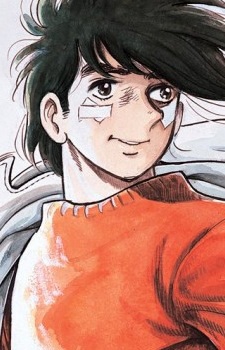

Tomorrow's Joe
あしたのジョー
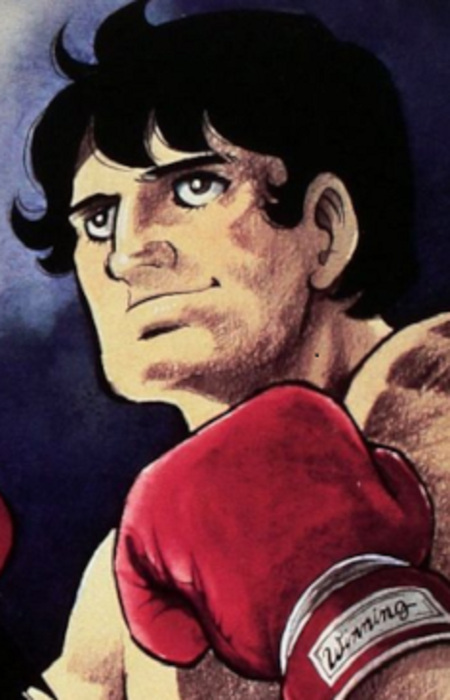
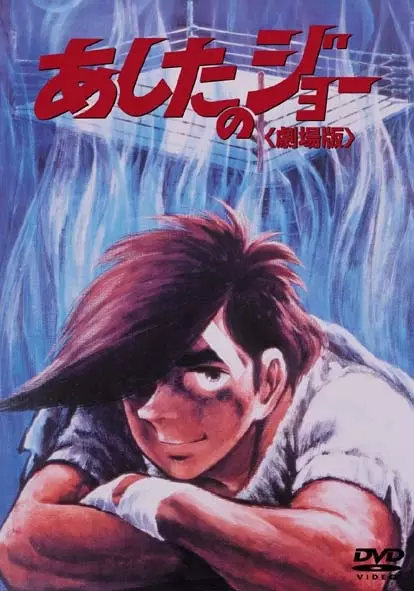
Joe Yabuki is a troubled youth, whose only solution to problems is throwing punches at them. What he lacks in manners and discipline, he makes up for with his self-taught fighting skills. One day, while wandering the slums of Doya, Joe gets into a fight with the local gang. Although greatly outnumbered, he effortlessly defeats them, drawing the attention of Danpei Tange—a former boxing coach turned alcoholic. Seeing his potential, he offers to train Joe into Japan's greatest boxer. At first, Joe dismisses Danpei as a hopeless drunk; but after the trainer saves his life, he agrees to live with him and learn the art of boxing. Unfortunately, Joe's personality makes him an unruly student, and he often falls back to his old ways. To survive the harsh world of his new career, Joe needs to trust his mentor and master the techniques taught to him. However, the road to becoming a professional boxer is rife with struggles that will test his mettle to the end. [Written by MAL Rewrite]
Main
Main
Main
Supporting
Supporting
Supporting
Supporting
Supporting
Supporting
Supporting
Supporting
Wickio
February 28, 2008
Stretching towards 40 years since its original broadcast on 1 April 1970, "Ashita no Joe" is one of the very first few sports anime and almost certainly the first to revolve around boxing. Based on the manga by Takamori Asao and Chiba Tetsuya, both the manga and anime are noted for being pioneers of the genre as a whole, and are considered classics. Story: Joe is a deadbeat. He is a troubled orphan who chooses to abandon his orphanage in an attempt to find his own way of life. Walking through the slums of Tokyo, he encounters a drunkard as he is hurled from a bar.Joe disregards the drunk, and ends up in a scuff with members of the local gang. After quickly disposing of the gang members, the drunk is impressed by Joe's instincts and fighting ability. It is revealed that the drunk is Dampei Tange, a former boxing instructor, as he vows to straighten up and fulfill his dream of creating a world champion in Joe. Sounds like a typical shounen sports series in most senses, but it must be remembered that this was the story that pioneered the genre and inspired many future similar titles, and for that it is held by me in highest regard. Art: The artwork will most likely be hard for the modern anime fan to accept, what with its charcoal-like feel and overall scratchy look, but if you have the right frame of mind to appreciate the fact that it is from an era of anime long past it is sufficient in its own right. The animation is fairly consistent and portrays the action in just the right way to get the viewer involved. Just don't go into it expecting "Hajime no Ippo" standard animation. Sound: On the sound front, viewers must again appreciate the age of the anime. The opening and closing themes are extremely old-fashioned and do not exactly get your heart pumping in the same way a modern soundtrack might. Having said that, the in-episode soundtrack does contain some pretty classic tracks and certainly serve their purpose. The voice acting is more or less perfect, with each actor giving a truly believable performance for their respective characters. Really top stuff. Character: "Ashita no Joe" thrives in its array of characters. In the beginning, Joe is our protagonist and is a rebellious youth always looking to cause trouble. It's hard to like a character such as him, and at times you may want to backhand him for being so damn arrogant, but it his arrogance that drives the series initially. As times passes, he becomes tamer and you'll find yourself cheering him on from the sideline as he steps into the rings rather than wishing for his demise. Tange also sees a dramatic change, going from being a lowlife drunk good-for-nothing, to becoming a respectable man, fulfilling his role as the coach in the same way that, say, Mick does in the "Rocky" films. Later down the line, Nishi serves his role as the friend despite their troubled beginnings, Yohko as a potential love interest for Joe, and Rikiishi as a heated rival. I could go on and on about the many wonderful and colourful characters, but I would never be able to provide a complete analysis. There is just so much depth. Enjoyment: At times, it can be downright depressing, but for all the right reasons. The series doesn't set out to be a happy series, and in that it excels. It manages to capture the emotion of the viewer perfectly, and so, in all respects, this is one of the most enjoyable series I have seen, and it really opened up the doors for similar series down the line. Frankly put, if there was no "Ashita no Joe", manga and anime may not be the same today. It is not often that the death of a fictional character can warrant a real-life funeral. That's just how important this series is. Overall: Anyone with even so much as a passing interest in sports anime should consider this a must-watch. In Japan it is considered the king of its genre and rightly so. Even nearly 40 years on, the series never fails to provide a refreshing and exhilarating experience. If you can get past the age of the series, consider this highly recommended.
Lindle
July 7, 2015
While there are some earlier anime that are well-regarded, Ashita no Joe is often considered to be the anime medium's first true work of greatness. In many ways, it does hold up as the benchmark that it is regarded as being - but in many other ways, it requires a "good for its time" disclaimer, as do many of its contemporaries. From a production standpoint, Ashita no Joe has actually held up exceptionally well compared to many other 70s anime. While it does have animation errors all over the place, the rough, sketchy way in which it is drawn makes it look highly stylized for itstime, and due to the rough nature of its art style, the animation errors are far less glaring than they would have been in something cleaner-looking. This style also translates to some very well-animated fight scenes, with surprisingly minimal use of stock animation. My only complaint regarding the production is some of the voice acting, which often sounds monotonous and amateurish. There are a few standouts, though, such as Shuusei Nakamura's take on Rikiishi Tooru, as well as Robert and Carlos being a rare examples of foreign characters in an anime having an audible accent (although why Venezuelans are speaking Engrish is never explained). The dialogue has aged much more badly, though, as around 90% of sentences spoken in this anime contain the word "Joe", most likely uttered thousands of times over the course of the series, which gets about as grating as you'd expect. This is a symptom of one of AnJ's most obvious flaws - everybody is obsessed with Joe to an unrealistic extent. This would be understandable if he were particularly charismatic or likeable, but Joe is an antisocial drifter whose earliest actions in the series mostly consist of theft and beating people up. As part of his character arc, Joe starts off as much of an anti-hero as possible, so the fact that he's regarded as though he were some kind of messiah by most people who know him makes very little sense. My single biggest complaint with the series is Joe's loyal followers, a band of delinquent children who clamour over Joe for reasons that are never adequately explained. They provide most of the show's comic relief, which is never actually funny. They serve no purpose in the plot other than to distract us from it. Their parents also seem to be disturbingly okay with their (sometimes near-suicidal) devotion to a homeless, dangerous, ex-con drifter who has involved them in criminal activity. This show's biggest strength, on the other hand, lies with the rest of its characters. More than boxing, this show is about becoming a better person. Many characters development revolves around this - Joe starts off as a juvenile delinquent, and progresses to someone trying to make a name for himself. Nishi also begins as a juvenile delinquent, but moves towards becoming a well-adjusted member of society. Danpei quits drinking and dedicates himself to restoring his career as a boxing coach. The highlights of the cast are Joe's two main rivals - Rikiishi Tooru, and Carlos Rivera. Anime has a strong history of great rivalries, and Rikiishi is perhaps the first great rival in the whole medium. He represents the opposite of Joe - where Joe is rash, easily-angered, and impulsive, Rikiishi is suave, calm, and collected. The direction he takes when he finally finds a boxer worthy of his rivalry in Joe makes for the most compelling arc in the show. Carlos, on the other hand, is supposed to be a clear parallel to Joe, coming from a similar background and rising from his upbringing in the slums. For all its ups and downs, Joe's story is an engrossing one, and the great characterisation makes it easy to become invested in Joe's developing career. The beginning is quite poor, but once the prison arc starts and Joe begins taking boxing seriously, it's easy to get hooked. The Rikiishi arc in particular is a masterpiece in its own right, and is unfortunately impossible to discuss in detail without tremendous spoilers. Joe is worth watching even just on the merits of that arc. Final Words: It takes a bit of patience to get into, but overall, I would recommend Joe as one of the better series I've seen from the 1970s. Story/Plot: 8/10 Characters: 7/10 Animation/Art: 6/10 Music: 7/10 Acting: 2/10 Overall: 6/10 For Fans Of: Slam Dunk, Rainbow
jmoriarty84
October 12, 2008
Welcome to what I call one of the most epic animes ever. Try to imagine a Japanese version of Rocky, and this is what you get. But I say Rocky is the American version of Ashita no Joe since Rocky came out in 1976, and the original manga of Ashita no Joe started in 1968 and ended in 1975. But anyway, they share the same charms and are both iconic to their respective nations in their owns rights. The story is reasonably paced and easy to follow, and tells a life story about a young man’s career and his struggles in and out of thering. Initially, Joe was just a bum who had nothing but the clothes on his back. He created controversy that makes Mike Tyson look like Disneyland but yet he was down to earth and had this aura to him in his neighborhood in the slums of Tokyo as if he were Manny Pacquiao in the Philippines. Despite how you can describe Joe in a personal level, it’s bizarre to see him as a hero at the same time. I just find it unique that in real life, people can react the same way when some athlete publicly acts crazy and doesn’t apologize for it, and we don’t really scorn them to some capacity sometimes. The other characters are also unique and some may not be of significant use, but they still have some kind of overall unforgettable impact in advancing the story. Yes, the art and animation are old and outdated which is something that many people today can’t really get past by which I can understand, but if you’re a type of person that can still appreciate the old Rocky movies or old movies in general, then this shouldn’t bother you. After all, Chiba Tetsuya, the artist of the manga still draws in that manner to this day and if he were to draw the manga all over again for today, he’d still do it the same way. But getting past the outdated style, it still does an excellent job of bringing out the expressions in the characters and their builds are well appropriate for their respective weight classes. It’s also interesting to note that with some characters, they will show age and change such as Joe, Nishi, and Noriko. They will look more refined, taller, and have different looking hair to symbolize that they are growing up which I found very unique. I also thought they did a great job of making Rikiishi look dehydrated to make it to Joe’s weight class at 118 pounds, bantamweight, when his best weight class is at 126 pounds, featherweight. Sorry to bring up another Rocky comparison, but the fights are on the same epic level and Joe’s fighting style can be compared to that of the Rocky Balboa character himself. They are both in no ways text book boxers like Floyd Mayweather, Winky Wright, or Pernel Whitaker, and they are go for broke brawlers like Ricardo Mayorga, Rocky Marciano, Antonio Margarito, and Daniel Ponce De Leon. Every punch they throw, is intended to knock you out. Every fight in Ashita no Joe is truly different from the last and brings a different kind of flavors of intensity and will keep you on the edge of your seat. As I described Joe’s fighting style, sometimes you think you’re watching a street fight instead of a boxing match and I mean a brutal street fight. And the ending fight when Joe finally get his shot is one of the best pieces of work I’ve ever seen. Nothing, and I MEAN NOTHING in American, Japanese, Korean, or Mexican or whatever country’s animation or cinema industry can ever come near that fight except real life bouts such as the trilogy between Erik Morales and Marco Antonio Barrera, or the Thrilla in Manila, and the final fight sets up for the best ending you can ever get. The seiyuu cast is wonderfully top notch. Johnny’s singer Aoi Teruhiko does the voice of Joe Yabuki. He does an excellent job of making Joe sound like a smart ass. Ryuusei Nakao, the voice of Freeza in DBZ, in some versions has played Carlos Rivera and current J-Drama actor Kishibe Shiro does the voice of Nishi. Nishi always came across to me as a Japanese version of Lenny from Mice and Men at a physical level and his voice does come across in that manner also, but his way of speaking symbolizes his good intended heart as well. Unfortunately, some of the other cast members have now passed on but they created a legacy with this anime. Naturally, the music is just something that defines the old school feel to it. A strange way to describe it that, it’s just so masculine and touching at the same time. It’s about conquering adversity and how it will make you a man. But other than that the soundtrack is just one of the passionate singing I’ve ever heard. Well, I’m not sure if Hajime no Ippo fans will like this, but I say if you’re more of a fan of Rocky, than this is probably more for you, while Hajime no Ippo on the other hand, tends to have more of the charms and appeal of the Karate Kid. Many other animes and mangas since then have paid tribute to this wonderful classic by restating lines or re-enacting scenes from it such as episodes and chapters of GTO, Fushigi Yuugi, Berserk, FLCL, Ranma ½ and Urusei Yatsura. If you want to know impact this series has, when one of the characters died, the fans even held a funeral for him. That’s how big it was there, but unfortunately, Ashita no Joe never really made it to America until recently under the title Champion Joe. But to conclude this review, I will say one thing, REAL MEN WATCH ASHITA NO JOE.
Gundroog
January 24, 2019
I really wish I could recommend Ashita no Joe anime cause the manga’s story deserves to get a good adaptation and have more people experience it. Unfortunately, both as an adaptation and on it’s own show, AnJ is just bad. I initially wanted to approach this from a perspective of someone who hasn’t read the manga and judge the anime on its own strength but I couldn’t make it through beyond about 30 something episodes before dropping it and having a blast reading through the manga. There’s two very big reasons behind why I strongly dislike this anime. For one, AnJ has terrible pacing. In 79episodes it adapts merely about 11 and a half volumes of the manga. That’s roughly 7 episodes per volume. Anyone watching the anime will likely notice the many ways in which Dezaki padded things out. Awkward pauses in dialogue, long scenes consisting of a few still shots, reused animations shown over and over, animation loops that are held for way longer than they should be. That stuff is all relatively innocent compared to the second big problem, the way it constantly pads out content with anime original material AND at the same time they manage to cut out some scenes and dialogue from the original. More often then not the stuff they cut is not some unimportant rubble but rather scenes that add nuance to the work as a whole, it removes teeth from a story that bites. I know anime was being produced roughly at the mid point of manga’s publication but they also only adapt about half of it so I don’t believe there’s any excuse to alter so much. Some might say just skip the filler and here’s what makes this even worse. AnJ doesn’t just have filler episodes, some of them are relatively self contained and can be ignored but those are tiny minority. For the most part original material mixes in with canon, at times completely ignoring the way plot unfolds for the sake of filler coming in more smoothly. However hard they try though, there’s always a clear contrast, because whoever wrote the filler didn’t have an ounce of writing talent compared to Asao Takamori. Filler is meandering, pointless, it moves nothing forward and at best reiterates previous material instead of moving forward. It downgrades character to acting like generic archetypes, it dumbs them down by trying to make their cold conclusions seem like the most shocking revelations. I strongly believe that there’s no alteration that had a positive impact and there a fuckload of alterations that build up until a shittastic climax that is Carlos vs Joe arc. When you do get to see the canon though, AnJ shows what it could’ve been. A story that still has few analogues in anime, a realistic and sincere story about a dregs of society fighting for a better tomorrow despite their tragic yesterdays. It’s not a drama that makes you feel good, because there’s no escapism to it. It doesn’t round off the edges of the real world, instead slamming you right against those edges and showing you how heartbreaking and hopeless things can be. However it does this not to make you feel depressed but to motivate you to push on forward, to improve yourself, to strive for better things instead of wallowing in the problems or trying to ignore them. Joe and many other characters constantly have to deal with problems, one worse than another and none of them are exactly equipped to handle them. Joe himself is a delinquent like no another. An orphan who constantly moved around and had to defend the only thing he had left, his pride, with his fists. The result of his upbringing is that he’s terrible at normal social interactions. Compromise is not in his dictionary and he lives his life scamming others and spending his nights wherever he can. When Danpei, an ex pro boxer and now pro alcoholic notices him in the slums it’s a starts of a very interesting co-dependent relationship. Joe sees Danpei as an opportunity to get stronger and beat the first opponent he can’t overcome while Danpei sees in Joe an opportunity to get into the world of boxing and climb back up the ladder. While Joe is most definitely the highlight, other characters still get developed into complex human beings with their own personalities, lives, goals and ideas.Unfortunately filler considerably undermines the journey characters go through cause while in the manga every volume is a difficult journey that shapes the characters, in the anime there are too many sideway shifts that significantly downplay the arcs people go through. Another occasionally strong point of the show is its presentation. One of the biggest advantages anime has over manga, is that you get to hear the characters and you get to see their acting and movement in more detail which in right hands can add a lot of intricacies. Voice actors in particular have to be the highlight of the entire anime in terms of presentation. It’s incredible how much passion comes through in their dialogue, how they manage to capture emotion with such sincerity that I can’t help but feel for them. One thing that always stood out to me is just one scene where the rarest thing happens and Joe actually cries, it feels like he’s genuinely sobbing while trying to hold himself. You get to HEAR that this is a man who’s used to putting up a tough front crying himself after possibly the first moment of genuine happiness in his miserable life. Tange similarly is just fantastic, it’s a travesty that both his and Joe’s VA never participated in voicing any anime other than AnJ. Yet, while I will praise voice acting for managing to depict emotional outbursts with rare sincerity, I can’t help but feel that Dezaki’s overly dramatic presentation often hurts the story. When it hits, it’s great, Dezaki has a sense for dramatic flair and it helps the moments that are meant to be exaggerated or shocking but sometimes you need the opposite of that. When seemingly dreadful things happen with little flash, it makes a point. Bad shit can happen anytime, anywhere and to anybody. You’re not special and there’s nothing to say that tomorrow you won’t become just another number in a small box on a piece of paper showing how many people died this year. It’s this kind of quiet dread that and insignificance of the individual in the big picture that can make tragedies all the more depressing and AnJ manga excels at that. When anime exaggerated everything tenfold it makes a common problem seem like a unbelievably cruel twist of fate. Overall it’s part of why anime ends up feeling so cartoonish and immature in the end. It’s hard to say how much the flaws I mentioned will impact one’s experience of watching the anime but it’s my honest opinion that as an adaptation it’s a travesty that tramples over excellent while simultaneously only surviving thanks to the strengths of said source material. As its own show I had to drop it due to how damn slow and stilted it is so take that as you will, I only managed to make it through out of morbid curiosity of how bad they’ll screw up the things I love. I know many people managed to genuinely fall in love with this show and maybe if I didn’t read the manga I’d be able to like it more but really hope that anyone who wants to experience this fantastic story choses the manga instead of a lackluster anime.
AkumaDono
May 8, 2016
My Ashita no Joe Review on YouTube: https://m.youtube.com/watch?v=1JtotcBAwy8 First of all I would like to say that I am very glad to make my first Review about my favorite Anime of all time and it could be my last Review too xD. I hope you can find it helpful. Before watching Ashita no Joe, I was aware of the fact that it is very old and it must have really Old Classic Art so if you care about the Art more than the Story you probably could find it disturbing. However if you are like me and you mainly care about Story then I guarantee that youwould not regret wasting your time in it. Ashita no Joe Mainly focus on Yabuki Joe an Orphan who refuse to spend his life in Orphanages so decided to escape in search for his reason to live. One day he found his way to Doya Town which was a poor Town and the Mafia is taking control of it. While Joe was walking the Mafia were abusing some of the poor children in the town but Joe was not intimidated at all and he does not care about making Justice until the Mafia decided to mess with him so he showed them exactly what he is capable of beating them all down showing them the Wild Animal that lives inside of him. Meanwhile Danpei a drunk former Boxer who failed to make it to the top level saw what happened and was impressed of Joe's Abilities. Therefore, he wanted to see his dream accomplished and he believed Joe is the way to lead him to see a" Bright Tomorrow ". He asked if he wants to be a Boxer and from there the story takes place, what would happen? Will Joe accept Danpei's offer to lead him to be a Pro Boxer? Story - 10 I honestly never saw anything like this story in my entire life, the Drama in this Anime reached a level of Maturity and Perfection that I at least did not think it is possible and I did not expect it will touch my heart so deeply. the beauty of it is that there is an important message and the end of Ashita no Joe 2 that touches you and make you realize something you might already know it but they show it to you in their own way. Art - 4 As I said comparing to the Art nowadays, The Art here is bad However it is decent to me I can understand and see what is going on without focusing hard which mainly what I need. Also to be fair I think it was good enough when you compare it to old anime. Sound - 6 I think the sound is decent you can clearly hear it despite the fact that the anime is old. The openings are really good also you will really love Joe's Whistle I try to practice doing it sometimes but its hard for me to do it *chuckles*. Character - 9 I think the characters are great, you will really like them and you feel that every character made his touch on the series. I can not really think of any annoying Character I liked them all. Enjoyment - 10 I can not describe the feeling to you exactly but each episode has touched me and made me feel like the series is going to the right way and made me think that I really can not expect anything out of it which was the fun part of the series. Overall - 10 Overall, when you finish it you probably would feel like what I feel right now and you would maybe understand my words and why it is the best anime to me of all time. When you put everything together it just become a perfect Masterpiece.
Rank
#252
Popularity
#2195
Members
111,489
Favorites
2,412
Episodes
79