アルジェント ソーマ
The 21st century was supposed to mark the beginning of mankind's golden age of space travel. However, humanity's lingering dreams of the stars are shelved when Earth suddenly comes under attack by alien entities. Trampling across the planet's surface, these giant invaders leave nothing but death and destruction in their wake. Having suffered personal losses from the invasion, Takuto Kaneshiro joins the fight against the extraterrestrial enemies. In his quest for vengeance, the disillusioned young Takuto must seek out any possible allies, but the line between friend and foe is dangerously thin. When old powers crumble and new opportunities arise, many are prepared to capitalize on the chaos. Takuto soon realizes that the aliens may be the least complicated obstacle to uncovering the greater truth behind the catastrophic invasion. [Written by MAL Rewrite]
Main
Main
Main
Main
Supporting
Supporting
Supporting
Supporting
Supporting
Supporting
Supporting
shellshock
September 3, 2009
The anime was fantastic, yes the main character may might have been a bit villainous, but he shows his true self in the end. The anime is very mysterious, and it does have its fun moments, but it is a serious type of anime. I personally thought this was a masterpiece, and beats all the junk. Yes it was a bit repetitive in the middle, but it was all in the plot. Overall 10/10 and it is a must watch, if you think the main character is too "emo" like the other review, then DON'T EVEN bother watching this.
ZephSilver
March 15, 2016
Supporting
When a show is described as a "hidden gem" it immediately calls into mind something that you've stumbled upon by happenstance with no prior expectations. These are the titles that come in and out of focus partially thanks to the presence of much more all-encompassing works made around the same time period. It's a common occurrence that spans across every medium but perhaps most notable in anime, where only a handful of shows per year are thrust into the limelight, while the rest are left to gather up dust and become yet another mortared in brick to support the weight of the juggernauts resting ontop of it. These "hidden" titles were at the wrong place at the wrong time. Like in the case of 2015's superhero show Concrete Revolutio, which unfortunately had to compete for views in the same season that aired the much more popular One Punch Man. Or even self-indulgent titles like Sword Art Online, which ultimately received a far bigger viewer base than 2012's Accel World, an anime made by the same author, Reki Kawahara. Had these shows aired at a different time, the chances of it receiving better coverage could have been amplified, for better or for worse. And when it came to being at the wrong place at the wrong time, Argento Soma could not have picked a more unfortunate release date; being produced during a period where any title with the slightest use of biomechanics and distressed young pilots were quickly dismissed as "Evangelion clones." This decade-long dark period also saw with it the likes of RahXephon, Brain Powerd, Fafner of the Blue Sky, Gasaraki, Brigadoon, Betterman and much more receiving that label for either legitimate reasons, or simply for the sake of grouping anything remotely similar under the same umbrella. Argento Soma was no different, becoming another statistic forced to carry the burden of that appointed buzzphrase. The reason for the label was pretty self-evident too, given the ominous aura that was ever-present throughout the mecha show's production; the pervasive nature of that 90s to early 2000s aesthetic that dominated all genres at the time, where anime entries were drenched in a pensive temperament, often dissecting itself and the broader storytelling landscape as a whole. This all served towards Argento's quick dismissal, almost being instantly forgotten upon arrival. But that's where the thin line of surface-level evaluations ended, as the show never stayed under Evangelion's thumb. Unlike the fate befalling some of its brethren like RahXephon, whom to this day still can't shake that "Eva-clone" label, Argento quickly grew into its own identity, taking a stance against its patriarch and choosing to draw from influences outside the medium altogether. Its statement may have been lost in the clutter, but for those that heard it—and more importantly—understood the bold proclamation; what they came to encounter was nothing short of an interesting artifact. To quote the words of the infamous ThatAnimeSnob: "Argento Soma, is to me, a deconstruction of Neon Genesis" and honestly, that's as befitting of a description as any. Instead of following the trendsetter at that time, Argento chose to challenge it in a way not seen before or since. Argento Soma is a "hidden gem" in every sense of the term. Starting off in a semi-episodic structure, we're introduced to our protagonist and residential edge-lord, Takuto Kaneshiro, who, like many others, found himself involved in a lifestyle where the military's far-reaching hand became a part of everyday life, thanks to an ever-present threat of alien invaders. After a series of unfortunate events, Kaneshiro took on an officer role in a paramilitary group called Funeral; a subsidiary of the army made for the sole purpose of combating the increasing wave of alien invasions. And as the fight against these extraterrestrials rages on, new information is slowly unveiled that changes not only the course of the battle but also humanity's stance on the perceived threat as a whole. The biggest forewarning that should be brought to your attention before viewing this is the choice of pacing. Argento Soma operates with a sense methodical arrangement, where everything is laser-focused to serve its characters and narrative, as it slowly builds towards its penultimate third act, where all its careful planning exfoliates into a much grander concept. A slow-burn that never concerns itself with side-show theatrics to maintain short-term attention spans, and as such, may require a bit of patience on the part of the viewer. It's the defining feature that separates sci-fi from hard sci-fi, Stars Wars from 2001: A Space Odyssey. Where the minutia of individual character involvement and the events of all things big and small are all held accountable; introduced with the promise of a return in investment. If pathos drove Evangelion, then Argento functions on precision. The benefits of this slower-paced first act can be seen with the metamorphosis of our protagonist, as well as the side characters that make up his surrounding environment. As already stated in the synopsis, Kaneshiro is motivated by vengeance, which gives way to a lead that's enveloped in a lot of mental grief and suffering due to his circumstances. He's possessed by this idea of "getting even" with the aliens that robbed him of normalcy and happiness, and it's seeing this very mindset mold him that brings a great deal of intrigue towards his growth throughout the series. As if donning a mask to hide his true feelings, we come to know Kaneshiro for a majority of the show by the alias Ryu Soma. An alias he chooses to adopt when becoming a member of the Funeral organization. But beyond the need to shield his identity, what's truly being put on guard is the person himself. Kaneshiro is in a state of denial about his shortcomings. Something we're made privy to as the veneer behind his actions slowly washes away, and he's forced to confront the true source of his grief. The first half of the show entertains a "monster of the week" formula but never places it center-stage to its true intentions: the character involvement and the grander concept that awaits them later down the line. In fact, it could be argued that the first half of the series is merely there to flesh out the world, give weight to the increasing alien threat, and more importantly, to add dimension to our cast of characters. In order to achieve this, the show develops its cast byways of a collective character study; a situation where the actions of one could indirectly paint a picture of another. Developments that come as a result of close-quarters interaction. And as all of this is being done, a slow paradigm shift from a character-driven story to narrative-based one is slowly being orchestrated in the background, as the show works its way towards the final thematic proclamation. One that makes broad implications yet remains intimate at its core. And while screen-time is evenly distributed to most side characters to help achieve this third act revelation, the primary focus is always awarded to Kaneshiro. Seeing his slow metamorphosis and growth as a character was quite fascinating. His brash and somewhat pigheaded persona never felt like artificial drama but was branched out from a place of genuine angst. There was a poignancy there, something that similar works fail to grasp. He's driven by a need for redemption and lashes out, not because he's justified in his actions, but because the moment he seeks for the answer through introspection, the truth revealed is far crueler than the scapegoat he designates for his revenge. He's drowning in self-pity, searching for any means of resurfacing. And seeing his struggle, contemplation, and eventual catharsis through acceptance was something well worth the price of admission. For those that have seen and appreciated Argento Soma, it's hard to fault the show's usage of deliberately slower pacing, as it's that very attribute that made its methodical reveals effective. But perhaps it's because of that that the show is practically unknown to a vast majority today. This isn't to suggest that the show had filler, but rather, it lets the narrative operate organically for far too long at times, even when it was done under careful observation. Ironically, the very free-flowing narrative that helped gave the events of the story a naturalistic expression is the same thing that contributed towards alienating its viewership. It was simply too long-winded for those that couldn't get behind this perceived "slower" pacing. This, as a result, has caused the few that have heard of it to either dismiss it altogether or shy away after getting wind of the unwarranted "Eva clone" mantra; a buzzphrase that offered a quick surface-level way to escape further elaboration. This anime suffers not because of the actual content but because of the audience that surrounded it. As condescending as this statement may sound, this anime is intended for a more refined viewer, someone that understands the fundamentals of proper storytelling and the need for carefully planned build up to give later events more substantial impact. It's the difference between a person taking the time to appreciate the fragrance and taste of aged wine, as opposed to merely swigging it with the intent of getting shit-faced. The difference is patience and consideration. And for a medium that is known for attracting people that seeks expedience, Argento's quaint methods places it at a disadvantage. Thankfully, for those willing to shift mindsets to accommodate this show's approach, it offers enough to justify its actions. For one, the show never viewed things through an ideological lens but chose to let the content speak for itself. This made decisions on the characters' behalf to hold greater meaning. No one was ever "good" or "bad," they were simply human, making decisions that they deemed to be the best one. This sense of moral ambiguity was shared among all characters, whether their role was of primary concern or held tertiary value to the plot. And since the leads were composed of adults, it paved the way for far more nuances in their interactions than what you'll typically get from an anime cast overpopulated by teens. Adults weren't simply nowhere to be found while adolescence ran around "saving the day." This was a show that had enough decency and common sense to realize that including adults was not only appropriate but essential when it came to settling the moral dilemma of characters' choices. There are no redheaded tsunderes or emotionally detached lolis running the day-to-day operations of the military, but fully-grown competent leaders that think before they leap. To sell the seriousness of a story's conflict, accountability should come before marketability. Teen protagonists may sell like hotcakes for anime, but that's usually at the cost of legitimacy towards how plausible a scenario could be. Sadly, this is something that's mostly lost in the clutter of many anime titles, where teens seem to be the only characters of relevance. But in a way, it's because of tropes like these that the cast of Argento feels so refreshing by default. Whether the creators were cognizant of this or not, their decision to have a cast where there's only one teen, while everyone else was either young adults or older, ended up working out in their favor. This is yet another defining feature that contrasts Argento from its patriarch. If Evangelion's relatability is with that of teens, then Argento shifts to the next logical step, cataloging sentiments meant for young adults to connect to. Teens blame the world, while young adults learn that taking ownership for their actions is the key needed to depart adolescence before entering the next chapter of their lives. It's differences like that where Argento truly shines. Where its autonomy from the "Eva clone" mantra becomes crystal clear. Beyond these strong narrative distinctions, the art and animation for Argento held up surprisingly well, as it contained fights that had a sense of weight to it, where the individual movements and the environment felt well-documented. From the swing of an incoming punch to gestures characters make under extraneous circumstances; every encounter was given agency. While there are instances where the show's age became apparent, it never got in the way of selling a scene. But perhaps the most notable inclusion was the striking character designs themselves, which looked like a crossbreed of sleek runway model-like postures and the lengthy stone-faced appearance of Gundam Wing's regulars; which isn't much of a surprise, given that Shukou Murase handled both Wing and Soma's character design work. This could also be seen with another Post-Eva work that he was involved in with Gasaraki. His aesthetic sensibilities are quite unique, taking anatomical body proportions and giving it a specific vogue-like neo-gothic edge. To get into specifics, the appearance of the main character was, for the lack of a better word, cool-looking. It's a type of blend between brooding and swagger that's rarely captured this well, but when done right, lead to some attractive creations. Where the character designs lost points for creativity was with the aliens themselves, which lacked variety, as it was relatively the same design with exception given to the one known as "Frank." The show could have greatly benefited with a few more distinct variations than the carbon copy lineup that was offered instead. While it could be argued that that decision to keep them all looking the same was made to correlate thematically with the show's "big reveal" towards the latter half, finding a way to work in more creative liberties to how they looked was still something that they should have entertained. Another issue that would immediately jump out at you was the characters' noses, or should I say, the lack thereof. If Escaflowne is infamous for its Pinocchio schnozzles, then Argento stands as its antithesis, sporting the Michael Jackson look whenever someone is facing the viewer. Thankfully, it isn't a jarring feature for long, as the problem subsides the more you watch it, similar to the effect Escaflowne had with its initial viewing. The show's soundtrack was a mix-bag of melancholic songs, all synchronizing under the same dreadful feeling that loomed over the entire series. And while the soundtrack served its purpose well, tonally the genres were scatterbrained. They were unified under the pensive tone each had, but that's about it. The opening theme captured the essence of the title quite well, having a bittersweet swooning vocal passage carried off by the swelling rise of the instrumentals; a balance between sorrowful pitfalls and hopeful ascensions. The same cannot be said about the ending theme, however, which was quite jarring and far too bushy-tailed for the sobering tone that the series gave off. It was as if someone started playing the Bee Gees "Stayin' Alive" during a funeral session. Outside of a few minor nitpicks here and there, the show does have its fair share of issues outside of pacing (for those bothered by the idea of slow buildup), one of which was its decision to name things in a manner that feels entirely too superficial. You see, Argento Soma was Sunrise's not so subtle attempt at patterning specific name and events after a classic novel, and in this case, that ended up being Frankenstein. But outside of the first episode, naming the found alien revived by a mad scientist "Frank," and having facilities and organizations named "Morgue" and "Funeral," there was very little that paralleled the classic novel and film itself. Instead, it's safe to say that the show only superfluously borrowed these titles, and had it been changed to anything else, nothing of significance would have been affected thematically. The usage of these titles should be treated as more of a motif than anything with symbolic annotation. In short, ignore the relevance of these titles. Just as Evangelion's theology symbolism was nothing but window-dressing, so too is Argento's need to reference Frankenstein no more significant than an artistic choice. Naming aside, perhaps the most significant issue that the show faces has to do with the involvement of a character named Mr. X. Unlike the harmless usage of name choices, Mr. X's participation brought with it damaging plotting issues. This wouldn't be any more of an issue than what's usually found with most shows, but for one that operates with such precision, the inclusion of such a wildcard ended up jamming the cogs of what's been up to this point, a highly-functioning machine. Given how problematic his involvement is, I would save all of this for the spoiler section. Thankfully, not even the issues found with his inclusion could diminish the show's third act revelation, something I will also save for the spoiler section as well. With the first half of the series being dedicated towards the character and narrative buildup, it's the second half that the series began to strut its stuff. With carefully foreshadowed moments that started peeling back new layers to the plot, and characters growing alongside the story to match it, everything started to come together, as the reveal placed the show on a league of its own. It stepped out of the realm of usual anime fodder and took cues from cinema instead. All of its careful planning and character fixation was finally brought to fruition. The mysterious fog that hid all agendas had finally lifted, leaving nothing but the naked truth of the show's secrecy to be laid bare for the audience to see. With the revelation of the third act finally being unveiled, humanity, as the show comes to know it, was made humbled by the presence of something much more greater than itself. For those that have experienced what Argento had to offer, join me in the spoiler section as we discuss this in further detail. ***spoiler section*** What made the third act so great was beyond the theatrics of the event but what it came to represent thematically in the series. What it managed to set up, in the beginning, resulted in the last few episodes being what I could only describe as "2001: An Eva Odyssey." It took the ingenious vision of Kubrick's film and pushed beyond its ending point by introducing a prologue that saw with it the genesis of humanity as a species, and the exodus of a new stage of human evolution into a grander sentient being. It literally and figuratively showed our limited understanding when brought face to face with an advanced species. Where humanity saw a brutal, uncaring race of otherworldly creatures, in reality, it was humanity that was the uncultured simple-minded species incapable of comprehending something beyond our current intellect. It's like a 2D person trying to grasp the idea of a 3D object. This plot twist even paralleled the journey of Ryu Soma as well, which made it a multifaceted reveal that serviced both the narrative and the characters involved. It's an idea that could have easily crumbled under its own weight but manage to pull it off with such gravitas. And since Argento had already committed to making its content as grounded as possible, the potency of this reveal was amplified even further. This isn't to say that Argento tackled the idea to the pedigree reached by Kubrick's magnum opus; far from it. But the fact that it even took the idea and ran with it was awe-inspiring within itself. It's honestly one of the most spectacular latter halves I've seen from any anime, period. But outside of this achievement, the show does have a significant plot hole that hurt it towards the end, and that was the involvement of Mr. X. David "Mr. X" Lawrence is by far the worst part of the show because, with his involvement, poor planning or split decision making on the part of the creators was immediately exposed. Earlier in the series, Mr. X was introduced as a sort of "devil on the shoulder" character that seemed to only exist in Soma's head. With his red hair, devilish features, and constant consumption of apples (obvious forbidden fruit reference), we as an audience was meant to believe that he was, in fact, a figment of the protagonist's imagination. But due to what I could only describe as a poorly executed retcon, this character was introduced as a flesh and blood human being that existed all along. Where the problem lies with that is that throughout the show, he was shown to have the ability to seemingly appear and disappear without anyone else outside of Soma acknowledging him. So when the reveal is made that anyone could have seen him all along, it rendered many instances of him appearing out of nowhere (from what we were shown) to be utter bullshit. One could argue that because of Soma's borderline delusional state, he simply couldn't follow Lawrence's movements and that his high-tech skills allowed him to evade cameras and personnel easily, but that still leaves the question as to how and why others were incapable of seeing him up until the point of the reveal. This was sadly a plot hole with close to no proper explanation given, but one I chose to consciously dismiss given everything else that the show had executed well in regards to the "Space Odyssey" third act, as well as Ryu Soma's character arc. That doesn't stop Mr. X from being a problem, and it's for that reason that my score was ultimately lowered. But aside from that point, nothing will take away that feeling of being awestruck that came about from the show's final act. ***end of spoilers*** Enjoyment: 9.5/10 I've never been one to care about the average scores accumulated by MAL users, but below 7 for this show is criminally low, perhaps being one of the most underrated and undeserving ratings given to any series I've stumbled upon in the medium up to this point. Sadly misunderstood, a show with so many layers that it effectively deafened itself to the general populace. And rather than take the time to decipher its themes, the quicker solution was to subject it to semantics and label it as an "Evangelion clone." Ignorance is bliss, unfortunately, that comes at the cost of things of greater value being dismissed by the collective out of convenience. As a fellow anime enthusiast, I saw this at the right time, never once being bothered by the episodic first half or the methodical pacing that it chose to contain everything in. With intriguing characters and a plot that slowly revealed its hand, the more I watched it, the more engrossed I became. The protagonist was one I've seen done wrong so many times before that finally seeing his type done right was quite rewarding. Very few protagonists struck a chord with me in the way he did. This was a show that only grew on me as it went along, and after episodes 16-18, it became an addiction I couldn't stop watching. It was modest, never once flexing its accomplishments to obtain any further appraisal. It simply told its story and let the viewers that took the time to understand it to take from it what they will. It's that kind of quality that I actively seek out in media. And it's that very reason that Argento Soma won me over, flaws and all. Overall: 7.5/10 This title is not for the impatient. For those that enjoy and understand the need for carefully planned build up, the payout is satisfactory, but for anyone else seeking instant gratification, you shouldn't bother with this. I don't like to advocate the saying of "you're not ready for this show yet," but in all honesty, sometimes that's just the case. This is a show that could only be appreciated by certain viewers past a threshold with their experience exploring the medium. One only accessible to those well-versed in titles of now and those of yesteryear. To truly know the legacy, the lineage, the very building blocks that make up its foundation. But perhaps more importantly, it requires a mindset that's moved beyond the "critics before art" phase. To receive what this show has to offer is to approach it divorced of any pretense, of any conceit. Humility is a must. And as a viewer, until you've gotten past these crossroads, I suggest keeping this one tucked away for a later date. I can't promise that you'll receive the same level of payout that I did, but I can assure that anyone in the right mindset to accept what it has to offer will, at the very least, be given something deserving of the price of admission.
twillit
December 6, 2007
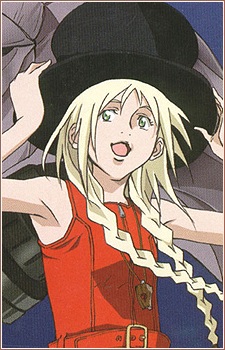
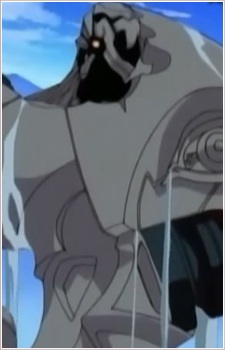
This Anime was almost dropped. There are some problems with this show and they mostly revolve around the primary character Ryu .... err sorry Takuto is his name in the beging and this guy is an exreteme emo! He is a victim and he wallows in it. I won't go into his reasons for victim hood, but I will say that he starts as a emo and ends as one and I get the feeling he would be a wife beater. Needless to say, I greatly dislike Ryu. Fortunately, he is not the only character, more on that later. Aside from Ryu, there is another annoyingaspect of this show, the music. Music was by Katsuhisa Hattori, a famous and accomplished composer / conductor. Argento Soma is a military show, based in the US, so they used military style music, kind of. It was more like music from a military graduation ceremony. Maybe in Japan, that is what they think of when they think of American military music. I don't know, but it didn't work for me. But wait, the show is based in the US? Well, that is different and I like different. Also it is a military show, meaning adult characters, something else I like. In fact there is only one child, Hattie, in the show and she truly acts like a kid. Wow, an anime that realistically portrays the characters! Now, don't get wrong here, all is not peachy with the characters. Yes you already know I dislike Ryu, the others are likable but a bit shallow. After a few episodes they become fairly predictable but there are some surprises toward the end, so yeah, it's okay. They really take the edge off of dealing with Ryu and any one of the characters can carry a single episode with ease. There are more things to like fore this is a Giant anime. Giant Mecha, Giant Aliens, and a Giant Robot. Yeah, the Mecha are pretty cool, the design is nice, and I really like the flight conversion, they are pretty unique although a bit underpowered. The Aliens, well they all look the same, but react differently, too bad they have no personality. The Giant Robot, Frank, I think he is the real star of the show. Frank is just a big bruiser, to fix things you just run up and hit it. If that doesn't work, hit it Harder! He also has a thing for young blonds, go figure. Now the story. You have Giant aliens landing on earth for an unknown reason. The military is helpless to combat them. A special force is formed with advanced mecha to fight the aliens. The name of this force is NERV....... no no no it's Funeral.... Heheh, okay so the basic story is pretty much a rip of Evangelion without the religious overtones or teenage angst. But there is Ryu, he is full of angst! He is Shinji all grown up and he is still a whiner! Still the story does heavily borrow from Evangelion, transplanted to the US with Pilgrimage Point replacing Tokyo. It's okay though, there are no EVA's attached to extension cords, at least not really, there are no cords and the Mecha are not really EVAs , for the most part that is. Oh, yeah, and the ending is completely unlike anything in Evangelion, in fact it's pretty different and unique. Which is why I am glad I did not drop this anime. Over all, it's Okay. Ryu is nauseating, the music is bad and the story is formulaic, yet I held out to the end and that is saying something.
Gsarthotegga
July 5, 2022
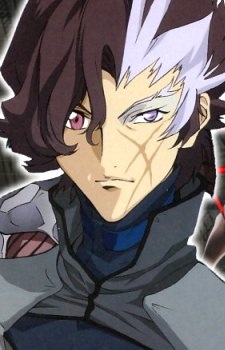
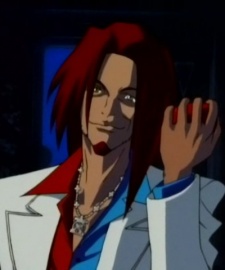
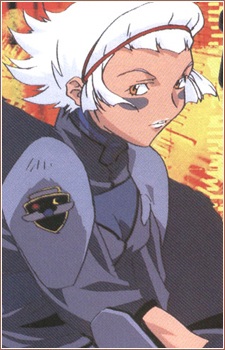
Argento Some is sometimes referred to as pretentious, an Evangelion clone, or it's said that the main character is "emo." I'm hesitant to use the word pretentious in the many cases where it is used, as that usually just means "it had lofty ideas, but I didn't like it," and it's seldom a substantive word to apply. Similarities to Evangelion are numerous and probably the closest you'll find to a "clone" other than RahXephon; the cover, with the main's brooding, downward-turned gaze is a bit "these wounds... they will not heal..." if not "CRAWLING IN MY SKIN!" but as far as the writing and characterof Ryu Soma goes, I don't see any real issue—I mean, going on a quest for revenge because your college girlfriend died in an accident is... kind of embarrassing, but it works in the realm of fiction, where love conquers all and we have themes about the self and connecting with others UwU. I came into watching this thinking it might be an unsung masterpiece—certainly it has a devoted mini-fanbase on MAL and elsewhere. The beginning is strong, then by the middle it's just okay, and you ride that lukewarm okayness to the end for a stretch of about 16 episodes, a few of the reveals are kind of not too appealing, but all the writing comes together, full circle, and the end is decent and even satisfying—it could have been better, had the writers done more with the middle section. It's often said in pedestrian HOW DO I WRITE threads that every story has a beginning, a middle, and an end—they should have just cut the middle out. There was a pretty good movie here, but as a series, it's on the mediocre side. The animation is consistent but mostly unexceptional. The direction, background art, and composition are all very solid in the beginning and fair throughout. While the character art is decent, it's mostly Ryu that stands out, and the characters tend to be missing their noses. Sometimes they don't even have a line or nostrils. Frank's design is great with its asymmetry, but all of the other aliens have one boring design. The real problem has everything to do with the aliens. There's a mystery as to why they want to head to Pilgrimage Point, but the main problem is that the series devolves into a monotonous monster-of-the-week show. Yes, Evangelion utilized this formula, but they made it work by crafting less repetitive stories around each angel event. The angels looked incredible, and as the show progressed, they tended to become more and more abstract and unsettling. The aliens of Argento Soma and their one design only contain any variance by giving them different abilities and forcing our protagonists to cook up special ways of beating them, but it's just doggerel. It's very apparent this was on the low-budget side. They could have set time aside for the characters to develop (and they really needed to here), but they repeat the same tedious formula instead. Either they needed to pad this series out for time, or the writer ran out of ideas—perhaps both. One good aspect that sets this show apart from other shows with the same formula, would be Ryu acting as a spy and a bit of a saboteur. Aside from trying to kill Frank a few times, he doesn't really do much other than leak information, and this had a lot of potential for greater drama, but it kind of doesn't go anywhere. I barely feel like he's an undercover agent at all, in fact. There's no sense of risk involved. Where the authors seem to lose track of where they were going with the script is seeded at an early point. A mysterious man appears before a recuperating Ryu. He looks a bit like a rejected villain from an already cancelled Yasuomi Uemetsu hentai (seriously, he looks like the guy from Kite), he has a sinister persona, and he's one of those characters where half of his lines are quotes he memorized from Shakespeare or other writers. This guy's character and motivations completely flip, and it appears they intended to make him a figment rather than real at first. Writer: I know we wanted to do that edgy sequence where Ryu's eyes bug-out and we find out he's insane, and the camera is all shaky during the hallucination scene, but it's not working. Director: Eh, let's just make this guy real. The audience will wonder if he's in Ryu's head. We'll slowly unveil he is real after faking the audience out the whole show. Don't worry about the fact that cameras would have spotted him by this point and that he's under house arrest or the unlikelihood of this guy being able to manipulate so much from behind the scenes on his lonesome and that none of this makes sense. It'll make him seem like an enigmatic mastermind. The audience will eat it up. Writer: Your rewrite of the script makes him seem like a completely different character. We alluded to him being the devil, had Ryu entering into a Faustian bargain with him, gave him all of these "I'm a bad dude" faces, and even had him splatter his pumpkin-sized tomato all over Ryu's apartment. You're going to just randomly rewrite him as a good guy? Director: Who cares? No one is going to remember after all the filler in the middle. This is deep art, and it will be ambiguous and probably seem symbolic. Plot holes just make it more nuanced and fuzzy, they add pizazz and spice, just like real life. It's like Cinéma vérité, you know? Writer: I don't think that means what you think it means... Most of the themes are established in the opening episodes. The debate between the main character and the professor is a lesson on life, and the super-genius Ryu Soma is a bit slow on the uptake. The themes about connecting with others are handled in a fashion very similar to Evangelion, as this is a mech show that's a bit metaphysical. Except instead of being the no. 1 wimp in the world, Ryu is moody, aggressive, and maybe a little autistic? He'll just as soon spit in your face or insult you before going "..." but that's one feisty iteration of the most classic line in anime. The only two characters who have any development are Ryu and Maki—I mean Hattie. Instead of the development being gradual, it's all saved for the end. Ryu is one of the better sadsack and introverted mains I've seen in recent years, and he certainly has an interesting design, what with his scars and fancy hairdo and his accident-induced heterochromia (how on earth does your eye become blue after an accident?). Hattie is 13—going on 6. I get that she spent five years in a coma and also has PTSD, but it's a bit much having her behave so childishly for almost the entire series. Then she has sudden awareness towards the end of the series and acts like she knows everything about Ryu's past relationship with Maki (what she says only makes sense if she has seen the episodes along with us) and also knows him better than he knows himself. The rest of the cast are likable enough, but only two of them have vaguely outlined backstories, and none of them develop at all. It's incredible to see a cast interact for 25 episodes and still seemingly not know each other. The butch Misato clone gets a few decent zingers about gender dynamics, and she semi-adopts Hattie and they live together, but unlike Evangelion's slice of life bits with Shinji/Asuka/Misato... we never see them together at the apartment—or at all, to be honest. The black guy is the dependable 2nd in command, and like the 1st, he's there for delivering exposition. Sue is about as childish as Hattie, and to contradict the beliefs of others, I think it's very accurate that she behaves this way. America now must have the lowest standards of entry into the military for a "developed" country—it's basically McNamara's Morons 2.0. I though she was supposed to be half-black and half-white, and she just happens to have silver hair (ANIME) and puts some black warpaint under her eyes, but in the last episode, she has skin as light as most of the other characters and red hair! What the hell? So she slathers on makeup and dyes her hair the entire series, then just doesn't do it at the end? Production staff: Sir, that character is from your other series! Director: Whatever... just leave it as is. It'll seem avant-garde or something. We're making art here. It's about emotion, not logic. Our fans will be talking about the deep symbolism of this character's transformation for years to come! As we astutely declare in the script: "It's no fun when the mystery is spoiled." Production staff: What mystery? It's an error. Guinevere pretty much just flirts with everyone, and she'll say stuff like "Are you just jealous? ;)" to trigger a reaction and embarrass the other characters. She also spits in at least one person's mouth. Dan (his awful British accent makes the dub unwatchable) is the rival, but he's kind of low-key about it—aside from getting irate because Ryu was hogging the computer for too long—and there aren't any homoerotic buddy-buddy scenes to break the ice between the two. The scene where they're both in the brig is basically wasted. It's not like the writer/director lacked the ability to churn more out of these characters. I was surprised by how impactful one of the later episodes was when Ryu is reunited with an old friend. You get a little backstory and characterization in that self-contained episode, but that character already felt like he had more depth than the rest of Ryu's crew, and he went out with a bang—whereas if the same happened to Sue, Dan, or Guinevere I'd probably laugh. The whole show after the solid beginning that leads to Ryu and Hattie being pulled into Funeral's (NERV knockoff) orbit goes like this: Ryu: Maki, I'm gonna kill Frank for what he did to you! Butch Misato: Psychobabble, exposition, blah blah, beep, boop. Ryu: FRANK! Devil: *Quotes Shakespeare and smashes a tomato in Ryu's apartment.* Ryu: ... Hattie: Mr. Fairy, I love you! Ryu: Maki, is that you? Hattie: I'm not Maki. You're a bad fairy and a liar. Ryu: Oh, Hottie. ;) Sue: Keep it to your perverted Japanese cartoons. *Ryu throws Hattie in a jet and flies off* Dan: Hey, are you going to stop them? Black guy: I don't know. Whatever, lol. Butch Misato: Jargon, jargon. I hope to have a really nice rose garden someday. Guinevere: *Makes a noise indicating she's pooling spit in her mouth.* Ryu: Maki, why don't you say something? How am I going to understand if you don't say anything!? Hattie: My name isn't Maki, you mean stupid head! *Time passes.* Ryu: Are you okay, Ma—I mean, Hattie? Hattie: I'm okay... because I'm with you. *Blushes* Okay, obviously he doesn't hit on her, but the way he says her name often does sound like Hottie rather than Hattie... but it's just a back and forth about Maki and Frank, stuffed between battles and irrelevant segments with the other characters. Everything that happens is woven into the core concept to a frightening degree, and the occult phrase as above, so below, definitely applies here (in this instance, understanding something small, leads to an equivalent understanding of something much larger). It's kind of satisfying once the end rolls around, and I basically like what they do with it, but I'd be lying if I didn't say this show runs out of gas and is towed along to the end by the execution of the premise alone. I can almost see the ridiculously funny Evangelion ending coming up with all of the characters laughing as our smart blockhead of a main has an epiphany and says, "OH, it was all just a misunderstanding." *Ryu places his hand behind his head in embarrassment.*
DarkRavie
November 16, 2017
Argento Soma is about Takuto Kenishiro, a young man who is offered a chance to get his vengeance on the monster he blames for destroying everything and everyone that he cared for. To get this revenge he is reborn as Ryu Soma and joins Funeral, a military organization that deals with the aliens that attack the earth. My thoughts: At first, I didn't think I would like the anime but it was surprisingly good. The animation was superb, the characters were likeable and the ending was surprising as well. It wasn't expected at all. This is an anime I would recommend watching.
Rank
#5886
Popularity
#4566
Members
30,746
Favorites
92
Episodes
25