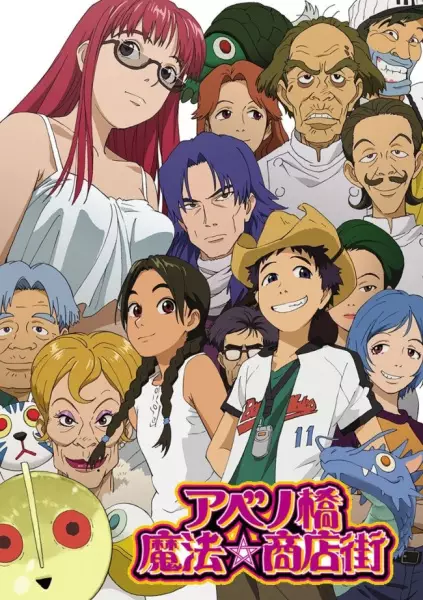
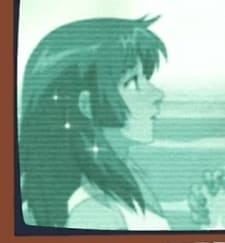
Magical☆Shopping Arcade Abenobashi
アベノ橋魔法☆商店街
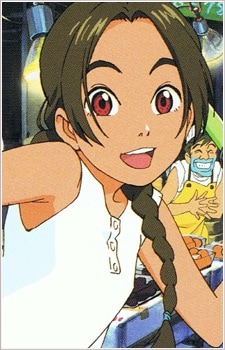
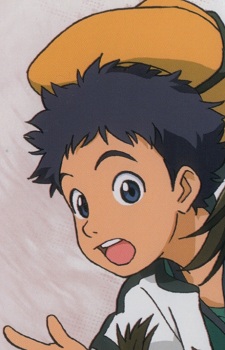
Satoshi "Sasshi" Imamiya believes his life is in shambles, as only a 12-year-old can. Having lost his card collection, his childish dilemmas worsen when he learns that his childhood friend, Arumi Asahina, will be moving away. Suddenly, their issues are dashed aside for the surreal, and they find themselves transported away through bizarre worlds of science fiction, magic, and war. Any attempt to escape only catapults them into another alien land. Soon, the two come to a realization: every world is just a reimagining of their hometown. But there are two unfamiliar faces—the voluptuous Mune-mune and the elusive blue-haired Eutus—and they just might be the key to escaping their predicament. Abenobashi Mahou☆Shoutengai follows Sasshi and Arumi's comedic exploits as they desperately attempt to return home. However, when the pair unravel a tale spanning generations, they begin to wonder if the cause of their situation is more personal than they thought. Is returning home truly what they desire? [Written by MAL Rewrite]
Main
Main
Main
Main
Supporting
Supporting
Supporting
Supporting
Supporting
Supporting
Supporting
Ranivus
May 14, 2008
Abenobashi Mahou Shoutengai is pretty much Excel Saga meets Alice in Wonderland, with a suprisingly good story line thrown in for good measure. The story pretty much surrounds two really good friends Arumi and Sasshi. Who happen to live in a rundown project area called Abenobashi Shopping District thats on the verge of being replaced with a new develpment complex. Of course noone wants to leave but then, everything just starts to go awry quite fast. This is where the 'falling down the rabbit hole comes in' Some seasoned anime watchers will be thinking this is alot like Excel Saga but the onlyconnection will be that they are stuck in wierd (not random) enviroments. Beyond that everything will make sense the more you watch the show. Overall, the show manages to bring comedy, drama, action, fantasy, and even romance in to one nice fun 13 episode package. When you hear people talk about how important having a good production company is for an anime, Abenobashi would be a perfect example. Gainax and Madhouse are two of the best companies in the businesss and watching this show you'll see why. Theres so many dfferent handpainted backgrounds, that i lost count at about 100 per episode. And the art themes and backgrounds are very different in every episode which makes this show such a joy to watch. On top of that the comedy gags are just so funny you cant help but laugh out loud. Some comedy shows can get by just by having a poor art and great characters, but if you want to see what a comedy can be like with high qualtiy art, this would be the show. I cant forget to mention that the shows characters all show such a diverse range of emotions (and body parts) that fit perfectly with every situation. They use comedy faces at the right times, drama faces at correct places, all of them are displayed with such timing and style its almost eerily perfect. Its hilarious how they manage to pull off so many anime, movie, and video game gags in such a small amount of time. Also my only gripe is that the cast sometimes talks too fast but thats also for comedy purposes Another thing with the characters is that the voice cast are just perfect for this show, the two main characters are polar opposites from each other but sometimes on occasion they switch roles which makes them fun to watch. You'll manage to love and hate both of them in equal amounts. Most of the other characters are so hilariously good that you'll wish you can get them out of you memory banks. The ugly characters are rife with age spots and the youthful characters are filled with beautfy and sexiness. Speaking of sex theres alot of ecchi sittuations in this show, so if you don't mind a little skin with your comedy its there, Theres even a large amount of ecchi jokes that most people might find offensive but is still hilarious in their own right. Usually when somone hears the same sound effects robbed from other places its a bad thing. But in this case, robbing or emulating the same sound effects are perfect for this show and whats makes this anime so top notch. It was so fun trying to spot all the different sound effects and spoofs and place them with their original place. The high quality sound actually carrys on to the songs. The background music cosists usually of big band style music perfect for a comedy pair such as Ayumi and Sasshi. The op song is perfect as its a very up beat fun song excellent to set you in the mood of watching the show. Whereas watching the ending song gives you almost a nostalgic feeling (complete with black and white japanese history slide show) which you should be feeling after watching one episode of Abenobashi with all the fun spoofs and such. I can safely say i've seen the op and ed every time and thats usually hard to do. Overall, the show was paced perfectly, comedy was spot on, sight gags were more than perfect, more than enough media spoofs all throughout the show, and it was all just a generally fun ride throughout. Typically the general public views anime as a cartoon with slapstick comedy, boobs, and alot of screaming (like Akira). Thats a pretty good description of the show in a nutshell. This is one of the show's that would be perfect to show a new anime viewer. Everyone should watch this show regardless of their preference, because even if it sounds like the same formula (from Excel Saga) it is far from it. Not a big fan of giving all 9's and 10's but that my honest feeling about this show.
Supporting
YourMessageHere
August 6, 2007
Take Quantum Leap (or Sliders, your preference) and cross it with Excel Saga. That, in a nutshell, is Abenobashi Magical Shopping Arcade. A couple of kids, a bright but otherwise unexceptional girl and her male otaku neigbour and long-term friend, find themselves tumbling from one lunatic parallel world to another in what begins as simply an attempt to return to normality but becomes an attempt to make things in their own mundane yet beloved reality right. The presence of recurring characters, not only versions of people they know but people they don\'t, begin to clue them in to the method behind themadness. The debt this series owes to Excel Saga is obvious and considerable, and wile I love both series, to me this has the edge in my affections. Sasshi and Arumi\'s efforts take them from one genre parody to another week by week, but unlike Excel Saga\'s scattergun "just because I said so" approach, the whole affair has a coherent and moderately serious storyline running through it, tying everything together. That one can maintain a single overarching plot through an RPG world, a kung fu world, a scifi world, a gangster world, a warfare world and so on is impressive enough. But the fact that you needn\'t follow the plot, if you don\'t want to, is also pretty smart. If you prefer, you can generally ignore the overarching plot and concentrate on the humour, of which there is lots, and it doesn\'t really let up; none of excel\'s recycling here, no "cute animal anime skit number three". The exceptions are a couple of episodes that in fact aren\'t all that funny and are mostly concerned with the overarching plot, a bit of a weakness. Perhaps with a little more polish this element could have been spread across the whole spread of episodes, and as it is, it does require some concentration to fully \'get\' the plot. No matter, I found myself laughing my ass off most of the time anyhow. Graphically, Abenobashi Magical Shopping Arcade has nothing very special about it - but it\'s a rare comedy that dazzles the eyes too. Everything is however perfectly unobjectionable, with character design probably the most impressive aspect. All the supporting cast, the familiar faces from around the Shotengai, appear in a new form for every episode; it\'s easy to take for granted the way they all fit straight in to whatever setting, yet are instantly recogniseable, no small feat in actuality. There\'s a mostly jazz-flavoured soundtrack, the BGM nothing incredible, generic but pleasing, and far from seeming out of kilter; like character design it is easy to take for granted its modification to fit the setting of each episode. The opening theme is infectiously catchy and great fun, one of my favourites among Hayashibara Megumi\'s many, many happy songs. The ending theme is also one of hers, and is gentle and lovely, the sort of music that makes you think of summer sunshine. Basically, Abenobashi Magical Shopping Arcade is one of those rare things that is as complicated as you want it to be. It can be just a parody humour show, or a more complicated tale with serious points to make about urban decline and the loss of community feeling, and also about genre cliches, if you like, on top of simply being funny as hell. You gets more than you pays for, for once.
yacques
November 8, 2013
Abenobashi Mahou Shoutengai First when I heard this anime's name, it made me think of a bunch of cute magical girls with pink hair and super round eyes casting spells and fighting against evil. Something I totally wouldn't watch. Then I noticed the producer is Gainax, which immidiately made me intrested of the series. So, watched it and I'm happy I did. ABOUT: Abenobashi tells a story of two childhood friends, Arumi and Sasshi. They live in the peaceful city of Osaka spending time with each other and just hanging around. However, Arumi is going to move to Hokkaido with her family and Sasshi's pretty shocked when hefinds it out. After few strange incidents these kids get sucked in different worlds. Time and period changes every time but the city and the people in it remain, although their settings change. Only Arumi and Sasshi can remember their 'real' world, everyone else are living their lives like it has always been the same. Arumi and Sasshi are trying to figure out why they are shuffling these weird paradox-worlds and how they can get back to their original world. Abenobashi has many movie references from famous American films which is a funny twist when you recognize them. Each episode contains a different world with different set-ups, varying from fairyland to a world of war. Even the art style changes making you really wait for the next episode. It’s a story about life and changes that come along with it. ART: As I am a big fan of Gainax productions, I really enjoyed this art. It reminds me of FLCL, maybe being a bit more mellow and pastel-colored. Still it has those little details and fast paced movements that makes it super-enjoyable in my eyes. I wish there would be more animes made with this same style. SOUND: The atmosphere is mostly created by the art and dialogue/storytelling, so the music mostly stays in the background. The music isn’t that intense but it fits in nicely. Voice actors in the other hand are extremely good choices! None of them made me irritated, they fit really well with their characters. Sometimes it's really a pain in the ass when you find a good series but the voice actors suck so bad it makes you not even want to watch it at all. Gladly that's not the case in this one. CHARACTER: The main characters are really good friends with each other. Sasshi’s a good example of a teenage boy who’s still a bit childish with his dreams and behavior, while Arumi is a bit more mature and she easily gets mad by Sasshi’s ‘stupid’ actions. We get a peek of their familiesl and their pasts as well, which makes you understand the main characters and their intensions better. All of the characters are unique persons, they have their own story and goals to reach. In every episode the background-characters positions change, though they still manage to remain their personalities. OVERALL: If you have watched FLCL and liked it, you totally need to watch this. Abenobashi’s wacky, energetic and humorous. It makes you laugh and smile but some episodes might make you cry and leave you with chills. Because of the jumping from world to world, this anime has a little bit of something to everyone. You should watch it, even if only once.
Wahmphi
December 24, 2014
Story: Abenobashi jumps from hamfisted comedy to serious plot moments and back again, giving the series a very uneven tone and pacing. It would have done better to excel at one or the other rather than try to do both. That being said, the plot's central premise is interesting enough to keep a viewer engaged from episode to episode, even if it does get wearying at times. Art: The art is bombastic and cartoony, full of bright colors. It's a more than capable vehicle for the zany humor this show presents, but it doesn't really stand out either. Sound: This series is full of cartoony, western sound effects, addingto the madcap style of the show. The characters are well acted and convincing. Do not watch the dub. Not because I dislike dubs; I love dubs. I watch most series with dubs but Abenobashi has the misfortune of having one that wrecks the immersion and misrepresents the characters. Character: The lead characters are a charming duo, who's personalities play off one another in hilarious ways. They were the main draw of the show for me. Their interactions provide a backbone for the otherwise reference-laden comedy of the show. The side characters are one-note, but suitably funny. Enjoyment: I enjoyed this show the most during its funnier moments and more serious character moments, but the humor was very hit and miss for me. If you enjoy referential humor and wacky sexual humor, you'll probably enjoy this show. Overall: This show was mostly wasted potential for me. It's main characters are witty and likeable, but the plot was unsatisfying and dragged down by the show's comedic nature. It could've either been a great comedy or a great story but it took the middle road and suffered for it. Vedict: 6
AnnoKano
January 10, 2014
“The times, they are a changin’” once sang Bob Dylan, in a song about a revolution against the old guard of established capitalists, about to be replaced by the creative and political youth. They would bring about a change for the better and create a world where the common man remains in control and the Capitalists are kept on a short leash. Needless to say Dylan was, as every generation since has been: completely wrong. The vanguard of Capitalism is now more powerful and in more control than it ever was, and the common man who has yet to file within its ranks is beingsquashed and squeezed by its weight. Abenobashi Mahou Shoutengai is about a community about to fall victim to the turning wheel of progress- a small group of local kids whose parents all work in the aging local shopping arcade, shortly to be made redundant by the construction of a new megamall in the vicinity. Some recognise the inevitable and opt to move away- such as the Asahina family, who run a French restaurant within the Shoutengai. Recognising the imminent destruction of their way of life, their father decides to resettle the family in rural Hokkaido. However, this has rather unfortunate consequences for daughter Arumi and her best friend Saashi, who have grown up together within the shopping arcade but are now set to be separated forever. The blameless victims of a ruthless economic system out with their comprehension, Arumi and Saashi have precious little childhood left- that glorious time spent living in a bubble untouched by the harsher realities of life and sheltered from the workings of the wider world. It can be forgiven in such circumstances, particularly of children, to want to retreat into the realm of fantasy. Millions of people will buy lottery tickets this week, even though only a handful of them will win, because of the potent fantasy that wealth will solve all of life’s problems. Saashi and Arumi are children however and so do not imagine a solution to the problem, but instead imagine a reality where there is no longer a problem. They enter a series of parallel universes where the shopping arcade exists in a different theme, each one an homage to a different genre of fiction. The residents of the shopping arcade are there too- with different roles in each new dimension. One re-imagines the Shoutengai as a fantasy castle; another as a space ship; yet another as a film noir influenced detective story. Each one is an excellent homage to the genre it portrays, with all the usual tropes included and plenty of jokes and references to season them. The whole experience is lots of fun for Saashi, a geek at heart, getting to experience for himself the worlds of fiction that he has immersed himself in throughout his childhood. Simpler worlds where the stake is greater but so are the odds, and where the enemy is a man with a moustache rather than a recurring trend in an economic system. His character is a representation of those of us who are passionate about fiction, and his experiences a metaphor for why we immerse ourselves in fiction. On the face of it, because we like the stories that are told and the wacky worlds we encounter- but deep down because of a desire to escape the tedious complexities of reality. Antagonistic to this trait is his best friend Arumi, who despite being the same age as Saashi is a great deal more mature than he is. When the two are transported to the parallel universes of the Shoutengai, Arumi maintains a level head and demands that the two of them return home, despite recognising what the consequences of doing so are for the two of them. This conflict between the two adds an interesting dimension to the story and drives the development of the two characters. Arumi’s character is also, by the standards of the medium, something of a feminist icon. Young girls in anime are portrayed in such a fashion that even intelligence is turned into a sexual fetish rather than a single aspect of a complicated personality. Arumi is different; she isn’t just an archetype, she has the qualities of a real person and while her level of maturity and pragmatism are perhaps a little exaggerated for someone her age, we should ask ourselves whether Abenobashi Mahou Shoutengai is really about the behaviour of children, or about the behaviour of adults. That is not to say that the rest of Abenobashi is feminist, however. It contains the usual perverse humour that is prevalent throughout the genres depicted. In particular, one of the main characters has breasts on the anatomically impossible side of enormous, and this is played for laughs frequently. For those who have matured since their younger teenage years, or those who are female, this is not particularly funny and certainly not original. Similarly offensive is its depiction of the local drag queen, which is neither clever nor amusing. It is probably best to sideline these transgressions as stylistic elements, intended to play off the wackiness of the rest of the production. Depicting multiple universes provides Abenobashi with ample opportunity to experiment with different art styles while remaining cohesive and studio GAINAX use this to their advantage. Throughout the series: every new setting comes with a new artistic style and each one is brilliant in its own way. No expense is spared on animation either, and movement is smooth throughout the series. The character designs are cartoonish and exaggerated, yet versatile enough to fit the wide range of different settings that appear throughout the series. In short there are many aspects of this series that are of exceptional quality and worthy of high praise, but there is one specific element of the storyline which is liable to sour one’s opinion of this otherwise clever and humorous production. If you are familiar with the anything else from the Gainax catalogue, no doubt you will be able to guess what that might be. The conclusion of Abenobashi Mahou Shoutengai is a rather bitter pill to swallow. The development of the series until that point leads one to expect a certain conclusion, until suddenly changing direction dramatically and going somewhere completely unexpected. It usually feels a lot less satisfactory than the obvious ending envisioned, which is frustrating. At the time, I believe my exact words were: “Fucking Gainax!” However, if one spends time afterward to mull over it, you can start to appreciate the qualities of the ending presented to us. While having our expectations realised would have been a satisfying experience, to have them dashed at the last moments prompts us to think about the production more without actually having lost anything; for if we so firmly expect a certain conclusion that we are outraged when it is not satisfied, we know already how it would have played out had that been the conclusion shown. Derailing it means we must not only ponder the significance of the alternative, but why the creators decided to use the alternative. To anger the audience, I hear some of you say. That was my initial impression, but on reflection I have started to doubt it. While the series is presented as a parody, but the underlying storyline is about escapism and its central themes are the end of childhood and, crucially, the relationship between a story and its audience. If Saashi is a representation of the audience, which I believe is self-evident, Abenobashi Mahou Shoutengai’s conclusion begins to make sense. For when like Saashi, we are faced with a dark and threatening side of reality which we are powerless to stop, we just cover our heads, avert our eyes and disappear into our own little worlds of fantasy.
Rank
#3500
Popularity
#2397
Members
97,900
Favorites
388
Episodes
13