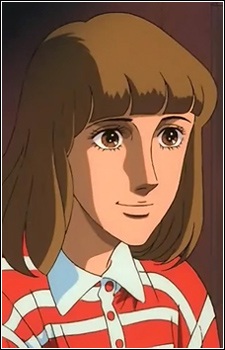

Aim for the Ace!
エースをねらえ!
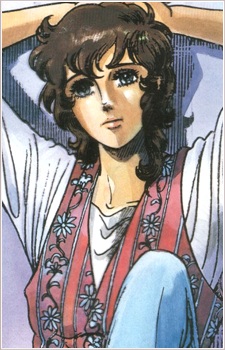
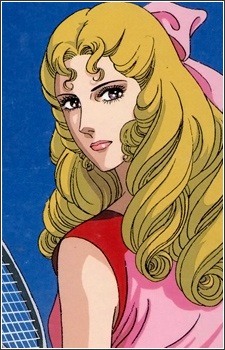
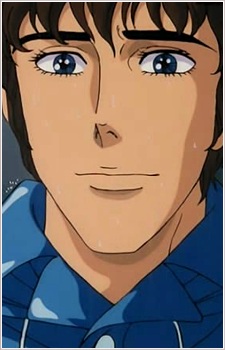
On her first day at Nishi High School, 15-year-old Hiromi Oka is inspired by top player Reika "Ochoufujin" Ryuuzaki to take up tennis. Shortly after joining the school's tennis club, she encounters Jin Munakata, the club's new coach. Munakata puts everyone under rigorous training that even puts Ochoufujin to shame. Despite the hardships, Hiromi's determination prompts the coach to select her as part of the club's main players. Because of this, Hiromi must endure the peer pressure from her seniors to become an ace tennis player. (Source: ANN)
Unowen
March 13, 2016
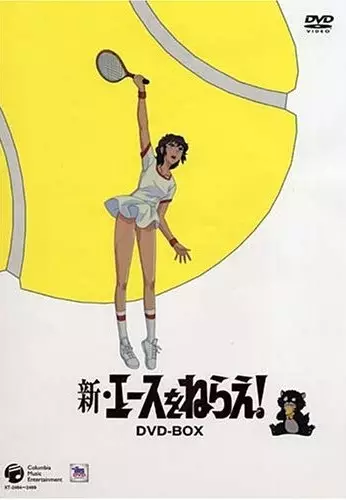
Animation as any other form of art can't avoid the rule of percentages that supposedly determines what is good amidst the mediocrity (that some would claim is around the 90% of the total). When it comes to old anime as the one object of this review, new factors appear, and the challenge is placed in discerning between what was lacklustre back in the day of its creation and what are the mere consequences of standing the test of time. Aim for the Ace! (Ace wo Nerae!) is one show worth to be highlighted thanks to the apparent simplicity of its premise, and the good mixture betweenthe sports' department with the constant dramatic situations and the psychological exploration of the characters. The fact of being only 2-cours long makes it from the very beginning way more accessible than some of the long-runners of the time. Aired in 1973, is not only one of the first anime of its genre, but also the first production to came under the name of studio Madhouse, and directed by one of its founders, Osamu Dezaki. The shows under the direction of Dezaki use to be safe bets for us viewers of our time, since they were able to find their strengths in the same limitations of the format that used to work as detriments instead. It is not, nevertheless, the aim of this review to praise this particular work for just being one of the first to make their appearance in this particular scene of both shoujo and sports. Aim for the Ace! is one truly interesting series by itself in spite of its context, with themes and worries that almost haven't aged with the pass of the decades, and that are still current and relatable. There isn't an excess of melodrama either, since the different issues are solved quite naturally, while others are introduced at the same time in one constant cycle of formulation-resolution that avoids dragging a particular problem for too long. The portrayal of its sports aspect shows a progressive and believable evolution. Visually speaking this show is a rarity, way less rough-looking than most TV productions of the end of the 60s and beginning of the 70s. Its peculiar color palette, with a high tendency for pastel colors, Akio Sugino's great work adapting the character designs and the overall good animation for the time are aspects worth to be mentioned. Apparently an obscure show in MAL terms with not even a thousand people rating the entry, it was actually a hit in Japan back in the day, albeit not in its original broadcast. An increased popularity in the following years thanks to retransmittions lead to the creation of Shin Ace wo Nerae! (1978), a remake of the series with updated visuals more alongside other Dezaki shows of the end of the decade. A summary movie for this remake, with new and better animation was also released on the following year. There are also a second and third seasons, released in the late 80s in the form of OVAs, nearly twenty years after the original series. Unfortunately, only the first season (that can be enjoyed as a stand-alone), the film (which I recommend despite the fact it covers the same events), and the first two episodes of the S2 OVAs are currently available with English subtitles [2021 update: both sequel OVAs are finally fully available!]. In conclusion, this 26-episode experience is really recommendable for any anime fan that is interested in the history of the medium. Some of the characters and themes of this show have been reformulated by numerous others almost to a fault, what affords the series a constant déjà vu vibe. Ultimately, don't miss it if by any chance you like Gainax's Top wo Nerae!, since the major part of that OVA's story works as a parody of Ace wo Nerae!
triplefox
May 12, 2016
I first watched Ace wo Nerae! in 2009, after learning of its existence through Gunbuster, and it had quite an impact on me at the time. It's a simple enough story - a great coach sees potential in a young student, and trains her to be a strong, courageous person on and off the court. Through hard work and persistence she overcomes her obstacles and grows successful. There is no audiovisual spectacle to be found in TV animation this old, from an era where Japanese animation's budgets, technical background and conventions were relatively limited. The most charitable thing you can say about it is thatit has some stylish design ideas, and a catchy opening theme. I tend to like art that borders on the abstract, so I still give it a decent rating. What I get impacted by every time I rewatch this(and I will go and rewatch an episode every year or two) is the strong storytelling. A lot of the tropes common to modern anime are seen here, in a more innocuous, unexplored form. It doesn't try to subvert anything or throw in huge twists, wacky characters or fantastical elements, it stays in a grounded, ordinary sort of telling, and just builds up your empathy for the characters and their goals with persistence. The simplicity of it is the thing that makes it remain interesting even now. If you want to see the story but would like different takes on it, you have plenty of alternatives: There is a 1979 film remake, a TV drama, and, of course, the original manga. The story does have a plot continuation in the sequel series and OVA, but they serve as more of a coda for fans.
NotenSMSK
June 19, 2015
Ace wo Nerea! Translated to Aim for the Ace is an underrated 1973's anime and that probably brings the first doubt to mind: The animation. Now before we move ahead, I'll tackle the animation as quickly as possible so it is easy for animation critics to decide whether to watch it or not. The animation of course is old. It lacks the luster and details, and fluidity of more recent animes. The colors are dull and at times the character features are seriously out of shape. Plus, there is a lot of sequence repetition. However - and this is important, the animation has its positives. Thechar features and build are consistent and the facial art style is somewhat unique and at times even attractive. They have repetition, yes - however they do manage to pull of unique sequences when required as well. And as someone who has followed a decent few recent animes, the animation is bearable. It is needed at this point to be understood that it is not an anime which features amazing graphic tennis but a story about a personality and a player strengthening separately and their journey through many hurdles. After having filtered out people who had issues with animation - the question pops up - is the anime good in the rest of the aspects? As far as story goes - it is a present cliche of "talentless protagonist going the distance to be one of the best" which wasn't as big a cliche then and even if it was, it is executed at a really good pace. You sort of know the ending and direction, but you watch for how it is executed. Each event - which is 1 to 2 episode long, manages well to keep your attention and doesn't let the show get too slow and boring or two fast and exciting to put you off. As for characters, well - for one, I love the characters in it. The main chars at least are pretty believable, their cues, expressions, and dialogue truly reflect an average school life. Meaning, moods just don't 'appear' or 'feelings' don't just develop out of nowhere. Plus, the protagonist isn't the total cry baby that just loses hope. And if that IS your first impression about her, it does change as the anime progresses. Some may rightly claim that certain chars are 1 dimensional however the anime does hint that they are showing a certain 'aspect' of their life, or their personality as they wish to show and their intentions, thoughts may be different and/or they may act differently given different situations. That is NOT shown for every single char, but it did help enough to keep me happy with the chars. There is one issue after watching many recent animes perhaps and it is that there are instances where you can guess which character to pop up to boost/demoralize the protagonist or add tension in the storyline, however unless one is overly critical about such matters, it is something that can be overlooked. The sounds are old, quirky and seem like something my parents might like. But they do manage to compliment the anime considerably and that is their purpose in essence. So over how would I describe it? An anime with old school, yet bearable and at times 'good' animation, believable progression of a tennis players skill and personality build with certain embarrassing, certain comical, and certain frustrating events that one does face in real. The episodes progress in a well thought manner, nudging you to see further and when I finished it, I was certainly happy to pick this up. It is a recommendation to all people who like sports, and good char development, and rather then looking for an extremely unique story are more satisfied with good execution and story line. Thank you for reading and feedback - positive or negative (not random insults - FEEDBACK) is always welcome!
The_Namer
February 20, 2023
Some genres evolve beyond recognition over the decades. Others have such powerful foundational works that you can still see their DNA in shows made half a century later. Sports anime are very much the latter. The tropes that form the backbone of the genre today can be traced back to shows like Aim for the Ace! Far from feeling like sports anime have left it behind, this 1973 Osamu Dezaki classic is as riveting now as it must have been when first broadcast. Indeed, the king of melodrama raises the tension to breathtaking heights. Though it follows the straightforward story of a girl learning the hardwork and guts it takes to master tennis, the visuals ratchet up the intensity masterfully to mirror the emotions of the characters. At one point Hiromi has hard lessons beaten into her in a tennis court enclosed by barbed wire, giving it the air of a prison camp. Umpires are faceless shadows casting judgement over the girls' fates. Barrages of tennis balls strike people like a hail of machinegun fire. Blood flies. Questions of who will win or lose mingle with fears over whether they will wind up crippled for life from overexerting themselves. It's all interwoven with a solid shojo romance arc and, despite clearly not being a complete adaptation of the manga, reaches a satisfying conclusion with an appropriate final confrontation.
freehydrogen
May 15, 2025
Tune in to this anime if you want to witness amazing sportsmanship and a well-paced, satisfying growth. This show exceeded all of my expectations and have become one of the my absolute favourites! Now that I have finished the 26 episode series, I reflect on it melancholically, because it had wholly captured my heart. I would recommend that anyone who comes across this review watches the show themselves to discover the points that I have mentioned below because it truly makes the experience better with a more subjective approach. Story: There is not a single episode which will make you delay watching the next.The pacing is really something to savour! The growth of Oka Hiromi's skills is slow but steady; it is perfectly handled. There is rivalry, denial, acceptance, training, matches, development, almost everything you would expect from the first impression. Regardless of the predictability of tropes, it gives you a unique experience as none of the "dilemma's" or hindrances are neither dragged nor rushed; it is dealt with adequately, which is the leading attraction of the show. Whenever she learns something there is always room left for improvement, so it doesn't feel like she has become overpowered without relative hardships to back her up, despite her inborn talent. The anime also doesn't waste time on petty rivalry or romance (except for the first few episodes), for most of the duration of the show, it focuses on H.O personal growth as tennis becomes something she starts to revere and love, and the hardships she must face due to her newborn emotions. That is when she trains with her full potential. She showcases a truly inspiring and satisfying development. Characters: I especially like the main rivalry between H.O and R.R; it is not driven by jealousy or insecurity (although it may seem so at first) but by pure desire to excel at their sport with both acknowledging and even admiring each others skills as the story progresses. Another thing to note is that while the characters do reflect on their game-play and encourage themselves during matches, they don't go on hours long internal monologues, which is very refreshing. Men's tennis team easily became one of my favourites as they constantly encouraged and supported H.O despite her facing constant rebuttal from her female counterparts (especially one of the members, who in fact ends up finding a very reasonable ground to support her by the end of the series. Her redemption arc isn't the most extravagant; however, it is quite realistic). Bgm and sound effects: I didn't miss a single episode's opening and ending themes -they are that captivating. It also has a very nostalgic feel to it, not only because of the music itself, but also due to the quality of the audios; and especially is the case if you have grown up watching animes like Shinchan and Doraemon. As for the sound effects, they can be very rough and loud at times; however, that is just the essence of older animes. Animation: This is the biggest complain people have about this show; bad animation. But I think that the plot itself compensates well for the animation, and personally I enjoyed the simplicity in the art. Sometimes you can even have a laugh to yourself when you notice the very obvious cut-outs of characters they use at times. But I would point out that the animation during some part of matches is very fluid and natural, albeit being used over and over again. Additionally, I am pretty sure that the animation quality increases a bit throughout the show, for example, H.O's room changes from appearing like it is just a bed and wallpaper stranded in an unspecified universe to actually being a room with curtains and furniture. The distinction is subtle but present. I am very excited about watching the next season!!! There are so many specific things about the anime that I undoubtedly adored, but as per my devastatingly annoying desire of writing a spoiler-free review, I must refrain from making a mention of them. I hope everyone enjoys the show as much as I did!
Rank
#4024
Popularity
#5914
Members
16,295
Favorites
114
Episodes
26