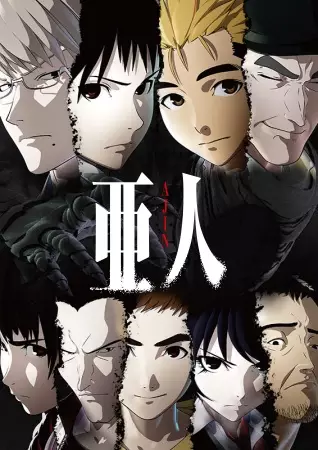
Ajin: Demi-Human
亜人
Mysterious immortal humans known as "Ajin" first appeared 17 years ago in Africa. Upon their discovery, they were labeled as a threat to mankind, as they might use their powers for evil and were incapable of being destroyed. Since then, whenever an Ajin is found within society, they are to be arrested and taken into custody immediately. Studying hard to become a doctor, Kei Nagai is a high schooler who knows very little about Ajin, only having seen them appear in the news every now and then. Students are taught that these creatures are not considered to be human, but Kei doesn't pay much attention in class. As a result, his perilously little grasp on this subject proves to be completely irrelevant when he survives an accident that was supposed to claim his life, signaling his rebirth as an Ajin and the start of his days of torment. However, as he finds himself alone on the run from the entire world, Kei soon realizes that more of his species may be a lot closer than he thinks. [Written by MAL Rewrite]
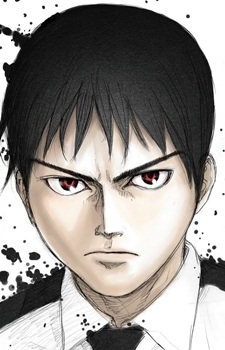
Main
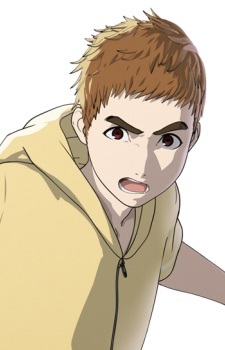
Supporting
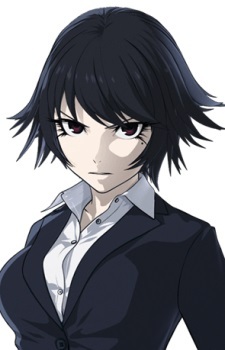
Supporting
Supporting
Supporting
Supporting
Supporting
Supporting
Supporting
Midg3tLuv
April 11, 2016
“Ajin” is the “Batman: Arkham Knight” (PC) of anime. This show is broken. The show visually assaults your eyes. Visuals are important in visual entertainment. Dismissing visuals in visual entertainment is like dismissing food at a restaurant. You may be influenced to go somewhere because the service rocks, but you won’t go if the food is horrible. The visuals are incompetent at best. I’m going to put this in terms that many people on this site will understand. Some gaming companies restrict games to 30 frames per second (FPS) because they want their game to be more “cinematic”. People complain that games below 30 FPS isnot suitable for many games. Frame rates under 30 FPS is regarded as a sign of lacking quality. “Ajin” took this concept of low frames as being cinematic and ran with it. They tried to be super cinematic with frame rates dipping below 10 FPS. In scientific terms, this does not even pass the critical flicker fusion frequency. Human eyes/brains register 24 FPS as a fluid motion. Movies are usually shot in 24 FPS and repeat frames to synthesize a 30 FPS motion. Please have the courtesy of doing a little research and finding out what the bare minimum is for entertainment targeted for humans. This is the first time I have ever had a headache after watching something. The manga has more frames per second than this horrible adaptation. The show is so horribly animated that the studio acknowledges their professional impotence. I’m not talking about how the 5th episode is deservedly named “Trash”. Although in that episode Satou regenerated an arm, pulled his arm out from under him, and shot a dude in a literal 1 frame. In chapter 19 of the manga, Satou was supposed to fly a plane into the building. They knew they couldn’t animate an airplane smoothly so they gave us a different alternative. We got an explosion and Satou riding the building down. The concept of him riding the building down was legit, but it is wrong. People will argue that the animators were being sympathetic towards Americans by not showing the plane like how Pokémon did, but there is another scene where the animators pushed the action out of the scene. Earlier in the series, a train hit a car and pushed the car out of the frame so they could blow the car up without having to animate it. There was a helicopter that blew up off screen because effort is too much to ask for. If the animators cared about their “art” they would not allow the “please buy our DVD/Blu-ray” halfway through every episode. This ad goes on for a full minute and takes up nearly half the screen. There are reasons that this advertisement doesn’t show up in other shows. Any self-respecting animator would be outraged by the blanketing of their animation. People try to defend CG when it is poorly executed in shows they like, but that is being a zealot. Quality doesn’t have sacrificed because the animation style is being experimented with. Over 2 decades ago Aardman Animation, the studio that brought us the British anime “Wallace and Gromit”, has made clay move far smoother than CG because Aardman Animation actually cares about their work and puts time into their art. The show does deserve some credit. The orchestrated pieces are put perfectly in place. I like Japanese Justin Timberlake in the intro song. The creators of this show are probably good with the ladies, because the mood is set for every scene. Satou is a great bad guy. He wants the world to burn and he has a great personality. You understand his rage and malcontent with how humans have treated him and he wants back at them. The show is best when Satou is around. The story is awesome. Everyone who has seen the anime or read the manga will agree that the story is cool. Corrupt government, explosions, stands (black ghosts), and Satou are all great things to have in a storyline. Great job on the story for knowing who is interesting and when they are interesting. Most people watch stuff for the main character, but Kei takes a backseat in the story so the show can focus on the larger issues. In the end, the show is a failure. Polygon Pictures horribly executed an adaptation. It is ambitious to animate humans with CG and the studio is not technically adept enough to execute smooth motion with it. Polygon Pictures joins the ranks of the garbage studios. Studio Deen, Idea Factory, and even KOO-KI could make this show better than Polygon Pictures. It makes me sad that the promotional videos for the new “Berserk” anime will also look like an unfinished project. Guts, if he were real, would bitch slap all those animators in the face with “Dragonslayer” for disgracing the well-deserved number 1 rated manga on this site. Real fans hold standards to their favorite series. If the anime does the manga justice, you should love and cherish it. When they fail at it, the fans should voice their disappointed opinions. Fans do not change their profile picture to a character from the show while rating and reviewing the show at a 10 when they have only seen 4 episodes of the series.
ZephSilver
April 8, 2016
"Don't judge a book by its cover": a phrase that I'm sure many of us are familiar with, being one that has long transcended both generational and ethnic background to be used across the globe. A phrase that has taken on several reiterations, but still maintains the same direct message. It's simple, to the point, and always relevant when entering the world of any storytelling medium. As much as many of us would like to think that we could quickly discern the contents of a show solely off of the art cover and synopsis, there are times when we are all proven wrong. Take theoutward appearances of Mahou Shoujo Madoka★Magica and Gakkougurashi! for example. Both titles display an outer shell that could be described as innocent or even a bit too cloying upon first encounter. Had any veteran anime viewer taken a glance at them with no prior knowledge, it could be easy to understand if they had fallen for the façade. When any viewer becomes accustomed to familiarized signs in certain anime they've experienced before, it isn't out of character for complacency to kick in. Whether we want to or not, past experiences tend to lead to some subconscious rewiring of expectations for individual content we perceive later on. It's how we refine our viewing habits and why we tend to avoid certain things that set off red flags in our heads due to unsavory experiences. It's a primal reaction our ancestors had to avoid danger and one we adopted for more trivial things, like avoiding shows that aren't in our favor. It's a habit with polarizing results, but still, an understandable one we all share in one way or another. And if one were to glance at the outward appearance of Ajin, I'm sure the prenotion to judge it would take hold quickly. With promotional art and a premise that seem to enforce the trappings of a typical bishounen action romp, it isn't hard to see why that knee-jerk reaction to label it would occur. But what we see on the outside, and what we actually get, is a whole other story. While Ajin may pattern itself to other shows of that caliber, it quickly deviates from the tropes associated with it to become something far more promising. This anime is a book that screams one thing while the pages on the inside reveal another. The story takes place in a fictional universe where humanity stumbled upon the discovery of a new sub-species of beings dubbed the Ajin. Having the appearance of regular humans, the Ajins are thought to be immortal, while also possessing several supernatural abilities. Due to their documented cases' being extremely rare, they quickly become subjects of superstition. But all that changes when a resurgence of the species occurs in modern day Japan, bringing with it a new public frenzy that leads us into the narrative that unfolds before us today. What we have here is a fundamental case of man vs. "allegorical" man, something many of us is familiar with, whether we're aware of it or not. Every time there's a story that pits opposing ideals of beings capable of human-level thought, (whether that be man or beast), it follows the man vs. man conflict. This isn't always limited to one conflict either, as multiple topics tend to branch out from its inception, as demonstrated with movies like Dances With Wolves, or Cameron's Avatar, for the modern viewing audience. It's the tale of societal discrimination and xenophobic rejection of anything that doesn't align with someone's own principals. These are the stories that advocate awareness by providing social commentary with the human condition being used as its platform. These familiar tales are no stranger to the world of anime. You don't have to look far, with titles such as Parasyte and Shinsekai Yori adhering to this traditional narrative, both of which serve as ambassadors in anime's ability to craft this tale just as efficiently as anything found on the silver screen. But despite the commonality of these stories, it's still one that's easily botched when handled with little finesse, with titles such as Tokyo Ghoul and Terra Formars being testaments to that fact. Thankfully, Ajin isn't a case of the latter, although, I do hesitate to place it on the caliber of the prior entries mentioned that did this narrative right. If I had to give a comparative evaluation, I'd say it finds itself somewhere comfortably in the middle. While not as fleshed out as Shinsekai Yori or as multifaceted as Parasyte, Ajin still manages to hold its own. Instead of letting the subject matter marinate in the subconscious of the viewer, Ajin makes swift actions to drive home the messages quickly it wishes to convey. This gives room for a narrative that's always in motion, which is ideal for those seeking immediate results. And while this to-the-point approach may leave many of its concepts explored only on a surface level, it still allows for a more consumable binge-watching experience as a result. It prioritizes thrills over thematic pondering, which makes it more accessible to a broader market. This also makes Ajin an excellent gateway for those who want just to get their toes wet with heftier concepts, but aren't quite ready to dive in just yet. It sprinkles in commentary about our current populace's desensitized state, as well as touching upon ethical treatment taken by governing bodies. It does just enough to whet the appetite of the viewer and add flavor to its narrative. And for those who want just a little bit extra with their action, this might just be all that's needed. But despite that fact, there's still a barrier of entry for those willing to crack the spine of this anime, and that, of course, is the usage of 3DCG animation. Deciding to use 3DCG, similar to that of Knights of Sidonia, was probably the most significant deterrent for those who saw past the generic premise and appearance. And in all honesty, just hearing this news alone was perhaps the reason many overlooked this title altogether. Yes, the presentation can take some getting use to for viewers who don't find it aesthetically appealing, but for those not bothered by the occasional uncanny valley effect, the show remedied this problem better than most. Unlike Knights of Sidonia, the individual movements here show far more mobility. The soundtrack, composed of Gothic organs, booming Hans Zimmer-esque fog horn sections, heavy guitar riffs and more, also helped in compensating in places where the animation found itself lacking. It might not be by much for viewers who are bothered by even the thought of CGI, but it certainly made it a far more palatable experience for those that could see beyond that. The fights that occurred throughout the series weren't reduced to two people smashing fists with no rational thought but are rather tactical bouts where Ajins and humans alike use their strengths and weaknesses against each other. Even with the apparent advantage given to the Ajins, the human opposition still found many clever ways of exploiting their powers by using it against them. This was also the case for when Ajins clashed among themselves. The show went into a decent amount of detail in explaining the body mechanics of the Ajins as well as the extent of their abilities. And the more an Ajin was aware of its strengths, the better it was at utilizing it in and outside the battlefield. But perhaps the clearest demonstration of the show's deviation from its inherent trappings can be found with the main characters themselves. In order to avoid turning this into a long-winded analysis, I'll go over only the two prominent figures highlighted throughout the show. They were far from being the most fully-realized characters of the 2016 Winter season (that honor resides with Shouwa Genroku Rakugo Shinjuu); however, they were still far removed from the cookie-cutter lineup that would come standard-fare with these stories. And what they may have lacked in development, they more than made up for with their distinct personality traits and interactions. They're simple, but at the same time, subjects which would make for interesting, if only brief, character studies. Take, for example, our main character, Kei Nagai. The first defining trait he exhibits immediately separates him from the atypical wide-eyed idealist or the hot-blooded teen that come almost default with his role. Instead of a rehashed archetype with only a different coat of paint to define him, what we get is a selfish misanthrope who places his own self-preservation and needs above others. Whether he had to be deceptive or fake empathy to weasel his way out of trouble territory isn't of concern to him. There are no delusions of grandeur festering in his mind; he is very much aware of the extent of his capabilities, as well as his amoral standing with the world around him. And while not entirely being pegged as a nihilist, he doesn't place trust in anything that isn't an irrefutable truth. Kei Nagai is a teen whom we've either seen or were at one point in our lives, which makes him one of the most honest depictions of this age group in some time. Unless he's given a feasible or self-beneficial option to assist someone, he will not go out of his way to aid them if it means placing his own life in harm's way. Anything outside of that is merely done out of forced guilt or social obligation. This underrepresented type of character makes him far from your garden variety, and as a result, an intriguing one to follow. And as much as some of us would like to take the moral high road in response to other people's suffering, the truth is most of us don't acknowledge it with any substantial sympathy. And it's for this reason that our protagonist becomes not only well-depicted but also easily identifiable for our modern society. Now, this isn't to say some won't find his actions deplorable; there are certainly lots of people out there with a healthy moral fiber, but his personality and actions are properly documented for the audience to understand his psyche, regardless of one's own personal ethics. He isn't going to fulfill the role of any white-knight advocate anytime soon, but in the context of the story he's placed in, his personality is tailor-made for the current social climate. And while Kei Nagai retains the central character role, the true star of the series was none other than Satou. Satou, also nicknamed "The Hat" by officials, is quite the enigmatic figure. With a hospitable, soft-spoken demeanor upon initial contact, he brings with himself an aura of accumulated wisdom, but lurking just below the surface of his thinly veiled smile lies a man with a very twisted moral compass. Like the hybrid of a cunning old fox and someone akin to that of Magneto from the X-men franchise, there's nothing he won't do to reach his intended goal. While wanting for the betterment of his Ajin brethren, the path he takes to get there is paved with the blood of opposition and bystanders alike, all while sadistically reveling in the madness he brews up. He's a charismatic demon in sheep's clothing, a man who nonchalantly goes about his business with no sign of remorse, which is made all the more menacing given his weathered age. Any youth can demonstrate raw ferocity towards someone, but it's the carefully calculated approach of a much older man that strikes fear into the officials in this series. Satou, for all intents and purposes, is the show's undisputed badass, a title he more than lives up to. Another character worth briefly addressing was Yuu Tosaki, an official who balances out the opposing ideals of Satou and Kei. He's your "all business no pleasure" kind of detective who is given the task to apprehend the Ajins by any means necessary. While he came across as one note, in the beginning, that is later alleviated with the reveal of his motivation. Outside of Yuu Tosaki, the rest of the secondary characters aren't fleshed out to any extent, but they are given distinct enough personality traits to make their inclusion warranted. All in all, the characters, whether essential or minor, helped in bringing the world and conflict to life. This title proves that even action shows can have some level of thought and planning placed into them. It never tried to be something far more than what it was and performed well with the material it had to work with. For those thinking that this would be just another bishounen-cock-fight title, I implore you to discard that premature notion and give this show a try. There was never a dull moment while watching this anime. With a plot that continued to push forward and main characters that always kept me on the edge of my seat, I found a great deal of enjoyment here. Satou's actions alone were more than enough for me to power through it. While the art was a bit off-putting at times, it never got in the way of me enjoying any part of the series. In terms of quality, it's somewhere between Tokyo Ghoul and Parasyte. If TG were McDonalds and Parasyte were a 5-star restaurant, then Ajin would be your local diner. Ajin was a show that could have easily dissipated under the weight of its own premise but managed to hold up incredibly well. With narrative choices and thoughtful insight that demonstrated a level of competency lacking in similar titles, Ajin has proven to be a show worth the initial investment. And with everything being taken into consideration, Ajin has become one of the few documented cases of an "edgy shounen" being done right.
lawlmartz
April 11, 2016
Ajin- What Tokyo Ghoul Wanted to Be... and failed miserably at! Ajin- also the most unfairly ignored series of Winter 2016. There, it's been said. If you were one of the few people who can see past a childish, baseless, and unwarranted dislike of 3D CGI based anime on principle- good for you, because Ajin delivers a quality sci-fi/superpower tale, regardless of the form it's rendered in. Because it's first on everyone's mind- the first thing to address here is the animation. Yes, 3D CGI can be scary. We've all seen monstrosities of bad animation like the ASS dragon from Fate Stay Night, the original Ghostin the Shell SAC, Absolute Duo, and many others. Yes, we're all fully aware of how ugly that plastic shader looks. To that end, Ajin can be ugly- and the worst part is the framerate, which is very sluggish at times and drags the visual experience down. However, for a show that was rendered entirely in 3D, this is not the end of the world. The majority of it is very easy to watch and flows well- and given the dark subject material, how it's cast in a washed out, at some points almost grayscale color scheme, but the few bright moments seem brighter by comparison in an otherwise pretty dreary show. The next thing I feel led to discuss are the comparisons to Tokyo Ghoul that I alluded to in the title. The subject matter here is quite similar, only with Ajin taking a step toward realism and making good on its threats, minus the terrible teen angst and melodrama. See, the Ajin are a small group of humans who have the ability to regenerate their bodies upon dying. No matter how gruesome their injuries, they always come back to life in a few seconds- making them almost entirely invincible. Because they're also human, they have similar fallibility to crippling, choking, or otherwise being incapacitated. To further complicate matters, they're also able to summon an invisible, (to everyone who is not an Ajin) but humanoid black specter which can be used as a proxy and controlled remotely- to do combat, spy, whatever. The catch is that they can only use this once or twice per day, before needing to regenerate. The Ajin are, because of the actions of one man named Satou, hunted by the government- resulting in a sort of class warfare, the nearly invincible Ajin VS the police and special agents whose job it is to control knowledge of and movements of the Ajin- all deemed a national threat from the terroristic operations of the murderous Satou- a broken psychopath with para-military training who exists for no purpose other than to incite fear and shock into the populace of Japan through killing- which he thoroughly enjoys. However much this story may be about Satou though, the main character he is not. Kei Nagai, a student who reminds me a lot of Light Yagami, albeit with a much more human mind and cold streak, is involved in a bus accident walking home from school. Smeared on the ground along with his life blood and organs, and dead- this black smoke appears from his body and a crackling sound is heard. Kei sits up, clothes torn from grinding along the road underneath the bus- very alive. Kei recognizes immediately that he's an Ajin, and that his life has just changed dramatically- most likely for the worst. His friends freak out, and then there's a knock at the door. Kei recognizes that it's time to go, and he, who just wants to live quietly and away from the Ajin madness, takes off on the run. Kei is, and shows that he's different from many superpower shonen main characters in that he's a very calculating, cold person. He's not afraid to use anyone or anything in his path if he sees it as a means to get ahead, and through this, he manages to slip under the radar, even if it costs him his friends and family, his force of will and intellect are what keep him alive after the government gets on his scent. See, the world of Ajin is built up very well from the beginning, featuring students in school gossiping about this viral video, supposedly featuring an Ajin being murdered over and over by shady government officials. We later see news broadcasts with the names of suspected Ajin and recognize that there's a very large gap of information missing to the public about what they really are. This introduction (in a realistic way) of the public intrigue is very natural feeling, and sets the stage for a socio-political facet to the show later on, with government coverups and information war. On this note, it should be noted that this show really pushed the envelop of gritty content, at least in recent memory, especially in how it presents some of the violent acts. It's never my place to spoil anything, but suffice to say that Satou takes some very drastic and destructive measures (all within the realm of reality, mind you) to make Japan very aware of his presence and the threat he poses as both an Ajin and terrorist. Likewise, the story does a great job of making everything very morally gray, with abuses of power by the government and shrewd manipulations by Satou to shift the public opinion of the ignorant masses towards the plight of the Ajin. As a dark, engaging, and interesting shonen, Ajin is definitely one of the more memorable of the genre in recent memory. It took many of the themes that Tokyo Ghoul had breadth in, and then gave them depth. Where Tokyo Ghoul was afraid to take steps, or just completely missed steps, especially with its characters, we have much stronger motivation and reaction from the characters here. The plot advances in a way that can be followed, but not in the most predictable fashion, with a couple of genuinely shocking scenes to boot. Though this 13 episode series doesn't completely wrap up the story (that will be left to a sequel movie sometime later this year, a la Madoka Magica), it ends on a satisfying enough note that I wasn't perturbed by its somewhat abrupt ending. I'm willing to give this my stamp of approval, and even go so far as to say that it's the unsung anime of the season for staying true to what it began, not pulling any punches, and remaining consistently good throughout its run- something no other show from this past season can claim.
Stark700
April 10, 2016
It’s pretty much like a horror movie. Ajin uses a lot of ideas borrowed from horror lecture and fiction. These include ancient monsters (the Ajins), government hunting them down, and a dark story about how a young man’s life changing forever after getting involved with them. Based on the manga of the same name, Ajin is more or less a thrilling story. To clear things up straight, there’s actually a film trilogy as well based on this series. The second and third film has yet to be released (at the time this review was written). The TV anime adaptation reflects on a deeper storytelling withsome additional aspects. Although based on the first film, the TV anime adaptation still remains largely unchanged. The story begins with a young man named Kei Nagai. He is living in a world where Ajin exist, demi-humans that have existed almost 17 years ago first found in Africa. They are considered a world wonder as many people fear them yet also consider them very special. This is where Kei’s story comes in as he realizes that he is far from normal. I have to admit, the show was rather predictable at first. The first few episodes heavily hints that there’s something wrong with Kei and that his connection with the Ajin runs deeper than he thinks. It turns into a cat-and-mouse game scenario where police, government, and other individuals are after him. Even his friends betray him so that they can reap the awards of capturing an Ajin. The only ally he has at first is Kaito, a delinquent friend that he’s known from school. But truthfully, the reality is that the only person he can trust is himself. As the story progresses, we see the darker side of humanity and Kei himself even undergoes changes. It’s not made specifically clear though if he was always cold or became more aware afterwards. Either way, the show explores his character in ways that drastically contrasts with his personality when first introduced. The interesting part about Kei also shows what it really means to survive. In their world, it’s to kill or be killed because apparently, being captured by the government pretty much guarantees death. Don’t believe me? Just ask science. As a dark story, the characters in this series also explores the darker side of what humans are capable of. Scientists at facilities are tasked with discovering the secrets of Ajin and immorality so test subjects are usually tortured for information and data. Then, there are noticeable characters like Satou who strives to do anything to get what he wants including killing innocents with little value of human life. The question makes us wonder who the real monsters are: Ajin or humans like him. Even Kei’s sister seems to have forsaken him as she thinks him as a monster. Satou’s ambition to rule the country with his twisted goals also makes him a cruel sociopath with intelligence and resources. In ways, he is somewhat similar to Kei as both lacks empathy to kill and unafraid to die. Both are also quite reckless in their actions as well and often willing to take risks to get what they need. As the story progresses, other characters including those willing to participate in terrorism are introduced in the series to really show how twisted some humans can be. As you may have guessed by now, the show isn’t very much for the lighthearted. There’s little to no room for comedy and the story itself is not afraid to kill of characters at the click of its fingers. There’s hardly any humans that we can feel sympathy for throughout the show as well. Even Tosaki and his assistant Izumi can be hard to get attached to as they are active members to track down Ajins. So in essence, it should be recognizable that the show is hard to get people to like its characters. I think the only character that can be considered a valuable friend would be Kaito. He is selfless and often takes daring risks to help out others including putting his own life at stake to help out Kei. Unfortunately, he is perhaps just a very small part of kindness in their dark world. Meanwhile, the show pushes the idea of humans capable of being the real monsters. The downside is that it’s what we see mostly on paper rather than a deeper insight on their characters. The manga does a better job at adapting characterization such as with characters like Satou. Honestly, I wasn’t a fan of the CGI artwork of the show at first. Polygon Pictures helms the show with their production and it’s evident that they utilizes what they are capable of. However, I think the CGI works quite well in the end. Action remains fluid and more detailed with Ajins’ fighting capabilities. It also gives them a more terrifying appearance with added aesthetics such as special effect particles. The character designs seems more or less average though. But if you’re looking for violence, Ajin excels exactly at doing what it is and that’s showing delivering bloodshed. Soundtrack is effective and as the show progresses, it gets more noticeable especially during more tense moments. For most of the story, we have to remember that Kei is running away from society as people seek to capture him. The OST and music works effectively to showcase the story of this cat-and-mouse game scenario. Adding to the eerie music, we also get good voice acting like with Satou’s sadistic and sarcastic personality. Kei’s change also becomes noticeable as his voice mannerism becomes more cold and lack of empathy. The show also does a neat job with both the OP and ED theme too with stellar choreography. What to expect from Ajin in the end? A more compressed story that exploits the darker side of humanity. It’s a series that isn’t exactly fun to watch if you’re not a fan of cruel experimentation, government conspiracies, and betrayals. However, the show does a fairly good job at telling its story. Despite some lack of characterization, Ajin handles its themes well and keeps the viewers at their seats to anticipate what’s to come next. Every episode expands more on the story while focusing on the most important elements. For anyone who is interested in some supernatural horror fiction, this is definitely something to look out for. And to be honest, it’s quite a thrill.
misterferrari
April 16, 2016
What would you do if you have been arrested and tortured over and over again for being who you are? That's one of the questions that Ajin implicitly poses. Besides discrimination, it also touches in several other very interesting matters like terrorism, corruption and the human nature. It has an extremely charismatic "villain", I put "" because you can't be sure if he is the bad guy or are the good guys, the government and the police, the ones that are wrong. (In my opinion the latter is the right answer and the villain should just kill them all!) I love animes with this ambiguity, like Death Note,Shinsekai Yori, Psycho Pass and Kiseijuu-Parasite. It also has some of the best action scenes I've ever seen in over 800 anime, and the most over the top terrorist atack ever! Summing all up, it is one of the best animes of all time.
Rank
#2637
Popularity
#397
Members
622,290
Favorites
3,321
Episodes
13