
Grimgar: Ashes and Illusions
灰と幻想のグリムガル
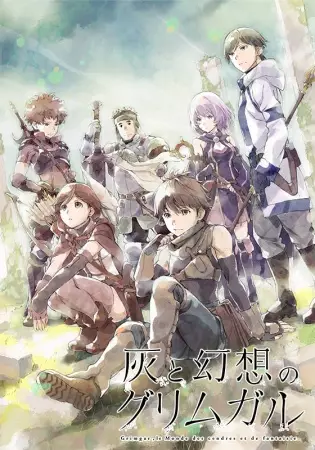
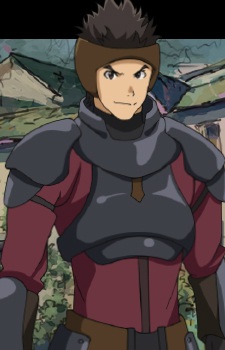
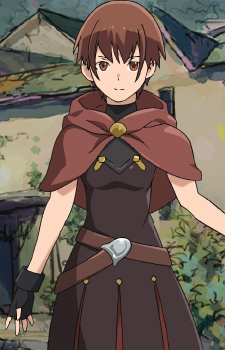
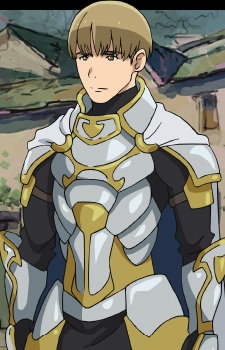
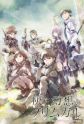
Fear, survival, instinct. Thrown into a foreign land with nothing but hazy memories and the knowledge of their name, they can feel only these three emotions resonating deep within their souls. A group of strangers is given no other choice than to accept the only paying job in this game-like world—the role of a soldier in the Reserve Army—and eliminate anything that threatens the peace in their new world, Grimgar. When all of the stronger candidates join together, those left behind must create a party together to survive: Manato, a charismatic leader and priest; Haruhiro, a nervous thief; Yume, a cheerful hunter; Shihoru, a shy mage; Moguzo, a kind warrior; and Ranta, a rowdy dark knight. Despite its resemblance to one, this is no game—there are no redos or respawns; it is kill or be killed. It is now up to this ragtag group of unlikely fighters to survive together in a world where life and death are separated only by a fine line. [Written by MAL Rewrite]

Main
Main
Main
Main
Main
Main
Main
Supporting
Supporting
Supporting
Supporting
_Hans_
March 27, 2016
I enjoyed Grimgar! Did you or should you? Well take a look here to find out. Pros + Exceptional Character development + Rich Character Interactions + Great approach to to the theme of Tragedy + Dark take on the "Trapped in a Video Game/Fantasy World" + Video Game world with Realism Cons- Easily bored or "Mindless Action" fellows may not like this show - Very slow paced - Insert Songs - The character of Ranta (At times) - Random and Unnecessary Ecchi Overall, Grimgar of fantasy and Ash is a astounding take on the "trapped in a world" genre. I honestly can say it is one of the best if not THE best of the genre. It's like a deconstruction of it. Instead of our MC's being happy and excited for the new world, everything just feels dark and demoralizing, JUST LIKE I LIKE IT ლ(ಠ益ಠლ). Give it a 5 episode rule
Flawfinder
April 3, 2016
Supporting
I'm honestly not comfortable with reviewing something like Grimgar of Fantasy and Ash because it's one of those shows where every single one of my complaints can be countered with "well that's what the fans like about the show". Which is true for a lot of bad anime in general, but Grimgar is one of those shows that's specifically made to draw "feels" from the viewer without the structured story that ERASED used aka the main the reason why I cared for ERASED's cliched "feels drama" in the first place. So me saying it doesn't have a story as the main reason for not likingit is the equivalent of me going on a rant about how much Uchouten Kazoku sucks because...oh wait, I did do that. Nevertheless, mood pieces just seem to exist in the same dimension as "walking simulators" in that they follow their own set of unique rules that most people would consider good, but I consider to be the equivalent of injecting myself with morphine. Forgive me if I was raised to believe that all stories were supposed to have actual story to them. But whatever, we'll play it your way for now, fans. Anyways, Grimgar is another "light novel adaptation about a bunch of teenagers being trapped in a video game fantasy world" and comes with the usual baggage that comes with being based on a light novel. The terrible sexist jokes that add nothing to the product and should have been cut out completely. The large amounts of talking that get in the way of actual plot progression. The fact that certain plot turns are telegraphed from miles away. The fact that this is "light watching" in general, and I don't enjoy light watching. Similar to Phantom World, Grimgar stands out a bit from the usual by-the-numbers dross that gets tossed our way by having an actually talented director onboard and after a bit of a rough start, it takes itself a lot more seriously. However, unlike KyoAni's thing, Grimgar is first and foremost a drama with some (bad) comedic moments, which is probably why it got a much better reception since A-1's heartstring tugging is something that anime fans love to eat up. But more than that, it actually takes its "trapped in a video game world" premise as something with actual stakes and underdog charm, right down to the characters being so bad that they can't defeat a simple orc and having people actually die, thus causing them grief for a large amount of time. They don't even explicitly state they're in a video game, although the fantasy world is so RPG-like it doesn't matter either way, and the road to forming bonds is a long but well-deserved one indeed - although the fact that the team members getting killed off are guys and the recruits they replace 'em with are girls didn't exactly miss my eye. This is all solid stuff to build a compelling narrative around, but Grimgar has about as much drive to do something with its edge as the seventh Harry Potter film, and is just content to let the stuff be the substance. You guys remember the complaint regarding how Deathly Hallows Part I was just a lot of running around without any real destination? Well that's exactly what Grimgar lacks in regards to all of its elements: a destination. Ignoring the large amounts of time spent on building up its world and characters at the expense of plot, which quite frankly bored me so hard that I went surfing on the net whilst playing the episode in the background, I don't understand what the end goal of this show is aside from being a more-realistic take on this RPG-genre. Bokurano is a more realistic take on the mecha genre, but it also had a destination for said take to work towards: fifteen kids have to destroy fifteen robots that will invade their world and only by defeating them can they prevent said world from becoming erased. I mean do these kids even want to go back to the real world, assuming they have a real world to go back to? What's the specific requirement to do so? Okay, they get strong to survive, but to what end? I'm not watching a sitcom here. I'm not even watching something where romance is the main focus - and incidentally, the romantic chemistry between any of the characters in this show is about as stale as Jerry Seinfeld's stand-up these days. None of the characterization is particularly strong to begin with as most of the characters' flaws don't really factor into what actually happens in this show, aside from Mary, who is distant from people because her team was wiped out in a tragic incident that wasn't even her fault. Grimgar isn't a character study. It's some sort of drama I can't place, and if I can't find a good way to describe it, it's kind of hard for me to join in on the feels train unless you guys don't mind "confusion" on board. You know that post I wrote a few days ago, questioning how much good execution is allowed to carry a product on its own? Well Grimgar embodies that question more than ERASED - and to a lesser extent, Gate - ever could. I mean aside from the bad jokes, it has a serviceable if not outstanding attitude towards its premise, but is that really enough to carry it for twelve episodes (and probably more when the sequels inevitably get announced)?. I mean I'm sure there's going to be people who like that upcoming Hardcore Henry film solely for the first-person gimmick, but that's a two-hour movie. Imagine an entire series based solely on that. And I'm more of an action guy than a feels guy to begin with, so me being worried about enjoying that says a lot. I know a lot of people already made their position before they even read this review and thus have already dismissed my points out of hand, but...ah I dunno. Maybe I should just avoid mood pieces if what's supposed to be good about them is completely opposed to my own ideals, but I really don't think belonging to a certain genre means you shouldn't at least try to have some sort of end goal in mind. I mean it's not like this thing was advertised as an atmospheric piece of entertainment - no more so than ERASED at least - and I'm still going to be somewhat positive of ERASED when it did this shit because quite frankly, it did it much better. I would have preferred it to not have put itself in a Catch-22 position in regards to using its plot in order to give the emotional moments weight, but that's all done with now. And quite frankly, I and everyone else are getting tired of bringing that show up. So to sum up this review in a nutshell...if you haven't seen Rakugo, then give it a try right after you close this thing. I'm pretty sure people who like this show's feels will like the ones in that anime several times better.
Stark700
March 27, 2016
Getting transported to a game world with fantasy elements. You’ve heard of these type of stories before in recent years. From Log Horizon to the infamous No Game No Life, it’s a recycled idea that has becoming a growing trend. What’s different about Hai to Gensou no Grimgar? Nothing really at first until you look a bit into the show. Well it’s not vastly different anyways. In essence, this series crafts a refreshing fantasy show with some intruding ideas but also ones that are unbecoming. Adapted from the light novel of the same name, the series takes place in fantasy world of Grimgar. We don’t getmuch inside scope on how the characters exactly arrived there but just the fact that they are now stuck in this world. Survival is what should be on the first thing on their minds as the party of strangers have to adapt with their newfound life. Consisting of a group of six members (Manato, Haruhiro, Ranta, Yume, Mogzo, and Shihoru), they are also told to be part of the Reserve Army forces and defend the world from monsters. I guess in a simpler way to say this, it’s their way of making a living and try to make the best of it in this new world. I have to confess a few things though. First of all, the series’ focus on its world fiction is fantastic. By all means, it is rich in resources from the dense forests to the lush landscapes with a decent amount of wildlife. Plus, civilization is exactly what people may picture from a fantasy game. There’s old fashioned towns, rural caves, mountainous regions, and starry skies crafted with high fantasy elements in this imaginary world. Whatever the author was thinking at the time definitely got the general ideas right for the show. Secondly, the story is what I’d describe more as fusion of fantasy, action, adventure, but also feeling that borderlines slice of life. To sum it up clearly, the slice of life part depicts the every day adventures of the party. Of course, this includes forging new weapons, fighting new enemies, and unlocking new skills to survive. It also adapts character interactions which seems to be a pivotal part of the show. It’s easy to see that the party members become close as time passes on. In the beginning, they’re complete strangers with little memory about themselves besides their first name. After living in the new world for a few days, we can see the chemistry building between certain characters. Haruhiro’s relationship with Yume and Manato is prominent as they treat each other like close friends. Manato, the leader of the party is also a role model with his charismatic personality and is able to see the positives in people. Even Ranta seems to follow his lead despite being the hotheaded guy of the group, often known for causing troubles especially with Haruhiro and Yume. Speaking of which, Yume is the brave girl. She has confidence and builds a close friendship with Shihoru, a shy mage who struggles to open to others. Then there’s Mogzo, the silent giant who often supports the party in whatever means he can. See the diverse range of character personas here? It’s hard to imagine how they can all get along at first but as time passes, the show is able to capitalize on these characters both individually and collectively as a group. Later on, they even gains new member whom they have a hard time to accept at first but still welcomes her as a valuable member of the team especially upon learning their background story. Now, the show is pretty repetitive with a sluggish pacing. It shouldn’t take long for anyone to recognize this especially with the nature of the story. The formulaic structure is basically the group learning new skills, occasionally gaining new equipment, while trying to improve their inner relationships. Sadly, monsters are limited to goblins and kobalds in the show and doesn’t get far in that territory. If you realized this and it’s not the type of feeling up your alley, then turn back now because this show will feel like a snoozefest to you. Otherwise for sheer entertainment value, it’s actually an emotional drive after the first half of the show. The concept of death becomes reality for a certain member of the party while the show exploits interpersonal conflicts. While the series does this well, I feel like it’s spending far too much time investing on certain plot mechanics at the expense of other potentials. Given the way this series is adapted (1 cour) and limited volumes, it’s not really impressive. Furthermore, the show‘s relationship dynamics can quickly become a bore once you see how much the show pushes that every episode. Don’t expect any legitimate romance to develop either despite some obvious hints. The show seems to tease that almost every episode especially between Haruhiro and Yume but nothing really comes into fruition. And if you’re not a fan of melancholic songs, then this show could be a nightmare. As a fantasy adventure, Grimgar often feels like a mixed bag; sometimes quite impressive while other times makes you wonder if it’s worth watching. In the meantime, the show does a fair job at demonstrating how a fantasy series should be about with its mechanics. There’s other adventurer guilds that looks credible, weapons that actually looks like it’s from a fictional world, and also various classes. (thief, mage, priest, etc) While the series isn’t like Sword Art Online with heavy game mechanics, it still knows how to execute some of them. However, the key keyword here is ‘some’. The mage class is one of the more underwhelming roles in the show with its limited spell set from what’s shown. From an objective point, I think the priest also plays an underwhelming role despite being invaluable for any party. Luckily, the action aspects saves that as it delivers some classic entertainment. It’s pretty fluid once you get used to it with a surprising amount of violence. On the other hand, the comedy is woodenly made. I forget the amount of time when the show makes lewd jokes (mostly because of Ranta). From extended dialogues about boobs to awkward misunderstandings, the show still falls into the formulaic light novel adaptations we see so often. One of the main highlights of the series is the fantastic artwork. It’s not just elegant but feels excitingly mythical that’s painted by colorful water paint. From mountainous landscapes to old fashioned towns, the show capitalizes every detail to precision. Even character designs looks vividly convincing as the guys and girls wear gear appropriate for their class. If you’re also familiar with shows like Aiura, then it’s recognizable at who worked on these designs. The show’s action is coordinated well with a nice amount of focus on teamwork and body movements. But like almost every light novel adaptations, it’s still vulnerable to some subtle fan service like Shirou. Music is one of the stronger dynamics of the series as well. While some say that the show’s tendency to constantly use insert songs can be an annoyance, it’s actually quite important to highlight the emotional values of the story. Character expressions matches in unison with the insert songs to show what they feel. This can be a hit or miss to viewers depending on how you take it by storytelling standards. Furthermore, character voice mannerisms aren’t too impressive in general. The most recognizable would be Yume though with her kansai-like dialect. Ryosuke Nakamura’s return to direct the show brings us this fantasy adventure, one that I can say is a good example of portraying an imaginative world. However, the overall storytelling isn’t too impressive while characterization is lacking t times. Still, I think it’s important to address that Grimgar isn’t about conquering the world. It’s quite simple really – just a party of members trying to make the best of their newfound life while trying to survive. If that isn’t your cup of tea, then it’ll be hardly enjoyable. In introspect, Hai to Gensou no Grimgar is a well-made show at what it is but not great.
orosan
March 30, 2016
When first watching the first episode of it, i honestly found it quite boring, but i insisted maybe there's more to it, and yes there were. the more you watch the more deep you go within the anime, the development is slow but enjoyable, and very easy to understand what's going on. Artistically, the drawings is definately above average, maybe Too glossy for others, but doesnt bother me in any way. Characters mostly we only got to see haruhiko and mary develope the most, the other didnt get enough screentime, but dispite only two developing characters it was still enjoyable to watch. i definitly recommend this for peoplewho wish to watch with patience. take your time and enjoy it. oh and the music is really good too :)
dissipated
April 1, 2016
This is a spoiler-free review. Hai to Gensou no Grimgar is a rather unique watch. Shows throughout time have had a tendency to force characters from 0 to a 100 in an unrealistic time frame. This often pertains to the widespread demands of instant gratification. Hai to Gensou no Grimgar challenges these demands by emphasising the natural growth of characters: step by step characters are built through every interaction with the plot. Closely observing this and the plot is paramount as to not miss the abundance of implicit detail dedicated to their development and characterisation. Due to this profound nature of the show, reflection is commonplaceand as such, the watch is recommended for anyone who enjoys reading pensively into things. An inherent feature of Hai to Gensou no Grimgar is its large main cast. There’s a greater emphasis on characterising and developing the group as opposed to the individuals; however, it is decently balanced between the group and the individuals such that neither don’t feel completely neglected; the viewers are briefly enlightened on their individual daily lives (roles, recreation, style of living etc.) and personalities. This opportunity to learn about how each character interacts with the group is one of Hai to Gensou no Grimgar best point. Note this orientates Hai to Gensou no Grimgar more towards those who are interested in group development. The show starts off on a weaker foot but eventually progresses superbly, making it worth the watch if the initial set of annoyances can be endured. Such is also true for the pacing, as it evolves into superbness. Though, it is sometimes deemed ‘slow’, but slow is not bad. It is only when it is incongruously or meaninglessly slow it can be considered such. In this case, the creators have done a superb job at pacing the show such that the story and characters (development and characterisation) are often progressing and the right mood is established. Also, the isn't show is absolutely slow. Explicitly it might seem so but when explored implicitly, there is profoundness behind most interactions and moments (plot-wise and character-wise). Bluntly put, the show might seem slow or idle if one focuses on the explicit details and misses all the implicit detail, which is possibly consequential of not understanding the purpose of the show (detailed later). Now regardless of the pacing, it is possible for something to be rushed. To rush something is to reach something without having the necessary details or time for the viewers to follow or agree with the outcome. Hai to Gensou no Grimgar is subject to such with the limitation of 12 episodes. This is especially pertinent to an important moment that coalesces some of Hai to Gensou no Grimgar major elements. Whether or not its failure can be pardoned (if it is viewed as such) will ultimately dictate one’s enjoyability of the show. It has been identified and explained it in the spoiler section. Hai to Grimgar's paramount feature is its realism. The characters will have to manage basic needs, such as food and shelter. The characters will have to face the reality of the world. The dialogue, development, and interactions are all seemingly realistic. One example of such realism is the fact almost nothing major happens at the beginning. Though why should anything extraordinary happen? They lead basic lives and hold little significance. It is abnormal for much to happen outside of their daily struggles. Another excellent feature Hai to Gensou no Grimgar employ is not having over-the-top combat abilities. They were mostly just minor extensions of the human ability, which harmonises well with its realism theme. Hai to Gensou no Grimgar is tailored to fans of slice of life. The combination of realism and narrative focus on character lifestyle and relatively slower progression makes it a natural watch for such people. A conspicuously common issue is approaching this show expecting an action, most likely consequential of the initial action scenes and seemingly shounen setup, and receiving a slice of life instead. It is also important to note that while the premise of the show was to toss the average teenager into a fantasy-themed world, it is not a deconstruction of the fantasy genre—the show lacks the focus on and the necessary intricate details characteristic of a deconstruction to be considered such—and is only one of its enjoyment factors. The watch is instead for those who are interested watching the growth of a group, the bonds they develop, the building of the character etc. It is much more of a character oriented show (60–70%) than a plot oriented one (roughly 35%). It is a show where learning about the characters is essentially progression. Understanding this and what a slice of life entails is critical when encountered with such works. Story=7.7 Character=8.1 Art=9 The art was dazzling at most times. The beautiful scenery heavily complemented the story by aiding the development of the desired mood. Most noticeably, the watercolour backgrounds evoked a tranquil slice-of-life feel, similar to that of Mushishi. The backgrounds were also unobtrusive allowing a higher focus on the projected characters, which is excellent because Hai to Grimgar is a character-dominated show. However, this conflicted with the action scenes as the projection of the background with 2D art instead of 3D sometimes lacked stimulation, detracting from its thrill. Sound=9 My praise for the audio component is similar to that for the art. Furthermore, Hai to Grimgar uniquely features many montages. They aided the conveyance of the mood and story and were fairly enjoyable to watch. There were however two misuses. They have been mentioned almost immediately below as to avoid spoilers. This section henceforth contains spoilers. This section will offer the main criticism and other comments regarding the show. Its first use (town settling) was inappropriate. It is only warranted once the characters have truly settled in, which was not the case. The second use (graveyard location) clashed with the mood. The pacing of the song was too fast inhibiting focus on the melancholy scene. The usage of the scene also felt extremely abrupt as Manato’s time with them was seemingly short. Shihoru is a frivolous character. She can be removed from the show with slight amendments and little difference. This was most apparent during episodes 1–5. She was, however, vital in combat post-episode 5. They need to rework her such that she serves a purpose (plot-wise) outside of combat. Due to the limitations of 12 episodes, the development of the bond between Manato and the group is rather lacking. 2 episodes were certainly insufficient for evoking the desired sympathy for the characters grieving Manato’s death. The end of episode 4 is the weakest of the series (somewhat rushed outcome) as it draws heavily on Manato’s bond with the group. Common sense dictates that they were distraught but it is rather limited and superficial. This foundation of knowledge would have also fostered understanding of and sympathy for Haruhiro as he confronted his inner-conflict. More application of the characters is desired; while Hai to Gensou no Grimgar does build the character, they lacked the time to further display the final product. This was most evident in episodes 11 and 12 where new details were introduced to the character but without application. This plays into the 12-episode limitation. It was exasperating when Haruhiro uttered ‘It would be nice if you could mend clothes with magic as well.’ and proceeded to blatantly explain it. It seemed as if that line was attributed to him solely to inform the viewers. While it was natural, the interpretation should have been somehow left to the viewers. Ranta escaping at the end was illogical. He was surrounded and barely knew the mine’s caving system as opposed to the Kobolds, which know the place inside-out. Haruhiro’s skill is essentially the visualization of that. Experience from fighting enemies will yield knowledge about their weak points and effective engagement. The streams of light that direct Haruhiro can be interpreted as the visualization of that. However, this ‘skill’ should have not appeared or appeared so quickly against the Death Spots at the end. As he lacked combat experience specific to Elder Kobalds, it should have been a challenge not something his ‘skill’ could easily relieve him from. It was an opportunity where the creators could have explicitly and satisfyingly displayed the development Haruhiro’s combat abilities and maturity over the course of the show. However, it was wasted by rushing the fight to a conclusion. Other comments: They actually fully (and superbly) developed the concept of the main cast being unnatural inhabitants of the world. The main cast were evidently briefly aware of this fact, but overtime the characters neglected it such that it eventually faded. This suggests of their adaption to the world and prioritisation of their survival in the realization of the triviality of pursuing such an oddity as opposed to meeting to the demands of their daily lives; the corroboration follows. At the utter end, Kikkawa (the drunkard) shouted ‘Australia’ in a carefree manner. They could have chosen any word or omitted it all together, but why did they attribute that specific line to him? They deliberately chose ‘Australia’ to connect it with the real world and had Kikkawa, the most carefree character, utter it in such a manner to hint their accordance with and acceptance of the new world. Also, when heard in the context of the characters, the statement sounds greatly insignificant, as it was randomly blurted out by a drunkard, suggesting the same of their unnatural inhabitation of the world. In conclusion, Hai to Gensou no Grimgar deserves an 8/10, which accordingly to MAL denotes a ‘very good’ show.
Rank
#1494
Popularity
#281
Members
801,823
Favorites
6,850
Episodes
12