The Kubikiri Cycle
クビキリサイクル 青色サヴァンと戯言遣い
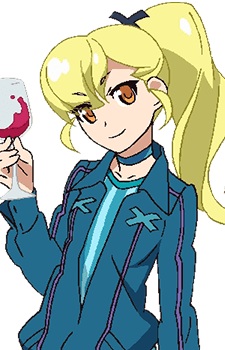
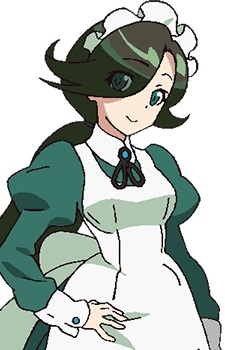
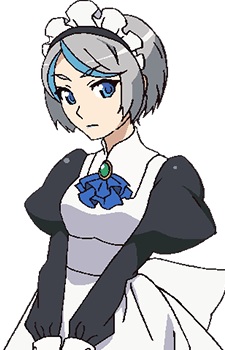
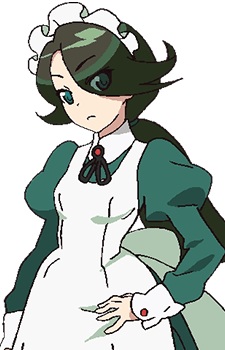
Due to a mysterious disease, the genius Iria Akagami has been forced by her family to stay in a mansion on the isolated Wet Crow's Feather Island with only a handful of maids. To keep herself entertained, Iria invites a variety of fellow geniuses to stay as guests in her home, including computer savant Tomo Kunagisa and her unnamed assistant, skilled fortune-teller Maki Himena, famous artist Kanami Ibuki, academic scholar Akane Sonoyama, and renowned cook Yayoi Sashirono. These visits progress as normal until one of the guests is found gruesomely murdered in the night without a single clue as to the identity of the killer or a possible motive. Tensions rise between those on the island as the killer remains at large, and Tomo's assistant takes it upon himself to uncover the culprit's identity before the murderous events progress any further. [Written by MAL Rewrite]
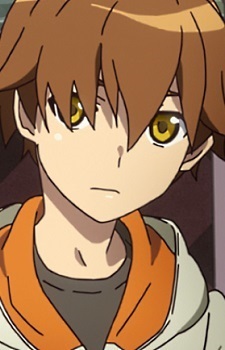

Main
Main
Supporting
Supporting
Supporting
Supporting
Supporting
Supporting
Supporting
Supporting
LouysG
September 26, 2017
:: NO SPOILERS :: Zaregoto is a Nisioisin show. Who ever told you it was a mystery probably told you PMMM is a kids show, and Shokugeki No Soma is a cooking manga. Bottom line, if you like that Nisioisin flavor you're gonna like this OVA, if you don't, well, at least ep. 7 has a beautifully animated scene directed by Akiyuki Shinbo that's worth the 8 ep. price of admission. Without reading any of the other reviews I can tell you what they're gonna say. Zaregoto is a slow build. The main character is an edgelord. It's a little bit too much of a stale whodunnit?without a sense that something tangible is at stake. Yeah, forget that noise. Like Monogatari, the big flashy genre set-pieces are sideshows, the character drama is the main event. All the mansions and murders and mauve color palettes only really matter to the extent that they give us greater insight into the characters themselves, the demons they're wrestling with, and whether or not they can actually overcome them. Deep breath. So yeah, the story starts with a lot of talking heads and not a lot of lopping heads. That's the point. When the characters and the hidden forces that drive them are the meat of the story its natural to spend 2-3 episodes listening to them subtly unveil the workings of their inner psyche. Of course, this is what makes Boku (MC-kun) seem like a member of the edge nobility. You already know him, he's the world-weary hoodie-donning teenager who abuses his privilege as narrator to preach his profound-as-a-puddle philosophy of not caring. Thankfully the show knows better. Half the fun of Zaregoto is watching the people around him pick away at his shell. He's a moaner, but he's not trash. You genuinely hope he'll evolve into a better person by the end of the series. What are you waiting for? I gave you the bottom line in the first paragraph. Stop reading reviews and just go watch the thing!
Veronin
February 26, 2019
Until the final moments of the second episode, it is extremely unclear what Zaregoto is supposed to be about, or even what it wants to be about. Little of significance happens during this time: character introductions interspersed with surreal 'SHAFT-ness' (this should be coined as a word if it hasn't already) and philosophical discussions about the meaning of life and why the protagonist is apparently such a big fat loser. Cool, so everyone is a weirdo, and the setting makes no sense, but why are we supposed to care, again? I expect most people who are not already fans of Nisio Isin or SHAFT animewill lose interest somewhere during this time and potentially drop the series altogether. Which would be a mistake, because the third to eighth episodes are an absolute joy to watch, and constitute some of the best content SHAFT has produced in years. Zaregoto (Kubikiri Cycle) is, rather, a murder-mystery anime, which those familiar with the Danganronpa series will find quite similar. The unnamed protagonist, trapped on a solitary island with a dozen others, must wrack his brain to solve a bizarre string of seemingly impossible murders. The natural response would be to call the authorities and let the professionals do their job, but circumstances prevent the police from being called to the island. And so begins a traditional battle of logic: the construction of alibis, theories to be argued out, and proof to be sought— and sought desperately. Those well-versed in the mystery genre will find it relatively easy to work out the culprit's identity via the clues left behind, but the actual process through which the murders are committed, and especially the culprit's motives, are a bit harder to predict, if largely because they contain elements that would be implausible in an actual real-life incident. So, if being surprised by absurd events is more entertaining to you than an ordinary, realistic murder case, you will be in for a fun little ride. And conversely, those seeking something plausible will be a bit more exasperated. But I am not sure you would be coming to a SHAFT anime in the first place if you were expecting realism. I mean, hell, in the final episode, with 200 cars exploding into an atomic-bomb sized ball of fire, directly behind the characters during their peaceful car drive, with them not so much as even acknowledging it (what?), it became clear to me that this show ain't based in our universe. The SHAFT universe is indeed a strange one. If surreal artwork and mystery was all Zaregoto had going on, perhaps it would merely be an average, albeit fun series. The debates between the characters at the round-table aren't particularly compelling, with the protagonist and his opponents simply going through the motions of a mystery story: a theory and an inevitable rebuttal. Compared to the Danganronpa games, which made things much more complex and interesting by means of characters speaking in red herrings and complete untruths (even when they are innocent and have nothing to be gained from lying), in Zaregoto's case, there just isn't a whole lot to applaud. So it's a good thing there is more to Zaregoto than mystery. The frequent philosophical discussions between the protagonist and his opponents, characteristic of Nisio Isin's catalogue, make even the moments where the story is at a standstill a pleasure to watch and listen to. There are a couple scenes that veer towards preachy or even arrogant territory ("this is my, Nisio Isin's, way of thinking, and other perspectives on life do not and cannot exist"), and a scene involving one of the maids uttering the most disparaging comments that could possibly be uttered to another human being (ending in them, literally, no joke, telling the protagonist he should kill himself), when said maid has only known the protagonist for a grand total of three effin' days, was quite... nay, extremely uncomfortable to watch. But by and large, the philosophical discussions in Zaregoto add an extra bit of flair, a more cerebral quality that many anime lack, even if the themes of these discussions aren't necessarily new or profound. With a dozen characters and only eight episodes (and constituting only the beginning of a much larger light novel series), naturally, the characters are developed to wildly varying extents, with some being relegated to the sidelines and existing as little more than one or two-note tropes. The cook, Yayoi, is particularly guilty of this, being some incredible genius in the kitchen and capable of differentiating hundreds of thousands of tastes (how the heck do you even count that in the first place?), yet we see nothing of her cooking or her character besides her blowing her gasket at one point before withdrawing to the shadows again. Maki, defined largely by her love for wine and her verbal abusing the protagonist, is perhaps the most mature and intriguing member of the cast, which makes it a shame how little was seen of her. Instead, we get to see Tomo a million times... cute she is— especially in her twintail incarnation— but 'cute shut-in savant girl' is a trope I've seen seen more times in anime than I want to. The unnamed protagonist— or Ii-chan, I guess we could call him as Tomo does— is unsurprisingly the one with the most depth, a sort of darkness, a depressive nature hidden inside him that is teased but little revealed throughout the series. Mature and logical, he stands his ground in arguments, keeping his emotions tucked away inside himself. Though I wouldn't go as far as to claim him 'fun' or 'likeable', he's completely inoffensive and is one of the more compelling protagonists anime's mystery genre has birthed. Yes, Zaregoto looks, sounds, and feels like a typical SHAFT anime, a visual cross between Madoka and the Monogatari series. Surreal artwork, embracing style over realism, is ever-present, particularly in the final episode which is SHAFT cranked up to eleven and completely and entirely visually incomprehensible. The surreal artwork coheres with the story, considering the ridiculous supernatural skills most of the characters possess, but at times the artistic and sound design becomes overbearing. No, the characters do not need to do the trademark SHAFT head-tilt, and no, we don't need the protagonist's inner monologues sounding like he is talking in the bathroom of some abandoned house. It's as if SHAFT is incapable of letting go, of letting the story take the lead and the artwork being complimentary, as it should in Zaregoto's case. There's an almost arrogant nature here, and, honestly, after over a decade of the same thing, it's about time the studio experiments with a new artistic style. But, yes, look and sound pretty Zaregoto does, especially with its background music and tight transitioning between opening sequence and story. Zaregoto is a thoroughly enjoyable, if unfortunately brief experience. It is also obscure: obscure in the sense that mainstream audiences— those who are not active fans of Nisio Isin or SHAFT— will not be aware of its existence. It is, after all, an OVA series. It didn't air on TV. It is an adaptation of a series already fifteen years old. It went straight to disc, the only choice being to buy it or not. In Japan, where streaming services and illegal downloading aren't half as much a thing as they are in the west, this has made Zaregoto completely and utterly impenetrable to newcomers. And that's unfortunate, because Zaregoto deserves to be watched.
Detective
December 3, 2017
Superimposition and retrospect ultimately lead to this abomination. This is an amateur work by NisioIsin developed, marketed, packaged, and sold in a post-Bakemonogatari world. This is the greatest undoing of this work, but to understand why this project failed beyond direct content we have to tackle a series of other shortcomings first. 1. Closed room murder mystery featuring a cast of geniuses. 2. The ever tired and tiring fantasy that is the coming of age narrative. 3. The once-iconic now-generic SHAFT direction style. 1. Vagueness is not profundity The story is set on an isolated island where an assorted group has been assembled by a quirky patron ofthe arts. There are around ten characters in the story. Only two are men, including the protagonist. Most of the other characters are famous in their universe for their ability, not much unlike the setting of Danganronpa fused with the backdrop of Umineko. They are blandly introduced with a title card to signify their importance. There is the adorable chef, the hotheaded fortune teller, and the disabled artist among others. This is the first sin of Zaregoto, as it uses this introduction as a heavy crutch to get it's weird premise off the ground. The rule of "show, don't tell" is a simple filmmaker principle that if you want someone to relate to something on film, do not haphazardly state "that character is smart." Show the audience through visual work the aforementioned character is capable of being smart. Our protagonist, a high school age male, is visiting this island with a "genius engineer" whose abilities are never really explained as she is almost completely absent in this story. He is quickly entrenched in a murder mystery, and instead of the homeowner calling the police, she insists they solve the mystery themselves. The stage is set for the sleuthing to begin, but... it never really does. The completely tone devoid foray into motives make this first a whodunnit which then rapidly develops into a coming of age story. The deaths are played off as inconsequential compared to the ravings of young adult self-deprecation. Our protagonist is unsure of himself and of his intellect and spends all eight episodes frustrated about his severe normalcy. After being foisted into an unbelievable and at least interesting scenario it is very disappointing that most of the work is spent soliloquizing about "being average." This lead me to believe the goal of Zaregoto was never actually to be a story of intrigue but a story of growth. So if Zaregoto isn't a mystery it must be something else? 2. Zaregoto doesn't know what it is. The word zaregoto is used in japanese to mean "nonsense" and it's supposed to be tongue in cheek but it's also supposed to be extremely serious. Irony, which worked more easily in NisioIsin's other works perhaps because they are partly comedy, is frustratingly used in this work to hide shortcomings. Where a character development should happen a platitude in the form of irony rests. The script drones on and on about vague notions of "sense of self" and "knowledge" to wind up at a head-tilt and smirking quip. This would be fine if Zaregoto didn't do this in every interaction. What once was novel is now textbook. Most scenes feel redundant, and the dialogue between any two characters feels alien. Each character is so weirdly inhuman that eventually you become desensitized to the weird interactions and just shrug them off. When every character is a suspect, every interaction trumped up as hugely important, and every thing that happens supposedly integral to solving "the mystery" you begin to doubt how honest this work really is. 3. SHAFT no longer innovates SHAFT's work in Bakemonogatari is monumental for editing in anime. Since 2009, SHAFT has begun to use the same wide lens shots, cut-to's, framing, and jump cuts in every work. The fact that shots and even color pallet in works like Nisekoi are almost identical to Bakemonogatari is alarming. Tonally those two works don't have a thing in common. Sadly, Zaregoto is no exception. Where this style worked in Bakemonogatari, where the literal and metaphoric often became visual gag or symbolic, the script of Zaregoto cannot hold. Tracking shots or wide lens shots feel lazy and often lead to a sense of disconnect. The close-ups are held too long, the backdrops feel empty and surrealistic, and the characters are framed jarringly. The true visual irony of the work is that while this work boasts a strange direction style, it would actually benefit with less "creative" shots. This "auteur SHAFT style" has become a crutch, and Zaregoto is the sloppiest offender yet. Conclusion: Safety, Redundancy, and Resignation NisioIsin wrote this as his first published work. Re-contextualizing Zaregoto for a post-bakemonogatari audience only hurt whatever this work originally intended. It became muddled in the mixed tone, the "tried and true" direction, and finishes feeling like a diminutive version of other works. Zaregoto is in actuality a generic coming of age story about a boring Japanese highschooler dressed in extremely elaborate lace. It is done up as a mystery, where the mystery is unsolvable and trite. It has these wacky characters with titles like "Genius Artist" that really don't feel any different from any other anime. It is even occasionally shot as a harem with needless sexual shots of characters that the script can barely justify for existing. All these come together and ultimately just feel insulting. It's too much yet it's trying too hard to look like it doesn't care. It intends to wow, but never executes. Forced restraint simply gives this poorly written hodgepodge an air of superiority it can't justify. I don't know if Zaregoto can ever be done well given the content, but I am certain that this anime was the worst way to handle it.
SpoopsterCH
October 6, 2017
Zaregoto, much like most other Shaft and/or Nisioisin productions requires a certain mindset as well as expectations to enjoy. While I don't like how pretentious saying this sounds, I still have to say it: This isn't some 'Whodunnit'-rhomp you can watch after work or school while being half asleep. To truly get most out of it, I recommend really focusing on it as much as possible. That, or get drunk and enjoy the pretty pictures and lovely sound. I've been guilty of that too occassionally. Now on to what you can actually expect. Zaregoto is a character study donning the guise of a murder mystery, with some good indulgent waifu material,as is Nisioisin's law. Now, one could say that this sounds a lot like the Monogatari series, which is also a character study pretending to be a 'Girl-of-the-week' harem, but there's differences beyond the genre. While The Kubikiri Cycle certainly has a good cast of characters, the main developmental focus is actually cast on our protagonist, Boku (or refferred to as Ii-Chan, by his friend Tomo), which alludes to the entire story being told in his perspective, as it was in the novel. Not once does anyone actually say his name. Throughout the story, the anime touches on themes such as one's place in the world as well as society, the blessings and curses that come with being a genius/savant, one's calling in life, the dependancy upon other people and lots of other tough to swallow subjects you'd probably rather hear about in school than anime. I'd say, though, that it's precisely what's so interesting about this OVA. You can easily read into it as much as you want, you can just enjoy this as a surface level murder-mistery (even if it falls a bit flat on that level) or you could even get an epiphany and become the next Buddha. We're not quite sure yet if Nisioisin is that smart or if he's just good at pretending to be smart. Anyway, if that managed to catch your interest, I'll now cut to the dry part of my review and talk about the subcategories specifically. Ready? Cause I aint. Story: As alluded to before, the actualy murder mystery is quite solid. Nothing amazingly new, but it utilizes the classic 'Locked Room' mystery quite well. It also doesn't fall into the more modern trap of not actually giving the audience the hints they need to figure stuff out themselves. You'll know as much as the protagonist, guaranteed. One thing to be critiqued especially, is that the entire cast sometimes just doesn't think about something every person who's familiar with mysteries would think about. People lying about alibis? The murderer didn't act alone? The persone we think is suspicious doesn't actually have a decent motive? Yeah, it'll take a while, if at all, for the cast to even consider these questions at times. Still, solid like I said, and it's more of a vehicle to make our characters encounter new experiences and question themselves, so it's not key to the enjoyment. Art: This is highly subjective, but I'm a sucker for Shaft's Monogatari-style directing, which they heavily used for this title. Head-tilts, eye close-ups, supremely intricate and beautiful backgrounds, colour-shifts, it's all here. Even without the directing though, I think it's needless to say that the art is just extremely nice. I've heard people say that the characters look a bit too 'plastic-y' at times thanks to the lighting, which I think is a fair point, but I can't say that I dislike it. Sound: The sounds was for me, especially in the first few episodes, phenomenal in complimenting the atmosphere. It constantly creates an atmosphere of unease even before the murder(s) and keeps you on your toes. As the episodes went on, however, I noticed the soundtrack less and less. Not that it ever got bad, just not as obviously good as before. I'll have to note though, that this might be because I binged the series, so maybe I just lost focus as time went on. Shoutout to both OP and ED, as they're really good songs. Characters: Usually, on any other Nisioisin production, this is where I'd praise him for cleverly subverting character stereotypes, but with Zaregoto I really need to commend him on writing characters that complement his main goal, which is to explore Boku (and to a lesser extent Tomo) as characters. Every character pretty much stays true to what you'd think they'd be like. But only in this circle of very defined and rigid characters can an undefined character like our protagonist truly shine. In that sense, I can see how giving this section a 10 could be controversial, as I'm praising the choice and usage of characters, and not the characters themselves. If it's any comfort, can I say that I really liked all of the characters, both personality and design? Especially my girl; sleazy, drunkard fortune teller, Maki Himena. ----- I really shouldn't have written all the stuff before my ratings, as it'd fit better in here, now that I think about. Trying to find any closing words, I'd have to go with the following: If you enjoy the idea of analyzing something again and again, and want to see just how far anime as a medium can be pushed, then you'll really like the Monogatari Series. And if that's too much time investment or a bit too big of a plunge (or I guess you already consumed everything Monogatari, but want more), then watch this OVA, cause it's a great start to Nisio's writing and Shaft's directing while not outstaying its welcome.
kokuborou
September 29, 2017
We all know Nisio Isin as a genius writer for the Monogatari novel series but what remains unknown is his first work: Zaregoto Series who inspired him later to write the Monogatari series. Kubikiri Cycle: Aoiro Savant to Zaregototsukai is the first volume from that series that was adapted by Shaft into a 8 Ova and as any monogatari fan you can notice some similarities in the plot, story and character traits. The main story is set in a mansion on a remote island where 12 geniuses with special abilities in their own domains and with different circumstancesare gathered to prove their worth. The build is slow in the beginning , it takes 2-3 ova until the main plot is revealed but if you are patient you will be rewarded with a great mystery , with clever tricks behind the crimes and dialogue lines used for characterization. The characters and the good world building around the mystery is what makes this ova series worth watching for. Having different quirks and personalities the characters will be the first to catch your attention, their adorable and pleasant art style design will make you love and cheer for them and finally the unique male main character will help you understand and put in order all of the chaos from that mansion using his nonsense logic to solve the mystery. The mystery is damn good and you will be fooled by the many well handled plot twits until the last ova were everything starts making sense. As any Shaft anime the visuals play a huge role in these ova series making the dialogue scenes more interesting and giving meaning to the characters actions who are playing with the words. The dialogue lines are the very essence in this show they take you on a trip full of adventure and mystery and present how each character perceives the world around them. The characters speech habits , manners and personality quirks are portrayed through their dialogue lines, they are likeable from the first ova and you will get easy attached to them. The opening song is catchy and the ost used overall is great. If you are a monogatari fan you will surely enjoy and love this ova series , if you are new and unfamiliar with the author’s writing style the first 2-3 ova will seem kinda boring to you but if you have patience later you will rewarded and amazed on how the author managed to connect all the dots to cover the plot holes and give you a mind blowing conclusion. So what are you still waiting for go watch this ova series it’s a hidden gem!
Rank
#1244
Popularity
#2180
Members
112,994
Favorites
918
Episodes
8