
シリアルエクスペリメンツレイン
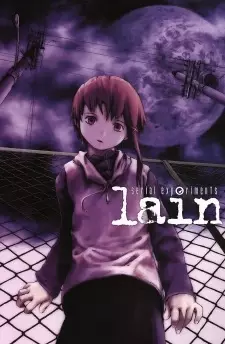
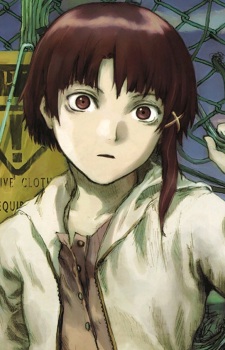
Lain Iwakura, an awkward and introverted fourteen-year-old, is one of the many girls from her school to receive a disturbing email from her classmate Chisa Yomoda—the very same Chisa who recently committed suicide. Lain has neither the desire nor the experience to handle even basic technology; yet, when the technophobe opens the email, it leads her straight into the Wired, a virtual world of communication networks similar to what we know as the internet. Lain's life is turned upside down as she begins to encounter cryptic mysteries one after another. Strange men called the Men in Black begin to appear wherever she goes, asking her questions and somehow knowing more about her than even she herself knows. With the boundaries between reality and cyberspace rapidly blurring, Lain is plunged into more surreal and bizarre events where identity, consciousness, and perception are concepts that take on new meanings. Written by Chiaki J. Konaka, whose other works include Texhnolyze, Serial Experiments Lain is a psychological avant-garde mystery series that follows Lain as she makes crucial choices that will affect both the real world and the Wired. In closing one world and opening another, only Lain will realize the significance of their presence. [Written by MAL Rewrite]
Main
Supporting
Supporting
Supporting
Supporting
Supporting
Supporting
Supporting
Supporting
literaturenerd
August 7, 2021
Oh yes...it's time! I have been meaning to go back and re-review this anime for about 5 years now. My original review was very flippant, poorly written, and quite dismissive towards Lain. I gave it a 6 and the whole review was basically "Lol, can you believe this shit?! What a weird anime!" Firstly, I want to go into a little background explaining my own experience with this anime and how my views have changed over time. I first saw Lain in 2005 and the best way to watch Lain in the United States at that point unless you had the money to buy the DVDsvolume by volume was to rent it from Netflix. This was back when Netflix was purely a DVD delivery service. So you watch 4 episodes of Lain, then send your disk back and wait about 2 weeks to watch the next 4 episodes. I was watching Lain via Netflix at the same time as I was watching another gem of early 2000s anime called Elfen Lied. I really enjoyed Elfen Lied and had no problem keeping up with that story in 4 episode chunks. This was not really the case with Lain. I ended up mostly just feeling VERY confused. My little brother loved Lain and some of my offline buddies did, but I didn't really see the appeal at the time. I thought it was just kind of odd and maybe even that dreaded word "pretentious". So flashforward to 2014. I've just started reviewing stuff on MAL and decided to write a shitty review of Lain, despite having not seen it in a decade and having very little memory of it besides "it's that weird show with the bear suit girl and the humming power lines". At the time, I actually wanted to connect with my fellow boomers on MAL and basically say, "Yo, remember this shit?!" You see, Lain was REALLY popular in the early 2000s. Japan thought it was so deep that Japanese philosophers started discussing it and they got the American Philosophical Society to hold a Lain conference in 2003. Time Magazine controversially picked Watchmen as one of the top 100 novels of the 20th century, but not even Watchmen was considered highbrow and academic enough to be featured in a conference by the APS! Lain in 2003-2005 was SO god damn hyped and elite that as far as animation and graphic novels were concerned it was a category onto itself. It certainly helped Lain in America that Pioneer's dub was both faithful to the source material and high quality unlike ADV's Eva dub. By 2014 when I wrote my review, Lain was near its all time low in popularity. It was still getting praise by folks like Thatanimesnob, but with casual audiences it was never less popular. Then we reach 2016 Youtube and the birth of the "video essay" era and HOLY SHIT did Lain come roaring back to life! Digibro's Lain essay had like 3 million views at one point. If you had a moderate interest in animation, your side bar was blowing up with video essays about why this anime called Lain was actually a masterpiece. So around 2016-2017, I start watching these video essays. Now I'm thinking, "Woah...was Lain actually good this whole time? It actually had relevant messages and predicted modern internet culture?! I just remember it not making much sense!" So around 2018, I buy the Lain DVD set for like 10 dollars at a used media store. I watch the first 2 episodes with my offline buddies and they're really not feeling it, so I switch to another series and get distracted. Somehow, I didn't actually re-watch Lain until this last week when my girlfriend came to visit. After 16 years, I have FINALLY re-watched Lain...and it turns out Lain is fucking awesome! In my old review, I was still following the plot, characters, sound, etc. format. I'm not really going to do that this time. If you're reading this review, you probably have at least a vague idea about what happens in Lain. It's about a genius hacker girl and her investigation into a mysterious hacker guild called the Knights. The Knights all serve a figure known as the "God of the Wired" and are somehow connected to a series of teen suicides in which the deceased teens are somehow able to continue sending emails and surviving online despite their physical bodies being dead. While Lain is labeled as cyberpunk, I would say this is only partially accurate. In the Western definition of cyberpunk, the genre is usually tied to what's called "hard science fiction". That means no impossible technology. No psychic powers. No magic. No supernatural phenomena that are beyond understanding. Lain is NOT a hard science fiction. Psychics actually do exist in Lain. The universal unconscious that Carl Jung theorized is real. The villain is able to use the brain waves produced by the mind of the planet Earth itself to break the barrier between the internet and reality so that we're all online all the time. As the God of the internet, Lain is able to rewrite all of time and space like an omnipotent being once the internet becomes reality. Lain's writer, Chiaki Konaka, has actually read a lot more HP Lovecraft than he has Philip K Dick and Robert Heinlein. Lain is about the internet, but it's actually just as much of a cosmic horror story as it is a cyberpunk. The character of Lain is amazingly complex given the series short run time. Lain offline is a withdrawn, lonely girl with very little control over her environment and only 1 friend. Once she gets near a computer, her posture changes, her expressions change, and she suddenly becomes far more confident and assertive. This reaches a point where there's a complete split between offline Lain and internet Lain like something out of Dostoevsky's novella The Double. When Lain was written in 1998, it was not a well known phenomenon that people act completely differently offline vs. online. Lain was way ahead of its time in this regard and many others as I'll discuss later. While Lain's plot is a tad imperfect in my personal opinion, the message of Lain is not only profound but positively prophetic. At the core of everything, the central point of Lain in my interpretation is that the internet is a false messiah. The internet in the 1990s promised to connect humans everywhere, but led to ever increasing loneliness and feelings of isolation instead. The internet was supposed to allow people from all races, classes, and religions to talk together and empathize with each other like never before, but instead it has largely desensitized us to human suffering and made it seem like nothing feels real. In the 2nd episode of Lain, the girls witness a mass shooting event at a club and they're laughing it off at school the next day. "Woah! Wasn't that some crazy shit! Let's go back to the club tonight!" No other piece of media from 1998 that I can think of so perfectly predicted how America and much of the world would learn to deal with frequent mass shootings and acts of terrorism. In Lain, the government is completely helpless to stop harmful information from being spread by rogue actors like "The Knights" who are an online guild of anonymous people that appear totally ordinary in their offline lives. They're teaching kids to commit suicide and spreading dangerous drugs and nobody can stop them. The novel 1984 predicted that the government would soon completely control the flow of information and 99.9 percent of people would have the same values and believe the exact same things. We live in a world where over 20 percent of adult voters believe in Qanon and despite the best efforts of the US government to stop conspiracy theories from spreading, they're losing the war against random assholes posting bullshit on anime image boards for people with autism! Lain was right and 1984 was completely wrong! Lain teaches us that the important things in life are offline. Lain learns from Alice that the human body IS important and forging relationships can only truly be done heart to heart and face to face. Lain's OST and sound mixing are absolutely incredible. I feel that so much has been said about this topic that I don't even need to bother. What isn't said as often is that Lain's actual animation is kind of janky. If you pay close attention anytime a character is walking or moving in general, you can tell that Lain was made on a bit of a budget. However, Nakamura's genius visual directing and imagery are SO good that most people never even notice! Despite all the praise I've given it, Lain isn't actually perfect in the end. It's only 13 episodes but episode 11 is almost entirely flashbacks that add nothing to the series and just take up time. Then there's the episode that goes on a complete tangent to talk about Roswell and Ufology shit for seemingly no reason. Lain does get a wee bit self indulgent at this point. While I can't quite give it a 10/10 and Lain actually still isn't in my top 10 favorites of all time, I can say that I REALLY loved watching this one again. It's a wonderful feeling to go back and find out that something you once judged harshly was far better than you remember in every aspect! Lain is an incredible anime that everyone deserves to see. If you've only seen it once and that was 5+ years ago, I absolutely recommend paying it another visit. You won't regret it!
Lain Iwakura, an awkward and introverted fourteen-year-old, is one of the many girls from her school to receive a disturbing email from her classmate Chisa Yomoda—the very same Chisa who recently committed suicide. Lain has neither the desire nor the experience to handle even basic technology; yet, when the technophobe opens the email, it leads her straight into the Wired, a virtual world of communication networks similar to what we know as the internet. Lain's life is turned upside down as she begins to encounter cryptic mysteries one after another. Strange men called the Men in Black begin to appear wherever she goes, asking her questions and somehow knowing more about her than even she herself knows. With the boundaries between reality and cyberspace rapidly blurring, Lain is plunged into more surreal and bizarre events where identity, consciousness, and perception are concepts that take on new meanings. Written by Chiaki J. Konaka, whose other works include Texhnolyze, Serial Experiments Lain is a psychological avant-garde mystery series that follows Lain as she makes crucial choices that will affect both the real world and the Wired. In closing one world and opening another, only Lain will realize the significance of their presence. [Written by MAL Rewrite]
seraphjei
March 11, 2008
Review for Serial Experiments Lain by John Kim Introduction: I find myself typing this review thinking more about the conceptualization of existence, than the anime itself. Above all, there are two standards I hold true for anime. There are anime that simply entertain for the sake of enjoyment, and there are anime that stretches the boundary of human imagination. Serial Experiments Lain falls in the latter category and for this reason Serial Experiments Lain stands out as a true classic. Serial Experiments Lain pushes the envelope of what the perceived notion of what can be done with television as a medium. The show doesn’t just provideentertainment; it provides insight, and profound views and beliefs about technology and the role it plays in society. With that said it's time to get on with the review. Story: Given that Lain’s story progression is very disjointed, if the execution were to be even off by the slightest, the show would have been ridden with plot holes. Lain however doesn’t need worry about plot and story in the same sense as other anime, but instead relies on the atmosphere and the characters to tell the story. What little plot Lain does have, the show works with it fabulously. Now some may argue that Lain is completely plot driven, but to each his own. Personally I believe that Lain strays as far as it can from bland episodic story telling, and in essence is similar to Citizen Kane in the aspect that the story has little to do with the show. Lain above all is a character study, and the plot only moves forward under the characters. Art: Despite the art being off center in terms of traditional anime, it hardly deters from the overall enjoyment of the series. It is important to note that the series actually benefits from the unique art style presented in Lain. Art is not a big pulling factor for Lain, so if you are a fan of high quality art, you may be in for a rough ride. Sound: The series relies on a minimalist approach to sound and music. Dialogue is sparse, but very profound. Sound effects are seldom used but with brevity, and has a lasting impact on the viewer. Once again, this lack of a quality that would normally be detrimental to an anime’s enjoyment, but becomes one of Lain’s strengths. The sound of the electricity running through power lines, the empty sound of Lain typing on her keyboard, and the scarce use of music. These are all memorable pieces of sound effects that adds to the overall impact of the show. Character: Now this is where Lain shines brightest. In a vast wasteland of mundane same-old, Lain sticks out as an anime that takes its characters to a level that most anime can only dream of achieving. The character of Lain is perhaps the most deep and relevant characters in anime today. To explain upon this point, one would have to watch the series and comprehend the various themes and motif’s on one’s own. But in order to be brief, Lain’s character can be summarized as ascending from human status, to near God like power through the prowess of the internet. Ahem, I mean, “The Wired.” It’s a simple concept and seems like it has been done before, giving credit to the argument, and it probably has. But the beauty here is the cast of side characters that surround Lain. Her sister, her father, mother, and friends, are all extremely deep characters, that although don’t appear to be, are actually extremely poignant in their own right. Enjoyment & Closing: If watched with an open mind, Lain will do more than simply entertain. It is truly revolutionary anime for its time, and the amount of depth in the show is utterly staggering. Never in my years of watching anime have I seen a show as thought provoking as Lain. If one were so inclined to contact me, we could talk for hours upon hours of the religious symbols, and religious references that run about the shows course. We could then change the subject to comparing Lain’s character to that of philosophy of the Jungian Shadow. We could converse and discover deeper and more universal meanings as time progressed. Lain is such a show that the viewer doesn’t just watch it. The viewer must be pushed to think, and who doesn’t want to do a bit a of thinking once in a while?
AestheticOnion
May 1, 2017
What really scares us? Death or the oblivion? Of course, the oblivion. It is not dying itself that frightens us the most, but rather knowing that we will lose everything we loved and cared for. All of the memories we've treasured, the choices we've made and the people we've touched; everything will cease from existence. So why do we treasure our past so much? Is that just a collection of memories the nostalgia bounds us to, or is it the part of who we are? Serial Experiments Lain is not your average show, and definitely not something you run into every day. It is a uniquepiece of entertainment that completely transcends its genre, and presents itself as a work of art. An avant-garde show, not restraining itself to the boundaries of traditional storytelling and plot building, creating a completely unique and revolutionary piece of media. This anime series is NOT for everyone. One of the reasons this show is popular even now, two decades after its initial release, is because its plot is still not completely figured out. The story is told in a rather convoluted fashion, which makes the already complex plot even harder to interpret. Lain is one of those shows that require the viewer to pay full attention to every detail, and challenging them to put all the pieces together to grasp the content of the story. The theme portrayal in this series only becomes more relevant even now, that the use of technology and internet is becoming larger. A nearly prophetic story of what will happen if the lines of reality and virtual world start to blur. Not only does the show do an excellent job at connecting its elements with its heavy commentary on psychology, sociology and technology, but it also has a very striking approach to the themes of human connection and loneliness, and overall an exploration the existential self in relation to the world. it raises a series of very thought provoking and intellectual questions about identity, existentialism, and religion. The show is also very famous for its mind-bending thoughts about reality, evolution and the existence of God. Lain's narrative is rather cryptic, meaning that nothing is told to the viewer directly, but rather gives them the undertone hints and pieces that, combined, make the story. The story is devoided of any dialogue or character's inner monologue, not allowing the viewer to know more than they should, giving them a strange sensation of being lost, and forcing them to search for answers. Due to the absence of dialogues, the show relies heavily on its visual presentation. It tells its story through massive, yet subtle use of symbolism and visual keys. The series is rich of surreal and expressive imagery, with commonly metaphorical content. In terms of characters, there are just the two worth mentioning, with one being far more relevant than the other: Lain and her best friend, Alice. They represent the two sides of the same coin, or, in this particular show, a physical world, and the virtual one. Lain is a lonely, shy, and seemingly depressed middle-school girl, who also suffers from a split personality disorder. She is used to portray most of the show's themes, one of them being a demonstration of the internet's ability to split ones personality, creating a whole different person online. Alice, on the other hand, is much more down-to-Earth, realistic and communicative. Her character is used to resemble reality, and common sense in general, but she is also the key trigger in Lain's development. Also, even though other characters have an important role in the story, and are used as a symbolical representation of a certain element the show portrays, they aren't as significant as the two aforementioned are. What i think is the strongest point of SEL's characters is the manner in which their characterization is done. As a fairly good compensation to show's lack of dialogue, Lain's characters aren't defined through cheesy lines or forced exposition conversations, but rather through their very actions. The show can clearly depict the character with little to no dialogue, only through visual presentation of characters reactions, movement and behavior. In an essence, 'show' is of a far greater value than 'tell' in visual media, and SEL follows that rule in a nearly flawless manner. From the technical sides, even tho the show lacks budget and doesn't have as much production value as most of the shows nowadays do, it still managed to use this in its advantage. The character designs are much more realistic and humanoid than most of the series. They are devoided of any abstract, but very commonly seen elements, such as weird and unique hair styles, unnatural hair colors, huge eyes and so on. This is due to the fact that the show wanted to make itself closer to the viewer and make them project themselves to the characters easier, but also to set a certain border of reality. In a show where so many surrealistic things happen there must be a certain sense of realism so the viewer can actually see what the paranormal happening is. Also, due to the lack of budget, the backgrounds in the scene have minimal amounts of details, and a somewhat inconsistent animation. This allows the author to literally point out elements the viewer should pay attention to. The show also uses lots of repetitive sequences, like the cityscape scene from the beginning of each episode. This is also used quite well, combined with new monologue each episode that really help a lot in the theme exploration. The show uses a very murky color pallet, with two different sets of colors: the deep blue tone, and a thick yellow and nearly sepia tone. This is not only used to locate the time of the happening, which is usually at night or twilight, but also used to switch tones and suggest a certain mood change in a scene. It is very noticeable that the show lacks music, probably due to the lack of budget. In this certain show, this is by no means a flaw. For a such a cryptic and mysterious show such as SEL, the absence of music creates a very unique atmosphere. The over-present silence and sometimes a quiet, but sharp techno sound absorbs the viewer in a world shrouded in absolute mystery, creating an atmosphere that perfectly complements the viewer's feel of being lost. But also, surprisingly enough, such lack of music and creating an absorbing ambient can be use very well when invoking drama. For example, a sudden hard techno bass after a long period of silence can help in creating a sense of tension, and also signifying to the viewer that he should pay attention to the plot point. This can also work the other way around, when the omnipresent background musing is rashly interrupted by silence, creating a very clear tone contrast. Serial Experiments Lain is one of the greatest anime shows ever made, and a personal favorite of mine. It takes an absolute focus on singularity, developing its themes beyond the limits, and pulls the maximum out of its platform for storytelling. It has some of the most aggressive and infinitely deep theme explorations ever put in any sort of media. Its story is complex, intriguing, and somewhat immersive, with thousands of plot-twist, fascinating narrative style, and unparalleled and grounded thematic side. A thoughtful and unique 13-episode experience that can only be described as an onslaught of brutal mindfucks, digging deep into the core of your brain. A perspective-changing brain-basher introducing a completely new look onto this so called "reality". Close the world Open the next
SNKFanboy
June 1, 2015
"Pretentious", according to google dictionary is: "attempting to impress by affecting greater importance, talent, culture, etc., than is actually possessed." honestly that definition very simply describes the anime serial experiments lain. serial experiments lain's story can honestlty be described as a random collection of 'deep' ideas like human concsiousness and existentialistism and its relation to the web, full of forced 2deep4u moments and random exposition supposed to be 'clues' to figure out the needlessly confusing storyline, wich is only made worse with long periods with no dialog and only the sound of a computer humming, which makes for a very boring and uninteresting watch. the characters aren'tgood. lain has no emotion and we never know what she is thinking, and can't relate to her at all, she's basically an alien. there are few side-characters that come up, and they are all not looked at at all, very uninteresting. overall serial experiments lain is a good anime to watch if you want to look smart, but not much else.
AnimeViewerJ
February 7, 2012
Now let me start of by saying THIS IS NOT AN ANIME FOR EVERYONE! *minor spoilers included* The story of Serial Experiments Lain is an interesting complex one to say the least. It starts of by a student commiting suicide saying she does not need to exist in this world anymore. The following day the students receive an email from the dead student and at first they think it is spam mail but that turns out not to be the case. Pretty much the whole show revolves around The Wired (or their version of a more advanced Internet) and how humans use it as a formof communication. The main colour pallete for Serial Experiments Lain uses a lot of blacks, purples, reds and yellows. The shadows pretty much consist of most of the colours listed above. For its time, the art style overall was great. Serial Experiments Lain doesn't rely heavily on orchestral elements and it doesn't have to. The atmosphere already sets the mood for you. There are subtle ominous sounds every now and then. Lain is an interesting character to say the least and as much as I want to give away spoilers I won't. Lain starts of as an anti-social girl if you will, she is a very shy and doesn't really show any emotion. If you do watch episode 3, that's when things start to really pick up. I was left like :O and you will see why. There are more characters, like Lain's so called friends....well really she only has 1 friend out of that 3 girl group, Lain's family, the Men in Black and a secret organization called 'Knights of The Eastern Calculus'. This anime is influenced by philosophical subjects such as reality, identity and communication. Those things are key to what make Serial Experiments Lain such an excellent anime. With Serial Experiments Lain being such an in-depth, confusing anime, sometimes you do feel lost and have to try and regain composure, regain your thoughts if you prefer to look at it like that. Some things may not make sense at the beginning, but then an episode or so later things will start to make sense or you will pick up something from a previous episode and slowly put together the pieces. As a whole I really enjoyed Serial Experiments Lain. So overall just to reiterate, Serial Experiments Lain is not an anime for everyone, you feel lost most of the time, this anime is a thinker (meaning you have to be using your brain to comprehend all of it), many adult themes (not including any of that naughty stuff ;), interesting characters....and in some ways very mysterious, has an odd aura surrounding them. I'll end with this: Close the world. txen eht nepO
Rank
#573
Popularity
#234
Members
890,060
Favorites
32,691
Episodes
13