Fate/Apocrypha
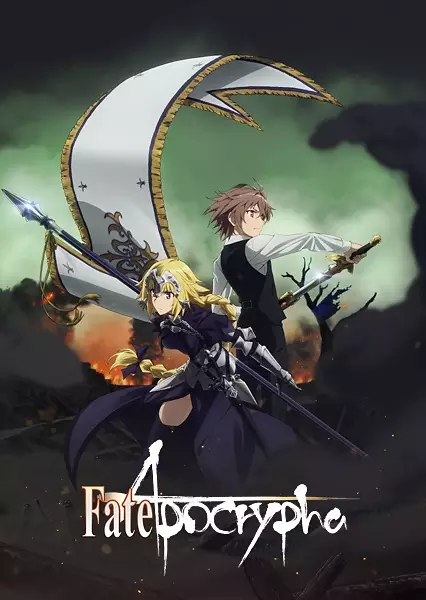
The Holy Grail is a powerful, ancient relic capable of granting any wish the beholder desires. In order to obtain this power, various magi known as "masters" summon legendary Heroic Spirits called "servants" to fight for them in a destructive battle royale—the Holy Grail War. Only the last master-servant pair standing may claim the Grail for themselves. Yet, the third war ended inconclusively, as the Grail mysteriously disappeared following the conflict. Many years later, the magi clan Yggdmillennia announces its possession of the Holy Grail, and intends to leave the Mage's Association. In response, the Association sends 50 elite magi to retrieve the Grail; however, all but one are killed by an unknown servant. The lone survivor is used as a messenger to convey Yggdmillennia's declaration of war on the Association. As there are only two parties involved in the conflict, the Holy Grail War takes on an unusual form. Yggdmillennia and the Mage's Association will each deploy seven master-servant pairs, and the side that loses all its combatants first will forfeit the artifact. As the 14 masters summon their servants and assemble on the battlefield, the magical world shivers in anticipation with the rise of the Great Holy Grail War. [Written by MAL Rewrite]
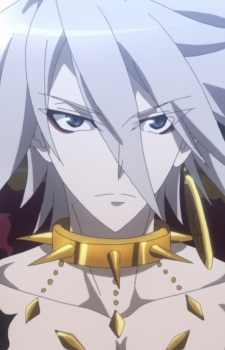
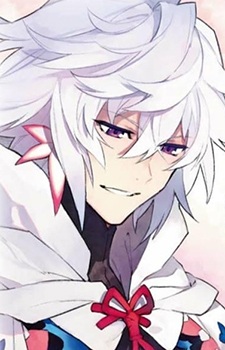
Main
Main
Main
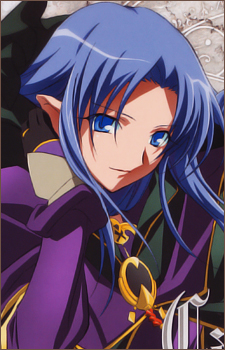
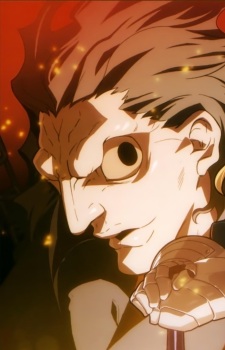
Supporting
Supporting
Supporting
Supporting
Supporting
Supporting
Supporting
Supporting
Shingster
December 31, 2017
Please note this review assumes that you have finished watching Fate/Apocrypha and while care has been taken to not spoil the story there may be potential spoilers within character analysis. Based off a light novel of the same name Fate/Apocrypha is part of the Fate Stay Night franchise but rather than being a part of the main universe it’s a spin off of the series taking place in a parallel universe that has its own events and characters. True to the theme and premise of its parent series Fate/Apocrypha revolves around the struggle for the holy grail a mythical item that is said to beable to grant whoever attains it any wish that they want. However, while the previous series of the franchise have restricted this to relatively small-scale engagements between magus’s the difference and arguably the main draw point of this series is the scale of the battles. Here rather than having small groups of magus’s fight each other with their servants the main story of the anime revolves around a large-scale war between two relatively large factions which pits the two factions both of which have 7 masters and servants against each other. As the Fate franchise has until now largely been contests between smaller groups of masters and servants the large-scale battle that was promised for this series was one of the main reasons why I decided to watch this series and I'm glad that I did as not only did the series have plenty of excellent battles it also had plenty of well-designed characters as well. The first episode while slow paced did a great job of introducing the setting and the main characters. The overall story of Fate/ Apocrypha revolves around the struggle for the franchises main prize the Holy Grail though with some differences to the established formula that was used in the franchise as this is a spin-off series. The war for the holy grail in this series revolves around the major powers struggles to control the grail and use it for their own goals with these factions being the red faction that is represented by the Clock Towers Mage Association and the Black faction which is represented by the Yggdmillennia family a group of mages that is based in Romania. The setting for the series, for the most part, is also Romania. The overall story for the series while looking at the struggles between the masters and servants of the two competing factions also follows the life of two characters whose fates have become intermingled with this war. These are the homunculus Sieg and the servant Ruler who was summoned by the grail itself. These two characters while at first uninvolved with the war soon find themselves dragged into it as the war between the two factions change dramatically as new enemies and nefarious plots reveal themselves and turn what should have been a conventional war into something else entirely. Sieg Sieg voiced by veteran voice actor Natsuki Hanae of Digimon Tri and Tokyo Ghoul fame is one of the main characters of the series. Initially, Sieg is an artificial human being that was created by the Black faction in preparation for the war for the grail that they have been prepping for years. However, unlike the others that the faction created beforehand Sieg from the beginning exhibited a number of behaviour characteristics that made him stand out. These included a reluctance to fight, self-preservation and being afraid to be alone. In the beginning of the series, Sieg was also very weak at first barely able to stand at first and needing some time before he can move on his own. Indeed, in the beginning, because of his lack of a personality and even of basic knowledge Sieg, in the beginning, wrestled with his feelings as he was unsure of what purpose he had for his creation. These doubts of Sieg however gradually start to disappear after he meets Siegfried and Ruler and the subsequent events that happened between them that ultimately caused Sieg to change not just in terms of personality but also in the role that he will have in the larger war. After Sieg’s ascension Sieg’s personality gradually starts to change because of not only meeting Ruler but also meeting many other people in his journeys and learning from them. While still remaining quiet and composed Sieg begins to develop an interest in humans and their struggles in life largely as a result of wanting to forge a new life to repay the debt that he feels he owns to both Ruler and to Siegfried. As the series progresses his personality is gradually created as a result of learning more about human society such as the towns and villages that they inhabit and the hopes, wishes and desires that they have in them as they go about their life. In this Sieg becomes visibly kinder and honest while also developing a determination to protect the innocent from harm. The insight into humans and their society also had the effect of not only allowing him to draw strength from them but also allow him to understand the concept of freedom and what that entails. The concept of freedom itself is something that can be seen to have a large impact on Sieg’s personality as it becomes his main motivation for his second life with this being to help others gain their freedom as he believes that all life whether they are artificial, or natural should be free to walk on the path that they choose. Sieg’s new life while giving him the opportunity to live his life the way that he wants to also gave him the opportunity to directly affect the war that’s being fought around him and in this, we can see one of Sieg’s core personality traits as well as one of his main struggles. In terms of personality traits one of Sieg’s core personality traits is without a doubt his determination whether it’s used to protect someone that’s dear to him or to repay someone for a great deed that they have done for him. This trait corresponds nicely with one of Sieg’s main struggles that he faces in the series namely the reason for wanting to fight. Overall the character of Sieg was an interesting one and while his origin story and second life were unusual to say the least his development that focused on him learning how to not just be human but also what it means to be a human was something that I thought was done well. His struggles as he tries to understand the differences between the actions that humans take was also interesting. His increased role on the battlefield and his struggles in doing so I felt were also well designed. Ruler Ruler voiced by veteran seiyuu Maaya Sakamoto of Mobile Suit Gundam Seed Destiny and Persona 3 movies fame is one of the main characters of the series and is the main heroine of the series. A servant that was summoned to this realm as a result of the start of the Great Holy Grail War Ruler was summoned with the direct purpose of acting as a moderator for the war whose main role was to oversee the war itself and make sure that the conflict is being waged fairly. Though a servant that was summoned to this world as a result of the war Ruler is also someone that can easily pass as a human being due to both her past origin story as well as her experiences in this world. A kind, Caring and honest person by nature Ruler is also someone that is righteous and is someone that believes greatly in god despite her origin story which was quite surprising. Because of this faith Ruler is also someone that is humble, honest and modest and as a result is able to forge bonds easily with people and strike up friendships quite quickly. As a result of both her origins and the understanding that she had of humans, Ruler was also someone that was always willing to help people no matter their allegiance which often clashes with her duties as an observer to the war but demonstrates her determination to help the innocents that were caught in this war. While Ruler herself readily accepts that her origin as a saint meant that she served as a leader of a vast host that fought during a time of turmoil in human history, Ruler readily admits that her hands are no less stained in blood than any other hero but instead of feeling despair from this uses it as a strength to keep the wars that she manages as clean as possible which I felt was admirable. As the series goes on it can be seen that Ruler’s evolution of becoming more human often clashes with her duties as both a servant and a moderator of this war. While Ruler was supposed to serve as the standard bearer of the war that had the task of both observing and guiding the war along its correct path, as the series goes on Ruler’s righteous nature that she inherited from her origin story had the effect of drawing her into the war not as an observer but as a combatant because of her quest to find the true reason to why this war was started in the first place. This quest for the truth of this war and Ruler’s act of becoming more human is linked together in the series becoming a cornerstone of her personality which later evolves as the primary motivation for her taking an active role in the war itself. In the beginning of the series Ruler was someone that was very loyal to her role as an observer and was someone that obeyed all the rules to the letter but as the series goes on this changes as she sees both the actions that the two sides take and the effects that these have on the war and to the innocents that are caught in the war. In line with Ruler becoming more human, this causes her to become more understanding of people and their feelings and circumstances, more willing to protect the innocents that find themselves caught in this war and more merciful towards the ones that fight in this war as well. The most important development here is naturally the development of her kindness in which she will value the actions and deeds of others and remember them for it regardless of whether they fought against or with her. Perhaps the best indication of Ruler becoming more human is her interaction with Sieg and the development of feelings towards him. While she treated him as someone that was caught in the war by circumstance at first these feelings soon evolved over time as she got to know him becoming friends and teaching him what it means to be human. In the process, it’s interesting to see both gradually becoming more human as they interact with each other as they learn about the values that humans have. In particular Ruler’s constant attempts to protect him and keep him out of the war I felt was pretty interesting to see as this shows her growing feelings for him and her desire to protect him which clashes with her duties as a moderator for this war. As a character I felt that Ruler was a pretty well-designed character that as the series went on was given plenty of good development that reflected not just how the war itself fared but also as a result of the people that she encountered along the way. Her evolution of becoming more human I felt was done really well and it was nice seeing her develops feelings and desires like any human girl would have in life. I felt that her seiyuu Maaya Sakamoto really did a fantastic job of portraying the character of Ruler. Shirou Shirou voiced by veteran voice actor Kouki Uchiyama of Buddy complex and Charlotte fame is one of the main support characters of the series and serves as the series main antagonist. A mysterious person that appeared on the eve of the war Shirou is a shrewd, cunning and blunt person that on first appearance can also appear to be mocking and condescending towards people that he meets. While seemingly laid back at times beneath the smiling face that Shirou puts up is someone that is creative, manipulative and far-sighted and well versed in orchestrating events as he is good at manipulating people whether they are allies or enemies. In the beginning of the series Shirou despite being a master of the red faction did not take to the field unlike masters of the other factions preferring instead to orchestrate events from behind the scenes. Unlike most masters that fought in this war, Shirou was shown to be a very capable planner capable of both creating complex and well thought out plans as well as creating plans on the fly that take advantage of events that happen outside of his calculation. Shirou was also shown to be a very capable negotiator where his perception skills and his understanding of humans can be best used to his advantage. As the series goes on and Shirou’s role and real identity becomes more apparent more of his personality begins to surface along with subtle changes to his existing personality traits. In the beginning of the series, Shirou was someone that approached each situation and development in the war with a sort of detached calmness that was his trademarked nature in the early stages of the series. This ability to calmly analyse a given situation and come up with ways to either take care of the problem or take advantage of it shows that Shirou in addition to being a capable planner and negotiator is also a capable strategist as well. Unlike most masters of this war Shirou’s combat abilities are supremely powerful and indeed he can stand up to enemy servants and fight toe to toe with them which is quite an achievement. However, Shirou’s greatest strength is not his combat prowess but rather his intelligence that allows him to outsmart and out think his enemies and succeed at the task that he has set himself to do. The baseline of a good character whether they are a hero or a villain is, of course, their origin and backstory that created them. In this, I felt that Shirou’s motivation that caused him to take such a role during the war came from his experiences from the past that he witnessed in his past life and summons. Rather than let these experiences plunge him into despair Shirou instead used this as motivation for his true wish. In this, I felt that Shirou was similar to another of the main characters in this series which is Ruler in that both were betrayed by humanity and died as a result but while Ruler understands and accepts that Shirou is different. As a result, the struggle between Shirou and Ruler which makes up the core story of this series is as much a battle of ideology and reasoning as it is between physical might. The character of Shirou I felt was a well-designed character that proved that with conviction, intelligence and might one can do anything. Aka no Assassin Semiramis aka Red assassin who is portrayed by veteran seiyuu Kei Shindou of Mobile Suit Gundam 00 fame is one of the main support characters of the series. A member of the assassin class of heroes Semiramis serves as Shirou’s servant and also as his right hand in the latter half of the series. A calm, composed but cynical person Semiramis is someone that can be said to be the ideal image of what an assassin with an ice queen type personality looks like. While not dismissive of other masters and servants Semiramis is someone that is malicious by nature and seems to love to hatch up schemes that can be used against enemies and allies alike. However, beneath that side of her, it can be seen that Semiramis is also someone that is intelligent and fast thinking able to determine the logic behind events quite easily. Despite being an assassin Semiramis is shown to be a surprisingly powerful mage and has an unusual super ability as well. While Semiramis is icy and cynical outside of battle once inside however she is shown to be a very cunning and crafty person able to come up with some really interesting tactics and strategy that can create some interesting situations for her opponents. Arguably the most prominent trait of Semiramis is her relationship with Shirou that seems to transcend the normal relationship that a servant and master should have. Indeed, while she seems to want to see her master fail in his plan it is contrasted by her desire for him and for the plan to actually work. All in all, the best word that can be used to describe Semiramis is enigmatic a term that seems appropriate for an assassin. Kairi Kairi Shishigou portrayed by veteran voice actor Kenji Nomura is one of the main support characters of the series. Initially Kairi was one of the masters that were summoned by the red faction in the early stages of the war to take part in the Holy Grail war between them and the Black faction. In the beginning of the series, Kairi was someone that can be considered a loner as he always fought by himself and never coordinated actions with his faction. Indeed, this aspect of him was likely what saved him from the fate of his fellow masters in the latter half of the series. Kairi personality wise was a determined, cautious and canny person that had a knack for surviving and being able to sense people’s intentions by meeting with them. While Kairi may appear to be someone that prefers to solve problems with force Kairi is shown to be surprisingly intelligent and able to react to changing situations with practised ease. He is also shown to be a capable tactician often coming up with ad hoc plans that work surprisingly well. As the series goes on and as Kairi’s character is expanded upon it can be seen that Kairi is someone that is kind by nature. While Kairi is not someone that trusts easily by nature Kairi however is someone that will treat people with the respect that he thinks that they deserve. This manifests in the fact that he will not underestimate his opponents under any circumstances. A prominent trait of Kairi’s is his determination to avoid causing any form of collateral damage while in combat. This itself is rather surprising since mages usually aren’t too concerned with the causing of collateral damage as long as their goals are achieved. In line with Kairi’s attempt to avoid causing collateral damage is his strong moral compass in that he will not to try to harm innocents and fight as fairly as he can. Despite this Kairi is a realist and understands that sometimes you have to be able to make decisions that you may not agree with but are necessary for the long run. One aspect of Kairi that I particularly enjoyed seeing was what his wish will be if he had managed to get the grail. In this, I felt that Kairi’s backstory that explained how this wish came about was interesting and actually made him appear more human than any of his fellow red masters. Red saber Mordred portrayed by veteran seiyuu Miyuki Sawashiro of SAO and Granblue Fantasy fame is one of the main support characters of the series and is one of the servants that fight in this war. A member of the saber class of servants Mordred is a brave, brash and hot-headed person in the beginning. True to her role as a knight and also because of her origin story Mordred is someone that is not especially trusting at first and is wary of anyone that she encounters. Despite that Mordred is someone that will trust those that have proven both their worth and their strength to her and in that situation, she will endeavour to do her best to assist them to the very end. In the series, this bond and loyalty is shown in her relationship with her master Kairi. True to her role as a knight Mordred is someone that loves to fight fairly and with full force rather than with trickery, surprise attacks or not fighting with full strength intentionally and as a result, she detests hiding. However, despite that Mordred is someone that appreciates the use of good strategy and tactics seeing this as one of the fundamentals of being a warrior. Perhaps because of her origin, Mordred has an interesting complex in that she dislikes being viewed as a woman seemingly preferring to be seen as a knight instead. In the beginning of the series, Mordred was noted to be overconfident and treated other people and servants with disdain. However, as the series goes on this attitude of hers gradually softens and she is able to see the value of alliances, allies and of looking at the larger picture. While Mordred herself, in the beginning, was noted to view humans with disdain as a result of her origin story as the series goes on it can be seen that she has developed a respect for them as a result of the things that she has seen in her battles in this world. One aspect of Mordred that I found to be interesting was her dislike of masters that mistreated their servants which considering her origin story of being the evil knight was even more surprising. The character of Mordred I felt was pretty well designed and showed some pretty good development as the series went on. Her strong bond and loyalty to her master I felt was especially well done as well as her indirect assistance to Sieg in the strangest of times. I felt that her seiyuu Miyuki Sawashiro really did an excellent job voicing her. Aka no archer Atalanta voiced by veteran seiyuu singer Saori Hayami of Owari No Seraph and Yamada kun and the Seven witches fame is one of the main support characters of the series and is one of the servants that fight for the red faction. A member of the archer class of servants Atalanta is someone that can be seen to be the picture of calmness and logic and behaves very much like a professional in contrast to her allies in this war. A calm, perceptive and patient person by nature Atalanta is someone that while quiet by nature is also composed and as a result, is not someone that gets rattled easily in battle. Indeed, she is someone that can face down a servant like berserker with an ice-cold calmness which is the trait that truly defines her. While Atalanta herself is a quiet person by nature she isn’t someone that is afraid of offering her own opinions and assessments of situations showing that behind her icy nature Atalanta also has a keen intellect as well. True to her role and identity as an archer Atalanta is someone that has great pride in her abilities and as such longs to be able to take on all foes that stand before her. However, with this pride also comes with Atalanta’s wish for all combat to be fair and as such she is someone that dislikes slaughter. As the series goes on and Atalanta’s personality and backstory are revealed Atalanta is shown to be a kind person by nature whose current personality was affected a great deal by her past. Atalanta’s most prominent trait is, without doubt, her determination to protect the innocent and especially children from harm a trait that stems from her rather tragic origin story. This backstory serves as the foundation that Atalanta’s personality is based on and indeed serves as the basis for her wish to the grail and ensures that she will fight even harder to achieve victory in the war. As a result of her determination to protect the innocents and the children that she was unable to protect in her origin story Atalanta’s personality changed considerably after the fight against Black assassin Jack. As a result of both seeing the kind of world that Jack lived in as well as seeing the actions that Ruler took against the spirits of the children that inhabited that world Atalanta’s personality changed dramatically. No longer calm and logical as her previous self-had been Atalanta instead becomes an angry, brash and rage-fuelled existence that seems to be barely restraining the anger that she feels at seeing the actions that Ruler took back in Jacks world. This change in personality I felt was pretty dramatic but well in line with someone whose greatest fears was realised by an existence that they had trusted for a long time. Seeing the previously calm and composed Atalanta transform into a being hellbent on revenge really was surprising but one that spoke well of her development as a character. I felt that her seiyuu Saori Hayami really did a fantastic job in portraying the character of Atalanta. Aka no rider Aka no Rider who is portrayed by veteran voice actor Makoto Furukawa of Orange fame is one of the main support characters of the series and is one of the servants that fight for the red faction in the holy grail war. A member of the rider class of servants Rider is a confident, intelligent and well-read person that proves that apart from his skill with the spear Rider is also someone that can come up with some surprising insights and ideas that others may have missed. Outside of battle, it can be seen that Rider is someone that while appearing to be somewhat laid back and uninterested in the larger scheme of things is, in fact, someone that can be surprisingly perceptive of events and considerate towards the feelings of others. The latter here is best shown in his relationship with his fellow servant of the red Atalanta whom he respects and trusts due to her strong conviction and moral compass. As a result of his origin story Rider is someone that can be considered to be more along the lines of a traditional warrior in that he dislikes the use of trickery and deception and prefers to fight fairly and with no reserve from both sides. As a result of this Rider’s relationship with Shiro who acted as the voice of the red masters, in the beginning, was rather tense as Rider disliked the fact that Shiro hid his plans and strategies from them and only told them when he felt the need to. As the series goes on however it can be seen that Rider has developed a grudging respect for Shiro due to his determination and conviction though he won’t be the one that admits it. In combat, Rider is shown to be a capable warrior well versed in both mounted and single combat and approaches each battle with due caution and determination. While Rider maintains a serious nature during combat it can be seen however that Rider loves to taunt his opponents hoping to take advantage of any flaws that can be exposed as a result but at the same time he is able to use his skill to avoid being caught in dangerous situations that his actions may have caused showing his skill as a warrior. As a character, I felt that Rider was a well-designed one that showed that warriors do not have to be grim and forbidding to be effective and that sometimes someone that acts like a joker outside of battle can be a surprisingly capable warrior in battle as well. Fiore Fiore voiced by veteran seiyuu Chinatsu Akasaki of Plastic Memories and Food wars fame is one of the main support characters of the series and is one of the masters of the Black faction that fight in the Holy Grail war. A wheelchair-bound teenage girl Fiore is a kind, caring and intelligent person that if she wasn’t a mage would have been a pretty normal teenage girl that’s happily living a normal life in a normal world. Despite being in a wheelchair Fiore is not someone that feels that it restricts her in any way which is best shown in her personality which is that of a positive, responsible and caring girl that is respectful and polite towards her siblings and members of her family and servants. Indeed, it is these qualities that ensure that Fiore despite not being able to fight as hard as other mages is well respected and trusted by her fellow family members to the point that command of the family will be passed to her when Darnic is elsewhere. Unlike most mages that fight in the holy grail war, Fiore can be considered to be a sort of an oddity within the familia as her kind and caring nature means that she is more humane than most as she cares about the feelings of others whether they are humans or servants artificial or natural. This can be seen in her treatment of the familia’s homunculi that she treats and see’s as human rather than as weapons as the other members of the familia view them. Though a member of a well known familia within the magic world and someone that her uncle Darnic readily trusts enough to pass command to at times Fiore is someone that thinks and acts with her heart at the forefront and as a result has very little ego that gets in the way when approaching situations that develop in the war. While very proud of her own skills and of her familia Fiore is not someone that is too proud to not ask for help when she needs to and indeed will readily ask for help when the situation proves too difficult for her and the familia. As the series goes on and as more of Fiore’s backstory and personality gets revealed it can be seen that Fiore also has struggles that she wrestles with that defy her character. In the series, Fiore’s kind and caring nature combined with her fair treatment of both her fellow mages and servants alike can be seen to clash with how a magus of the magic world should act. Indeed, this is a fact that Fiore also understands very well but yet cannot easily overcome. While very loyal to both the familia and to her uncle and knowing full well what the implications of losing the grail would bring to the familia Fiore struggles with the realisation that to gain more power and be a more powerful magus that she must do things that are morally questionable something that clashes with both her personality and her perception of what is right as a human being. The struggle of between what is right as a human being and what is right for a being a magus of a well-known familia I felt was well done and was an interesting topic that really defined Fiore as a character. In the end, I felt that Fiore was a very well-designed character that emphasised the struggle of being a mage and a human being very well. Her struggles I felt only served to make her a much more interesting character that one can relate to. I felt that her seiyuu Chinatsu Akasaki really did a fantastic job in voicing her. Kuro no archer Kuro no archer voiced by veteran voice actor Shunsuke Takeuchi is one of the main support characters of the series and is one of the servants that fight for the Black faction. A member of the archer class of servants Kuro no archer is a calm, quiet and understanding person and as a result is a perfect fit for his master Fiore as their temperaments are very similar to each other. True to his role as a member of the archer class Kuro no archer is someone that is intelligent, perceptive and well read and seems to have a good knowledge of tactics and strategy from his origin. As a result of his personality Kuro no archer is able to bond easily with other people regardless of whether they are masters or servants which is helped greatly by the fact that he is always willing to help people even though he has nothing that he will gain from it. The best example of this is when he helped Rider take care of Sieg. This ability to work well with others without having to compromise on his beliefs I felt was one of Kuro no archers more prominent traits as it allowed him to work well with people of varying affiliations. Perhaps as a result of his core trait of being very loyal to his master Archer is someone that detests traitors and even more so for those that killed their own masters in their betrayal as well. Only when he faces such foes does Archers calm self-disappear and be replaced by a thirst for justice. In the series, Archer is shown to be very considerate and caring towards his master Fiore which I felt was something that was well done as it reflected his nature as both a servant that fights but also one that assists their master for the duration of their contract. Kuro No Rider Astolfo played by veteran seiyuu Rumi Ookubo of Hundred and Gate fame is one of the main support characters of the series and is one of the servants of the black faction. A member of the rider class of servants Astolfo is someone that can be considered to be someone that wears their heart on their sleeves as he is someone that thinks with their heart rather than try to think of a way in which they can benefit from an encounter. Personality wise Astolfo is a kind, positive and bubbly character that is always willing to help those in need regardless of whether they are enemies or innocents that are caught in the crossfire. While Astolfo’s most prominent trait can be considered to be his curious nature it can be said that his most important trait is his steadfast loyalty to his own beliefs of justice. While Astolfo herself may appear to act similar to a child in terms of personality this hides the fact that he can be surprisingly reliable and responsible at times and when he is with a master that he truly admires and respects it can be seen that he can be surprisingly loyal to them. Within the series, this is best seen in the relationship that Astolfo manages to establish with Sieg as though while they had the strangest of first encounters their relationship eventually evolved in a most unexpected way. As the series goes on and as Astolfo’s personality becomes much more developed it becomes apparent that Astolfo at his core is something akin to a free spirit in that while technically he is a servant of the black faction he will often go out of his way to help others that are caught in the conflict regardless of whether his orders say so or not. In this, it can be seen that Astolfo cares little about what others think of him only that his actions are in line with his beliefs and convictions. In line with his free nature, Astolfo is someone that bonds easily with others and prefers to not stand on formality openly using the true names of his fellow servants freely which I felt added charm to his character. True to his free personality Astolfo believes greatly that one should live their life the way that they want to without worrying about any constraints that stand in their way. Despite his free-thinking nature, however, Astolfo is someone that believes greatly in finishing things that he has already started and will not back down from a promise that he made to someone even if the other party regrets it which points to his loyal nature. As a character, I felt that Astolfo was a well-designed and well-developed character that showed that despite not being rigidly loyal to the cause as long as your heart is in the right place you will still be able to forge your own path. His free-thinking nature combined with his determination to help those in need I felt allowed him to contrast well with the other servants of the black. His cheerful nature, as well as his ability to stay positive even in the grimmest of battles, was also another aspect of his personality that I liked. His relationship with Sieg was something that I enjoyed seeing and watching that develop over the course of the series was one of the best points of this series. I felt that his seiyuu Rumi Ookubo really did a fantastic job in voicing the character of Astolfo. AMV Animation wise I felt that the animation for the series was actually pretty good with the combat scenes being especially well designed and thought out. The individual character designs for each of the characters whether they were masters or servants I thought was another high point for the series. In particular, I really liked the designs for the uniforms that the members of the black faction wore as well as I felt that it highlighted and represented their uniformed purpose and goal and stressed the unity of the famila to accomplish it. The locations that were featured in the series I felt was also varied and well designed and did a good job of showing the different types of environments that existed in the country that the holy grail war took place in. In terms of music, the series had some really impressive opening and ending themes with my favourite ones being the first and second opening themes that were sung by Egoist and LISA and the first ending theme that was sung by GARNIDELIA. The background music for the series I felt was also pretty well done. The voice acting for the series I felt was one of the series main strong points which were helped greatly by the talented voice cast that the series had made use of. In particular, I feel that Maaya Sakamoto, Miyuki Sawashiro, Saori Hayami, Chinatsu Akasaki and Rumi Ookubo deserve particular praise as I felt that they did an excellent job in portraying their respective characters. Overall conclusion In overall, I thought that Fate/Apocrypha was a pretty good anime that had as its main strong points its strong premise, strong and unexpected story, well-designed characters, excellent voice acting and excellent combat. Also, notable about the series was its inclusion of complex issues like the definitions of freedom, choice and what and how you should spend your life. The overall premise of the story was an interesting one and one that served as the staple of the Fate Stay night series since its inception but the difference here is scale. Rather than having a small number of masters and servants fight for the holy grail to get their wish granted Fate/Apocrypha expands upon this idea significantly expanding the small-scale battles that were seen before to a large-scale battle instead pitting two factions that both have seven masters and their assigned servants against each other in a grand battle for the holy grail making this a fight that involves 14 masters in total. The resulting struggle between the two factions, as a result, forms the main backdrop and conflict that the series main storyline makes use of. The overall storyline for the series using the backdrop of the war as its main point I felt did an excellent job of showing the struggles between the two factions as they fight for control of the holy grail and did an excellent job of showing the moves that were made by the two sides in the war. Indeed, I really enjoyed seeing the moves that both sides make as the war proceeds. While the war itself was the main focus of the series Fate/Apocrypha is also notable in that it features some unique elements not usually seen within the series such as the development of feelings between masters and servants, the definition of what life and freedom is, what makes a human being and whether servants have free will and whether or not they can defy their masters that they have a contract with. The characters of Sieg and Ruler, in particular, define the great majority of these themes as both are existences that are above the norm of what you will usually see inside the fate universe. The fact that these questions and beliefs form part of Sieg’s development as a character was an aspect that I particularly liked. The relationship between servants and masters has always been one of the main aspects of the Fate universe and Fate/Apocrypha's interpretation of it was by far the most interesting one as servants here are not as tightly bound to their masters as other series have shown and indeed they can choose to defy their masters if they think that a situation demands it something that I thought was welcome as it gives more life and personality to them. Overall Fate/Apocrypha was a series that I really enjoyed watching as it combined excellent combat scenes with an impressive and well thought out storyline that was full of unexpected twists which in turn was reinforced by well designed and developed characters that were portrayed by some of Japan’s best seiyuu’s and voice actors within the industry. The inclusion of complicated themes like freedom, feelings, life and desires I felt also served to enhance the series as a whole and make its story and its characters that much more interesting. As a final score, I would say that Fate/ Apocrypha easily deserves a score of 10/10.
sterl1
December 30, 2017
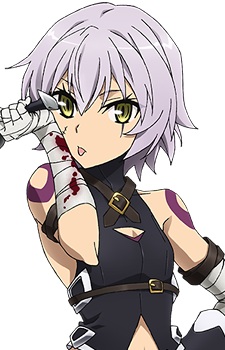
THIS REVIEW CONTAINS SOME SPOILERS Ahhh. A-1 Pictures. The studio who have time and time again, blessed us with their heavenly touch. Once again delivering the seasonal train-wreck that they have been doing so effectively since the creation of time itself. Being one of the most popular studios for both Western and Japanese fans; A-1 have made some of the most popular shows to come out of the medium. Many battle shounen such as Magi, Blue Exorcist, Fairy Tail and The seven deadly sins have all been met with a warm embrace from anime fans. Last year’s big hit Erased, two of the most popularmelodramas in Anohana and Your Lie in April, and the most important one of all: Sword Art Online. They have a lengthy list of popular shows but most of which are not met with the warmest of critical receptions and many usually have a split amongst watchers. Many casual watchers who are not very invested into the anime medium praise their works for their accessibility and good production values. On the other hand, more demanding viewers have scrutinized their shows for poor writing quality, needless otaku pandering, needless fanservice and in some cases; being an absolute train-wreck. I do believe that there is a lot of truth to what many say. Most shows I have encountered from A-1 are weak and only fill a criteria in order to make the maximum amount of profit they can. To cut a long story short; they are a mainstream magnet. While some of their shows are a little excessively over hated their latest title deserves all of the hate it has gotten and has reminded me why I ultimately dislike A-1. Fate/Apocrypha is the latest title to come fresh off the conveyor belt and put another popular A-1 show in the limelight once again. This particular fate title follows the same basic formula you would expect from the franchise, but it does have its own unique twist in the plot. Instead of seven masters with seven servants fighting amongst each other for the Holy Grail, two factions fight over the grail each with their own set of seven servants and seven masters. Fate/Apocrypha is an alternate universe that branches off the fate/stay night universe where the Holy Grail has disappeared after the third Holy Grail war and has landed in the possession of a mage family that declared that they are in ownership of the grail and secede from the association. As cool as its premise might sound on paper, Fate/Apocrypha is absolute trash. It’s a downright train-wreck no matter which angle I approach it from. Its first mistake was starting off with a draining info-dump. A fantastic way to immerse the viewers! But that is far from the worst problem. The show tries to make the audience in some way, shape or form care for over fifteen named characters all of which either look like generic waifus or characters out of a final fantasy game. When you have Jack the ripper being portrayed as a loli, that really says a lot about what kind of show this is doesn’t it? Let’s also not forget about a certain trap that took the anime world by storm. I wouldn’t blame guys for pulling their dicks out to Astolfo since he resembles a female more than actual females do. Apart from blatant fetishizing, enabling those who want him as their waifbando to better self-insert and fulfill their deviant wishes. Astolfo's backstory was never really dug into enough to make him a distinguishable character with his own vision and ideals which further fuels the point that the only purpose he served in this calamity of a story is otaku fuel. The fate franchise has always used sympathetic backstories to draw attention from the viewer. This worked far more efficiently in previous fate titles because they were about a much smaller group of characters who were a lot more distinctive from each other. Despite my problems with other fate incarnations, their characters were easier to care for because of tighter focus and a more well-structured surrounding plot. In this catastrophe, the show will very loosely reveal glimpses of a character's past while immediately transitioning to another character in a completely different scenario. This is not only immersion breaking for the viewer, but trying to split attention between a huge group of characters all of which look similar and are mostly generic anime archetypes is a huge step in achieving train-wreck status. Most characters lack any sort of meaningful characterization and most are too cookie-cutter which ultimately drags them down to the dirt. In addition to the characters being poor, the relationships between them are equally as dull with barely any engaging character chemistry or dialogue due to the dry atmosphere, dull presentation and lack of charisma from any of the cast bar Ruler who unlike everyone else, has some style and charm embedded in her. The rest are not worth mentioning individually as they generally share the same problems, a perfect example of lackluster script writing and the overall stupidity of most A-1 shows. Furthermore, Fate/Apocrypha takes the extra step of killing off a character that seemed to be important to the overarching plot in just the 4th episode. All while desperately leeching for the audience’s sympathy with a half-baked and ham-fisted flashback right before his death. And you think that’s bad? What is even worse than that scenario is that he gave his life for a self-insert protagonist whom he’d just met by giving him his heart. Fate/Apocrypha cannot only handle its cast properly but it exceeded my expectations by handing me one of the most contrived scenarios in anime I have seen in awhile. Yet again, another perfect example of incompetent script writing. Additionally, the bland self-insert protagonist whom had his life saved in the most contrived manner possible, makes one of the most ridiculous decisions he could ever have made. Being a homunculus made for war he escaped his captives under the protection of his trap-bait waifu and finally had the chance to live a free life. A sane human being would pick that option right? Well think again. This piece of shit character decides to jump straight back into the battlefield to save the other homunculus being held captive all of which he doesn’t even know personally on top of going to fight for a brainless reason just after being held in a container all his life. As bad as the characters and script are in Apocrypha, what ultimately makes this show horrendously disengaging is that nothing in this anime feels important. It’s almost completely devoid of personality and energy making it an absolute snooze-fest nine times out of ten. Energy stems primarily from the characters. A charismatic cast is what gives a show charm and in effect, makes it more immersive. But I feel none of that from apocrypha. Its plot doesn’t have a single shred of significance. What was the final straw for making me realize this is when a character attempted to sacrifice themselves in an attempt to take a formidable enemy with them. At that point in time I gave more fucks about cutting my nails than an artificial character with an artificial flashback that was thrown into an artificial scenario. And to put the icing on the cake, our bland self-insert was revived from almost certain death without any logical explanation. I call a bullshit asspull! If that isn’t the perfect sign of a train-wreck, then what is? Even some minor thematic significance does not stop a train-wreck from being a train-wreck. In the second half the anime started to explore some ideas relating to the nature of humanity and its salvation, ultimately ending in failure. Furthermore, Fate/Apocrypha never showed any illustrations, actions or consequences to serve its themes. Instead it presented them through bland characters who served as mouthpieces telling the audience about the themes instead of showing them through the plot to. It shows glimpses of events through some character flashbacks that support its themes but none of them are developed enough to leave an impression. With poor presentation and underdeveloped theme exploration, Fate/Apocrypha’s story proved to be arguably one of the most boring rides in anime i have had the displeasure of participating in this year, further highlighting why this anime is probably the biggest failure of its airing season. The one thing I hoped could pull through so I could keep my attention on this show was the action scenes. After all, Fate titles are well known for having some breathtaking action sequences. And yet even they are for the most part were only average and do nothing to get me hyped in the slightest. A-1 Pictures usually have good production values for all the shows they adapt from a popular source material. The character designs range from generic light novel designs to designs that look like they came out of a JRPG. The technical artwork on the characters and backgrounds are nothing to write home about and are too plain to breathe any life into the story but nonetheless the technical artwork was acceptable. The animation is what ultimately let me down. During most of the show’s action scenes the art simplifies and there is clearly a lack of attention to detail. Furthermore, the action directing is very messy and the “camera” panning is too quick and shoddy, making the sequences difficult to follow and only adds to the laziness noticeably evident. Clearly A-1 don’t give a donkey’s ass because the name of the franchise alone will make money for the production committee. Its highlight was episode 22 which featured some brilliant sakuga sequences that stretched all the way till the end of the episode, unquestionably making it the best episode in the show and the only action sequences that are praiseworthy, but one episode full of breathtaking animation does not excuse all of its technical shortcomings littered all over the show. Similarly, the OST is typical for the kind of show this is. There are two tracks in particular that work well with the action sequences and serve to add some tension. It’s a shame those tracks weren’t used on an action anime that has far more passion put into it. Both the opening and ending are very forgettable and can easily be skipped every episode. While the voice acting works well enough for most characters, some over-exaggerated screaming scenes full of over-bloated drama were unnecessarily magnified to the point of borderline cringe. It could be due to inexperience and it’s not a relatively damaging issue in the grand scheme of things but nonetheless it was distasteful. Now I have surely made Fate/Apocrypha seem like the spawn of satan, and it’s bad enough to be placed borderline bottom of the barrel. When you look at how many problems this show has and how little qualities there are to be taken away, an individual has every right to label this anime as a failure. But to its credit, this anime somehow managed to improve about two thirds into its episode count. Of course, it’s not saying much when a show is extremely incompetent and all of a sudden decides to start doing a satisfactory job at the most basic of tasks. There was so much room for improvement that even someone with no professional writing experience like myself would be able to glue some paper over the cracks and steady the ship. In the middle of its run, the show killed off a multitude of characters in a huge battle, most of which were throw aways with either no characterization or minimal characterization and i did not care for them in the slightest. But as a result of its character clean up, the show stopped spreading itself so thin by concentrating on a smaller cast which were more vital to the plot and gave the audience some insight into their personality and goals. Furthermore, a clear antagonistic force was established with a concise objective that stabilized the plot, and for the first time, Fate/apocrypha showed some competency in juggling character focused episodes and action sequences. Everything in the show from this point on had more weight placed on it, a sense of importance that I got from nothing in the first half, which was simply an empty casket. Instead of simultaneously throwing together multiple random encounters that were more jarring than exciting, the plot became more focused on individual arcs and events which made it easier to sit through. Even the action sequences slightly improved, with more convincing directing in the latter half. However by that point that damage was all but done. No matter how much you try to plug the holes on a sinking ship, eventually you will run out of paper for the cracks if the ship continues to come under fire. Its improvements were still vastly overshadowed by the poor characters, bland aesthetic, dry atmosphere and cookie cutter plot filled with holes. Any events that followed were still uninteresting and the execution was simply tasteless. By the time the show elevated its drama and plot with higher stakes, i couldn’t bring myself to care about the characters. Like I said previously, Fate/Apocrypha is trash. A textbook example on how to make a train-wreck of a story with barely any redeeming factors. Just another anime that should be thrown into the dumpster just like 95% of seasonal anime that air. It spreads itself so thin that none of the characterization or major events have any semblance of importance and to top it all off its story is an atrocious mess with a lack of focus. At this point I have almost completely lost all faith in the fate franchise, and titles like these highlight why I ultimately dislike A-1 Pictures as a studio. Many in the anime community say that studios cannot be completely accountable for most anime they produce because most don’t hold the same staff in-house for every project. There is certainly truth in that statement, but it’s clear as daylight that A-1 have an identity and that is to be a completely mechanical workshop devoid of creativity, solely designed to pump out shows in the dozens that will make every otaku’s dick wet all while completely forgetting about the script. Don’t get me completely wrong, I do enjoy some shows from A-1, and I’m sure I’ll find some more of that nature in their extensive catalogue, but it’s shows like these that keep supporting my argument that A-1 are the circus of the anime industry and that won’t be changing anytime soon.
Stark700
December 30, 2017
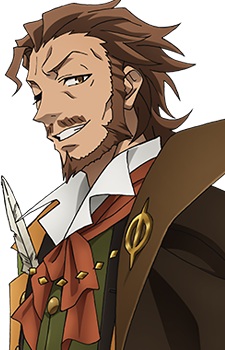
Taking a footstep into the Type-Moon universe feels almost intimidating at first. The franchise consists of an immense fictional universe that’s filled with unnatural ideas. Their flagship titles include the Fate franchise that were adapted into several TV series, OVAs, and movies. However, Fate/Apocrypha came to me as a show that couldn’t hold itself together. What could have been a big hit of the year translated into a nakedly boring storyteller that dropped the ball. To get the obvious out of the way, you don’t absolutely need to watch other Fate shows to understand Fate/Apocrypha. It’s advisable though since getting a better understanding of the generalpremise (in particular, the Holy Grail War) could improve your experience. Besides, the first few episodes does get into its exposition to explain some of the rules and concepts. It also introduces two sides of the Grail War with its ensemble of characters. I don’t want to jump the boat here but it felt like Fate/Apocrypha had to do a lot to please the viewers. Setting up a show with a story premise that involves two sides clashing for the ultimate prize sounds like a sensational attraction. It could really draw viewers, whether you’re a newbie or veteran of the Fate franchise. As someone in the middle like myself, it felt like a show that could really get viewers to really invest themselves more to what the Fate franchise had to offer. It’s sort of refreshing to see a war drama-like scenario rather than a battle royal. Unfortunately, it didn’t really live up to expectations that made this show feel any refreshing. It felt like a formulaic story that I couldn’t feel attached to or appreciated. As more episodes progressed, it became a chore to watch. Before I get to the what, how, and why, it’s important to understand what Fate/Apocrypha really did wrong. For a show like this, it obviously has a decent amount of characters it had to work with. Given the context that there are at least 7 masters and servants on both sides (Red faction and Black faction), there would be a minimum of 28 characters that gets involved in the main story. Then, there’s Ruler/Jeanne who serves as the mediator of the Grail War. (think of her like a middleman of a game) With 25 episodes adapting a 5-volume light novel series, the main concern lies with the fact that the show won’t have enough time to spotlight all the characters. Indeed, this anime did omit characterization on multiple fronts with its cast. This applies to both sides that includes the masters and servants. What made it worse is that the characters’ roles and motivations didn’t seem interesting to begin with. It just felt like the characters are there like pieces of a chess game. Some characters such as Mordred, Atalanta, and Jeanne has their own background stories. Unfortunately, those are vaguely explored and really doesn’t do justice with the show’s characterization. At the worst part, we have mindless characters like Spartacus and Jack the Ripper that just felt disposable. Now, we do have a main protagonist in the show despite the war-like drama going on. The show introduces Sieg, a homunculus that gets involved in the Holy Grail War. After a series of events, he gained the ability to transform into a servant in Siegfried’s form. To be honest, Sieg’s role in the show felt like a mixed bag for me. Compared to the other characters, he gets a lot of spotlight as he learns about himself, the world, and begins to act on his own morals. However, they are generic to the core and really doesn’t bring interest in terms of storytelling. On the other hand, his character chemistry with Jeanne is perhaps one of the better elements of the show as it makes them both look more human. Still, Sieg is portrayed too much like an average protagonist that just doesn’t stand out compared to the others. Everything he says almost sounds the same and he has a rather uninteresting personality as a character by himself. The only occasional time he shines is through character interactions with others. It’s also sad to say but most of the characters in this show can hardly shine on their own. It’s mostly the character chemistry that sells more interest. They come in a variety of forms such as respect (Mordred/Kairi), greed (Siegfried/Gordes), parental (Jack the Ripper/Reika), among others. Unfortunately, I confess that most of the character relationships in the show ended up being dry and empty. It felt like a lot was missing including insufferable personalities, roles, and in general, characterization. Shirou Kotome is a character that people will begin to take notice more in the latter half of the show. Still, I can’t say his role in the show is impressive given his view on humanity and morals. Shirou’s personality in this anime is also easy to dislike and feels more like they introduced him as an antithesis of Sieg. The clash of ideals gets old fast and tedious. The only plus on this is that both he and Sieg makes the story flow better as their roles are more acceptable. Just be aware of that the show suffers from weak plot devices and doesn’t do justice at telling its story. So Fate/Apocrypha did a lot of wrong. What did the show actually do right? For me, the characters themselves have rather distinctive personalities that can occasionally be entertaining to watch. Mordred is perhaps one of the more dynamic character with a prideful amount of charisma. Astolfo adds a big dose of comedy to this rather moody show. William the Shakespeare also shows a ton of energy through his philosophy and dialogues that can occasionally be amusing to watch. Even Frankenstein can occasionally have windows of moments that draws attention to viewers. Admitingly, I do miss a few of the characters after their demise. The story itself has a thoughtful premise despite the poor pacing at times and omitting/rushing certain content from the light novel. It’s very predictable at times but occasionally feels impactful when you see the plot being carried out. Unfortunately, these concepts are mostly scattered throughout the show and doesn’t connect each other in a balanced way. It’s like a broken toy that still has problems after being repaired. Watching Fate/Apocrypha’s action scenes reminds me of battle-shounen style cinematics. Rather than ufotable, A-1 Pictures takes this project that set off some red flags at first. Through their history of adapting shows with action, it felt like this anime’s technical elements would be mediocre. While it doesn’t live up to the caliber of ufotable, A-1 Pictures does live up to their standards. To put it simply, the show’s action scenes mostly looks sharp and stylish. In one particular episode in the latter half of the series, it really brings out a style of animation that stood out by itself. There are some episodes that suffers from raw visual quality with sloppier action movements but for most part, it lives up to expectations. Character facial expressions is also noticeable that showcases the persona of the cast. Jeanne, Atalanta, William the Shakespeare, and Jack the Ripper are a few examples. Character designs also stands out with noticeable traits such as Astolfo’s androgynous appearance, Frankenstein’s experimental look, Mordred’s prideful knight armor, or Semiramis’ devious dress. Jeanne herself stands out as well with her pure look as a spirit in a French girl’s body. Most of the fan service in the show comes with the violence rather than skin so do expect a lot of that. On the technical front, this anime‘s theme songs and OST delivered what I would expect from an action/fantasy show. It balances between orchestral, eerie, harmonious, and intense. In particular, the moments between Jeanne and Sieg has OST that make them stand out more compared to other character pairs. Character voice mannerism is suitable for most of the casts' personalities although it may take a while to get used to Astolfo and Sieg. Jeanne’s voice sounds too monotonous at times and holds the show back as a main character. On the other hand, I do really find Mordred to stand out a lot in the show with her voice and personality. Frankenstein is also worth mentioning as she hardly gets any lines but portrays her personality consistently like from the original story. Fate/Apocrypha felt like a show that had a lot of potential but had too much to work with to be able to make everything go smoothly in the end. While this may seem like an excuse at first, it still doesn’t feel right as the story and characters didn’t capitalize on them. The Holy Grail war drama has been going on for a long time since the Fate franchise begin and to be honest, this one didn’t feel any exceptional compared to its other works. It didn’t inject ideas that made the show impressive but instead tried to rely on its character cast to do the storytelling. That came out as poorly made with little value to talk about in the end. Even at 25 episodes, it still felt like a show that gave the Fate franchise a middle finger.
CodeBlazeFate
December 30, 2017
Fate/Apocrypha: A Postmortem Review Now that 2017 is drawing to a close, we can certainly say Fate/Apocrypha lived up to its name, given that this is an entirely unnecessary installment to view due to its poor quality. It is arguably the blandest, most forgettable installment in the Fate series, notable only for current memes and trends in the community, such as traps and the meme of lewding fictional characters, as well as for what it tried and failed to accomplish over the course of its run. Now before I delve into the review proper, allow me to answer some burning questions: “Can Fate/Apocrypha be watched as astandalone?” Yes, but I wouldn't recommend doing so, as you want to know the rules of the main Holy Grail Wars first that way you know how this deviates. It doesn't explain all of those rules either nor does it explain all of the new stuff it does despite some attempts. You should at least watch the main timeline installments to avoid possible confusion with this one. So no, do not make this your first, let alone only experience with Fate/ anime. “Should I watch Fate/Grand Order: First Order beforehand?” No. Pretend that abomination doesn't exist. It will not give you any insight into Apocrypha’s deviations either. All the entry does is cause confusion, not explain anything it adds or amends, and advertises a mobile game that contains all of the servants in the franchise. “I'm a guy. Is it gay if I like Astolfo as my waifu?” Yes it is and yes you are unless you're bi. Thankfully for you, he's bi too. Fate/Apocrypha, otherwise known by me as Fate/Steak Sauce, was animated primarily by Studio A-1 Pictures, and to be honest, I feel it may have utterly destroyed itself under its lofty ambitions in a variety of ways, resulting in a relatively dull mess full of improperly explained new mechanics, logical errors and holes, a cornucopia of characters that are as bloated as they are uninteresting to the point of even beating out last year’s juggernaut dumpster fire Re:Zero, and lastly, arguably the worst production values ever given to a major A-1 Pictures show. It simply spread itself too thin, leading to a disappointment in nearly all aspects. Before we really delve into why this show manages to be relatively disappointing in retrospect for me (as I was conditioned by footage and reception over the course of 23 weeks prior to my viewing of this failure to correctly assume this anime would be hovering around the subpar range at all times), how about we look at the one area Fate/Steak Sauce manages to somewhat excel in, that being the music. The composer, Masaru Yokoyama, did a rather decent job with the tracks present here such as its namesake track “Fate/Apocrypha”, among a few other catchy and epic battle tracks. Some of these tracks are rather memorable, for right and wrong reasons. Simply put, these standout tracks get played way too much, particularly “Fate/Apocrypha” and “Jack the Ripper”, the latter of which plays in over ⅔ of the scenes Jack the Ripper and her master, Reina RIkudou, are in. Another issue is that sometimes the music just gets cut off, and while that may work once in a blue moon like in episodes 6 and 17 when a character saves another from a deadly surprise attack, the rest of the time it comes off as sloppy and jarring. Nowhere is this more apparent than with the first OP, where it just cuts off instead of ending and lingering for half a second like it probably should. Speaking of OPs, while OP1, "Eiyuu Unmei no Uta" is one of the weaker songs done by EGOIST, it is nonetheless as pretty good OP that works well given the nature of this show’s “Great Holy Grail War”. OP 2, "ASH", is one of LiSA’s strongest, rivaling, probably surpassing the band’s immensely popular SAO OP 1. This one feels like the perfect 2nd OP of a Light Novel action anime adaptation, which happens to be what LiSA’s songs are primarily used on with the likes of SAO, Mahouka, and Qualidea Code, and quite frankly, this is easily the catchiest LiSA OP to date for me. ED 1, "Désir" by GARNiDELiA, is a pretty decent track by this group as well, and of all the tracks I heard from her this year, this is arguably my favorite, but it certainly isn’t among my favorites she’s done. ED 2, "KOE" by ASCA, is absolutely astounding! If nothing else, Fate/Apocrypha has easily the best ED theme in the franchise to date, because this song is phenomenal, especially the full version! It fits perfectly for this kind of show as well in its 2nd cour too and the vocals are fantastic. I cannot wait to hear more songs from this group, and with this same studio releasing Grancrest Senki soon at the time of writing, I won’t have to wait too long it seems. Of course, you cannot properly review an anime without taking the actual visuals into account and woo boy was it...rocky. For starters, it seems like A-1 Pictures tried their own spin on the Ufotable face and artstyle and it often doesn’t work that well. The models quite frequently look off, and I can’t count the number of scenes where a character (or multiple characters) not horribly far from the foreground doesn’t have a face. There's also that time in episode 9 where Frankenstein’s arms and face became a slinky and turned an emotional scene into unintentional hilarity. The CGI is brief here though sometimes it just looks egregious too (Saber plane from episode 19, anyone?). Hell, the character designs pail massively in comparison to those of Zero and F/SN by a mile. The outfits range from meh to absolutely hideous, with some of the worst offenders being Shakespeare and especially Siegfried, who is easily the worst designed character in the franchise to me. Everything about this design feels ugly and wrong, especially the armorless glowing chest. Other bad designs include Jack the Ripper, who is a little girl (or little girl body that happens to carry the spirits of a plethora of souls of unfortunate children) with an outfit that TV tropes would define as “stripperific”. The fights are probably the most hit and miss aspect. Sometimes the fights look absolutely abysmal with ruthlessly horrendous choreography and shots that are entirely disconnected to the point of the fights becoming beyond incoherent and incomprehensible (see Karna vs Siegfried in episode 3). Not to mention that the frame rate of the fights can be immensely choppy, such as in the main fight of episode 21. Other times, however, many of the fights would actually become tolerable, if not downright wonderful to look at sometimes, such as anytime Karna busts out his fire moves starting from his fight with Vlad the Impaler in episode 8 and pretty much the entirety of episode 22 (yes, the art is less detailed but the animation is bombastic and dynamic, with absolutely wonderful looking flashy art and animation for the imaginative and stellar attacks and newly constructed environments). The actual choreography of nearly all melee is truly terrible, with some of the worst fights this studio has produced, but then we get those exemplary aforementioned examples on occasion and the fact that a lot of the time the flashy visuals are done effectively, and it all sorta averages out even, all things considered. There are two interesting plotlines in this series, both of which directly involve the main characters, Sieg, Jeanne (and technically Leticia), Astolfo, Shishigo, and Mordred. Those are his journey of learning what it’s like to live and have freedom, and what it really means to be good and find salvation. Over the course of the series, this homunculus, with little knowledge of the world, asks these questions and becomes part of an overarching dialogue with these characters who ask the same and end up coming to their own conclusions of at least one of the two answers, with heartwarming and heartbreaking circumstances and great, terrible, and far more morally ambiguous people fueling or at least playing some influence on said answers, especially for Sieg. He tries to help other homunculi gain freedom just like a select few did for him, and by the end of the series, he comes to his own conclusions just in time to help someone he cares about regain resolve. This, in essence, is one of the two main, interweaving plots of Fate/Apocrypha. To be nice for a moment, Apocrypha does this admittedly well to a degree, and there are a few reasons for this. For one, Sieg starts off weak and with physically no developed personality, as some characters are quick to point out. While he does grow into a more archetypal character akin to what Shirou Emiya from Fate ends up reconstructing in UBW, it is still appreciated development, even if he grows little afterwards, only developing a sense of hate most of his contemporaries (with exception to, oddly enough, Kirito from Sword Art Online), never come close to exhibiting. Another reason this all works is that despite many of the characters not being that well written, more than ⅓ of this sizeable cast plays a major role in his journey through these questions and his final decision towards the end of the series. This means, at least structurally, this all works fine and dandy to some extent, as there are many defining moments in the series for Sieg that influence him in a positive or negative way. There is one problem with the structure to be brought up later but even still, this all sounds pretty good, right? Oh, if only... If that were the case, this series would’ve actually been rather poignant and compelling. For one, as mentioned earlier, not that many of the characters are actually well-written, as they don’t have good chemistry with Sieg in the first place, and they’re not interesting in their own right anyway. Given the immense size of this show’s character ensemble, with a grand total of over 30 characters in a 25 episode series with only 23 minutes per episode, inevitably only few would stand out as worthwhile characters. That is, of course, assuming that any character in such a cast was to do so at all, which is unfortunately not really the case here. Sure, thanks to a few spoiler-based reasons, we only actually need to follow around 24 of them. But that’s still too many for such a series to handle. A lot of them are immensely forgettable in their own right, with a few such as Celenike and Atlanta becoming increasingly, crushingly terrible as the story went on. The main 5 mentioned earlier are the closest we get to well-written characters. This, along with the lack of time to really sell the drama related to some of the more minor characters, makes the deaths of some less emotionally impactful than the people behind this show wanted them to be, especially in the second half of the show, where the majority of the characters are killed. There are a few decent character dynamics such as Jack and Reina, Shishigo and Mordred, and Shakespeare and Semiramis, but not enough are explored well enough for me to truly feel for when some of these characters start dying. This also means that characters whose confrontations with Sieg are key to his development are far less effective given their lack of focus or proper characterization in a dismal, bloated roster that gets shredded off over the course of the war. It effectively means that the main plotline of Sieg's story, and the war at hand, are not blended well together. Speaking of Sieg, he somehow comes out as the best character of the show, having to develop into a more archetypal character, which is immensely bizarre and interesting, even if, once again, he doesn’t become that exemplary of a character. There is some nice banter between some of these characters but banter doesn’t automatically make ok at best characters suddenly good and compelling, despite the ambition and drama displayed with many, especially with the main antagonist. I’ll leave it at that though before I go too far. We still have one major subcategory of reasons the writing failed, that of course, being the narrative. To avoid spoilers, let’s just say there are asspulls galore and many things that just appear out of nowhere only for them to appear from a portal the next time in an attempt to make up for not explaining anything beforehand and causing confusion. One of two nasty exceptions is what a certain female character acquires out of nowhere in episode 21, as there is no explanation as to how or where she got it. This instance actually gets somewhat repeated in episode 23 with a serum a certain important duo used to win a major fight. Everything related to Noble Phantasms is wrong, from the fact that they don’t establish the amount one can have here, or the fact that there are legally many one can weird for some reason (they simply show it and only later do they explain after all the confusion caused). A certain character gets struck by the effects of a servant’s Noble Phantasm in episode 10 that was effectively an electric suicide bomb, and then manages to use all of the noble phantasms the servant who accidentally zapped him with hers had, in episode 24. I understand that the holy grail war this time is different and that there are new rules created specifically for this spin-off entry, and they do a reasonable enough job explaining most of these. However, with instances like the above, they still managed to drop the ball. Sometimes the story claims that a character used more command seals than he or she actually did (or at the least, they don’t show all of them being used). Sometimes it seems like characters just teleport from one location at the end of an episode to another that was far away at the beginning of the next, in an instant (not including the times servants actually do). Other times, time seems to have passed by tremendously with nothing having happened during the fights whatsoever (especially in episode 3). I could keep going on, piling all the small details that really tear up the narrative from the inside, as the first half alone gave me 2 whole pages of errors and holes to list, but I think I’ll stop here. Needless to say, I was a bit disappointed with this entry, not out of the fact that it didn’t meet initial expectations, as it kind of did, but because I saw the potential it ended up having, and found that in an effort to do so much, it failed to make the best out of much of anything. I didn’t even go over the fact that Sieg has a myriad of roles to play in such a short time, including being at the center of a love triangle with Astolfo and Jeanne. I could still list a ton of errors made in both halves, and try to more manually show how this series could’ve been better other than maybe suggesting an increase in length which would obliterate this series’ relatively decent pacing. I didn’t talk about how surprisingly absent Leticia is, or even try to delve into this giant and subpar cast. I did expect this series to crumble underneath its own weight, and for what it's worth, it did surprise me at times, and leave me with some enjoyment, intentionally or otherwise. I didn't expect a show's emotional core and its backdrop to be at odds with one another and come up short as a result. So, with all my negative views on it, and the fact that I advised against viewing it, I still didn’t try to spoil Fate/Apocrypha. For those of you who know how I operate, particularly with bad shows, this must be at least a little baffling. Well, it’s because for all intents and purposes, I really can’t stop anyone from watching it, especially given that it did some interesting things. Though, you shouldn’t expect this to become very common. That said, Fate/Apocrypha is ultimately a sadly dismal entry, both in terms of its contemporaries, and in terms of an anime in its own right. It tried so hard and got so far, but as the lyrics go, in the end, it doesn’t even matter. The fights range from great to terrible, and the narrative, for all it tries to tell and do, manages to be riddled with holes, structural issues, and an inability to properly combine its main storyline with its backdrop. Barring its noble intentions and occasionally impressive fights, the only real saving grace for this anime is the music, which tends to get overplayed in this anime, unfortunately. It merely ended up like a Lancer in any other Fate/entry, out of luck and doomed to fail. So, goodbye Fate/Apocrypha, at least you tried your best, and sparked a new life with some current anime trends, for better or worse…
BrotherCoa
December 31, 2017
Fate/Apocrypha - a completely new Fate experience. Before I write down this review I will note few things: -This will be a spoiler free review. -I am reviewing it from a neutral standpoint and I have watched all Fate anime so far and I have extensive knowledge of the lore. -This anime has nothing to do with Fate/Stay Night so you can watch it even if you did not watch the original work. The work does good explanation of how the basics of Fate universe works. -I should also note that majority of negativity this show gets is because of fans of the franchise who expectedanother Fate/Stay Night story, which Apocrypha clearly is not. It has different theme, different characters and different setup. So I would suggest that you venture into this not expecting another FSN to get maximum experience, otherwise you will be as disappointing as many Fate fans were who were expecting something else and missed the point of the show. With that out of the way let the review begin: Intro: Fate/Apocrypha exists as a parallel universe to Fate/Stay Night, the Holy Grail War is not only in different location ( Romania instead of Japan ) but the war itself is bigger than ever. To compensate for the increase danger of something that may go wrong Servant Ruler was summoned to oversee the War. But nothing is at meets the eye as there are others who have different idea of how war should go. And thus our story begins... full of twists and epic battles. Story 8: Now I have read LN ( at least the parts that are translated ) and I can say that A-1 remained some 80% true to the novels. In some areas the change were good, in others... not so much. Characters suffered the most from this as many things that are associated to their background and character growth were removed. Surprisingly, the one character that suffered the most from this is main female lead - Ruler. Even if her introduction scene with main male lead in anime was made better the part they cut to make it possible is one of the most memorable from LN. I would suggest that you check the manga that remained much truer to the LN and didn't skip any character development parts like LN did. That is to say, story is really the weakest part of anime, but then again only to those who never read LN and do not know all the background stuff happening around the characters. Still I am not going to rate this very low as the removed parts did not affect that story that much. Ufotable is also guilty of this in Zero and UBW anime and I consider those very well done as far as adaptation of the main story goes. In Apocrypha the story is decent and interesting to watch. The plot twists are very few but done great, and the battles are just magnificent to watch. p.s. - to showcase the difference between stories I will write down main themes of them. It will not contain spoilers but it will give you some idea what to expect: Fate/Stay Night - Morality and how our choices affect everything around us. Apocrypha - Religion ( Apocrypha is filled with it, from debates to outright symbolism ) and are thing that we made for simple usage just that or can they also be much more than that? Art 9: Despite having low res here and there animation was quite decent and it get the job done. Special note on episode 22 that got praised by anime veterans ( among them Nasu himself, the creator of Fate ) because it was entirely hand drawn episode. Some moments are literally breathtaking as far as animation goes and the rest is decent. I should also note that this is all to TV station lowering the quality of episodes in order to air them. A-1 staff argued about this and when watch BD episodes I tend to agree with them. In that regard anime suffered as many expected better animation due to this being Fate work after all. All in all animation is good and it get's the job done. Sound 9: I really have nothing to add here. All Fate anime have great soundtracks ( 2006 FSN being the one with the best ) and VA really gave it their best here when voicing the characters. The sound was consistent during the entire show and some of the scenes where characters are chanting their special attack and giving important speeches are quite memorable. So as far as sound goes it is also well done. Characters 10: 90% of reason to watch this show, I am not kidding. Tn Fate the story, battle and moral messages are important bits but one thing that really push Fate forward ( and makes it as popular as it is ) are the characters. And Apocrypha has a lot of good and memorable ones with great character development and interesting backstories. You cannot help but liking most of them, even the bad guys. The only drawback here is that they have cut a lot of Ruler's backstory and some story elements ( which to me are very important for her full character development to be fleshed out ), some never get their full potential explored ( like Berserker of Red ) and others were outright pushed back for the sake of others being more highlighted. I should also address the biggest problem with this show here that many had - Main male character. He has very specific original story different from any other Fate MC. As such he is much weaker compared to others who already ahd established deep personality and character traits. Problem with him are also fans of Fate as they expected him to be as deep as the others, which for him was impossible mission. Other than that he is somewhat Mary Sue-ish in the anime, but not to the level where he will break any and all enjoyment from it. So enter Apocrypha accepting MC as he is and you will enjoy it all the more. Enjoyment 10: Apocrypha is really enjoyable Fate anime. The battles are fantastic and biggest in scale in all of Fate with Grand Order being the only exception to the rule, the characters are fun to watch and get attached to, the twists are done great, the calm moments between engagements are nice watch and the ending brings out so much feels... Fate/Stay Night 2006 last episode level of feels - especially the last 3 episodes. It is quite enjoyable and worthy addition to Fate franchise. Few negatives it has are so overshadowed by positives that are barely noticeable, and then again most of them are only if you read LN before watching it. So if you watch this and expect enjoying anime you will not be disappointed. Overall 9: Fate/Apocrypha is unique story in Fate franchise. It deals with different themes, has the biggest Grail War in series beside FGO, has a ton of enjoying characters - both Servants and Masters and when something sad happens to characters you cannot help but feel sorry for them. If you are fan of the franchise you should give this a go - especially if you are fan of Ruler and Saber of Red because I doubt we will see them any time soon ( if FGO get's anime that is, which I doubt will happen so soon ). If you are new to Fate - you can also watch this without fear of ruining yourself FSN experience ( unlike watching Zero before FSN 2006 and UBW anime series ) since the anime itself has very little connections to it. I highly recommend it, as both anime watcher and fan of the franchise.
Rank
#3619
Popularity
#498
Members
510,761
Favorites
2,681
Episodes
25