The Boy and the Heron
君たちはどう生きるか
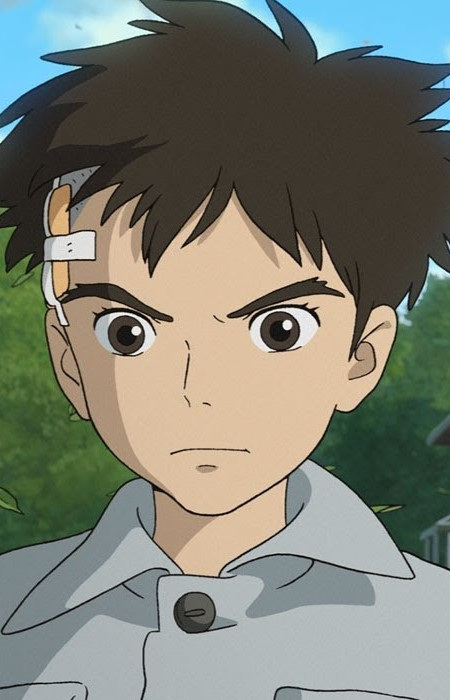
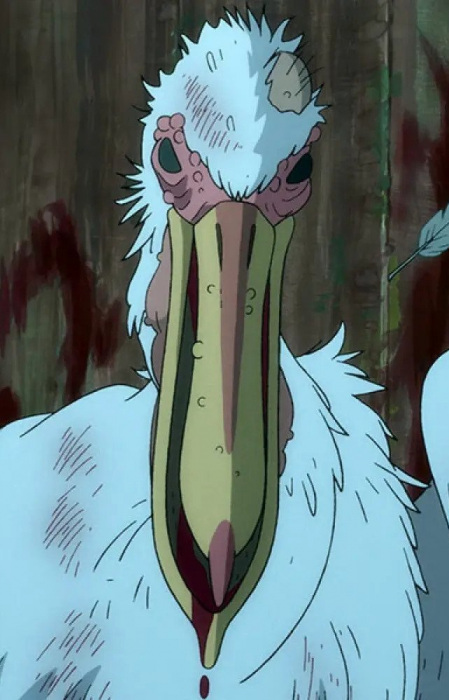
Three years into the war, Mahito Maki loses his mother in a tragic fire at the hospital. Shortly thereafter, his father marries Natsuko, the younger sister of Mahito's mother. They take Mahito out of Tokyo to seek refuge in his late mother's rural family home. There, Mahito is constantly taunted by a strange gray heron, who seems to have taken an interest in him. Unable to come to terms with his loss and struggling to adjust to a new life in an unfamiliar place, the boy is shocked to discover that Natsuko is pregnant. To make matters worse, the pesky heron can speak—and claims that Mahito's mother is still alive. Luring him into a mysterious tower near the residence, the heron says that Mahito can save her from death, but the boy is not easily swayed. When Natsuko disappears one day, however, Mahito watches her walk into the tower and becomes compelled to venture in to rescue her. He soon finds himself falling into another world below his, where life and death seem to be entwined. As he navigates through this foreign realm to find Natsuko, Mahito must understand what it means to live if he wants to safely return home. [Written by MAL Rewrite]
Main
Main
Supporting
Supporting
Supporting
Supporting
Supporting
Supporting
Supporting
Supporting
keybore
July 20, 2023
This film is exactly what you would get if you were to go up to ChatGPT and prompt "Give me a Ghibli movie". The erratic scene transitions, nonsensical story non-telling and almost zero character development for the characters (which they just keep throwing at you throughout the movie), it gives you the feeling of "it exists, it smells familiar, but it feels so off". The movie stops for nothing; no reflection, reaction, or conversation. There is no humanity to the film compared to other Ghibli films. You are pulled by the ear from scene to scene, given no time to appreciate or take in anything. Theyinstead force space for shallow renders of Ghibli tropes, such as "the cute little guys" or "look at this delicious food!", which only goes as far to give you some watered down feeling of emotion. You keep thinking that there will surely be something redeeming, perhaps a message, but even the message is rushed through. You then find yourself coming out of the movie it feels like you were either too sober, or the producers too high. In any case, you now have a phobia of birds.
Doshigatai
July 14, 2023
Before I get into the review, this review may be difficult to understand as I am not a native English speaker. Please understand. Studio Ghibli's new film, "Kimitachi wa Dou Ikiru ka" ("How Do You Live?"), directed by Hayao Miyazaki, takes its title from Genzaburo Yoshino's novel "Kimitachi wa Dou Ikiru ka" ("How Do You Live?") published in 2017. But the story is completely original by Miyazaki. Studio Ghibli's official website describes the film as an adventure fantasy. This is the first film by director Hayao Miyazaki in 10 years since "The Wind Rises," which was released in 2013. The odd thing about this film is thatonly the release date, title, and key visuals have been announced. Producer Toshio Suzuki of Studio Ghibli has stated that no TV commercials or advertisements, let alone trailers, will be released prior to its release. Also, unusually for an anime film in recent years, the film is being produced under Ghibli's sole financing. This means there is no problem even if the film is creating a deficit due to the drastic strategy of not using advertisements or promotions. Referring to the production staff, the original story, director, and screenplay (storyboard) are by Hayao Miyazaki, and the music is by Joe Hisaishi. So far, this is no different from the usual Ghibli productions, but the animation director is Takeshi Honda. He is a veteran animator who has worked on "Evangelion" "Millennium Actress," "Dennou Coil," and many others. The tag team of Miyazaki and Honda, who has worked on so many films, is exciting and gives us a glimpse of how important Ghibli considers this film to be. Although I am writing this review after watching the film, I will try to minimize spoilers, given Ghibli's strategy of not promoting the movie this way, i.e., they want people to watch it 'in its entirety' with no prior information. I went to the cinema on July 14, 2023, the first day of the film's release. I had only limited prior information, as I mentioned earlier. My first impression was that I had no idea what was going on. There was so much information and abstraction that I never fully understood. Undoubtedly, this is the most difficult film ever made by director Hayao Miyazaki. Let's take a brief look at the storyline. The main character is a boy named Mahito, who is estimated to be in his early teens. He lost his mother in a hospital during an air raid during the Pacific War and left Tokyo with his father for the countryside. There, he is met by his father's second marriage. Unable to accept her as his new mother, Mato transfers to a new school and begins to have problems with his classmates. Around the mansion he moves to, there are strange entities, such as the presence of a grey heron (the bird in the key visual) that speaks the language and a mysterious building. At one point, Mahito chases after his new mother, who disappears into the woods, and when he enters the mysterious building, he faces a grey heron, which leads him on a journey into the 'world below.' This, the 'world below,' is not only a place of death but also a clean and beautiful fictional world where people turn away from reality. It is a world built on a perilous balance, and only those who inherit their great-uncle's blood are qualified to maintain it. Mahito is qualified and can rule the 'world below,' but what choice does he have to make? Hayao Miyazaki leaves us with a certain message in this work by putting reality and fiction in opposition. When living in the real world, we may want to cling to the past or keep to our own world. We may also do bad things or lose hope because of the ugliness that pervades the world. But we must be honest with ourselves and move forward. This film is the culmination of Miyazaki's work, and he has projected himself into this film. Hayao Miyazaki experienced an air raid in Utsunomiya when he was a child. He also lost his mother when he was a child. His father works for an aircraft company, which Mahito and Hayao Miyazaki have in common. Miyazaki may want to convey to his childhood self the importance of looking forward to life despite the hardships, ugliness, and evil that exist in this world. Finally, I have probably only been able to present about 10 percent of this work. So please bring yourself to the theater and enjoy the many elements I could not tell you. To fully appreciate this work, you need to discover its hidden meanings and understand its symbolism. Therefore, I will likely discover different and new interpretations of this work as I rewatch it in the future. Accordingly, my evaluation of this work will also change, so please keep this review only as a reference. Thank you for reading. *On July 17, I rewatched the film and added a new interpretation to its notes.. Please take a look. I may update my review and interpretation in the notes hereafter. Please note that there is a possibility of spoilers.
Sigsig
July 28, 2023
The movie feels like a series of short stories forcibly strung together with unrelated characters. I expect that there is some abstract meaning to it, but it was not obvious to me as an average moviegoer. The protagonist, while not very vocal, is unusually perceptive and somehow recognizes those seemingly unrelated characters and matches them with actual people he knows, which always turn out to be correct guesses. In the abrupt end, I was filled with more questions about the motivations and aftermath of what happened to the sub characters. Unlike the other Ghibli films that teaches a moral or converses a message, I didn'tget what was supposed to be the point of this movie. That said, the animation and sound are all on point which makes this a pleasing experience for the eyes and ears, but not quite brain. I would recommend it if you love Ghibli films and have 2 hours to kill.
Swoss
December 21, 2023
I walked into the cinema not knowing a single thing about The Boy and the Heron. And I walked out still not knowing anything. Nothing about the plot, the characters and what they represented, especially the rather 'Okay, I guess that's it,' ending and, in particular, what Miyazaki was getting at, what he aimed to actually achieve with this movie. You can't just come out of a 10 year long pseudo-hiatus and decide to come back out swinging with a nearly 3 hour experience with literally nothing to tell. Yet, for some reason, that's exactly what happened. Walked out with absolutely no clue what the helljust happened. No, I had not left immediately after entering. And no, I did not fall asleep; yet after a while I was borderline comatose. I sat and watched the full 2 and a half hours, completely observant in the first three quarters, and my attention slowly waned ever since. At about the halfway point, the film dissolved into an incoherent mess, flooded with Miyazaki's mindless ramblings of literally nothing. If I had to describe The Boy and the Heron, it would be like listening to a lunatic ramble on and on, the words meaning and inferring nothing, his speech slurred and delirious, yet so desperately we grasp for something out of it, some meaning, that after a while of listening to what is essentially incoherent rubbish, we just give up and move on. As a preface, I should add that, while I do enjoy Ghibli films, I wouldn't consider myself a fan, yet I do get excited when I'm about to watch one. I know that a good time is about to be had, where the animation is amazing, often the emotions are so touching and endearing joined with an amazing soundtrack. Most times, I rarely dislike a Ghibli film. And, if I didn't find it as good as I normally do, it's generally just an 'okay' film. However, for this one in particular, admittedly I had some anxiety because I honestly believe that Miyazaki had not made a single good movie since 2004, when Howl's Moving Castle came out. Ponyo and The Wind Rises were alright, the others completely mediocre and forgettable. So, Miyazaki's streak of completely amazing movies was long gone, and the Boy and the Heron is just another poor attempt to bring himself back up to his level. He has long gone past his prime, his peak. Coupled with the fact that there was no advertising for this film and that it was absolutely boggled with ambiguity, so much so that it honestly felt that not even Miyazaki himself knew what was going on, it was impossible to even grasp a fragment of an idea. And, it's not like it does anything particularly well. While I do agree that not all pieces of media need to have a central message and that they can be good without one, for instance Pulp Fiction, the Boy and the Heron just does not impress me with its writing. Some scenes should have been highly confronting for Mahito but I didn't even know what the hell was going on. Even the plot line literally made no sense. It's set in WWII, because of course it is, you can't have a Japanese film not talking about WWII in some regard, and follows a boy called Mahito. After a while of trying to go through some character development, he takes psychedelics and everything makes 0 sense. You can't be like, 'this film is ambiguous so you can draw your own conclusion,' and tell me that the parakeets meant something to you. Perhaps I should also add that, for some unknown reason, Miyazaki is fucking obsessed with birds in this film. I don't think there was a period in the film lasting longer than a minute that did not have a bird in it. But never in the film is it ever made clear why he had to have so many birds throughout this movie. We get it man, you fucking like birds! But please, for the love of God, give me something to grasp on, some idea or anything. Yet, we don't get a single thing. There is absolutely no wonder as to why there is no advertising, no promotion and nothing about this film disclosed before its release, aside from the name and a poster. That is because Miyazaki does not have a single fucking clue what the hell the Boy and the Heron is about.
chweab
December 9, 2023
Ghibli's latest production attempts to be a thought-provoking, existential commentary on life, dealing with grief, and moving on after loss. Instead, it offers more questions than answers and fumbles it's pacing by drawing out the beginning half with world-building the world we are familiar with instead of the new one that we'd appreciate clearer knowledge about. The main character does have a resolution with his development, albeit it is easily overlooked due to the his minimal lines and generally monotonous reaction to a lot of events. The relationships between characters are not complex, and were not impactful enough to make me feel a connection toany of them or their intentions. Sure, I felt bad for the main character and his grief, but his journey of self-discovery and identity fell short at the expense of bizarre bird attacks, isekai inception and the introduction of side characters that get underdeveloped. To put it short, the film attempts to do too many things in 2 hours. The foreign world we are introduced to gets built half-heartedly and leaves us with many abstract explanations to questions that could be answered more concretely and clearly. The animation, however, is stunning. Ghibli's fluidity and consistency does not fail on this account. Conclusively, the film is a joy for the eyes but may pose to be slightly confusing for those with a logical perspective like my own; therefore, just accept the abstract explanations, move on, and enjoy a general story about identity and dealing with loss.
#1696
Popularity
#1809
Members
144,847
Favorites
716
Episodes
1