
Rascal Does Not Dream of Bunny Girl Senpai
青春ブタ野郎はバニーガール先輩の夢を見ない
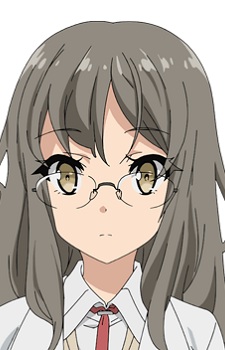
The rare and inexplicable Puberty Syndrome is thought of as a myth. It is a rare disease which only affects teenagers, and its symptoms are so supernatural that hardly anyone recognizes it as a legitimate occurrence. However, high school student Sakuta Azusagawa knows from personal experience that it is very much real, and happens to be quite prevalent in his school. Mai Sakurajima is a third-year high school student who gained fame in her youth as a child actress, but recently halted her promising career for reasons unknown to the public. With an air of unapproachability, she is well known throughout the school, but none dare interact with her—that is until Sakuta sees her wandering the library in a bunny girl costume. Despite the getup, no one seems to notice her, and after confronting her, he realizes that she is another victim of Puberty Syndrome. As Sakuta tries to help Mai through her predicament, his actions bring him into contact with more girls afflicted with the elusive disease. [Written by MAL Rewrite]
Main
Main
Supporting
Supporting
Supporting
Supporting
Supporting
Supporting
Supporting
Supporting
ExemplarCayman
December 26, 2018
THIS REVIEW CONTAINS NON-CRUCIAL SPOILERS FROM ONE EARLY EPISODE Raskal Does Not Dream of Copyright Infringement There is going to be a lot of mentions of Monogatari series in the review, because you need to understand that this series is not just similar, or inspired, or derivative. No - it’s an unbelievably blatant plagiarism, it steals everything from Monogatari, and I mean EVERYTHING, except for a couple of elements stolen from Oregairu and Haruhi instead. Comparing it to the famous cases of literary plagiarism ruled by court (Like Harry Potter’s rip-off called Tanya Grotter), it would 100% be ruled a copyright infringement if Nisio Isin/Kodansha ever botheredto sue (and it baffles me that they didn’t). If you’ve seen Monogatari before, you might get a kick out of spotting entire scenes and minute-long dialogues meticulously copypasted word-for-word (don’t make it a drinking game, you’ll die) but there really isn’t much point in doing that over an actual rewatch, because production values are not as good as Studio SHAFT. Well, one might ask, wouldn’t a carbon copy of a good series also be good? No, because there is another element in play - the author is a talentless hack. Something called “stupidity” manifests in multiple aspects of this story making it impossible to enjoy. Here are some examples: 1. Primitive surface-level copying results in nonsense. The best example is the show's title - it’s terrible for marketing purposes because it made many people believe this is going to be some ecchi harem. Well, the title comes from the female lead wearing a bunny-girl suit ...for approximately 15 seconds that basically amount to nothing plot-wise. You see, in Monogatari heroines have animal leitmotifs, and that got copypasted - except the writer couldn’t think of any actual reason for this inside the story, so it’s just an awkward non sequitur, sitting there, doing nothing except making the title stupid - and there are many other examples like that. 2. Insufferable protagonist. There is a certain trope familiar to most anime watchers - “badass loner”, aka “Gary Stu”, aka “Self-insert Jesus-kun”, aka “literally me”. Araragi from Monogatari looks like one - until he isn’t, because writing anime cliches as complex real people is what that series does. Hachiman from Oregairu is another take - he is also real, i. e. an awkward teenager who has trouble socializing. Being a talentless hack he is, the writer of Aobuta couldn’t do anything but write this trope completely straight. The MC is supposedly antisocial pariah, but he has social skills and confidence of a god. When some dumb females give him shit he just says “begone thot!” and they run away in shame, defeated by his awesomeness. He beats a jock twice his size in a fist fight by “outsmarting” him, nevermind a gang of jock’s friends standing there doing nothing. It’s just so cringy to watch. Kirito from SAO is a better protagonist, at least that guy farmed levels or something. 3. Idiotic non-logic. Monogatari has supernatural phenomena explained with ghosts. Aobuta has supernatural phenomena explained with quantum mechanics. That is, dumb and cringy “is math related to science?” level of quantum mechanics understanding. That’s not my point, pseudo-science is just a particular case of a bigger problem of nothing making sense. This is also better explained with an example. Spoiler ahead: **Spoiler begins here** Here is a conversation between two characters: Person A: “I’m trapped in a day-long time loop.” Person B: “That means there is another person also trapped in the same loop.” Nonsense, right? Well the conversation is slightly longer but boils down to exactly that. Here is a full version with my play-by-play: Person A: “I’m trapped in a day-long time loop.” Person B: “What if you're not trapped, but instead perfectly predict the future, and experience it as an advanced form of jamais vu?” //How could this possibly be a first idea in reaction to the time loop? How does that work? Why is it a time loop that repeats multiple times instead of just being clairvoyant? You what? Person A: “How so?” Person B: “Laplace’s demon. A theoretical intelligence that can perfectly calculate position and behaviour of every particle in the universe, therefore, can predict the future.” //But why would it make a repeating loop instead of just being clairvoyant??? Why would Laplace’s demon be your first idea if it doesn’t actually fit the nature of the situation? Person A: “But I’m not a Laplace’s demon, I’m a normal human” Person B: “That means some other person is Laplace’s demon and they do the calculations. You’re quantum entangled with that person so you experience their time loop.” //Again, how could this possibly be your first idea? Other person being Laplace’s demon doesn’t actually answer any of the questions posed. Also, quantum entanglement... a) Is an actual physical phenomena, not a theoretical construct, and it doesn’t fit the situation at all, so it wouldn’t be a thing that comes to mind here; b) Doesn’t have anything to do with Laplace’s demon, so it wouldn’t come to mind based on that; c) DOESN’T EXPLAIN WHY THE TIME IS REPEATING IN A LOOP, INSTEAD OF TWO PEOPLE BEING CLAIRVOYANT. **Spoiler ends here** Notice the pattern? Wrong physics aside, none of the conclusions of Person B logically follow from the previously reached conclusions, it’s a bunch of random lines arranged one after another. Either the author is a moron and “lines arranged one after another” is his understanding of how logic works, or he thinks the audience are morons and he can scam them with this garbage if he talks fast and sounds confident. Incidentally, if someone tries “but that’s just Person B’s theory, it doesn’t have to be true” on you - spit them in the face because the characters act on those assumptions and they are proven to be 100% correct. 2/10 because this series provides nothing of value and has no reason to exist, except to give an answer to a weird thought experiment - what if some acclaimed series was the same, but written by an author 50 IQ points lower.
Rylston
December 26, 2018
‘I live life everyday hoping that I’m a slightly kinder person than I was the day before’ - Makinohara Shoko If you thought this show was about literal BUNNY GIRLS, boi should you be prepared to be bamboozled by the most misleading title that you mightve ever come across. I was watching the first few minutes of the first episode expecting something probably as ecchi as it seems on the cover art, but hot damn did I got hooked by the quirky characters, mainly the interactions between our main protagonists. This show within the first episode reminded me of Bakemonogatari, which till this date Istill think has one of the best monologues and dialogues, and now at the end of it, I think we have a great contester to dethrone the monogatari series, and here I present you, Seishun Buta Yarou wa Bunny Girl Senpai no Yume wo Minai. Story / Character -10- Revolving around the idea of ‘Puberty Syndrome’, this story mainly focuses on how our male protagonist, Sakuta settles this problem for the ones undergoing this syndrome. Albeit totally supernatural, there are sufficient backstory and explanations relating to quantum physics and what not (if you can understand that is), in which I think is always a great touch to the story to not let the audience sit in confusion. Puberty Syndrome is where you might find random bruises or cuts throughout your body, or having a juxtapose of yourself that takes your rightful place etc. However, because the setting of this story is actually in high school, it can be very relatable to some due to the fact that the problems usually are involved with gossiping, bad mouthing or simply falling in love. Consequences of not properly solving Puberty Syndrome can lead to severe problems, just like in real life, one wrong move and it might cause you the win or lose. Now moving on to our protagonist, ladies first, and it is our best girl Sakurajima Mai senpai. Humorous, bold, outgoing, what more can one ask for, it’s an all in one package here for your service. Sakuta, again humorous, kind, and mostly perverted. With the encounter of Makinohara Shouko, Sakuta starts to treat others kinder and is the core of why Sakuta helps (perpetually) everyone out throughout the story, because he wants to be kind. As of the side characters, imouto, kouhai, thicc af girl IN LAB COAT, theyre all really great and likeable characters, with each of them having their own unique personalities. They also contribute a lot to the story, making this entire show a very wholesome one. Catchy settings and directing is what makes this anime stand at the top against the others this season, maybe even the year of 2018, you get so invested into the characters by the first episode it is hard to just not love this anime. Art -10- Cloverworks ( A-1 Pictures) nailed the crap out of it this time. The art style is really smooth to the eyes, and looks a lot like Oregairu (which is definitely an extra point), animations are fluid and some compositions are seriously on point. Subtle emotions are well laid out on the characters and they really add up to the feelings and they convey well to the audience. Sound -10- Another big part that contributes to the wholesomeness of this show is the voice acting and the OSTs. The opening which at this point everyone probably knows how to sing, is hella catchy, and is like a blackhole sucking you in, once you heard it, theres no turning back. Same goes for the ending, every character had their own uniquely designed ending, just like how the monogatari series has the VA sing the OP for their respective arcs (in which case is the same here). Voice acting is top notch, whats better than having a quirky conversation? A lively and energetic one. And its all here in this show, cocaine for your ears my buddy. Overall -10- Definitely my top pick of this season (year as well), if you haven’t watch it, please do so already, you really don’t want to miss out this show, even if the cover art turns you off (or the otherwise ( ͡° ͜ʖ ͡°) You want some fun time watching some slice of life-y anime? Check! You want some home hitting feelings or tear jerking moments? Check! Having doubted this anime at first was my single worst mistake Ive ever made, because this series has proven itself worthy of being one of the best animes possibly out there. With an movie adaptation for another arc in the future, I can safely say that everyone should be looking forward for that, just like how Sakuta looks forward getting teased by Mai everyday.
Syureria
December 26, 2018
Seishun Buta Yarou wa Bunny Girl Senpai no Yume wo Minai is a short series adapted from "Light Novel" this series has thirteen episodes, six years after the release of Sakurasou no Pet na Kanojo from the present screening Kamoshida Hajime who is the creator of this series at once The creator of the series "Sakurasou" recently also produced a work that Cloverworks studio appointed to become an anime. Story What happens when you experience a strange puberty, for example, can you exchange your body to be someone else? A story that focuses on a young man named "Azusagawa Sakuta" who finds himself meeting a bunny girl,it turns out Sakuta knows that person she is "Sakurajima Mai" who is a senior in his school. But strangely only Sakuta can see the form of a rabbit Sakurajima, both of them are looking for a way out together to uncover the mystery that happened to him. Talking about the mystery of the series has several chapters that they must complete, if counted there are five chapters available in this series. Having supernatural themes, this series is highly anticipated by various people, but the solution they provide is forced as if they only gave a very simple impression but we can accept it. Not forgetting this series is also in the romantic category, indeed some of the scenes that are displayed are very simple and limited to such as holding hands (therefore this series can be watched from among the ages, but there are some scenes that contain sexual jokes that are not worth watching for children but it's still natural). The conflicts they are not very significant, they only argue about the problems they and they can solve them very simply. Art Recently, exactly two months ago a company called "Cloverworks" which was the parent company of "Aniplex" released a number of popular anime series, for example they collaborated with several studios in the recent "Darling In The Franxx" series. cause controversy in the whole world. In their adaptation they have no shortcomings, arguably in every adaptation they have worked very well. The series has a rigid animation design and does not have a special characteristic, a simple character design adds to the impression that this animation becomes very simple. But the audience does not care too much about it, they only focus on a very interesting story. Sound An anime series will not be good if it is not supported by the sound part. From the voice part or seiyuu they are very good, the match between the voice and the characters is very suitable they can produce good sound quality according to the age of the character they are playing. The opening theme of "Kimi no Sei" sung by The Peggies is very simple but has its own characteristics, while for the closing theme "Fukashigi no Carte" they are very good at replacing singers in each chapter based on their respective characters.For their BGM they are very careful in their selection, sometimes BGM is at the center of attention, for example when fighting is not only important animation but BGM also plays an important role in this matter. Character This series has two main characters, telling about their school life is not an ordinary student they have strange puberty. Sakuta is a student who is boring in the eyes of many people, he has a dark past therefore he is shunned by many people but he still live his life as usual. After meeting Sakurajima Mai Sakuta's life changed which initially had no purpose in life now with the spirit of living his life. Has a strange youth Sakurajima Mai is very bored because at any time she can disappear in the eyes of everyone, but one time when she was in the middle of a meeting she met a Sakuta, he was able to see the form of Mai wearing a rabbit costume. artist who has ignorance to everyone. After him meeting with Mai, Sakuta is now acquainted with a girl named Koga. She is the younger sister of Sakuta's class who has a cheerful nature but behind her cheerful nature, she has a strange youth. Different from the others, Koga can return time based on her will. Having a smart and beautiful friend is the hope of everyone. Futaba, who is Sakuta's classmate, has an easy to talk nature, but this Futaba has a strange youth where he can split into two. Mai has a half sister named Nodoka, she is an artist like Mai. Nodoka has jealousy towards people who are stronger than him, as a result of his character he can exchange bodies with other people so that he can feel what the person can feel. Sakuta is also just like Mai, she also has a younger sister, but the difference is the younger sibling. The sister of Sakuta named Kaede, she is a confined and timid girl but she has a reason why she is moody. from his classmates, therefore he became a confined and timid girl. Enjoyment This season has many interesting anime series and one of them is Seishun Buta Yarou wa Bunny Girl Senpai no Yume wo Minai tells about puberty syndrome, this series has a very interesting story in each episode even we are invited to think how to solve the problems they are facing.
Zaber_san
December 26, 2018
"Never judge a book by its cover." - Some random person. This Fall 2018 anime season, there are a lot of shows to watch on. Honestly, on my opinion, I enjoy this season pretty much more than any other seasons this year. From Goblin Slayer giving us memes and war, SAO back at it again with another season of Kirito OP-ness, to Jojos returning to TV screen with its title "Golden Wind", Fall season this year is definitely a must-see season. Let us not forget the romance or drama genre of anime which are plenty this season as well. One of them, giving us audience a prettymuch click-baiting cover is "Seishun Buta Yarou wa Bunny Girl Senpai no Yume wo Minai" or in short, "Bunny-girl Senpai". When I looked at the cover picture of the anime on its MAL page and its synopsis I was like "Oh... It is another typical and generic harem anime that the protagonist is always at the center of everything and he is not that lovable to the audience perspective I bet." That WAS my statement until I watched up to episode 3 and kept going until I finished it. I was so damnnn wrong. Story: We follow the story of Azusagawa Sakuta to his daily high-school life. It was normal, until he met Sakurajima Mai wearing a bunny suit in a library. Weird am I right? But as the story goes on, we get to follow that Mai is suffering to a what is called as a "Puberty Syndrome" which incase for her, turning invisible to other people (except Sakuta because he is the protagonist). This was the starting point of the story. We get to know so many types of Puberty Syndromes that revolves around Sakuta's girl colleagues not only Mai. Does this sound pretty familiar? Yes.. It is almost like the plot of the Monogatari series. In spite of that, Bunny girl senpai tends to create a unique atmosphere to the audience. It is more on drama, feels, romance and the sufferings of the girls along with Sakuta in the story, portraying real-life issues on our society. One of the girl suffered bullying, one suffered jealousy or envy, one suffered hatred on herself and not knowing how to act what she wants, one suffered ignorance to reality and wanted loneliness and one suffered one of the harsh reality of love. Every single bit of this issues complements the story's goal and the main protagonist Sakuta who really is the center of them all. But making him the center of it doesn't make it as your typical and generic harem anime unlike other anime out there that the protagonist is the center of everything and the harem is very plain. In fact, it is not even labeled as a harem on MAL which totally makes sense because the vibes of it being a harem is not there. Instead, we get the vibes of every character's problems or issues they are encountering along with Sakuta which is totally fine for the story. Hence, Bunny girl senpai's story unveils problems or issues of teenagers to our modern society that make it more of a story foreshadowing this topics and having the audience learn from it because of the experiences of the characters. Characters: Speaking of the characters, there are soooo many waifus on this show. But let us talk about the one, the only, man of culture, Azusagawa Sakuta. Unlike any generic protagonist out there who cannot portray their real feelings in real life in front of a girl, Sakuta is different. He will say anything that comes to his mind whether it is a perverted one or someone that makes someone offensive. His replies to the girls especially to Mai-san always get me and say "How do you have the guts to say that?". In any case, Sakuta is one of the best male characters I've ever seen this season or maybe this year as well. Now for the waifus. My favorite Sakurajima Mai have like some sort of unique trait on her. She doesn't really care about what Sakuta is saying even it is something perverted. She is always composed but have the blush to protect. She have some little tsundere vibes but not that much unlike her little sister Toyohama Nodoka. Nodoka is like the opposite of Mai-san. She is your typical tsundere type of girl but her story gave us more details about their relationship as a sibling to Mai-san. Next girl is Koga Tomoe, which I think represents a girl that is a tryhard and wants to keep updated always to whats happening whether in real life or social media. She fears loneliness and because of that she tries to become like her classmates. Then there is Futaba Rio, the one who wears lab coats on every scene she is on and the one that advices Sakuta of the causes of Puberty Syndrome through the power of SCIENCE!. We can say she is a very smart girl considering her intelligence on quantum mechanics, physics and all sorts of mumbo-jumbo science stuff. But then like any other girl in the series, her fear or Puberty Syndrome complements to the story of the anime. It is something most of us wanted to do for the sake of others but we are unsure if we can really do it... and again because of love.. Of course we shall never forget the little sister of Sakuta, Azusagawa Kaede. Because of her I tend to like Sakuta as a main protagonist because Sakuta.. surprisingly... not in love with her little sister! Like how many times we get to see incest in anime. Like literally every season I guess? But here, Sakuta doesn't like Kaede hugging him while he was in bed and he even quoted this statement "Who'd get excited over their little sister?" Sakuta aside, Kaede probably have the worst type of Puberty Syndrome and it impacts Sakuta as a brother of her as whole as well. Even the parents of Sakuta and Kaede are devastated. That's why I can describe Kaede as Sakuta's challenge that makes him a hard challenger and never give up on her. And finally the little girl Makinohara Shouko is just a pure mystery to me. I mean this girl is someone important to Sakuta but there are circumstances that makes her a mystery and somewhat special. Overall, the characters are lovable to the audience that makes it entertaining to watch on every week. Art: On the art side, it is good. It is not that special or anything but it is indeed watchable and pleasant. the character designs are pretty much cute as well with their eyes big but bright. It is fairly a unique art style among other art style this season. Sound: Unfortunately, unlike the good OST of Monogatari, Bunny-girl senpai doesn't have much of that. The soundtracks are good and thats it. It just fits into the atmosphere but it is something that I will not put on my music playlist as it is not my taste. But... the opening and endings are veryy good for my ears. The opening have good sound that catches my ear and the ending portrays some sadness because..... the episode ended of course. But i said "endings" earlier. The endings have different characters walking in a beach. For example, if the episode is mainly about Futaba, you will see Futaba walking into the sands of the beach. The same applies to every character of each arc. Overall in terms of sound, opening song and ending song are likable while OST's are good but not for my playlists. Overall thoughts and Enjoyment: Hence, Bunny-girl Senpai is one of those anime that makes the story sounds pretty similar to other genre or anime but its intake to it are unique. The fact that it implies some weakness or fear of teenagers makes it relatable to people and gives out feels to us. If you are looking for an anime that have a bunch of girls but have a good story and a well-narrated protagonist, this is it for you and I highly recommend it to anyone.
Stark700
December 26, 2018
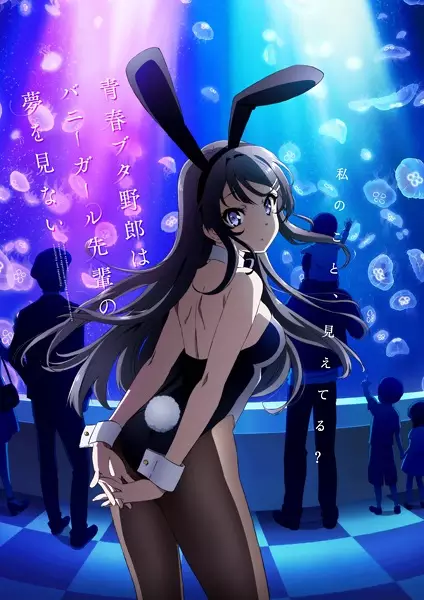
What do I think about Seishun Buta Yarou wa Bunny Girl Senpai no Yume wo Minai? It’s an amazing show. That’s the simple way to say it but the complicated way is explaining it from my perspective. To be fair, I think this anime gets judged based on a lot of facts before it even aired. Like for instance, the brainchild behind the light novels is the same person that made Sakurasou no Pet na Kanojo. (The Pet girl of Sakurasou) Anyone who has seen that anime may think what to expect from this show. But I think a bit differently. Hajime Kamoshida helmed thestorytelling for both series but there’s quite a bit of differences. I don’t want to talk too much about comparison because the fact is, Bunny Girl Senpai pretty much stand out a lot on its own feet. But let’s get the most obvious out of the way first. When you see that key visual on the anime entry page, what really comes to mind? On the front is a beautiful long haired beauty dressed in a sexy bunny outfit. When you look at it, she could probably resemble a playboy girl on the front page of a magazine. The visual impression alone had my interest although it’s clear that the anime isn’t just about a bunny girl. It’s about a boy named Sakuta Azusagawa in which his life changes forever after encountering our poster girl, Mai Sakurajima in the library. At the heart of the series is also a mysterious phenomenon known as the “Adolescence Syndrome”. Now I should say right off the bat that you’d better be prepared for social commentary. This is essentially a very talky show with no shortage of dialogues. In fact, it explores many social problems that is very real in our world today. Anxiety, depression, bullying, inferiority, isolationism, lack of confidence. You name it. If I had to guess, there’s probably someone out there in your life that also suffers from something along those lines at one point or another. So in many ways, it’s easy to say this show is relatable on a realistic level. But you’re probably thinking that logic makes no sense considering the set up for the first few episodes. Indeed, Mai’s debut in the anime is perhaps way too bizarre to be considered real. It could even be considered surreal. I mean, who has ever seen a girl in a sexy bunny outfit walking around in a public library? Until I realized what this show really wanted us to experience, it sort of reminded me of an anime known as “Bakemonogatari”. My first impression of the fated encounter between Mai and Sakuta felt similar compared to that series. We have a regular guy meeting a girl under unusual circumstances and they begin to connect on a more personal level. What does make the first few episodes for this anime more distinctive is the amount of human emotions shown. Early in the series, we get a confession from Sakuta as he expresses it with brutal honesty. That love confession defines Sakuta as a character who isn’t afraid to hold back his feelings. In fact, Sakuta seems like a guy who doesn’t care much about what others think of him. Some people would call his behavior as cynical and anti-social. Indeed, Sakuta isn’t a guy that’s easy to make friends with but he does truly have people he cares about. Mai and his sister, Kaede are perhaps the two most important people in his life. That brings about his relationship with them. From the beginning, he and Mai develops a strange bond that blooms from strangers, to friends, and to a couple. Their relationship develops more and more despite some of their similarities and differences. It’s shown that both characters suffers from some anxiety issues. However, Mai’s problem suffers more as she fears about being forgotten. On the other hand, Sakuta is indifferent about how the world and doesn’t even care if everyone hates him. (with exception of his closest loved ones) The first arc details the show exploring their deep inner problems. In fact, these inner struggles manifest in the form of the mysterious “Adolescence Syndrome”. As I watched more and more of this series, it became easy to see the direction of the overall storytelling. Each arc contains a story that deals with a different issue and a different character. However, several recurring themes apply and the most prominent is the amount of social psychology. There’s meaningful interactions that is essential for the plot and character development. I’m quite impressed how much every arc made me feel invested by these different characters. The second arc explores Tomoe, a schoolgirl that gets involved in a time loop. Think of Groundhog Day or the Eightless Eight. At this point, I knew what this show as aiming for: having the main protagonists help conquer their problems while solving the mystery of the Adolescence Syndrome. Tomoe’s problems involves her fear of losing friends is another example of a social problem. It paints the picture of people suffering from problems that they try to avoid yet seemingly need help in doing so. That’s where Sakuta comes in to deal with them. He’s like an anime life coach. With the pattern of the story structure, I knew what to expect as Sakuta also helps deal with problems involving Rio Fubata, Nodoka Toyohama, and even his own sister, Kaede. I should say that at times, the manifestation of their problems feels like a superstition. We get doppelgangers, body switching, and memory loss. It’s rather creative how they represent each of the characters’ inner struggles while capitalizing on the psychological appeal. One character that manages evade these social problems is Shoko Makinohara. Regrettably, I’d say that compared to the other cast members, her presence is easily forgotten despite her connection to Sakuta’s past. Speaking of which, Sakuta has problems of his own that includes his troubled past. He even suffers from a physical scar on his chest due to his sister’s Adolescence Syndrome. Throughout the series, I think it’s important to realize how the creators managed to capitalize on its emotional content. The final arc in this anime adaptation shows Sakuta as a kind brother who is willing to do anything to help his sister. It’s the type of family bond that is emotional and contains a lot of heartwarming moments. And even as emotional as the story gets, this show still finds time for comedy such as with Sakuta’s lewd comments about girls and his dry sense of humor. It’s interesting to note that CloverWorks is involved in this project. They’re a studio rebranded from A-1 Pictures as its own identity. To my delight, they managed to capture the essence of this show perfectly. The main selling point of the quality is the character interactions. Because this anime consists of a lot of dialogues and interactions, it’s important to capitalize on their social lives. Thankfully, Cloverworks knew what it was doing as it draws out human emotions of the various characters. Characters such as Mai, Kaede, Tomoe, and even Sakuta are firm examples of this during more of their emotional moments. The visual quality also stays consistent throughout the duration of the run without relying on it too much. Bravo CloverWorks, you’ve made quite an impression this year already. The opening theme song “Kimi no Sei” is perhaps one of the catchiest ones for its usage of lyrics and delivery. It contains a variety of characters and while it’s not anything too unique, it captures the surreal-like feeling of the show. There’s even Mai in her iconic bunny outfit. Additionally, there are interchanging ED theme songs performed by the various voice actresses of the characters. Each of them follows their respective arc but all of them earned my praise for their consistent delivery. This show may have a long title but it only took me a short time to accept what it really is. The amount of social psychology content made the story flow on many levels with each arc. Almost every character in the end felt important for the overall themes of the series. And while I can’t say Bunny Girl Senpai may be recommendable for anyone, I’d definitely giving this a try if you’re thirsty for meaningful character relationships and dialogues. It’s not a Bakemonogatari 2.0 and in fact, I’d say Bunny Girl Senpai is much more appealing than what it appears to be.
Rank
#394
Popularity
#47
Members
1,939,860
Favorites
50,842
Episodes
13