Boogiepop and Others
ブギーポップは笑わない
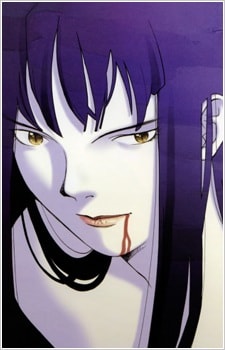
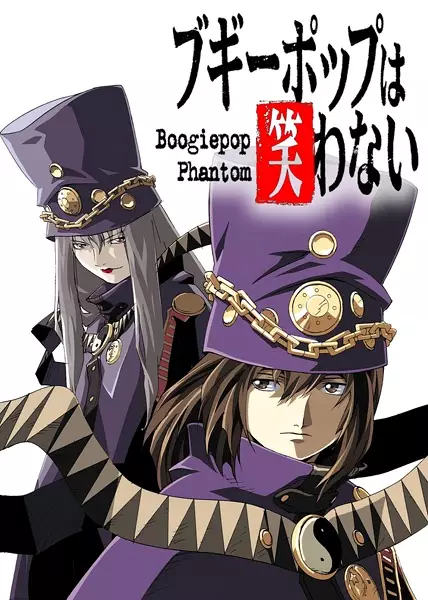
Hushed exchanges among the female student populace of Shinyo Academy center around an enigmatic supernatural entity. This entity is Boogiepop, a Shinigami who is rumored to murder people at the height of their beauty before their allure wanes. Few know of his true nature: a guardian who, between periods of dormancy, manifests as the alter ego of a high school girl named Touka Miyashita to fend off "the enemies of the world." Now, a string of mysterious disappearances—presumed by the school to be merely runaways—has caused Boogiepop to awaken. But somewhere in the academy, a menacing creature hides, waiting for its opportune moment to strike. Boogiepop wa Warawanai subtly explores the intrinsic associations between human beings and their perception of time, while delving into its characters' complex relationships, emotions, memories, and pasts. [Written by MAL Rewrite]
Main
Main
Main
Supporting
Supporting
Supporting
Supporting
Supporting
Supporting
Supporting
Supporting
Stark700
March 29, 2019
Once in a while, there may come a show with complex storytelling and character roster that is much more than what it seems. The light novel medium is such a style of Japanese novel literature where imaginations are endless. As one of the earliest light novel originators, Boogiepop Phantom’s presence could be felt as far as back in the early 2000s. While I have seen that show many years ago, it felt like Boogiepop Phantom was missing something, or perhaps needed a boost to regain its popularity again. It’s 2019 and here we are again, connected by a powerful entity known as the Boogiepop, alegend among community who came to judge humanity. Consisting of 22 light novel volumes, it’s obvious the show doesn’t have the time to adapt every single one. The 2000s’ series ended up being an anime original while this show commits to a much more faithful adaptation. Jumping into the new Boogiepop may seem like a walk in the park but make no mistake, this show is not so easy to understand. In fact, I would recommend re-watching scenes and episodes at any chance to get a better experience. And it all begins with the first 3-episode arc: Boogiepop Does Not Laugh. Before I venture deeper, do be aware that while the anime overall has interconnecting themes, it follows non-linear storytelling structure. In fact, it adapts an arc format where each arc consists a series of episodes together. From this adaptation, we get four arcs with “Vs The Imaginator” being the longest. That being said, I should mention that the first arc will most likely make or break for most viewers. Essentially, we are introduced to a supernatural entity known as Boogiepop, the urban legend with a keen insight on observing human behavior. But as the show progresses, it’s shown that her ambiguous actions may be more puzzling than what it seems. Who is Boogiepop? What exactly does it want? Why is it here in our world? These are some of the questions many will have in their mind for this first arc. Indeed, it shouldn’t take long to realize humanity is in jeopardy with the presence of “Synethic Humans” among society. On the outside, they may look like us but on the inside, they are beings with a twisted ambition. Their existence also proves how weak humans are by manipulating our free will. It’s a fate worse than death when you realize the atrocious acts manipulated individuals can commit. Spooky E is a prominent example during his reign of terror during the “Boogiepop vs Imaginator” arc. Having no second thoughts about harming or even killing humans, he represents pure evil as an agent of the Towa Organization. That also brings in a big question. Just what exactly is the Towa Organization? While it’s an organization responsible for creating synthetic humans, no one truly knows their real agendas. The catalyst of this mysterious group is a character named “Echoes” who came to Earth to judge humans. The first episode establishes him as a being who is confused about human behavior. The Towa Organization seems to organize ways to test humans through dangerous experiments, many which result in deaths or disaster consequences. Their main goal throughout the show revolves how to control human’s way of evolution. It’s a complex concept that may take untold amount of time to achieve. In addition, the Towa Organization is known to have great influence in the world, capable of escaping the law and defying authority. I think it may take some time for viewers to figure out their purpose in the show because as I mentioned before, there’s multiple subplot building on in each arc that can get very confusing. The remainder of the course of the series also explores other important themes such as human choices. Some characters in the show (who are ordinary humans) play important roles to make differences in certain outcomes. If you remember before, free will allows people to accomplish great things if they put their mind into it. On the other hand, Boogiepop is someone that has potential to accomplish imaginable feats. It’s why she is perceived as a main adversary against the Towa Organization. In a way, I even see her as a successor of Echoes. However, Boogiepop isn’t necessarily an “overpowered character”. In the final arc, she wonders if defeating the King of Distortion is possible. But in essence, it’s her wise words and wisdom that I find more appealing than other characteristics. Her words may be interpreted differently depending on how you perceive them but by the end of the day, she really lives up to her name of being a legend. Madhouse is responsible for once again to bring Boogiepop to life and for what’s worth, it’s somewhat well made in terms of accurately committing to its ominous atmosphere. There’s no doubt the quiet and eerie mood lives throughout the entire duration of the show. This especially applies to the static shots in the opening episodes. It also uses a clever amount of raw character emotions to show how humans react under extraordinary circumstances. My main criticism though lies with some of the raw animated scenes as at times, it feels off . This shouldn’t hold the show back altogether but can weigh down the enjoyment on occasions. Luckily, the music, OST, and theme songs for make up for this with its well-timed choreography and directing. We live in a world now where almost anything is possible. For a show like Boogiepop, its world contains ideas that you can’t even begin to imagine if any of it became real. Being one of the most influential light novels, many writers have followed its origins and made work that became worldwide attractions. Now I will say this anime is really not one aimed for the casual audience. Many episodes may require re-watches as any scene may hold significance or clues to the show’s plot. It’s also recommended to watch this in marathon sessions than a weekly airing. But hey, once you get hooked into the world of Boogiepop, you may want to stick around for more.
SingleH
March 29, 2019
The name Boogiepop is pretty stellar. It’s catchy and unique, of course, but it also has a wealth of meaning behind it not many people are aware of, at least not here in the West. The name Boogiepop is a self-deprecating inside joke Kouhei Kadono, the author of the original novels, thought up to mock himself and his struggles in actually getting said novels published. Kadono has always been something of an arthouse writer, and he had quite a hard time getting any of his initial works published since he had yet to make a name for himself and all the publishers he approached saidthey simply couldn’t turn a profit printing pieces with such little popular appeal and no audience base, even after—according to Kadono—honestly admitting how good they were. To successfully break out into the market, Kadono made a compromise with himself. He decided to tone down his more abstruse, niche stylization, his self-proclaimed “boogie” writing, and tone up the more accessible, popular style which the inherently cynical publications were willing to print, hence the name Boogiepop: a forced dichotomy between the imagination of an auteur and the creative restraint of a corporate shill, “boogie” and “pop.” The original anime adaptation of the series, Boogiepop Phantom (2000), which was also produced by Madhouse, is founded on that so-called “boogie” style. It seeks to be tonally expressive, narratively experimental, visually symbolic, deep seated in the thematic gravity of the novels which the adaption team clearly had an genuinely intimate understanding of, and most importantly, it sought to market itself toward a largely mature target audience. On the other hand, this new adaptation, Boogiepop and Others (2019), is founded on the “pop” style, which seeks merely to appeal to the lowest common denominator of kids and teenagers with obtusely frenetic action, archetypal writing, generic self-insert character designs, spoon-fed theming, and as much modern anime pandering as they could fit in the package. While my irrepressible love and respect for the masterful novel series this terribly disappointing and wildly misguided adaptation was based on will inevitably turn this review into a thinly veiled diatribe, there is a fair deal of credit to give where it’s actually due. Firstly, the show looks gorgeous…in ways. As mentioned, the artwork is stylistically abysmal. It doesn’t look like Boogiepop should look nor feel like Boogiepop should feel; it’s simply the most accessible, basic art style imaginable which has completely abandoned the textured, almost brooding darkness which characterized the original novels and the atmospherically brilliant original adaptation. However, the actual technical quality of animation—while plagued with about as much inconsistency as any other anime these days—can get stupidly high and make the show a feast for the senses if not for the discerning eyes. I remember hearing the Natsume Team at Madhouse had dropped One Punch Man and being utterly dumbstruck. Why in the world would they’ve dropped one of the industry’s most profitable titles in decades? The manga is always best selling and the anime was an international success, so what could possibly have taken precedence over such a commercial giant? Apparently, this. Director Shingo Natsume utilized many of the same connections he called upon for One Punch Man and Space☆Dandy and landed the show with some positively daring fight choreography and bombastic sakuga—sometimes even to a fault, seeing as a significant portion of episode directors working on the project clearly did not share his creative vision for Boogiepop, but for now I’m getting ahead of myself. Despite the exceptionally clever, thoughtful, and inventive antagonists of the novels being reduced to needlessly enigmatic, vapidly motivated, edgy shounen-style villains, I’d be lying if I said their respective confrontations and subsequent defeats weren’t animated about as well and with about as much personality as Madhouse could’ve managed, and even if the moment-to-moment of the show looked boring as hell, when it occasionally went all out, it brought to life scenes I never thought I’d see outside my imagination, and even I can’t deny that gratification. Even with the visuals being so strong, at least technically, the audio is even better, and more importantly, more emblematic of what Natsume was actually going for with this evidently fallacious adaptation. While the sound design—a facet of production which is seemingly overlooked to a greater and greater degree with each passing day as studios realize their main audience, young people, lack any critical sense for quality soundscapes—is expectedly lackluster, the actual score is outstanding. The composer, Kensuke Ushio, truly is the rising star of the anime industry, praised for all his rightfully acclaimed work from Devilman Crybaby’s revolutionary synthwave, Liz and the Blue Bird’s outright emotive orchestra, Koe no Katachi’s SFX-based composition, and Ping Pong: The Animation’s unforgettably rousing, electrifying soundtrack which amounted to one of the best anime has ever seen. While his music for Boogiepop and Others (2019) doesn’t quite reach the heights of his more legendary work, it’s still as magnificent as you’d expect given his repertoire, but the fact his distinct style is what Natsume was looking for in a composer speaks volumes about why this adaptation feels so off. If you’ve had the pleasure of listening to Ushio’s music before, you’ll know what I’m talking about, but the fact Natsume thought Ushio’s calming aesthetic jibed with the experimental identity of Boogiepop in any way whatsoever really shows why he missed the mark. The novels are mature, and therefore root their humanity in their nuanced characterization. Almost every novel after the first is fueled not by character, but by mystery, spectacle, and metric tons of Kadono meticulously expounding on his genius theming and bizarre concepts, all of which simply do not play well with Ushio’s soft, ambient sound. Boogiepop is contemplative and poignant, certainly, but while the first book wherein these few chapters of concentrated emotion lie would fit well with Ushio’s music, these moments are cut from the anime in their entirety, or worse yet, edited around to such a degree they lost all the catharsis which they had in the original. And this is the problem with Boogiepop and Others (2019): if you’ve read the novels, then the characters and themes will’ve lost all thought, and if you haven’t, then how could you even invest in such a hollow cast or be intrigued by such vacuous symbolism in such a seemingly aimless storyline? Natsume has more than proven himself as a talented director in the past with his work on One Punch Man, the action spectacle you all know and love, and the infinitely better yet infinitely lesser known police procedural, ACCA: Jusan-ku Kansatsu-ka, and if One Punch Man showed us his phenomenal action direction and ACCA his equally phenomenal character direction, then Boogiepop and Others (2019) showed us just how well he could combine the two into a show as (potentially) exciting as it is (potentially) contemplative. Sadly, the script absolutely annihilated any sense of flow which those two works had and greatly limited his skill as a director. The writers of this adaptation very blatantly ordered scenes as if checking off boxes on a bulleted list and make no attempt to add characterization, style, personality, or nuance, simply wanting to show X, Y, and Z just for the sake of having shown it. Myriad scenes had frankly choppy execution, were poorly edited, had awkward pacing, and were made with poor sound design and messy audio mixing. Additionally, what exactly is shown on screen has been greatly edited and sometimes completely censored from what the original anime adaptation was willing to show in gore and what the original novels were willing to show in nudity. The characters are empty husks, since they’re given no time to be anything otherwise. It absolutely speeds through the narrative and character arcs alike, zooming past all the central themes, every chance to humanize the cast, and the alluring tone which had me and so many others in love with the original works. I know I sound like a broken record, but this is all yet another manner in which this new adaptation derails itself from its more adult source material and constricts its own charisma to sell out to the younger, more vast, more accessible audience who just want to watch some flashy action sakuga and go home. They cram an entire chapter of the novel into episode one alone—one of the most dense setup chapters to a novel I've ever read in my life into a single twenty minute episode—only to then cram the next three chapters into episode two, unceremoniously blazing through a major character death which served as the entire emotional crux of the original novel just so they could get to the fight sequence in chapter five as soon as possible, even though their speedy pacing totally killed the tension it would’ve had if they had properly built up to it. To be fair, this problem lessens as the show continues because Natsume entrusted more technically pivotal scenes to outsourced key animators, episode animation directors, and in the case of the Boogiepop Overdrive arc, even a whole new storyboarding team. There were some Ex-Sunrise/Bones animators, some WIT Studio animators in both the show and the opening, and even some Trigger boys. Obviously, this had them ending up with the drastically inconsistent levels of quality I mentioned forever ago, which just so happened to align the “worse” at the beginning and the “better” at the finale. I mean, in hindsight, that opening itself told me everything I needed to know about this new adaptation in a hopelessly forthright fashion. With MYTH & ROID being as invested as they’ve historically been in the projects they're involved with, the opening theme for Boogiepop and Others (2019) is great. It’s nowhere near as unique, striking, tone setting, and memorable as the opening theme for Boogiepop Phantom (2000), but it still got it right more than the rest of this show did, and it warns of what the show had in store for me by being paired with an opening animation which is just a bunch of pseudo-symbolic bullshit having nothing at all to do with Boogiepop or its original message. MYTH & ROID’s theme, “Shadowgraph,” is about loss of self and general despondence and dissociation with social norms and stigma, which, while not directly touching on Boogiepop’s central theme of normalcy, is at least directly relevant to the narrative and characters, but the visuals and animation itself are nothing of the sort. And speaking of theme songs, the lack of insert songs in this show was actually, physically painful for a fan as obsessed as I am. They didn’t play Oingo Boingo’s “No One Lives Forever” during the big Manticore scene even though a song that old would've been a breeze to get the license for—especially for a production team able to get the permission to air five weeks worth of made-for-TV anime back-to-back, by the way—nor did they have Boogiepop appear at the school whistling Composer Wagner’s “Die Meistersinger von Nürnberg” despite the fact it MADE that scene in the novels, only to then use it later in the Boogiepop VS Imaginator arc anyway. I swear, it’s almost like the staff forgot when and why they should care. I apologize for dropping my eloquence and devolving into a ranting, raving fangirl in the last little moments there, but hey, I warned you it would happen. Bringing it all back to a place of critical review, though, I think it’d be healthy to unbiasedly examine what we ultimately have here. We have me, some fanatical Boogiepop Superfan who recognizes the perfection of the original novels and will criticize anything and everything which isn’t equally infallible, and a well made yet emotionally, thematically, and stylistically unfulfilling and often destructively unfaithful adaptation. If someone watches this and likes it despite everything I’ve bitched about, then that’s awesome. They have another anime to enjoy. And if someone watches this and sees its hollow core for what it is, then they’ll just read my review or others like it, go check out the originals, and love them instead. Neither scenario is negative. Sure, I’m disappointed a godsent novel series and its superb original adaptation weren’t followed up with by an equally outstanding work of art, but nothing it did offended me, because while it certainly fails to fan Boogiepop’s flaming brilliance and all which makes the series so legendary, it didn’t go and make Boogiepop downright bad. So, at the end of the day, I honestly recommend this show if you’re for some reason hesitant about getting straight into the classics, if only as an introduction to the Boogiepop franchise and giving you that initial push. I know that’s cheating, but I’m honestly just worried if I’m too critical, then I’ll scare people away from one of my favorite titles to date and force them to miss out on what could be one of theirs as well. The last thing I’d want is for you to shy away from a timeless masterpiece because a less than competent adaptation team failed to fully capture its magnificence and some hack asshole on MAL gave the whole property a bad name by going in too hard on their work, which itself is both the worst version of the story, and not even all that bad. Thank you for reading.
Snapshot426
March 29, 2019
You know there comes a time when an anime series needs your attention. Not because of the quality of the show, but the fact that if you want to get the full experience of the show, you need to sit down, watch it and pick up any details can be answered and explored later on. Of course not everyone has time for that, but some people like to pick apart anime to fully understand it. This anime is one of these cases. An anime with an interesting structure of storytelling, character development and how to get everything out of it. Sit back, relax and getyour surgical kit on because you are about to dissect an anime and its meanings as I present to you the anime review for Boogiepop and Others. Lets begin. Story: 7.5/10 Set in modern day Japan, the story follows the growing rumours of a mysterious, cloaked figure that deals with all kinds of supernatural events. They call it Boogiepop. A person who only a few people have come into contact with due to them being involved in these supernatural events. They are naturally curious as to why these events happen and what exactly is Boogiepop. With all these events happening, Boogiepop must stop them in order for balance to maintain in this world. The show is very arc focused. Each arc deals with some kind of supernatural phenomenon where a handful of characters get dragged in and eventually run into Boogiepop as it also must deal with these events, although they are dealt with rather disappointingly swift as soon as Boogiepop enters the scene. But you see, this isn't some shounun battle anime. This is a mystery thriller and Boogiepop acts as the protector? Maybe? Because you see, there are mysteries that make us theorise and put pieces together in order to make sense of it. Now that could mean that the story could not make sense in general, unless it was intentional. Maybe the show wanted you to go back and re-watch earlier episodes again. But now, you will have a better understanding after watching later episodes. The four arcs are told differently in this regard. Where it is a prequel arc, or an arc that is shown in the wrong order. They tell the story in a way that requires your attention. For some people, it might get them engaged, others might be turned away; which is why the method of storytelling is rather rare. But the fact that it encourages you to re-watch episodes means that its rather unique way of storytelling is rather refreshing. To get me engaged in a story not by a gripping narrative, but by filling out the blanks. Now a good mystery always keeps spoon feeding the viewer answers but still leave some mysteries to keep the viewer engaged. I would say the show manages to do this pretty well. There always seemed to be some kind of answer as to what some of these things mean. The main mysteries of this show are what exactly is Boogiepop, why do these supernatural events keep happening and what is this mysterious Towa Organisation that people keep mentioning. The show did eventually give me answers to most of these mysteries by either saying out loud or by piecing together some events to make more sense out of them. But still, I felt like the show still kept me in the dark with some of these mysteries and I feel like I didn't get the answers I was looking for. So it isn't all perfect. But it didn't deter me from enjoying the overall mystery of this show. Characters: 7/10 There are only a handful of characters that appear in multiple arcs but other than that. The characters are rather secluded in their own story. Some of them are just innocents that got caught in the wrong place at the wrong time, others are actively finding out the truth about certain events and people to get a sense of closure. I wouldn't say that there is really a bad character in this series as they all play their part. They all have their role to fill in the story and even then, if you don't like a specific character, chances are they aren't going to return in a different arc. Of course, the main character the show focuses on is Boogiepop itself. Since we don't know what Boogiepop is exactly, it leaves us to theorise. Is it some kind of genetic experiment that escaped, is it merely just an alter ego, is it simply the supernatural protector of humanity to keep things in the balance or is it some kind of otherworldly creature who sees humanity as precious beings? Okay that last might be a bit ridiculous but you get what I mean. You question what exactly is Boogiepop doing, what is its purpose and where it came from. Only through watching, re-watching and putting pieces together will you get some idea. Although I am disappointed that we don't get some clarity on Boogiepop's human persona, Touka Miyashita. Is she an alter ego for Boogiepop? is it the other way round? or has she merely been used as a vessel for Boogiepop? We never really find out, even with re-watching some episodes. And considering people have seen Boogiepop's face, you would think that they would ask questions for Touka about anything wrong with her and is she okay. But no. Another recurring character is Nagi Kirima as throughout the arcs, we see her whole character progression and how she came to be. Being a rather "unconventional" girl due to events from her past and her way of doing things. Nagi is kind of like the non-supernatural version of Boogiepop because, like Boogiepop, she likes to uncover supernatural phenomenons as well; leading to multiple confrontations between Boogiepop and Nagi. I like Nagi in this regard because she has her own sense of keeping balance because of what she experienced in her past, it feels like she is the only one that can do it when Boogiepop is not around. She is prepared, she's confident and has a lack of fear for these things. She makes for a nice character to watch how she grows into the Nagi we see present day. Animation: 8.5/10 Ahh yes, Madhouse, one the most beloved anime studios of all time. They are known for putting a good budget on an anime to make it look good with fluid animation. While they usually do it in battle centric anime, it doesn't mean they can't do it in other series. And they have done a good job with this show. While there are moments where Madhouse can flex its muscles and produce some really good looking scenes, what sold me was the show's art style. More specifically, the lighting. Now that might sound a bit strange but the lighting in this series is really well done. The way they do sunsets, the lights that illuminate the city. It really does look good. Now the art style in general takes a more different look than the original material, but I would say it still looks good. I wouldn't say it looks better, but looks different in a good way. There were times though when characters looked poorly drawn so it isn't perfect. Sound: 9/10 The soundtrack is rather ominous with a heavy use of techno and minor instrumentals to add to the ambience. It generally plays in the background, adding to the supernatural elements of this show. But that is a good thing and the right thing to do because the music shouldn't be a distraction. The focus should be on the story to unravel the mystery. So the music mustn't be a distraction. So it doesn't use anything bombastic to distract you, but uses more sombre techno music and instrumentals to add the supernatural elements that is going on here. This is especially true when the music sounds like its playing backwards, giving this very creepy vibe. MYTH&ROID have become somewhat of a fan favourite amongst anime viewers. While they haven't done much openings, their openings for Re:Zero, Saga of Tanya the Evil and Overlord III are amongst people's favourites. So here they come again with another great opening called "Shadowgraph." This opening is just fantastic with its ominous music, great vocals, great visuals and well used symbolism highlight Touka not knowing what is going on or about Boogiepop until she embraces it with open arms. Like many other openings this season, its a standout and helps solidify MYTH&ROID as a fan favourite amongst anime viewers. The ending sequence as well is enjoyable, mainly due to its art style being really pretty to look at as well as the fluidity of it all. But the song is also good. "Whiteout" by Riko Azuna is another good techno piece that is backed by strong lyrics and a great pace to it all. If it weren't for a certain ending sequence from Kaguya-Sama, this would probably be my favourite ending sequence this season. Conclusion: Boogiepop and Others manages to tell an interesting story with plenty of mystery and intrigue to it to keep the viewer watching. Yet it manages to encourage people to re-watch episodes to get a better grasp of the story and the mystery overall. But it is also very niche. Only some people will get the full effect of this show as others will not have time for that and will just take what they get. Which means that this anime could become very divisive in the near future. I for one, think this show is very solid due to its overall mystery, great atmosphere as it invokes a very supernatural atmosphere and with animation and soundtracks that add to a scene. Yet I also know that people will definitely not enjoy this as it is too confusing for them. This leaves me to believe that the episodic, week by week structure of Boogiepop went against it when trying to tell this kind of story. But since all of them have been aired, this isn't really an issue now. Boogiepop is a show I would recommend if you are looking for an in-depth Supernatural Mystery show to get your teeth into. My Personal Enjoyment: 7.5/10 Overall score: 7.9/10 Recommendation: Consider it
Kipo0007
March 29, 2019
First of all before giving a review.To the people who are planning to watch,are currently watching or dropped it halfway. Please for the love of anime, be very patient with this series,because its really worth it Boogiepop is adapted from the novel/manga and not original like the 2000 boogiepop series) Its a psychological,Horror series which is shrouded in mystery and revolves around a enigmatic supernatural entity known as boogiepop, which possesses one of our MC's miyashita touka.Boogiepop though rumored to target and murder people in a really mysterious way is actually is a guardian who awakens and manifests itself when the world is in danger or an enemy appears,enemythat is in the eyes of Boogiepop. The reason being this series can slow paced and confusing at times,you will be like "What just happened,who's this,what does that even mean", but that's the beauty of this series, its like a beautiful puzzle which viewers cannot envision at first but when it comes together,that to when it does it comes in a amazing fast paced manner,it just hits and blows your mind over literally. This show focuses on theme and meaning of humanity in various spectrum.From the beautiful,mysterious side of humans to the dark and disgusting side. It has different arcs which starts with random scenes and characters on which light is shed much later which mostly revealed to be related to a new enemy and threat which is constantly at play at a psychological degree which begins at a personal level, slowing growing to social and global scale,through various mediums including unfathomable chain reactions of character interaction and conversations. Each different arc every time has a majority of new characters with some of the original main cast constantly involved.But the best part is each time when a new character enters with a new arc,almost every single one of them has a interesting personality,character and a decent backstory,which makes it more intriguing to watch & keeps the viewers attention hooked. Also the characters are not only backed up by their words about who they are but by actions too, and i am talking about really good and surprising fighting and action choreography, which for a psychological horror animes was really a feast for my eyes. There are really good badass characters in this show, one of favorites would be Nagi,one of the main cast.Her character, with her backstory and development really caught my eye and made her one of the most interesting characters. One of the best parts which i myself personally find is even though the series revolves around,boogiepop makes the least appearance, while the other characters play out their part in the episodes and the arc in a proper fashion while boogiepop enters as a savior at the last moments with its beautiful yet mysterious dialogues which will just mesmerize you. Another reason why boogiepops dialogues are beautiful is the fact the amazing script and even more amazing and breathtaking Voice acting of Yuki Aoi. I could listen to boogiepops like an ASMR over and over, its that addictive. Hats off to her. During this show, with every episode i just find myself getting totally lost and immersed in the world this series presents,i just love how its made including the characters. The narrative structure,its like we are presented with different pieces of story at different points in time that get pieced together gradually. It creates a nice mystery to her as well. The ideology,the mindset of humanity, how every scene and conversations between characters just plays with the viewers mind in a complex but beautiful manner, the concept/message from the build up period to the finishing of each arc and episode just pure guilty pleasure for a mature audience. Another thing i am glad to see the horror aspects is done with specific scenarios and very mild gore element which can at times spook and take the audience by surprise. Animation wise, Madhouse has done a really good work on this series.The character designs and animation pretty well fit the aesthetics of the show.It mostly reminds me of Parasyte maxim, another great horror show, so you kinda understand what i am talking about. Its really well done. Only problem i had was sometimes i had trouble sometimes distinguishing characters,as most of the designs were quite closely similar. Other than that setting of show, the background sceneries with its slightly dark, but tranquil element captures the atmosphere in high levels. The production and filter usage also were quite top grade. The sound/OST is another great part of this series. Starting off with OP and ED,especially the OP "Shadowgraph" arguably the Best Op of this season and my personal favorite,Myth and roid again with a home run with a beautiful and breathtaking track. Every time i hear it gives my a tranquil feeling and giving me goosebumps at the same time,its that good. ED also quite satisfying to listen to and fits well. The OST's and background music is just great and well adapts to the story line and scenarios,while giving the feel of mysterious, tension and bit of horror, also during the fight and climax scenes it picks up the pace, while giving a chill and tranquil vibe during amazing and deep conversations between characters. Also as i mentioned earlier Voice actors have performed well and given justice character,especially Yukii Aoi with Boogiepop,her calm and soothing voice for boogipop is eargasm for my ears literally. The studio and staff just delivered a great package to the viewers. Coming to the end of the review,i would say this is the underrated show of the season,people have been dropping it due to slow pacing and the confusion the plot causes at the start,but are not patient for it to unfold in an amazing manner which is the unique selling point of this show. It needs immense focus at times but its worth it and i could say its quite a masterpiece in its own way. We might not have another boogiepop, its that unique and kind of a gift from the anime industry to the mature audiences. Watching this show,it really made me realize how much I miss watching a good horror/psychological story, no wonder this series is so beloved and influential towards other LN's. This show needs more recognition and appreciation. Really highly recommended.
cowamanga
March 5, 2022
The only reason I feel compelled to write a review is because based on reading others, I truly don't know if I missed something or watched a different show. There's a difference between skilled nonlinear storytelling to build intrigue and just dropping information out of order for the sake of novelty. It's just a bad story but out of order. The show was so sloppy, had so many stories peter out into lame dead ends, and spent most of the dialogue spouting stiff self-serious nonsense. I love introspective and abstract media, this is just not it. Something that I feel is never mentioned is therelationship to the trailer. WHY was the trailer so much cooler than the actual show?? Why did they animate separate footage that was completely unrelated to the story?? Who was the fire skating wizard??? Is there a secret I don't know about??? Please help. There's so many distinctly bad episodes that even on a second watch with an understanding of the plot, I can't even begin to fathom characters justification for their actions. Nobody acts like a person. The first episode is hot garbage. I love hearing about potentials that might be happening off screen but are still too vague to know why the even matter for 20 minutes. The girl who is also Boogiepop may as well not be a character, her only purpose is to be an arbitrary connection to the other students where all this crAaAzYy stuff is happening, despite her not contributing anything. The way that magic or aliens or whatever operates in this world is so incredible fuzzy I wish they had said 'because fairies.' Magical realism can be so compelling if you don't use ambiguous magic as a weird crutch to wrap up story lines. There is the rare occasion where someone says something that could maybe provoke a singular thought, but not nearly enough to justify the stale exposition or philosophizing that goes on for majority of the show. I can't reflect on things that have no anchor in reality. So many of the storytelling choices were so strange or weird, I'm not sure if I should be blaming the source material or the adaptation, but I'll leave the original alone out of courtesy and ignorance. I hate this show. It haunts me. Nothing makes sense. Maybe I'm just an idiot, but I have to live with these memories now and I'll never forgive them for that. If you enjoyed this show, you are valid and I'm jealous I can't have fun with you.
Rank
#4343
Popularity
#1151
Members
243,445
Favorites
932
Episodes
18