Run with the Wind
風が強く吹いている
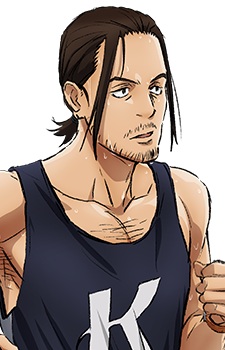
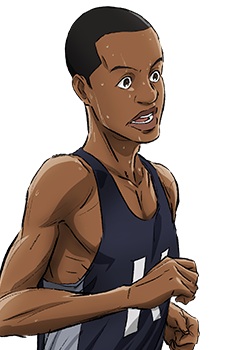
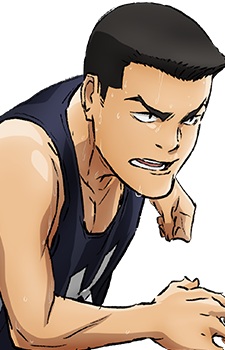
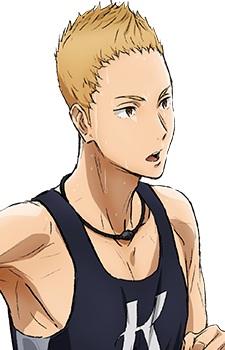
Former ace runner of Sendai Josei High School, Kakeru Kurahara is chased away from a convenience store for shoplifting. Shaking off his pursuer, he runs into Haiji Kiyose, another student from his university. Haiji is impressed by Kakeru's agility and persuades him to live in Chikusei-sou, the run-down apartment where Haiji resides along with eight other students. Having lost his entire apartment deposit at a mahjong parlor, Kakeru accepts the offer reluctantly. However, Haiji reveals a secret during Kakeru's welcoming party: the apartment is actually the dormitory of the Kansei University Track Club. He unveils his ultimate goal of participating in the Hakone Ekiden—one of the most prominent university marathon relay races in Japan. Unfortunately, all the residents apart from Haiji and Kakeru are complete running novices. Worse still, none of the inhabitants are even remotely interested in being involved with Haiji's ridiculous plan! With only months before the deadline, will the fourth-year student be able to convince them otherwise and realize his elusive dream of running in the Hakone Ekiden? [Written by MAL Rewrite]
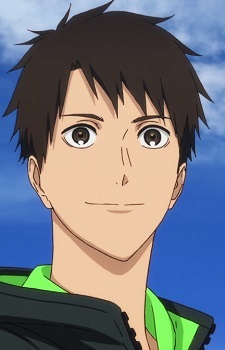
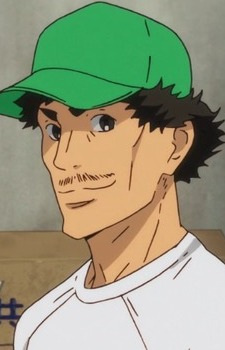
Main
Main
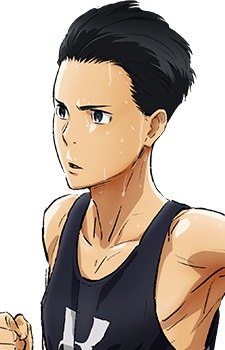
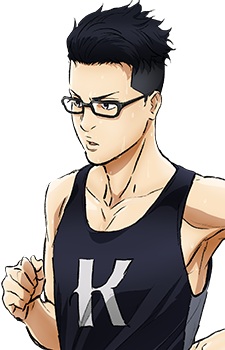
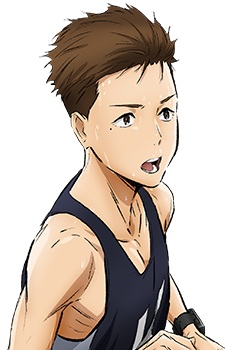
Supporting
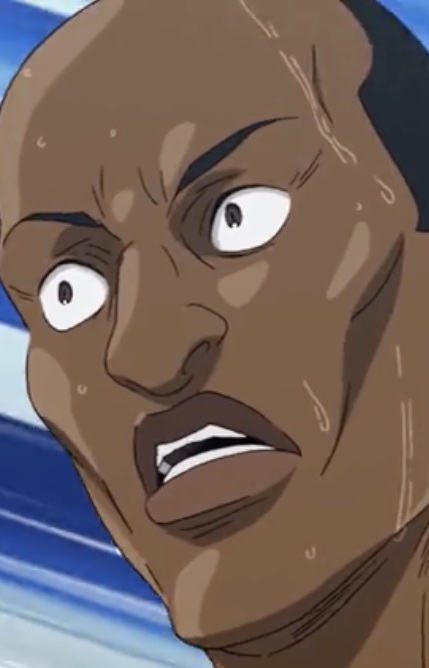
Supporting
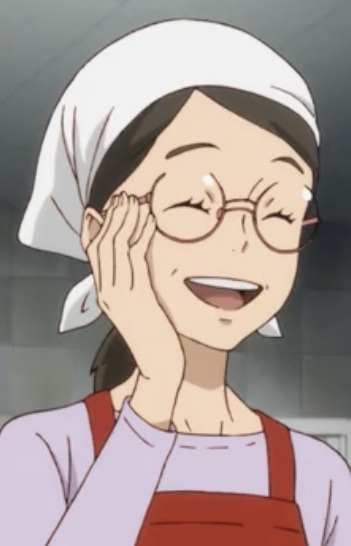
Supporting
Supporting
Supporting
Supporting
Supporting
Supporting
SingleH
March 26, 2019
Watching Welcome to the Ballroom throughout its six month long, two cour run was one of the most disheartening experiences I’ve yet to endure in all of my years. I watched with dreadful attention as the industry titan, Production IG themselves, those who’ve defined high-quality TV animation even after relegating their most legendary among an already packed house of unrivaled talent into the realm of exclusively theatrical productions, as they brought to air a shounen manga adaptation in much the same vein as their previous successes with the genre, Haikyuu and Kuroko no Basuke, only now with the same CG extras and panning over stillswhich plague any other garbage studio as opposed to the ceaseless sakuga and lavish key animation which we’ve all come to know them for—and only them for. No matter how handsome, no matter how sharp the male designs; no matter how sexy, no matter how shapely the female designs; no matter how lively the color palette popped and setting design shined; no matter how elegant the soundscape nor how powerful the dialogue, the show as a whole simply could not contend with the gripping, inspiring, elating aura its predecessors captured their deservedly massive audiences with whilst being stained by such—not even poor—just lacking animation. Now, call me a wishful thinker, but they’re back. Production IG’s TV Animation Team is back in a big way with Run with the Wind. Run with the Wind boasts such a splendidly rich animation production, it really reminds you just how impressive, how downright humbling this division of the studio is at its best of times. The character designs are as clean, sharp, and all-around attractive as those of Haikyuu and Welcome to the Ballroom, fit with a level of orate detail which was incessantly impressive to see in such fluid movement. The design-work of the main cast in particular, as well as the voice actors chosen to play them, clearly had a lot of thought put behind them, as you can see exactly why they dress the way they dress, walk the way they walk, accessorize the way they accessorize, and how such distinct appearances representing such well-realized personalities can really benefit the immersion of the work as a whole. And as the show progresses and you come to understand the characters more intimately, you’ll slowly start noticing more and more of those little details that had been there the entire time. It’s as brilliant as it is beautiful, and the background art never slacks either, as expected of the committed craftsmen and women of IG who would never sacrifice one facet of production on behalf of another’s quality—they just make it ALL that good. The astounding level of hand-drawn details, expertly mixed manual and digital shading, color variation and gradients, and well-researched setting references all work in tandem to build this gorgeous aesthetic of naturalistic beauty balanced with realistic subtlety. On top of the impeccable visuals, the sound design is so nuanced and ever-present, when I noticed it I would become so absorbed and distracted as to miss entire lines of dialogue and have to rewind. And I can say without hesitation the soundtrack is an easy nine out of ten, as the composer was the same talent behind the monumentally epic, blood pumping score for Haikyuu, the emotionally gripping yet hyper-stylized Studio Trigger tracklist for Kiznaiver, and the music for Death Parade, which reached the heights of contemplative character dramaturgy and exciting psychological thrillers both. I simply cannot praise the production of Run with the Wind any more without it coming across as hyperbole, and as for the narrative which gave the beauty its heart and the solid writing which firmly held it all together, it was pretty damn good itself, even if not as breathtakingly perfect as the production values were. The main characters made up one of the most grounded ensemble casts in all of anime, easily competing with and outclassing legitimately good shows like Durarara, Hajime no Ippo, or Assassination Classroom, who’re all known for their ability to deftly juggle enormous casts whilst developing those within them. Unlike those aforementioned and most others which aren’t even half as good, Run with the Wind managed to not merely manage the large cast, but to actually mete out character development in a down-to-earth manner which didn’t challenge the realism of the story’s structure. At no point in this show is there anything that could be described as an “arc.” Never does the narrative take a break for drama, nor does it ever feel like one character in particular is being too overbearing or stealing the spotlight, with any necessary character building sneaking its way into the narrative subtly. Such sensible pacing works wonders for any conflict too, since all confrontations are built up to naturally. Nothing ever comes out of nowhere and is usually born from within the main character, Kakeru, who you get to know well enough to both sympathize and empathize with the anxieties of. While it’s not hard for me to image someone having a problem with the blunt spright-man bringing all the conflict to the table being the main character himself, his deep-seated motivations are so well-written and intrinsic to his character which we’ve come to understand, I totally got where he was coming from whenever he blew his top. That said, this brand of discord is by no means unique to Kakeru. All the characters have insecurities and hangups which feel truly genuine. Most anime will have characters ranting and raving about a bunch of out-of-this-world garbage the viewer has no reason to care about, but Run with the Wind does nothing of the sort. The character Nico-chan (a play on the word “nicotine”) has difficulty running for his addiction to smoking and his unhealthy BMI. The character King has trouble being committed to the team because he has to find work to pay for college. The character Shindo has doubts about his involvement with the team because his girlfriend dumped him after feeling he had neglected her. All the characters are real, with real scripts, with real problems. It’s a seriously wonderful cast who brings the relatively straightforward story to life, and there were a number of times I had tears in my eyes watching them cross the finish line. The final point I wanted to discuss before concluding is the villain, Sakaki. Sports anime, simply put, NEVER commit to real villains. They always pussyfoot around the issue with mutually understood competition wherein the opponents are never genuinely malicious and are only causing conflict for the sake of sportsmanship. The only time truly antagonist villains appear in sports anime is like Jabberwock from Kuroko no Basuke, or Bryan Hawk from Hajime no Ippo, or the Blue Mars from One Outs, or any other one-dimensional villains out there who are just evil assholes for the sake of being so. Out of all four thousand anime I’ve seen, I’ve yet to see a wholesale ill natured antagonists who truly wants to beat the protagonists solely out of hatred. Sakaki, the main villain in Run with the Wind, is the first character I’ve seen in a sports anime who truly earned the title of “villain.” His history with Kakeru makes for a heavy motivation for conflict, and his vindictive attitude comes across as being deserved, even if you take Kakeru’s side. Again, Kakeru may not always be righteous, so the idea he has some skeletons in his closet isn’t all that far fetched. As you learn more about their pasts, and you get both sides of the story, you’re naturally invested. It’s just another really, really good aspect of the show which I wanted to make a point wasn’t under-appreciated at all in my review since Run with the Wind is a fantastic show I highly recommend for what I hope are now obvious reasons, and that’s not even mentioning the fact this point is what begins to illuminate the refreshingly unexpected psychological core behind it all. As I’ve said no shortage of times, the main character Kakeru is a really flawed person. He’s impulsive, irritable, and outright violent, and it’s not even anyone’s fault, it’s just who he is. So, he runs. He literally and metaphorically runs away from his problems and is constantly accused of doing so by many characters in the show. As said problems continue to pile up despite his speed, he realizes the problems are within and running simply won’t escape them. When he finally stops and turns around to see all the people he’s hurt along the way, all the mistakes he’s made and regrets he has, and all the people still trying to support him in spite of all he’s done, he sits down and confronts reality in a poignantly human fashion, and it’s this emotional courage that frees his spirt, so to speak, so he can truly move forward and run with the wind. Thank you for reading.
Stark700
March 26, 2019
Is it just me or does it seem like we don’t get enough literature anime adaptations these days? Kaze ga Tsuyoku Fuiteiru (also known as Run With the Wind) is an actual book adaptation and features competitive running as part of its plot. Like most competitive sports, the show delivers storytelling to feature the journey of characters to accomplish their goals. Thankfully, this show delivers a promise that won’t leave you disappointed. To check off the bucket list, you should probably ask yourself if you enjoy a story driven by drama with sports elements. Because make no mistake, this anime contains a great deal of realismwhile selling drama at every chance it gets. It will try to evoke emotions out of the viewers and between the storytelling, you’ll experience a story with its insightful character cast. Meet Kakeru Kurahara, the 1st year former elite runner at Kansei University. The first episode shows his daredevil actions as he is caught stealing. Thankfully, he is saved by 4th year student Haiji Kiyose who has an ambitious dream of competing in the Hakone Ekiden. The Hakone Ekiden is considered an important relay race taking place btween Tokyo and Hakone in Japan. Kakeru seems like a perfect candidate to be on the team. Upon being invited to the Kanse University Dorm, he quickly discovers it’s a place for the Track and Field team. The show sets up for huge amount of story and character development as we quickly realize how weak their team actually is. Now I’ll say right off the bat that I am a sucker for an underdog story. It has potential to develop characters on many levels. The problem here is that Kakeru isn’t a noob compared to the rest of the team. He already has experience in running but lacks the enthusiasm. This is explained through some very complicated and dark background storytelling. Apparently, an incident from his former Track & Field team caused him to doubt himself. Nonetheless, I believe Kakeru’s personality to be one that people can understand after seeing what he’s been through. This is a sharp contrast to Haiji, who is always enthusiastic about the team and his dream. The main problem is that the team requires a lot of training and commitment to compete at the Hakone Ekiden level. Still, I appreciate the character bond of the team. As the show progresses, Kakeru begins to realize that he’s not running alone and that he has friends to run with. A main selling point about Kakeru’s own journey is how he conquers his personal demon and move beyond his past. You better get used to seeing a lot of Kakeru and Haiji’s character bonding in this story. Interestingly, the rest of the cast get their spotlights too as they reinforce the show’s themes. Characters such as Takashi and Akane (aka Prince) are inspirational for their dedication and realization to succeed. Remember, most of the guys in Haiji’s team aren’t experienced or very athletic. It takes a strong will, determination, and attitude to become succesful. The show carries character development as its team members strives to be the best they can be. It’s a relatable concept that can be applied to real life with goals being accomplished through hard work. I personally find the show’s attitude to be very inspirational with many of its character cast conquering their fears and running toward their dreams. As dramatic as the show can be, do also expect a decent amount of lighthearted moments and comedy. The Jo twins are a prime example of this with their playful personalities. The man service also adds in some cheek humor when the team have bonding moments while discussing about their goals. When the drama picks up though, definitely be prepare to experience the real deal. Teams such as the Rikudo University is no pushover for their reputation. Haiji’s push to get his team to succeed also comes at an immense amount of effort considering the requirements for this dream race. It’s revealed in the show that the team must rank into the top 10 teams and meet personal records. So by all means, it comes to no surprise the amount of pressure the team can feel while training. This is where the main amount of drama drops in with characters feeling how difficult is to reach their goals. Nonetheless, I confess to say that a show like this meets the satisfaction of “the journey is more important than the destination”. People may have hard this phrase many times before but as a driving force in the show, it suits for it perfectly. The amount of character development is expanded to most of the main character cast that you can easily recall their names and some of their memorable moments. No one is truly left out in favor of the main cast even as they seem featured more prominently at times. As a Production I.G. show, this definitely reminds me a bit of their other sports projects. Haikyu especially comes to mind for its similar character designs and competitive atmosphere. More importantly, I felt the great deal of realism for its character designs. Throughout the show, the characters evolve physically and mentally. Their character expressions and reactions carries an emotional weight that can easily be felt throughout the show. It’s the type of feeling when you finally earn a sense of pride and accomplishment after all the hard work. And don’t forget, the team is consisted of cool guys so the man service can be a treat for the ladies. With 23 episodes, I confess to say that it’s the perfect amount for this particular anime. Why? That’s because it managed to develop its character cast while staying consistent with the storytelling. The amount of realism made me realize how inspirational this show can be. With every episode, I felt compelled to see just how much the characters can succeed for their future. Honestly, we need more literature adaptations these days.
ACasualViewer
March 26, 2019
This show is underrated and a true gem. Story: 9 Run with the Wind is a really special show, it’s been a long time since any story has quite impacted me this strongly. The story is actually quite simple, a bunch of college students decide to run a marathon, and their journey to reaching it. The execution is where the anime shines, there is never a wasted moment at all, every episode either focuses on the growth of a character, the growth of the team, or a major cliffhanger that leaves you wanting more. The anime outside of some unrealistic dramatic scenes, felt very relatable and refreshing,the college students felt mature, but not to mature, just the way people out of high school should feel. There weren’t to many stupid scenes involving walking into a bathroom that was unlocked or getting into a fight with some rival school or team like you would see in a show set in a middle school or high school. The setting was executed effectively, the jokes were solid, the pacing was consistent, and the story did not ignore anything that was very important. The last part is important because it allows the viewer to actually believe a team largely comprised of people who have never run competitively before could somehow actually qualify for the hardest college marathon in their country and perform well in it. The story focused on their training, on the amount of suffering they went through, on the support they had from their community and family, and most importantly on how each character overcame their obstacles one at a time instead of suddenly being a top tier runner. The story is a strong execution of a sports anime plot, it will keep you wanting more, it will make you feel excited for the team and their performance, and it will make you actually focus on all the subtle scenes that are thrown in and connected to the characters in the final race. Art: 8 The animation is smooth and clean, there were no major problems with it, the running choreography was some of the best I seen in anime, especially during the final race. Character designs did feel a bit basic, like the characters were just remodels of other shows done by Production IG, specifically Haikyuu. There is not much else to say, it was a good production, but nothing super amazing, it gets an 8 just for the angle and animation quality for the running scenes. The sound: 8 The second opening was a very fun song especially the last 30 seconds. Overall the music suited the series and was designed to get the viewer hyped up for major scenes, worried during dramatic scenes, and focused during training scenes. The sound could have been better yes, there wasn’t any part of the OST I would listen to outside of watching the show, but for a sports anime this is good enough. Characters: 10 At first, I thought the characters were just Haikyuu clones, with Kageyama as the main character, but I was totally wrong. The character development between the team started pretty slow however it was the right pace for a 24 episode show. The characters were funny, charming, interesting, well written, and extremely real, despite the very large cast by the end of the show you will know them all by name and know them as people. Although some of the characters did not get any real development until the very last episode outside of a few small scenes through the show, their final performance added up to so much more. We had a character quit his addiction to smoking and got to watch it slowly build up in the background until he could run, we got an otaku who couldn’t even jog run a marathon over time, we even a pair of twins each with very distinct personalities coming to terms with each other’s talents and how they should chase separate goals. This was easily the best part of the series, the characters were absolutely amazing, they had good chemistry, great inside jokes, and they even managed to bring an African character in and not have him be 1 dimensional fast runner because he is from Africa. The show also has a very strong MC who grew from a cold expressionless results-oriented person to someone who cared more about his team than his own performance. Overall the characters were simply the best part of the series and even if you don’t like sports anime, I would recommend watching this just for their growth in the series. Enjoyment: 8 Being straight here, I never thought a show about running could be this exciting. I really enjoyed this series, it’s so far, the best sports anime I seen in the last year, and one of the strongest I ever seen. The characters, the drama, the growth, struggles, the successes, all of it resonates with me and anyone else who has ever attempted pursuing any competitive goal before. This is a much watch if you seen any other Production IG sports anime and wanted more. Overall: 8 I give this show an 8, it was really hard deciding whether or not to give this show an 8 or 9 since it was very close, however I will give it an 8 for 2 reasons. One because although the main characters were great, the ending did not tie up all the loose ends for their development, I really wanted to know what happened to some of them given that one had injuries, one had a thing for a girl in the cast, and one that was graduating soon.I also wanted to know more about the future of their running club however that was left unclear and open ended. The second reason why I did not give this show a 9 was because the show required a bit much on unrealistic drama, for example a member is sick before the last race, another gets injured before the race, Kakeru’s argument with his rival also seemed really stupid and I can’t imagine anyone being angry for so long over something like that. But overall everything else was very good and this was one of my favorite recent shows, I still highly recommend it, and its definitely a high 8.
FMmatron
March 26, 2019
There are various aspects which have to be considered and come into play if we are talking about how a good anime should generally be like. That said, values and priorities in regards to a story and technical features may differ dependent on whom you ask. Well thought out plot, compelling characters or perhaps a focus on visual storytelling-you name it, all of us have preferences whose omnipresence ultimatively dictates our viewing habits and the enjoyment we receive out of something. There's still one attribute I view as vital in order to appeal to the audience, namely heart and even more so when itcomes to the sports anime. Kaze ga Tsuyuko Fuiteiru essentially embodies the spirit which made me such a big fan of the genre. It is also a show that exceeded preexisting expectations. Expectations mainly based on a single name. Brought to us by Production I.G a studio renowned for their outstanding record regarding anime that revolve around physical activities. Ok not quite tbh, but if we take a look at some big hit's from this decade like Kuroko no Basket, Diamond no Ace, Haikyuu, Ballroom e Youkoso then it shouldn't really surprise that I.G has earned a certain reputation in this field and everyone familiar with their sports adaptations of this decade might fully agree. The story revolves around Kakeru and Haiji who met by chance. One is an ex competive runner and a prodigy, the other a guy desperate enough to trick his dormmates with the objective of letting Kansei University enter the Hakone Ekiden. Sounds like a solid premise for this genre. Although there's a notable difference in direct comparison with the title I mentioned above. The show's in question used a narrative that rather focussed on the sport and elemental technicalities, Kaze ga Tsuyuko Fuiteiru on the other hand went more for a character and drama oriented approach. Running in a club served more or less as a catalyst to induce conflicts, trials and self-exploration on the steep road to reach the "top". Then there's the fact that it's setted in university. Good, that doesn't sound like a major change up at first , but it allowed to showcase harsh circumstances accompanied by sacrifices which can only occur if you're in one of the busiest stages of your life. Moreover, I thoroughly enjoyed the cosy ambience of a lively dorm and the seemingly deeper bond of the cast, similar to that of a family. Especially the first episodes capitalized on that aspect and it was easy to get warm with the characters. Speaking of them, the easiest way to sum up the lot without spoiling much would be to describe them as a diverse bunch or if I take this a bit further maybe even as a group that consists of people whose personalities almost couldn't contrast more. While this made up for engaging character dynamics it was at the same time also the ideal breeding ground for several disputes which put the common goal at risk. There were times where it was hard for some viewers not to get aggravated by some actions or attitudes that were displayed. This doesn't sound very appealing, but rest assured. After a bit of patience you will get rewarded with amazing individual as well as collective development emotionally striking enough to wash away all unpleasant memories. However, conflicts weren't limited to be solely of external nature, each Kansei member had his own struggles to deal with and the show dedicated a decent amount of screen time on depicting those in a tangible manner. At this point I might fairly add that time spent on fleshing out characters wasn't alloted equally and this could've evoked the impression that some of them were lacking significant growth. Thankfully, this most definitely wasn't the case. The final batch of episodes in particular took care of that task. They presented a gratifying conclusion to each individual journey. The boys reflected on their past and the last months devoted to running . This ultimatively enabled them to become aware of how running, an activity most of them were initially indifferent about brought a change to their lifes. These moments truly hit close to home as they were able to convey a wide array of emotions along with a level of relatableness that surpassed everything I had expected. All this made the already enjoyable ride more than just worthwhile. What struck me most besides the raw emotional impact I experienced while watching characters I've gotten fond of fight against the competiton and themselves was the technical finesse put to display. The running segments were beautifully composed, ranging from expressions of the runner, spectator reactions, inner monologue, animation and OST, everything was in tune. Regarding the overall animation and art quality, well it was mostly conistent throughout the entire course of the show. Some CGI here, some minor inconsistencies when it comes to the faces ther, but nothing that warranted major criticism in that area or took me out of the experience. It fulfilled the standards you would expect of I.G. Outstanding in that department was how realistic the running motions looked and the effective use of imagery. The director did extremely well there and this became already apparent during the first episode. The first encounter of Kakeru and Haiji was without a doubt one of the strongest opening scenes I've ever scene and immediately captivated me. Coming to the music department and I'm going to make this short. Fantastic! It always fitted to the scene, enhanced the mood and correspondingly the enjoyment by a large margin. The theme songs, especially the first ones, Catch up , latency and Reset were exceptionally good. Now onto something, many, especially those who care about accurate depiction and realism when it comes to technical aspects would most likely take an issue with. Kaze ga Tsuyoku Fuiteiru didn't put much emphasis on elaborating details of running nor did it provide a logical explanation how admittedly more or less fit novices were able to perform so well on a high level. Team Kansei surely put lots of effort into their training, but others must have done so as well. Potential viewers gotta ask themselves whether they can stomach a dose of idealism or not. Personally, I didn't have much trouble to overcome my disbelief due to plenty of other merits. Foremost, the sheer endless energy the whole story and characters emitted. Then also the fact that an anime about a solo sports had some of the best team chemistry is nothing short of praiseworthy. Lastly, I'm gonna talk about my personal enjoyment. Kaze ga Tsuyoku Fuiteiru was by far the most entertaining show I've seen from the last year and it turned out to be way more than I could've hoped for. I was totally invested in the characters, I laughed, I felt joy or cried with them. I even started to integrate running in my workout routine again. On top of that it managed to recreate the exact feelings of the times when I've seen my first sports and I hope everyone who's going to check this marvellous work will experience a similar sensation. I gave it an overall rating of 9 due to the set rating system for reviews, but in my heart it gets without a doubt a full score.
Ezekiel_01
April 2, 2020
We, humans, are always an interesting bunch of creatures. The difference between us humans from animals is that we have dreams. Dreams we set as our goals with. We chase down our dreams in the road of life, hoping to reach self-satisfaction and eternal happiness. Sadly, not everybody has a solid resolve to chase down their dreams, while some don’t have an end goal in their life, making the destination of life confusing and frustrating. But even with those odds, we still continue to move and keep on running in different directions. We still chase down the unknown answer we seek. This is what Kazega Tsuyoku Fuiteiru, better known as Run with the Wind, is about. This anime is not just an anime about track and field. But this anime also about our struggles in life, instead of walking forward, we decide to run-away aimless. (Short Synopsis) The show started off on one faithful night when Kakeru was being chased down by the convenient store for shop-lifting, this caught Haiji attention, after chasing down the culprit, Haiji realizes the potential of Kakeru in running, He then immediately offer Kakeru free residents in Chikusei-so apartment which Kakeru impulsively accepts. We are then introduced with 8 other college students residing in the apartment studying in the same university Kakeru’s attend to, which is Kansei University. After the welcome party of celebrating Kakeru’s residency as the 10th resident of Chikusei-so, Haiji later revealed that the apartment was formally the dormitory of the Kansei University Track Club. This further reveals his true intentions, the sole purpose of creating a 10 person track and field team to participate Hakone Ekiden, a prominent university marathon relay race in Japan, this explains why the apartment provided cheap rent and free food. Residents that sign the contract permitting them to live in Chikusei-so apartment are required to participate in the track and field club activities, or if they refuse, they immediately need to pack-up and leave. Unfortunately, the resident of the apartment cannot afford to move to another apartment so they have no choice but to participate in the club activities. This sparks the start of the main plot of the story. Honestly, the first few episodes are slow and boring for me. Around this duration, the plot focuses on introducing uninteresting and not so impressive batch of college students that has nothing special going for them. Frankly, in the first episode, it makes me believe that they have no chance of winning and they are too far away to reach their goal in reaching Hakone Ekiden. For the reason, not all of them are willing to join and given that the majority of them are not even runners. It is kind of funny and interesting for me to see how this show will go on later episodes since this kind of joke will die out fast in a few episodes. Content Below Contain Spoilers. (The Analysis) Plot & Characters (9/10)>>> 6.3pt Everything changes during the latter half of the series when some serious team exploration and internal conflicts take place. The narrative of the show drastically changes, from having an easy-going, light-hearted comedy narrative, about a lackluster team blindly aiming to the top. To a bona fide character-driven narrative that focuses on self-discovery, confrontation of one’s doubts and fear, and an inspiring drama story about mediocre individuals working together, to become something they never imagine they can ever be. This is the time where I got myself immerse and felt invested in Kansei University team efforts, as further I go to discover their struggles, and better know them as a person. As the series progresses, my entire viewpoint of the show changes for the better. I like what the show's narrative is aiming for. As the show continues to flesh-out its character you will discover that each character has a purpose. Their personality and life issues are relatable and easy to identify with. I admired the dedication of the show in representing each character, including the supporting cast, on how important they are in the team, each individual’s contribution matter and everyone is equal. Everybody is important and special on their own rights. This is another thing that impresses me in the show. It actually explains to us the importance of teamwork. It casually explains teamwork, even a person who doesn’t play a team base sport or play sport, in general, will easily understand the message the show is trying to convey. It promotes trust and faith to your fellow men. Life felt more meaningful when someone trusted you and give your life meaning. It always felt good when people rely on you and admire who you are. It is always reassuring that somebody got your back on critical times; this is how the entire Kansei University team felt over time, every time they run. Even though they were forced to run in the first place they gradually soon discover the hidden benefits and joy of the entire scheme. They realize that running gave them the opportunity that they never have the chance to experience before, and that is to live and spend your life with a purpose, without worrying or thinking too much. Even though the interpretation varies from each individual team member, the general message of living your life the fullest in the present is solid. Each individual character of the team has a solid development and resolution, it felt satisfying. I like how organic each character grow and mature towards the end. The show truly respected its character. Starting from the not so interesting and mediocre individual, developing to highly inspiring and respectable figures, we can look up to. The show truly did a good job of handling its basic story and basic character direction to the fullest. In the end, the entire team runs with an open heart, no longer forced to run. They eventually succeeded in their goal to reach and be the top of Ekiden. This makes the ending the show more impactful memorable as a whole. They didn’t just win the battle but they won the war! They open the path of a bright future that awaits them to chase down, on the never-ending road of life. Music (7/10) >>> 1.4pt In connection with the overall theme of the anime about teamwork and inspiration, the soundtrack, OP and ED music add-up with the emotional soul of the show. I always like the soothing atmosphere the soundtrack provides, it is relaxing on calm times. The soundtrack impacts me the most when a certain point is reached; especially when it comes to character resolves, the music presented it in the fullest form. This provides characters internal monologues and achievements memorable. Music is always the best way to convey emotions to its audience. It always felt good that you can comprehend the character's current emotional state by just listening to the theme of the music. The show did a good job with this technique. Even though some moments are objectively dull, but because of the carefully chosen musical score, that dull moment becomes impactful moments of the show. Personally I like the soundtrack and ending theme of the show. "Reset” by Taichi Mukai and "Michi" by Taichi Mukai is certainly going to my playlist. The ED music provides motivational and inspirational good vibes, every time I listen to it. Art Style & Animation (7/10) >>> 0.7pt The art style and animation are alright. It fits perfectly with the theme and characters. I always like the simple design of characters, since I focus to identify them more on their personality. Its mundane atmosphere during calm times is alright, it blends well with the slice of life theme. But I do give it credit towards critical scenarios. The well-crafted change of pacing between mundane backgrounds to colorist/white atmosphere during important character moments, combine with monologues and impactful music composition certainly creates a good formula. Overall the art and animation it’s good for a slice of life, sports anime standard. Even though I found CGI Cars or CGI running men rather disturbing to look up but that’s my personal preference. Enjoyment (7/10) Personally I am not a sporty person. I prefer indoor activities more than outside. I like to play on board games than physically exerting myself. I just got interested in the synopsis of the series. And it is a kind of sport that I haven’t seen before. It’s not about boys playing with their balls but rather boys running marathons that are 10km to 20km so I gave it a try. My expectation of this anime direction would be somewhere in the line of ballroom e youkoso about a mediocre character going for the top. Considering studio I.G is adapting it from a material that I certainly never heard off, made it more interesting. Studio I.G had never failed me before when it comes to basic slice of life with sports before. It’s a good thing I trusted my instincts and experience. Turns out I like the show. Even though it started barely weak in the first few episodes but became more solid as it goes on. I love the moral lessons this show provides, I like its characters, I love the ED music and the animation style. I really enjoy it from the middle to finish. Overall Impression (8.4/10)>>> A Solid Very Good Show I always prefer a show with a slow start but with a solid foundation from the middle to ending, than a promising start with unstable middle and ending. Run with the Wind proves, that even with a basic plot and a basic set of average individuals characters can present a narrative that can rival the sophisticated stories with complex characters. It proves that a deep and meaningful message can be made on the most mundane of setting. I admire the flow of the writing of the story, how it presents and develops its characters overtime is certainly commendable. I wish more anime like this are produce and more people support this type of shows. Run with the Wind is certainly a rare gem for me. The message it represents to me is a tear-jerking a life change experience.
Rank
#239
Popularity
#830
Members
333,006
Favorites
6,509
Episodes
23