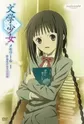

Stars Align
星合の空
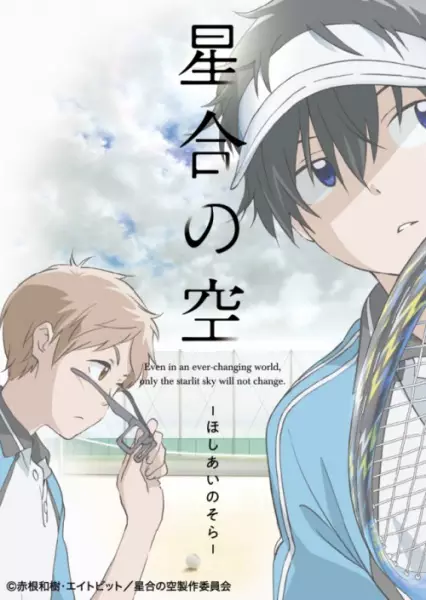
Constantly outperformed by the girls' club, the boys' soft tennis club faces disbandment due to their poor skills and lack of positive results in matches. In desperate need of members, Touma Shinjou is looking to recruit capable players, but he fails to scout anyone. Enter Maki Katsuragi, a new transfer student who demonstrates great reflexes when he catches a stray cat in his classroom, instantly capturing Touma's attention. With his interest piqued, Touma ambitiously asks Maki to join the boys' team but is quickly rejected, as Maki doesn't wish to join any clubs. Touma refuses to back down and ends up persuading Maki—only under the condition that Touma will pay him for his participation and cover other club expenses. Maki joins the team, and his incredible form and quick learning allow him to immediately outshine the rest of the team. Although this gives rise to conflict among the boys, Maki challenges and pushes his fellow team members to not only keep up with his seemingly natural talent, but also drive them to devote themselves to the game they once neglected. As the members of the boys' soft tennis club discover their own capabilities, they endure personal hardships and deal with the darker side of growing up in middle school. [Written by MAL Rewrite]
Main
Main
Supporting
Supporting
Supporting
Supporting
Supporting
Supporting
Supporting
Supporting
KANLen09
December 26, 2019
This show truly has the definition of "don't judge a book by its cover", because it ain't just a sports anime, but one that is rife with the daily affluences of family drama and matters that's spread all over it. And knowing director Kazuki Akane on this show's influence taken mostly from his creation of "Noein" and planning this original story for over a decade, I'd say that while this has caused A HELL LOT of backlash, like Satoshi Mizukani's Planet With, the end result is truly the icing on the cake, whether you'd decide to take it literally or not, I believe that whatAkane-san wanted out of it, he truly accomplished it to its feet with his unorthodox method of storytelling. You must be wondering why the title literally says "Stars Align", but it's Kazuki Akane's way of foreshadowing that no human is ever perfect, and we're like the stars of the sky, when life beats us down harsh, the common interest in question (soft tennis) aligns us in the thread of fate, that is adolescent trauma (which happens to be his favourite theme). Being grown-ups, the world that they know is never a bed of roses, so the harsh reality of families growing through the different pangs and uncertainties must know how to counteract on their very own. While the school/soft tennis club part is there to help expose and alleviate their true natures of the sufferings going through with parental disabilities, or expectations as simply you would call it, all kinds of nature are laid in bare sight. What these adolescent teens (i.e. Maki, Toma and the others) must do is not to take that emotional attachment and let it be the ridiculing point of their lives, but rather, no matter how much understanding others may have on their struggles, it's the reconciliation that leads to the amalgation of their feelings and work it out to experience their joy (which again, is in the soft tennis club) as an output. And to this point, all the dysfunctional boys in the Shijo Minami Boy's soft tennis team, budding artist but introverted and bullied Kanako Mitsue, and Kinuyo Kasuga the student council president, all face different but similar parental dysfunctions that affect them both physically and mentally, but not without some help from the same outside community that was once split but now bonded with understanding and acceptance, to push past their fears and limitations to be the best they could be. Even the worst of issues have a silver lining that despite how much relentlessness was given, any amount of joy would overcome the overglaringly terror and rebuild it into something special. All were alone, but the least of forgivings were not enough to separate each and every single member to reunite and conquer these harsh battles together. Studio 8-bit's visuals have never looked so better, especially with the soft tennis matches that seem to glide by every so often with the amount of exceptional precision and realism. While the overall stance is decent, the character designs are one that pops out in the slew of recognizing who's who and what's what, being that informative for reasons I cannot fathom, but with the puzzle pieces put together, paints a canvas that excels better than my initial thoughts about what this could be. Light-hearted visuals but not without the more serious moments (a.k.a parent-child arguments) make this one of those shows that stand out for reasons. And speaking of the music, I do enjoy the music and sounds of the show, with some realistic voice acting in the parental issues and OP and ED (of which the former comes VERY often), playing into sound design of the show that's just well done IMO. Always been a fan of Megumi Nakajima's music and this OP shows, while the ED's music is also good, and the dance...let's just say that copyrighted material needs to be attended to foremost. More than just a realistic drama-ified anime, Kazuki Akane's Hoshiai no Sora brings one important point to start and end its story: "Wherever you are in life, everyone goes through thick and thin, and it takes two hands to clap, so grab a partner that can help spur each other's life forward and achieve things you couldn't have imagined you'd accomplish." Love it or hate it, Stars Align truly will forever be misunderstood under Akane-san's direction, but for those who got the gist of it, make your life count, and keep moving forward.
Navaneeth_007
December 26, 2019
Well, First Of all The Anime was Axed At 12 episodes by the production company even though the director wanted 24 episodes to Completely Tell the Story. So when he was given opportunity to choose either one from fast pace of story or Leave it at half he chose to keep at decent page and leave it Half. Now coming To the Anime Review, If you are suggested to watch the anime based on Sports Genre what you found was Half Correct. Coz this Anime is 50% Sports 50% Drama. But This anime is Off the chart with mind blowing character Development and surrounding coverage.Don't listen to anyone else if you have time for 12 episodes watch This anime and give me Like If you Found my review Helpful
Kirik0h
December 27, 2019
Anime originals are rare; stellar ones even rarer. In today's anime industry, much like it is in Hollywood, we are bombarded by endless numbers of adaptations of already popular franchises as they help to guarantee a level of financial success. Hoshiai no Sora is a 12 episode passion project written and directed by Kazuki Akane which was originally produced for 24 episodes before it was then told it could only air 12. This is incredibly clear from the phenomenal production values, and its unique approach to the sports drama genre but also in that the show does not end at episode 12. Traditionally in sportsanime, the sport in question is the centrepiece of the characters' lives. Even in Run with the Wind, it is not long before running becomes the most important thing in the character's lives. Sports anime in general are no different than shounen anime in that they act as fantasy escapism for viewers to vicariously live beautiful, youth-energetic, rose-coloured high school lives with action, adventure, and camaraderie. In many sports anime, we never even see the parents of these children let alone be involved in their children's lives. Hoshiai no Sora is unique in that it portrays a group of young middle-schoolers whose life situations are what is being explored and the relationship between these characters in the sport are a consequence of this. This is a mature show that seeks to show what real friendship and camaraderie is and how school and sports can be the refuge from the domestic situations at home. What is most impressive about the show is the dialogue - it is not cheesy, it is not contrived, it is not overly-laden with shounen tropes of eyerolling-inducing cheers of "With the power of friendship, we can literally do anything", it is an accurate portrayal of how children may react and respond to tough situations and how friends can truly help each other. The themes explored in this show are wide and also mature - not seen in most anime in this genre. It would be a spoiler to discuss any of these further but it is worth noting that a sequel is in the works and that this show was made to be 24 episodes long (and indeed they had already produced an ep 13)! Some may find the lack of conclusion to be unsatisfying but personally for me, the pacing of this show was perfect and any attempt to rush a conclusion would be ill-fated. The animation is brimming with attention to detail. The way each character is animated shows their own unique quirks and personality traits and right from the beginning, we can see differences in the way characters play soft tennis. Even, the ED oozes more passion and animation than some entire anime. But it is the cinematography and camera work that makes this show stand out. This show does not rely on stills and Powerpoint-esque presentations to show its action. We see action, impact, and reaction and the camera angles are readily used to amply the excitement and dynamism of the action in a way that regular TV cannot. Hoshiai no Sora takes advantage of the anime medium and takes no shortcuts. The soundtrack by jizue is one of the best OSTs of 2019 not least because it captures and amplifies the emotions in the scenes, in the way drama and sports OSTs should, but also because the sound is different enough such that it is attributable to Hoshiai no Sora. To design and tailor a soundtrack to as show means the audience should be able to associate it with the specific scenes in this specific show where it is played and jizue nails it. When Fall 2019 started airing, I surely did not believe that I would be blessed with another character-driven realistic sports drama so soon after Run with the Wind. However, I was blessed with something greater. An anime original that is brimming with confidence in its approach, its production values, and its willingness to explore adolescence in a genre that is oversaturated with what are nothing more than battle shounen wearing the disguise of a sports jersey. And for that I am grateful, and I truly recommend this to any fans of authentic character dramas, and hope the stars align once more to provide us with the sequel we deserve.
SingleH
December 26, 2019
If there’s two people I know who don’t need to be told or shown more than they already have seen for themselves how rotten parentage can be, its me and my poor older sister who got the worst of it. Parentage, and especially motherhood, is often portrayed as a thing of love, and care, and protection, all of which are qualities understood to be innate, healthy, and of course, natural. This is not the case. Well, most of the time it is, because, as they say, stereotypes come from somewhere, but nevertheless, such is not the always the case. Sometimes parentage can be malicious, dangerous,and scary, and it can ruin people’s lives before they’ve even begun. Hoshiai no Sora, despite its outward appearance as a benign sports anime, is a show about the deep seated psychological atrophies and torsions which cause the innocent love of parents to go sour, and more importantly, it is also the first show I’ve seen with this subject matter which manages to portray such a delicate issue in a way which isn’t so misguided as to be offensive, so if not for the hours of soft tennis it unapologetically wasted my time and its own time with, I sincerely thank this show for being able to depict something none other in its genre has been able to correctly, nor this cathartically. Our hero Maki Katsuragi is a no-bullshit little nihilist who joins his school’s soft-tennis club—a notoriously negligent and satirically self-aware club—not for precious middle school memories, but for cold hard cash. Like a badass. But in actuality, Maki is only requesting to join the team under these conditions as a front. Knowing his Gary Stu, god-like, anime self-insert protagonist abilities in soft-tennis are indispensable to the dramatically hopeless team and doubly knowing the desperate team captain, Touma Shinjou, will do anything to get his hands on such a valuable player to revive his long-dead team, he exploits the situation to get the income under the guise he doesn’t care and will only participate for money, when in reality, the poor kid is really just desperate himself to secure any money he can to help his single working mother make ends meet. It’s a pretty real setup, but it gets really real when you learn the principle reason his mother’s own salary is insufficient is Maki’s father, his mother’s abusive ex-husband, is making routine visits to their apartment when only Maki is home to steal whatever of their money he can, because despite his dastardly attitude, Maki’s history of being beaten by this guy for as long as he can remember has him totally shut down whenever he’s present. Seeing Maki so pitiable is a poignantly stark contrast to the snarky bastard he is at school, and it so perfectly illustrates just how fundamentally abuse can permanently eat its way into its victims psyches, especially when they are young and dangerously impressionable. Seeing Maki, the nonsensically overpowered isekai protagonist who one day found himself in a show about soft-tennis, crumble like a house of cards at the mere sight of this scumbag really sells the implications of what he’s done to him to the viewers, and more importantly, what people in real life actually have to go through. However, what makes it truly well written and worthy of praise is how much it does NOT do what every other psychological horror-comedy anime does and actually portrays this terribly serious relationship as one made up of reality. The scenes are only after a lull in the action; should you catch on, there’s this absolutely chilling break in dialogue; the color palette layers itself with this oh-so-subtle drab overtone you don’t even notice until it’s too late; and right as it happens the camera shudders—and, oh—the cinematography! The cinematography is brilliant! The sudden shaking slams on the breaks, and the camera grinds its movements to a halt as if it’s just as horrified as the poor child cowering in the corner, cutting only to show flash-cuts infused so ingeniously with panic or perspective shots so ruthlessly ratcheting up the already towering levels of immersion present in these glorious scenes by literally putting us in his shoes. And you see him hit ‘em, and kick ‘em, and berate ‘em, and tear the apartment apart to steal what little they have to take, and he’s crying, and trembling, and cowering and—uuuuhh—it’s just the BEST! Seriously, though, it’s the manner in which the damage is so correctly ingrained into Maki’s personality in a way with speaks to real life—much unlike most shows incorporating the likes of abusive parents who’re merely out to pander to the edge-fandom as painstakingly bluntly as they can—is what makes it so affecting, convincing, and tactful. That said, Maki is by no means alone. The team captain I mentioned, Touma, lives in a household wherein his father avoids his mother out of reticence, and his mother avoids him out fear all the while unfairly pampering his other brother. Their transgendered team manager, Yuuta—on top of being relentlessly bullied at school for being outwardly gay—lives in a household wherein he has to work with his sister to hide his crossdressing from his mother, whom is of the belief once she dramatically discovers his habit that he’s a freak and she’s a failure as a mother by way of his development. Their team member, Itsuki, was born to a Mother who poured boiling water on him as a crying baby, leaving him with a horrific scar spanning his entire backside and a dangerously volatile trigger for violence. Their other team member, Nao, lives in a household under strict control by a world-class helicopter parent whose crushed him under so much stress he’s become a pathological liar. Getting ridiculous yet? Because I could go on, wether it be the adopted Rintaro or the destructively spoiled Taiyou, apparently any character they bothered naming in this show has some degree of unhealthy parentage under their belts, and in retrospect, only so many of these cases actually got it right—and that’s only if you can buy into the fact such an abundance of said cases could even occur under such a massively coincidental set of circumstances in the first place. Simply put, Hoshiai no Sora is, as a whole, what I would call bluffing. I devoted a paragraph to praising the directorial deftness on display in scenes depicting Maki’s abuse, because not everyone gets that degree of harsh and intricate realism and is thereby nowhere near as believable or smartly written from a critical standpoint. I can’t really speak to Yuuta’s portrayal, because while I suffer from as much body dysmorphia as any other clinically depressed autist, I’ve never actually had gender identity issues. But I’ve been screamed at, slapped at, struck at, and everything in between which these poor kids have to no end, and frankly, I don’t think they’re developed in a way someone with my experience can really believe in in good faith. Itsuki is violent, because he was abused. Okay, my sister turned violent too, and she fell out of relationship after relationship because her and her men always seemed to be in a rush to hit one another. But despite getting the same treatment she did, I didn’t turn violent, and no matter how many years those bitches throughout school would gang up on me, I never once even thought to strike back. Clearly, it takes more to go violent then to simply have been hurt by your guardians in the past. Nao is a pathological liar, because he was put under pressure. Okay, I devolve into a pathological liar whenever a conversational partner decides to pry into my personal life, and I often even suffer from cognitive dissonance having built year long personas with different colleagues and family members all based on lies which don’t align as they were fabricated in the moment on nothing but panic. But despite getting the same treatment I did, my sister didn’t go crazy, and no matter the fact she went to a private school which placed its own extra dosage of pressure onto her separate from my mother’s already bountiful amount, she never once broke down. Clearly, it also takes a lot more to go crazy then to simply have been pressured by your guardians in the past. Do you see what I’m getting at with these examples? What surface level developments the show offers are not the only ingredients to these special solutions, and the fact the show portrays it as if it is shows a certain level of ignorance in its writing and conceptualization—even if the show is obviously coming from a place of genuine artfulness and good intentions. There is so much more nuance to these phenomena of developmental psychology then is shown or discussed by the show I cannot wholeheartedly buy into the idea—despite its wealth of dramatization—any one of these kids, no matter how seemingly unfortunate, are ever going to end up like my sister, who went through rehab before she was able to graduate college and was knocked up by a drunkard who would become so unhinged she and her newborn son had to flee back to my parents house for safety, or end up like me, whose thrown myself into traffic, thrown myself off an overpass, overdosed on antidepressants and sleeping pills, and cut myself so violently and for so long the skin color of my left forearm is now different from that of my right. I’m not trying to justify my opinion by exploiting the fact my real life sob story is worse than the ones Akane Kazuki came up with, because he very well could’ve come up with ones a lot worse—its fiction, after all. I’m just trying to make the point the subtle ways in which these children are affected by their parents’ scarring behavior may or may not be as accurate as they needed to be in all cases, seeing as I actually have had the misfortune of knowing how at least two people really did turn out in the real world. But if this show is so thoroughly touching, and not to mention directly personally relatable, why aren’t I telling you it’s the best anime ever made, even with its lack of necessary intricacy? Because despite its contemplative value being through the roof, its experiential value is at best milquetoast and at worst hellishly tropic and boring. Yes, those scenes I mentioned before were all expertly directed, and yes, the show does work wonders with its subtle tone shifts in color palette and sound design, but outside the moments where Akane Kazuki came in and got to work with his own two hands, the show can be a serious slog. Now the heavy stuff’s over, and this review gets to fizzle out slowly and monotonously like the the show itself did and talk about soft tennis. All that meaningful intrigue I just talked about—believe it or not—is mere garnish to the show’s actual plot: a run of the mill, stock brand, dime-a-dozen highschool sports story. This show isn’t Haikyuu, Run With the Wind, or Welcome to the Ballroom, where the character arcs are weaved through the sport, nor is it One Outs or Baby Steps, where the sport is used to tell a progressive narrative, nor is it Ping Pong: The Animation, which seeks to tell a wholly symbolic and nearly spiritual coming of age story through the sport. It’s just a show about interpersonal drama with healthy theming, which also just happens to have another totally separate story about soft tennis running along side itself. Their progression as a team, their unification as members, and their whole entire underdog story—which is all done quite well, by the way—is completely and totally irrelevant to any and all emotional investment you as a viewer hold in the story, and I simply cannot wrap my head around why they put so much focus on it. This was a show which had me glued to the screen half the time and having it mindlessly playing in the background with me doing work at home the other half of the time—if not outright getting frustrated with it and ratcheting up the playback speed. By the time episode ten and—worse yet—episode eleven rolled around, I started to panic. With so many loose ends hand-waved for the sake of banal episode-long sports anime matches all the way to the finale, which is in itself another match of soft tennis, I had to start looking out for news on this show getting renewed, because while I don’t know if its getting a second season or not, I know for a fact if we didn’t spend so much time playing soft god damn tennis, it wouldn’t even need one! And who knows if this studio could even make a season two any time soon with so many more productions slated for this coming year when the show looked so surprisingly gorgeous? The one and only saving grace to the overabundance of soft tennis in a show which was really about way more interesting things at its core—even if an ultimately weak saving grace in comparison—was the outstanding production quality. Be it beautifully lavish, obviously well-researched, life-like character movements, ambitious camerawork maintaining flawless anatomical accuracy, or expertly airy hand-drawn clothing physics, Hoshiai no Sora is an absolute feast for any sakuga nerd, and I find it seriously impressive coming out of this studio. But now that I’ve said how pretty it is, I must be the bitch I am and pick it apart at least a little bit, because while it may rightfully knock the socks off the average viewer, this is no infallible production. First and most obviously, the lavishness and fluidity of the animation is not consistent and mainly focused in the fist handful of episodes, with some speed-lined, single colored backgrounds and panning over stills coming around episodes six and seven, but most would assume this the case anyway. What I really want to talk about is how thick this show is with referencing. Last year, a show about badminton called Hanebado! aired out of studio LIDENFILMS, a studio as historically shaky as 8bit themselves, but to the surprise of the world over, this show was—at least for the most part—heartstoppingly gorgeous. The mind blowingly ambitious shot compositions kept up with by equally jaw dropping sakuga was only describable as an animation celebration. That said, this production quality was inevitably too much to handle, and many of the nonchalant practice matches ended up being fully rotoscoped, and there was one non-rotoscoped match in particular which aired radically unfinished in episode seven. Overall, it was impressive, but as the ambition of the production started tripping up the staff’s footing, the mechanisms keeping it running became blatantly clear. Hoshiai no Sora falls victim to much the same fate. While there is no rotoscoping, they do reuse animation, trace photographs for dense backgrounds, trace live-action dance choreography for their ending animations, and more to the point, they trace CG references. In the first few episodes, everything was hand drawn, but as the show chugged along, I started noticing the background athletes being subbed in by stationary CG models. At first it was as innocuous a development as it was an expected one, but it didn’t take me long to notice the girls’ team playing on the court behind our boys doing full movements, and what oh what were they doing but the same exact fluid motion the characters do in their pretty animations. Without press releases, verified quotations, interviews, or production documentaries, I cannot say what this show really aimed to be at heart, but I can say what it felt like. It didn’t feel like an Inio Asano manga or an Umino Chika adaptation, nor did I feel it to be the next Masaaki Yuasa’s Mind Game, or the next Tomihiko Morimi’s Tatami Galaxy, or the next Mamoru Oshii’s Angel’s Egg, any of which are obvious to anyone who can relate to be creations birthed from intensely personal experiences and convictions. Rather, it felt like the work of a man looking in on the hardships of others and—out of honest respect and a splash of scholarly interest—creating a story he felt to both explore and honor the trails and tribulations they’ve gone through, whether or not he truly understood the can of worms he was cracking open himself. It’s an ode to abuse and a reached hand out to those who’ve suffered from it, and while anyone like myself whose also had the misfortune to’ve undergone some of this in their own lives as well will probably find his understanding of the issues and their effects to be more than a little incomplete, I personally think they should all agree with me when I say his sentiment was in the right place, and his creative direction of the concept was skillful enough to be laudable as art and tactful enough to be genuine as cathartic media…even if he stupidly thought it a story best told via monotonous soft tennis. Thank you for reading.
JamieNormand
July 30, 2023
This was the best anime I have seen all year. Everything in it made me feel happy. From the drawing of characters to the Tiktok dancing at the ending animation, I loved every bit of it - except for the cliffhanger ending because, unlike most anime, Hoshiai no Sora is not based on a manga - it is an anime original series. Now, basically, it is a sports anime and it focuses on the developments of a boys' soft-tennis team and how their lives change when a new member called Maki Katsuragi joins them. If you only look at it as a sports anime, I believeit is up there with my previous personal best sports anime, Tsurune. However, as some other commentator here also says, it goes beyond being sports anime. I have watched countless slice of life anime and Hoshiai no Sora/The Stars Align was the first one to include so many society-level and family-level everyday problems in it. Through the 12 episodes of the show, we see divorced couples, a father who extorts money from his ex-wife and kid, an overbearing mother, helicopter parents, a father who hurts his child and doesn't even consider what he has done, a mother who actually hates one of her children, an adopted child, a young man confused about his gender preferences - and all these in a very believable, very real-life-like storytelling. It shows how following a sport may make kids feel better, more confident, and how it canalizes them to establish good, solid friendships. I recommend this anime series with all my heart.
Rank
#1690
Popularity
#1273
Members
218,662
Favorites
2,419
Episodes
12