MARS RED
In the year 1923, a vampire crisis takes Tokyo by storm. Provoked by the illegal trade of "Ascra," an artificial blood source, the population of vampires begins to rapidly increase within the city. Under orders from Lieutenant General Sounosuke Nakajima, the Special Forces Unit 16 gathers vampires within the military to create a new undercover vampire-hunting unit known as Code Zero. Leading the unit is Colonel Yoshinobu Maeda. Responsible for locating the source of the Ascra trade as well as capturing and killing vampires, he is pressured into producing fruitful results amidst the growing criticism that threatens to decommission the unit. To make matters worse, the vampires within the unit are struggling to grasp their newfound powers and identities now that they are no longer human. With the world at odds against them, the members of Code Zero must find a way to curb the crisis or otherwise fall victim to their own demonic natures. [Written by MAL Rewrite]
Main
Main
Main
Main
Main
Supporting
Supporting
Supporting
Supporting
Supporting
Supporting
ExemplarCayman
June 28, 2021
This review contains an optional spoiler section at the end. - How does it end? - It’s a tragedy. One word: cinematography and theatrics. If someone told me before I have seen Mars Red that it’s a TV anime entirely drawn in cinemascope size (2.35:1), my first thought would’ve been, “Well, that’s pointlessly pretentious. Not like a TV anime is shot on 70 mm film and meant to be projected on cinema screens.” Boy, am I happy to be wrong on this one. Every other scene of Mars Red is an absolute masterpiece of shot composition, properly utilizing the wide aspect ratio for grand panoramic views and pensive camerapans. It wouldn’t be weird to think you’re watching Quentin Tarantino’s work, so skillful the presentation on the pure craftsmanship level is. And it’s not like I’m implying this is a case of style over substance - in Mars Red style IS substance. The show is adapted from a stage play, and it wears that origin on its sleeve. The cast members can’t walk three steps without quoting some classical drama (the fact that several of them are actual thespians helps). And then the storylines of the early episodes mimic the very same classics in a deliberate, ostentatious manner. So the wide shots don’t just exist for the sake of pretty pictures - they are contributing to the show’s extravagant theater-like atmosphere and to its exclusively visual storytelling, the much-vaunted “show, don’t tell” principle, which many like to use as a buzzword but few appreciate when it’s seriously put to practice, as lack of spoonfeeding makes the story cryptic and genuinely hard to follow (I had to watch the first episode twice to fully understand what transpired there - and I saw many not only completely miss the ENTIRE story of that episode but also miss even the fact that they’re missing something - but more on that later). Also, it’s about vampires, which I hope is something I don’t have to explain because any self-respecting vampire fiction fan should understand that vampires means pathos and pathos means vampires. Do note that the show has two distinct “phases”, and so far I’ve been talking about its first half. The second half ditches the episodic structure and the theater homages in favor of a single main plotline, but what it loses in aesthetics gets compensated twofold in weight of its dramatic writing - Episode 6 is a particularly profound highlight. Here, I ought to elaborate on the show’s setting and how it contributes to the tone and the narrative. It’s Taishou Era (the early 1920s) Japan - no doubt the consequence of Kimetsu no Yaiba’s success, that nonetheless has more significance than just being a marketing gimmick. The Taisho Era was the golden age of the Japanese Empire - coming out of World War I on the winning side with massive territorial gains and ushering the decade of prosperity, progress, modernization, and social change. It’s not an accident that the male characters of Mars Red are manly military men with iron-cast jawlines, nor is it one that the female characters are plucky, go-getting “modern girls” (the Japanese name for flappers). There couldn’t be a better stage for a theatre-inspired story. So, what the central plotline of the second half of the show does on that stage is denouncing the militaristic ethos birthed from that decade (embodied by the character of Lt. Gen. Nakajima) - the ethos responsible for railroading the Japanese Empire into World War II and spelling its demise. Furthermore, the main plot is counterpointed by personal dramas of the cast members playing out amidst the aftermath of the Great Kanto Earthquake of 1923 - another defining event of the Taishou Era. Returning back to the “show, don’t tell” point. Honestly, at times what this series does feels more like “don’t show, don’t tell.” Important plot developments happen off-screen between episodes, with the audience left to figure out wtf had happened only by the breadcrumbs in characters’ dialogues and reactions to the aftermath of those. It’s like the show was purposefully trying to filter out the “plot” audience that watches anime to see if aliens will explode the earth with a blue laser - instead of watching it for character arcs, exploration of themes, or audio-visual presentation - as figuring out the plot here is a nigh-impossible task. This is the first series since The Tatami Galaxy that feels intentionally designed for rewatches. The first rewatch is a much more enjoyable experience than the initial watch-through - and I don’t mean this as an abstract impression, but as my actual first-hand experience. I have rewatched the entire show before it finished airing to confirm for myself if things that I felt were unexplained/plot holes actually were those things - or if I just missed/didn’t get it the first time. Rest assured, it’s the latter - not a single question about the plot points, character motivations, etc. that I had on my first watch was left unanswered after a rewatch. So, yeah, look at the screen when watching anime. Still, don’t expect a Madoka-tier perfectly-structured, easily-digestible screenplay. Watch this show only if you’d like to appreciate some amazing cinematography and submerge yourself in some stageplay pathos. I really don’t have all that many words to describe those, as it’s kinda a misguided effort trying to describe with words what’s so beautiful about the sunset over the ocean - one just has to see it. 11/10 (on a 15-point scale) for “historical drama that epitomizes the art of visual storytelling.” P.S. Below is a list of plot points established in the first episode purely by visual/indirect storytelling. The list is meant for those who have seen the episode. It’s there for a case study of how a “deep” anime actually looks like. *Spoilers begin here* 1) Misaki was Maeda’s fiancee. I’m not explaining this one, it should be obvious to anyone who looked at the screen when watching this episode. 2) Maeda has recently lost his dominant right arm and wears a prosthetic. You can see him struggling to write readable kanji with his left hand around 00:50, as well as generally using only his left hand for everything while holding his right arm in an unnaturally stiff way. Later, around 10:35, Lt. Gen. Nakajima apologizes for summoning Maeda three days earlier [than his medical leave ends] and inquires about the arm, to which Maeda replies, “I can use it.” 3) Misaki’s first name is revealed around 11:15 by a case file, and then her full name is spelled on a letter Maeda holds around 12:45 - and it’s Nakajima Misaki. Meaning, she is a relative (an educated guess would be - a daughter) of Lt. Gen. Nakajima. When Nakajima instructs Maeda to dispose of her if she is not usable, and makes a point that personal feelings should not interfere with the duty - he talks to himself just as much as he talks to Maeda. 4) Defrott is a vampire and he’s the one who turned Misaki. She was mortally wounded in an accident that happened in his presence, and expressed regret about missing the chance to show her performance of Salome to Maeda - and so Defrott gave her a second chance. Defrott reveals his and Misaki’s motives in a conversation with Maeda around 15:30, and then with Salome quotes around 17:30. Bonus: the title Mars Red alludes to the god of war and the color of blood - it’s a story about using vampires as a military force. Something tells me that the Venn diagram of people that got this meaning on their own and people that disliked this show is nil.
Supporting
Resident_Green
June 30, 2021
Pretentious, chaotic, and lazily open-ended. And pure relief when I managed to finish the last episode. ∞ Who is Mars Red aimed at? Definitely not an average anime follower. I doubt that even folks drown to niche shows are going to find Mars Red charming. It's very theatre-heavy and into the most confusing way of storytelling. Don't get me wrong. I love me some mental challenge, but that lack of explanations would frustrate even the most chill person. Those with a degree in English literature could be the ones to enjoy this, but even there I'm not so sure. I still believe that anime isn'tall that deep. ∞ Why so low score? Confusing world. Dull characters. Nonexistent purpose to the story. World. The more you get into it, the harder it is to figure stuff out. Especially after the major event that throws the world setting on its head. After that, conflicting pieces of information and no answers are the norms. Also, unnecessary time jumps further challenge your ability to piece unexplained narrative turns. Characters. They all have undeveloped goals and predictable roles in the story. I would be hard-pressed to call any of them relatable or compelling. Initially, Maeda Yoshinobu had the most interesting character concept - a man whose sheer force of will made him stronger than any supernatural being. Sounds amazing, right? Yet he is criminally underused and his impact at the ending is...confusing and infuriating. Vision. There is no genuine sense of purpose behind anime. Some vamps need to work hard to save their humanity, and some lost it. Vamps are truly fragile creatures. Well-intentional extremism never leads to great solutions in practice. That’s it. The end. ∞ Is there anything salvageable? Of course, but it's not worth to watch the whole season for it. Designs of background and characters are far from generic and anime is highly atmospheric at moments. Some shots from the first couple of episodes had movie quality to them. The ending song is great and is a clever way to tell the background story of one of the characters.
niekisacreep
June 28, 2021
I really would like to give this one a 8 or higher but these damn plotholes. With every episode you end up asking yourself "did I miss something? When did that happened?“ and that’s the Elefant in the room because the story relies on you understanding what things are happening. There ist not that much exposition or a character that tells you what happened or something like that and that’s a shame. This anime has a fantastic stageplay and I liked the artstyle and it’s simplicity. There is so much potential but it ends up getting nowhere because you can’t follow what’s happening and that’swhy I gave it a 7. It’s nothing more than good and even that is expressed with positive will.
KANLen09
June 28, 2021
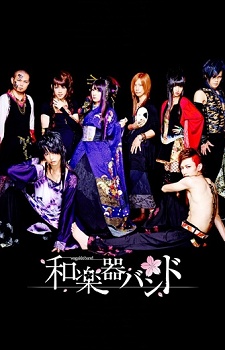
When was the last time we truly got a serious depiction of vampires in anime, much less Frankenstein, Werewolves (e.g. Sirius the Jaeger) and so on? I sure as hell can't remember one in recent memory, not even in the past decade. Hollywood though, has some variables ones like the mediocre Van Helsing movie to the iconic Bram Stoker's Dracula. On the other hand, you have famous people like theater director and writer Bun-O Fujisawa, who is the brainchild for this show: Mars Red, a story of vampires living in the Taisho era of Tokyo. Largely influenced by the learning journey in theater due to hisfamily upbringing, Bun-O Fujisawa experienced many theatrical shows, even trickling down to even opera and musicals. His expedition to London to study theatre in London is quite liberal, and being a native Japanese, he has to prove his skills through his performance of his works in London, orchestrated in a carefully considered and methodically composed manner. If you can notice Fujisawa's trademark in Episode 1, where the "recitation drama" of Salomé, this is the result of Fujisawa having noticed that recitation dramas weren't building any momentum in Japan when that culture didn't exist, only often happening in places like bookstores. What he did was to induce performances almost exactly like a regular theater show with the flashy live band performances and the outfits; the only difference is that the actors remain stationary. So then, Bun-O Fujisawa's depiction of Mars Red is simply taking the same trope or cliché, but expanding in a way that seems famililar, yet feels differently. The depiction of vampires not as conventionally powerful monsters, but as vulnerable people in society, the theme that humans and vampires alike possess both strengths and weaknesses, or so Fujisawa thinks that essence is very important to the anime (which having experience from similar plays in the past, I totally agree with this unique subtlety of a direction). What makes Mars Red appealing is in what Fujisawa says it best: "Don't you think that the appeal of vampires is that they possess two contrasting elements: superhuman powers and weaknesses? In the show, there's even more of a focus on their “weaknesses” compared to your conventional vampire. They are weak to sunlight, can't swim, and need blood. Because of their heightened senses, the stench and noise pollution of industrial Japan can only cause them pain. In this story, vampires are born within the paradox that is the modern science of the industrial revolution: it supports them in their weaknesses. Even then, science can't do anything about the problems of their heart that they face in eternal life. I hope you can enjoy this new tale about vampires." And indeed he has created his own spin of vampires that has its own charm, though an underrated one to some who can appreciate the enamor. For more information about that one, I can reference you to ANN's interviews with the creator Bun-O Fujisawa himself, as is debut director Kouhei Hatano and screenwriter Junichi Fujisaku done very recently, paying homage to the legend that is Fujisawa and his Reading Theater stage play (seen in Episode 1). The TL;DR is this: Junichi Fujisaku, having done similar stories like Blood+ and Blood-C from the elusive Blood franchise, if you are a millennial or older who've watched the Blood franchise before, you can definitely feel the similarities in the scriptwriting, though this is an unique, standalone work on its own. It is a throwback to a classic that's made modern with its own flare and feel that makes Mars Red a compelling, moody story. Stage plays are nothing new when you reference that to the long extensive history, but in anime? This has always been a topic that is very hard to be translated into animation, and somehow Kouhei Hatano and his production team at Signal.MD managed to pull this off with much fanfare, even if the audience population scale of influence is small. Nevertheless, knowing its theater-cum-stage-play influence of a theme, Mars Red uses its many characters to develop their small "side"-stories that will converge to play like a major scene in most theatrical screenplays. Even Fujisaku admits that he tried to arrange the screenplay in a way that follows the source material. However, the format of an audio dramatic stage reading play does not include images, rather, tt uses the voice actors' performances and music to create an image in the audience's heads, similar to the techniques of Japanese Rakugo. Because everyone creates their own images, it may be the case that an anime, which has to portray images in a distinct form, can't surpass those imaginings, which is a huge undertaking to risk spoiling the tight story. Also, because the characters of Kurusu, Yamagami, Maeda, Suwa, Takeuchi, Deffrot, Nakajima, and Aoi all having their own story developments, Fujisaku had a feeling that it might lack dynamism as a series, so the first thing he did was rethink the theme of the anime series: The weakness of vampires is the strength of humans. Regardless, Hatano and Fujisaku made a conscious decision to be subtle with the storytelling, one which compels the audience to understand the time era which this show is based upon (reminder: Year 12 of the Taisho Era (1923), the climax of the source material) and why the dialogue is mentioned as such. At the end of the day, there is no right or wrong answer, and Fujisaku mentions that whatever the answers you arrive at while watching Mars Red, it is all valid. Truth be told, I thought that the 2007 series "Romeo × Juliet" had the best depiction of any old-school classic theatrical shows to date when it comes to anime, of course, the real-life stageplays will always triumph over any form of media that tries to depict poetic stories. But while Mars Red might not break the same bank, I can at least appreciate all the symbolisms and subtleties that this show encapsulated, from the obvious plays of Oscar Wilde's Salomé, to even the whole kinda ridiculous Van Helsing-like vampire setting that when combined, gives a whole new meaning to the theatre act. As for what this show is about, please refer to the synopsis, as it basically tells the underlying story that's the tip of the iceberg, and it's true setting of something even deeper down the rabbit hole. But if that's not enough, Episode 1 is easily one of the best introductory episodes into Mars Red, as foretold by Fujisaku that the story won't work without it, as one of 3 pivotal episodes that will make-or-break the show as a whole. Being a theatre play, the 21:9 cinematic letterbox scaling is a MUST to tell stories of this calibre, and the dark, somber visuals of Signal.MD's tight production schedule mirrors that of a play that is 13 episodes long (which equals 5 hours of runtime), but feels like we're watching a 2-hour Broadway show at max, if you're the type to appreciate theatre, musicals and the like. The visual composition of shows (not just movies) made purposefully in the 21:9 aspect ratio scaling truly gives shows an edge together with the storytelling elements that remark that of a typical movie-like feeling, if the story and plot holds up together nicely, which in Mars Red's case, can be a hit-or-miss. The best part of the show has gotta be the music. More than lifting iconic orchestra plays like Salomé to even Frederic Weatherly's "Danny Boy", I just can't get enough of those musical references which play off the show's theatrical themes so well. Not to mention the OP and ED, this is one unexpected pairing that I'm truly thankful for, for being one of my top favourite OSTs of the season. Wagakki Band's OP that mixes rock music with traditional Japanese musical instruments, together with HYDE's incredible ED, is a phenomenal godsend banger of an OST. Even if you hate this show, the music's reason alone to watch this one. How did this show got so badly lost in the shuffle of great shows in the Spring 2021 season is beyond me. All I know is that Mars Red is truly criminally underrated for its convoluted, yet easy-to-understand plot, and you'd have to be a bit literate in theatrical studies to fully enjoy this anime. Otherwise, this show is just not for everyone, and will only cater to the elitists of the masterfully crafted people who can admire and value the art of theatre.
APolygons2
July 23, 2022
Show don't tell Is one of the first and most important rules of story telling. it's a rule that pretty much everyone knows, everyone understands why it's important, but next to no one actually cares about it. I mean we all acknowledge that most shounen anime explain what is happening in the fight, while it's happening. and we all make fun of it, but from everything that I have seen rarely anyone actually cares. there is a certain truth that I have learned from looking at people's takes when it comes to this subject, and that's the fact that the casual watcher would rather have info dumps,than to have to pick up small things to get the story. now don't get me wrong, if the show don't tell is used for a simple to follow enough story like a silent voice, people do understand it's magic, but when it's used on something a little more complex, that's when we reach a problem which brings me to this show. If you go though and read the negative reviews, you will start to see a pattern. half the people claim this show has many plot holes, doesn't make sense and is boring, and the other half of the people claim it to be absolutely amazing. there isn't really a middle, people either didn't like or loved the story. Now here's the thing, 90% of the time, when someone uses the phrase "you just didn't get it" it's just a lazy excuse to ignore actual, real criticism. or it's used when two idiots are arguing about a show that has clearly left things for interpretation over if it has meaning or not. but this is not that. this show has a clear story, there isn't anything to be interpreted. so when I say the fact that this show had heavy use of show don't tell is the reason many people actually didn't get the story, I'm not being an asshole, that is actually pretty much the case. the first episode alone was one of the best first episodes I have ever seen, and you can go read the comments on it. you will find people praising it like it's the greatest thing ever, while also having people calling it dull, boring, and uninteresting. Now that you know why the reviews are super mixed, and the why the rating is so low, let's get to everything else. ********************************************************************* Story 7.75/10 A semi-historically accurate Tragedy with vampires and military. Just as everything else, the story embraces that stage play feel, which if you didn't know, is what the show is based on. the show has three aspects to it's story, the character driven subplots, the overall military plot. and the overall tragedy plot. out of these, the tragedy plot is near perfection and the character driven subplots are amazing... but the military stuff, their kind of just, ok. that aspect has a villain who is pretty uninteresting and one dimensional. and honestly, it's a little dragged out. nevertheless, that's only a third of the show, and even that plot line has some great character moments. The ending is also extremely good, which if you're anything like me, you will care about it a lot. ********************************************************************* Art 9/10 - Animation 5/10 - overall 7/10 the art is stunning, but the animation doesn't do it justice. there is a pretty shit looking fight in the second half. although the last episode fight which was by far the most important was pretty damn decent animation wise. for the most part, other than that 1 fight ,the animation was good enough when it mattered. ********************************************************************* Voice acting (dub) 9/10 Music 9.5/10 I haven't seen the sub, but the dub was pretty damn good, with a pretty damn well written script and the music is, one of my favorite soundtracks in all of anime. there is nothing but praise to give it. in fact I'm listening to it while writing this. it's just too good. ********************************************************************* characters 8/10 Not all, but most of the main characters were fully 3 dimensional, well realized, developed characters with clear motivations and story arks. of course there were a few characters that got the short end of the stick, but you can't expect a full cast of complete character arks in 13 episodes. not every show can pull off an odd taxi. ********************************************************************* enjoyment 9/10 despite the fact that many people call this show boring. I enjoyed every second of it. I was more hyped for the fights than most battle shounens, even though the animation isn't even that good. I cried, I laughed, and I Felt for the characters. and that is something special. I was fully invested, which at least for me, doesn't happen too often. ********************************************************************* Overall my final score is an 8/10 It's certainly not for everyone. but if you think you're the type of person who would like a uniquely directed, tragedy that doesn't hold your hand, watch it. thanks for reading. Edit: it's now a good 2 years later, and I finally got the chance to rewatch this series, and frankly, it's far better than what I remembered, so keep in mind that even this review, is underpraising the series. I will likely make a whole video essay on it the first chance I get on my Youtube channel. so keep an eye out for that.
Rank
#7047
Popularity
#1935
Members
133,025
Favorites
604
Episodes
13