Samurai X: Trust and Betrayal
るろうに剣心―明治剣客浪漫譚―追憶編
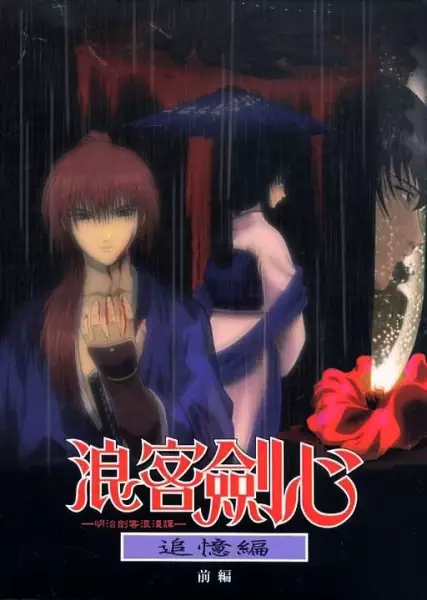
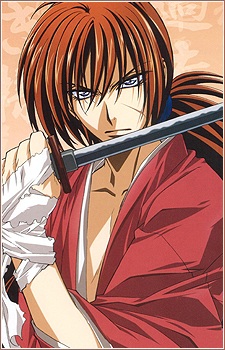
When mankind's savagery surpasses his fear of death, there is little hope for those who wish to live honest lives. Beneath a full moon, a young boy witnesses the murder of the bandits who had enslaved him, and is then christened with a new name by the man who rescued him. This boy is Shinta, now known as Kenshin Himura, and he is destined to become a swordsman. The softness of his heart does not befit the occupation, but his desire to protect the innocent is absolute. Rurouni Kenshin: Meiji Kenkaku Romantan - Tsuioku-hen details the origins of the man who would bear the name of Hitokiri Battousai long before he swore his oath not to kill and before he earned his reputation as an assassin. The young man's heart is divided between justice and corruption, while the fate of a nation rests on his actions. [Written by MAL Rewrite]
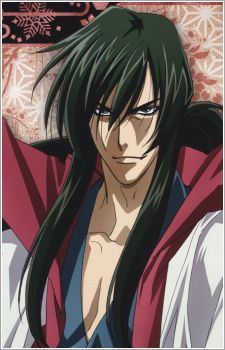
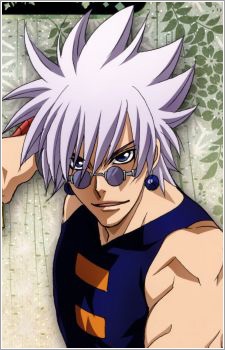
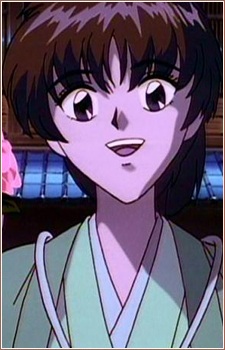
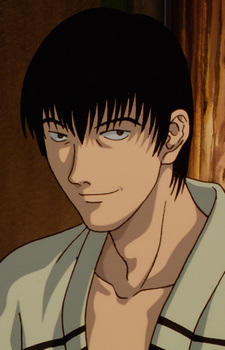
Main
Supporting
Supporting
Supporting
Supporting
Supporting
Supporting
Supporting
Supporting
TheCriticsClub
August 13, 2008
There's a universally accepted truth as far as anime shounen stories go: nine times out of ten, the manga is better than the anime adaptation. While that is the case with Rurouni Kenshin as a whole, what Studio DEEN did with Rurouni Kenshin: Tsuiokuhen can be called nothing short of a masterpiece. In the manga, Nobuhiro Watsuki describes Kenshin's past that's full of strife and hardship, but with a touch of comedy to help tone down the entire seriousness of the situation. Studio DEEN abolished what little comedy Watsuki went with and, along with flawless animation, a unique art style, and a beautifully composed soundtrackby Taku Iwasaki, Rurouni Kenshin: Tsuiokuhen is an ideal example of as close to perfection as one can get. Art/Animation - 9 Taking a step away from the style of the Rurouni Kenshin TV series, Tsuiokuhen takes a darker and more grim approach to its presentation. The first and most notable change from the TV series is the depiction of the various sword styles and their employment in the scenes, as well as realistic blood splatter. While the TV series emphasizes the effect and abilities of the techniques of these styles, Tsuiokuhen brings realistic swordplay into its story. Another noticeable changeover is the expressions of its characters: although in the TV series these characters are serious but still have comedic tendencies, all this is removed in these OVAs, leaving a serious tone for its story. In addition to these changes, Tsuiokuhen also has more of an emphasis on its setting through its animation. It is undeniably Japan under the Tokugawa Regime, the banners of the Samurai, rags worn by the slaves, and everything down to the buildings and clothes. Sound - 9.7 This anime’s music soundtrack is both beautiful and intense. In addition, combining sword fights that sound like real sword fights, attention to sound effects, and the voice actors chosen, Tsuiokuhen’s sound is nothing short of brilliant. The voices of the characters are just another reason as to why this anime has a grim depiction as many are cold and basically emotionless, while other characters have either normal voice expressions or even upbeat tones. With such great story, characters, and animation, Tsuiokuhen could have easily loosened the reigns in the sound department, but instead this show doesn't stop short. The great sound selections really finalize and add polish to an already great show with the final result being a true masterpiece. Characters - 10 Tsuiokuhen provides the foundation for what becomes one of anime's most likable and well developed characters in Himura Kenshin. A focus of this anime is Kenshin's growth as he transitions from adolescence to adulthood and his struggle as he comes to terms with his role in the world. Newcomers to the Rurouni Kenshin scene will be introduced to a wide variety of unique characters who play a prominent role throughout Kenshin's life. Fans of the historical/samurai genre will see familiar faces in Soushi Okita and Hajime Saito of the Shinsengumi. The swordmaster Seijuro Hiko also serves as a counterpoint to Kenshin's idealism with his jaded take on life and his belief that a sword is merely a tool for murder. Those already familiar with Kenshin as the vagrant samurai with a reversed blade sword will be treated to a glimpse into the background of the Hitokiri Battousai, his relationship with Tomoe, and the events that shaped Kenshin and gave direction to his life. Cameo's by Makoto Shishio and Enishi Yukishiro will seem more noticeable and somewhat nostalgic for those who have seen what they become and the role they play in Kenshin's future. Story - 10 The story of Tsuiokuhen depicts the past of Himura Kenshin and how he became known as Hitokiri Battousai, all the way to the origin of his cross-shaped scar and his vow to never kill again. It shows Kenshin's trials and tribulations during the Bakumatsu and, as readers of the manga are familiar with, his relationship with both Yukishiro Tomoe and her little brother, Enishi. The beauty of what Studio DEEN has accomplished here lies within the dark, brooding and emotional way they went about narrating the story. Contrary to the aloof way the TV series was, Tsuiokuhen went with a more mature outlook, easily evident with the excessive blood and gore shown in all of the battles. And with telling the story in only 4 OVAs, the story never seems to slack, but stays intriguing from start to finish. Enjoyment - 10 Tsuiokuhen manages to combine a high level of violence with a very dramatic historical storyline, which is quite an accomplishment since many shows often go overboard on either the gore, the action, or the narration. Here Studio DEEN has done a great job portraying the story in a very gritty, down to Earth style that lends seriousness to the historical and dramatic aspects of the show. At the same time, the violence is very raw, brutal, and shocking to the senses, but while there are fantastic sword fights, the focus remains on the purpose behind them. Combined with a subtle but chilling soundtrack, this lends an air of maturity to the show and contributes to the tumultuous and unsettling environment Kenshin has become a part of. While this OVA isn't very lighthearted, it is a very unique blend that will likely please most viewers and makes Rurouni Kenshin: Tsuiokuhen a must see for any anime fan. OVERALL - 9.74 This review is the final result of a review team composed of members from the "Critics and Connoisseurs" club. The team members were: BlackMagic - Who wrote the Character and Enjoyment sections and combined the individual review parts together into a whole. BURNlTHElPRIEST - Who wrote the Art/Animation and Sound sections. vindemon64 - Who wrote the Introduction and the Story section. Here are their individual scorings for the Anime: Category - BlackMagic, BURNlTHElPRIEST, vindemon64 Art/Animation - 9, 9, 9 Sound - 9, 10, 10 Characters - 10, 10, 10 Story - 10, 10, 10 Enjoyment - 10, 10, 10 In the club wide poll held for Rurouni Kenshin: Tsuiokuhen it received an average overall rating of 9.09
mistress_reebi
July 7, 2007
Also named: "Samurai X: Trust and Betrayal", this is a prequel to the anime series 'Rurouni Kenshin." One word for this anime: Amazing! It's so good that it's hard to decribe. This is one of the only anime series that will make the viewer's jaw drop to the floor and be filled with emotion. Those who are Rurouni Kenshin fans will love it; those who are new to the series will still like it. It's a drama and may not be as interesting among younger viewers and is more mature than the anime. Those who are sensitive to extreme violence and blood may want to turntheir heads during some scenes. The first episode is a little jumpy as it skips from past to present, which to non-Kenshin fans may be confusing. Besides the jumpiness, the plot is excellent. For a drama, the pacing isn't thin and slow and is perfect for the setting. The story to Trust and Betrayal is far more enjoyable than regular series. (which is enjoyable to begin with) The characterisation is somewhat shown in the series, and could be developed further. One learns that Kenshin is turning into a merciless manslayer when he slices a man in half, killing for the first time, and shows no emotion after. However, the other character's personalities aren't as developed. The artwork is realist compared to Nobuhiro Watsuki's original concept, but is artwork at it's finest. Those who aren't into realist artwork will still find this series interesting to watch. They used computer three-dimension graphics, mostly in the backgrounds, but still kept unto the traditional animation. For traditional animation, it's one of the best. The music will make one go in awe with it's use of a fulll orchestra. It creates moods and themes that also make the viewer full of emotion. The music is a main factor in making this OVA unbelievable, but it was already magnificent to begin with. They hired the best actors in both casts for this anime. The Japanese Kenshin voice (Mayo Suzukaze) is a little too girly for the role and the English Tomoe voice (Rebecca Davis) is too emotionless it sounds like she is reading the script. The voices have a different tone than the regular anime series, which is a nice change. The OVA voices are realistic and set the drama tone, while the anime has exaggerated voices that are too cartoony. Even the Kenshin voice is different, but it's hard to decide which voice is suited better. (J. Shannon Weaver in OVA, Richard Hayworth in anime) The Landlady had the best acting performance in the English dubbed, but the acting was still great. More emotion could be used in characters, but the voices matched the characters. This OVA has to be the most underrated anime known in the anime world. It was never a "fad" or a trend as most popular series start out, which is somewhat sad because this anime deserves attention. (Although fads are always hated in the end which shouldn't happen to this OVA) Everything about the OVA is wonderful from the music to the artwork. Anyone involved with this OVA worked extremely hard in putting effort and it clearly shows. This OVA should be on every anime fan's shelve.
Tatterdemalion
May 29, 2013
Surprising though it may be, it’s really incredibly rare to find a samurai anime that is actually good. As far as the samurai genre goes, Akira Kurosawa pretty much closed the book with 1954’s “Seven Samurai” and since then, is seems as if whenever anyone attempts to tackle the genre, there exists a mysterious force that compels them to strip away any and all sense of authenticity and add in superpowers, vampires, aliens, or hip-hop (not that that is necessarily a bad thing but it certainly gets tiresome). That’s one of the reasons why Rurouni Kenshin: Tsuiokuhen is so refreshing, it daringly tackles the storyof young samurai-turned-assassin Himura Kenshin in the turbulent era of the Meiji Revolution with such bleak realism and solemnity that it’s really hard to believe it originated from a shonen manga. In short: Rurouni Kenshin: Tsuiokuhen is a masterpiece in the sincerest sense of the word; a true work of art that not only shatters the boundaries of the samurai genre but also what it is possible to achieve in an animated work. Story- Tsuiokuhen tells the story of Himura Kenshin, detailing his rise to infamy as Hitokiri Battousai during the Bakumatsu period and ultimately tracing the origin of his cross-shaped scar and his vow never to kill again. The beauty of the story lies in its raw, ominous execution. Contrary to the manga and the TV series, Tsuiokuhen faces the brutality of the Meiji Revolution with a mature clarity that really draws you in, and exhibits an emotional rawness that will leave you in pieces. The story never slacks and, despite being told over four OVAs has more of the feel of a movie, remaining unified and captivating from start to finish. Characters- Tsuiokuhen is particularly enjoyable character-wise having already watched the TV series and read the manga, but the character of Himura Kenshin as presented in the OVAs is well-shaped enough to stand on his own and still be a tour de force of character design. The focus of this anime is the period of Kenshin’s life as he transitions from adolescence into maturity amid the turmoil of the Bakumatsu and his struggles to uphold his idealism while continuing to commit acts of violence in the name of a brighter future. The splendor of the character designs throughout the OVAs is in how convincing each character manages to be, each action is believable and sympathetic, further drawing you into the story. Animation- The darker and more realistic theme can also be seen in the animation, which, despite being made in the late 1990s, is remarkably sharp and dismally realistic. The animation is fluid and the action is raw and brutal. The comedic edge to the animation style that existed in the TV series and manga is completely gone, furthering the serious tone. Sound- The music is dark and intense in the same manner as the story, and there is great attention paid to realism in sound effects. The voice actors each give magnificent performances (particularly, in my opinion, Mayo Suzukaze’s darker interpretation of Kenshin). Overall, the sound just adds onto what is already a brilliant work. Overall- This is a must-see for pretty much anyone who enjoys anime, particularly those with an appreciation for accuracy in the portrayal of history and fans of the samurai genre (as well as anyone who watched the TV series or read the manga).
js930
December 1, 2009
The word masterpiece is used too much these days.. I haven't seen anything that deserves that title as much as Rurouni Kenshin: Tsuiokuhen. While the original Rurouni Kenshin is meant as a typical shounen (comedy, action, a bit of romance?), this is a serious historical drama. Those words might turn you off, but you'll be surprised how well it is done: never is Tsuiokuhen truly slowpaced, never will the action be disappointing, never will the animation cease to amaze you. And the music. Ah, the music. Taku Iwasaki at his best. Story - 10. A serious, sad story. A romantic drama. Or is historical a better word?After all, this isn't just the story of the Hitokiri Battousai. While the focus lies on his actions, the overall story is that of the Bakumatsu and the bloody war before the Meiji Restoration. The OVA beautifully plays with this legendary battle, not pushing it to the background, but not letting it take the lead either. Art - 9. The art may seem too dark at first but it is in fact quite fitting. The characters look serious, mature and their emotions are clearly visible on their faces. The setting is especially beautiful: the backgrounds, buildings, even the crowds you see on the streets, they all look real. The same goes for the swordfights. Typical shounen anime defy all laws of nature or show only flashes of light. There is not a single fight in Tsuiokuhen that doesn't make sense. Perhaps that is the best part of the fights - blood, wounds, exhaustion, they all seem real. Character - 10. Every character truly matters. The smallest side characters are crucial to the plot. This may be because it's a short OVA.. but what if a story is so well-written that you can see the story from every character's eyes? By focussing on a character's face just a little too long, their (side)stories will grab you when you least expect it. The historical characters, for example Soushi Okita and Katsura Kogoro, aren't ignored either. Every single character influences the storyline, and by that adds something to Kenshin's life - be it a good or a bad thing. Sound - 11. I wish I could give an 11/10. I already was a bit of a Taku Iwasaki fanboy but now I am convinced that there are no better composers. The voice actor's are fitting (serious voices for serious characters), the sound effects are great (especially in fights), but I was too distracted. Well, not really.. but the soundtracks give me shivers if I just think about them. The music get's intense at the right moments but never loses it's beauty. Nothing sounds synthetic or unfitting. I almost want to say: 'It's as if the OST was made for this anime'. Hehe. Enjoyment - 10. A romantic, historical drama that never ceases to amaze. You will feel the chill run down your back when a fighting scene starts, if your volume is high enough. You won't be bored by too many historical aspects, and while every fight is bloody, the gore isn't so much that it becomes too much to handle. Serious themes like death, hatred and betrayal aren't shunned.. and it doesn't stop there. A mature OVA that didn't let go of me for quite a while. What would make a man with a cross-shaped scar on his cheek devote his life to end bloodshed and make him vow to never kill again? Watch this. You'll find out.
Nervin
December 1, 2015
Throughout the past decades, japanese history and culture is often portrayed in various mediums, in particular that of movies which often take place in the last two centuries of Japan's history. This era is characterised by a slow shift from feudal traditions to the modernization brought from the west, being the transition from the Edo period to the Meiji period, also known as the japanese revolution in 1868, of importance in this case. Rurouni Kenshin: Meiji Kenkaku Romantan - Tsuiokuhen narrates the tale of Himura Kenshin's past and his struggle with his own beliefs against the harsh reality he faced. It is truly a masterpiece,with a compelling story, flawless characterization, and fantastic animation and sound. It is a story of romance, trust and betrayal, as the english title suggests. ~Story~ The story focuses on Himura Kenshin, who is saved from a massacre by the master swordsman Hiko Seijuro in his childhood. Advising him to seek help in a nearby village, Seijuro leaves the child alone, just to return a few days later discovering Kenshin - or rather Shinta, which was his name at the time - having made graves to every individual, both foes and allies. Surprised and taken away by the young boy's actions, he decides to take him in and teach him the ultimate swordsmanship, the Hiten Mitsurigi Ryu. As time passes, Kenshin, believing the events that are taking place at the moment as unacceptable in his philosophy, he sets out to support and help crafting what he believes is a better, more just world. However, throughout his journey he soon realizes that not everything is as simple as it seems, being faced with the harsh and crude reality of the world. These events all occur several years before the Japanese revolution in 1868, which will culminate in the establishment of the Meiji period. The setting itself is on its own interesting, yet where the anime really shines is in its narrative and on how it approaches and explores Kenshin's past. Audiences observe and follow the protagonist's life from his childhood to his current self, in which the learning of swordsmanship take place, and how his ideals were formed and conceived. Love, retribution and betrayal are other themes that are explored through his past. The pacing of the story was without doubt splendidly done: neither too slow nor too short, never overdoing or prolonging battles, or dialogues more than necessary, befitting to keep viewers on their edge of their seat. The narrative had a realistic and natural progression, which enhanced the overall experience. Other great aspect of the anime is the fact that it manages to depict the current era splendidly, in particular that of the japanese revolution; while its main focus lies in displaying Himura's past, it also presents a bigger picture of events, without never focusing excessively on it, making it more a character driven story than a plot driven one. It managed to convey and portray to the viewers the setting of the story, as well as the social instabilities and the society of that particular period. The atmosphere of any revolution was well presented, in addition to how these operated with treason and their opponents, in this case the government. Naturally some may point out that some of the latter events that take place are a bit lackluster, as some of the characters introduction was not conveyed to the viewer, as there was little foreshadowing to said characters. ~Characters~ The cast of characters presented in "Rorouni Kenshin - Tsuiohuken" is small, yet of great importance to the overall storyline. The most important character is naturally Himura Kenshin himself. This character undergoes easily the biggest character development throughout the whole duration of the OVA's. Though he may seem to represent a stereotype at first, the viewer soon realizes that is in fact not the case. From his youth to his former self in the japanese revolution due to the environment and circumstances he went through, he develops from an idealistic young boy, to hardened and emotionless assassin to shut his pain out of killing people. Yet he continues to do so in his sole belief that he truly is helping in ushering and forging a new era; this is without mentioning that shortly after his world is shifted upside down by the fateful encounter with Tomoe. The story and development of the main character wouldn't be possible without a convincing, good cast of secondary characters. These interactions with various individuals are of big importance, which are represented through revolutionaries, the shinsengumi, Kenshin's master Hiko Seijuro, or Tomoe herself, which will be of great importance for his character development. Some may argue that not enough attention was paid on fleshing out the supporting cast such as the revolutionaries and their particular motives on why they had that mindset, yet I see that as a very minor drawback, as most motives are tied to true historical events and facts, being people who either truly believed in the changes, or just individuals working in their own interest. ~Animation and sound~ The animation of Rorouni Kenshin - Tsuiohuken is done by studio DEEN, and is certainly very well done, even when considering it was released in 1999. The battles were very dynamic and fluid, never exaggerated as viewers may be used from shounen shows, with great battle choreography, in addition to depicting the different sword styles used, as well as the abundance of blood to further emphasize the grim and serious atmosphere of that era. The characters design are realistic and much less "cartoonish" than it was from its manga adaptation, which further enhanced the narrative. The soundtrack played also an important role in the anime: it managed to convey the various settings it was trying to convey to the audience, being both intense and magnificent, particularly "The war of the last wolves" composed by Taku Iwasaki. These really managed to immerse viewers in the story. Not to forget the sword fights that sound very realistic, in addition of having voice actors that matched splendidly with the characters they were trying to portray. ~Enjoyment~ Rurouni Kenshin: Meiji Kenkaku Romantan - Tsuiokuhen was overall a fantastic experience which I thouroughfully enjoyed in every single aspect, from the storyline and the narrative, to the flawless character development and magnificent OST and animation. Other aspect I personally liked was the fact of ditching the more "cartoonish" art style of the manga to a more serious one, which really made it much easier to immerse myself in the story, in addition to removing the comedic touches that served to lighten down the atmosphere in the TV series. Even though this anime could be watched as a standalone series, I particularly think that these OVA's are best to be watched after completing the original TV series, "Rurouni Kenshin: Meiji Kenkaku Romantan", as it really gave the viewer everything they wanted to know and understand about Himura Kenshi's past and on why he evolved to be such a person. Hence, I could recommend this to any potential viewer of any demographic, yet I would advise on completing the original TV series beforehand for a full experience. Thank you for reading.
#69
Popularity
#945
Members
291,543
Favorites
6,449
Episodes
4