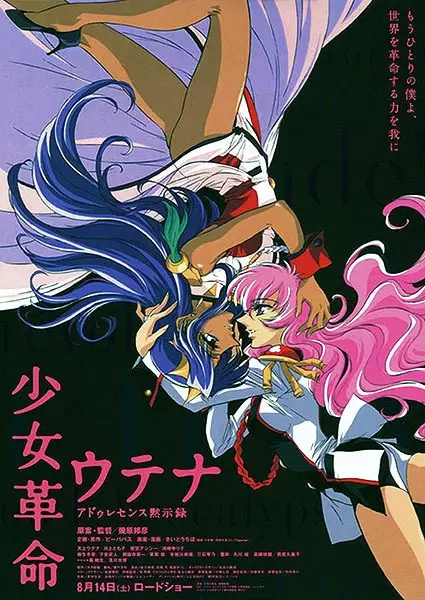


Revolutionary Girl Utena
少女革命ウテナ
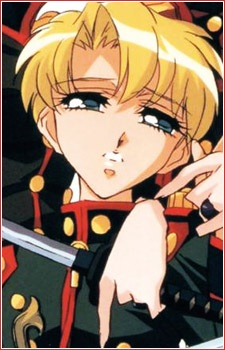
Years ago, a tragic incident befell a young princess when both her parents died. Devastated, it seemed nothing would calm this poor soul. However, a prince traveling through the area came to see the princess, hoping to cheer her up. After wiping her sorrowful tears, the prince gave her a ring carrying a rose emblem and told her as long as she holds onto the ring, they are destined to meet again. The event leaves a deep impression on the girl, Utena Tenjou, leading her to become a prince herself. Years later, Utena attends Ootori Academy, recognized by the same rose emblem as her precious ring's. There, attracted by the scent of roses, she witnesses Anthy Himemiya tending the flowers, accompanied by the Student Council President Touga Kiryuu and Vice President Kyouichi Saionji, who seem to be arguing over Anthy. While Utena thinks nothing of the occurrence, the Student Council gathers to discuss an important matter. Subsequently, a misunderstanding leads to Utena being dragged into the world of Duelists—those with rings similar to her own. The Duelists fight for the ownership of the Rose Bride, Anthy Himemiya, who is said to possess great power. Wanting to prove her capabilities as a prince, and enraged that Anthy is being wronged and objectified, Utena resolves to fight against the Duelists to save her from the cruel fate. [Written by MAL Rewrite]
Main
Main
Supporting
Supporting
Supporting
Supporting
Supporting
Supporting
Supporting
Supporting
Sorrow
November 25, 2014
Revolutionary Girl Utena is a hidden gem within hidden gems. A rather strange anime indeed but everything about this story just spews out greatness. There's just so much happening all at once, it's almost as if there are 6-7 different stories happening all at the same time, and then as the show progresses, each story intertwines with another. There's no doubt that this anime was highly influenced by Ikeda Riyoko's Rose of Versailles, one of my favorite tragedies ever; both have a strong female lead growing up as a male (focus on gender-roles), take place in a historical (royal) setting, are quite theatrical (Shakespeare-like almost),incorporate inexplicable roses and have a intriguing/illustrious story. Utena tells a coming-of-age story that explores two big questions in particular (in all, there are several several more): can one stick to childish ideals that they had as a child in order to defeat an opponent who embodies adulthood? And can an "pure and innocent" female with pink hair and flower symbolism back in the days escape her duty/role as a female and instead take on the role of a male/prince? Revolutionary Girl Utena revolves around Utena Tenjou, a girl who dresses like a boy and dreams of becoming a prince when she grows up. The reason she wants to be a prince? Because she was so "impressed" by a Prince who had given her a Rose Crest ring and told her that they'd meet again in the future. Utena grows up attending Ohtori Academy, a very strange high-school where people fight for their ideals, and to achieve a rumored celestial something. Throughout the course of the story, Utena is forced into battles with the Duelists in order to claim the Rose Bride, which is said to be the key to becoming a prince and obtaining something eternal (celestial thing). The entire series is divided into four separate story arcs. The first arc (Student Council Saga, episodes 1-13) focus primarily on character development, how Utena ended up having the oh so important Rose Bride (Anthy Himemiya), and the beginning of the mysteries lurking under the outline of the story. The second arc (Black Rose Saga, 13 - 24), more characters are introduced, the most important one being an 18 year old school psychologist who uses Black Rose Crest Rings to manipulative people. The third arc (Akio Ohtori Saga, 25-33) is the psychological trauma aspect of the show, where betrayals and truths are slowly unraveled. Promises are broken, friendships are severed. This is literally the Neon Genesis Evangelion-part of the story if you will. And the final arc is where the conflict, and entire point of the story escalates up to it's climax; and all the dark secrets are revealed. Okay so this is a pretty tricky story to write a review for because it was just all over the place, and it's difficult to pinpoint the main storyline. Honestly though, this series was more of a live dramatic theater play than an anime story. Constantly the show is "telling" the story, "not being" one. You'll see what I mean by this when you watch the show. At the surface of the story, it'll seem like this is just another magic-school-tournament story with repetitive fight scenes, but oh no. That's just incorrect to it's maximum incorrect level. Although it may not seem like it at first, once you finish it, you'll realize how deep the story is, and how much of an impact it'll have on your psychological understanding of the world/human nature. The beginnings of each episode constantly make no sense. They jump from this scene to that scene, without explaining what happens in between until later. But as the story progresses, the writers did a fabulous job connecting each minor detail with each other to form a "bigger-picture"-plot. All in all a great story. The character development was genius. One of the many things I loved about this anime was it's amazing cast of characters and the way they were used to portray a specific theme/archetype. In each arc, different characters were focused upon which really created a bond of understanding between the audience and the characters. Many others begin as stereotypes but flourish into complex beings during their respective character arcs. The most important character next to Utena would be the comic relief, Nanami whose capriciousness heads deep into slapstick terrain but stops just short of overbearing. Her theatrics represent her superficial behavior with substantial intentions. Other important characters include the male antagonists (for most part), Touga, Saionji, and Akio, who through callous psychological and emotional bullying almost cease to be human and become more and more like symbols of human vice. If they are not slapping their female cohorts into submission, they are coldly seducing them for their own gratification. They blend in quite remarkably with Utena’s melodrama/characterization. But moving on... Utena’s an interesting character for a variety of reasons, but it all starts with the basics. As a little girl, she lost faith in the world when tragedies unfolded before her. Was there truly a divine being that watched over us? If so, then why is tehre suffering? Shortly later, a prince comes along and and gives her conviction, gifting her a [symbolic] ring and promising that they’d meet again, just so long as she doesn't lose her bravery and nobility. (Sound like a common fairy tale yet?) So captivated by the prince, she decides to become a prince but is that really a good idea? So goes the fairy tale the show comes back to time and again. Though the words remain the same, the message never does – in a show obsessed with performance and perception, the meaning of words can shift even as their base nature remains consistent. Words like “prince,” the traditional storybook male savior, a word that ultimately comes to signify both less and more than its stated definition. From the beginning, Utena’s desire to be a “prince” points to the serious bone this show has to pick with traditional gender roles. Even the show’s ornate style contributes to this effect – the flowery framing that’s typically a hallmark of “female-oriented” manga and anime is here used to convey traditionally “masculine” power, such as the seductive power of a potential male prince, or Utena herself. Utena is consistently cast in “masculine” terms, from her chosen form of dress, to her adoring female fans, to her athletic prowess and skill as a swordsman. However, to Utena, all these choices are a perfectly legitimate expression of self. In fact, whenever anyone expresses surprise about Utena acting like a “traditional” girl and “performing” girl, Utena responds with a defiant “but I am a girl” – to her, her standard behavior and representation is a completely valid expression of “girl.” Which all points back to the show’s obsession with spectators and performance – in the context of a show that emphasizes how much we all “perform” our personalities, the arbitrary, “performed” nature of gender roles is that much more apparent. Basically others insist on calling out her ‘weaker’ girlish facets to humble her but in the process deny the possibility that she is an inseparable compound of both. Her battle of identity (becoming what others wish vs remaining true to oneself) eventually becomes more salient and more interesting to follow than her duels. Okay so the story is good and all, and the characters were all masterfully developed, and are all perfectly created characters. But they're not the highlight of the show, nor are they the reason why I like this show to the extent where I'm a fanboy. The greatest part of Shoujo Kakumei Utena is it's constant ambiguity (themes). The show presents to the audience countless numbers of psychological conceptions, societal values, human nature, through use of motifs/symbolism. Seriously, the amount of symbolism is overwhelming, and it's not like a "all up in your face symbolism" like Neon Genesis Evangelion, but it's subtle which makes it all the more impressive. Themes of Nobility and Strength. Gender Roles. Eternity of Youth. Freedom/World Revolution. Corruption of Power/Human Nature. Forbidden Desires. The series also focuses on sex, although it doesn't use any explicit imagery. Incest becomes a major theme, and the series explores it from numerous perspectives; loss of innocence (sexual and otherwise) also becomes very important. At its core, though, Utena follows the story of a friendship-turned-romance between two girls who never expected it; director Ikuhara has even said that the love between the two is the most important thing of all. I won't get into detail about each concept though because it'll be much better experiencing it for yourself than reading about it. The art and sound are both magnificent in this series, although they aren't exactly the best. The art I think the show tried to use "old" art a little too extremely to make the show seem more "classic"-like (which it is btw). But I did really love all the portrayals of symbolism/art paintings, the beautiful castles/backgrounds, fancy uniforms, and each character's design, especially Utenas. Soundwise, this show is very well voice-acted, and the soundtrack is probably one of the best orchestrated I've ever heard. Seriously though, this show had probably the most appropriate voice actors - characters connection I've ever seen. Furthermore, the music fits the atmosphere well, and the songs they play during the duels added quite the "epic" feeling. There were those church-like chorus soundtracks that created a mysterious and sinister tone when necessary. Openings weren't great and all that memorable, but they certainly weren't bad; I will admit that I skipped the opening after like episode 7, but that's because I was crazy about watching more of the great show. All in all, I liked both the art and sound; somewhat high quality. Stop wasting your time now, and go watch this series, it's one that you should definitely watch~
Years ago, a tragic incident befell a young princess when both her parents died. Devastated, it seemed nothing would calm this poor soul. However, a prince traveling through the area came to see the princess, hoping to cheer her up. After wiping her sorrowful tears, the prince gave her a ring carrying a rose emblem and told her as long as she holds onto the ring, they are destined to meet again. The event leaves a deep impression on the girl, Utena Tenjou, leading her to become a prince herself. Years later, Utena attends Ootori Academy, recognized by the same rose emblem as her precious ring's. There, attracted by the scent of roses, she witnesses Anthy Himemiya tending the flowers, accompanied by the Student Council President Touga Kiryuu and Vice President Kyouichi Saionji, who seem to be arguing over Anthy. While Utena thinks nothing of the occurrence, the Student Council gathers to discuss an important matter. Subsequently, a misunderstanding leads to Utena being dragged into the world of Duelists—those with rings similar to her own. The Duelists fight for the ownership of the Rose Bride, Anthy Himemiya, who is said to possess great power. Wanting to prove her capabilities as a prince, and enraged that Anthy is being wronged and objectified, Utena resolves to fight against the Duelists to save her from the cruel fate. [Written by MAL Rewrite]
TrenchKamen
July 26, 2008
Admittedly, I'm biased when it comes to reviewing this anime. I started watching it at a very impressionable age, and the impact it had on me at that particular time in my life is astronomical. I also have a huge soft spot for anything surreal, gender-bending, absurd, existential, or psychological. That being said, Utena fulfills all of those criteria beautifully. And it is enjoyable on multiple levels. I enjoy it as much now, at age 20, as I did at age 12. My understanding of the characters, the symbolism, and the message inherent in each episode has changed dramatically. At a young age I saweverything as Utena did; I viewed the series from her standpoint, agreed with her fully, and essentially played the role of the fool. In the final episodes when she does not understand what Akio was saying, I did not either. Now I do. Now I sympathize with him, understand his cynicism and manipulation of adolescence, and now I realize just how truly revolutionary and powerful one Tenjou Utena was. Now I understand Akio's shock. He's lost the ability to see things as the iconoclast--the fool who is an iconoclast without being self-aware of the full implications of what he or she is doing. But then, I digress. "Utena" borrows heavily from the philosophies of Carl Jung and Hermann Hesse, most notably the latter's incredible novel "Demian". I highly recommend that those who enjoyed this series read the works of both men. The anime incorporates a brilliant and deft weave of existentialism and psychological analysis with excellent characterization and a degree of slice-of-life realism. There is a running theme of the discomfort inherent in becoming self-aware, adolescent discomfort, budding sexuality, and dissatisfaction with the status quo that is inherent in these realizations. These are teenagers who look for the meaning in everything; they cannot yet except there IS no meaning in everything. They want to rebuild the world. In this sense, these turbulent, anarchic sentiments are a throwback to "Demian"; they are the same sentiments that had an entire generation of disillusioned German youth hailing the book as a voice speaking on their behalf for the first time. In many ways, that voice is universal. "Utena" does it justice. From a technical standpoint, Utena is top-notch. The artwork is gorgeous, the music lush, and the direction lucid. It hearkens to the era of cel-based animation with a minimum of CGI, especially as compared to current offerings. The seiyuu all do an excellent job with their characters. J.A. Seazer's musical compositions are worthy of stand-alone acclaim. They are quite unlike anything else known in the anime genre. I suppose I am obligated to warn of the exploration of various taboo subjects beyond homosexuality (Utena and Anthy being one of few canon yuri couples out there outside of hentai), including incest; if you are squiked beyond your comfort threshold by this, don't watch the show. Otherwise, I cannot recommend this show highly enough. I acknowledge it is not for everyone, but if you are that sort of twisted, abstract person who would enjoy this show, and if you remember the growing pains of adolescence (or are currently undergoing them), you can't watch it soon enough.
Venneh
June 7, 2008
Warning: Epically long review ahead, mainly because I love this series so much. Title: Revolutionary Girl Utena Manga, Anime: Revolutionary Girl Utena was originally a manga with story by Be-Papas and art by Chiho Saito that ran in Shogakugan's Ciao magazine from 1996 to 1997. It has been licensed Stateside by Viz Media, and the final volume, which covers the movie, was released on December 3rd, 2007. Revolutionary Girl Utena has two anime incarnations. One is the original TV show, which is made of 39 total episodes, and was produced by JC Staff (famous for their work on Honey and Clover and Potemayo), and directed byKunihiko Ikuhara (famous for becoming the director Sailor Moon after the second half of the R season up until the SuperS season). It ran on Japanese TV from April 2nd, 1997 till December 24th, 1997. The second is a movie adaptation, which will be covered later in this review. Both have been licensed Stateside by Central Park Media, which is now defunct. Let's just say it's been out for a long time Stateside. Story: "Once upon a time, years and years ago, there was a little princess, and she was very sad, for her father and mother had died. Before the princess appeared a traveling prince riding upon a white horse. He had a regal bearing and a kind smile. The prince wrapped the princess in a rose-scented embrace and gently wiped the tears from her eyes. 'Little one,' he said, 'who bears up alone in such deep sorrow, never lose that strength and nobility, even when you grow up. I give you this to remember this day. We will meet again. This ring will lead you to me one day.' Perhaps the ring the prince gave her was an engagement ring. This was all well and good, but she was so impressed by him that the princess vowed to become a prince one day. But was that really such a good idea?" This is the story that a younger Utena Tenjou tells us as her older self, still aspiring to be a prince and dressing like a boy, goes to the prestigious Ohtori Academy. After her close friend Wakaba is cruelly treated by a member of the Student Council, Saionji and she sees him slapping Anthy, his supposed girfriend, she challenges him to a duel. The ring she wears unknowingly admits her to a secret duelling arena in the forest where Saionji meets her with Anthy, who is apparently the Rose Bride. Saionji then pulls a sword out of Anthy's chest, and things only get odder from there on out... Utena is an absolutely amazing series. On the surface, Utena is just a duelist of the week series, with recurring duelists. However, what makes this show so much more than that is the depth of character development that you get with the duelists, and even with the recurring minor characters. Each duel shows another side to them, and, in addition, reveals even more reasons why these people should go to a psychiatrist. Seriously, you could probably do a good case study on every one of the main characters, and a good deal of the minor recurring characters. Hell, even the girl who's mainly used as comedic relief gets excellent development and light shed on her psychological problems! The other thing about this series is that nothing, nothing is what it seems to be at first. There are layers and layers to every single character and aspect of this show, and as the show goes on, you realize exactly what is going on at Ohtori Academy. There's some very heavy symbolism that uses some fairly mundane objects and allegories that foreshadow what's going to happen long before it ever does, and you'll only catch this on another watchthrough of the series. Which, by the way, would probably be best after you've watched this the first time through. There's a lot of things that you only get in subsequent watchthroughs, and you'll realize just how much there is to this series when you do. I am convinced that someone could probably write a master's thesis on this show. Warning: There are some fairly blatant innuendos and sexual images in this, along with hints of incest and major age differences and definite abuse. Oh, and there's lots of girls and boys feeling up/kissing their respective genders. So, if you don't like that, you should stay away from this series. Art: The art takes a bit of getting used to, admittedly, with blank eyes, sharp edges, and heavy lines. In general, Utena is heavily stylized, but when compared to other shows airing around that time (Neon Genesis Evangelion, Beserk), the quality is fairly high. A lot of work goes into the background art and all the symbolism as well, all of which figure heavily into the show. There's a lot of stock footage in this show, but luckily it's animated well enough that it doesn't bother you, and every time it plays, you can catch some new little detail about it. Music: The background music for Utena is done by Shinkinchi Mitsumune, who also did work on Rozen Maiden's background music. From what I've heard from him, this is probably his best work, and I wonder what happened that he put so little effort forth with Rozen Maiden, compared to the effort that had to have gone into this. Every theme is memorable, and is probably some of my favorite music from a series ever. And then there are the vocal songs that play while the duels happen, done by J.A Seazer. When you're looking at a translation of the songs, you're going to realize that they make absolutely no sense and just seem like random words thrown together. And, at first glance, they do. However, as you're watching the show through again, you realize just how much effort went into those random words, and that yes, they actually do mean something. The OP, which never changes, is one of my favorites. It's not anything out of the normal standard for OPs out there, upbeat female JPop number, like with Ouran, but for whatever reason, I really like it. It's the same thing with the three EDs; all upbeat female JPop numbers that I normally wouldn't like, but really work for the series. Seiyuu: Takehito Koyasu (known for his roles as Hotohori in Fushigi Yuugi and Haruhi's dad in Ouran High School Host Club) appears as the voice of Touga, one of the more interesting male characters in here and one of my favorites, and Kotono Mitsuishi (known for her role as Sailor Moon in the show of the same name and Misato Katsuragi in Neon Genesis Evangelion) appears as the voice of Juri Arisugawa, probably the most interesting female character after Utena and Anthy. Akio's seiyuu, juurouta Kosugi, was also Fernand d'Morcerf's seiyuu in Gankutsuou, and sounds like sex and malice incarnate. And Anthy's seiyuu, Yuriko Fuchizaki, brings an amazing amount of depth to her character, just barely hinting at what's going on beneath the surface and letting hints slip as to what she really is throughout the series. All in all, an amazing cast. Length: Thirty-nine episodes may seem a bit lengthy at first glance. And admittedly, there are elements that get a bit repetitive. But I'm fine with the length, as it allows you to see a lot of detail that you might not necessarily see in a shorter series, which works to the benefit of Utena. Overall: An absolutely amazingly written and acted series with lots of depth, heavy character development, stylization, symbolism and allegories, and people with lots of issues, that has a lot of details you'll notice on subsequent watchthroughs. Tied for my all-time favorite series. Watch this. You will not regret it. Story: 10/10 Art: 9/10 Music: 10/10 Seiyuu: 10/10 Length: 9/10 Overall: 48/50; 96% (A)
kekekeKaj
August 21, 2011
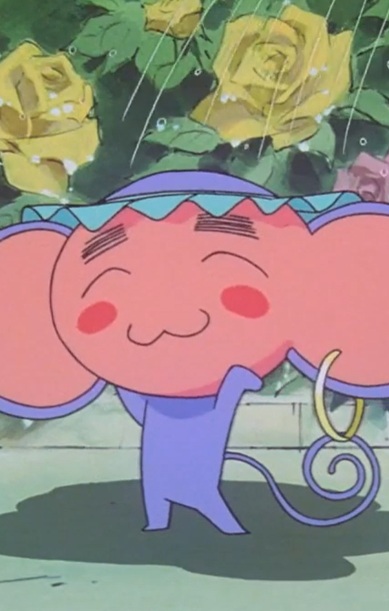
First things first - "Revolutionary Girl Utena" (I'll just call it "Utena" for the sake of brevity from here on) is a weird anime. And I mean *really* weird. The surreal settings, the plethora of symbolisms that constantly assault the viewer, the sexual innuendos... the whole show is so bizarre that it's hard to know where to begin the review. I'd heard a lot about "Utena" beforehand. Some say it's the shoujo version of "Neon Genesis Evangelion"; others say that Oscar from "Rose of Versailles" is Utena's spiritual grandmother; and many people consider it to be one of the greatest masterpieces in anime. Having seen it,I can conclude that there is merit in all of those statements. Well, perhaps apart from that last one. For me, "Utena" is too flawed to be deserving of that honour. However, there's no denying that it's an influential series, and many of its influences can still be seen in more recent shows. Although "Rose of Versailles" does have a certian degree of influence on "Utena", most of these extend only as far as the surface. The most obvious of these influences is Utena herself. Born as a girl, but lived most of her life as a "prince" rather than a "princess", the parallels between Utena and Oscar, the heroine of "Rose of Versailles", are obvious. A lot of the visual effects (such as the various rose effects) that "Revolutionary Girl Utena" deploys also seem to be derived from "Rose of Versailles", although a lot of them do seem to be used in a rather more tongue in cheek way. But beyond this, the two series are vastly different in terms of content. "Rose of Versailles" tells a much more straight forward story, albeit with the gender bender twist provided by Oscar herself, while "Revolutionary Girl Utena" is anything but straight forward. Not being a fan of the overly abstract and surreal, I had a little trouble getting to grips with the show. For the settings in "Utena", you have this school with a bunch of these outlandish rules, where the school council members fights duels with each other in a secret tower in the forest for the possession of the Rose Bride (another student), in order to gain the power to revolutionarise the world... Whaddaf*ck? Is this some kind of peculiar school play? Alas no, it appears to be reality, just not as we know it. Utena (who is, in case you haven't guessed, the protagonist) is thrown straight into this strange setting, and initially, she seemed as confused as I was about the strangeness of it all. She does make some effort towards finding out what the heck is going on, as you would naturally expect her to do, but her efforts are... kinda pathetic. One minute, she's like "WTF is all this?! Duels? Rose Bride?? Power to revolutionalise the world???" Then the next minute she's completely sold on all the weirdness and, without anyone prompting her, starts drawing swords out of Rose Bride's chest and shouting key phrases such as "grant me the power to revolutionalise the world!" like the rest of those freaks from the student council. And so, after this extremely half-hearted effort at forming a tenuous link to reality (I don't know why they even bothered to be honest), the scene is set for the rest of the show! Despite all the weirdness of the premises, I initially found "Utena" less difficult to to get through than I would have expected. However, a few episodes in, I found an even bigger problem that made the going a lot tougher - repetitiveness. There is simply a ludicrous amount of it. If they took out all the repeated scenes, the series would probably be able to fit into a standard 26 episode season quite easily. In each of the arcs of the series, the same scene is reused to set up almost every battle as well as to end almost every battle. I've lost count of the number of times I've seen Utena accepting the power of Dios into her... it's the same scene everytime, no matter what the situation leading up to it is. Sometimes she would be crouching before the scene, sometimes standing, sometimes even with the enemy rushing towards her, but always, she finds the time to casually stand around, being infused with the power and then lunge at her opponent and win the dual. After seeing it 20+ times (and I don't think I'm exaggerating in the slightest here), there's just one word to describe this... BOOOOORIIIING. Perhaps they're trying to parody the transformation sequence of the magical girl, but even as a (not particularly funny) running joke, it wears out its welcome pretty quickly. The action scenes aren't even good, and they certainly don't become good after about the 30th time of viewing. The repetitions aren't just limited to the battles either, they extend to the "Duelist of the Week" format. "Utena" really taken this format to extremes, with a lot of the scenes/dialogues being used to set up the duels being recycled to the point of annoyance. In the black rose saga, for example, every episode follows the same formula of some person with some personal problems getting told that their only option is to "revolutionalise the world", and it just seems laughable that it's the answer to all their problems "My cat has died." "I see. Your only option is to revolutionalise the world." "I've lost my favourite red pencil." "I see. Your only option is to revolutionalise the world." "I got a hole in my left sock." "I see. Your only option is to revolutinoalise the world." You wouldn't believe how sick of that phrase I became. The dialogues often borders on absurd and smacks of lazy scripting. But because of all the repetitions this show has, on the rare occasions when it does makes a deliberate change to the script, the contrast can really pack a hefty punch, and those episodes shines all the more brightly because of it. It's hard to say whether this is a positive thing because the resulting effect can be so refreshingly wonderful, or whether it's a negative thing because the show's repetitions drove me to the point where I end up over reacting to the smallest change. Probably a bit of both. Perhaps it's all deliberate, and you may say I'm missing the point as I'm unfairly criticising what it's aiming to do, but just because some chef *deliberately* poured a bottle of vinegar into a dish in order to give it an extra zany kick doesn't change the fact that he's completely ruined the dish as a result, and it doesn't make me feel much better knowing that it's all intentional when I'm gagging from the taste. As someone who's really into character driven shows, I did not find the characters of "Revolutionary Girl Utena" to be particularly interesting in general. There's too much posturing and general displays of shallowness. Every week Anthea the souless doll gets slapped for some petty reason as she's the scape goat for everything; most of the girls are annoyingly vain, but most of the guys are even more so, and need no encouragement to unbutton their shirt and start poncing around. There's an irritatingly large amount of time devoted to this, while more fascinating characters like Jury are criminally under used. Admittedly, by the end, most of the characters do reveal themselves to be more than just faceless people in a dull crowd, but still, with a couple of exceptions, I found it hard to care about most of them at any given point in the show. It says a lot that I'm more interested in what Anthea's pet monkey Chu-Chu is doing than what most of the characters - Anthea especially - is doing. At least Chuh-Chu's crazy antics, in particularly when he's battling his arch enemy the frog, never ceases to amuse me. Speaking of amusement, the nature of the humour in "Utena" is random, and whether it's effective or not also seem to be pretty random. There are times when it works but then at other times it's just... random... without being at all amusing. The similarities between "Neon Genesis Evangelion" and "Utena" comes mostly from comes from the apocalyptic themes and also the mountain of symbolisms the two of them contain. If anything "Utena"'s use of symbolims is even more aggressive than that of "Neon Genesis Evangelion" - they're constantly being shoved into your face and, to be honest, I found it all a bit too much. As the author Stephen King once put it, "Symbolisms exists to adorn and enrich, not to create a sense of artificial profundity," and there's a sense that "Utena" is more of the latter than the former. In my opinion, symbolisms should be done with a subtle touch, preferably integrated into the show such that they don't stick out like a sore thumb. This way, it can be nice when you get them and you don't feel like you're missing out if you don't. The fireflies motif from "Grave of the Fireflies" is a textbook example of how I think it should be done. The intrusiveness nature of the symbolisms in "Utena" on the other hand, feels like it goes against the whole spirit of the concept, and it results in some completely bizarre scenes (f*cking cars popping up all over the place, anyone?) that can really be frustrating if you've no idea what these weirdass symbols are supposed to mean. In terms of production values, "Utena" also comes up short. Other than the ludicrous amount of reused footage that I've already mentioned (they should consider displaying "Warning: Contains at least 25% reused animation! on their DVD boxes), the sound production quality also comes off as something more dated than it actually is. I was unimpressed by the much lauded soundtrack that consists a lot of rather experimental sounding songs with gibberish lyrics relating to apocalyptic themes. What's worse is that those songs tends to stick out badly, so not only did I not like them, I also found it hard not to take notice. It does improve in the second half of the show (I particularly liked the second ending theme, and one of the eyecatch themes is nothing short of beautiful despite its short length), but overall the sound department mostly comes off as a poorly produced, failed experiment. But despite the amount of time I've just spent bitching about the show, I actually think it's good. It's just that I found it a lot easier to identify the source of my negative feelings towards it than the positive. I guess there's an odd kind of enjoyment to be had in "Utena" by turning off the part of your brain that's grounded in reality, and there's a certainly a kind of magnetism about the show that keeps it interesting. Amidst all the surreal madness, some of the direction is undeniably brilliant, especially in its execution of twists. Ultimately, "Utena" is a show that's far greater than the sum of its parts - in spite of the overly repetitive animation, the overly similar shallow, vain individuals in its cast, the overly aggressive use of symbolisms and the overly filler nature of the story etc, the whole thing works surprisingly well. I just wasn't blown away, that's all.
Twickers
February 7, 2008
---The review contains spoilers--- It's been about five years now since I first saw this anime and still it's my definite favorite. I wasn't that interested at first, because it sounded rather pathetic with a bunch of people having secret meetings to duel each other over some girl. But I gave it a chance and watched the first four episodes, which ended with the first of a two part episode. Not really nice and the question "what happens next" haunted me quite some time and I was relieved when I got the DVD with episode five. I was satisfied afterwards and just didn't have enough timefor the rest of it. But a few months later a friend of mine bought DVDs 1-7 (8 wasn't out yet) and so we sat there, three people, a weekend with nothing to do and we watched. 35 episodes in a row and there was no question, wether we should have done anything else. The last month waiting for the grande finally was emotionally painful. The story may seem pretty strange (in fact it is), but everything falls in it's place and the driving force are the brilliant characters and their relationships. There is love, friendship, loyalty, adoration, obsession, disgust, hate and anything in between. If you like character driven drama, than this show is for you! The series can be divided into four arcs and each lets us explore the whole cast in a different light. Everybody has issues and these issues are reflected on most everybody else. It's interesting to explore the goals of the duelists, who want the power of the Rose Bride, to revolutonize the world - even by the end you can't be sure what this phrase really stands for. A revolution means drastic changes in a short frame of time and in a way, these changes already start with Utena arriving. She sets things in motion in a world, where everybody seems to have a very definite place. Symbolism is pretty high in here and even some of the corny comedy filler (usually revolving around a girl named Nanami) reveal pretty dark motives. Nobody is what he or she seems to be at first. Still the story by itself gets an 8, because the basis of all that's happening is pretty thin and you have to wait before the greater plan is revealed. But the characters get the full 10, since they are what it's all about. My favorite character still is Arisugawa Juri, to me, she's an alternate version of Utena herself. Both are strong and independent, but where Utena reaches for high goals, Juri has sunken into bitterness. But everybody gets defining moments thanks to the duels and with those duels comes another great strength - the soundtrack. The opening is pretty catchy, there are two ending songs I'd rather skip, the BGM sets the mood from easy going over dramatic to depths of terror, but the outstanding part are the 21 duel songs. J.A. Seazer composed a piece for every of these encounters and they not even set the tone of the action, if you have the time to look up the lyrics you found yourself drowning in yet more metaphors. The animation is rather good, it can stand up to Magic Knight Rayearth and Slayers, which came out roughly around the same time. Even though there are lots of re-used scenes and images (Utena's walk to the dueling plattform is the counterpart to a Sailor Senshi transformation, yet more dramatic), the carefully placed colors and the great mimic expressions totally make up for it. The entertainment factor is pretty high. I enjoy rewatching some of the comedy episodes occassionally or you can just watch the bunch of episodes that revolve around your favorite character. Of course rewatching the whole show is the best way to explore the world of the Ohtori Academy and after seeing the shocking finale it's refreshing to go back to the light hearted start again. I never expected the tragedy that unfolds from episode 34 ("The Rose Signet") onward. It takes a very dark turn. If you plan to watch this, be prepared for all the characters you slowly start to hold dear been emotionally torn apart. Maybe all the roses and bishounen might scare you off at first, but you need the contrast of such a "noble" setting to embrace the twist and turns.
Rank
#394
Popularity
#1135
Members
245,932
Favorites
9,674
Episodes
39