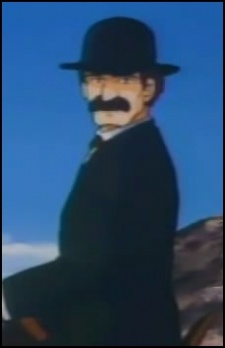

The Dagger of Kamui
カムイの剣
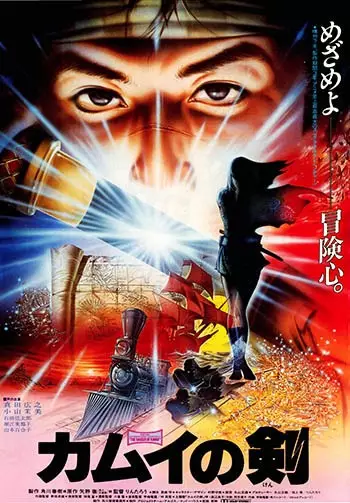
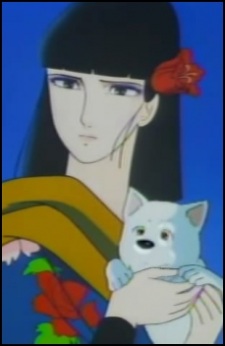
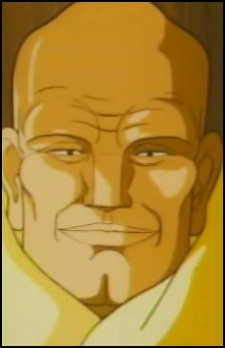
A young boy named Jiro finds his mother and sister murdered in his home. Falsely accused of the crime, he flees from his village and meets a priest named Tenkai, who has him kill a rogue ninja named Tarouza. After fulfilling that task, Jiro undergoes training to become a master assassin. Many years later, Jiro finds out that he was an orphan and his real father was Tarouza, who had worked for Tenkai until he aborted his mission when he fell in love with an Ainu woman. The young ninja discovers that the Shogunate was to retrieve the lost treasure of Captain Kidd and use it to once again isolate Japan from the rest of the world. Using the clues that Tarouza had kept secret, Jiro—along with the female ninja Oyuki and a slave named Sam—travels to Russia and America to search for the treasure in hopes of using it to extract revenge from Tenkai. (Source: ANN)
Main
Main
Main
Main
Supporting
Supporting
Supporting
Supporting
Supporting
Supporting
Supporting
Shura-shurato
January 25, 2013
Seriousley! they DON´T make longlasting anime movie with effort anymore like this one, and wich is partially based on actual history its one of my oldskool fav. I dont care about the runtime of the movie because it started strong en ended very strong! Charac. animation is not too special, more a bit kiddy, an very good background story historical places and char. development really were put potential in there , and good mix of 80´s synth and 18th century japanese interpetation music. Beautiful anime sketches inbetween the movie is what i really miss of 21 century anime! just because u can see the drawingof it partially unfinished, just great!
Boltz
January 14, 2016
Supporting
At just over 2 hours long The Dagger of Kamui is a historical epic most people can enjoy, although it will feel a bit more rewarding to those that have experienced a decent amount of anime and manga beforehand and know a few things about the Japanese history and folklore. The first thing of note is the outstanding soundtrack. It's a unique mixture of electro rock and funky synth tunes, merged with traditional instruments and spoken sound effects. If you've seen Miyazaki's highly acclaimed The Wind Rises, you'll remember the amazing train scene with spoken sound effects. Kamui uses a lot of that and it soundscool. The music also blends in perfectly - when Jiro is with the Native Americans there's even a pan flute in there. The second thing that woos the viewer is the animation. There are a number of impressive scenes, but arguably the best ones are the ones where characters and objects dissipate into colorful particles that fly around and glitter like in a kaleidoscope. All of this is not that surprising when we look at the production list. Made by Madhouse - one of the oldest studios that constantly puts out high quality content. Directed by Rintaro, also behind jaw dropping visual masterpieces like the Adieu Galaxy Express 999. Key animation by Kawajiri and Takashi Nakamura, whose hands touched a number of extremely cool and stylish animated works. The third thing is historical accuracy and here we get to the part that seasoned viewers might appreciate a bit more. By no means is Kamui hardcore accurate, but the environments of 19th century Japan and America are pretty believable. The Ainu and Native American tribes are a bit romanticized of course, but it's quite pleasant to observe their habits and attires and compare them to the Japanese. Another interesting thing to observe is the clash of ideology, culture and religion of the time. The main clash is obviously between the Shogunate and the rising imperial forces that happened during the Boshin war. A more subtle one is between the Japanese and the indigenous Ainu tribes. This being portrayed at all is kind of a big deal, because the Japanese are a bit shy and embarrassed when it comes to depicting their native tribes, because of the complicated ways in which they were "assimilated" (unlike Americans who like to flash around with the heritage of their natives). The religious clash is kinda connected to the cultural one - Buddhism VS the worship of local deities. It's a common theme, often present in anime and manga too. If you look closely you can draw the following parallels: Tenkai's face = Buddha = the Devil's incarnate. It's not uncommon to see in Japanese literature the tales of Buddhism spreading from Korea or China and violently trying to phase out the local deities. One of the most fascinating depictions of this clash can be found in the Sun chapter of Phoenix, a most influential manga by Osamu Tezuka. The Dagger of Kamui is a pretty interesting work indeed, although it's not as well defined and polished as let's say Princess Mononoke, on which Miyazaki worked meticulously to atone himself for Nausicaa (which he was forced to do a quick adaptation when the original manga was just starting out). Neither is it as striking as works like Ninja Scroll, but even action fans shouldn't be disappointed as there is enough slashing and slicing to go around.
nostalgic-hero
February 3, 2015
Kamui no Ken, which I saw for the first time in the abridged version entitled "Revenge of the Ninja Warrior" is a historical drama story about a half Ainu, half Japanese boy living in the turbulent period of the Tokugawa era, the Boshin War and early part of the Meiji era. That setting is the backdrop for the story, and it's one of mystery, intrique, betrayal and vengence. He's framed for the murder of his mother and sister and forced to flee from his village and is taken in by a monk named Tenkai whom gives Jiro the task of training to become a ninja. The artstyle is very well suited for the anime and the ninja fight scenes are done quite well. The musical score is truly something else, it's something like a fusion of 80s rock and traditional Japanese music and in a lot of scenes it does a really good job of setting the mood. Over the duration of the story, Jiro learns about the (then) small world of feudal Japan and the remainder of the modern world. He even meets some significant historical figures along the way. One of the themes touched on by this movie is the question that the Japanese likely asked themselves during this era.. that is, "If we become a modern nation, will we lose something in the process of doing so?" If you're into action anime, you'll enjoy this one. If you're into historical drama, you'll enjoy this one.
Chuy_diazz
March 5, 2026
Journey Through Madhouse Episode #15: A tale of revenge, ninjas, and a treasure hunt, which doesn't aim to be an action anime but rather a historical drama. The revenge and ninja aspects are somewhat sidelined. The true message of the work seeks to represent Japan's vision regarding opening its borders. The story explores the dilemma that if Japanese protectionism is overthrown, they risk losing their identity. The film represents this, in a rather strange way, in a fight between ninjas and cowboys. The anime aims to reflect the doubts and concerns of Japan at that time, which is why it has its characters travel through Russiaand the United States. However, the film suffers from the same concerns. In the third act, it loses some of its identity, shifting from a ninja story to a Western. I don't know if this was intentional or not, but I think it's a negative point for the film. As for the animation, for an anime from the 80s, it has quite a few interesting elements. Especially in a couple of chase scenes where the effort put in is evident. However, it's the 80s, and epilepsy was a constant theme at that time. You'll frequently encounter scenes with a dazzling light show and flashing lights that, if they don't leave you foaming at the mouth, will at least give you a migraine. The soundtrack is the strongest point of the work. It's music that makes its presence known. Many times you'll be more captivated by the music than by the scene you're watching. Particularly, the soundtracks for the few fight scenes do the best job of communicating the emotions of the moment through sound. I would only recommend the film to people who are somewhat interested in Japanese history. In terms of trade and globalization, the film offers a glimpse into the Japanese mindset of the 80s. On the other hand, if you're just looking to watch an anime for entertainment, this isn't it. Here you'll only find cowboys versus ninjas, but instead of punches, there will be a lot of dialogue.
thec0re3
August 5, 2017
When it comes to epic ninja dramas, there are not too many out there that come close to the experience that you will leave with after watching Kamui no Ken, or as I know it, Dagger Of Kamui. The animation is dated and I was shocked to know that this title came out in 1985. When I first watched this title back in 1995, you could not tell me this anime was not amazing to look at. That opinion has certainly changed some but I still maintain that the animations and much of the choreography are amazing to watch. When you find influences from thisfilm in other anime like Naruto and Samurai Champloo, then you know this anime left a big impression. The story is not your average revenge tale and the twists were pretty mind blowing. Jiro, an orphan child, gets tangled in a wicked game of deceit driven by a powerful shogunate who seeks an item discovered by Jiro's father who once served under him. As the truth begins to unfold, it leads Jiro on a journey to uncover the mystery of his father's past as he fights to stay alive all the while. By the end of the film my stake in the characters quest for vengeance was through the roof and it may have been the biggest thing keeping me intrigued in what felt like a very lengthy film. The music during this period of anime was always enjoyable to me and Kamui No Ken is no different. The characters in this anime did not carry a great deal of gravity to them. For Jiro to have such a level head in all this calamity, it was quite unthinkable looking back at it and what mainly stuck with me throughout the film was the pure empathy that I felt for his plight. Even as sadistic as the antagonist is, I felt nothing from him outside of the contempt that I had from his actions. My biggest take away's from this film is the insanely detailed plot and the ninja battles that took place. Outside of Ninja Scroll, there was nothing within the genre that was quite like it at the time and it is still mainly why I have such a high regard for this film. If you think Naruto had it bad, then I suggest you take a look and see what Jiro went through. It is this kind of story telling that kept me really engaged during this period of anime and it is ultimately why I can keep coming back to revisit this title time and time again.
#6745
Popularity
#7691
Members
8,469
Favorites
27
Episodes
1