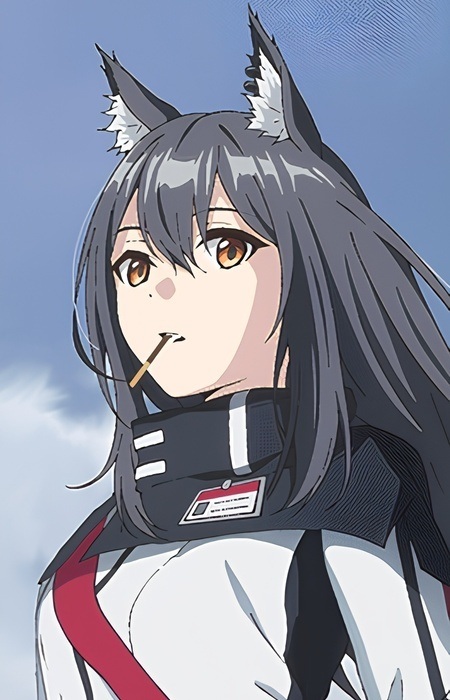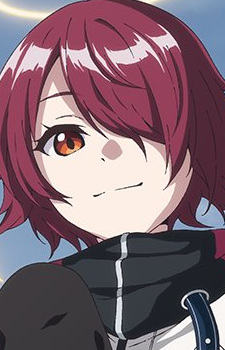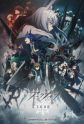

Arknights Animation: Prelude to Dawn
アークナイツ【黎明前奏/PRELUDE TO DAWN】
The discovery of a black crystalline mineral known as Originium has accelerated technological advancement in the world of Terra, with its high energy yield allowing people to demonstrate abilities akin to magic called Arts. Large veins of Originium can naturally be found at the sites of Catastrophes, various forms of natural disasters caused by the mineral itself. However, the usage of Originium comes at a price, as there is a high risk of getting infected with Oripathy—an incurable and highly contagious disease. Because nations subject the infected to harsh discrimination, the oppressed begin a dissident movement. Calling themselves Reunion, the rebel faction mercilessly destroys cities, further contributing to the already calamitous nature of Catastrophes. Rhodes Island, committed to treating the infected and uninfected as equals, is a paramilitary pharmaceutical organization believed to be the most advanced in its research for the Oripathy cure. Unfortunately, the person spearheading the project—an enigmatic figure known only as the Doctor—suffers from amnesia, effectively impeding what might be the only hope for the infected to break free from their chains of despair. [Written by MAL Rewrite]
Main
Main
Supporting
Supporting
Supporting
Supporting
Supporting
Supporting
Supporting
Supporting
GG-WP
December 16, 2022
A game adaptation that stayed true to its source material. To the average person, this show may appear boring and will not pique their interest in the game. While to someone who plays Arknights, this show was a pretty good adaptation and overall an enjoyable ride, especially seeing their in-game waifus get the screentime they deserved. As the title suggests, this season is simply introducing the audience to Rhodes Island and Terra's current state, problems, and so on. Unfortunately, since it is an introduction, it is bound to bore many people. But it serves its purpose admirably, hence the "Prelude to Dawn" in the title. Interms of execution, the chapters adapted by the show were boring to read in-game, so Arknights players may be surprised that the adaptation turned out well while remaining true to the source material. In that regard, the writers have done an outstanding job. In terms of art, the backgrounds are well-made, with the architecture of Lungmen and Chernobog being unique. The art style for nonhuman objects is generally good, and the same face syndrome in character art isn't too bad, but it still exists. Doktah is my main source of dissatisfaction because its figure's stature is sometimes off and feels weird in the show, but the art is otherwise above average. In terms of animation, there is little action, so there isn't much to say, and nothing particularly noteworthy. But the few action scenes, especially Ace's, were pretty cool. Otherwise, the animation is mediocre. Still images are boring. Background characters are unchanging. Their decision to use CGI for Reunion soldiers is probably good for budgeting. The OP is ok, nothing special, but the contrast between its calm atmosphere and the dark theme is pretty good and fits the mood of the show. The ED, in my opinion, is the superior of the two, and it, once again, matches the mood and vibe of the show. The accompanying art in the ED is also very pleasing to the eyes. In terms of sound, the VAs did an excellent job of portraying the characters they play. The viewers can tell who is who. When the VA speaks, their emotions and feelings are properly captured. Ch'en is an example of this, as her VA's voice acting perfectly portrays the character. This show has elicited a wide range of reactions. One may or may not enjoy it. Those who play Arknights will undoubtedly have the edge in terms of investment and enjoyment of the show. Coming from someone who has no knowledge of Arknights, I'd say it was pretty boring, but it was still a good adaptation that stayed true to its lore. The show did well for its role as a crash course to the Arknights game. It is worth watching for those who want to learn more about Arknights' world. People looking for a one-time stop, on the other hand, would be disappointed since the chapters adapted are only a small part of the Reunion arc. It will take more than one season to complete.
The discovery of a black crystalline mineral known as Originium has accelerated technological advancement in the world of Terra, with its high energy yield allowing people to demonstrate abilities akin to magic called Arts. Large veins of Originium can naturally be found at the sites of Catastrophes, various forms of natural disasters caused by the mineral itself. However, the usage of Originium comes at a price, as there is a high risk of getting infected with Oripathy—an incurable and highly contagious disease. Because nations subject the infected to harsh discrimination, the oppressed begin a dissident movement. Calling themselves Reunion, the rebel faction mercilessly destroys cities, further contributing to the already calamitous nature of Catastrophes. Rhodes Island, committed to treating the infected and uninfected as equals, is a paramilitary pharmaceutical organization believed to be the most advanced in its research for the Oripathy cure. Unfortunately, the person spearheading the project—an enigmatic figure known only as the Doctor—suffers from amnesia, effectively impeding what might be the only hope for the infected to break free from their chains of despair. [Written by MAL Rewrite]
Mcsuper
December 16, 2022
Game adaptations or game advertisement anime have always been a mixed bag. Whether it’s terrible plot writing, boring worlds, or obvious pandering, game adaptations always are met with skepticism. However, Arknights: Prelude to Dawn is an example of one done with passion and love for the source material. I haven’t played Arknights myself, but I would imagine many Arknights players would be satisfied with this adaptation and loved how their favourite characters came to life. Of course, that isn’t to say that the entire eight episode run was flawless, as I did find a few parts rather heavy on exposition and a bit boring, butoverall, it was quite a treat to watch, and one of the better shows to come out this season, in my opinion. STORY: The story wasn’t particularly unique, as these types of dystopian stories with diseases ravaging the population isn’t anything new. We see these stories in Hollywood movies all the time. That said, the world in Arknights is decently built, with different organizations having different morals surrounding Oripathy, and the treatment of the Infected. It would have done even better with just a bit more exposition, but what we got was quite sufficient. Obviously, this part of the story was probably the weakest part of the game, if I was to venture a guess, and that makes me all the more excited for what’s to come, if there are future seasons in the works. ART: It has a very cinematic feel, especially at the start. It felt vastly different to the anime I was used to watching, but slowly eased its way back to a more “anime style”. I really enjoyed the backgrounds and some of the fight scenes, and I thought the overall production was quite solid. Props to Yostar Pictures for doing quite the phenomenal job here. MUSIC: The OP and ED are quite fitting for the show and its darker themes, and the soundtrack itself is decent, but the music doesn’t get overplayed that it covers the eerieness of some of the scenes. CHARACTERS: The overall setup of the characters and their respective organizations was good, and some of the characters do stand out quite a bit. Amiya is your typical protagonist that tries to keep peace between the organizations, the doctor is a very good leader in battle, not necessarily someone I’d see as a self-insert, especially with how he/she is portrayed. ENJOYMENT: My thoughts for this was pretty consistently positive, with just one episode that was a bit underwhelming. I enjoyed it for the most part for sure. The production was good, and the world building was quite intriguing to see. THEMATIC EXECUTION: The dark themes were actually done quite well, along with the whole idea of discriminating against the Infected, along with the moral ambiguity. You feel for each side to a certain extent, which was certainly the goal here. OVERALL: A solid job by Yostar Pictures, and an adaptation that inspires hope if there are indeed future seasons of this, which I would wholeheartedly want to see. It was a good starting point that has some interesting ideas going for it. I’d love to know how Arknights players thought of this, but even as someone who knew nothing about this game beforehand, I can definitely say that I’m intrigued now.
ZNoteTaku
December 16, 2022
*Arknights: Prelude to Dawn* is bleak, a series full of dead people walking. I don’t mean that only in terms of the world around them engaged in warfare, but also in regards to their bodies as living people. From our first long POV shot as the stasis-awakening Doctor, we are thrust immediately into the dreary atmosphere of unpleasant colors, sounds, and implications. The lack of warmth is aided by disorientation as though we ourselves have awoken from stasis and have entered a place that seems to leech the life out of everything around it. But there is one smiling figure to give greetings – thecheerful Amiya, expressing her gratefulness at The Doctor awakening at last. But plagued with amnesia, he does not recognize her nor recognize him/herself, effectively a stranger in a foreign land. The problems have only just begun, however. As the grounding beneath our feet gradually reasserts itself, we learn more about this world and how longstanding its problems have been. The world has turned thanks to Originium, a precious mineral that unfortunately leads to Oripathy, a disease with a 100% mortality rate. Though there is no correlation between physical contact with a person who has contracted the disease, called “the Infected,” the Infected are nevertheless ostracized and oppressed for fear or Oripathy’s spread. It is a cultural stigma that even those who know better cannot divorce themselves from, as the governments and populace have spent so much time oppressing that changing the system or the culture is too cumbersome. From the Infected come two main groups: Reunion, which seeks to overthrow the world governments for their mistreatment of the Infected, and Rhodes Island, who seek to develop a cure for Oripathy, which The Doctor was researching. At both a literal and metaphorical glance, there is no reason to hope for anything in this series. Among the earliest flashes of the story proper we see are gunshots and battling in expansive, empty corridors and spaces. Rhodes Island, both here and recurringly throughout the story, constantly find themselves running or on the move from Reunion. Although the factions each fight on behalf of the oppressed Infected, they do not meet eye-to-eye on how to do so. On the immediate level, Reunion is to blame – how could global justice be attained through such apparent violence when they drew first blood? But *Arknights: Prelude to Dawn* spends less time trying to convince the viewer which is “more correct” and instead encourages them to appreciate the sheer tragedy of it all, that presumably decades (if not longer) of not heeding the cries of dying people has led to the dying people not be able to agree amongst themselves. When resigned to such a life, what other option is there to believe in? So, the split naturally arises among the people: the more militant option that might get attention more quickly, or the more peaceful option which requires patience and time? As we spend that time observing both Rhodes Island and Reunion’s methods for getting the Infected people to follow their cause, it becomes clear that Rhodes Island is horribly outmatched. Both groups know that the Infected are dying, and their support not only increases their numbers, but also the morale of their respective goals. Rhodes Island only has a gentle hand and the vague promise of a cure that may never come. In a dark time, the hand of sincerity can seem like a mockery, especially when that hand is, much like you, only given a short window of time left to live. Reunion’s battling prowess is not merely demonstrated in skirmishes, but also in rhetoric. Horrible as their methods might be, their message is loud and clear – we are strong, we will fight, and we will win. They’ve produced results which have gotten attention, and the Infected who debate which side to consider more worthwhile are thus posed a question: take the short returns now in the hope that they rest of your life-ticking-away days are more comfortable, or take the word and leap of faith that everything will be okay? Even if all of the promises made turn out to be lies, or if civilians die as collateral, most would, I imagine, be hard-pressed to argue that delaying any chance of a better life is the better choice. In the eyes of *Arknights: Prelude to Dawn’s* Infected, they’ll all be dead anyway from Oripathy eventually, so what more do they have to lose by joining the more-militant Reunion? It’s easier to rationalize away the cost of life when your own life has been treated as subhuman, and any notion of life having salvation, even a microscopic amount, has likewise been relentlessly crushed. (And that’s not even considering Talulah, a mistress of death who seems only too eager to see any violent action through to the end). Like the overhanging misery of the show’s dilemma, the sun bathes the world in the murkiest tones possible, filling abandoned desolate buildings in white light that only serves to draw more attention to the crumbling walls, discarded syringes on the floor, and signs of the world’s decline. It’s as though the world itself physically is gradually giving up. Why would anyone want to live here? Would it in fact not just be easier to roll over and fade away instead? Such a question is no doubt pessimistic, but given the treatment of the Infected people, the thought doesn’t sound nearly so unpleasant given the active hellscape alternative. *Arknights: Prelude to Dawn* imbues pessimism into nearly all of its facets to paint the most-visceral picture possible. And from that pessimistic state of mind thus presents the main hook that makes Rhodes Island, and the ensuing drama, worth following. In the midst of all this sadness, these are the Infected who choose not to give up to despair and take up the sword of salvation instead of blood. Theirs is a mission not only against the Reunion that actively seeks to kill them, but against the world that would sooner see them out of sight and out of the way. They’re struggling, but not helpless. They know that the dream they cling to is fragile, and that it may be a fantasy they’re chasing after all. I referred before to how their extended hand of sincerity can seem like a mockery, but buried under that assumption is genuineness. Amiya believes in her conviction, and seeks to act upon it by leading her friends and fellow soldiers into the fray. Their combative style (and the animation by extension) may not be the flashiest thing ever seen, but it and the cause keep moving forward, bolstered by a good, sometimes-bass-heavy soundtrack. I would be remiss if I did not remark that *Arknights: Prelude to Dawn* stems from the Arknights video game, and that this adaptation is clearly meant to be more table-setting for future installments as opposed to rounding out a fully-complete story. In that sense, it does stumble in the execution of some of its expository elements and elsewhere. The Doctor is more a setpiece instead of an active player due to his amnesia (though his involvement does improve as the show goes on), some of the introduced characters are given brief moments and then vanish for most of the season—if not the rest of it—and the intrusion of the PRTS is an obvious allusion to an in-game mechanic that the anime replicates when it’s not necessary to do so. It’s an unfortunate circumstance of source material retention that works in a game format and less-well in an anime. Overriding all of this though was that the immersion ultimately did pan out, that the resigned, crushing tone succeeded. Most of what I described could be labeled as “necessary evils” since the season is meant to be expository, relying on the “Infected Civil War” and the complexities of the overall scenario. The show does not relent for one minute, as even the quiet moments are tinged with melancholic smiles and reminiscence. It has no time for comedy (except for Ezusiai, which never sat well with me both in the moment and in the aftermath), choosing instead to indulge in morose, soul-draining affect. Perhaps for that reason, this series is a bit of a hard sell. In regards to how it stands as an adaptation, I cannot say since I have not played the original *Arknights.* *Arknights: Prelude to Dawn* insists on knocking its characters and their hopes down every chance it gets. Each fumbled operation, each person who dies, and each time that Reunion and Rhodes Island either ideologically or violently clash reads like another page in a Sisyphean tragedy. No matter how many clashes occur or how many gambles take place, everyone is racing against their own personal clock. Whether it be due to Oripathy slowly killing someone over time, getting The Doctor to safety, or whatever scheme Reunion has cooked up, time is everyone’s greatest enemy. With the overarching dilemmas and quandaries, the show coils itself around its characters tighter and tighter. Yet, the promise that relief awaits still persists. And even if the promise turns out to be nothing more than a pipe dream, it’s a promise worth clinging to. But then again, in a world like this, promises may be easily broken…
aurora_aeterna
April 18, 2023
tl;dr rating if you play arknights: 8 or 9 /10. rating if you don't play arknights: 5/10 at best Surely this show's ratings are inflated by the fans of the game. I mean let's be honest. I play the game and while yes, the game has great story and yes, the game has great voice lines, the anime was without a doubt very slow paced and at times boring. It is practically word-for-word from the source material though so points for staying true there. Like I mentioned above, if you don't play the game you will fall asleep watching this. The gravity of the scenes, the explanationfor the world of Terra, the way the characters interact with each other; all of it would not make sense to a non-fan and the anime does little to try to explain any of it to people who are unfamiliar with the source material already. The pacing is molasses. The character development is also molasses. Both of which are real shames because the Arknights main story is actually quite interesting and at times thought-provoking and challenging. All of that was latent in here in the show, sent to background in favor of what felt like character showcases. I should also mention that Yostar/HG make great PV's and music but we didn't get much of that here. Some cool action sequences, a smattering of music, but it didn't shine. It really hurts me to say it but I do not recommend this to anyone who didn't play the game. I would recommend the game though. So I guess you could come back to watch this after playing the game some? It is a good game...
ShinodaChan
December 16, 2022
Ah yes, superfluous dialogue and a rushed plot: the authentic Arknights experience. Going in, this adaptation was always going to have issues. Not only does it adapt the weakest part of Arknights’ main story, it was produced by Yostar Pictures. On paper, this makes sense: Yostar got burned when they trusted another studio with Azur Lane, and they’ve largely done everything in-house since. The problem is that YP is a small studio, which — lacking enough resources or staff — forced them to outsource to various studios (Studio Palette, Studio Silver, Candy Box etc.) for Episodes 2-6. Add in a first-time director in Yuki Watanabe anda limited budget — Arknights is profitable, but nowhere near the levels of FGO or Genshin Impact — and you have a recipe for disaster. So, given all of these restraints, how did it do? Visually, the anime is inoffensive. Character close-ups are beautifully drawn, and key moments are clearly denoted by a sharp increase in dynamism and detail. There is some inconsistency present where characters at a distance are either drawn in a more pixelated fashion or animated with CGI, but this is the exception rather than the norm. The problem lies in the stiffness of the animation, particularly in fight scenes. For a game that doesn’t shy away from its dark atmosphere, the action in this adaptation is awfully toothless. Enemies will get shot, slashed, smacked, or stabbed, but in almost every case they’ll end up knocked to the floor at worst; seemingly unscathed. YP’s sporadic usage of blood is especially strange, adding it almost at random in a few moments across the entire cour. Some of this (e.g. characters that are burning to death or have been dismembered) may stem from censorship, but that alone doesn’t explain the strange camera cuts, mediocre choreography, lack of force, and questionable logic that summarize each battle. YP’s full inhouse production of Episodes 7 and 8 results in a significant improvement, leading me to wonder how much of the issue stems from a combination of outsourcing and budget. Either way, the result is a beautiful art style that is held back by lackluster animation for most of the cour. With a bigger budget and more staff I have no doubt that YP could deliver an impressive visual experience, but this adaptation isn’t that. Of course, I’m not an artist. I’m a writer, and speaking as one: good grief, this storytelling is flawed. Arknights' in-game story is notorious for having poorly written dialogue. This isn't a localization issue (Chinese players complain about this as well), it's the writers acting like they need to turn every sentence into a paragraph. The anime isn't much better in this regard — unnecessary padding is all over the place — but that isn’t the main problem. In a recent interview with YouTube content creator Dogen, Rafał Jaki — the creator and executive producer of Cyberpunk: Edgerunners — highlighted the importance of ‘the dramatic question’, noting: “...there is a difference between the story and the plotline. Story being, ‘what happens if a family member dies?’ and the plotline is, ‘somebody is going to the funeral, they go to the city, and they have this adventure’...but without the question it has no substance, it’s just things happening to the character.” (Dogen 22:22-22:46). Arknights’ earlier chapters are all plot and no story, failing to establish or explore a dramatic question. The closest I’ve seen to one was suggested by Reddit user scot911, phrasing it as “Is it better to work inside the system to reform it through diplomatic means or is it better to violently overthrow the system and start anew?” If this is the case, then Arknights does a terrible job of investigating this. Rhodes Island is implied to be restricted by Lungmen’s authority, but how often does that actually matter? Without getting into spoilers, nothing Lungmen withholds or demands from Rhodes Island hinders their ability to complete their mission. Things would by-and-large have happened the same way even if Rhodes Island had total autonomy, meaning that the penalties of ‘working inside the system’ are more superficial than anything. There isn’t enough ideological conflict between Rhodes Island and Lungmen to create genuine problems in their relationship, and this results in their partnership feeling rather uneventful. Meanwhile, Reunion’s perspective never gets the justification it needs in order to be legitimized. Whereas in Akira it is clearly conveyed that Neo-Tokyo’s government is incompetent and corrupt — needing to be overthrown for change to happen — Lungmen is largely presented as a normal city. This changes in later chapters of the game, but for the purposes of this season the viewer never gets the sense that Lungmen as a city might warrant Reunion’s methods. The discrimination that the government enables is barely explored, as is the police brutality of the L.G.D. Poverty and violence are implied to be issues, but the plot never stops to take a closer look. This is the true issue with Arknights’ earlier chapters: the plot never lets characters investigate the world, much less themselves. The writers attempt to compensate for this with philosophical monologues, but these fall even flatter than they already did when applied to a more visual medium. This results in a rushed, barebones plot that is only slowed down by dialogue-heavy low-points in tension. The sad thing is that even this is vastly better than the in-game story; the bar being that low. The anime incorporates multiple minor changes that contribute more substance to the narrative, and it’s a shame that YP didn’t attempt to push for more. As is the plot is still deeply flawed, which — combined with overwrought dialogue and poorly crafted fight scenes — creates a slow and uninteresting story that never says anything profound. To note one more thing: characterization suffers because of the aforementioned issues, leaving most characters plain at best and irritating at worst. Amiya’s character development is indiscernible until the end of the season, with any payoff locked away in a second season. Speaking of payoff, it’s hilarious to me how the Doctor claims in Episode 3 that they’ll gradually become more of a character over time…only to be no different by the end of the season. Gacha game protagonists are notorious for this — even FGO’s anime equivalent of Ritsuka is relatively flat — but that’s no excuse for poor writing. If you imply that development will occur, then show it in the short term instead of assuming the viewer will stay engaged for the long term. That aside, there isn’t much to say. Yuki Hayashi’s soundtrack is ambient and rarely gets a chance to stand out, capturing the lack of tension throughout the story. The OP and ED are nothing special, though admittedly this point is subjective. Voice acting — whether by members new to the cast or reprising their roles from in-game — is generally solid, but it isn’t enough to carry the story. All in all, Prelude to Dawn is an adaptation with limited style and hollow substance. I brought up the comparison to lukewarm tea in my preliminary review, but I think that describing it as a watered down soda works as well. You can taste the flavor that was meant to pop in your mouth, but only just. It’s too diluted to amount to anything else, but hopefully — should Yostar receive an increased budget — this will be as mundane as it gets.
Rank
#4307
Popularity
#2006
Members
126,377
Favorites
1,136
Episodes
8