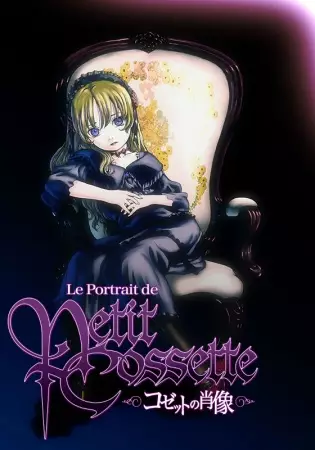

Le Portrait de Petit Cossette
コゼットの肖像
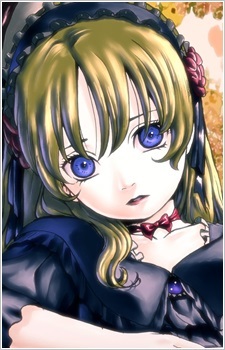
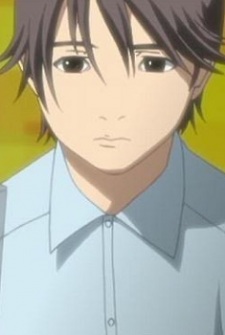
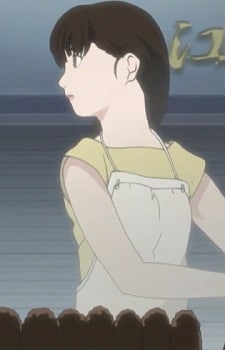
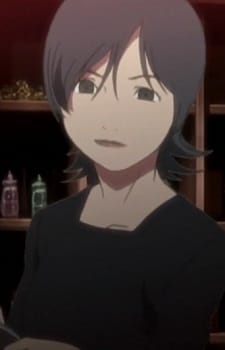
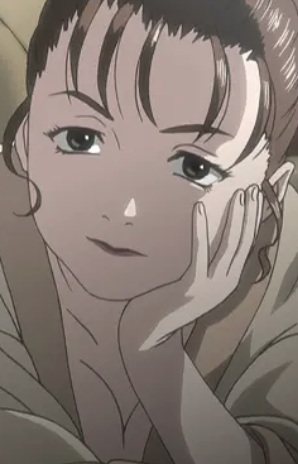
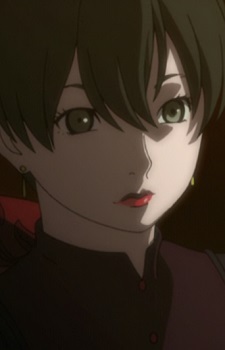
Eiri Kurahashi is a Japanese art student who works in an antique shop. His friends begin to notice a dramatic, and rather concerning, change in Eiri, as he becomes more absent-minded and his behavior completely changes. They quickly decide to blame their friend's troubles on a girl. They may be right, however, as Eiri has begun seeing a beautiful, doll-like girl trapped within an antique Venetian glass that his uncle bought in France. She seems to be living in a strange other world, contained entirely inside this glass, but her image refuses to leave Eiri's mind. His sketchbook becomes filled with her likeness, and he realizes he has become completely infatuated with this strange little girl. When he recognizes her in a portrait by the mysterious Italian artist, Marchello Orlando, he learns her name is Cossette d’Auvergne, and that she was tragically murdered along with the rest of her family. One night, as he closes up the shop, he hears a voice asking him not to leave. Finally making contact with the object of his obsession, he makes a deal that he doesn't fully understand. [Written by MAL Rewrite]
Main
Main
Main
Supporting
Supporting
Supporting
Supporting
Supporting
Supporting
Supporting
santetjan
March 16, 2008
Le Portrait de Petit Cossette is, first of all, a work that tries to be visual art, about visual art. It tries to tell what is in essence a very simple story in the first place by means of short scenes using specific visual style, and only in the second place by actual conversation and plot development that is spelled out. Thus, if, after watching the first episode you decide you really don't like the visual style used, don't bother watching the other two episodes: this series is not for you. With regard to the plot, it would be no exaggeration to state that the samestory could have been told within five minutes, nor would it be too much to say that any review of the plot would also most likely divulge what little twist there is. In essence, the story revolves around two artists and a piece of art, the portrait of a young girl, and the two differing outlooks on art these two artists have: one in the end prefers the piece of art, unchanging and everlastingly beautiful, unwilling even to acknowledge the existence of the living, changing 'original' girl, while the other prefers his art to be alive in some fashion, even if this means that change and loss exist. It is a story about the love of the artist for his art, a love that is profound enough to accept the necessity of loss, even, if necessary, of the self. Nowhere is the story explained in as much words as I've used above, or are there pieces of dialogue directly concerning this difference in outlooks on art. In fact, there is not that much dialogue at all, nor does the show try to explore the main characters: there is little in the way of actual plot or character development. This is because Le Portrait de Petit Cossette is a Romantic piece, or, more accurately, a piece of Romantic horror. The plot is a gathering of tropes from the genre, and focuses to a large extent on the passionate love of the main characters without giving much in the way of an explanation for their feelings and behaviour, wholly following the example of the greater pieces of Sturm und Drang literature, where round characters were considered less important than the strength of what little they tried to convey. Even the fact that the plot seems confusing, and that not everything is explained or neatly given a purpose within the story can be fully explained as Romantic horror: from Poe to Lovecraft the actual lack of a full explanation served to enhance the story. When all is said and done, the story might not be all that original, or contain a lot of development. It is, however, very true to form. The art is simply gorgeous. A lot of different styles are used, from simple nature backgrounds to what has been described as "bargain-basement Salvador Dali", with an emphasis on portraying scenes in twilight or with light that is filtered, seemingly in order to make the few bright points stand out more. Even though not all styles work out equally fine - especially the more surrealistic scenes tend to be a bit over the top - they do usually perfectly portray the mood of a certain scene. To this is added a soundtrack consisting largely of semi-classical music that does a wonderful job in strengthening the different moods, ranging from simple, uplifting tunes to a ballad that is beautiful and haunting, even though it is sung in Japanese, which does not really fit the mood. It is true that this show is pretentious, as is, it should be said, all art, and visual arts have a tendency to be even more pretentious than music or literature: the use of a French title (containing errors in grammar, spelling, and syntax, to boot, as it should have been titled "Le portrait de la Petite Cosette") is in itself proof of this, as is the bundling of a whole bunch of different musical and visual styles. On the other hand, it is quite honest about its being pretentious, and it must be said that, in the end, what matters in visual art is the art, not story, and not character. Anime is visual art, and no matter how good a series is, it will never be better than a solid book in portraying story or characters. What it adds are visuals, and these enhance the story in a way words alone can never do. To me, it is not too pretentious to try and make the story revolve around the art, and not the other way round: in a way, that seems to be what anime should in the end be about. I won't lie. I consider Le Portrait de Petit Cossette to be the best piece of film I have ever seen, without a single doubt. As implied above, it is very difficult to make an objective statement on story and art, as you either like the style, or you don't. To me the different scenes do connect, and portray a story about longing, love, and sacrifice that portray thoughts that can be felt, but not put into words - though they can be shown. In a way, I am in love with these three episodes like the protagonist is in love with the painting, and, thus, am unable to see anything that could detract from this impression. Perhaps that simple fact is the greatest compliment a show can receive.
mahoganycow
April 15, 2013
There are a lot of ways to frighten people and make them feel vulnerable in a primal way, and therefore there are a lot of ways to execute horror—outright screaming and slashing, psychological mind games, the appearance of the supernatural. And somewhere, buried under all of those, is a subset of horror which I internally refer to as “weird and atmospheric.” Not very professional, I know, but it's the sort of bin into which I throw things like Le Portrait de Petit Cossette, a three episode OVA that is just plain strange more so than anything else. Of course, you could also call it aromance, or a drama, or a mystery; Cossette is a very creative and ambitious work that plays leapfrog across genre boundaries, but unfortunately, so do its numerous flaws. Cossette's story is relatively simple, but for whatever reason, its creators seem eager to make it as difficult to follow as possible. There are frequent changes in setting between the real world and a surrealistic hallucinatory world that the protagonist visits. These transitions take place with little tact, and they give the series a very warped sense of chronology which is only added to by the use of repetitive flashbacks to events that happened only minutes ago. There is little to no explanation offered as to what this surreal world actually represents, and the OVA seems to take it for granted that the audience will be able to interpret the significance (if there is any) of the events that transpire there without much help, a proposition that's dubious at best and downright foolish at worst. What's happening in the real world isn't very interesting, either; the protagonist's group of age-appropriate female friends are noticing that he's having a bit of a mental breakdown, they're all concerned with his well-being, and they take various actions to try to ensure his safety. This story thread ultimately serves very little purpose, and is more or less just a distraction from the central plot. To even understand that plot requires using tremendous amounts of speculation and assumption to fill in the gaping holes left by the writers. I'm confident that I'm a reasonably attentive viewer, and I don't feel at all embarrassed to say that on the first watch of Cossette, I could only guess at what was happening for at least forty percent of the OVA's running length. There's a fine line between minimalistic storytelling and poor storytelling. It gets crossed here, in spades. I wish I could say that the characters swooped in and redeemed everything, but it wasn't to be. Our male lead, Eiri, an amateur artist who owns an antique shop, is a neat concept, but he has all the personality of a dishrag, and is little more than a tool used to push an overly obvious thematic agenda on the audience. The same can be said of Cossette, the doomed young daughter of foreign nobility whose soul is trapped in a decorative glass; what a great idea, and what a shockingly lackluster execution. Her lack of character might be explained away by the idea that she is supposed to represent an object of obsession rather than a person, but the fact that she responds in kind to Eiri's love sort of voids that entire train of thought. There's an attempt at romance, but I've said it before and I'll probably say it again—romance holds no meaning when neither character is even identifiable as an individual. Supporting roles, you ask? Welcome to the cast of cliches: A close female friend who is in love with Eiri but has difficulty showing it, two local psychics who give Eiri vague spiritual advice (such gems as “there's a soul in everything”), a hard-nosed doctor who notices Eiri's failing mental and physical state, a girl smitten with Eiri who works at a local restaurant. They're introduced haphazardly and, again, we're often left to make assumptions about who they even are and what their relationship is to Eiri. Most of them are cardboard cutouts graced with the privilege of about two or three lines of dialogue, and their role in the story as a whole is rather unnecessary. There's some kind of halfhearted harem drama between the overly zealous friend who is in love with Eiri and the rest of the cast. This element isn't very well thought out, nor does it have any place in the OVA, and it falls more or less flat. Artistically, Cossette has a lot of merit. The production values are reasonably high. The character designs are inoffensive. The backgrounds are lovely, ranging from verdant forests to foggy city streets, and the atmosphere created in the bowels of Eiri's dusty antique store is suitably eerie. Somewhere along the line, though, Cossette trades all of that for a ridiculous amount of CGI, editing, and visual trickery that's really quite annoying. It turns into a regular slideshow of artistic tricks-of-the-trade. Name a strange camera angle, lighting or filtering choice, or visual distortion, and the odds are pretty good that it's here. Cossette just can't resist: A shot through stained glass here, a weird point-of-view through a digital camera there, an overlay of flickering static, an endless pan over a computer-generated landscape. Words cannot even describe the number of techniques in play here, most of which serve no purpose other than as a sort of directorial “hey, look what I can do!” In terms of the technical implementation, they might very well be flawless, but I'll be damned if I can see a reason for their awkward inclusion. The OVA is actually at its best when none of these are employed. The halls and darkened storage rooms of Eiri's store, with antiques stacked around him like tombstones, are a lot more unsettling than the tactless barrage of seizure-inducing effects. If you're the type to look at the staff listing, you might be able to guess that there's one aspect of Cossette that is tough to complain about, and that's the music. Yuki Kajiura does what she does best: Sweeping modern orchestral compositions backed by chanted vocals, intricate piano melodies, soft and haunting atmospheric noise. The soundtrack sounds great both in the context of the OVA and on its own. It doesn't sound as clear or as polished as her later work, but it's arguably as good as any other musical score she's been involved with, and that should say just about everything; it's grade-A, plain and simple. It's not terribly difficult to label the soundtrack as Cossette's strongest element. Imagine judging a dog show where the only contestants are a beautiful golden retriever and a dead possum. That's the choice I had to make. Harsh words all around, and yet, that number does say five, which is far from the worst available score. Cossette might have inexcusably poor writing, but it does have some technical merits to fall back on, and I'll begrudgingly admit that it's a captivating watch even though the visuals are obnoxious. It's also a very creative idea, and while that idea ultimately isn't capitalized on, I can tell that it is trying to make an ambitious statement about art and the nature of human interaction with art. This thematic material isn't handled well at all, but the fact that there's even any thematic material worth mentioning in the first place is something. In a word, Cossette is a mess, and I really can't give it the most enthusiastic praise, but creativity and ambition are present, and if nothing else, it's certainly a unique piece of work.
Krunchyman
January 3, 2019
The elegant flow of luxurious hair contours gracefully along the pristine crown down the petite collar of the unsurpassed delicate flower. Golden locks glisten under the flicker of a saffron flame. The soft, supple facial features radiate pure ineffable beauty, displaying no discernment of imperfection. She is the stimulus that evokes profound imagination, via the means of simply existing. Her fortuitous, biological circumstances have destined her to inject inspiration into the psyche of the perceptive virtuoso, to invigorate him to produce marvelous portraits of exquisite splendor. She is the beacon that guides his creative spirit towards its fullest potential, realizing theend goal of Maslow’s hierarchy of needs. She is Essential. She is Beautiful. She is Perfection. She is a Muse. If the perceived perfection is identified as genuine, is it not irresponsible to allow ne plus ultra beauty to be squandered to the inexorable flow of time? Marchello Orlando, a man obsessed with the unparalleled beauty of his “lover,” believed it immoral to permit such beauty to wither away — even if it required the assassination of the angelic person, whom he professed his adoration. For Marchello, terminating inimitable elegance was paramount in the pursuit of “preserving” his masterwork(s). But art is not an exercise in preservation, rather it’s a rendition of singular moments/conceptions that are ever-fleeting. The art, itself, is preserved, but the transient process is lost to the annals of time. Eiri Kurahashi, a young artist who becomes entranced by Cossette d’Auvergne’s haunting beauty, discovers the ennui of drawing a pseudo preservation of Marchello’s “divine” deed. In a physical and emotional catharsis, Eiri uses his own blood to paint a stunning portrait of his tormenting muse. Signifying Eiri's denial of Marchello’s notion of preservation, in lieu of acknowledging the muse for what she really is (a human being), and not for what she represents (perfection personified). The porcelain doll shedding tears of blood, was the surrealistic representation of how Marchello viewed Cossette. It is said that “the eyes are the windows of the soul,” and given that the doll (Cossette) has no eyes, she, invariably, has no soul. By virtue of his blood pact with Cossette, Eiri offers his own soul as a form of reparation for “his” past ill deeds. He is, after all, the reincarnation of Marchello. The man who rejected Cossette’s life, for his own idealistic vision. Of course, Eiri suffers extensively for his “past” transgressions, in a myriad of chilling scenes with hauntingly beautiful artwork. Screeching violins go hand and hand with the gothic aesthetic, creating a melancholic atmosphere to accentuate Eiri’s gruesome retribution. Cossette, inadvertently, gives inspiration to her “two lovers,” but while Marchello takes her gift and forsakes her for it; Eiri, on the other hand, returns the favor by giving his blood (the necessary fluid of human life) to affirm her existence as valuable, and not merely the object for which one derives self-actualization. Eiri, after 250 years, releases Cossette from her bondage of eternal “preservation,” by rejecting the flawless imposter (the muse, if you will) for the release of the real Cossette from her unsought constraints; thus, allowing her soul to transcend the intermediary world and finally be at peace. The emancipation of Cossette absolved Eiri from his own misguided idealism. Empowering him to break free from his self-created muse infatuation, and, hopefully, learn to foster an emotionally symbiotic relationship. Eiri (Marchello) deluded himself in the pursuit of capturing impeccable beauty; thus, dissociating himself from the pivotal social interactions of his everyday life.
MaximumRider
June 19, 2008
Le Portrait de Petite Cossette. Where to start.... Well, the storyline is pretty good, but there are several flaws that come with it. The main flaw, is that there are several times where you have to "fill-in-the-blanks" yourself, or in other words, perhaps go back and watch it several times to undertsnad it. Anohter flaw is a lot similar to this is where you might wonder how the main character ends up in a particular place, just out of the blue. The story is actually for the most part quite well made but just with several flaws. The art is, in my opinion, very breath-taking.It is much more detailed than other Anime I've watched other than " The Count of Monte Cristo". The sound is probably the best part in my opinion, and I highly reccomend downloading or buying the Soundtrack. (I would give out a particular link but since MyAnimeList has asked me not to, I will do much to oblige them).=) But anyway, the music during each episode goes along so well with the story, keeping you interested the entire way through. The characters are great for the mst part. I did however think that they coud have made Eiri, the main character, sound a lot better with some better dialogue. Cossette is by far the best character in the story, including movements, actions, and dialogue. I enjoyed a lot and reccomend it to anyone. EXCEPT-kids. This is probably the most gothic Anime I have watched, and it is very, very gory and bloody. There is some slight nudity, but nothing too too, inappropriate. Overall it was very good, in fact, it was much better than I thought it would be. If you are into the whole romance anime mixed with some action fighting-for-the-one-you-love-with-gothic style, then by God, this Anime is definitely for you!
ktulu007
October 2, 2013
Welcome, My Friends, to horror anime month. For the next five weeks we'll be looking at things that go bump in the night. Experience suggests that most of them will not actually be scary in the slightest in spite of the genre label. In fact, I think the only truly frightening anime I've ever reviewed in October was Perfect Blue and everything else just used horror to mean “there are monsters.” In any case, let's start the month off with Le Portrait de Petit Cosette which is a bit unique for an anime in that it's not based on anything. The three episode OVA wasproduced by Daume, the studio responsible for Onegai Teacher and Shiki. There is a manga, but it's based on the OVA instead of the other way around. Let's turn out all the lights and take a look. Our story begins with our protagonist, Eiri, hanging out with some friends. But don't get attached to them because they'll only appear in one other, brief scene. They talk briefly about love and Eiri runs off for his part time job at his uncle's antique shop. He spends some time just holding and looking at a glass. A glass that seems to contain a girl that only he can see. The biggest problem with this OVA is that it meanders. What I mean by that is that there are a lot of scenes that go nowhere and don't tie into the main plot. Not only that, but the animation will frequently shift to random things (a street, a mailbox, tableware, bamboo, butterflies, etc...) during conversations. I still can't figure out whether this is supposed to be disconcerting or it's just a way to pad the OVA. If it's the former it doesn't work. The latter would seem more probable since this OVA drags. You wouldn't think I'd be able to say that about something that lasts all of three episodes, but it does. There are long stretches of scenes that just show random objects or filled with scene after scene where nothing of value happens. You could probably cut this down to a single episode if you only kept the relevant parts. Don't expect actual horror from this either. A lot of what happens is strange and/or kind of nonsensical but not frightening. There are some scenes that have promise, but the effect they could have had ends up getting spoiled by random object cuts and pointless scenes. The characters are pretty dull. Eiri and Cosette are really the only ones who matter, possibly Mataki if you stretch the meaning of “matter.” They could have developed the characters if they had spent less time on pointless moments, but they don't. They start out as stock characters and experience very little growth as things progress. The art is pretty good. The random shifts and transitions may not do anything from a story perspective, but the things they cut to are drawn well. There are a lot of really good details in the backgrounds as well. Which I paid close attention to as nothing of merit was happening in the foreground most of the time. The character art looks pretty good as well. The biggest issue with the art comes when they try to do a “scary” scene and random objects of wildly shifting art styles start coming at you. Which just looks odd. Their attempt at drawing a monster, which oddly enough has a negligible effect on the plot, just looks silly. I honestly laughed out loud when I first saw it. They also like to do randomly tilted shots throughout the series. Which just look stupid and out of place. The voice acting ranges quite a bit in quality. Inoue Marina gives an excellent performance, and it's the only aspect of the OVA that actually comes across as creepy. But then you have Saiga Mitsuki and Toyoguchi Megumi who are just okay. You also have Ebara Masashi who, thankfully, only appears in one scene in which he over-acts like hell. I know he can act, I've heard him do it in Xenosaga and Fullmetal Alchemist, to name a couple examples. The effects, are not at the level of the acting. They try to create this disconcerting cacophony, but it just ends up spoiling the effect in a lot of cases. Inoue Marina will be delivering her lines in a genuinely creepy way, but then the effects will make her voice sound tinny, for lack of a better term, and the creepiness will be gone or the effects will be louder than the character voices and it'll be hard to hear what they're doing. The music is just pretty typical of “horror” fare. The ho-yay factor is a 1/10. This has no ho-yay. The cast is overwhelmingly female, but they can't be bothered to develop their relationships in any way, romantic or otherwise. Most of the male characters only appear in a scene or two. This is the best anime I've seen in the past four weeks. Which admittedly isn't saying much since the other anime were the two first series of Sekirei and Isekai no Seikishi Monogatari. The bottom line is that there are some moments that could have been effective but they're diluted by a whole lot of pointless scenes and random transitions. Still, I do recommend watching it, with two or three friends. Why? Because Le Portrait de Petit Cosette lies in that realm of dullness and semi-stupidity that makes for excellent snark material. Watch it to poke fun at it and it will lead to entertaining moments for you and friends. But as a serious horror piece I have to give it a 4/10. It's mostly just pretty dull but inoffensive. Horror anime month will continue next week with a look at the only horror anime on my request queue, Blue Gender.
#5845
Popularity
#2734
Members
79,250
Favorites
446
Episodes
3