
ガチアクタ
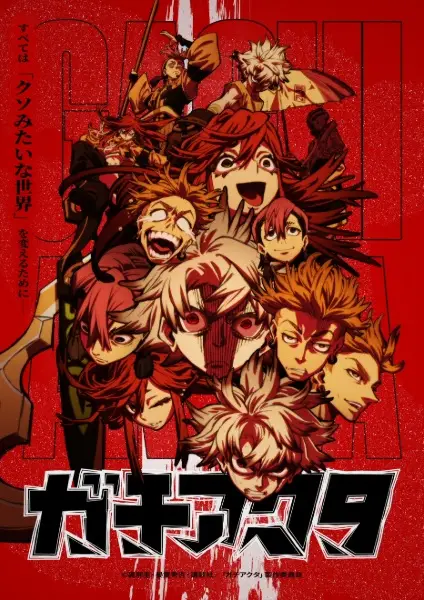
The inhabitants of a certain wealthy town think nothing of throwing objects away. However, their waste is priceless to Rudo, a resident of the town's slums. Despite the constant warnings from his adoptive father Regto, Rudo spends his days searching for reusable materials that would otherwise be sent to the giant disposal area known as the Pit. Due to its vastness, the Pit doubles as a means of criminal punishment; those dropped in are never to return again. When Regto is murdered by a mysterious assailant, Rudo is falsely accused of the crime and thrown into the Pit. To his surprise, he awakens in a trash-filled area inhabited by enormous monsters formed from the junk. As the toxic air and Trash Beasts push Rudo to the brink of death, he is saved by Enjin, one of the Cleaners who wield weapons known as Vital Instruments to fight the monstrosities. Having gained his own Vital Instrument, Rudo soon joins the Cleaners in the hopes of finding a way to escape the Pit and avenge his father. [Written by MAL Rewrite]
Main
Supporting
Supporting
Supporting
Supporting
Supporting
Supporting
Supporting
Supporting
MoshiiMoshii_
December 26, 2025
Gachiakuta is literally trash and not just because of its theme, which tries to shock at all costs, but mainly due to its weak and poorly executed writing. The series fails to turn its ideas into something engaging or meaningful, resulting in a shallow story with no emotional impact and no truly memorable moments. Everything feels empty, as if the visual shock is only there to mask the lack of narrative substance. Another weak point is the humor: it’s clear that the author has no sense of comedic timing. The jokes appear at inappropriate moments, break the mood of scenes, and feel completely out of place.Instead of relieving tension or adding charm to the characters, they come off as unfunny, poorly timed, and disruptive to the flow of the story.
Tkit
December 21, 2025
The biggest annoyance of Gachiakuta is how unrealized its uniqueness is. An original setting with great style, only to house a fairly generic shonen story with weird pacing. It will give a great backstory to a character who doesn’t have any screen time. It will fake out a generic powerup for a hero in trouble only to save him in the nick of time anyway. You will see an antagonist defeated in a surprising and interesting way only to have her return to lose in a traditional way. Story tries to say something interesting but heads towards a super wacky, big, generic and slow confrontation.Anime does a lot of cool stuff and some of it is left but most ends up eventually undermined. It really is a fun visual experience. Art style is one thing but when you see ‘graffiti designer’ as one of the top credits in the op you know this will be a different looking shonen. Allocation of the resources here is good. Overall this isn’t a marvel of great animation but show does a lot of things well to make it punch above its weight. Style I already mentioned, what contributes a lot is the music. They made a very fitting and well done soundtrack for this anime. The other point are well dispersed animation highlights. Those highlights range from a very well animated fight to an emotion driven sequence with changed art style. Character designs are important to mention. They look really cool and are interesting but suffer from wonky anatomy. Some of it is intentional sure but it isn’t very pretty and occasionally body proportions for characters are completely broken. The direction this story took is quite disappointing. Except the rushed and simplistic parts of the first episode it all seemed very interesting. Protagonist suffers a massive injustice and is thrown into a super hostile environment. Themes surrounding waste that extend to societal issues are interesting. Unfortunately on his way down, the author placed giant tracks in his path that lead to a more generic story. Rudo immediately finds a mentor who was just on his morning stroll through the death lands and we are welcomed by another shonen organization that will give the hero community and purpose. Structure of this season is also quite sad. After the introduction, we go through a series of events connected by very slow episodes of the group simply wandering around. Said events? A mixed bag. Some are just ok, few I didn’t like, there is the Amo arc that has interesting developments but feels pretty slow as well and except Rudo does the most for a person that won’t be here for the rest of the season. And at the end there is a massive shonen fight that I will talk about later. Those smaller, more minor events and the journeys between them all make this anime slower than one would expect. Characters here are an interesting bunch. They all are ‘cool’ but interesting development is limited and except Rudo, Amo and Zanka no one has anything engaging going on. Rudo is a typical shonen protagonist at his heart but he is pretty well done. I like his struggle with revenge. Zanka has an interesting struggle of a normal anime strong guy as a teacher among super strong anime people. And Amo is somewhere as well. They aren’t very unique but are good enough. This may all sound nice but without Amo this is just half of the core cast and outside of the core there is a lot of characters. As I said they all are somewhat cool but anime doesn’t manage to make most of them interesting even when it tries to juggle the additional cast by having some of them outside of certain big events. We get an interesting glimpse into Riyou but direction for her isn’t yet established. Enjin is a cool mentor who does less than you would expect and that is that. Now that you know about this struggle with managing the flood of people and failing attempts to make everyone in the group interesting it should be obvious why having a tournament like final fight with a big group of villains isn't ideal. Let’s skip the fact that setting up this fight with a cartoon trash slide to separate everyone into 1v1 fights is a crazy decision. This fight is long and not that interesting except for few good moments. While serving as a climax to this season in reality it is basically just the introduction to the big antagonist who nicely mirrors Rudo with his motivations. Again there are signs of competency but Gachiakuta can’t escape being a standard shonen at its heart. Show failed to prioritize what it wanted to say, it has a lot of potential and maybe in the future will do something great but for now this is very typical. Floods of characters that dilute the main cast. Despite the fakeouts there are still constant rescues of people who lost. Plot sometimes will have pretty well done backstory and sometimes it will just be the usual stuff. Pacing is occasionally pretty bad with a certain episode that I would just cut. The climactic final arc is too big for the little build this show had, which is sad considering the slow pace before. Big setup which failed to do anything very well.
imquotable
January 3, 2026
Gachiakuta is visually impressive in almost every obvious way. The animation is fluid, the aesthetics are striking, the character designs are memorable, the tone is strong, the fights are dynamic, and the power system is engaging and easy to follow. On a purely technical and artistic level, the show delivers. If someone is watching primarily for stylish action and strong presentation, it succeeds quite comfortably. The problems begin once the show has to rely on anything beyond visuals. One major issue is the sound. The constant screaming from many characters makes entire scenes feel like a competition to see who can shout the loudest. This is amplifiedby very poor audio mixing. Action scenes and shouting become extremely loud, then normal conversations suddenly drop to a much lower volume, forcing constant manual adjustments. This wasn’t a file quality issue, even high bitrate versions had the same problem. It’s simply inconsistent audio design that makes watching the show more tiring than it should be. The writing also has a recurring "telling instead of showing" problem, and sometimes manages to do both unnecessarily. There are scenes where something is clearly visualized, then the characters immediately explain exactly what we just saw. For example, a character gets hit, the show explicitly depicts a rib breaking, and then the character proceeds to announce that they got hit and their rib was broken. It treats the audience as if they cannot interpret basic visuals. Character writing is another weak area. Most of the cast feels like familiar shonen archetypes without much originality. This is not automatically terrible, but it is undeniably generic. In some cases it goes further than that, with characters that feel almost duplicated. Jabber Wongar and Stilza August come across as essentially the same personality assigned to opposite sides. Other designs, such as Fu, feel less like thoughtfully written characters and more like someone’s personal sexual fantasies inserted directly into the story. The supporter system is also questionable from a narrative and tactical perspective. Supporters accompany Givers into extremely dangerous combat situations despite being clearly weaker and often unable to contribute meaningfully. There are multiple examples where Givers fight effectively without supporters, such as Enjine and Rudo’s early battle and later major fights, with no acknowledgment that supporters are even necessary. Their presence mainly seems designed to place a fragile, likable character in danger to provoke emotional responses from the audience. A “Nanami type character”, because who doesn't like a Nanami type character, is endangered not because it makes sense tactically, but because it reliably generates reactions. Meanwhile, someone actually useful in combat like Eishia, who can heal, is not the one taken into these situations, which underlines how artificial this setup is. Pacing overall is acceptable, but the weaknesses of the writing become obvious when the action stops. Episode 16 is a clear example. It contains little to no action and relies almost entirely on dialogue and character interaction. Because the characters are not particularly compelling and the dialogue lacks impact, the episode feels far longer than it actually is. It drags not because it is slow, but because there is not enough substance to support a dialogue-focused episode. What is most revealing is the reception. Despite these issues, the show holds a rating over 8, which suggests how strongly presentation outweighs writing quality in current anime culture. Exceptional animation, striking aesthetics, and cool fights seem to compensate for generic characters, weak dialogue, and shallow thematic handling. Gachiakuta is not a terrible series, it is entertaining and often impressive to look at. But it is also a work where style carries most of the weight, and where the absence of action exposes how thin the character writing and dialogue really are. In short, Gachiakuta excels visually and technically, but struggles in storytelling, character depth, and audio design. It is enjoyable as spectacle, but much weaker as a complete narrative experience.
Darou_
December 22, 2025
Gachiakuta is a work that easily stands out in today's shōnen scene, mainly because it delivers something increasingly rare: originality. In a market saturated by repeated formulas, the series bets on its own well-defined ideas, starting with its extremely creative world-building, where the concept of discarding and marginalization is not only aesthetic, but also narrative and symbolic. The striking visual identity is another great asset. The dirty, aggressive, graffiti-inspired lines give the work personality and reinforce the weight of that universe. Each scene and confrontation conveys a sense of danger, degradation and chaos, creating a unique atmosphere. This aesthetic marries perfectly with the strong and maturetheme, which deals with social exclusion, injustice and human value in a raw way - a point I really love in the work, as it gives depth and emotional impact to the narrative. Narratively, Gachiakuta has enormous potential. The story grows little by little, planting concepts and conflicts that promise to expand significantly. The secondary characters are very well developed, especially Zanka, who goes beyond the supporting role and proves to be essential both in the development of the protagonist and in the group dynamic. The so-called “villains” are captivating and intriguing. Jabber steals the show with his chaotic and unpredictable presence, while the mystery surrounding Zodyl adds a layer of tension and constant curiosity to the plot. The action scenes are another highlight: intense, well-choreographed and visually striking. The protagonist also deserves a mention. He clearly has room for gradual development, especially when he shows good intentions and a sense of justice, but he still lacks courage and conviction, which makes his journey more human and interesting. On the downside, it does take a while to get going. The beginning is slower and may put some readers off, but once the story finds its rhythm, the experience is excellent. In addition, the world is so rich and full of ideas that the sheer volume of information needs to be dosed carefully so that the narrative doesn't get lost or confusing. Overall, Gachiakuta is a bold, intense work full of personality, which stands out precisely because it escapes the ordinary and focuses on identity, theme and world-building. A pleasant surprise in modern shōnen.
oPikWojtik
January 25, 2026
This review is mainly subjective and contains no major spoilers. I spent a long time thinking about if i even wanted to write a review for Gachiakuta. This show made me feel dissapointed, but i also wanted more of it. I’m not a fan, rather a hater of action-heavy shonens in general. The only action shonen I actually like are those that lean heavily into dark, complex storytelling, such as Attack on Titan. I started watching Gachiakuta during the summer season, but after nine episodes, I dropped it. It simply wasnt as interesting as i expected, and the season itself was overloaded with better shows. I onlycame back to finish it recently in January. That said, second chance didnt really change my overall impression of the show. Story and Action – 5/10 Gachiakuta positions itself as an action shonen with dark and mysterious tones in the background. Those themes are present, but it is clear that the series tries to be rather action-focused. The problem is that the action, which is supposed to be the strongest aspect of the show, is easily its weakest. When I started Gachiakuta, I expected enjoyable, dynamic fights with cool characters doing cool things, paired with a somehow working story. What I witnessed instead is the opposite, the action is underwhelming, often really boring, and frequently interrupted by dialogue. Dialogue was also a major issue for me. A lot of conversations felt extremely pointless and dull. Characters try to sound deep and philosophical through niche words and metaphors, but most of the time their sentences lack actual meaning, dont lead anywhere and often dont even make sense. The only character whose dialogue actually felt intelligent was Zodyl, which only made the difference with the rest of the cast more frustrating. Many action sequences feel less like fights and more like extended yapping sessions with occasional movement. The only character whose action sequences felt actually enjoyable was Jabber. His fights were energetic, with a crazy good choreography and tension. Unfortunately, the rest of the cast, despite having interesting vital instruments and abilities rarely delivered satisfying performance. The potential these characters had was replaced by yapping. For me, Gachiakuta perfectly represents a major issue in shonen storytelling. To develop shonen narrative and themes, action must be sacrificed. The result is a series that doesnt excel in either. Unlike something like Demon Slayer, which prioritizes action way more over depth and complexity, Gachiakuta tries to balance both and ends up failing in both. Which left me with mixed feelings. The story does better than action, but is still mediocre. Dark themes and mysteries surrounding the world of Gachiakuta are explored well, but its not what i expect from an action focused shonen. More to why the story is better aspect than action will be mentioned in worldbuilding section. Characters – 6/10 To be fair, characters in Gachiakuta are not badly written. They have distinct personalities, unique motivations, and actual good backstories. The issue is that many of them simply are not compelling enough to make me care. I didnt dislike the characters, I just felt no connection with them. Some had interesting concepts, but not enough depth to leave a stronger impression. They exist, they function, but few of them truly stand strong. Worldbuilding – 8/10 This is where Gachiakuta shines the most. The mysteries surrounding the world and its rules were easily the most engaging parts of the series for me. The worldbuilding is strong, complex and full of unanswered questions. It clearly has a huge potential for later parts of the story. The setting feels oppressive and unpredictable. Despite it having defined rules, the world still leaves room for countless possibilities. For example, moments tied to the Watchman, genuinely gave me chills. If Gachiakuta had leaned harder into its mystery and worldbuilding rather than forcing itself into being an action slop, my overall impression would be much better. Atmo-SPHERE – 7/10 Gachiakuta’s atmosphere works well when it leans into its darker, unsettling elements. But, the constant return to the mediocre action often breaks the immersion. The tone wants to be dark and intense, but the execution doesnt always let that work. Art & Sound – 7/10 The character design is excellent. Every character has a distinct, unique look and undeniable drip. The Vital Instruments are creative and well thought out, fitting the characters and their backstories and the world design is easily the coolest aspect of the series. That said, I DESPISE the extremely thick outline used on the characters. It makes them feel cut out from the background and the world around them, instead of coexisting with them. This issue is exclusive to the anime adaptation and significantly hurts visuals. The use of CGI is not overwhelming, but it doesnt work with the thick outline i mentioned. The soundtrack is solid, and while the openings and endings are not really my style, they fit the tone of the series flawlessly. Overall – 6/10 Gachiakuta is a series full of good ideas and potential, but it fails to excel where it matters most for an action shonen. I would call Gachiakuta the bridge between action shonens and dark tone seinens, this however is rather an issue, because trying to be both, leads to mediocrity. While the world and its mysteries kept me interested enough to finish the show, the overall experience left me feeling more disappointed than satisfied. I would recommend Gachiakuta to viewers who value worldbuilding and action, just be ready to find some action sequences rather boring. If you’re looking for engaging fights or consistent story with depth, this series will definitely let you down. Gachiakuta isn’t bad, but it’s a clear example of a show that could have been much better. For me, the disappointment outweighs the enjoyment. Best definition for this show would be just MID. Favourite characters: Zodyl, Jabber, Tamsy Favourite episode: Episode 22
Rank
#399
Popularity
#566
Members
456,244
Favorites
5,224
Episodes
24