刀語
In an Edo-era Japan lush with a variety of sword-fighting styles, Shichika Yasuri practices the most unique one: Kyotouryuu, a technique in which the user's own body is wielded as a blade. The enigmatic seventh head of the Kyotouryuu school, Shichika lives quietly in exile with his sister Nanami until one day—the wildly ambitious strategist Togame barges into their lives. Togame brazenly requests that Shichika help in her mission to collect twelve unique swords, known as the "Deviant Blades," for the shogunate. Shichika accepts, interested in the girl herself rather than petty politics, and thus sets out on a journey. Standing in their way are the fierce wielders of these legendary weapons as well as other power-hungry entities who seek to thwart Togame's objective. In order to prevail against their enemies, the duo must become an unbreakable team as they forge ahead on a path of uncertainty and peril. [Written by MAL Rewrite]
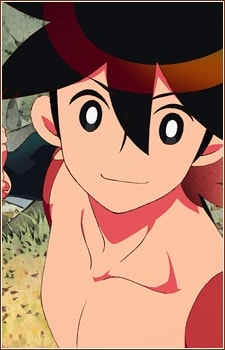
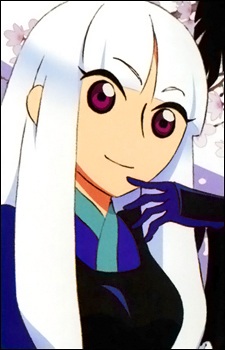
Main
Main
Supporting
Supporting
Supporting
Supporting
Supporting
Supporting
Supporting
Supporting
anonypc
February 5, 2014
This anime is beautiful, I don't really know how else to describe it. Even after watching the entire series the second time through, It's difficult to articulate my thoughts about watching this. The quality put into each show is amazing, as I believe it was released monthly, with each episode spanning around 45 minutes. Katanagatari does a good job telling a folktale-like story which is compelling and intriguing. It takes place in a post-Sengoku era, aka the post-"warring states period" in Japan,according to wiki. It's a story about the journey of two people, who were perhaps destined by fate, to travel together andcollect 12 unique swords which each contain mysterious power, be it benign or supernatural. It focuses on their adventure traveling together throughout Japan and the mysterious encounters they undergo among the people who either foster or are hunting these swords simultaneously. Underneath the surface of their journey, there is an underlying love story and a gradual development of character between the pair. It is progressed with each successive encounter throughout the show, which is done is a very stylish and majestic manner. This show is extremely charming. The style is unparalleled, and is befitting to the mini-culture portrayed throughout the show. I can understand the art being a hit or miss with some, but personally it was like looking at beautiful art. It is not an action packed show filled with meticulously animated fight scenes, although there are plenty of badass moments. It is just a simple story that is filled with memorable moments via a well written script. I remember vaguely reading somewhere that this was based on a light novel. Either way, while watching the show I definitely felt like I was reading a good book rather than watching a generic show. There are strong but subtle emphases of destiny, history, geography, and japanese culture in this anime. Furthermore, the show is paced well as each sword is generally obtained per episode, in various ways which all lead to finding to resolve to fight. In conclusion, this anime is amazing, and is definitely in my own personal top 10, maybe even top 5 I've ever watched so far. Three things I love about this anime: 1) The music. There were probably only 1 or 2 times where I felt the music did not suffice, or was apropos. Other than that, the music is top notch. It gives you the feels. It's unique, I would bet some are made with some pretty old-school instruments specific to Japan. Violins, are also a welcome in any show. 2) The love. This is a great love story. It's the type of love where it develops & changes the character's perspectives within the show gradually. It's done tastefully and with class. 3) This show is very memorable. It is a stand alone story with a conclusive end. There will be moments where you will get immense feels, accompanied with amazing music feels at the same time. If by the end of the show you don't get any feels, you are most definitely a robot.
Archaeon
January 4, 2011
Since 2006, light novel adaptations have gradually become a regular feature in anime as producers in the industry scrabble around in their attempts to find the biggest cash cow since the advent of Suzumiya Haruhi. The surprising thing is that the fallout from this has actually been a lot better for fans than one might expect, and while titles like Guin Saga, Kemono no Souja Erin, Ghost Hunt, Baccano!, Kure-nai, Rental Magica, Spice & Wolf, and NHK ni Youkoso! may not be as commercially successful as KyoAni's behemoth, they do represent a gradual shift in the industry towards creativity and originality. Which is where Katanagatari comesin to the picture. Written by Nisio Isin (although he usually writes it as NisiOisiN since his name is a palindrome), the twelve volumes of the original light novel series were published as part of the Kodansha Box line. Strangely, all of the books were released at a rate of one per month from January to December 2007, with a spin off novel published in February 2008. Now while this is clearly a phenomenal feat, one does have to wonder if a few corners were cut for the sake of expediency and to meet deadlines, and also if the adaptation can stand up to scrutiny. Katanagatari is basically what the title suggests - a story about swords. It begins with fire and death as a rebellion against the Owari shogunate meets a bloody end. Twenty years later, a small boat makes its way across the sea to a deserted island where the passenger, Togame, hopes to enlist the aid of Yasuri Mutsue, the 6th generation head of the Kyoutouryuu sword style and the hero of the rebellion. Instead she finds Yasuri Shichika, who is more bumpkin than the term allows for, and is also as hard as nails. One of the things that really stands out about the series (aside from the visuals, but we'll get to that in a bit), is the dialogue. The show is very well scripted with some very good conversations and witty repartee, and the explanations are usually clear and concise enough for the viewer to follow. There are also numerous verbal nods in the direction of modern popular culture, which makes a nice change of pace as one might normally expect lots of serious conversations about honour, loyalty, duty, revenge, or other concepts that are usually found in these types of story. The problem though, is that the dialogue can also be off putting for viewers who want a little less conversation, a little more action (sing along if you know the words), especially as the fights are over in a very short space of time. In addition to this the story can sometimes err on the side of predictable, especially with the number of plot coupons that drive the whole show (in this case the "cursed" swords), and the series can sometimes become nothing more than a repetition of talk, talk, talk, fight, talk, end. The biggest criticism about Katanagatari though, is that it's nothing more than a very nice looking "fetch quest", and while the dialogue really does pull the whole show together, the storyline can sometimes feel derived or contrived. What really makes the series stand out are the rather stylized visuals. The design principle attempts to merge several themes ranging from traditional Japanese art to modern fighting games, and while there are some flaws here and there, the overall effect is ... something else. The scenery is surprising to say the least, and almost every frame is literally filled with little details that will often go unnoticed by the viewer, from the grain and different tones found in wood, to the multiple hues and fractures of stone. In contrast to this the characters are simplistic yet colourfully flamboyant. The costumes vary from the utilitarian to the nonsensical (especially those of the Maniwa ninja corps), while the characters themselves have exaggeratedly simple, almost cartoon-like, facial features. Oddly enough, whilst one might expect this sort of design to lack in terms of expression, the opposite is true for Katanagatari. White Fox, who produced Tears to Tiara and are currently working on Stein's Gate, have done a tremendous job with the design and animation of this series. The characters have a certain grace about their movements that belies their simplistic appearance and sometimes clunky costumes, while actual combat scenes are extremely well choreographed and animated, so much so that the individual moves of Shichika Hachiretsu (Seven hits, Eight Pieces), are clearly defined. That said, the art style may not be everybody's cup of tea, but if you can handle it then there's a pretty good story here. One of the defining aspects of a good narrative is the strength of the scriptwriting, and because of the extremely strong dialogue in this anime, it's often easy to overlook how good the actors actually are. Hosoya Yoshimasa's role as the über country bumpkin Yasuri Shichika may have caused him some consternation as the character is effectively emotionless for a good portion of the series. That said, his deadpan delivery works very well, and can often make the viewer stop and try to work out if what he says is meant to be a joke. On the other hand, Tamura Yukari's not-quite-tsundere Togame is sometimes a joy to watch, with the character's many mood swings and emotional changes handled with aplomb. But then again, what else would one expect from an actress who's also played Takamichi Nanoha, Kawasumi Mai (Kanon), Furude Rika (Higurashi), and a horde of other lead and supporting roles. To be honest, given that Hosoya only has a handful of shows under his belt it's amazing he managed to keep his head working alongside such an experienced seiyuu. Katanagatari features quite a lot of music in the form of two opening themes, twelve ending themes, and a plethora of background tracks. The OPs and EDs are handled well, but given the number of songs on offer, deciding what works and what doesn't is very much a matter of personal taste. The incidental music is another matter, as while there are scenes where the music dominates proceedings, the majority of the series features either very subtle tunes that are almost unnoticeable, or no music whatsoever. The nice thing about this approach is that the dialogue doesn't have to fight to lead a particular scene, and while the more subtle background music is pleasant enough, this is ultimately a "wordy" anime. The biggest weakness of shows like Katanagatari is that they have too many characters for their own good. While Shichika and Togame are played confidently, have some well though out dialogue, and generally bounce off each other like peas on a drum, the same cannot be said of the supporting characters, in particular the Maniwa Corps who seem to be nothing more than a collective of whipping boys whose only role in life is to prove just how strong Shichika and his sister are. That doesn't mean the characters are bad though. Both Shichika and Togame's emotional development is handled in a very competent manner, and as their relationship slowly becomes more defined, so too do their actions change towards each other and the world around them. Unfortunately, while a lot of attention is lavished on the two leads, there is very little left over for the supporting cast, which is a shame as there are some great performances in this anime. Now while the series has a lot to recommend it there are some valid criticisms that can be levelled at it, the main one being that Katanagatari is far too "wordy". See, the problem is that since the dialogue is very good, someone has decided that the series should have more of it than it actually needs, and the upshot of this is that there are occasions when the characters just go on and on. Now it should be pointed out that a part of this is because the series parodies certain stereotypical behaviours found in shounen anime and manga (and James Bond stories I might add), which is nice, but ultimately unnecessary. Katanagatari is a strange anime that's part "fetch quest", part wuxia tale, and strangely enough, part Seinfeld (i.e lots of people being dryly humourous, deadpan or witty), which isn't a normal combination by any measure. That said, I thoroughly enjoyed this anime for its originality and innovation, as it would have been all too easy for White Fox to follow the tried and tested route for samurai anime, so the fact that they decided to stick with Isin's concept of how the characters should look is laudable. Now if only the other studios would start broadening their horizons ...
8thSin
December 10, 2010
'Katanagatari' ('Tale of Swords') is about Togame, a self-claimed "General Director of Military and Offering Affairs serving under Yanari Shogun Family of Owari Shogunate", and Yasuri Shichika, the last inheritor of swordless swordsmanship "Kyotouryuu", and their adventure to collect 12 legendary swords. Original work written by the same author as 'Bakemonogatari', this is a dialogue-based series that I cannot recommend to Shounen and other viewers who seek mindless battle scenes, you can ignore my warnings... "but by that time, you'd be slashed into pieces." The story of 'Katanagatari' is driven by the characters who stand in the way of the sword gathering. New characters and weapon ofthe month are introduced in every episode. Through negotiation and battles with Togame and Shichika, we learn about their opponents' backgrounds and purpose to fight. It can be said that the story progresses by disposing expendable side characters. The story may be about the main couple gathering the 12 swords, but the show is really all about why people fight. The humor in this series heavily relies on 「すべり芸」, the comedy through deliberately failed attempts to be funny, which in turn creates a humorous atmosphere for its sheer lameness. The frantic pace of conversation was the key to making this comedy style work, as well as the persistence (such as catchphrases, Togame missing the battle, sexual implication etc) in every episode. The episodic nature of the series makes character development difficult, but it was made possible by dedicating each episode to a theme or lesson for Shichika, and sometimes Togame. 1: Intro 2: What to protect 3: Purpose 4: Friendship 5: Love/Resolve 6: Conscience/Loneliness 7: Death 8: Human Will 9: Discipline 10: Swordsmanship 11: Fate/Past 12: Freedom/Future Shichika started out as an emotionless weapon that blindly follows Togame's orders, acting as her sword. By facing the variety of opponents in their journey and influence of Togame herself, Shichika gradually grow up as a human being, learning ways of the society and new emotions with each encounter. Character development was excellent. By end of the show, Shichika was no longer a brutal killing machine; he had his own purposes and opinions. Character design was fantastic in this series. Everyone was easily distinguishable. Even those who died quickly had very distinct personalities and features that left lasting impressions. Character naming was pretty interesting in kanji, such as Shichika --> "Seven Flowers", Togame --> wordplay of 「十が目」(Eye is a Cross) and "Blame", Hitei-hime --> "Princess Denial". Every name basically describes the person. My only complaint with the characters is that every adversary in this show had a sympathetic or honorable reason to fight. They were too lovable. I believe there should be at least one character for everyone to hate in this type of action/adventure series. There should've been an enemy who was simply a serial killer who loved taking life, or a corrupt leader oppressing the innocent civilians. I also felt sorry for Maniwani, for being defeated (often easily) in every single battle against Shichika or Sword-holders. The final episode summarizes and concludes the series well, lots of cool action, and the funniest scene occurred in stage 10 of dojo-yaburi, with Hakari the Scale. I also liked how in the end, it showed that possession of powerful weapon is pointless unless the wielder has the skill and knowledge to make full use of it. I still consider 'Bakemonogatari' voice acting to be the best ever, but 'Katanagatari' is a close second. Togame (Tamura Yukari)'s voice takes a while to get used to, but it grew on me in time. Shichika (Hosoya Yoshimasa)'s voice sounds like reading the script at first, but not really; quite humorous and emotional when needed to be. Other than that, everyone else's voice was an instant hit (this is important because some of the characters were dead within minutes of appearance), which is quite a feat because there are over 30 major characters in this series. This is another series that made me think "Seiyuu sure are amazing". BGM, on the other hand, makes a strong case for a new benchmark. It should be noted that at least one new piece of BGM is played in every episode, but all pieces flows so well that it doesn't sound like deliberate theme music for each villain. Most pieces are fully orchestrated in Western or Japanese traditional instruments, charged with the grandeur of the adventure. Others are jovial Japanese rap that serves its purpose by being so bad that it's funny. However, it's not the quality of individual number that makes the background music of 'Katanagatari' remarkable, rather its application. Every number is used in exactly the right places. The most distinguishable characteristic of the implementation is that the music start well before each significant scene to build up the tension, harmonizing with the story to enhance the drama as they climax with absolute precision. OP1 was very catchy with good balance of anime beats and traditional Japanese atmosphere, but OP2 was average. EDs are different for every episode. Ep4, 8, 12 were particularly strong songs, but all were shared by outstanding vocals. Character in this series had extremely crude designs, with background detail of varying degree. However, the artwork has a very unique style that creates a Japanese fairytale, picturebook-like atmosphere that suits this series well. One can tell the animation director and staff went lengths to visually compliment the story with wonderful "camera work", composition, and fabulous fight scenes. I want to believe that the character designs are simplified so that they (especially the protagonist) begin as blank canvases, and their impressions and details painted in viewer's minds as the show progress through words. The art quality in this series is technically inferior compared to most shows airing this year, but in my opinion had one of the best presentation and style. Probably hit or miss depending on tastes. Although there are limits to episodic storytelling, the show had great character development and interesting story. The story was full of surprises and unpredictable turn of events despite it being a simple tale of sword gathering. Quite innovative and bold in style with both artwork and plot development. There were many great episodes in this series, I hereby declare episode 2, 4, 10, 12 「神回」 (godly epic episodes). Episode 7 was one too, though it probably had been possessed by a demon than god in many ways. Perhaps it's a result of loose deadline due to monthly episode, but you can tell the staff paid close attention to perfect everything, from animation to sound to story structure. It was one hell of an adventure around Japan. In spite of all the flaws mentioned above, 'Katanagatari' is a series that I enjoyed tremendously. This series was filled with so many interesting quirks, and I will definitely remember it for a long time. Cheerio! Let's all hype up this word with the wrong meaning.
johnvswild
August 22, 2013
I simply cannot grasp why this anime receives so much praise. SPOILER-FREE White Fox adapted this from the light novel Katanagatari, and although they have the same author and a similar name, it has no connection to the Monogatari series in style, substance or story. The two main characters romp through a mythologized version of feudal Japan, neatly divided into formulaic episodes, collecting swords and killing fucking everyone they see. Katanagatari is by no means a terrible anime, but if you look at the way it is treated, you might think it’s an absolute masterpiece, or panders to the shounen crowd excessively. Neither is true. The world andaction are so ridiculous and clichéd that you might be forgiven for thinking it is simply a parody. If Katanagatari deserves any praise (which indeed it does), it is for managing a certain level of uniqueness. However, uniqueness alone is not enough to carry a series. STORY 4/10 This is a twelve episode anime about collecting twelve swords. As such, you may begin to notice a pattern that the anime follows. In case you can’t I can spell it out for you: find the sword, find the wielder of the sword, get ready to kill sword wielder, fight scene, kill sword wielder, take sword. Fortunately, Katanagatari is not so obtuse as to staunchly follow this formula for every episode, but it can get pretty tedious at times; sometimes the biggest surprise an episode will shock you with is how few people die. That’s right, none of the characters have any qualms about killing even friendly characters, resulting in one of the highest body counts per episode I’ve seen in anime. Not that it is necessarily a bad thing, but Katanagatari just makes it annoying; out of a cast of dozens of characters, you can count on one hand those alive at the end. There is even a set of twelve characters who exist for no purpose other than dying violent deaths as soon as they’ve received their quota of characterization. This “quota of characterization” brings me to another annoying habit of this show: a naruto-esqe need to explain every technique and move of every character. Announcing attacks beforehand already makes the action scenes a little silly, and very few characters indeed do not at least once give a lecture on their fighting style, magical moves or weapons, usually in the middle of a fight. This highlights the more prevalent flaw of excessive dialogue. For an “action” show there is not nearly enough action. A lot of this does contribute to the story and characters, but some of it makes me wonder if it wasn’t just to fill up their 50 minute time slot. I feel that the ending deserves special attention. Jarring would be an understatement, a better description would be “feels like it’s from a different show.” All of the characters in the final episode have their personalities nearly reversed, and events transpire that makes the rest of the series relatively meaningless. It feels terribly contrived and without spoiling too much, it is a massive disappointment. ANIMATION 3/10 The art in this show is unique. Opinions on the character designs will be very subjective; they are certainly atypical of anime. Over the course of the series they will likely grow on the viewers. Backgrounds are colorful and charming. The art really does not fit the story and setting but some will love it. The real weakness of this show’s art is the animation. It starts out passable, but as it goes on you can almost see a counter on the screen as White Fox’s budget for this show drops. Fight scenes are the only part that gets any special attention as the show goes on, and even their quality drops over time. It starts out fairly pretty but increases in still frames, simple designs and reused animation become more obvious. If I did not know they spent a month on each episode I would say it looks rushed. Overall this extreme inconsistency leads to some parts looking quite attractive and others looking really awful. SOUND 6/10 The music in Katanagatari is pretty lackluster, but often fits very well with the show. The music definitely contributes to the mood of scenes. The voice actors complement the show far worse. Tamura Yukari does a brilliant job as Togame. Unfortunately other characters generally deliver their lines with all the emotion of reading a string of numbers with a director over their shoulder shouting “sound angry for this scene!” The sound effects really shine. CHARACTER 5/10 The characters are the point of Katanagatari. Whether you like the show are not, everyone will agree that the action, story and everything else are secondary to the character development. Unfortunately, this means the show puts incredible effort into one area that ultimately falls flat on its face. The only good thing I can say about the characters is they are not stereotypes. The side characters are particularly unimpressive. They are incredibly shallow and most are killed off as soon as they receive just enough development to elicit an emotional reaction from the lowest common denominator. I also can't count the number of "Japan's strongest" that come out of the woodwork. Togame, Shichika and their relationship are the real focus of the show. Throughout the show they slowly develop from a largely superficial relationship into one of real trust between partners. Finally, at nobody’s surprise, romantic love blossoms between the two. Unfortunately, the circumstances surrounding this make it unsatisfactory. And it happens during the final episode, which I have mentioned involves everyone acting tremendously out of character. Although their interactions are very strong, Togame and Shichika themselves are rather weak characters. Shichika especially is quite the Gary Stu, with a lot of forced development. “Why does he fall for Togame in minutes?” Because he does. “Why does he suddenly get way stronger?” Because he does. “Why is he unable to use a sword?” Because it makes a convenient plot device. This sort of thing is constant. One last problem that bugs me particularly is that Katanagatari succumbs to temptation and commits one of the cardinal sins of anime character development: “cHAIRacter development.” This is changing hair style, especially cutting a female’s hair short, to demonstrate character development. It is usually done when the character is so weak that a superficial change is required to show growth. It was completely unnecessary and just annoying. ENJOYMENT 6/10 It isn’t hard to get caught up in Katanagatari. If you can overlook some flaws then there isn’t any reason you can’t enjoy watching it. The ending is lousy, but the ride to get there can be pretty fun at times. CONCLUSION The art and focus on characters make this show unique, but uneven animation, disappointing characters and the ending cause this show to fail at being what it wanted so desperately to be: special.
Smartreviews
December 11, 2014
"I have just come to a realization! This scroll by Broken Sword contains no secrets of his swordsmanship. What this reveals is his highest ideal. In the first state, man and sword become one..." - King of Qin, Hero I originally stumbled upon this anime thinking it was a continuation of the Monogatari series. It's not. But it's a great show nonetheless. What wowed me about this show was its pacing. Katanagatari is easily one of the most well-paced animes I've ever seen, and the pacing reminds me a lot of BBC's Sherlock series. Each of the 45-minute episodes are like a mini-movie, leaving very littlein terms of cliff-hangers, yet keeps you wanting more, if and when you have time. For me, it made for a good series to relax and watch with my girlfriend on the weekends of my hectic whirlwind lifestyle. So why did I choose to start with a quote from an obscure 2002 Jet Li movie? Well, the one thing that probably caused Katanagatari's score to drop a few points for a lot of people was its ending, which undoubtedly left 90~% of viewers confused and angry. So, I decided to take a metaphorical stab at an explanation (for which I will enlist the help of this obscure 2002 Jet Li movie) that will hopefully shed some light on the true meaning behind Katanagatari, and help you reach a more fulfilling understanding of what the heck you just watched. However, as my explanation contains light spoilers, I will leave it at the end of my review for you to read after you've already finished the series. Now, for the review: - Story (8/10) - The story of Katanagatari is both very straightforward and somehow wildy unpredictable. It follows a rinse and repeat cycle where our heroes, Togame (a delicate strategist) and Shichika (an emotionless jungle boy), face off against an enemy with a powerful and unique weapon, find some way to defeat them, and subsequently take their weapon. It may sound dull and repetitive, but the show does a great job of keeping things fresh with cute/clever interactions between Togame and Shichika, who are superstar characters in their own rights, but I'll get to that in a bit. The only thing the story is lacking is depth behind each character's motivations. Togame is collecting swords for the Shogunate, which is the enemy of her loving deceased father, while Shichika is there because... I have no clue. He claims it's because he fell in love at first sight with Togame, but his attraction is rather platonic. I think the real reason was because he was bored. That's not to say their relationship seems fake. Katanagatari doesn't pull love out of thin air like some animes do (*cough* Angel Beats!). While the relationship between Togame and Shichika starts off a little suspicious, and the show doesn't try to hide the fact that Shichika comes off as this asexual weirdo, it develops into something that seems very real by the time we get to the closing credits. Throughout their travels, Shichika undergoes a very subtle transformation from emo-jungle-boy to fun-loving prankster that's shown in the way he interacts and teases Togame. It's all done in a Flowers for Algernon kind of way, meaning the narrator doesn't have to tell us that Shichika and Togame are changing, it's just obvious. It's really refreshing to see an anime that shows us things rather than tells us what to think, wouldn't you agree? (NOD YOUR HEAD) But still, the initial motivations behind each character's actions leaves a lot viewers scratching their heads. This, of course, is compounded by the problems people have with the ending. It's not just Shichika and Togame either. All of the characters have a tendency to act in unpredictable and senseless ways, from Hou-oh, a beloved clan leader randomly decapitating his dear disciple to Shichika's sister running around killing people for no reason. None of their motivations seem to make any sense. But motivations aside, it still gets an 8 out of 10 for it's combination of fun-filled subplots, clever battle sequences, and colorful cast of characters. - Art (9/10) - Have you ever watch an episode of an action anime and thought, why is there no fighting in this episode? Well, Katanagatari never has this problem. There's fighting in every episode. And while the fighting is not flashy (or forced for that matter), it is very well drawn and sensibly creative. The style is not detailed, except with some of the scenery, and the artist takes liberties with the shape of human bodies and faces, but it's all still very cool looking. It all reminds me a LOT of Gurren Laggan. I guess what I'm trying to say is that it fits well with the style of the anime as a whole. There are two weird things about the artwork that might annoy some people. First, like the artist for Gurren Lagann, this artist doesn't like to draw normal looking eyes. I don't mean having something like the Sharingan of Naruto canon, that's actually connected the story. I mean some characters will just randomly have pentagons for eyes, because why not? And second, the art style changes slightly after the first few episodes (the lines get noticeably thinner). I don't know if this is to show aging (older characters are typically given lighter lines in anime), but it's all made very obvious during flashbacks. But if you can disregard those two things, I'm sure you'll find the graphics as entertaining as I did. - Sound (9/10) - The opening/closing and the music in general fit well with the anime. That's really all I can say about that. The background music has a modern/Sengoku style to it that reminds me a bit of Samurai Champloo, but more Sengoku and less modern than Samurai Champloo (there's very little rap). And obviously, it's by a different composer (RIP Jun Seba). Actually, I think the opening is by the same band that did the Monogatari series. Anyways, it's all very good. The intros/outros are memorable, although neither of them really wowed me. The voice acting was underrated as well. However, I've only seen the sub. - Characters (9/10) - The characters are probably the best thing about this show. The main characters, Togame and Shichika are both very distinct and clever. Neither of them fall entirely within any anime cliche. The repertoire between them is great, and they both have some very memorable lines. The development of the characters is relatable as the pair try to find meaning behind why they fight, what it is they're searching for, and what they really want out of life. The side characters are also very interesting. All of the enemies are unique and interesting. In fact, even the guys who only get 10 seconds of screen time are interesting. I'm going to say "interesting" one more time for emphasis, just in case you didn't catch the first 30 times I said it. They all have fun quirks about them, and none of them really came off as annoying. One good example of this is the Maniwa Corps, a group of ninjas that are sort of like what Team Rocket is for Ash and Company on Pokemon, but way cooler. The difference is that while Team Rocket is made up almost entirely of storm troopers clones, every single of one of the 12 (14?) Maniwa members are unique. About 5 seconds ago (or 10-30 seconds depending on how fast you read), I mentioned that none of them come off as annoying. Well, that's not entirely true. The fact that their motivations often fail the logic test, as I mentioned earlier, can come off a bit annoying at times. But even this does little to make them full blown annoying characters. Even Hou-oh, who I mentioned briefly earlier as acting out of random uncharacteristic impulse, turned out to be one of my favorite anime side characters in a long time. Basically what I'm trying to say is that the characters have minor annoying tendencies, but the core that makes them who they are is solid, and will keep you invested in them. - Enjoyment (10/10) Memorable dialogue? Check. Fun scenarios? Check. Colorful characters? Check. Fulfilling story? Check. Top-notch pacing? Check. Meaningful fight scenes? Check. A spattering of fan service here and there? Ding Ding Ding. We have a winner. Overall: 9/10 Its not the greatest show I've ever seen. But it's definitely worth the watch. I honestly believe it would be rated a lot higher if people weren't so upset with the ending. To cure that, I've decided to write an explanation. So if you haven't yet finished the show, PLEASE STOP READING HERE. If you have finished the 12 episode series, here's my take on what the ending was about... (Warning: Light Spoilers) Katanagatari (or Story of the Sword), taken as a whole, is about the falsification and course-correction of history. So it only makes sense that the first question we should ask is what part of history was corrected and what part was falsified? Let's start with what was falsified. The subject matter behind this story is China, not Japan. And Shichika is an anime-parallel of Jing Ke. Name sound familiar? If so, either you're a history buff or you've watched too many Jet Li movies. Jing Ke, as some of you may know, is the main character of the 2002 Jet Li movie, "Hero" (although in the movie, he's known as "nameless"). And the history that is course-corrected is Jing Ke failed assassination of Ying Zheng, the King of Qin, and the man who would later become China's first Emperor. (the name Shichika in Japanese means "seven," which could refer to the seven warring nations of Han before they were united under Ying Zheng) He's also the one who ordered the eventual construction of the great wall of China to fend China off from foreign invaders, which the anime briefly mentions. The legend goes, Jing Ke earned an audience with Zheng upon presenting him with a present - the 12 broken swords of his greatest enemies. But in the end, Jing Ke failed because of two critical mistakes. First, he was paralyzed with fear for both himself and his loved ones at the sight of the King, and second, he was too slow in retrieving the poisoned dagger he hid in the scroll he presented to the King. Now that the stage is set, let's move on to course-correction. While it's true that Emperor Zheng built the great wall, he was actually hated in China. The construction of the great wall cost the lives of millions, and Zheng was remembered as being a ruthless coward. And so peering into the future, Kiki Shikizaki (and his descendant Princess Hitei) attempted to course-correct Jing Ke's failed assassination by getting rid of his two weaknesses - his human heart, and his need of a weapon. And so he taught Ke's ancestor the Kyotouryuu and created the deviant blades as a condition precedent for Ke's meeting with Zheng. Lastly, by killing Togame, the love of his life (who's name in Japanese means "Blame" as in the one to blame for countless deaths), Princess Hitei fulfilled her ancestor's goal in getting rid of Jing Ke's second weakness, and turning him into a perfected weapon, without residual attachment to the world. This allowed him to overcome his fears, and even go as far as to wish for death. And so all the blood shed would not be in vain and millions of lives are saved from the clutches of China's first tyrant. Of course, this would mean that Zheng could no longer build the great wall to protect China from invaders, to which Shichika replies (and I'm paraphrasing) - we'll just have to trust the heroes of the future to tear them to pieces. Ok, so that should explain what happened. I may be wrong, but at the very least, it gives you a basis for understanding the theme of this story. By focusing on what could have happened (history), rather than what did happen (anime), the ending should hold a bit more weight. The story doesn't do that, it really couldn't. That was something that had to be left to the viewer. Another thing that probably upset people is how Shichika ends up with Hitei. Well, that's something you have to look at in context of the overarching theme of the anime - the falsification of history. History is written by the victor. Now ask yourself who you think the narrator of the story is. It could only be one person. And once you've figured that out, things should become clearer. History is written by the victor, and in this case a victor with a penchant for falsifying history. Is it not possible that the ending was a lie too? Call it a narrator's wishful thinking, if you must. Hopefully, you were able to figure out what I meant. I can't solve all your riddles for you. It would take too long. And by then, I will have already torn you all to pieces. Cheerio!
Rank
#320
Popularity
#421
Members
591,299
Favorites
10,938
Episodes
12